
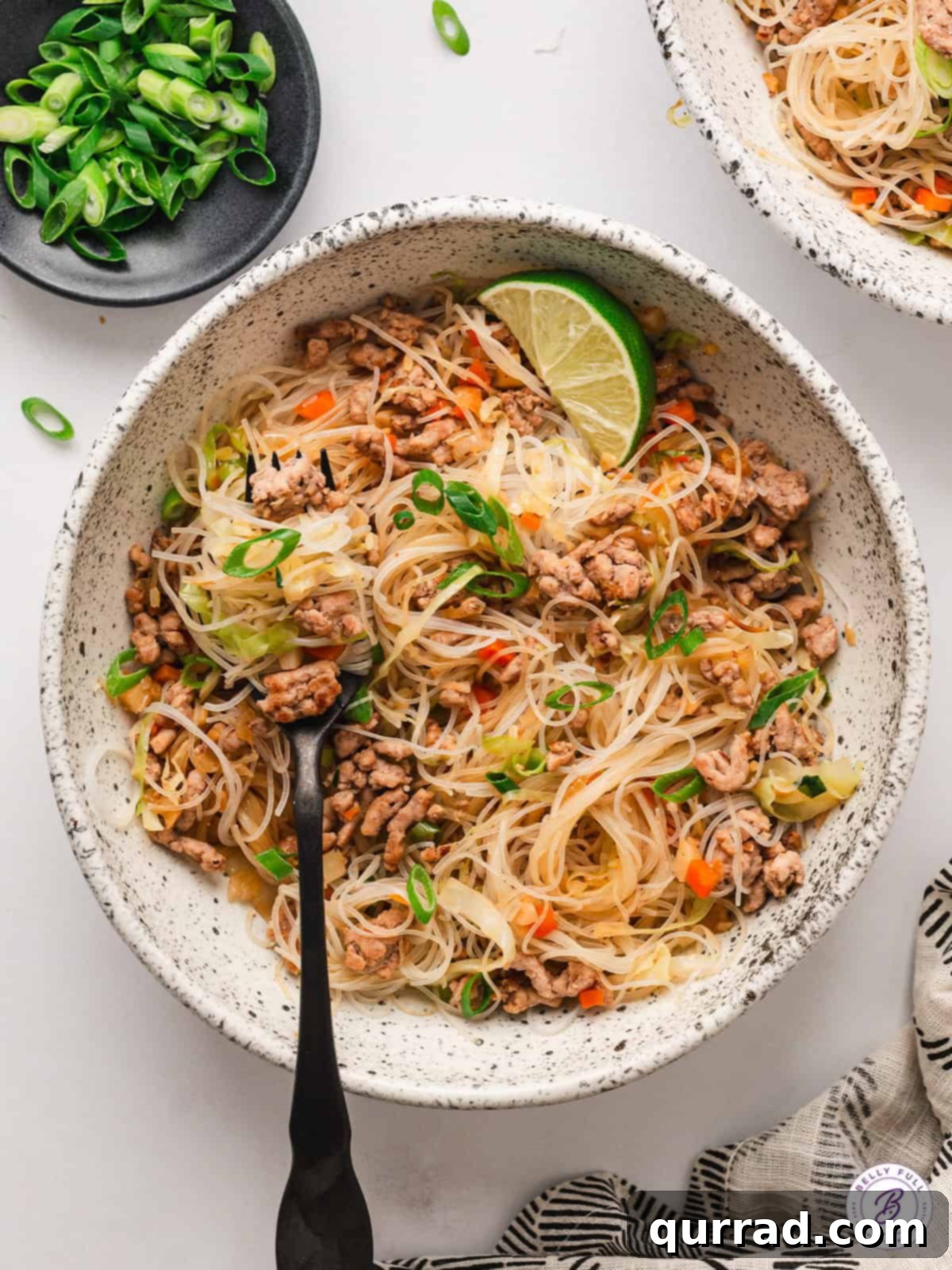
Authentic and Easy Filipino Pancit Recipe: Your Guide to a Flavorful Noodle Stir-Fry
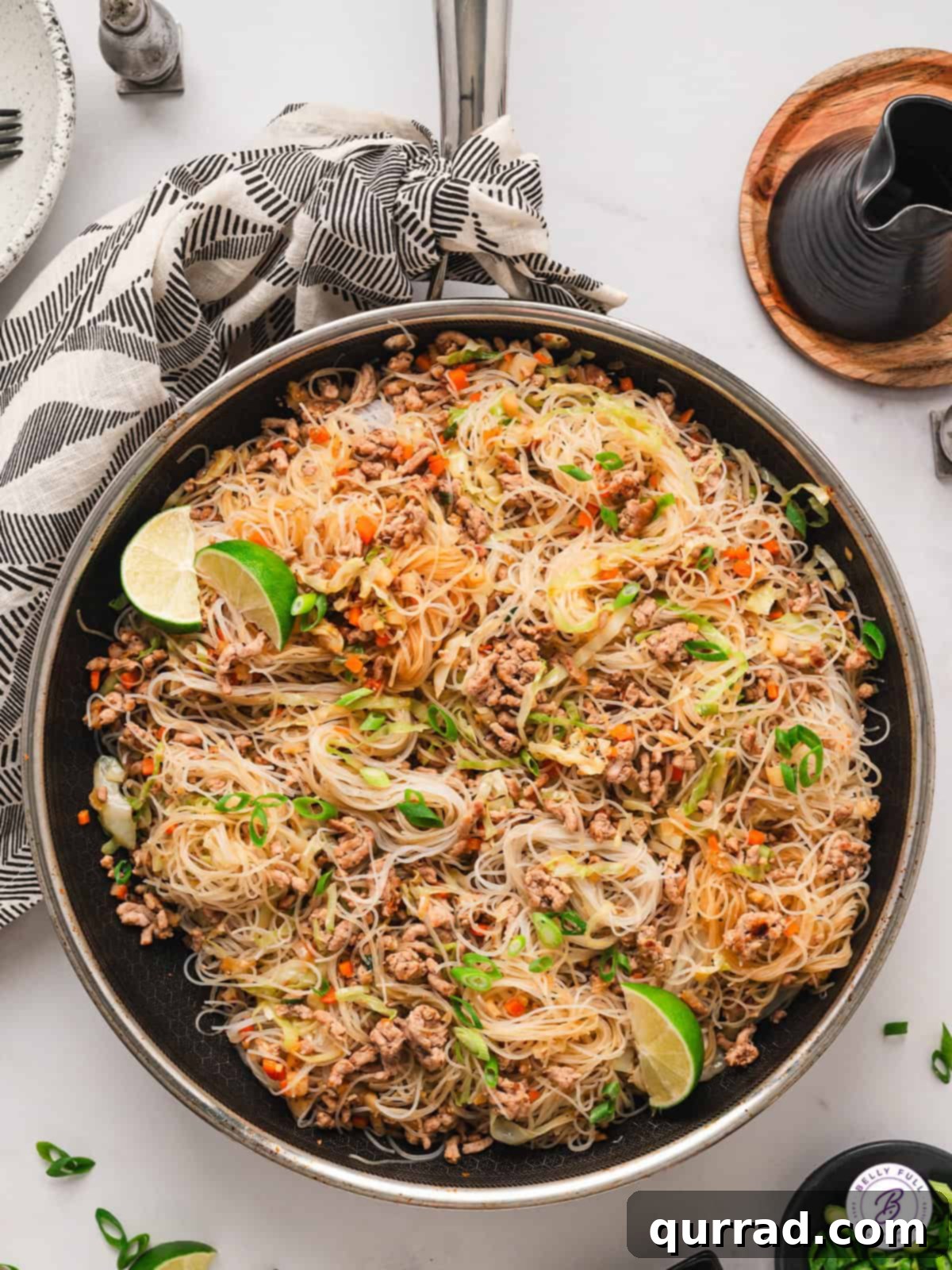
Discover the rich, savory flavors of the Philippines with this incredibly simple and satisfying Pancit recipe. Featuring tender ground pork, a vibrant mix of fresh vegetables, and delicate rice noodles all harmonized by an umami-packed sauce, this dish is a true celebration of Filipino cuisine. Perfect for busy weeknights, special gatherings, or whenever you crave a hearty, all-in-one meal, our easy Filipino Pancit promises a delicious experience that’s both quick to prepare and budget-friendly. Get ready to stir up a taste of tradition!
5 STAR REVIEW
“This is simple quick and delicious!” – Sarah
Easy Filipino Pancit Recipe: A Culinary Journey to the Philippines
Pancit is more than just a noodle dish in the Philippines; it’s a culinary staple steeped in history and cultural significance. Derived from the Hokkien word “pian i sit,” meaning “something conveniently cooked,” Pancit reflects the Chinese influence on Filipino cuisine. Over centuries, it has evolved into a diverse category of noodle stir-fries, each region and family boasting its unique rendition. While you’ll encounter numerous varieties like Pancit Canton, Pancit Malabon, and Pancit Palabok across the archipelago, this particular Filipino Pancit recipe, often referred to as Pancit Bihon, focuses on delicate rice noodles, savory ground pork, and an assortment of fresh, crisp vegetables coated in a rich, umami sauce.
Our journey to perfecting this Filipino Pancit recipe began through the generous sharing of our Filipino friends, who introduced us to its comforting embrace. It quickly became a beloved dish in our home, cherished for its vibrant flavors and ease of preparation. This recipe represents our favorite version, but we’ve included plenty of ideas for customization so you can make it your own. If you’re a fan of other Asian noodle delights such as Chow Mein or Lo Mein, prepare to fall in love with Pancit.
Beyond its incredible taste, Pancit holds a special place in Filipino culture. It’s traditionally served on birthdays, symbolizing a wish for a long and prosperous life. This simple yet profound tradition adds an extra layer of warmth and meaning to every serving, making it not just a meal, but a celebration.
Why You’ll Love This Easy Pancit Recipe
- Effortlessly Delicious: This recipe delivers authentic Filipino flavors without requiring complex techniques or hard-to-find ingredients. It’s designed for home cooks of all skill levels.
- Quick Weeknight Solution: With a prep time of just 10 minutes and a cook time of 20 minutes, you can have a wholesome, homemade meal on the table in under 30 minutes.
- All-in-One Meal: Packed with protein, carbohydrates, and a generous serving of vegetables, Pancit is a complete meal in itself, eliminating the need for additional side dishes.
- Customizable for Everyone: Whether you prefer chicken, shrimp, or a vegetarian option, this recipe is incredibly adaptable. You can easily swap proteins and vegetables to suit your taste and what you have on hand.
- Budget-Friendly: Made with common ingredients like ground pork, rice noodles, and affordable vegetables, this dish offers maximum flavor without breaking the bank.
- Comfort Food Appeal: The savory, aromatic sauce combined with tender noodles and crisp vegetables creates a truly comforting and satisfying dish that appeals to both adults and children.
Filipino Pancit
10 minutes
20 minutes
30 minutes
6
people
Pin
Step-by-step photos can be seen below the recipe card.
Ingredients
- 8.8 oz. package dry Thai Vermicelli rice noodles, bihon or any rice noodle will work
- 2 tbsp vegetable oil
- 1 lb. ground pork
- 4 cloves garlic, minced
- 1 inch fresh ginger, peeled and minced
- 1 small onion, finely minced
- 1 medium carrot, finely minced
- 2 cups shredded green cabbage
- 1/3 cup finely minced water chestnuts
- 2 scallions, diced
- 1 tsp coarse salt
- 1 tsp ground black pepper
- 2 tbsp low-sodium soy sauce
- 1 tbsp oyster sauce
Instructions
-
Prepare/soak noodles according to package directions. For rice vermicelli, this often involves soaking in hot water for a few minutes until tender, then draining.
-
Heat the vegetable oil in a large nonstick skillet or wok over medium-high heat until shimmering. Add the ground pork and spread it out evenly. Cook undisturbed for 1 minute to achieve a golden char, then break it up into tiny crumbles. Continue cooking until no pink remains, about 5-7 minutes. Once cooked, drain off any excess grease to keep the dish from being oily.
-
Add the minced garlic and fresh ginger to the skillet with the cooked pork. Sauté for about 20-30 seconds, stirring constantly, until they become fragrant and lightly golden. Be careful not to burn the garlic.
-
Stir in the finely minced onion, carrots, shredded green cabbage, finely minced water chestnuts, and diced scallions. Sauté these vegetables for approximately 3 to 5 minutes, or until they are tender-crisp. You want them cooked through but still retaining a slight bite.
-
Season the mixture with coarse salt and ground black pepper. Then, stir in the low-sodium soy sauce and oyster sauce, ensuring they are evenly distributed and coat all the ingredients.
-
Add the prepared and drained noodles to the skillet with the pork and vegetable mixture. Using tongs, toss everything gently to combine, allowing the noodles to absorb the delicious sauce and integrate with the other ingredients.
-
Taste the Pancit and adjust the seasoning if desired. You might want to add a splash more soy sauce for saltiness, or a squeeze of fresh calamansi or lime juice for brightness. Serve immediately and enjoy!
Video
A video demonstration of this Filipino Pancit recipe is available to guide you through each step for perfect results.
Notes and Customization Tips
- Explore other proteins: While ground pork is traditional and delicious, feel free to experiment with other protein sources. Ground turkey or thinly sliced pork chops cut into 1-inch pieces are excellent alternatives. You can also use diced chicken breast or thighs, tender beef strips, or even succulent shrimp for a seafood twist. Remember to adjust cooking times accordingly to ensure your chosen protein is cooked through.
- Add more vegetables: Pancit is wonderfully versatile when it comes to vegetables. Enhance the color, texture, and nutritional value by adding other quick-cooking options. Consider incorporating baby corn, crisp snap peas, thinly sliced green beans, bell peppers, or even mushrooms. For an extra pop of green, stir in some spinach or bok choy in the last minute of cooking.
- Spice it up: If you enjoy a bit of heat, a pinch of red pepper flakes or a drizzle of sriracha can be added with the soy and oyster sauce.
- Garnish for flair: A squeeze of fresh calamansi or lime juice just before serving adds a bright, tangy finish that truly elevates the flavors. Garnish with additional chopped scallions, a sprinkle of toasted sesame seeds, or even some fried garlic bits for extra crunch and aroma. Hard-boiled egg slices are also a common and delightful topping in Filipino cuisine.
Nutrition Information (per serving)
Carbohydrates: 42g |
Protein: 16g |
Fat: 21g |
Saturated Fat: 7g |
Polyunsaturated Fat: 4g |
Monounsaturated Fat: 8g |
Trans Fat: 0.03g |
Cholesterol: 54mg |
Sodium: 794mg |
Potassium: 392mg |
Fiber: 3g |
Sugar: 3g |
Vitamin A: 1769IU |
Vitamin C: 12mg |
Calcium: 43mg |
Iron: 1mg
Nutritional information provided is an automatic calculation and may vary based on the exact products you use and any changes made to the recipe. If precise numbers are crucial for your dietary needs, we recommend calculating them independently using your specific ingredients.
While we can’t offer an interactive form here, we encourage you to visit our main site to subscribe and receive more delicious recipes directly.
Did you make this? Leave a rating below!
How To Make Filipino Pancit: Step-by-Step Instructions
Creating this flavorful Filipino Pancit is a straightforward process. Follow these detailed steps to achieve perfect results every time:
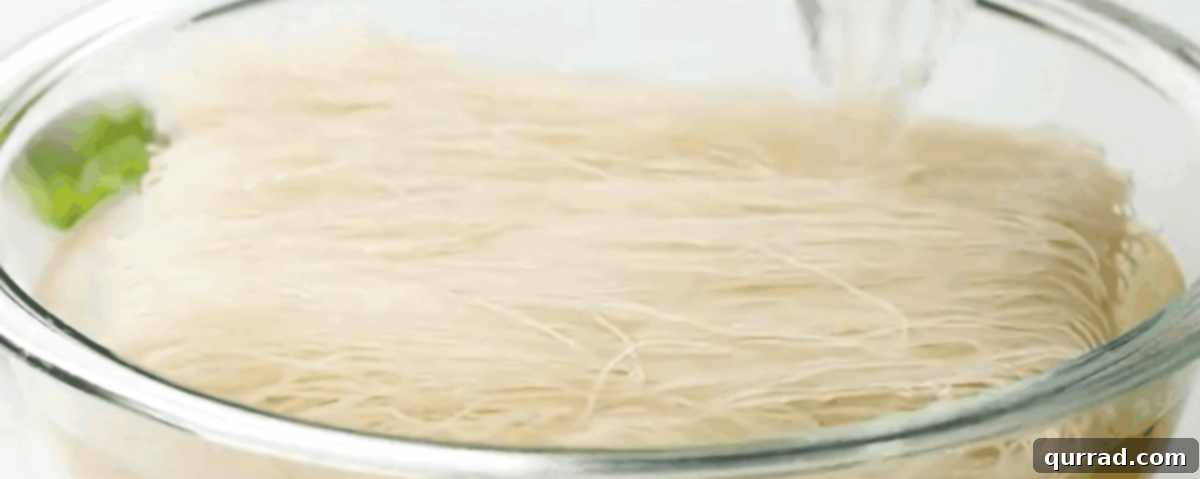
1. Prepare the Noodles: Begin by preparing one 8.8 oz. package of dry Thai Vermicelli rice noodles (bihon is ideal, but any fine rice noodle will work) according to the package directions. Most varieties require soaking in hot water for about 5-10 minutes until they become tender and pliable, but not mushy. Drain them thoroughly and set aside.
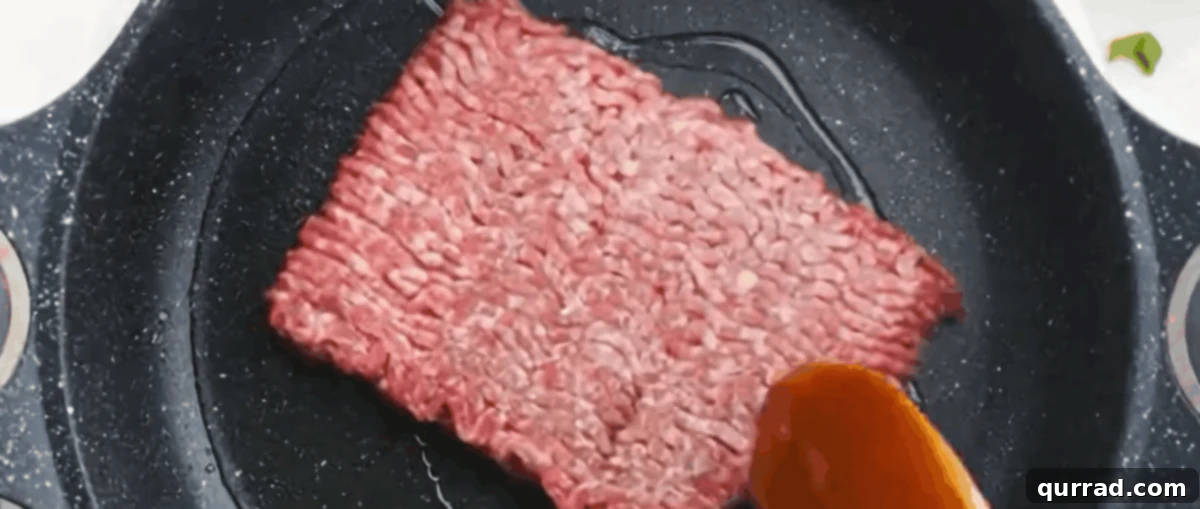
2. Cook the Pork & Aromatics: Heat 2 tablespoons of vegetable oil in a large nonstick skillet or wok over medium-high heat. Add 1 lb. of ground pork, spreading it evenly across the pan. Allow it to cook undisturbed for about 1 minute to develop a nice golden char on one side, which adds depth of flavor. Then, break the pork into tiny crumbles and continue cooking until it’s completely browned and no pink remains, usually about 5-7 minutes. Once cooked, tilt the pan and carefully drain off any excess grease to prevent the dish from becoming oily. Next, add 4 cloves of minced garlic and 1 inch of peeled and minced fresh ginger to the skillet. Sauté for about 20-30 seconds, stirring constantly, until the aromatics are fragrant and lightly golden. Be mindful not to burn the garlic, as it can turn bitter.
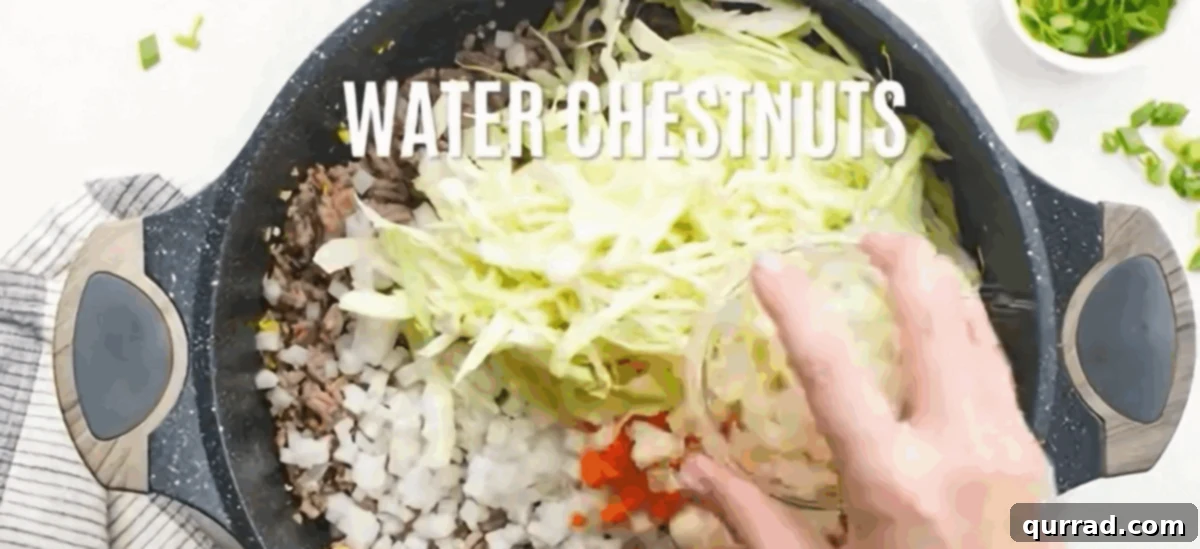
3. Sauté the Vegetables: Stir in 1 small finely minced onion, 1 medium finely minced carrot, 2 cups of shredded green cabbage, 1/3 cup of finely minced water chestnuts, and 2 diced scallions (white and light green parts). Continue to sauté these vegetables for approximately 3 to 5 minutes, or until they are tender-crisp. You want them cooked through but still retaining a pleasant crunch, adding wonderful texture to the Pancit.
4. Season and Combine Noodles: Season the vegetable and pork mixture with 1 teaspoon of coarse salt and 1 teaspoon of ground black pepper. Pour in 2 tablespoons of low-sodium soy sauce and 1 tablespoon of oyster sauce. Stir well to ensure all the ingredients are evenly coated with the savory sauce. Finally, add the prepared and drained rice noodles to the skillet. Using tongs, gently toss everything together until the noodles are thoroughly mixed with the pork, vegetables, and sauce. The goal is for every strand of noodle to be infused with the delicious flavors.
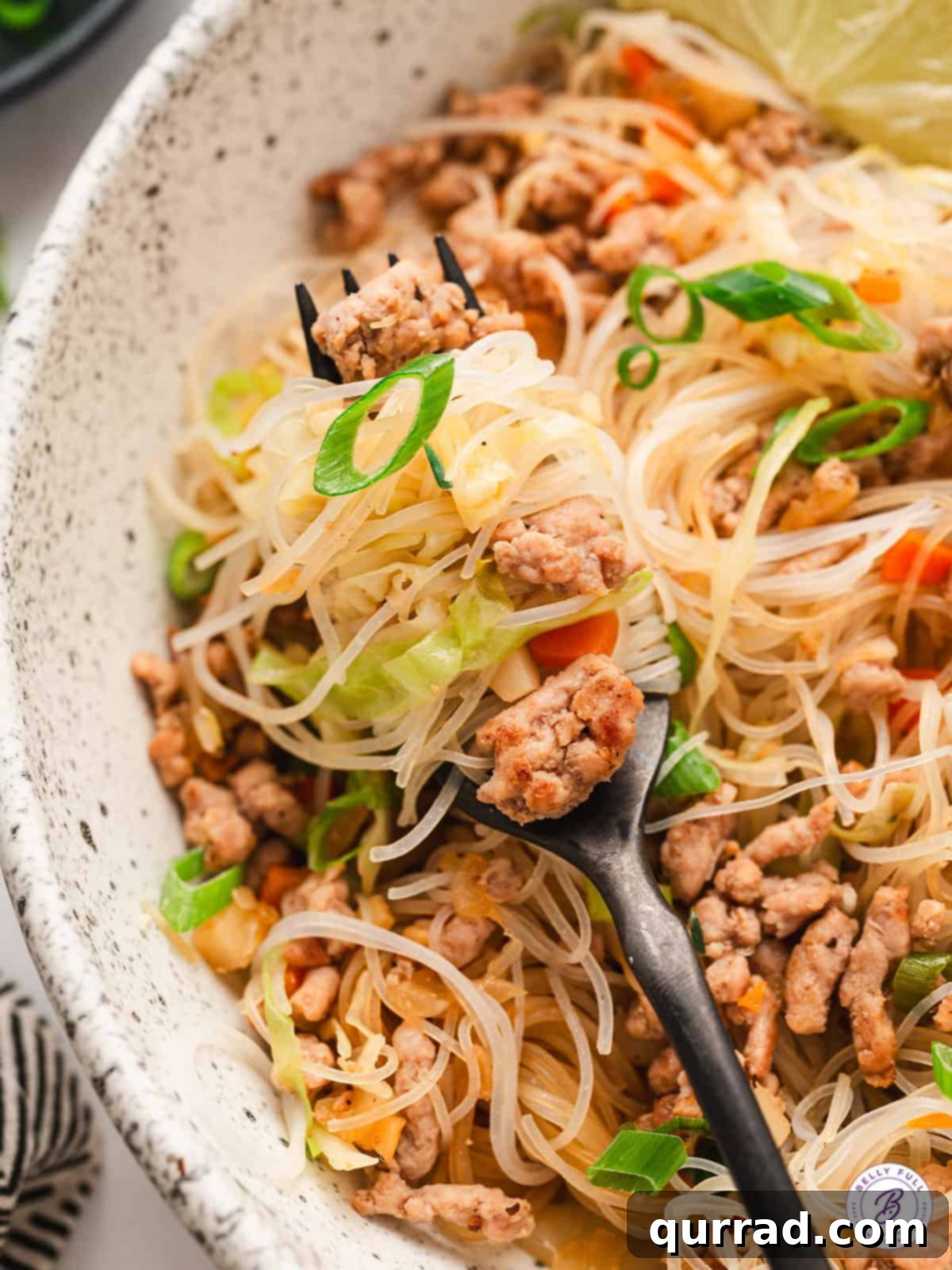
5. Taste and Enjoy: Take a small taste of the Pancit and adjust the seasoning as desired. You might want to add a bit more soy sauce for an extra savory kick, or a dash of black pepper for warmth. A squeeze of fresh calamansi or lime juice can also brighten the flavors beautifully. Serve your homemade Filipino Pancit immediately, perhaps garnished with extra scallions or a wedge of lime, and savor every delicious bite!
Tips for Perfect Pancit
- Noodle Prep is Key: Don’t overcook your rice noodles when soaking. They should be tender but still have a slight al dente bite, as they will cook further in the skillet. Overcooked noodles will become mushy and clumpy.
- High Heat for Flavor: Ensure your skillet or wok is hot enough when browning the pork and sautéing vegetables. High heat helps create that delicious caramelized crust on the pork and keeps the vegetables crisp-tender, preventing them from becoming soggy.
- Don’t Crowd the Pan: If you’re doubling the recipe or using a smaller skillet, cook the pork in batches to ensure even browning. Crowding the pan can steam the ingredients instead of sautéing them, affecting texture and flavor.
- Balance the Sauce: The sauce is the heart of Pancit. Taste as you go and adjust the soy sauce and oyster sauce to your preference. Remember that different brands can vary in saltiness.
- Fresh Aromatics Make a Difference: Freshly minced garlic and ginger provide the best flavor. Avoid using powdered versions for this dish if possible.
How to Store Leftover Pancit
Storing leftover Pancit properly ensures you can enjoy its deliciousness for days. Transfer any cooled leftover Pancit into an airtight container and refrigerate it promptly. It will maintain its quality for 3-4 days in the fridge. It’s important to note that the rice noodles will continue to absorb the sauce as they sit, which might make them a bit softer and the dish slightly less saucy than when freshly made.
While Pancit reheats well, we generally do not recommend freezing this dish. The delicate rice noodles can become brittle or mushy upon thawing and reheating, significantly affecting the texture. For the best experience, enjoy it fresh or as refrigerated leftovers.
To reheat leftovers, you can either use a microwave or the stovetop. In the microwave, heat in short intervals, stirring occasionally, until warmed through. On the stovetop, place the Pancit in a skillet over medium heat, adding a touch of chicken broth or water to loosen the noodles and rehydrate the sauce, if necessary. Stir frequently until thoroughly heated. This method helps restore some of its original texture and moisture.
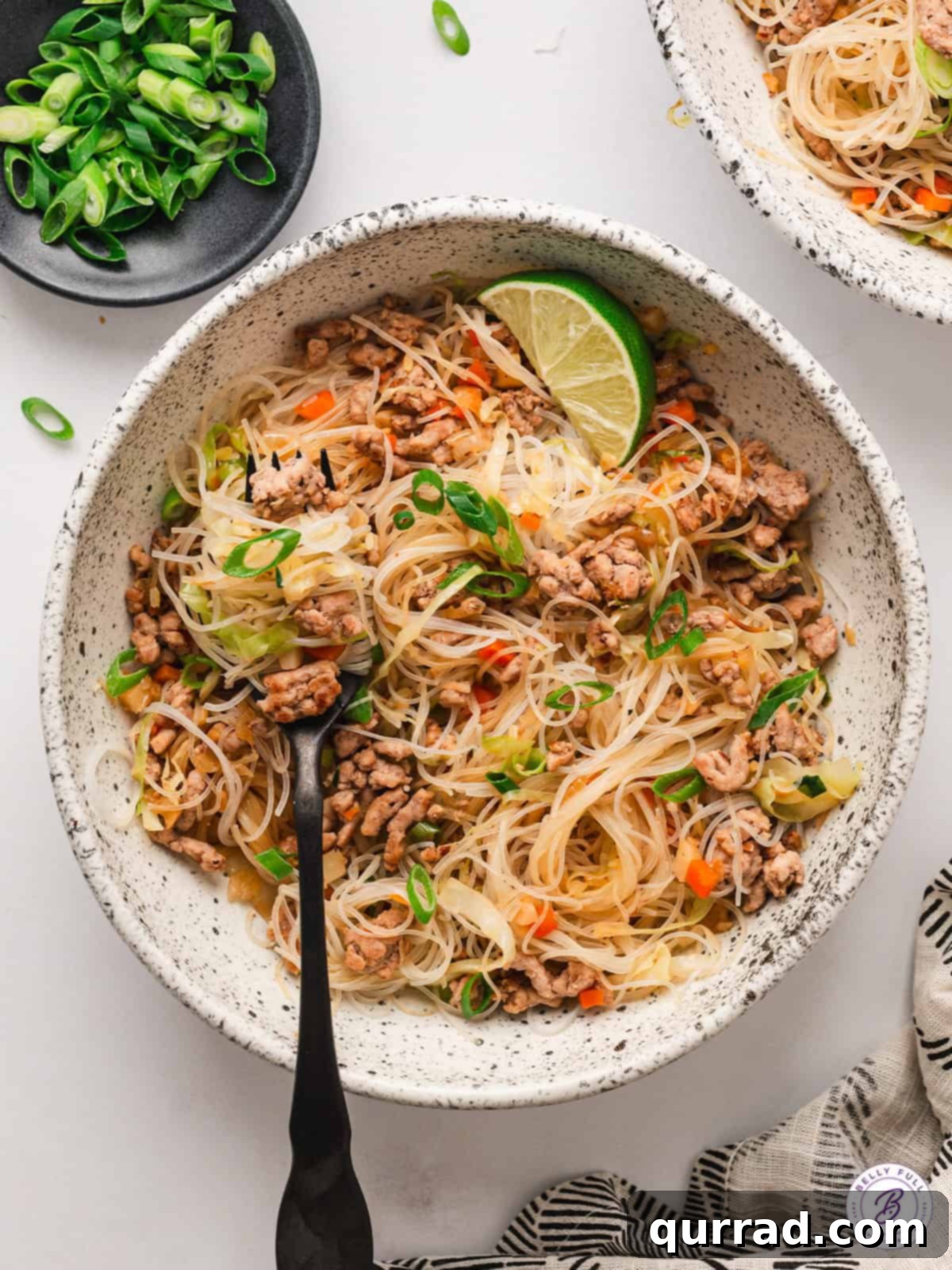
Serving Suggestions for Filipino Pancit
This flavorful Filipino Pancit recipe truly stands alone as a complete and satisfying meal. With its harmonious blend of protein from the ground pork, essential carbohydrates from the rice noodles, and a colorful array of nutritious vegetables, there’s absolutely no need for additional side dishes. It’s incredibly filling and perfectly balanced on its own.
However, if you’re looking to create a more elaborate Filipino feast or simply can’t resist adding more deliciousness to your table, Pancit pairs wonderfully with a few traditional accompaniments:
- Lumpia: The quintessential pairing! Crispy Lumpia (Filipino spring rolls), whether filled with savory pork or vegetables, offer a delightful crunch and complement the soft noodles perfectly.
- Fresh Calamansi or Lime: A squeeze of fresh calamansi (a small Filipino citrus fruit) or lime juice over your Pancit just before eating adds a bright, zesty tang that cuts through the richness and truly enhances the overall flavor profile.
- Fried Garlic: For an extra layer of savory crunch and aroma, sprinkle some homemade or store-bought fried garlic bits on top.
- Hard-Boiled Eggs: Slices of hard-boiled eggs are a classic topping, adding a creamy texture and extra protein.
- For Dessert: If you’re extending your Filipino culinary journey, finish your meal with a sweet treat like Filipino Turon (banana spring rolls), a delightful combination of sweet plantains wrapped in a crispy wrapper.
Frequently Asked Questions About Filipino Pancit
What kind of noodles are best for Pancit?
This recipe specifically calls for Thai Vermicelli rice noodles, also known as “bihon.” These thin, delicate rice noodles are commonly used in Pancit Bihon and absorb flavors beautifully. Other rice noodles will also work, but bihon provides the traditional texture.
Can I make Filipino Pancit vegetarian or vegan?
Absolutely! To make it vegetarian, omit the ground pork and oyster sauce. You can substitute the pork with extra firm tofu, pressed and crumbled, or a mix of mushrooms. For a vegan version, ensure your soy sauce is vegan-friendly (most are) and replace oyster sauce with a vegetarian oyster sauce or a dash of mushroom-based umami seasoning.
What’s the difference between Pancit Bihon and Pancit Canton?
The main difference lies in the type of noodles used. Pancit Bihon, like this recipe, uses thin rice vermicelli noodles. Pancit Canton, on the other hand, uses thicker, egg-based wheat noodles, similar to Chinese lo mein or chow mein noodles. Both are delicious but offer distinct textures and slightly different flavor profiles due to their noodle bases.
How can I make my Pancit spicier?
To add a kick, you can incorporate a pinch of red pepper flakes or a small amount of minced bird’s eye chilies (siling labuyo) along with the garlic and ginger. Alternatively, serve with a side of sriracha or a chili garlic sauce for individual customization.
Can I use different vegetables than what’s listed?
Yes, Pancit is very forgiving when it comes to vegetables. Feel free to use what you have on hand or what’s in season. Great additions include bell peppers (red, green, or yellow), snap peas, green beans, bok choy, spinach, and celery. Just ensure they are cut into similar sizes for even cooking.
More Asian-Inspired Recipes To Try
- Easy Cashew Chicken
- Gochujang Pasta
- Lumpia
- Sheet Pan Beef Bulgogi
- Korean Short Ribs
- Thai Drunken Noodles