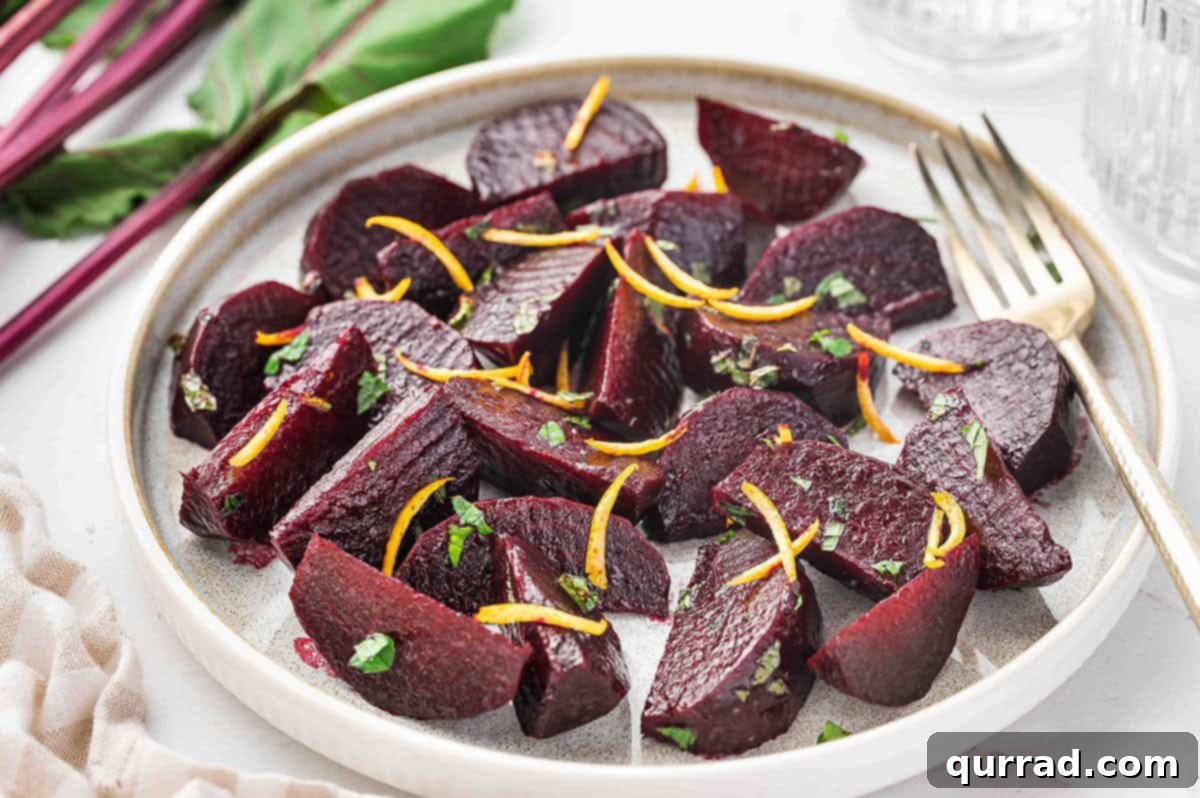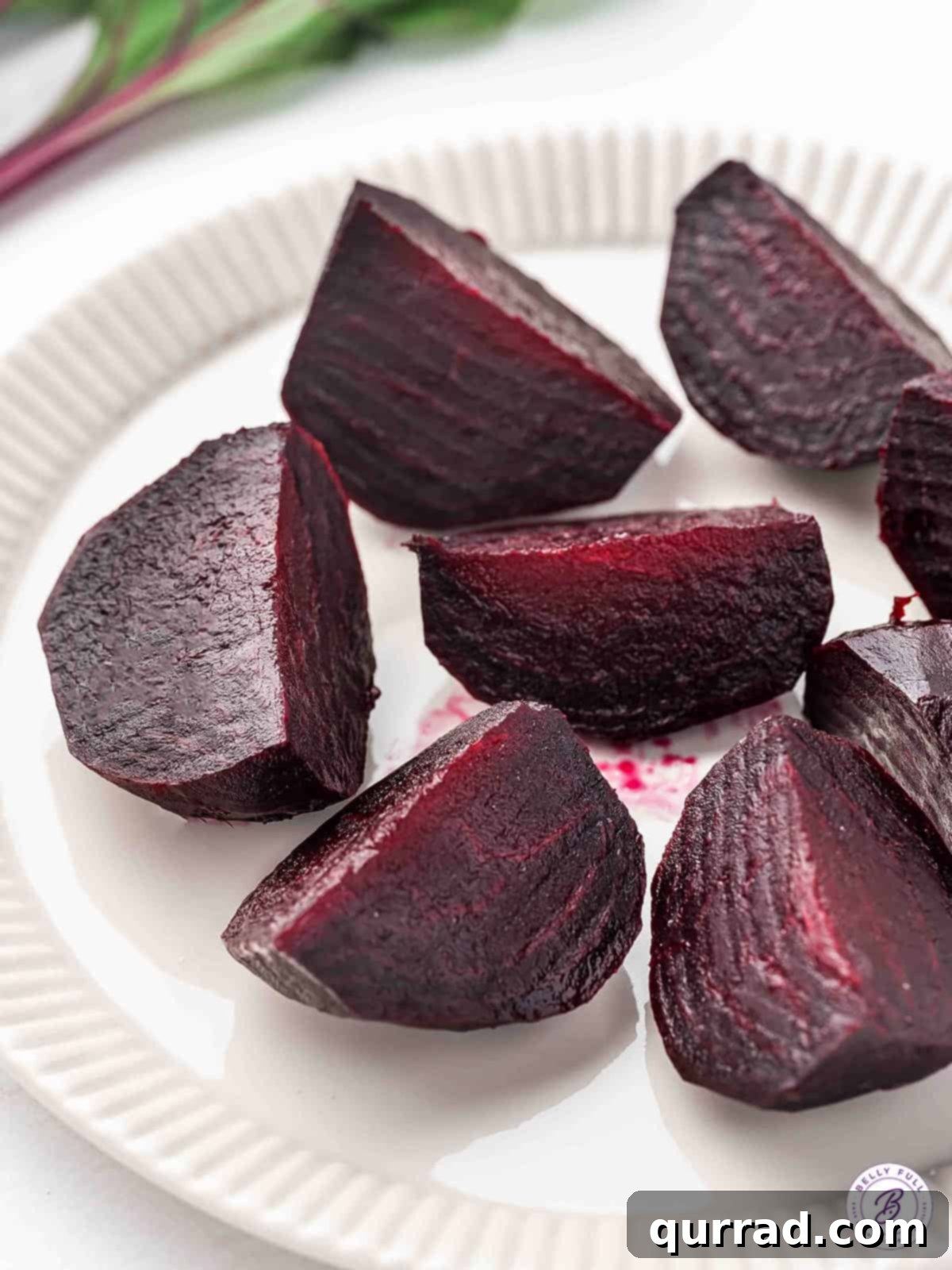
How to Roast Beets: Your Ultimate Guide to Sweet & Tender Perfection
Discover the incredibly simple yet profoundly rewarding method for oven-roasting beets. If you’ve ever wondered how to roast beets to perfection, you’re in the right place! This guide will walk you through achieving perfectly tender, intensely sweet, and beautifully vibrant beets every single time. Roasting is arguably the best way to prepare this versatile root vegetable, unlocking a depth of flavor that steaming or boiling simply can’t match. They’re ideal for tossing into salads, pickling for later enjoyment, or serving as a delightful glazed side dish. Mastering this technique will not only elevate your culinary repertoire with minimal effort but also introduce you to the true deliciousness of beets.
Rave Review: A 5-Star Experience!
Tarah shares her enthusiasm: “This method for roasting beets was super easy and they turned out absolutely delicious. I even put them to use in the pickled beets recipe from this site. I don’t think I’ll ever buy canned or jarred beets again! This is truly the best way to roast beets.”
Unlocking the True Flavor of Beets: Beyond the “Dirt” Reputation
I understand that for many, beets are a hard sell. They often get a bad rap, with people describing their taste as earthy, or even “like dirt.” However, I firmly believe that this perception usually stems from improper cleaning and preparation. When cared for and cooked correctly, beets transform dramatically. Roasting them, in particular, is a game-changer. The intense heat of the oven caramelizes their natural sugars, mellowing any earthiness and concentrating their inherent sweetness into a rich, deep flavor that is both satisfying and incredibly delicious.
Beyond their surprisingly delightful taste, beets are an absolute powerhouse of nutrition. They are loaded with essential nutrients, making them a fantastic addition to any healthy diet. You’ll find them rich in potassium, vital for maintaining healthy blood pressure, and iron, crucial for energy and red blood cell formation. Additionally, beets are an excellent source of dietary fiber, supporting digestive health and helping you feel full and satisfied. All of these benefits come in a low-calorie package, making roasted beets a guilt-free pleasure you can enjoy often.
The Culinary Versatility of Oven-Roasted Beets
Once you’ve mastered the simple technique of roasting beets, a world of culinary possibilities opens up. Their tender texture and sweet flavor make them incredibly versatile. You could literally snack on vibrant refrigerator pickled beets every single day, or whip up a refreshing arugula beet salad for a light and healthy lunch. Another personal favorite, and a true crowd-pleaser, is my cucumber beet salad – a dish so compelling, it has successfully converted many a sworn beet hater! But the possibilities don’t stop there.
Roasted beets can be effortlessly incorporated into a myriad of dishes. Slice them thinly for elegant appetizers, cube them for hearty grain bowls, or mash them into savory dips and spreads. They can also be pureed into vibrant soups or even added to smoothies for a nutritional boost and beautiful color. Their natural sweetness also pairs wonderfully with tangy cheeses like goat cheese or feta, and their robust flavor stands up well to herbs like thyme or rosemary. Discover how easy it is to make perfect roasted beets and transform your meals.
Essential Tips for Roasting Beets Like a Pro
Achieving perfectly tender and sweet roasted beets is incredibly straightforward once you’re armed with a few key tricks. These expert tips will ensure your beets are flavorful, easy to prepare, and impress anyone who tries them, helping you avoid common pitfalls and maximize their natural goodness.
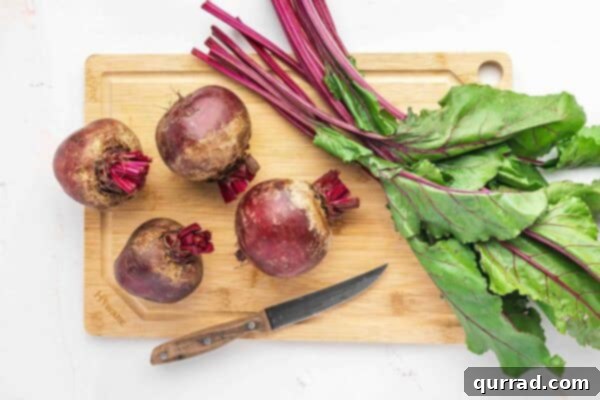
- What to Look for When Buying Beets: The foundation of a delicious dish starts with quality ingredients. When selecting beets, choose ones that are firm and heavy for their size, with smooth, unblemished skin. Avoid any that feel soft, spongy, or show signs of wrinkling or decay. If the greens are still attached, they should look fresh and vibrant, indicating a recently harvested beet.
- Scrub Them Clean First: Beets grow deep in the soil, so they inevitably come with a layer of dirt. It is absolutely crucial to wash and scrub them exceptionally well under cold running water before they go into the oven. Using a vegetable brush can help remove all traces of soil, which is often responsible for the “earthy” taste some people find off-putting.
- Don’t Toss the Greens – Use Them!: The leafy tops of beets are not just ornamental; they are incredibly nutritious and delicious! Instead of discarding them, treat them like you would spinach, kale, or your favorite leafy green. They can be sautéed with garlic, added to soups, stir-fries, or even blended into pestos for a boost of flavor and nutrients.
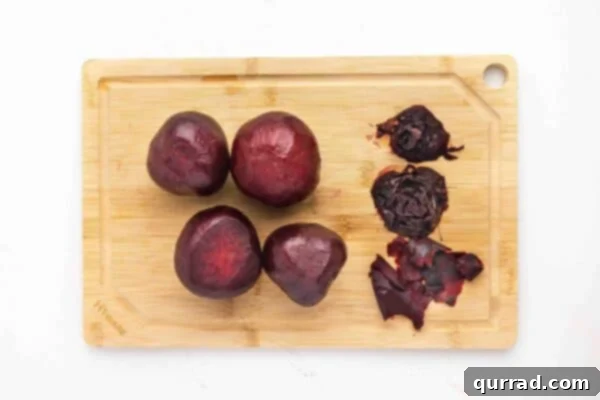
- No Need to Peel Before Roasting: This is one of the best time-saving tips for roasting beets. You do not need to peel them before cooking! Roasting the beets with their skins on helps to lock in moisture and flavor. Once they are done cooking and have cooled slightly, their skins will have softened significantly and can basically just rub off with little effort, especially if you use food-prep gloves or a paper towel to handle them. This saves time and minimizes staining.
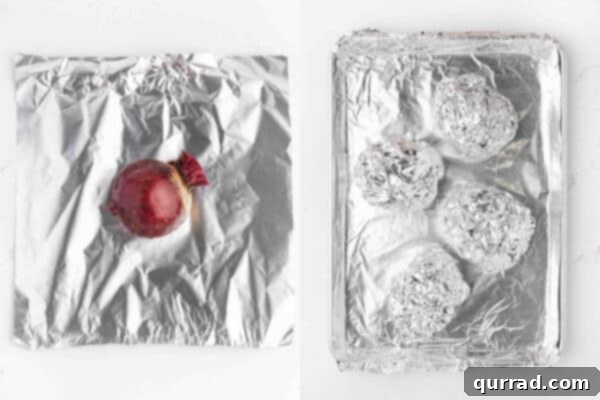
- Roast Them Whole in Foil: For consistent tenderness and concentrated flavor, it’s best to roast beets whole. Their dense composition means that cutting them into smaller pieces before roasting can sometimes lead to them drying out or cooking unevenly. Wrapping each beet loosely in aluminum foil creates a mini-steaming environment, which helps them cook through gently, retain moisture, and intensifies their natural sweetness.
- Flexible Oven Temperature: Beets are remarkably forgiving when it comes to roasting temperatures. While 400°F (200°C) is generally recommended for optimal caramelization and tenderness, you can certainly roast them alone or in conjunction with other items you might be cooking (like a roast, chicken, or casseroles) at slightly higher or lower temperatures (e.g., 375°F to 425°F). Just remember to adjust your cooking time accordingly – lower temperatures will require a longer roasting period, while higher temperatures will shorten it.
- Size Affects Time, Not Method: It truly doesn’t matter what size your beets are – whether small, medium, or large – the roasting method remains the same. The only variable that changes is the cooking time. Smaller beets will be ready sooner, typically within 30-45 minutes, while larger ones might take up to 1.5 hours. Always test for doneness by piercing the center with a skewer or paring knife.
- Beware of Staining: The vibrant pigments that give beets their beautiful color are also notorious for staining. Cooked beets, especially during the peeling and slicing stages, love to stain your skin, cutting boards, and clothes. Having some food-prep gloves readily available is highly recommended. You might also want to use a dedicated cutting board or cover your regular one with parchment paper.
Perfect Oven Roasted Beets
5 mins
1 hr
1 hr 5 mins
4
Pin
Oven-roasted beets have a tender texture and sweet, rich flavor. Roasting beets is super easy to do and a great addition to so many recipes, from salads to side dishes.
Ingredients
-
4
medium
beets - (Optional: a drizzle of olive oil, a pinch of salt, and freshly ground black pepper for enhanced flavor before wrapping)
Instructions
-
Preheat Oven and Prepare Baking Sheet: Preheat your oven to 400 degrees F (200°C) with the oven rack positioned in the middle. Line a rimmed baking sheet with aluminum foil. This will make cleanup incredibly easy and prevent any beet juices from staining your pan.
-
Clean the Beets: If the beets still have their leafy tops, carefully cut off most of the greens, leaving about an inch of stem for easy gripping. (Remember, you can save and cook the greens!). Wash and scrub the beets thoroughly under cold running water using a vegetable brush to remove all dirt. Pat them dry with a clean towel.

-
Wrap Individually: Take each cleaned beet and wrap it loosely but completely in its own piece of aluminum foil. There’s no need to peel or dry them further at this stage. If desired, you can add a small drizzle of olive oil and a pinch of salt and pepper inside the foil before sealing for extra flavor. Place the individually wrapped beets onto your prepared baking sheet.
-
Roast Until Tender: Transfer the baking sheet with the wrapped beets to the preheated oven. Roast until you can easily slide a skewer or a small paring knife to the center of the beet without any significant resistance. For medium-sized beets, this typically takes about 1 hour. If your beets are on the smaller side, start checking for tenderness after 30-40 minutes. Larger beets may take up to 1.5 hours. It’s important not to over-roast, as this can cause them to dry out.
-
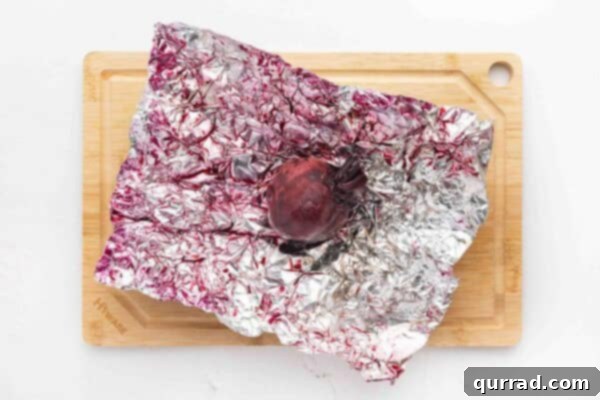
Cool and Peel: Once roasted, remove the beets from the oven. Let them cool in their foil packets for about 15-20 minutes on the baking sheet. This steaming period helps to loosen the skins even further. Once cool enough to handle, carefully unwrap them. Trim off the remaining stem and root ends. Using a paper towel or food-prep gloves (to avoid staining your hands), gently rub off the skins. They should slide off quite easily. If any parts are stubborn, a vegetable peeler can be used gently, but usually, it’s not needed.
-
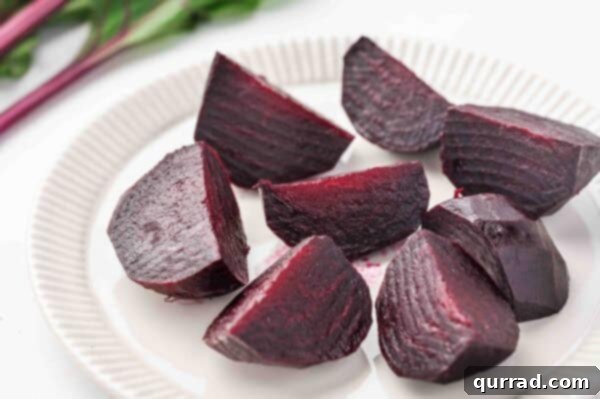
Quarter, Slice, or Dice: Your perfectly roasted beets are now ready for use! Quarter, slice, or dice them into your desired shape and size for whatever recipe you’re using them for. Enjoy them warm as a side dish, or chill them for use in salads and other cold preparations.
Video Tutorial: How to Roast Beets
Watch this quick video to see a step-by-step demonstration of just how easy it is to roast beets perfectly for tender, sweet perfection:
Video: Learn the simple steps to perfectly roast beets every time.
Nutrition Information
Calories: 73kcal |
Carbohydrates: 16g |
Protein: 3g |
Fat: 1g |
Saturated Fat: 1g |
Sodium: 133mg |
Potassium: 553mg |
Fiber: 5g |
Sugar: 11g |
Vitamin A: 56IU |
Vitamin C: 8mg |
Calcium: 27mg |
1mg
Nutritional information provided is an automatic calculation and can vary based on the exact products you use and any changes you make to the recipe. If these numbers are very important to you, I would recommend calculating them yourself.
Did you make this recipe? We’d love to hear about it! Leave a rating and comment below to share your experience!
How to Store Roasted Beets and Enjoy Them Later
Proper storage is key to extending the life of your delicious oven-roasted beets, ensuring they remain fresh and ready for your next culinary creation. Once your beets are roasted, cooled, and peeled, they are incredibly versatile for both short-term and long-term storage.
Refrigeration:
For immediate use or short-term storage, you can keep your roasted beets whole, sliced, or diced. Simply place them in an airtight container to prevent them from drying out or absorbing other odors in the refrigerator. Stored this way, they will remain fresh and flavorful for up to 1 week. This makes them perfect for meal prepping, allowing you to quickly add them to salads, grain bowls, or as a vibrant side dish throughout the week.
Freezing:
Roasted beets also freeze exceptionally well, which is fantastic for preserving their sweet flavor for several months. To freeze them, first decide on your preferred cut: quarter, slice, or dice them. For best results and to prevent them from sticking together in a large clump, spread the beet pieces in a single layer on a baking sheet and freeze until solid (this typically takes 1-2 hours). Once frozen, transfer the individual beet pieces to freezer-safe storage bags or containers. Be sure to remove as much air as possible before sealing to prevent freezer burn. When you’re ready to use them, you can thaw them overnight in the refrigerator or add them directly to cooked dishes like soups or stews.
Serving Suggestions: Beyond the Basic Side Dish
While oven-roasted beets are delightful on their own as a simple side, their rich flavor and tender texture make them an incredibly versatile ingredient. Here are a few creative ways to incorporate them into your meals:
- Salad Star: Add sliced or cubed roasted beets to any green salad. They pair beautifully with goat cheese, walnuts, arugula, and a balsamic vinaigrette.
- Vibrant Hummus: Blend roasted beets with chickpeas, tahini, lemon juice, and garlic for a stunningly colorful and flavorful beet hummus.
- Grain Bowls: Toss them into warm or cold grain bowls with quinoa, farro, roasted vegetables, and a protein source for a wholesome and satisfying meal.
- Warm Side Dish: Serve them simply seasoned with a drizzle of olive oil, fresh herbs (like dill or parsley), and a squeeze of lemon juice.
- Sweet & Savory Glaze: Reheat with a maple-balsamic glaze for an elegant side.
- Soup & Stew Enhancer: Add diced roasted beets to vegetable soups or stews for added depth of flavor, color, and nutrition.
- Appetizers: Cube and serve on skewers with feta cheese and mint, or blend into a dip for crackers and crudités.
More Irresistible Beet Recipes to Explore
Once you’ve mastered the art of roasting beets and fallen in love with their natural sweetness, you’ll undoubtedly want to explore even more ways to incorporate this vibrant and nutritious vegetable into your diet. Here are some of our other favorite beet-centric recipes that are sure to delight your taste buds and add a splash of color to your table:
- Homemade Pickled Beets: Tangy, sweet, and perfectly preserved – a timeless classic that’s much better than store-bought.
- Vibrant Beet Hummus: A stunning, healthy dip that’s as delicious as it is beautiful, perfect for entertaining or a healthy snack.
- Maple Glazed Roasted Beets with Orange: A delightful sweet and savory side dish that truly elevates any meal, offering a sophisticated flavor profile.
- Creamy Pasta with Beet and Thyme Sauce: An unexpected and incredibly flavorful pasta dish that offers a unique twist on traditional sauces.
- Quick Air Fryer Beets: For those times when you need perfectly tender and slightly crispy beets in less time than traditional oven roasting.
- Crispy Baked Beet Chips: A healthy, crunchy, and addictive snack alternative to potato chips, perfect for satisfying cravings.
Frequently Asked Questions About Roasting Beets
- Do I need to peel beets before roasting?
- No, it’s generally not necessary and often recommended to roast them with the skin on. The skin helps to retain moisture and flavor, and it becomes very soft after roasting, making it incredibly easy to rub off once the beets have cooled slightly.
- How do I prevent beets from staining everything?
- Beet juice is notorious for its staining power! The best way to prevent staining is to wear food-prep gloves when handling cooked and peeled beets. You can also use a dedicated cutting board, or line your regular cutting board with parchment paper or aluminum foil when slicing and dicing.
- My roasted beets still taste earthy. What went wrong?
- An earthy taste is often due to insufficient cleaning. Ensure you thoroughly scrub the beets under cold running water before roasting to remove all dirt. Roasting them whole in foil also helps to concentrate their natural sweetness and mellow out any inherent earthiness. A touch of acid, like a squeeze of lemon juice or a drizzle of balsamic vinegar after roasting, can also beautifully balance and brighten their flavor.
- Can I roast different sized beets together?
- Yes, you can, but be mindful of the cooking times. Smaller beets will cook faster than larger ones. It’s a good practice to group similar-sized beets together on your baking sheet, or simply check the smaller ones for doneness earlier and remove them from the oven while the larger ones continue to roast until tender.
- What’s the best way to serve roasted beets?
- Roasted beets are incredibly versatile! They are fantastic in a variety of dishes. Serve them warm as a simple side dish seasoned with salt, pepper, and fresh herbs. Add them to green salads or grain bowls (warm or cold). Puree them into dips, spreads, or vibrant soups. Their natural sweetness also pairs wonderfully with tangy ingredients like goat cheese, balsamic glaze, or citrus dressings. The possibilities are truly endless!
We hope you adore this delicious and straightforward recipe for oven-roasted beets! Don’t forget to leave us a review below and share your thoughts and experiences. For more culinary inspiration, recipes, and cooking tips, be sure to follow Belly Full on TikTok, Instagram, Facebook, Pinterest, and YouTube to stay updated with our latest culinary adventures!