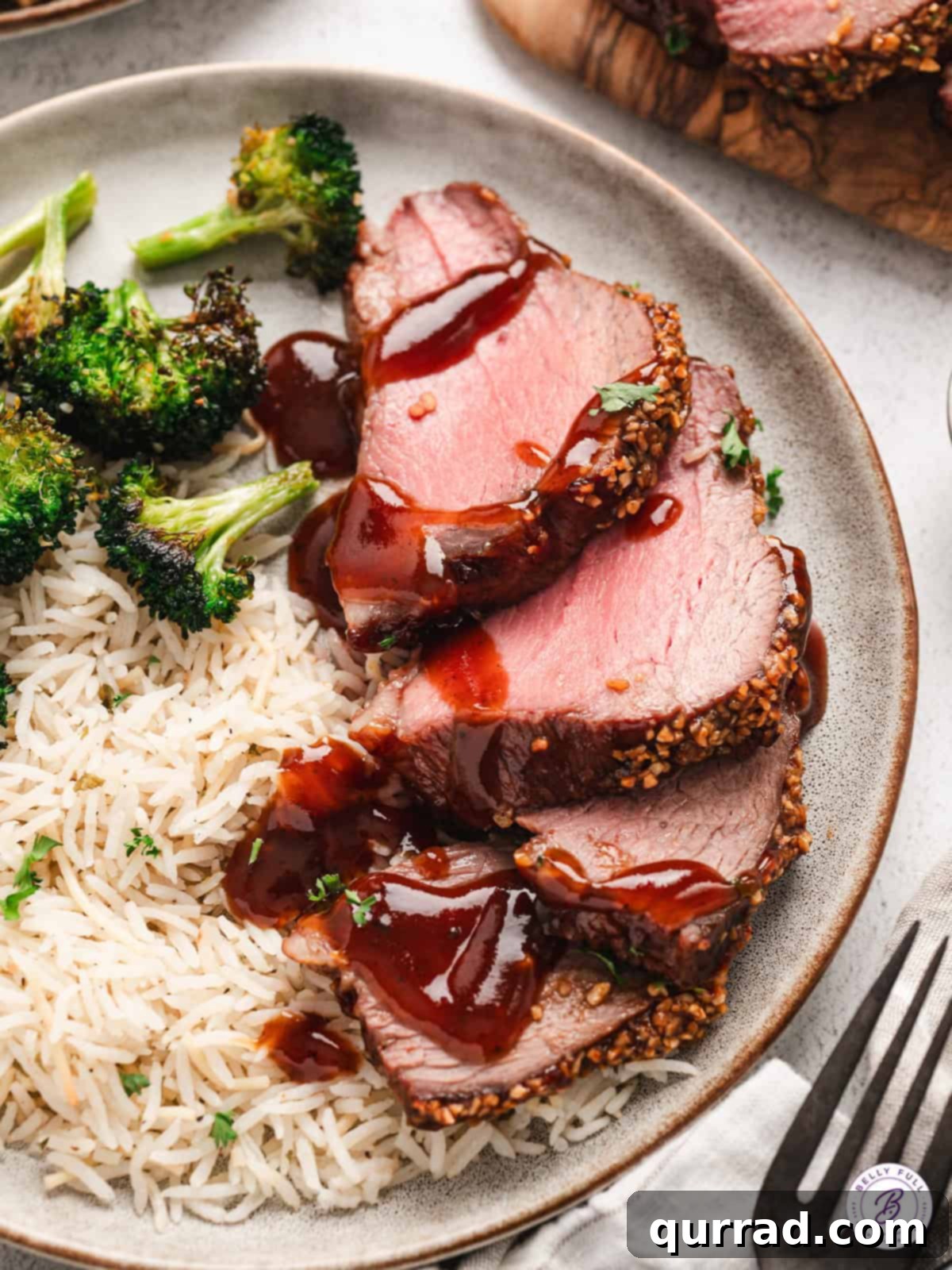
Prepare to be amazed by this Teriyaki-Barbecue Roasted Tri-Tip, a dish that effortlessly combines a sweet and tangy glaze with an irresistible burst of garlic. With just four simple ingredients and a mere five minutes of prep time, you’ll achieve a remarkably tender and juicy roast that will have everyone asking for seconds. This recipe is a testament to how incredible a simple meal can be!
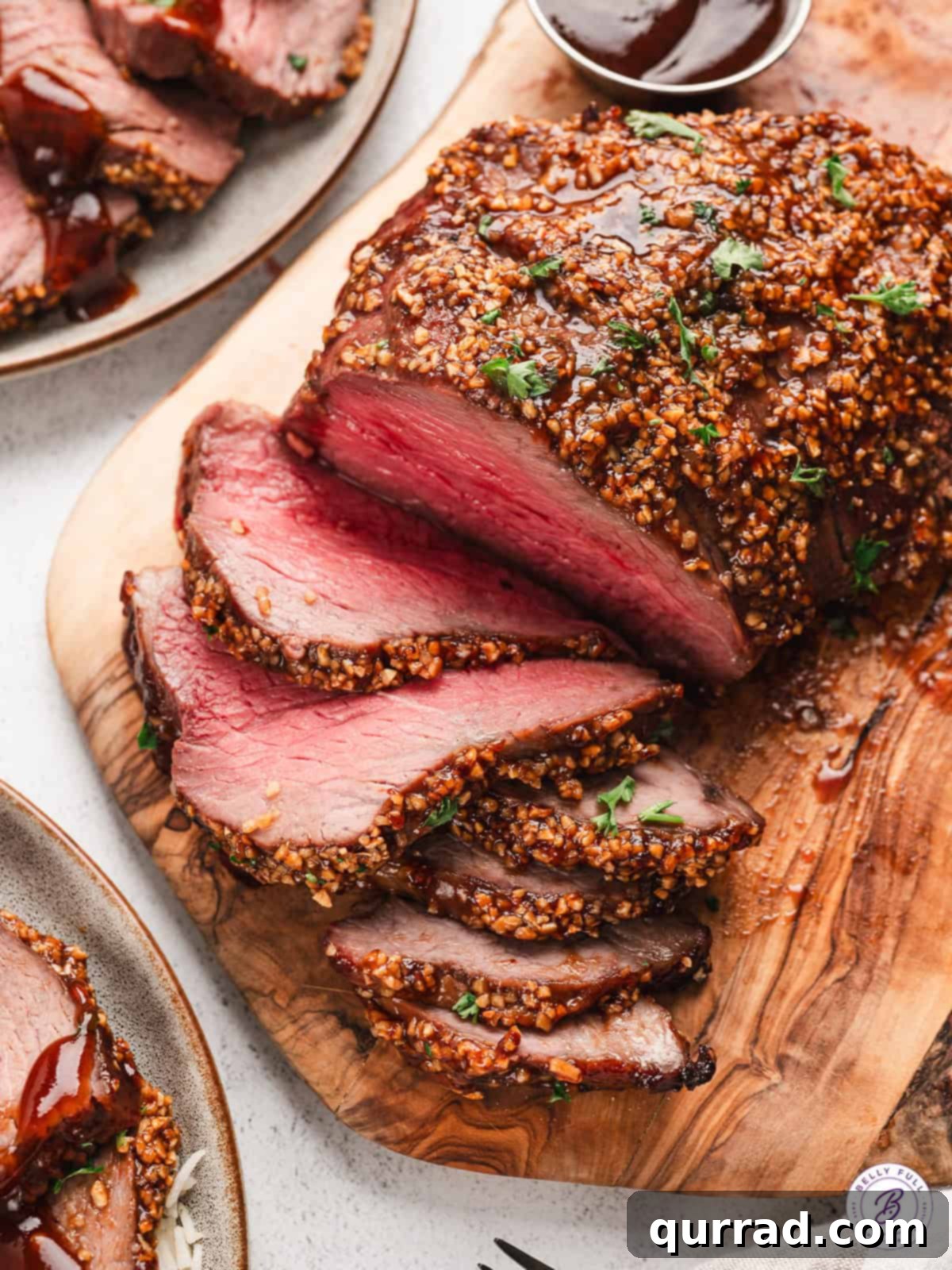
This cherished roasted tri-tip recipe holds a special place in my heart, passed down from my mother and perfected over 50 years. Like other beloved childhood meals, such as her cranberry chicken, Chinese spare ribs, rice pilaf, and marble squares, it was a rare treat. However, its irresistible flavor and minimal effort have made it a frequent request in my own home, a testament to its enduring appeal and incredible deliciousness. This is truly a recipe that transcends generations, bringing joy to every table it graces.
The beauty of this tri-tip recipe lies in its elegant simplicity: a mere two-ingredient sweet and tangy glaze, complemented by a generous layer of aromatic dried garlic. Despite its straightforward nature, the resulting flavor profile is nothing short of phenomenal. I often jest that if faced with the choice of a last meal on earth, this succulent tri-tip, accompanied by a fluffy rice pilaf and perfectly roasted broccoli, would undoubtedly be my pick. It’s a meal that promises pure satisfaction and leaves a lasting, happy memory.
Achieving Tri-Tip Perfection: Essential Tips for Success
Mastering a perfectly roasted tri-tip is easier than you think when you follow these crucial tips. From prep to plate, these techniques ensure maximum flavor and tenderness every time.
- Bring to Room Temperature Before Cooking: For even cooking, allow your raw tri-tip steak to rest at room temperature for at least 30 minutes before it goes into the oven. This crucial step helps the meat cook more uniformly from edge to center, preventing tough, overcooked exteriors and raw interiors.
- Roast with Precision Using a Thermometer: The key to your desired doneness is an instant-read meat thermometer. Insert it into the thickest part of the roast, away from any bone or fat, to accurately monitor the internal temperature. Relying on visual cues alone can be misleading, so trust your thermometer for consistent results. (Refer to our detailed guide below for specific cooking times and temperatures.)
- Rest and Slice Against the Grain for Tenderness: Once cooked, let the tri-tip rest for 5 to 10 minutes before slicing. This allows the juices to redistribute throughout the meat, resulting in a more tender and flavorful bite. More importantly, always slice against the grain. Tri-tip is unique in that it has TWO distinct grain directions, which typically intersect near the point of its triangular shape. Identify both and adjust your slicing direction for each portion to ensure ultimate tenderness.
- Don’t Skimp on the Dried Garlic: The generous layer of dried garlic flakes across the top of the roast is not merely an optional garnish; it’s a cornerstone of this recipe’s flavor. This ingredient transforms into a savory, slightly crispy crust during roasting, infusing every bite with rich, aromatic garlic goodness. Do not be shy with the quantity – ensure the entire surface is well-coated!
Teriyaki Barbecue Roasted Tri-Tip
Prep Time: 5 mins
Cook Time: 50 mins
Total Time: 55 mins
Yields: 6 servings
Pin Recipe |
Print Recipe
This remarkably tender and juicy Teriyaki Barbecue Roasted Tri-Tip is a culinary masterpiece, coated with a luscious sweet and tangy glaze and a generous layer of dried garlic. Prepare to be amazed by its incredible flavor and the sheer ease of its preparation – requiring only 4 ingredients and a mere 5 minutes of hands-on prep!
Ingredients
- 2 & 1/2 pound Tri-Tip steak
- 1 cup barbecue sauce, (such as Baby Ray’s for best results)
- 1/2 cup THICK Teriyaki sauce/marinade (ensure it’s a thick variety for a richer glaze)
- 2 tablespoons dried (dehydrated) garlic flakes, (or more to completely cover the roast)
Instructions
-
Preheat Your Oven: Start by preheating your oven to 375°F (190°C). This ensures the oven is at the correct temperature for even cooking once the tri-tip is placed inside.
-
Prepare the Tri-Tip: Inspect your tri-tip roast. If there’s an excessive amount of thick fat cap, trim some of it down, leaving a thin layer for flavor and moisture. Place the fattier side of the roast down on a rack set in a shallow roasting pan. This setup allows for air circulation and helps create a beautiful crust.
-
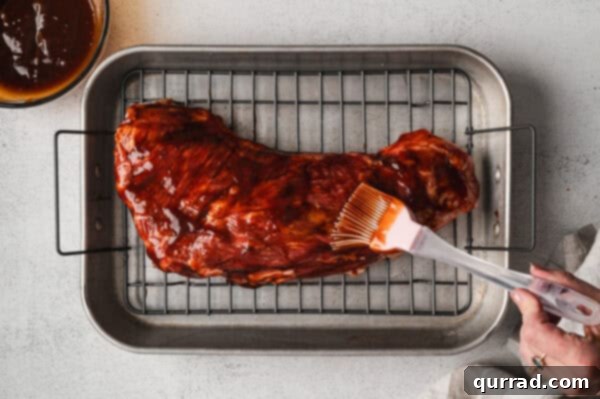
Craft the Signature Glaze: In a small bowl, thoroughly mix the barbecue sauce and the thick teriyaki sauce until well combined. This blend forms the sweet and savory foundation of our glaze. Reserve approximately 1/4 cup of this mixture for serving later. Use the remaining sauce to generously coat both sides of the tri-tip roast, ensuring an even layer of flavor. This initial coating will begin to caramelize as it bakes.

Applying the savory teriyaki-barbecue glaze to the tri-tip. -
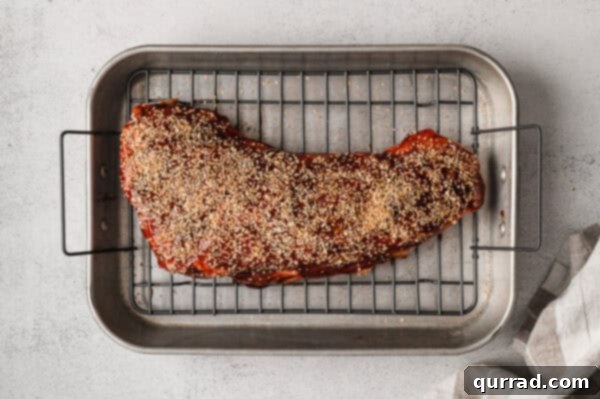
Garlic Crust Application: Abundantly sprinkle dried minced garlic flakes over the entire top surface of the roast. Press lightly to adhere the garlic. This step is critical as the garlic will form a delicious, aromatic crust during cooking, adding depth and texture to the finished dish.
The tri-tip generously coated with garlic flakes before roasting. -
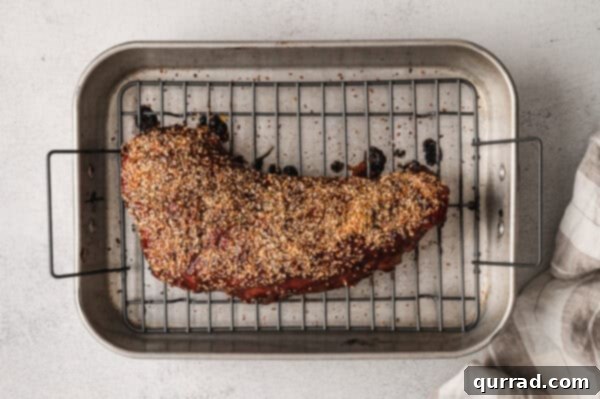
Roast to Perfection: Bake the tri-tip in the preheated oven for approximately 45–60 minutes. The exact cooking time will depend significantly on the weight and thickness of your roast, as well as your desired level of doneness. Use an instant-read meat thermometer inserted into the thickest part to achieve these internal temperatures:
- Rare: 120°F (49°C)
- Medium-Rare: 130°F (54°C) (This is my preferred doneness for maximum tenderness and juiciness.)
- Medium: 140°F (60°C)
Remember, the steak will continue to cook a few degrees as it rests.
The beautifully roasted tri-tip, showcasing its golden crust. -
Crucial Resting Period: Once your tri-tip reaches the desired internal temperature, remove it from the oven and transfer it to a cutting board. Tent it loosely with foil and let it rest for 5 to 10 minutes. This resting period is vital: it allows the muscle fibers to relax and the juices to redistribute evenly throughout the roast, ensuring a more tender and moist result. NOTE: Remember that steaks continue to cook an additional 5°F (2-3°C) after being removed from the heat during resting, so pull them slightly earlier than your target final temperature.
-
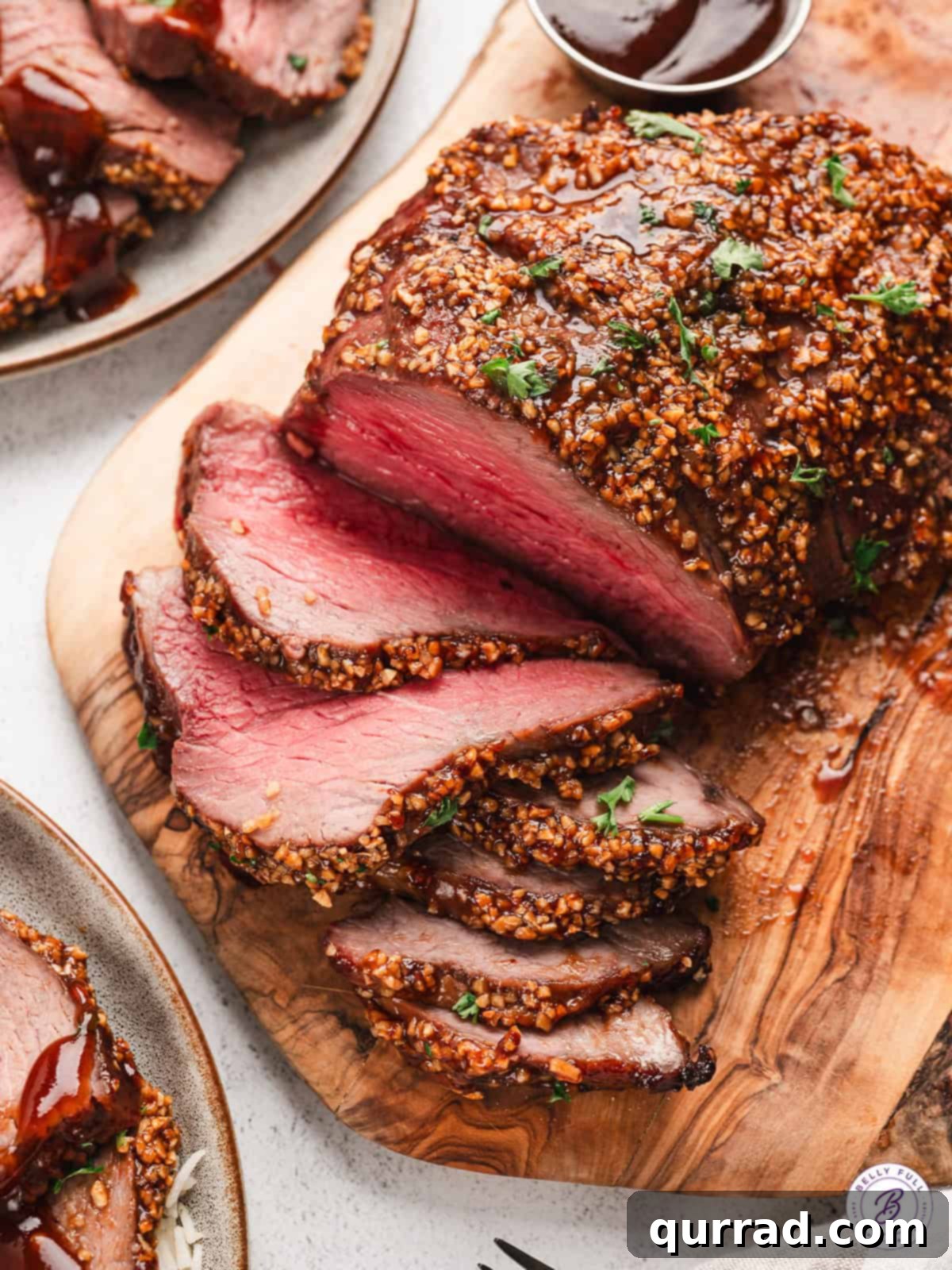
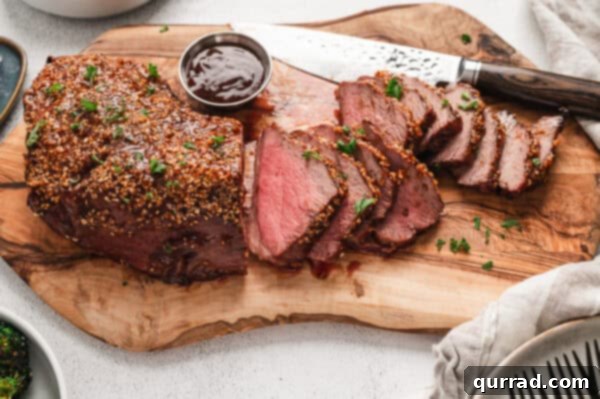
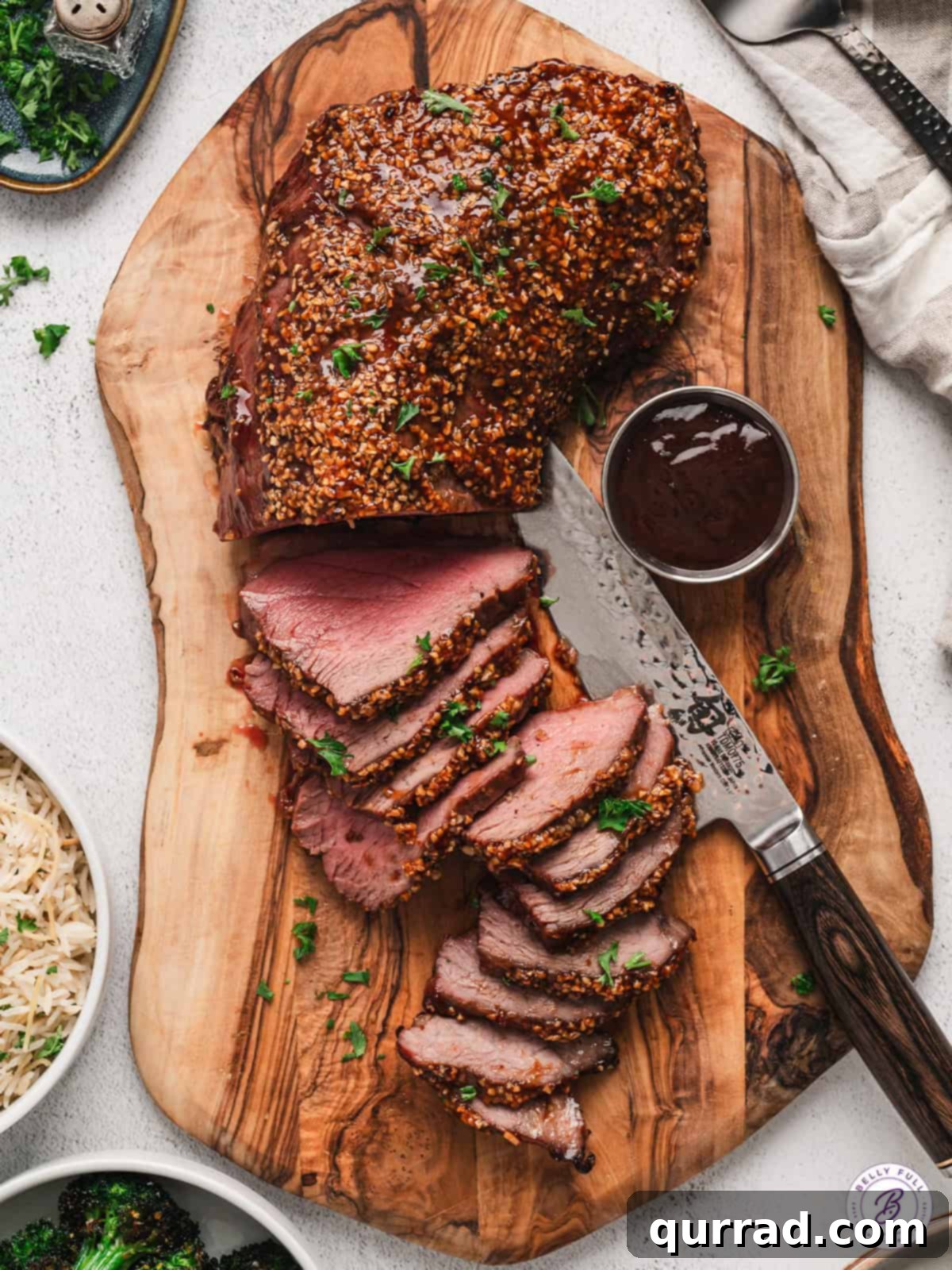
Expert Slicing: Slicing tri-tip correctly is paramount for tenderness. Because tri-tip has TWO distinct grain directions (which usually converge near the point of its triangular shape), you must identify them both. Slice each section of the roast against the grain (perpendicular to the muscle fibers). This shortens the fibers, making the meat incredibly tender and easy to chew. Incorrect slicing can make even perfectly cooked tri-tip tough.
Slicing the tri-tip against the grain for maximum tenderness. -
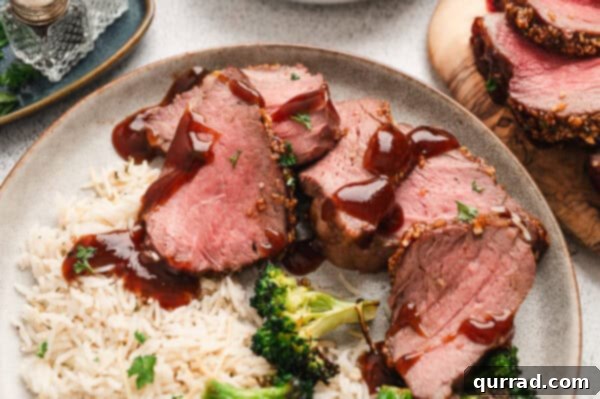
Serve and Enjoy: I always serve this magnificent tri-tip with some of the reserved glaze, alongside my favorite creamy rice pilaf and vibrant roasted broccoli for a complete and satisfying meal. Get ready for a delicious dining experience!
The final dish: tender tri-tip served with its complementary sides.
Nutrition Information (Approximate Per Serving)
- Calories: 404 kcal
- Carbohydrates: 24 g
- Protein: 41 g
- Fat: 15 g
- Saturated Fat: 5 g
- Cholesterol: 123 mg
- Sodium: 1510 mg
- Potassium: 787 mg
- Fiber: 1 g
- Sugar: 19 g
- Vitamin A: 107 IU
- Vitamin C: 1 mg
- Calcium: 67 mg
- Iron: 4 mg
Please note: Nutritional information is an automatic calculation and can vary based on the specific brands and products used, as well as any modifications made to the recipe. For precise values, it is recommended to calculate them independently.
Did you try this amazing recipe? We’d love to hear your feedback! Please leave a rating below and share your experience!
What Exactly is Tri-Tip Steak? A Deeper Dive
Often hailed by butchers and beef connoisseurs, Tri-Tip is a fascinating and increasingly popular cut of beef. It gets its name, “Triangle Tip” (or simply “Tri-Tip”), from its distinctive triangular shape. This cut originates from the very bottom of the bottom sirloin primal, nestled near the flank steak. What makes it particularly special is its excellent marbling—those fine streaks of fat woven throughout the muscle. This marbling melts during cooking, infusing the meat with incredible flavor and ensuring it remains beautifully juicy and tender, whether you choose to grill, smoke, or roast it in the oven. Historically, it’s a more economical option compared to pricier cuts like sirloin and tenderloin, offering premium taste without the premium price tag.
The tri-tip gained significant popularity in Santa Maria, California, where it became a cornerstone of the region’s famous barbecue tradition, earning it another name: Santa Maria steak. If you find yourself searching for it at your local grocery store and can’t spot it, don’t hesitate to ask your butcher. Most experienced butchers are familiar with this cut and can easily prepare it for you. While some adventurous cooks have experimented with substituting tri-tip with thick London broil or sirloin steak in other recipes, it’s worth noting that this specific Teriyaki Barbecue recipe has been perfected with tri-tip, and substitutions have not been personally tested for optimal results. Its unique shape and fat content contribute significantly to the dish’s signature texture and flavor.
Mastering Tri-Tip Doneness: Your Guide to Perfect Temperature
Tri-tip steaks typically range in weight from 2 ½ to 4 pounds, offering a substantial cut perfect for feeding a family or a small gathering. Achieving your desired level of doneness is crucial for enjoying tri-tip at its best, and a reliable instant-read meat thermometer is your indispensable tool. Here’s a guide to internal temperatures (measured in the thickest part of the roast) for various levels of doneness:
- Rare: 120°F (49°C) – Expect a cool red center, very tender and juicy.
- Medium-Rare: 130°F (54°C) – A warm red center, offering an ideal balance of tenderness and flavor, highly recommended for this recipe.
- Medium: 140°F (60°C) – A warm pink center, slightly firmer but still very palatable.
- Medium-Well: 150°F (66°C) – A slightly pink center.
- Well-Done: 160°F (71°C) – Very little to no pink, firm texture.
While the FDA recommends cooking beef to at least 145°F (63°C) for food safety, the final doneness is ultimately a personal preference. Many steak enthusiasts prefer medium-rare for optimal flavor and texture in cuts like tri-tip.
After reaching your target temperature, it is absolutely essential to remove the meat from the oven and allow it to rest, tented loosely with foil, for 5 to 10 minutes. This resting period is not merely a suggestion; it’s a critical step. During resting, the internal temperature of the steak will continue to rise by approximately 5°F (2-3°C) – a phenomenon known as carryover cooking. More importantly, it allows the muscle fibers to relax and the delicious juices to redistribute throughout the roast, preventing them from Gushing out when sliced and ensuring every bite is moist and flavorful. Therefore, always pull your tri-tip from the heat a little earlier than your desired final temperature to account for this carryover cooking.
The Art of Slicing Tri-Tip: Maximizing Tenderness
Correctly slicing tri-tip is arguably as important as cooking it to the right temperature. When you observe a raw or cooked steak closely, you’ll notice thin, long lines or fibers running in a particular direction through the meat. This is called the “grain.” For the most tender and enjoyable results, cooked tri-tip should always be sliced thinly against the grain—meaning perpendicular or crosswise to these muscle fibers. This technique effectively shortens the muscle fibers, making the meat much easier to chew and dramatically improving its tenderness.
Tri-tip presents a unique challenge because, unlike many other cuts, it possesses TWO distinct grain directions. These two grains typically intersect or change direction near the top, narrower point of its signature triangular shape. To ensure every piece is optimally tender, you must first identify both grain directions. Then, cut the tri-tip into two or more sections along where the grain changes. Finally, slice each individual section against its respective grain. Failing to slice against the grain can result in a chewy, less enjoyable experience, even if the steak was cooked to perfection.
Dried Garlic vs. Fresh Garlic: Why Dried is Best for This Recipe
When it comes to this Teriyaki Barbecue Roasted Tri-Tip, dried (dehydrated) garlic flakes are the secret ingredient, offering distinct advantages over fresh garlic. While fresh garlic is potent and pungent, dried garlic is more concentrated in flavor yet possesses a milder, less aggressive profile. Its low moisture content is key: it prevents the garlic from burning quickly during the long roasting time, allowing it to slowly infuse its flavor into the meat and develop a beautiful, aromatic crust.
Beyond flavor, dehydrated garlic flakes contribute a pleasant textural element to the dish when used as a topping, creating a slightly crispy exterior that enhances every bite. This ensures a consistent garlic flavor throughout the roast, a quality that can be harder to achieve with fresh minced garlic. Furthermore, the convenience factor is undeniable: no peeling, no chopping, and a significantly longer shelf life mean dried garlic is always ready when you are, making prep quick and hassle-free without compromising on flavor.
Complementary Pairings: What to Serve with Teriyaki BBQ Tri-Tip
This magnificent roasted tri-tip is the star of any meal, but pairing it with the right sides elevates the dining experience even further. I consistently find that our favorite creamy rice pilaf and vibrant roasted broccoli create the perfect harmony of flavors and textures, making for an unforgettable meal.
However, the versatility of this tri-tip means you have a plethora of options. Consider serving it with a different type of rice, such as jasmine or basmati, to complement the Asian-inspired glaze. A classic baked potato, or a quick and crispy air fryer baked potato, provides a comforting starch. For a more sophisticated touch, tender sautéed mushrooms or a fresh, crisp green side salad can wonderfully balance the richness of the beef. Don’t forget a good crusty bread to soak up any leftover juices and glaze!
Storage & Reheating: Keeping Your Tri-Tip Delicious
Ensuring your leftover tri-tip remains as delicious as the first serving requires proper storage and careful reheating techniques. Follow these guidelines to preserve its tenderness and flavor:
- Storing Leftovers: For optimal freshness and to prevent drying out, any leftover tri-tip steak should be ideally left whole (unsliced) if possible. Wrap it tightly in aluminum foil or place it in an airtight container immediately after cooling. Store the wrapped or contained steak in the refrigerator, where it will remain fresh for up to 3 days. Slicing only what you plan to eat for each meal helps maintain moisture in the remaining roast.
- Reheating for Best Results: While reheating cooked steak in the microwave is certainly an option for convenience, for truly best results that preserve tenderness and juiciness, a “low and slow” method in the oven is highly recommended.
- Preheat your oven to 250°F (120°C).
- Place the whole (or larger unsliced pieces) steak on an oven-safe rack set over a baking sheet. This ensures even heat circulation.
- Tent the steak loosely with aluminum foil to trap moisture and prevent the exterior from drying out.
- Reheat the meat for approximately 20-30 minutes, or until its internal temperature registers around 110-120°F (43-49°C) on a meat thermometer. The exact time will vary depending on the thickness of your steak. Avoid reheating it to a higher temperature to prevent overcooking and toughening the meat.
This gentle reheating method helps the steak warm through without losing its tender texture or drying out the precious juices.
I sincerely hope you enjoy creating and savoring this delicious and remarkably easy Teriyaki Barbecue Roasted Tri-Tip recipe. If you make it, please take a moment to leave a review below – your feedback is greatly appreciated! For more culinary inspiration and delightful recipes, be sure to follow Belly Full on TikTok, Instagram, Facebook, Pinterest, and YouTube!