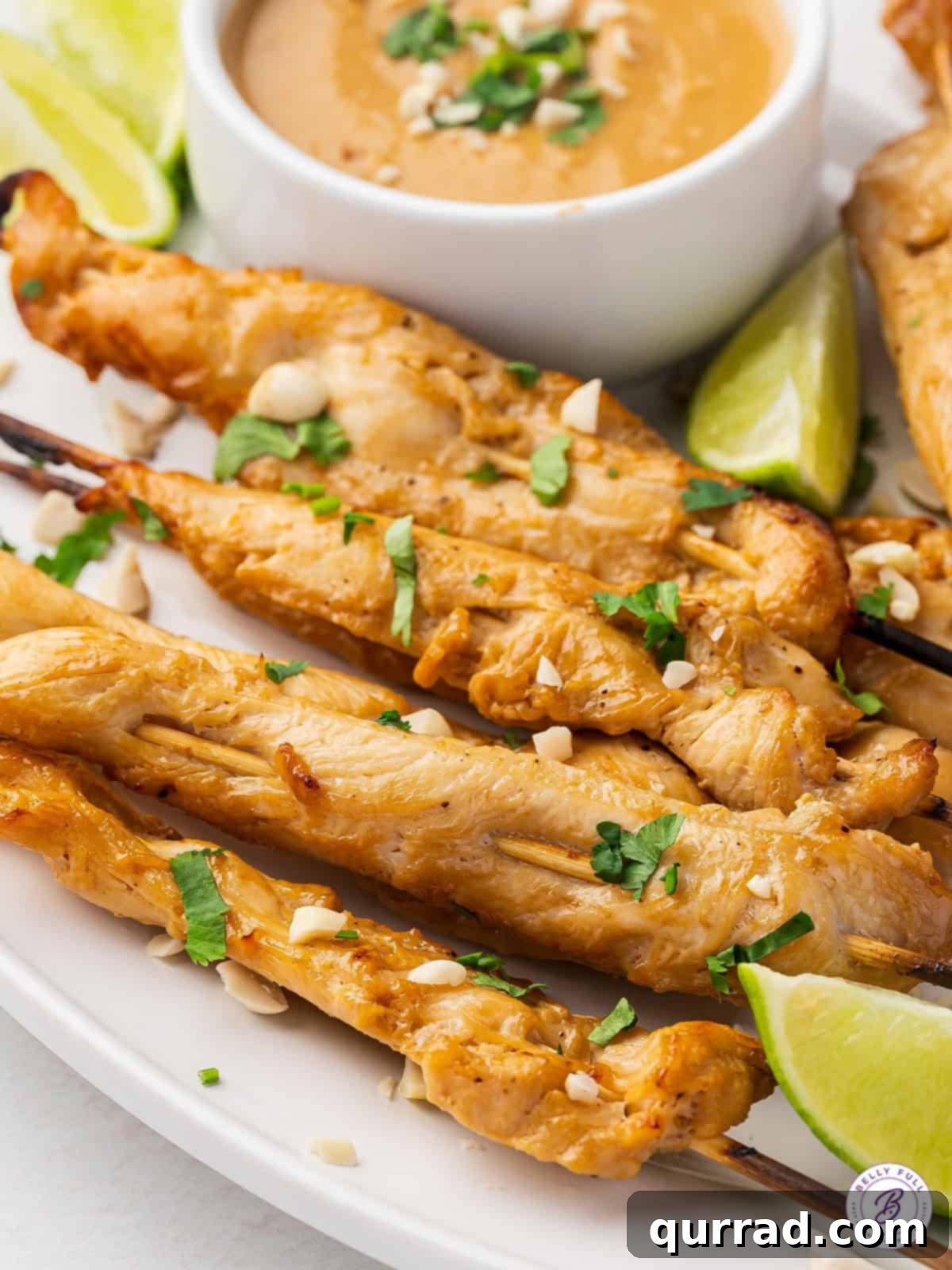
Transform your dinner table into a vibrant Thai culinary experience with this incredible Easy Chicken Satay recipe. Featuring succulent, marinated chicken pieces threaded onto skewers and broiled to a perfect golden char, this dish promises tender, juicy bites every time. Served alongside an irresistible, creamy peanut sauce, it’s a restaurant-quality meal you can effortlessly create in your own home.
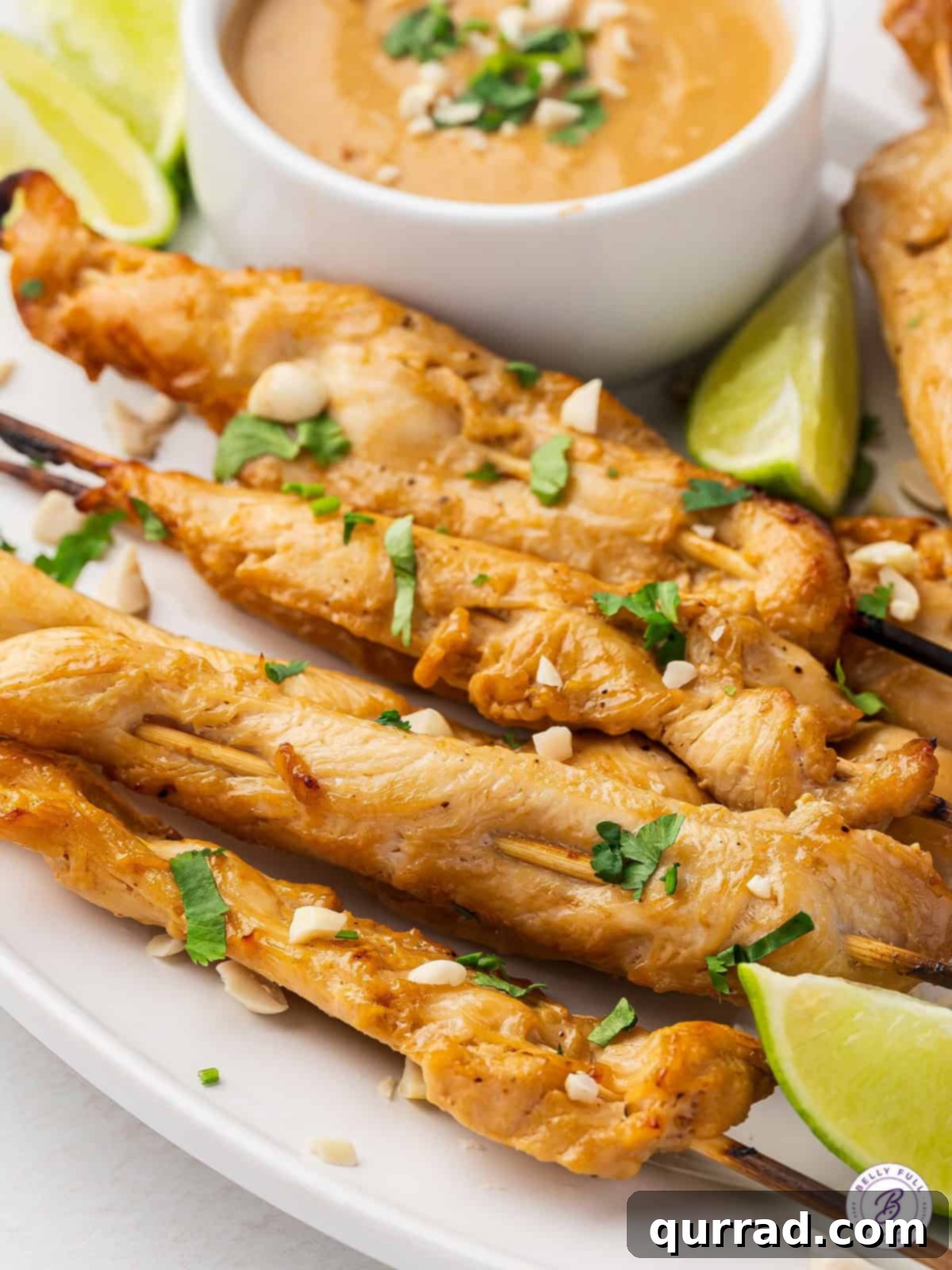
There’s nothing quite like the savory, sweet, and slightly spicy notes of a perfectly crafted Chicken Satay. This recipe joins a collection of beloved Thai-inspired dishes, offering a straightforward approach to creating complex flavors. Unlike store-bought versions, making chicken satay at home ensures maximum freshness, quality ingredients, and the ability to customize to your exact taste preferences. It’s a fantastic addition to any weeknight meal rotation or for entertaining guests with minimal stress.
One of the best aspects of this recipe is its minimal hands-on time. While it does require a few hours for the chicken to marinate and fully absorb the aromatic flavors, the actual preparation and cooking are remarkably quick. This makes it an ideal dish for meal planning; you can prep the marinade in advance, letting the chicken become incredibly flavorful, then simply thread it onto skewers and broil when you’re ready to eat. The result is always a delightful balance of taste and texture that transports you straight to the bustling streets of Southeast Asia.
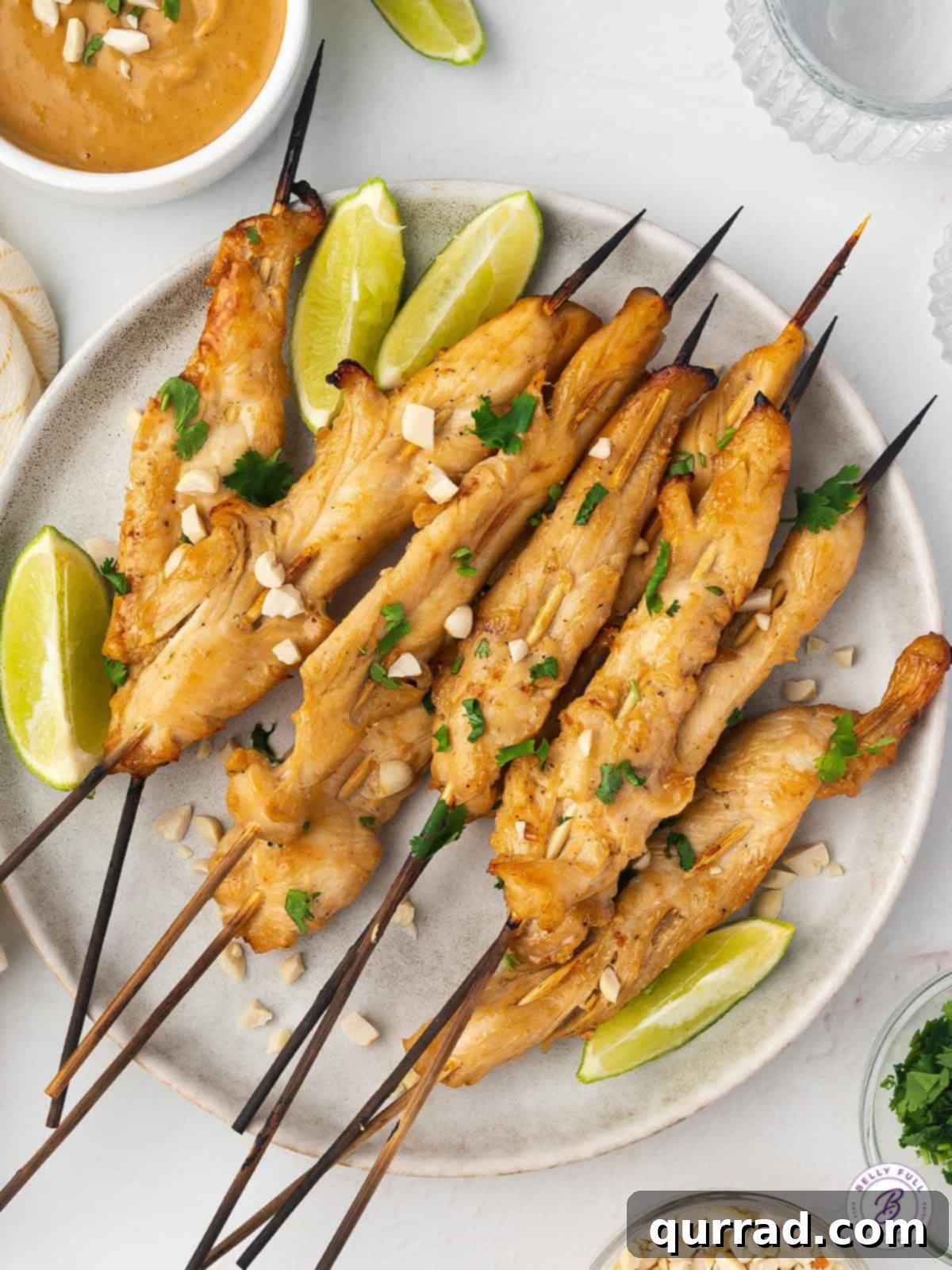
Understanding Satay: A Culinary Journey
Satay is a beloved culinary staple across many Asian countries, particularly celebrated in Indonesia, Malaysia, Singapore, and Thailand. At its core, satay refers to skewered and seasoned (or marinated) meat, traditionally grilled over charcoal to impart a distinctive smoky flavor and beautiful char. While chicken is incredibly popular, satay can also be made with beef, lamb, pork, or even tofu, showcasing the versatility of this iconic street food.
The origins of satay are often traced back to Java, Indonesia, where it evolved from Indian kebabs, adapting local spices and grilling techniques. Over centuries, it spread throughout Southeast Asia, with each region developing its unique marinades and accompanying sauces. Thai chicken satay, in particular, is renowned for its aromatic marinade often incorporating ingredients like turmeric, lemongrass, galangal, and coconut milk, creating a complex flavor profile that is both sweet and savory, with a hint of spice. Our recipe streamlines these flavors into a home-friendly version, relying on a broiler for convenience while still achieving that delicious char.
The Essence of Flavor: Ingredients for Authentic Chicken Satay
Achieving truly delicious chicken satay relies on a thoughtful blend of ingredients for both the marinade and the indispensable peanut sauce. We focus on readily available items that deliver maximum flavor with minimal fuss. Below are the key components and why they are essential:
- Chicken Tenders: For their inherent tenderness and quick cooking time, chicken tenders are an excellent choice. Their naturally thin shape makes them easy to skewer and ensures even cooking. Alternatively, boneless, skinless chicken thighs can be used for an even juicier result, or chicken breasts, cut into thin strips, also work well. The key is uniform pieces for consistent cooking.
- Low Sodium Soy Sauce: This forms the savory foundation of our marinade. Opting for low-sodium soy sauce allows you to control the overall saltiness of the dish, ensuring it’s perfectly seasoned without being overpoweringly salty. It adds a crucial umami depth.
- Fresh Lime Juice: A splash of fresh lime juice introduces a bright, zesty acidity to the marinade. This not only balances the richer flavors but also helps to tenderize the chicken slightly, contributing to its succulent texture.
- Honey: Honey provides natural sweetness that beautifully complements the savory and spicy elements. More importantly, it helps the chicken caramelize and develop that desirable lightly charred exterior when broiled or grilled, adding another layer of flavor and visual appeal.
- Toasted Sesame Oil: Just a teaspoon of this aromatic oil infuses the chicken with a distinctive nutty, savory aroma that is characteristic of many Asian dishes. It adds a layer of depth and authenticity to the marinade.
- Chili Garlic Sauce: For those who appreciate a touch of heat, chili garlic sauce is a fantastic addition. It brings a gentle warmth and a garlicky kick, enhancing the marinade’s complexity without overwhelming the other flavors. Adjust the amount to suit your spice preference.
- Salt & Pepper: Simple yet vital, these basic seasonings round out the flavor profile, ensuring the chicken is perfectly seasoned from the inside out.
- The Iconic Peanut Sauce: No chicken satay is complete without its signature dipping sauce. Our recipe for peanut sauce is a harmonious blend of creamy peanut butter, low-sodium soy sauce, fresh lime juice, a touch of brown sugar for depth, more chili garlic sauce for heat, and a hint of fresh grated ginger for aromatic warmth. Water is used to thin it to the perfect dipping consistency. This creamy, tangy, sweet, and spicy sauce is the perfect counterpoint to the marinated chicken.
Mastering the Art of Marinade and Skewering
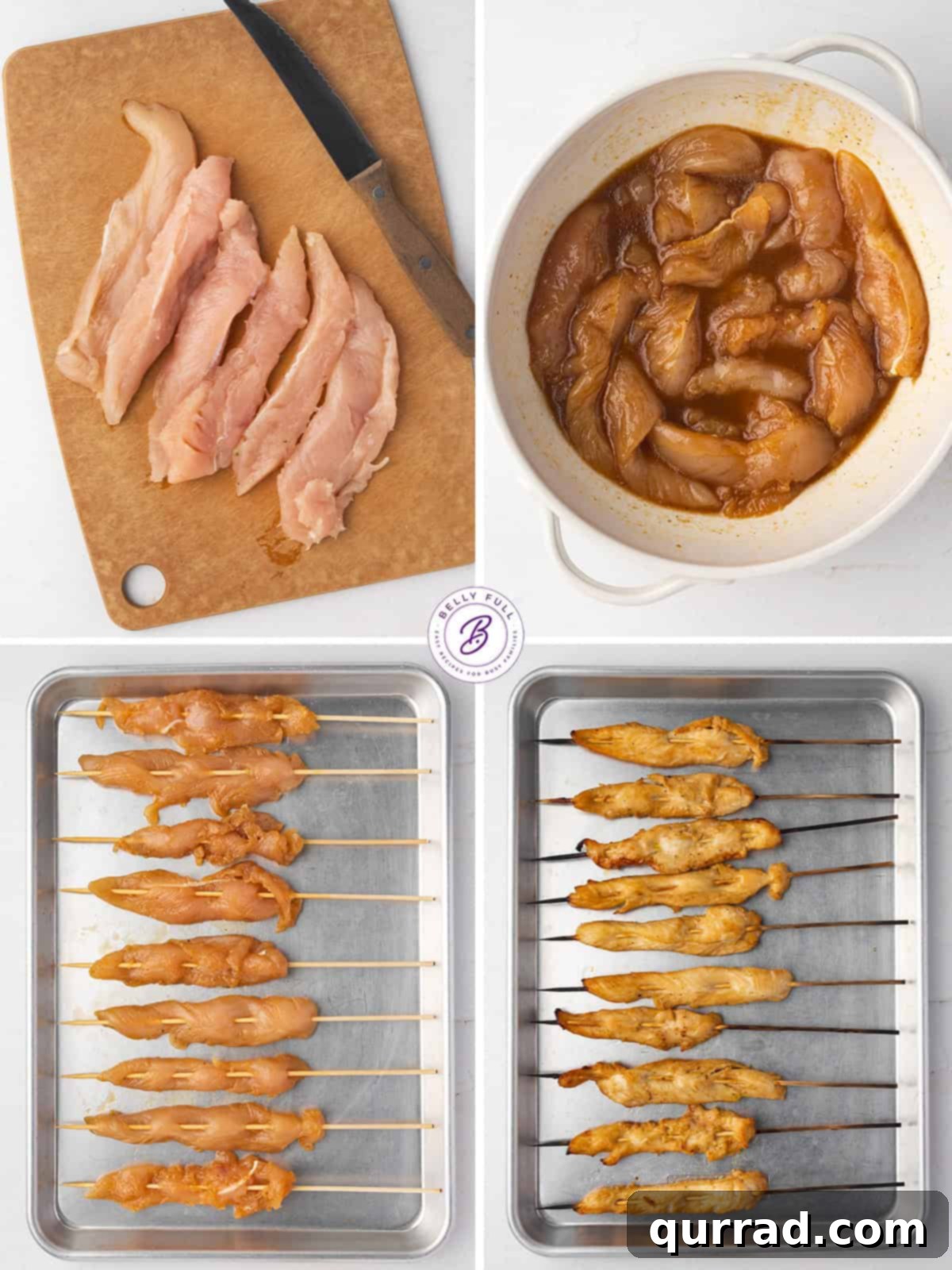
The secret to unbelievably flavorful and tender chicken satay lies in a proper marination process. This isn’t just about coating the chicken; it’s about allowing the aromatic liquids to penetrate and tenderize the meat. We start by cutting the chicken tenders crosswise, ensuring each piece is bite-sized and has maximum surface area for the marinade to work its magic. Tossing the chicken thoroughly with soy sauce, lime juice, honey, sesame oil, chili garlic sauce, salt, and pepper ensures every morsel is coated. The chilling period of at least two hours (and up to overnight) is non-negotiable for deep flavor infusion.
Before cooking, an often-overlooked but crucial step is allowing the marinated chicken to come to room temperature for about 30 minutes. This seemingly small detail significantly impacts the cooking process. Chicken at room temperature cooks more evenly and quickly than cold chicken, preventing the exterior from drying out while the interior struggles to reach the desired temperature. This leads to a consistently tender and juicy result.
When it comes to skewering, presentation and cooking efficiency go hand-in-hand. Use 6-inch skewers, which are typical for satay and allow for individual servings that cook rapidly. If using wooden skewers, remember to soak them in water for at least 30 minutes prior to threading the chicken. This prevents them from burning under the high heat of the broiler or grill. Thread the chicken pieces so they are relatively flat and evenly distributed, avoiding overcrowding, which can lead to uneven cooking and steaming instead of charring.
Top Tips for Satay Success
- Achieve Even Cooking with Room Temperature Chicken: As mentioned, bringing the chicken to room temperature for about 30 minutes before broiling is key. This helps the meat cook uniformly from edge to center, resulting in consistently tender and juicy satay. Don’t skip this step after its initial refrigeration.
- Mindful Broiling for Perfect Char: The broiler works quickly and intensely, offering an excellent way to get that coveted lightly charred exterior. However, it requires vigilance. Every oven’s broiler varies in intensity, so keep a very close eye on your chicken. Turn the skewers frequently – approximately every 4-5 minutes – until the chicken is cooked through and reaches an internal temperature of 165°F (74°C). The goal is a beautiful char, not burnt ends!
- Choosing the Right Skewers: Traditional satay often uses shorter, thinner skewers, typically around 6 inches in length. This size is perfect for single servings and quick cooking. If you only have longer skewers (e.g., for shish kabobs), that’s perfectly fine. You’ll simply have fewer skewers overall and might need to adjust cooking times slightly. If using wooden skewers, always soak them in water for at least 30 minutes before use to prevent them from catching fire.
- Grilling Your Chicken Satay: While our recipe utilizes the convenience of a broiler, chicken satay is famously grilled. For an authentic experience, preheat your grill to medium-high heat. Grill the skewers for about 2-3 minutes per side, turning frequently, until the chicken is cooked through and shows attractive grill marks. Cooking over charcoal offers an unparalleled smoky depth of flavor.
- Perfecting the Peanut Sauce Consistency: The consistency of your peanut sauce can make or break the dipping experience. For the creamiest, smoothest texture, we highly recommend using commercial creamy peanut butter brands like JIF or Skippy. Natural peanut butter, with its tendency for oil separation, often results in a grittier or less emulsified sauce. When adding water to thin the sauce, start with the lesser amount (e.g., 2 tablespoons) and whisk thoroughly. Gradually add more, a teaspoon at a time, until you reach your desired pourable yet substantial dipping consistency. It should coat the back of a spoon.
Serving Your Delectable Chicken Satay
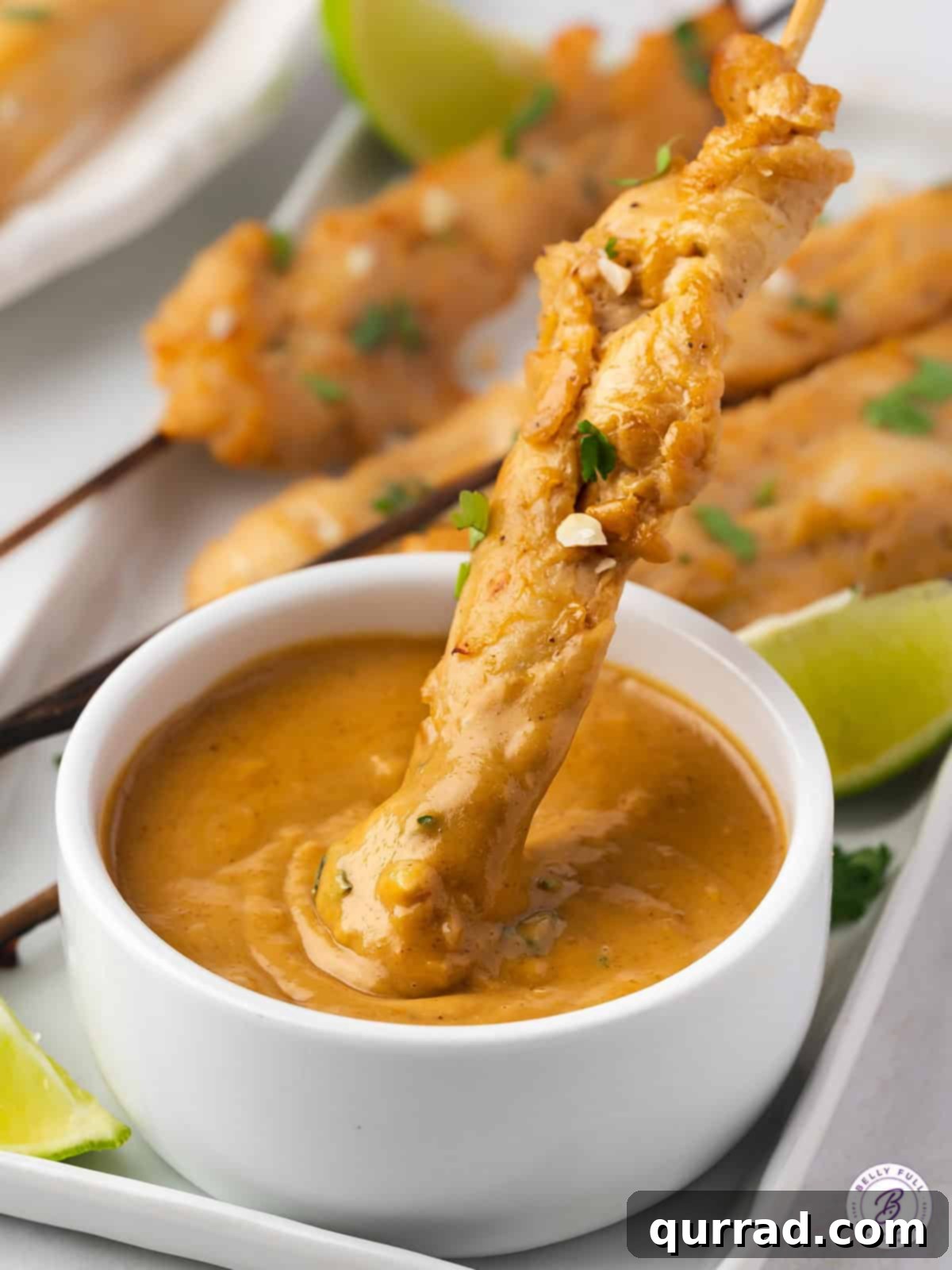
Thai chicken satay skewers are best served immediately after cooking, allowing their freshness and warmth to shine. A crucial accompaniment is a fresh lime wedge; a squeeze of lime over the hot chicken adds a bright, tangy counterpoint that elevates all the flavors. Of course, the star alongside the chicken is the creamy, savory peanut sauce, presented in a small bowl for generous dipping.
For a complete and satisfying meal, consider these excellent serving suggestions:
- Jasmine Rice: The classic choice! Its fragrant aroma and soft texture perfectly absorb the flavors of the chicken and sauce.
- Fried Rice: For a heartier meal, a side of homemade fried rice with vegetables is a fantastic complement.
- Pineapple Coconut Rice: Elevate your side dish with a tropical twist. Pineapple coconut rice adds a subtle sweetness and creamy texture that pairs wonderfully with the tangy satay.
- Simple Green Salad: A light, crisp salad with a ginger-sesame dressing can provide a refreshing contrast to the richness of the satay.
- Cucumber Salad: A traditional Thai cucumber salad, often made with vinegar, sugar, and chili, offers a cooling and zesty side.
- Fresh Herbs: Garnish generously with fresh chopped cilantro or mint for an extra burst of freshness and color.
Proper Storage and Reheating for Leftovers
Should you be lucky enough to have any leftovers, proper storage ensures your chicken satay remains delicious.
- Fridge: Store cooked chicken satay in an airtight container in the refrigerator for up to 3-4 days. It’s best to store the peanut sauce in a separate airtight container to maintain its optimal texture and prevent it from soaking into the chicken excessively.
- Freezer: For longer storage, cooked chicken satay (without the sauce) can be frozen for up to 2-3 months. Wrap individual skewers tightly in plastic wrap, then place them in a freezer-safe bag or container. Thaw in the refrigerator overnight before reheating.
- Reheat: To reheat, gently remove the chicken from the skewers if desired. You can warm it in the microwave on medium power until just heated through (this is the quickest method). Alternatively, reheat in a skillet over medium heat with a splash of water or broth to prevent drying, or in a preheated oven (around 350°F / 175°C) for 10-15 minutes until warmed. Be careful not to overcook, as this can dry out the chicken. The peanut sauce can be warmed gently on the stovetop or in the microwave, adding a tiny bit of water if it has thickened too much in the fridge.
We sincerely hope this easy and flavorful Chicken Satay recipe brings joy to your kitchen and satisfies your cravings for authentic Thai cuisine. Don’t forget to share your experience and leave a review!
Chicken Satay
20 mins
10 mins
2 hrs
2 hrs 30 mins
14 skewers

Pin
Ingredients
FOR THE CHICKEN
- 1 pound chicken tenders
- 2 tablespoons low sodium soy sauce
- 1 tablespoon lime juice
- 1 tablespoon honey
- 1 teaspoon sesame oil
- 1/2 teaspoon chili garlic sauce
- salt and pepper, to taste
FOR THE PEANUT SAUCE
- 1/4 cup creamy peanut butter
- 4 teaspoons low-sodium soy sauce
- 1 tablespoon freshly squeezed lime juice
- 2 teaspoons brown sugar
- 1 teaspoon chili garlic sauce, or more to taste
- 1 teaspoon freshly grated ginger
- 2-3 tablespoons water, (whisked in to desired consistency)
FOR SERVING
- Chopped peanuts
- Fresh chopped cilantro
Instructions
-
Cut the chicken tenders in half, crosswise. In a medium bowl, toss the chicken with the soy sauce, lime juice, honey, sesame oil, chili garlic sauce, and a bit of salt and pepper.
-
Cover the bowl and chill the marinated chicken for at least 2 hours. After chilling, let it rest at room temperature for 30 minutes before cooking.
-
Preheat your broiler with the oven rack positioned about 5 inches from the heat source.
-
Thread the chicken onto 14 (6-inch) skewers. Arrange the skewers on a baking sheet lightly coated with nonstick spray. Broil until the chicken is cooked through and lightly charred, typically about 4 to 5 minutes per side, or until chicken registers an internal temperature of 165°F (74°C). Keep a close eye on them to prevent burning.
-
Make the peanut sauce: In a small bowl, combine all peanut sauce ingredients until thoroughly blended. Start with 2 tablespoons of water and whisk well. If the sauce is too thick, gradually add the third tablespoon of water until your desired creamy, pourable consistency is reached.
-
Serve the cooked chicken satay immediately, garnished with a sprinkle of chopped peanuts, fresh lime wedges for squeezing, and the prepared peanut sauce on the side for dipping.
Nutrition
Carbohydrates: 3g |
Protein: 8g |
Fat: 3g |
Saturated Fat: 1g |
Polyunsaturated Fat: 1g |
Monounsaturated Fat: 2g |
Trans Fat: 0.004g |
Cholesterol: 21mg |
Sodium: 218mg |
Potassium: 164mg |
Fiber: 0.3g |
Sugar: 2g |
Vitamin A: 11IU |
Vitamin C: 1mg |
Calcium: 6mg |
Iron: 0.3mg
Nutritional information given is an automatic calculation and can vary based on the exact products you use and any changes you make to the recipe. If these numbers are very important to you, we recommend calculating them yourself.
Did you make this? Leave a rating below!
More Asian-Inspired Recipes to Explore