
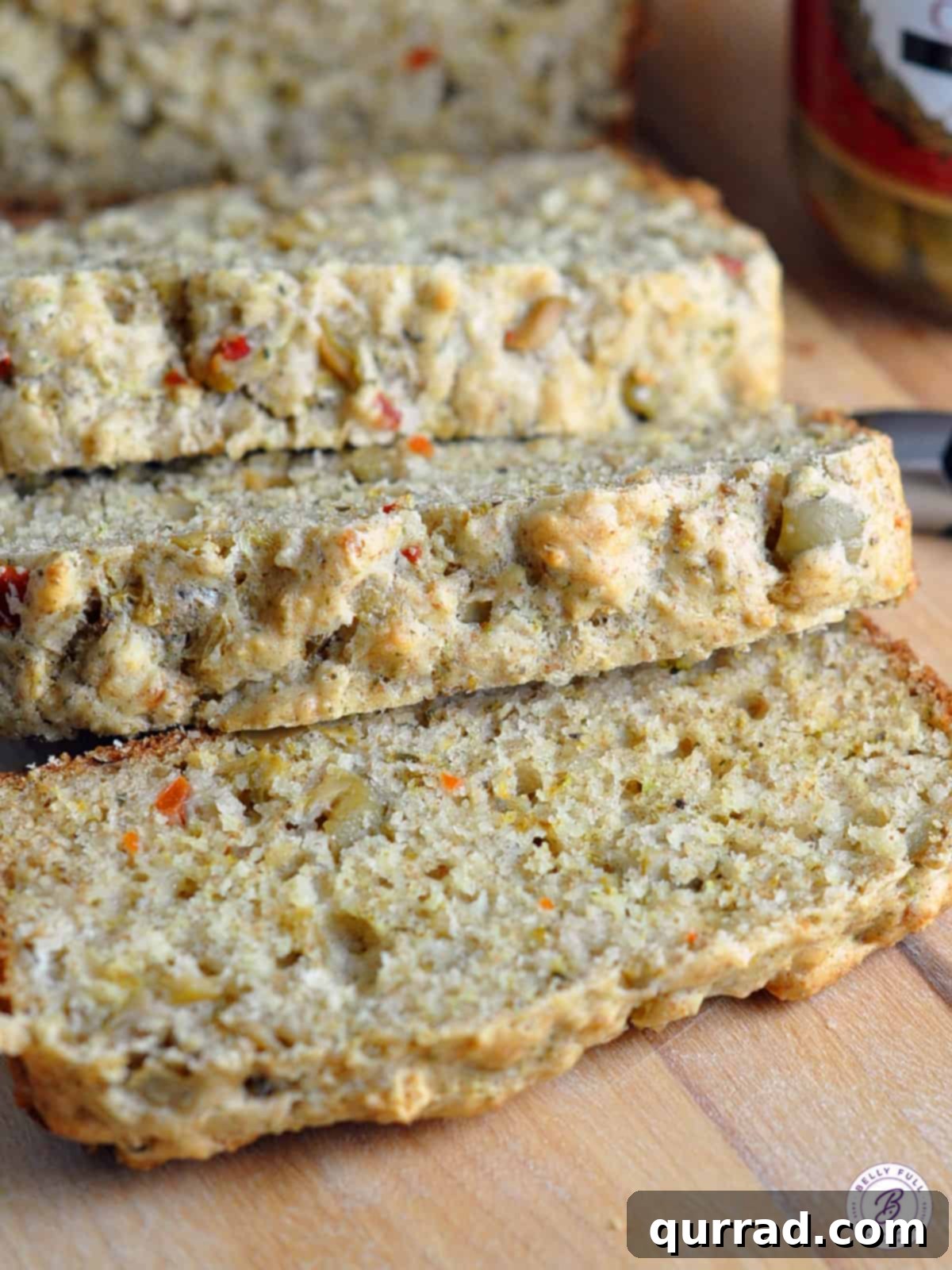
Welcome to the delightful world of homemade quick bread! If you’re searching for a simple yet incredibly flavorful recipe that’s sure to impress, look no further than this savory Olive Bread. This easy-to-bake quick bread offers a moist, tender crumb and a golden crust, infused with the rich, tangy notes of Spanish olives and a hint of Parmesan. It’s perfectly delicious on its own, fantastic alongside a creamy tuna salad sandwich, or wonderfully comforting when dipped into a warm bowl of tomato soup.
Easy Olive Bread: A Savory Quick Bread Recipe
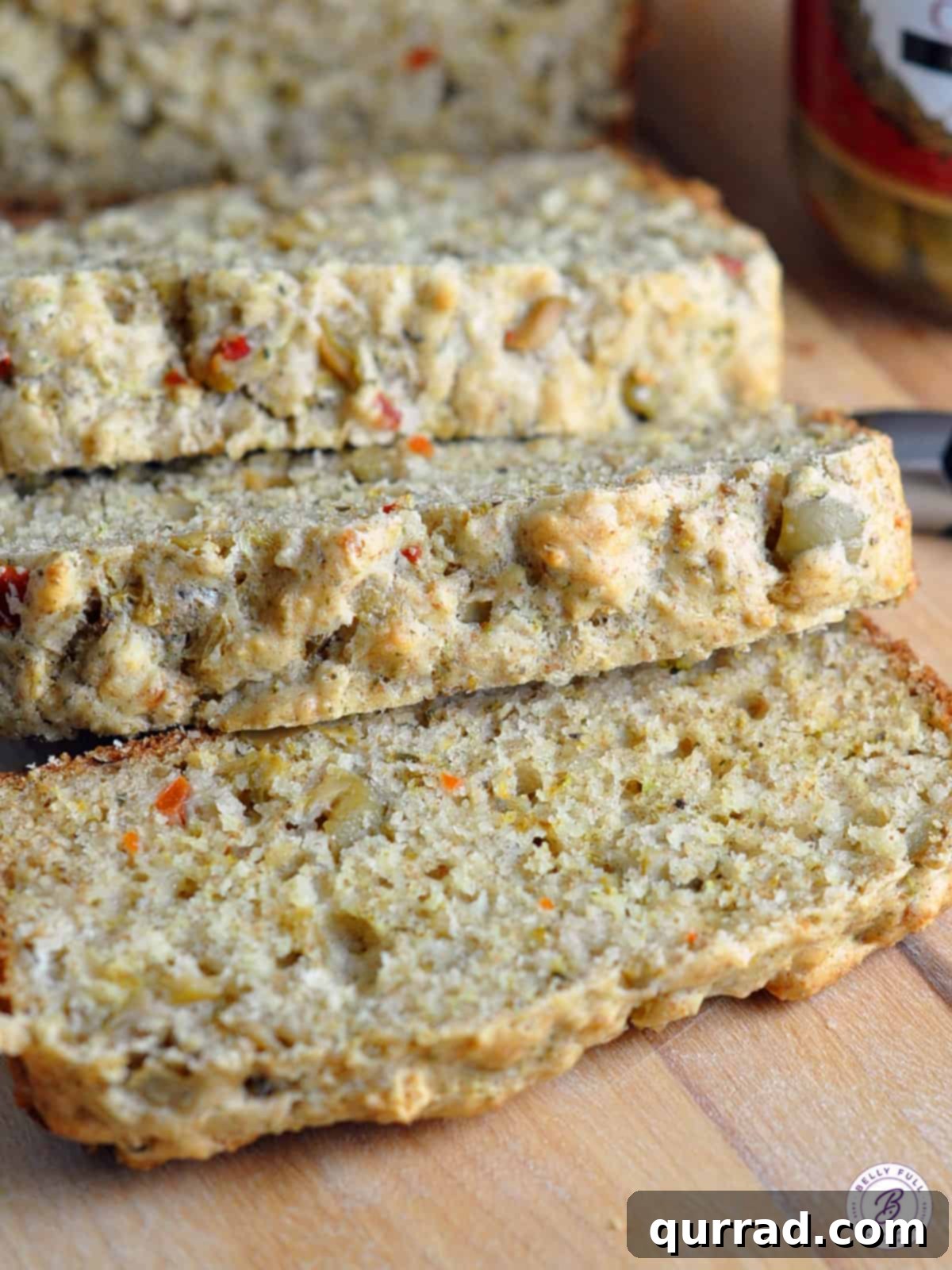
There’s something uniquely satisfying about the aroma of freshly baked bread filling your home, and this easy olive bread recipe delivers that joy without the fuss of yeast and extensive kneading. This quick bread is a fantastic introduction for beginner bakers and a convenient go-to for seasoned pros. Made with the humble yet powerful combination of buttermilk, savory Parmesan cheese, and vibrant Spanish olives, it bakes up consistently moist and tender with a beautifully golden, slightly crisp exterior.
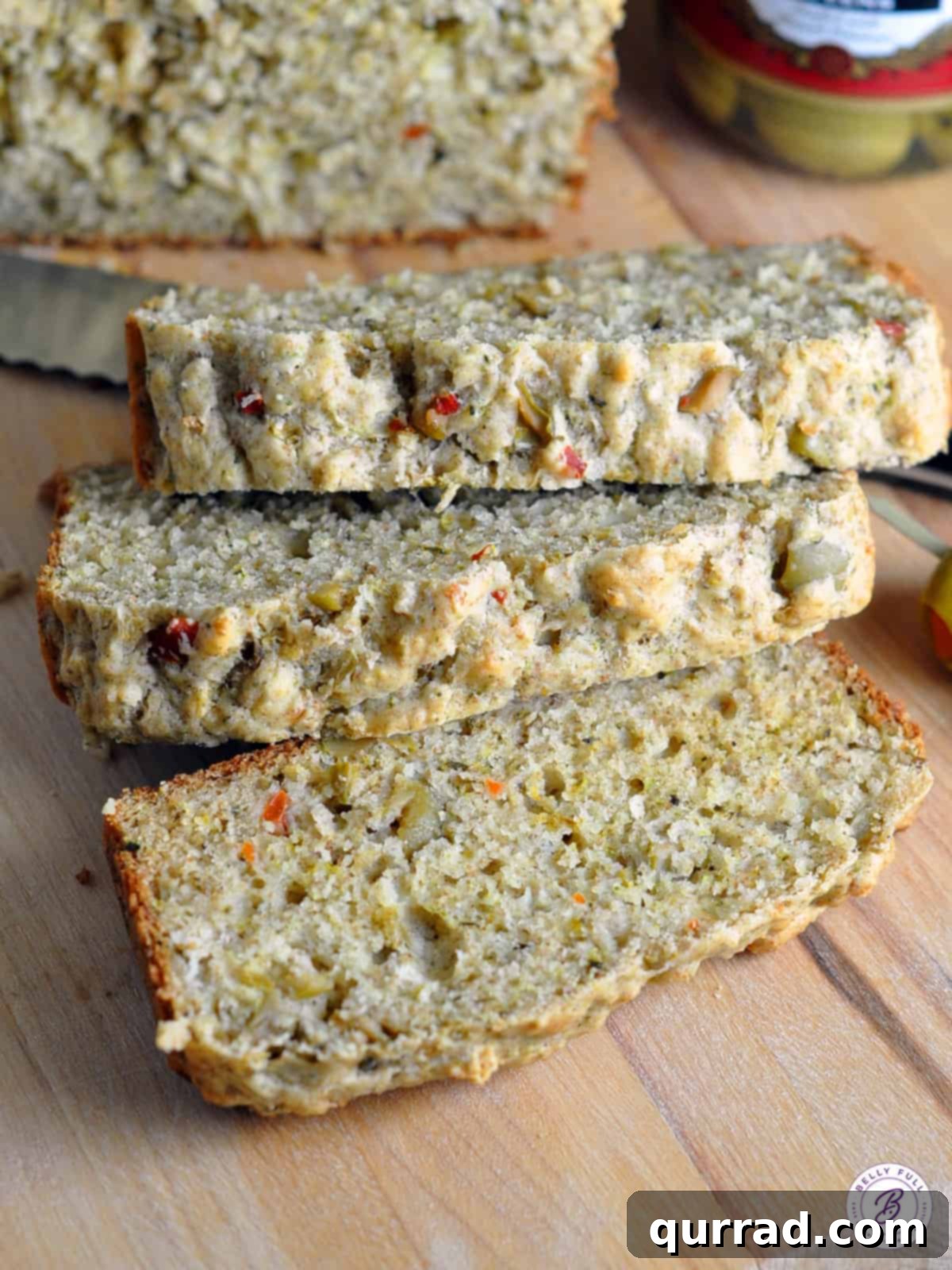
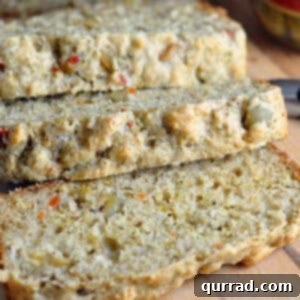
Imagine slicing into a warm loaf, the steam gently rising, revealing pockets of green olives and fragrant herbs. A simple slice is a treat in itself, but for an extra layer of indulgence, a whisper of softened butter elevates it to pure bliss. Beyond a standalone snack, this versatile olive bread transforms into an excellent base for hearty tuna sandwiches, a rustic accompaniment to a comforting tomato soup on a chilly evening, or a sophisticated alternative to traditional dinner rolls, making any meal feel special.
What is Quick Bread?
Before we dive deeper into this specific recipe, let’s quickly understand what “quick bread” means. Unlike yeast breads, which rely on yeast fermentation for leavening and require significant time for kneading and rising, quick breads use chemical leavening agents like baking powder and baking soda. This means they come together quickly, often in under an hour from start to finish, and don’t require any waiting for dough to rise. They are typically mixed just until the ingredients are combined, then baked immediately. This simple method makes them ideal for busy schedules or when you crave homemade bread without the commitment.
Why You’ll Love This Easy Olive Bread Recipe
- Effortless Baking: No yeast, no kneading, and no extensive rising time means less work and faster results.
- Incredible Flavor Profile: The salty, briny olives, sharp Parmesan, and subtle sweetness of sautéed onions create a complex and irresistible taste.
- Moist & Tender Texture: Buttermilk and butter ensure a wonderfully soft and moist crumb every time.
- Versatile Serving: Perfect for breakfast, lunch, dinner, or as an appetizer. It pairs well with a variety of dishes.
- Crowd-Pleaser: This savory bread is a unique and delicious addition to any meal or gathering, guaranteed to garner compliments.
- Customizable: Easily adapt the recipe with different cheeses, herbs, or even a hint of spice.
Essential Ingredients for Your Savory Olive Bread
Crafting this flavorful quick bread requires a selection of fresh, quality ingredients that truly make each bite memorable. Here’s a closer look at what goes into this easy olive bread recipe and why each component is essential:
- Spanish Queen Pimiento Stuffed Olives: These are the undeniable stars of our bread. Large in size, their characteristic tangy, slightly nutty flavor, and smooth texture are perfect for cutting through the richness of the bread. The pimiento stuffing adds a subtle sweetness and a vibrant pop of color. Make sure to chop them finely to ensure even distribution and a burst of flavor in every slice. Feel free to use other varieties like Kalamata or a mix of your favorite briny olives if you prefer, as long as they are pitted and finely diced.
- Onion: Olives and onion are a match made in culinary heaven. Finely diced and gently sautéed in butter until soft and translucent, the onion adds a foundational layer of savory sweetness and aromatic depth that complements the olives beautifully without overpowering them. This step is crucial for developing their flavor.
- Buttermilk: This key ingredient is responsible for the bread’s signature richness and delightful tang. Its acidity reacts with the baking soda, contributing to the bread’s tender crumb and airy texture. If you don’t have buttermilk on hand, you can easily make a substitute by adding one tablespoon of white vinegar or lemon juice to a measuring cup and filling the rest with regular milk to make one cup. Let it sit for 5-10 minutes until it slightly curdles.
- Butter: Used in two capacities – first, to sauté the onions, infusing them with a rich, golden flavor, and second, as a vital component of the batter, providing essential moisture and a luxurious richness that contributes to the bread’s tender texture and delicious taste.
- Eggs: Large eggs provide essential structure and binding to the quick bread batter, helping it rise and hold its shape while contributing to a rich, moist texture.
- All-Purpose Flour: The foundation of our bread. For accurate measuring, always spoon the flour into your measuring cup and level it off with a straight edge. This prevents over-measuring, which can lead to a dense, dry loaf.
- Baking Powder and Baking Soda: These are our powerful leavening agents. Baking powder provides the initial lift, while baking soda reacts with the buttermilk to create a tender, fluffy texture. Together, they ensure a beautifully risen and soft bread.
- Seasonings: A touch of coarse salt balances the flavors and enhances the savoriness of the olives and cheese. Dried Italian herbs, a classic blend, infuse the bread with aromatic notes of oregano, basil, thyme, and rosemary, adding a Mediterranean flair.
- Parmesan Cheese: Freshly grated Parmesan cheese, preferably off the block, offers the best flavor and melts beautifully into the bread, adding a salty, umami depth. While pre-grated cheese can be used, fresh Parmesan truly elevates the taste.
How to Make Delicious Olive Bread: A Step-by-Step Guide
This quick bread recipe is incredibly straightforward, requiring no kneading or lengthy rising times. It comes together quickly and easily, making it perfect for bakers of all skill levels. Follow these simple steps for a perfect loaf every time:
- Preheat Oven and Prepare Pan: Begin by preheating your oven to 350°F (175°C). Next, prepare a 9×5-inch loaf pan by lining it with parchment paper. Ensure you leave a slight overhang on two sides; this will create “handles” that make it incredibly easy to lift the baked bread out of the pan later.
- Sauté the Onions: In a medium nonstick skillet, melt one tablespoon of unsalted butter over medium-high heat. Add the finely diced onions and sauté them for about 3 minutes, or until they become soft, translucent, and fragrant. This step is crucial for mellowing their flavor and enhancing their sweetness. Set the sautéed onions aside to cool slightly.
- Combine Dry Ingredients: In a large mixing bowl, whisk together the two cups of all-purpose flour, one teaspoon of baking soda, one teaspoon of baking powder, half a teaspoon of coarse salt, one tablespoon of dried Italian herbs, and one-third cup of grated Parmesan cheese. Ensure all the dry ingredients are well combined and evenly distributed.
- Mix Wet Ingredients: In a separate medium bowl, whisk together the one cup of low-fat buttermilk, two tablespoons of melted unsalted butter, and two large eggs. Once combined, stir in the cooled sautéed onions and the finely diced Spanish queen pimiento stuffed olives.
- Combine Wet and Dry Mixtures: Pour the wet mixture into the bowl with the dry ingredients. Using a spatula or wooden spoon, gently stir until just moist and incorporated. The key here is to not overmix. Overmixing can develop the gluten in the flour, leading to a tough and dense bread. A few lumps are perfectly fine and even desirable for a tender quick bread.
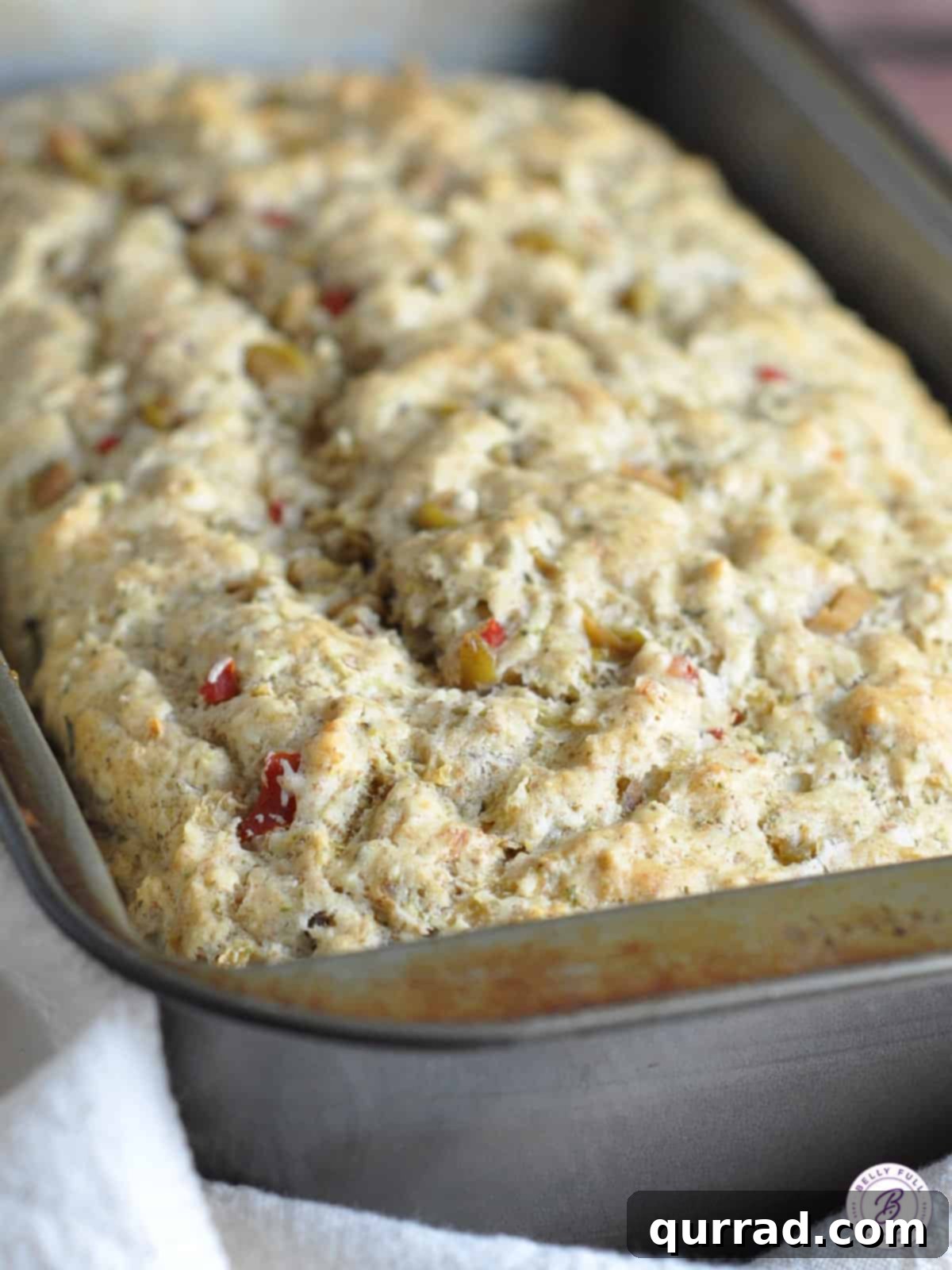
- Fill Loaf Pan and Bake: Transfer the batter evenly into your prepared loaf pan. Place the pan in the preheated oven and bake for 40 to 45 minutes. The bread is done when the top is beautifully golden brown, and a wooden toothpick or long skewer inserted into the center comes out clean.
- Cool, Slice, and Serve: Once baked, remove the pan from the oven and let the olive bread cool in the pan for about 10 minutes. This allows the bread to set and makes it easier to handle. Then, use the parchment paper overhang to carefully lift the loaf onto a cutting board. Slice warm or at room temperature, and enjoy the delicious flavors of your homemade olive bread!
Expert Tips for the Perfect Olive Bread
Even though this is a quick bread recipe, a few simple tips can elevate your baking experience and ensure a consistently perfect loaf:
- Don’t Overmix: This is perhaps the most critical rule for quick breads. Mix the wet and dry ingredients just until combined. Overmixing develops gluten, resulting in a tough, chewy bread instead of a tender one. A few streaks of flour are acceptable.
- Accurate Measuring: Especially for flour, spoon it into your measuring cup and level it off with a knife. Scooping directly from the bag can compact the flour, leading you to use too much, which makes the bread dry.
- Quality Olives Matter: Since olives are a star ingredient, choose a good quality brand. Spanish Queen pimiento-stuffed olives are excellent, but feel free to experiment with Kalamata, green, or a mix of Mediterranean olives. Ensure they are pitted and finely chopped.
- Room Temperature Ingredients: Eggs, buttermilk, and melted butter (cooled slightly) incorporate more smoothly into the batter, leading to a more uniform texture.
- Proper Pan Preparation: Lining your loaf pan with parchment paper is a game-changer. It prevents sticking and makes lifting the bread out incredibly easy, ensuring a beautiful, intact loaf.
- Check for Doneness: The toothpick test is reliable. If it comes out clean or with a few moist crumbs attached, the bread is ready. Overbaking can lead to a dry loaf.
- Cooling Time: Don’t rush the cooling process. Letting the bread cool in the pan for 10 minutes helps it set and prevents it from crumbling when sliced.
Serving Suggestions for Your Delicious Olive Bread
The versatility of this olive bread is truly remarkable. It’s a wonderful addition to almost any meal or occasion:
- Simply with Butter: A warm slice with a generous spread of butter is a classic, comforting treat.
- Alongside Soups and Stews: Its savory profile makes it an ideal companion for creamy tomato soup, hearty lentil soup, or a rich beef stew.
- With Cheese and Charcuterie: Serve slices as part of a cheese board or charcuterie platter. It pairs beautifully with goat cheese, feta, or even a sharp cheddar.
- For Sandwiches: Elevate your lunch by using this olive bread for sandwiches. It’s particularly good with tuna melts, roasted chicken, or a fresh mozzarella and tomato sandwich.
- As Dinner Rolls: Replace ordinary dinner rolls with this flavorful bread to complete any meal, from a casual weeknight dinner to a festive holiday spread.
- With Eggs: Enjoy it toasted with scrambled eggs or a frittata for a savory breakfast or brunch.
- Dipped in Olive Oil: For a simple appetizer, slice and serve with a good quality extra virgin olive oil for dipping.
Proper Storage and Reheating Tips
Like most freshly baked goods, this olive bread is at its peak when enjoyed fresh. However, it stores remarkably well, allowing you to savor its flavors for days or even months.
- Countertop (Short-Term): For enjoyment within 1-2 days, wrap the cooled loaf tightly in foil or plastic wrap, then place it in a resealable plastic bag. Store at room temperature on your kitchen countertop.
- Refrigerator (Mid-Term): To extend its freshness, wrap the bread in foil and then transfer it to an airtight container or resealable bag. It will keep well in the refrigerator for up to 7 days.
- Freezer (Long-Term): For longer storage, wrap the completely cooled loaf (or individual slices) tightly in plastic wrap, then an additional layer of aluminum foil. Place it in a freezer-safe bag. It can be stored in the freezer for up to 2 months. Thaw frozen bread overnight in the refrigerator. For best results, bring it to room temperature before serving, or gently warm it.
- Reheating: Individual slices can be quickly reheated in the microwave for a few seconds until warm, or in a toaster for a slightly crispier edge. For a whole loaf, wrap it loosely in foil and reheat in a preheated oven at 300°F (150°C) for 10-15 minutes, or until warmed through.
Variations and Customizations
One of the joys of baking is the ability to customize recipes to your liking. Here are some ideas to add your personal touch to this olive bread:
- Different Cheeses: Instead of Parmesan, try grated Gruyere for a nutty flavor, sharp white cheddar for a tangier profile, or a mix of mozzarella and provolone for a meltier texture. Feta cheese crumbles would also add a wonderful salty kick.
- Add Herbs: While Italian herbs are classic, consider fresh chopped rosemary, thyme, or oregano for an intensified aromatic experience. Sun-dried tomatoes (oil-packed, drained, and chopped) can add a sweet and tangy element.
- Spicy Kick: Incorporate a pinch of red pepper flakes into the batter for a subtle heat that complements the olives.
- Garlic Lover’s Dream: Sauté minced garlic along with the onions for an extra layer of savory flavor. Roasted garlic cloves, mashed, could also be folded into the batter.
- Seed Topping: Before baking, sprinkle the top of the loaf with sesame seeds, poppy seeds, or a blend of “everything bagel” seasoning for added texture and flavor.
- Extra Veggies: Finely diced bell peppers or roasted red peppers could be added to the batter for color and a slightly different flavor profile. Just ensure any added vegetables are well-drained to avoid excess moisture.
Frequently Asked Questions About Olive Bread
- Can I use different types of olives?
- Absolutely! While Spanish Queen pimiento-stuffed olives are recommended for their flavor and size, feel free to use Kalamata, green, or a mix of your favorite briny olives. Just ensure they are pitted and finely chopped (about 1/2 cup total).
- Do I need to chop the olives?
- Yes, finely chopping the olives is important. It ensures that the olive flavor is evenly distributed throughout the bread and prevents large chunks that might make slicing difficult.
- What if I don’t have buttermilk?
- You can easily make a homemade buttermilk substitute. For every cup of buttermilk needed, add 1 tablespoon of white vinegar or lemon juice to a liquid measuring cup, then fill the rest with regular milk (dairy or non-dairy) to make 1 cup. Let it sit for 5-10 minutes until it slightly curdles.
- Can I add other cheeses?
- Yes, Parmesan works wonderfully, but other hard or semi-hard cheeses like Gruyere, sharp cheddar, or even a mix of Italian cheeses would be delicious. Grate them fresh for the best flavor.
- How do I know when the quick bread is fully baked?
- The top should be golden brown, and a wooden toothpick or thin skewer inserted into the center of the loaf should come out clean. If it comes out with wet batter, continue baking for a few more minutes and retest.
- Why is my quick bread dry?
- Common reasons for dry quick bread include overmixing the batter (which develops gluten), using too much flour (always spoon and level!), or overbaking. Ensure you follow the recipe’s measurements and cooking times closely.
More Delicious Olive-Inspired Recipes:
- Olive Cheese Bread
- Olive Tapenade
- Marinated Olives
- Olive Salad
- Olive Spread (just 2 ingredients)
We truly hope you enjoy baking and savoring this incredible Easy Olive Bread! It’s a recipe designed to bring joy and deliciousness to your table with minimal effort. Don’t forget to leave a review below and share your experience with us. Your feedback helps other home bakers discover and love this recipe too!
Stay connected and find more fantastic recipes by following us on TikTok, Facebook, Instagram, Pinterest, and YouTube!
Olive Bread
15 mins
45 mins
1 hr
10 slices
Pin
Ingredients
- 1 tablespoon unsalted butter
- 1 medium sweet onion, diced
- 2 cups all-purpose flour, spooned and leveled
- 1 teaspoon baking soda
- 1 teaspoon baking powder
- 1/2 teaspoon coarse salt
- 1 tablespoon dried Italian herbs
- 1/3 cup grated Parmesan cheese
- 1 cup low-fat buttermilk
- 2 tablespoons unsalted butter, melted
- 2 large eggs
- 11 large Queens Spanish pimiento stuffed Olives, diced (about 1/2 cup)
Instructions
-
Preheat oven to 350 degrees F (175°C). Line a 9×5 loaf pan with parchment paper, leaving a slight overhang on two sides.
-
Heat 1 tablespoon butter over medium-high heat in a nonstick skillet. Sauté onions until soft and translucent, about 3 minutes. Set aside to cool.
-
In a large bowl, whisk together the flour, baking soda, baking powder, salt, Italian herbs, and Parmesan.
-
In a medium bowl, whisk together the buttermilk, 2 tablespoons melted butter, eggs, cooled onions, and diced olives until combined. Add the wet mixture to the dry ingredients, stirring gently until just moist and incorporated. (Do not over mix.)
-
Transfer batter to the prepared loaf pan. Bake for 40-45 minutes or until the top is golden and a toothpick (or long skewer) inserted in the middle comes out clean.
-
Let cool in pan for 10 minutes, then transfer to a cutting board using the parchment paper handles. Slice warm or at room temperature and enjoy!
Notes
Nutrition
Nutritional information given is an automatic calculation and can vary based on the exact products you use and any changes you make to the recipe. If these numbers are very important to you, I would recommend calculating them yourself.