
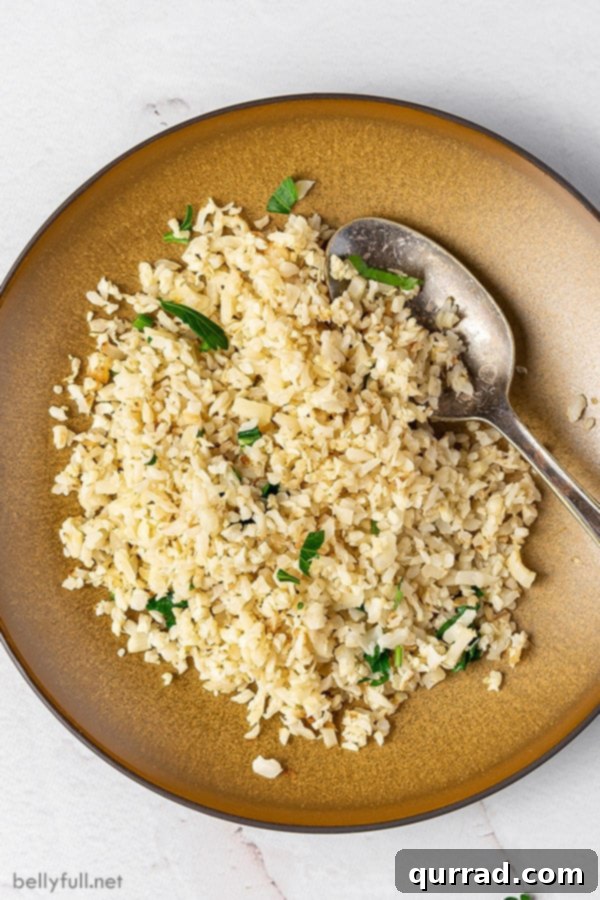
The Ultimate Guide to Perfect Cauliflower Rice: Your Healthy Low-Carb Alternative
Transform your meals with this comprehensive guide to mastering Cauliflower Rice. Discover how to prepare a light, fluffy, and flavorful low-calorie, low-carb alternative to traditional grains. Whether you’re making stir-fries, burrito bowls, or simply seeking a healthier side, this recipe is designed for ease and delicious results.
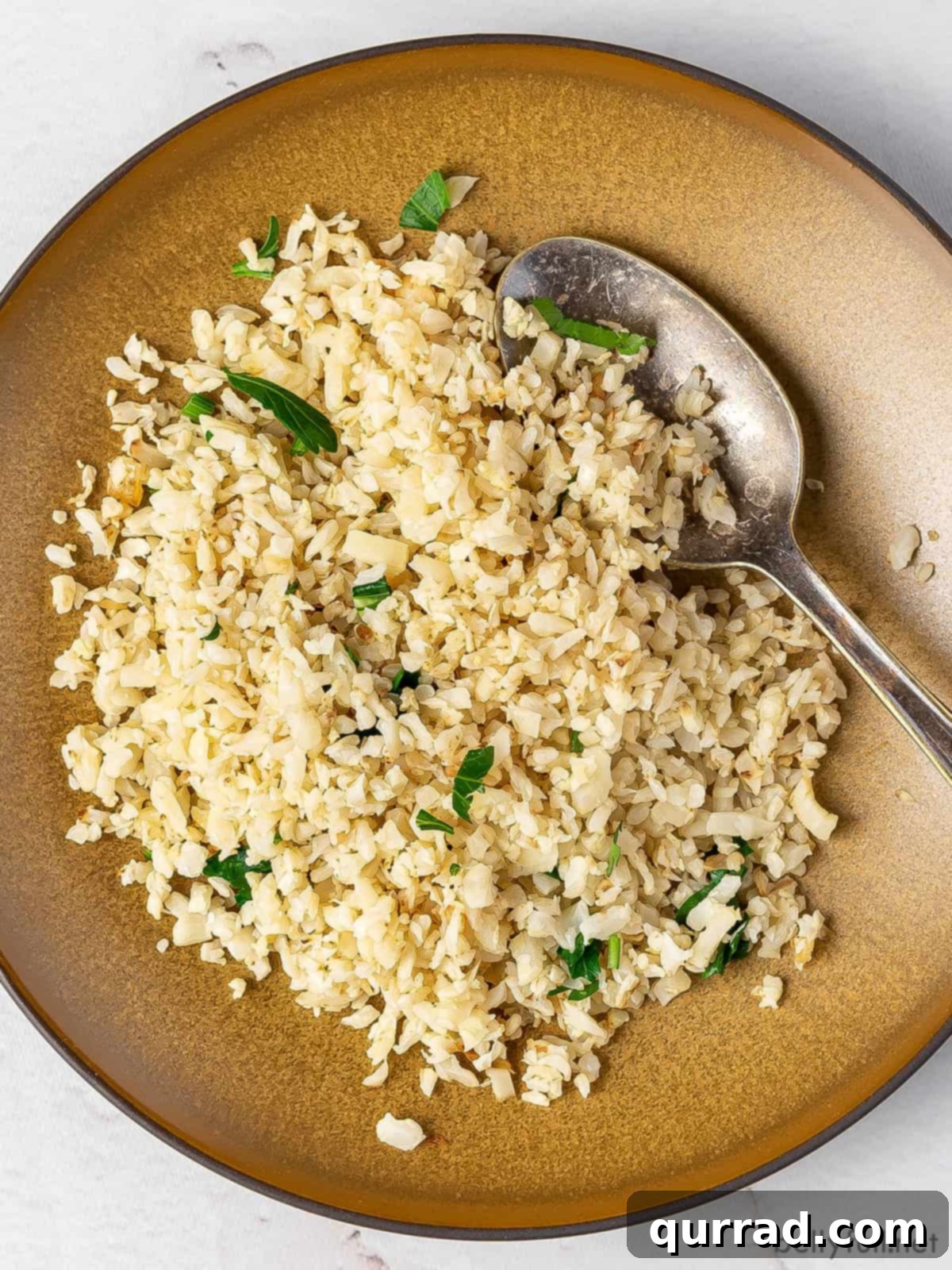
Embrace a Healthier Plate: Discovering Cauliflower Rice
In today’s health-conscious culinary landscape, cauliflower rice has quickly risen to prominence, not just as a fleeting trend but as a genuinely versatile and nutritious staple. For those looking to cut down on calories and carbohydrates, or simply increase their vegetable intake, it offers a brilliant alternative to common grains like white rice and couscous. This recipe promises a cauliflower rice that is light, exquisitely fluffy, and incredibly easy to prepare in mere minutes, making it a perfect fit for a wide array of dishes from vibrant stir-fries and hearty burritos to comforting rice and bean bowls and wholesome soups.
We understand that for many, traditional rice holds a special place in the heart – and on the plate! While cauliflower rice won’t perfectly replicate the chewiness of steamy, hot white rice, it doesn’t aim to. Instead, it offers its own unique texture and subtle flavor profile that, when prepared correctly, is exceptionally tasty and satisfying. It’s a healthy swap that doesn’t feel like a compromise, especially when you consider the myriad benefits it brings to your diet.
What Does Cauliflower Rice Really Taste Like? Busting Myths
One of the most frequently asked questions is, “Does cauliflower rice taste like regular rice?” The straightforward answer is no. While it mimics the granular appearance and serves a similar function in dishes, its flavor is distinctly that of cauliflower. However, it’s a much more subdued version than simply steaming a whole floret. When the cauliflower is grated or pulsed into rice-sized pieces, its natural “cabbage-y” notes are significantly softened, creating a neutral canvas that readily absorbs the flavors of accompanying ingredients and seasonings.
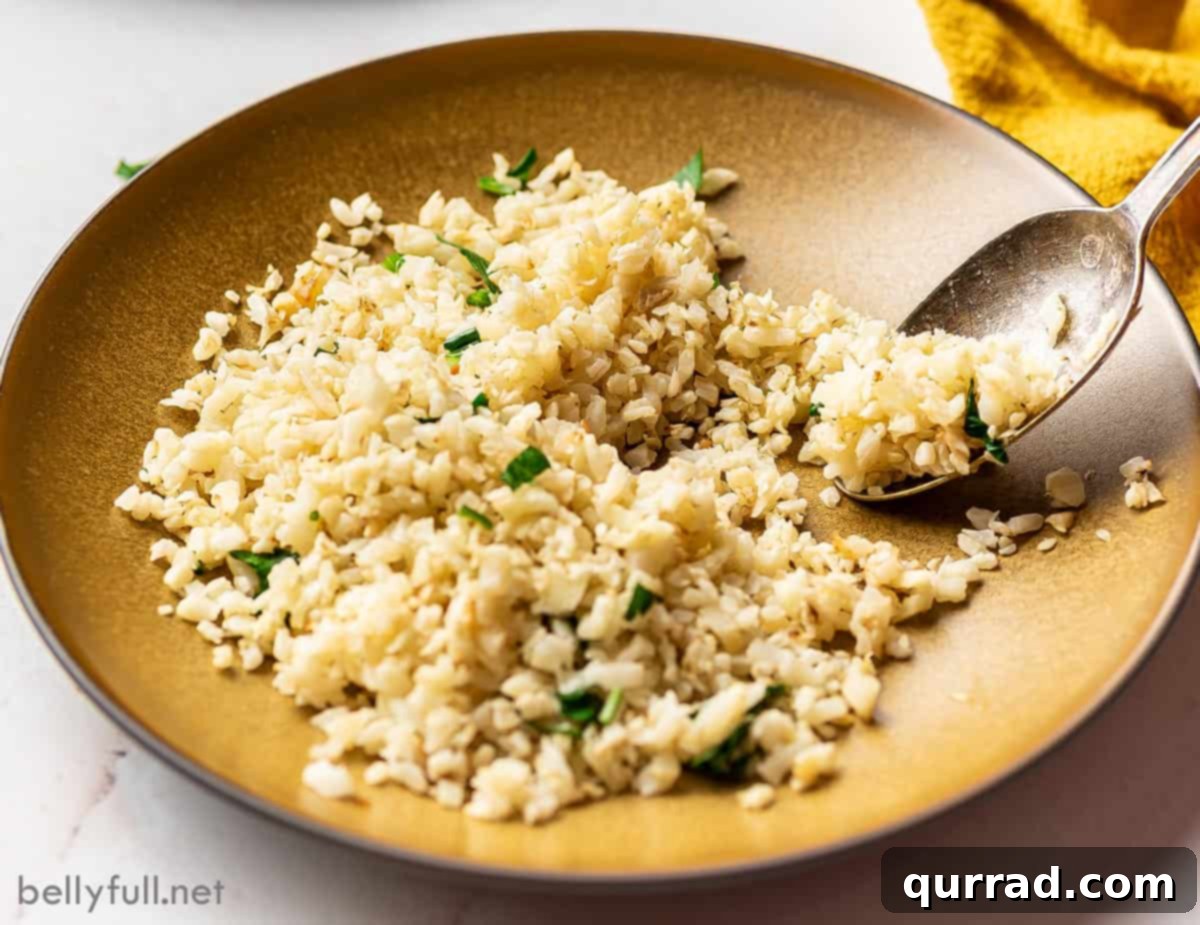
Our method involves sautéing the riced cauliflower until it achieves a slight toastiness. This process further enhances its mild, nutty flavor and contributes to a pleasing, tender-crisp texture that holds its own. When infused with aromatic garlic, a hint of salt and pepper, and finished with fresh herbs and a squeeze of lime, it transforms into a delectable side. In fact, when generously coated in a savory stir-fry sauce or blended with a bold salsa verde, its unique character often blends so seamlessly that it becomes an almost undetectable, yet highly beneficial, component of your meal. It’s truly a win-win situation for both cauliflower lovers and those new to this healthy alternative.
The Nutritional Powerhouse: Why Cauliflower Rice is a Smart Choice
Choosing cauliflower rice is not just a culinary preference; it’s a strategic move for a healthier lifestyle. This humble vegetable, when riced, becomes an incredible ally for various dietary goals and health benefits. Our recipe is specifically tailored to maximize these advantages, offering a side dish that is both satisfying and incredibly light:
- Remarkably Low in Calories and Carbs: Each 1-cup serving of our cauliflower rice contains an impressive only 85 calories and a mere 7 grams of carbohydrates. This makes it an outstanding choice for those monitoring their caloric intake or adhering to low-carb eating plans. Compared to traditional white rice, which can have significantly higher counts, cauliflower rice allows you to enjoy generous portions without derailing your diet.
- Keto and Paleo Friendly: Its naturally low carbohydrate content makes it a cornerstone ingredient for ketogenic, paleo, and Whole30 diets, supporting metabolic health and weight management by keeping blood sugar levels stable.
- Rich in Essential Nutrients: Cauliflower is more than just a low-carb filler; it’s packed with vitamins and minerals. It’s an excellent source of Vitamin C, vital for immune function; Vitamin K, important for bone health; and B vitamins, including folate, which support energy metabolism. It also provides a good amount of dietary fiber, promoting digestive health and helping you feel full and satisfied.
- Antioxidant Rich: Cauliflower contains powerful antioxidants that help protect your cells from damage caused by free radicals, contributing to overall well-being and potentially reducing the risk of chronic diseases.
Integrating cauliflower rice into your diet is a simple yet effective way to boost nutrient intake, manage weight, and maintain a balanced, healthy eating pattern. It’s a versatile vegetable that truly earns its superfood status.
Homemade vs. Store-Bought: Choosing Your Cauliflower Rice
With the widespread popularity of cauliflower rice, you now have the convenience of choice: preparing it from scratch or opting for pre-riced, store-bought versions. Both options have distinct advantages, and the “best” choice often depends on your priorities for time, convenience, and desired quality.
Crafting Cauliflower Rice from Scratch
Making cauliflower rice at home guarantees the freshest product and offers complete control over its texture. By ricing it yourself, you can ensure it’s processed to your preferred consistency—not too fine, not too chunky—just before cooking. This fresh approach often results in a more vibrant flavor and superior texture, avoiding the slight moisture or sulfurous smell that can sometimes develop in pre-packaged varieties. While it requires a bit more effort, especially the initial washing and chopping, the process is straightforward and generally more cost-effective in the long run. Plus, there’s immense satisfaction in preparing healthy food from whole ingredients.
The Convenience of Store-Bought Cauliflower Rice
For those busy weeknights or when time is of the essence, store-bought riced cauliflower is an absolute game-changer. It eliminates all the prep work—no washing, no chopping, no messy grating. Many high-quality brands are available in the produce or freezer section of most grocery stores, making healthy eating incredibly accessible. If you choose this option, remember to check the ingredient list for any unwanted additives and, crucially, to thoroughly pat it dry before cooking. This simple step is vital to prevent a soggy outcome, ensuring your store-bought cauliflower rice is as delicious as homemade.
Regardless of whether you start with a fresh head of cauliflower or a convenient bag from the store, our cooking method will guide you to a perfectly tender, fluffy, and flavorful result. And if you’re exploring other healthy cauliflower creations, be sure to check out our comforting mashed cauliflower and rich creamy cauliflower cheddar soup recipes.
Your Step-by-Step Guide: How to Make Cauliflower Rice
Creating your own batch of fresh cauliflower rice is a straightforward process that yields fantastic results. Follow these detailed steps to transform a humble head of cauliflower into a versatile, grain-like ingredient:
-
Wash and Thoroughly Dry the Cauliflower:
Begin by giving your head of cauliflower a good rinse under cool running water. Critically, you must dry it thoroughly. Excess moisture is the enemy of fluffy cauliflower rice, as it promotes steaming rather than sautéing, leading to a mushy texture. Use clean kitchen towels or paper towels to pat it completely dry, ensuring there’s no standing water.
-
Prepare Florets and Remove Core:
Carefully remove all the outer green leaves from the cauliflower. Using a sharp knife, cut out the tough, central core and discard it. Break or cut the remaining cauliflower into small, manageable florets. Aim for roughly uniform sizes, as this will help ensure even processing in the next step.
-
Rice the Florets Using Your Preferred Method:
This is where the cauliflower transforms! You have excellent options:
-
Food Processor with “S” Blade (Quickest):
Place approximately half of your florets into the bowl of a food processor (avoid overfilling, as this can result in uneven ricing). Secure the lid and use the pulse setting. Pulse 4 to 5 times, or until the cauliflower breaks down into small, granular pieces resembling rice. Be careful not to over-process, as this can quickly turn it into a paste. Transfer the riced cauliflower to a bowl and repeat with the remaining florets.
-
Food Processor with Grating Disc (Most Consistent):
Attach the grating disc to your food processor. With the motor running, feed the cauliflower florets through the feeding tube. This method typically produces very uniform, fine rice-like bits, ideal for dishes where a consistent texture is desired.
-
Hand Grater (No Food Processor Needed):
If you don’t have a food processor, a standard box grater with medium-sized holes works perfectly. This method requires a bit more physical effort and can be messier, so consider grating over a large bowl or baking sheet to catch all the pieces. It might take longer, but it’s a reliable way to achieve fine cauliflower rice.
-
Food Processor with “S” Blade (Quickest):
-
Crucial Step: Remove Excess Moisture (Again!):
Regardless of your ricing method, this step is paramount for achieving perfectly toasted, not mushy, cauliflower rice. Transfer all the riced cauliflower into the center of a clean, absorbent kitchen towel or a stack of sturdy paper towels. Gather the edges of the towel to form a ball and then squeeze firmly, pressing out as much liquid as possible. You’ll be amazed by how much water comes out! This ensures your cauliflower rice will brown beautifully and maintain its fluffy texture during cooking.
-
Ready for Recipes:
Once you’ve completed these steps, your homemade cauliflower rice is ready to be used in our delicious cooking recipe below, or any other recipe that calls for riced cauliflower. This foundational preparation sets the stage for a truly exceptional dish.
The Art of Cooking Cauliflower Rice: Achieving Stovetop Perfection
The transition from raw, riced cauliflower to a deliciously cooked, grain-like side dish lies in the cooking method. While some might consider oven roasting, we highly recommend sautéing your cauliflower rice on the stovetop for truly superior results. This method is not only quicker but consistently yields a fluffier texture and a more intensely flavorful product. Here’s why and how to master it:
As emphasized previously, the single most critical factor for success is the thorough removal of excess moisture from your raw cauliflower rice. This step fundamentally dictates the outcome: without it, you’ll end up steaming your cauliflower, resulting in an unappetizingly mushy consistency. The goal is to achieve a light, fluffy, and slightly caramelized texture, which can only happen when the moisture has been adequately expelled. Variations in cauliflower heads and ricing methods mean moisture levels can differ significantly, so always give it a good squeeze!
Once your cauliflower rice is perfectly dry, the stovetop becomes your best friend. Here’s why we champion this approach:
- Speed and Efficiency: Sautéing is incredibly fast. Cauliflower rice cooks much quicker than traditional rice, and the direct heat of a skillet speeds up the process significantly compared to the oven. You can have it ready in under 10 minutes.
- Superior Texture: The direct contact with a hot, oiled pan allows the individual “grains” of cauliflower to lightly toast and caramelize, preventing them from clumping together and promoting that coveted fluffy texture. Roasting, while effective, can sometimes lead to a drier or more unevenly cooked result.
- Enhanced Flavor Development: Sautéing with olive oil and fresh garlic creates a deeply savory base, allowing the cauliflower to absorb these aromatics beautifully. The slight browning adds a nutty depth of flavor that is harder to achieve with other methods.
Our detailed recipe card below provides precise instructions for cooking cauliflower rice on the stovetop. It walks you through each step, ensuring you achieve that perfect balance of tender texture and rich flavor every time.
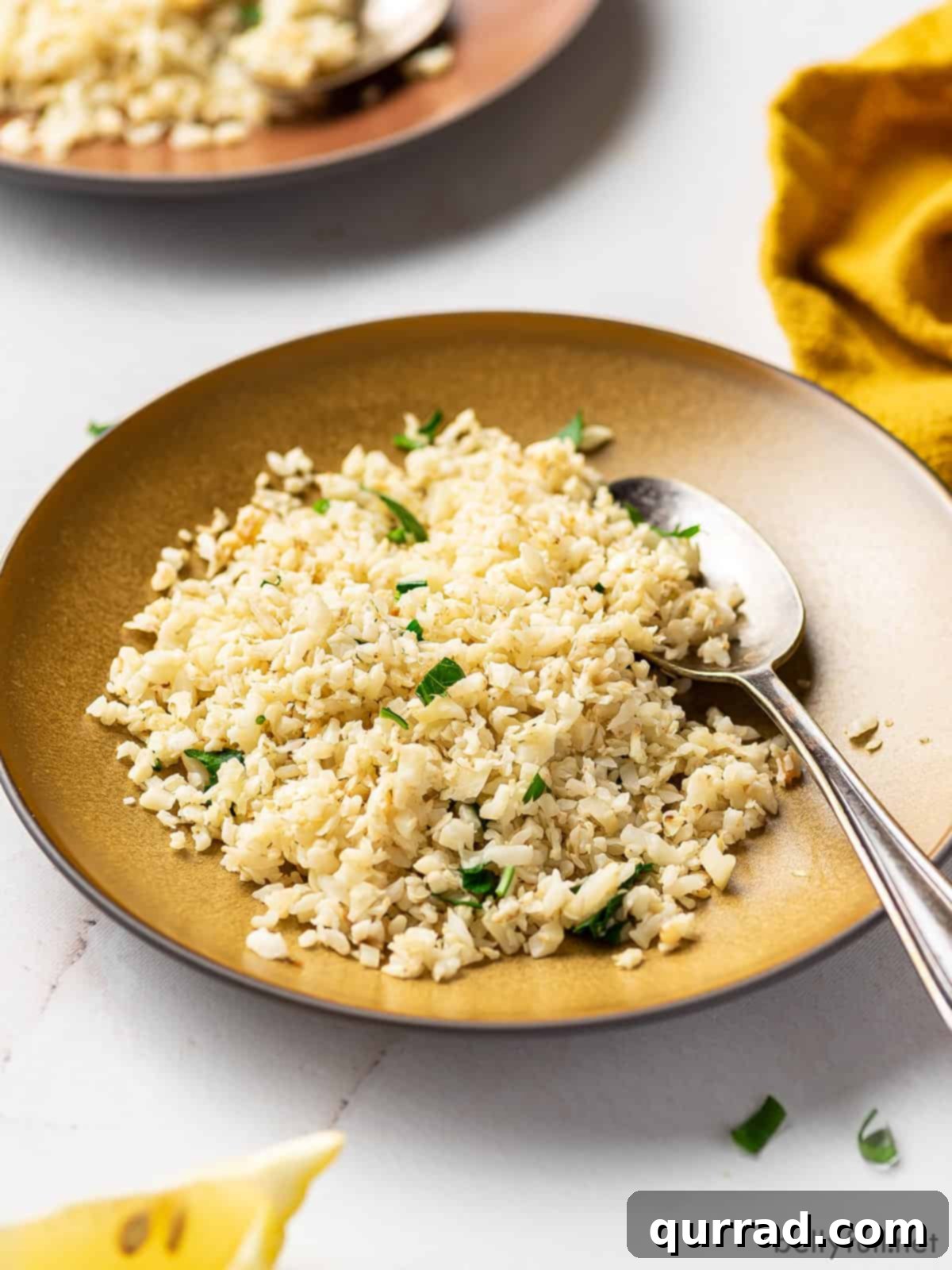
Smart Storage Solutions for Cauliflower Rice: Freshness & Convenience
Whether you’re a meal prep enthusiast or simply dealing with leftovers, knowing how to properly store cauliflower rice is key to maximizing its freshness and ensuring convenience. Here’s a comprehensive guide to keeping your raw and cooked cauliflower rice in prime condition:
How Long Does Cauliflower Rice Last?
-
Raw Cauliflower Rice (Homemade or Store-Bought):
Once you’ve riced a fresh head of cauliflower, or after opening a package of store-bought riced cauliflower, it’s best stored in an airtight container in the refrigerator. In this state, it will typically maintain its quality for about 2-3 days. Beyond this timeframe, raw cauliflower can start to develop a stronger, slightly sulfurous odor and may lose some of its desirable texture. For optimal freshness, it’s advisable to cook or freeze it promptly after ricing.
-
Cooked Cauliflower Rice:
Leftover cooked cauliflower rice should be cooled completely and then transferred to an airtight container before refrigerating. It will keep well for up to 3-4 days. When you’re ready to enjoy it again, reheat gently in the microwave or on the stovetop. A splash of water or broth can help rehydrate it if it appears dry, preventing it from becoming tough. Avoid over-reheating, which can lead to a mushy texture.
-
Can You Freeze Cauliflower Rice? Absolutely!
Freezing is an excellent option for long-term storage and meal prepping, particularly for raw cauliflower rice. For best results, rice the cauliflower (if starting from fresh) and then, critically, press out as much moisture as possible using a clean towel. Freeze the cauliflower rice raw; it’s generally not recommended to cook it before freezing as it can become overly soft upon thawing and reheating. Store it in a tightly sealed, freezer-safe bag or container, removing as much air as you can to prevent freezer burn. It will maintain its quality for up to 1 month.
When ready to use frozen cauliflower rice, you have a couple of options: you can microwave or steam it directly from frozen, which is ideal for quick additions to dishes. If you plan to sauté it on the stovetop, it’s best to thaw it overnight in the refrigerator first, then drain any excess liquid that accumulates before proceeding with your cooking recipe. This ensures it cooks up light and fluffy, just like fresh.
Versatile Serving Suggestions for Cauliflower Rice: Beyond the Side Dish
The beauty of cauliflower rice lies in its incredible versatility. It’s not just a healthy side; it can be integrated into a myriad of dishes, transforming everyday meals into nutrient-packed, low-carb delights. Understanding its unique characteristics is key to unlocking its full potential in your kitchen.
Is Cauliflower Rice Always Interchangeable with Regular White Rice?
For most applications as a side dish or a base for bowls, the answer is a resounding yes! You can confidently serve seasoned cauliflower rice alongside almost any entree you would typically pair with traditional white rice. However, it’s important to remember a crucial difference: cauliflower does not absorb liquid in the same way grains do. Therefore, it is generally not suitable as a direct substitute in recipes where rice is cooked directly in a large volume of liquid, such as classic risottos, paellas, or some pilafs. In these dishes, cauliflower would release its own moisture and become watery rather than absorbing the cooking liquid to achieve a creamy or fluffy texture.
Creative and Delicious Meal Pairings:
Here are some fantastic ways to incorporate cauliflower rice into your meals, creating complete and satisfying low-carb options:
- Dynamic Stir-Fries: Serve as a light and healthy base for any of your favorite stir-fry recipes. Its neutral flavor perfectly complements savory Asian sauces.
- Deconstructed Burrito Bowls: Build vibrant, flavorful burrito bowls with seasoned cauliflower rice, black beans (optional for low-carb), corn, salsa, avocado, and your choice of protein like grilled chicken or seasoned ground beef.
- Hearty Curries and Stews: A wonderful accompaniment to rich, aromatic curries or robust stews, allowing the flavors to meld beautifully without the added carbs of traditional rice.
- Alongside Baked & Grilled Favorites: It pairs exquisitely with lean proteins such as savory honey garlic glazed salmon, zesty salsa verde chicken, or tender baked chicken breast, creating a balanced and complete low-carb meal.
- Comforting Casseroles: Use it as a base or an ingredient in comforting baked dishes like a cheesy chili relleno casserole for added nutrition and less carb density.
- Taco & Fajita Fillings: Incorporate it into your taco fillings or serve it as a lighter side to your fajitas, offering a fresh twist on Mexican night.
- Savory Breakfast Bowls: For a unique and nutritious start to your day, try using seasoned cauliflower rice as a savory base for a breakfast bowl topped with fried eggs, avocado, and hot sauce.
Don’t hesitate to experiment with different flavor profiles: a squeeze of fresh lime and chopped cilantro for a Mexican flair, a dash of ginger and sesame oil for an Asian twist, or Italian herbs and a sprinkle of Parmesan for a Mediterranean touch. The adaptability of cauliflower rice truly makes it a staple for creative and healthy cooking!
Discover More Delicious Low-Carb Side Dishes
Expanding your repertoire of low-carb side dishes is a fantastic way to keep your meals exciting and nutritious. If you love the versatility and health benefits of cauliflower rice, you’ll surely enjoy these other vegetable-centric options that perfectly complement any main course:
- Roasted Cabbage with Crispy Bacon: A surprisingly flavorful and tender side, with savory bacon adding a delicious crunch.
- Flavorful Sautéed Mushrooms: Earthy mushrooms quickly cooked to perfection, a simple yet elegant addition to any meal.
- Roasted Spaghetti Squash with Onion, Garlic, and Parmesan: A delightful pasta alternative, offering a delicate texture and rich flavors.
- Creamy Cheesy Zucchini Casserole: A comforting and indulgent dish that’s surprisingly low in carbs, loaded with cheesy goodness.
- Comforting Mashed Cauliflower Casserole: A creamy, satisfying substitute for mashed potatoes, perfect for a hearty side.
Cauliflower Rice Recipe
This quick and easy cauliflower rice recipe delivers a delicious, light, and fluffy low-calorie, low-carb alternative perfect for any meal. Get ready to elevate your healthy cooking!
Prep Time: 15 minutes
Cook Time: 7 minutes
Total Time: 22 minutes
Yields: 4 servings (approximately 1 cup per serving)
Ingredients
- 1 medium head cauliflower (approx. 1.5 – 2 lbs), or 16 ounce bag store-bought raw cauliflower rice
- 1 1/2 tablespoons extra-virgin olive oil
- 2 cloves garlic, finely minced
- 1/2 teaspoon coarse salt, or to taste
- A few turns of freshly cracked black pepper, to taste
- 2 tablespoons fresh parsley, chopped (or 1 scallion, finely diced), for garnish
- A squeeze of fresh lime juice (about 1-2 teaspoons), to brighten flavors
Instructions
- Prepare Cauliflower: If using a fresh head of cauliflower, begin by removing all the green leaves and thoroughly washing and drying the cauliflower. Cut or break the cauliflower into small, uniform florets, discarding the tough core.
- Rice the Cauliflower: Choose your preferred method:
- Food Processor (S-blade): Fill the food processor bowl about halfway with florets. Pulse 4-5 times until the cauliflower breaks down into small, rice-sized granules. Be careful not to over-process to avoid a mushy texture. Transfer to a bowl and repeat with remaining florets.
- Food Processor (Grating Disc): Attach the grating disc. With the motor running, feed the florets through the feeding tube for consistently sized rice pieces.
- Hand Grater: Using the medium-sized holes of a box grater, carefully grate the cauliflower into rice-like bits. (Note: this method can be a bit messy!)
*If using store-bought cauliflower rice, you can skip this ricing step.
- Remove Excess Moisture: This is a critical step for preventing soggy cauliflower rice! Transfer the riced cauliflower (whether homemade or store-bought) to the center of a clean kitchen towel or several layers of paper towels. Gather the edges of the towel and squeeze firmly to press out as much excess liquid as possible. You’ll be surprised by how much water comes out.
- Sauté Aromatics: In a large nonstick skillet, warm the extra-virgin olive oil over medium heat. Add the finely minced garlic and sauté for about 20 seconds, just until it becomes fragrant. Be careful not to let the garlic burn.
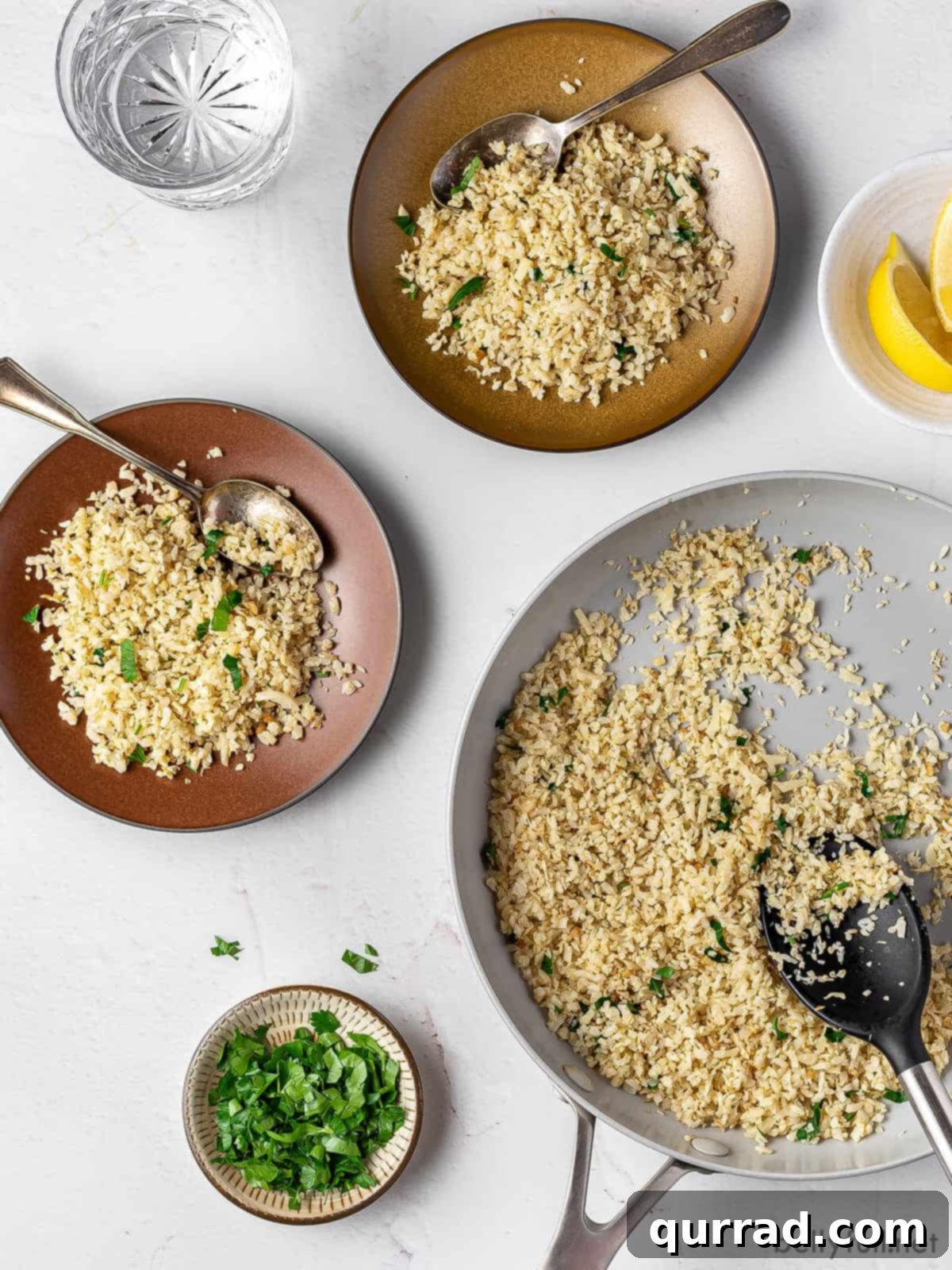
- Cook Cauliflower Rice: Add the thoroughly dried riced cauliflower to the skillet. Season with coarse salt and freshly cracked black pepper. Stir well to combine the cauliflower with the oil and garlic. Cook for approximately 5 to 8 minutes, stirring every minute or so, until the cauliflower is tender-crisp and has achieved a lightly golden brown color.
- Finish and Serve: Remove the skillet from the heat. Stir in the fresh chopped parsley (or finely diced scallions) and a squeeze of fresh lime juice. Taste and adjust seasonings as necessary. Serve warm immediately as a delicious and healthy side dish. Enjoy!
Nutrition Information (Per 1 Cup Serving)
| Nutrient | Amount |
|---|---|
| Calories | 85 kcal |
| Carbohydrates | 7 g |
| Protein | 3 g |
| Fat | 6 g |
| Saturated Fat | 1 g |
| Polyunsaturated Fat | 1 g |
| Monounsaturated Fat | 4 g |
| Sodium | 335 mg |
| Potassium | 447 mg |
| Fiber | 3 g |
| Sugar | 3 g |
| Vitamin A | 169 IU |
| Vitamin C | 72 mg |
| Calcium | 37 mg |
| Iron | 1 mg |
Nutritional information provided is an estimate based on the ingredients listed and may vary depending on exact product brands and any modifications made to the recipe. If precise nutritional values are critical for your dietary needs, we recommend calculating them independently.