
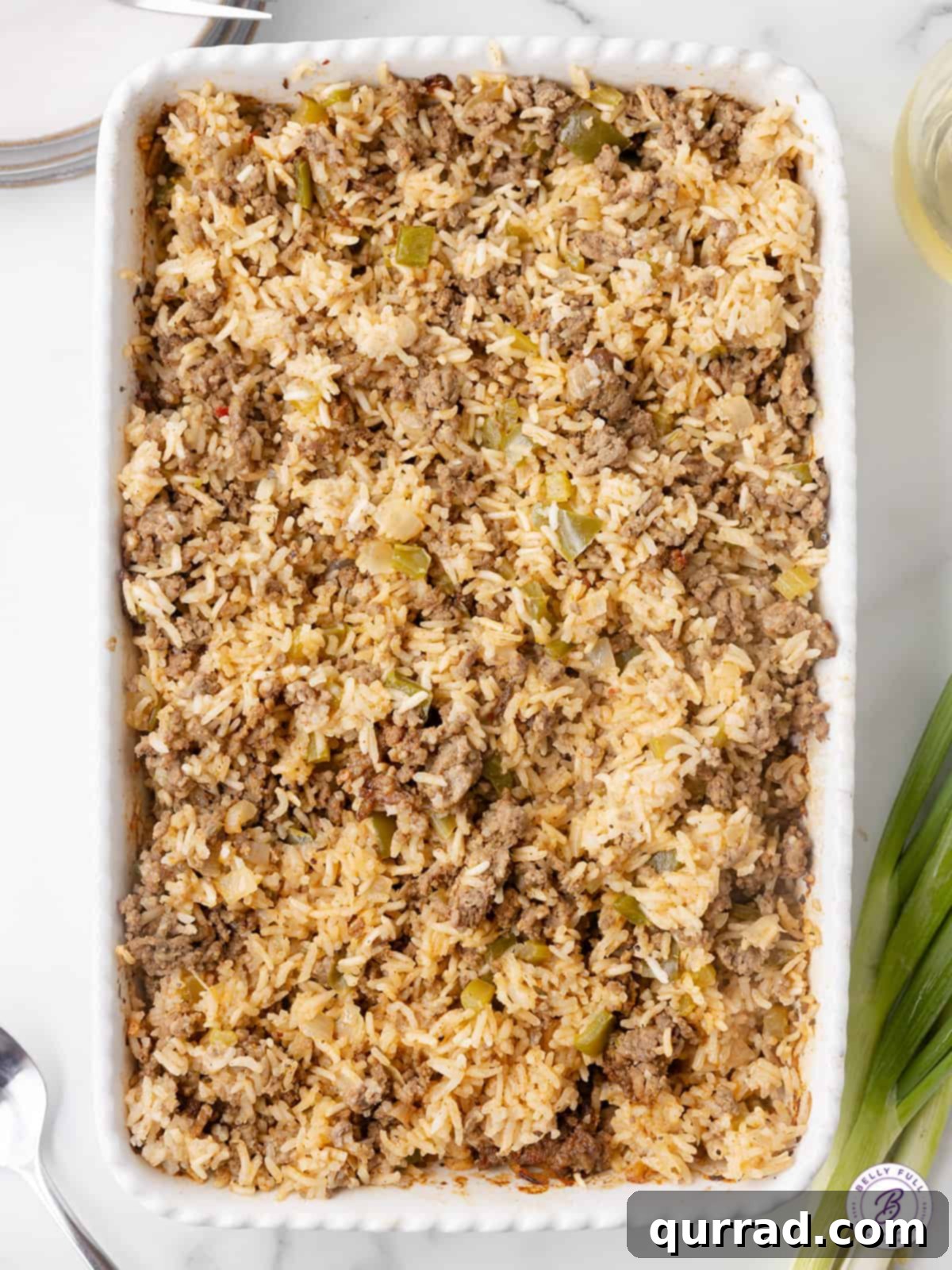
Easy & Authentic Dirty Rice Casserole: Your New Go-To Southern Comfort Dish
Prepare to be captivated by the rich, savory flavors of this incredible Dirty Rice Casserole! This easy-to-make dish brings the soulful essence of Louisiana Creole cuisine right to your kitchen, offering a hearty and satisfying meal that’s bursting with aromatic spices and tender meats. Whether you’re seeking a substantial main course for a family dinner or a flavor-packed side dish to complement your favorite Southern spread, this casserole is a true culinary gem that promises to become a staple in your recipe rotation.
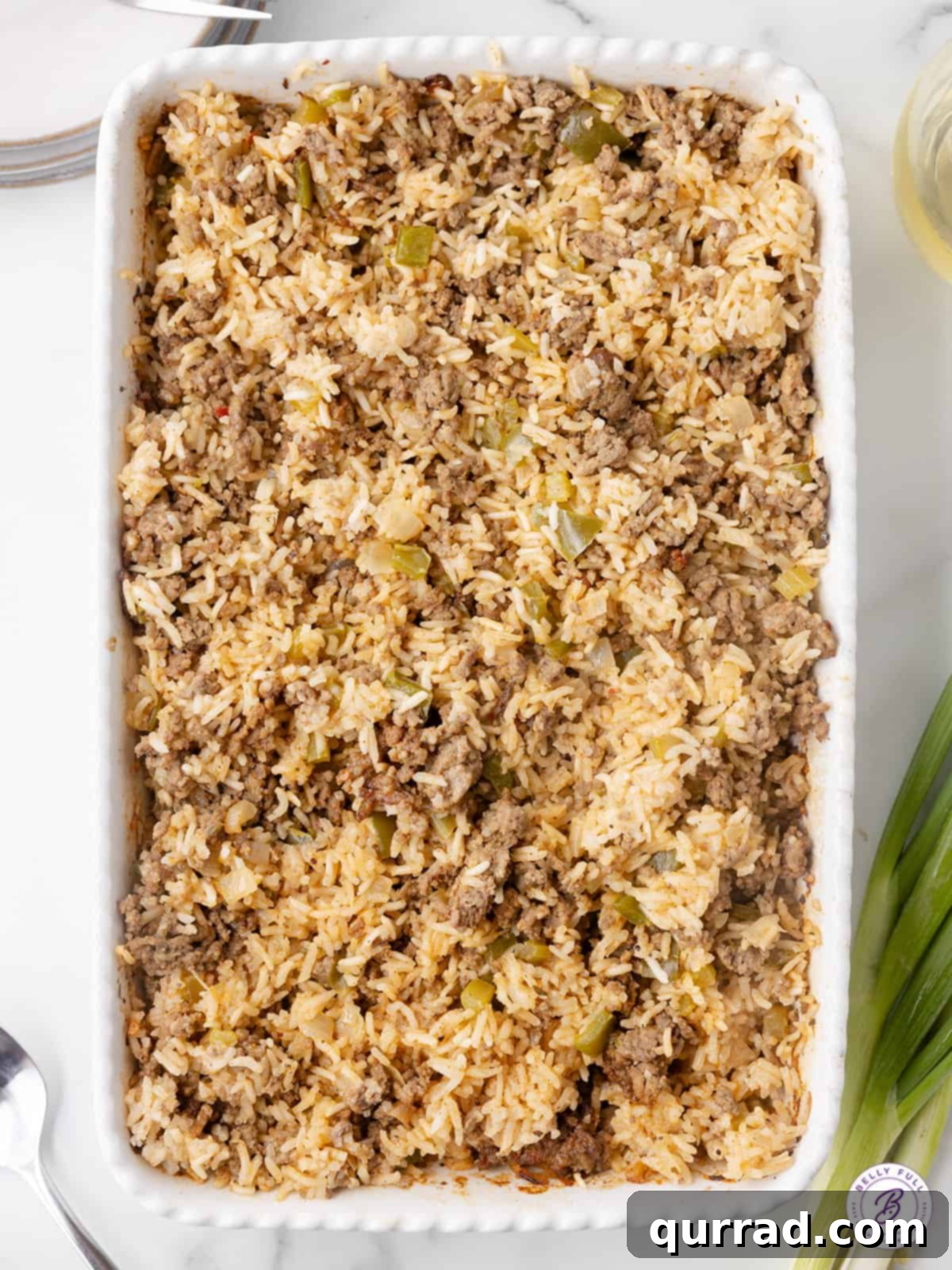
What Exactly is Dirty Rice? Unpacking a Louisiana Classic
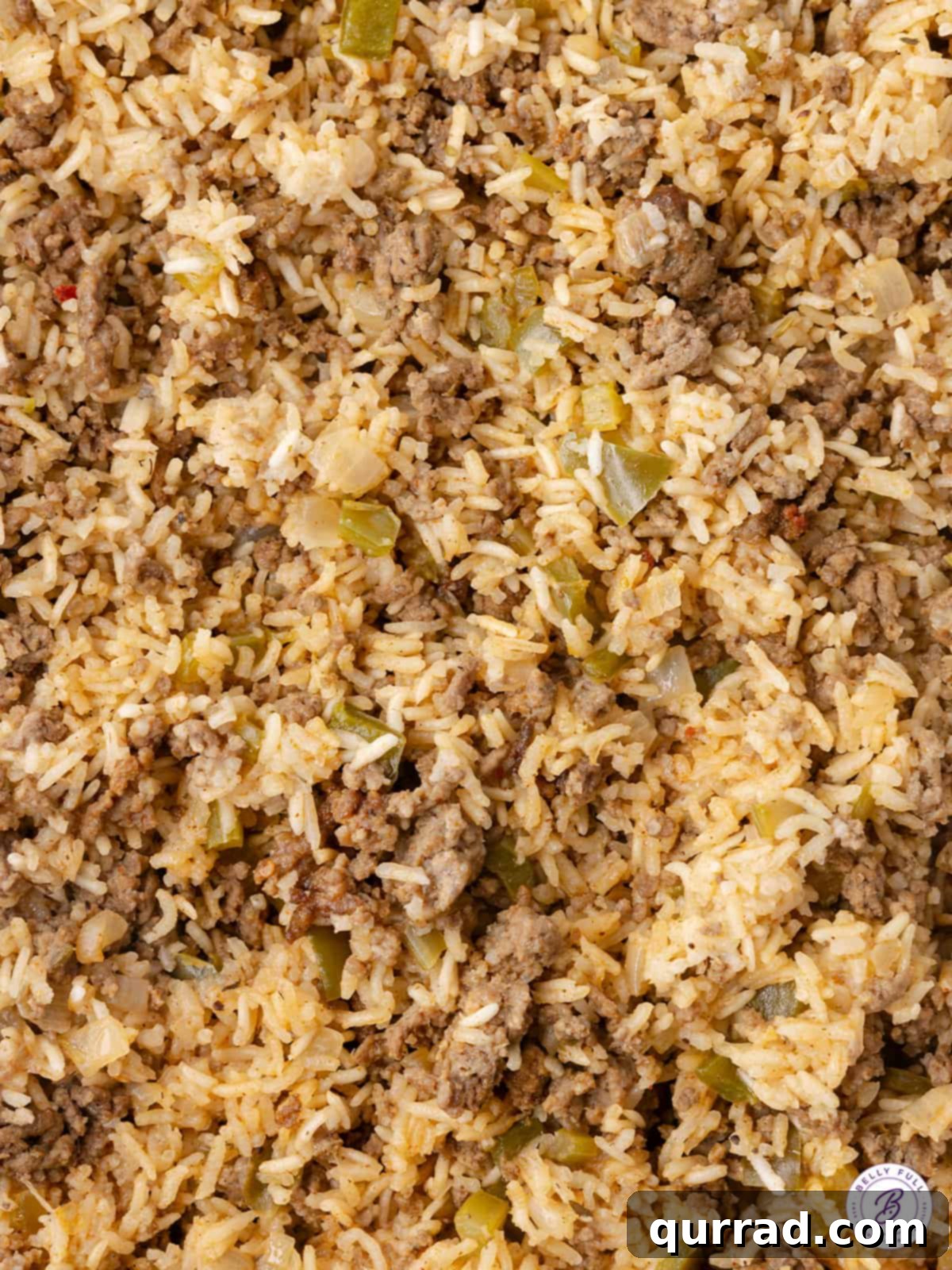
Dirty Rice is a cornerstone of Louisiana Creole cuisine, known for its distinctive “dirty” appearance which gives the dish its name. This isn’t a derogatory term; rather, it refers to the beautiful brownish hue the rice takes on as it’s cooked with finely minced meat – traditionally chicken liver or giblets, though ground pork, beef, or a combination are also common. Beyond the meat, the dish is built upon the “holy trinity” of Cajun and Creole cooking: diced green bell peppers, onions, and celery, all simmered together with a vibrant blend of spices. The result is a deeply flavorful, aromatic rice dish that’s as comforting as it is iconic. Our casserole version captures all that authentic taste in a convenient, all-in-one baking dish, making it accessible for any home cook.
Why Choose a Casserole for Dirty Rice?
While traditional dirty rice is often prepared on the stovetop, transforming it into a casserole offers several distinct advantages. Primarily, it simplifies the cooking process, allowing the flavors to meld beautifully in the oven with minimal hands-on time. The baking method ensures that the rice absorbs all the rich broth and seasonings evenly, resulting in a perfectly tender, fluffy texture without the constant stirring required on the stovetop. This “set it and forget it” approach makes it an ideal choice for busy weeknights or for feeding a crowd. Furthermore, a casserole inherently means less cleanup, as everything cooks in a single dish. It’s also fantastic for make-ahead meals, as the flavors only deepen when reheated, making it a perfect candidate for meal prep or potlucks.
Essential Ingredients for Your Dirty Rice Casserole
Crafting this savory Dirty Rice Casserole requires a blend of fresh produce, lean meats, and a pantry full of aromatic spices. Each ingredient plays a crucial role in building the layers of flavor that make this dish so irresistible.
- Ground Beef and Pork: We opt for a combination of lean ground beef and ground pork to create a robust and incredibly hearty base for the casserole. The beef provides a familiar richness, while the pork adds a touch of sweetness and depth, mimicking the traditional flavors often found in authentic dirty rice. Using lean meats helps keep the dish from becoming overly greasy, allowing the other flavors to shine.
- The “Holy Trinity” of Vegetables: Diced green bell pepper, onion, and celery are the cornerstone of many Louisiana dishes. These three vegetables, sautéed until tender, form an aromatic foundation that infuses the entire casserole with their sweet, earthy flavors and pleasant texture. Minced garlic is added at the end of the sautéing process, ensuring its pungent aroma and taste are maximized without burning.
- Dry Long-Grain White Rice: The choice of rice is paramount for achieving the perfect texture. Long-grain white rice is ideal because its individual grains cook up fluffy and separate, perfectly absorbing the rich liquid and seasonings without turning mushy. Avoid short-grain varieties, which have a higher starch content and can become sticky and overcooked in a casserole environment. Basmati or jasmine rice are also excellent alternatives that will yield a similar light and fluffy result.
- Chicken Broth: The liquid component is key to cooking the rice and distributing flavor. Low-sodium chicken broth is our preference, allowing you to control the overall saltiness of the dish. However, feel free to substitute with vegetable broth for a lighter flavor or beef broth for an even richer, deeper profile, depending on your dietary preferences or what you have available.
- A Symphony of Seasonings: The heart of any great dirty rice is its spice blend. Our recipe features paprika for color and mild warmth, garlic powder and onion powder to enhance the aromatics, dried oregano and dried thyme for classic herbaceous notes, and a touch of Cajun spice for that characteristic Southern kick. Salt and black pepper are added to taste, tying all the flavors together. Don’t be shy about adjusting the Cajun spice to your preferred level of heat!
Step-by-Step: How to Prepare Your Delicious Dirty Rice Casserole
Creating this flavorful casserole is a straightforward process that yields impressive results. Follow these simple steps for a truly unforgettable meal:
- Preheat and Prepare: Begin by preheating your oven to 375°F (190°C). Lightly grease a 9×13-inch baking dish with nonstick spray or a thin layer of butter to prevent sticking and ensure easy cleanup. This foundational step is crucial for a smooth cooking experience.
- Brown the Meats: In a large, sturdy nonstick skillet or Dutch oven, combine the ground beef and ground pork. Cook over medium heat, using a wooden spoon or spatula to break the meat into small, even crumbles. Continue cooking until the meats are thoroughly browned and no pink remains. This step is essential for developing deep, savory flavors. Once cooked, carefully drain any excess grease from the skillet to prevent the casserole from becoming oily. Transfer the browned meat to your prepared baking dish.
- Sauté the Aromatics: Using the same skillet (no need to clean it – those browned bits add extra flavor!), add the diced green bell pepper, onion, and celery. Sauté over medium heat for approximately 5-7 minutes, or until the vegetables have softened and become tender and translucent. Towards the end of the sautéing process, stir in the minced garlic and cook for another 20-30 seconds until it becomes fragrant. Be careful not to burn the garlic, as this can turn bitter.
- Toast the Rice and Spices: Add the uncooked long-grain white rice to the skillet with the sautéed vegetables. Stir in the paprika, garlic powder, onion powder, dried oregano, dried thyme, and Cajun spice. Cook and stir continuously for about 2 minutes. This brief toasting helps to develop a nutty flavor in the rice and ensures the spices are fully bloomed and distributed.
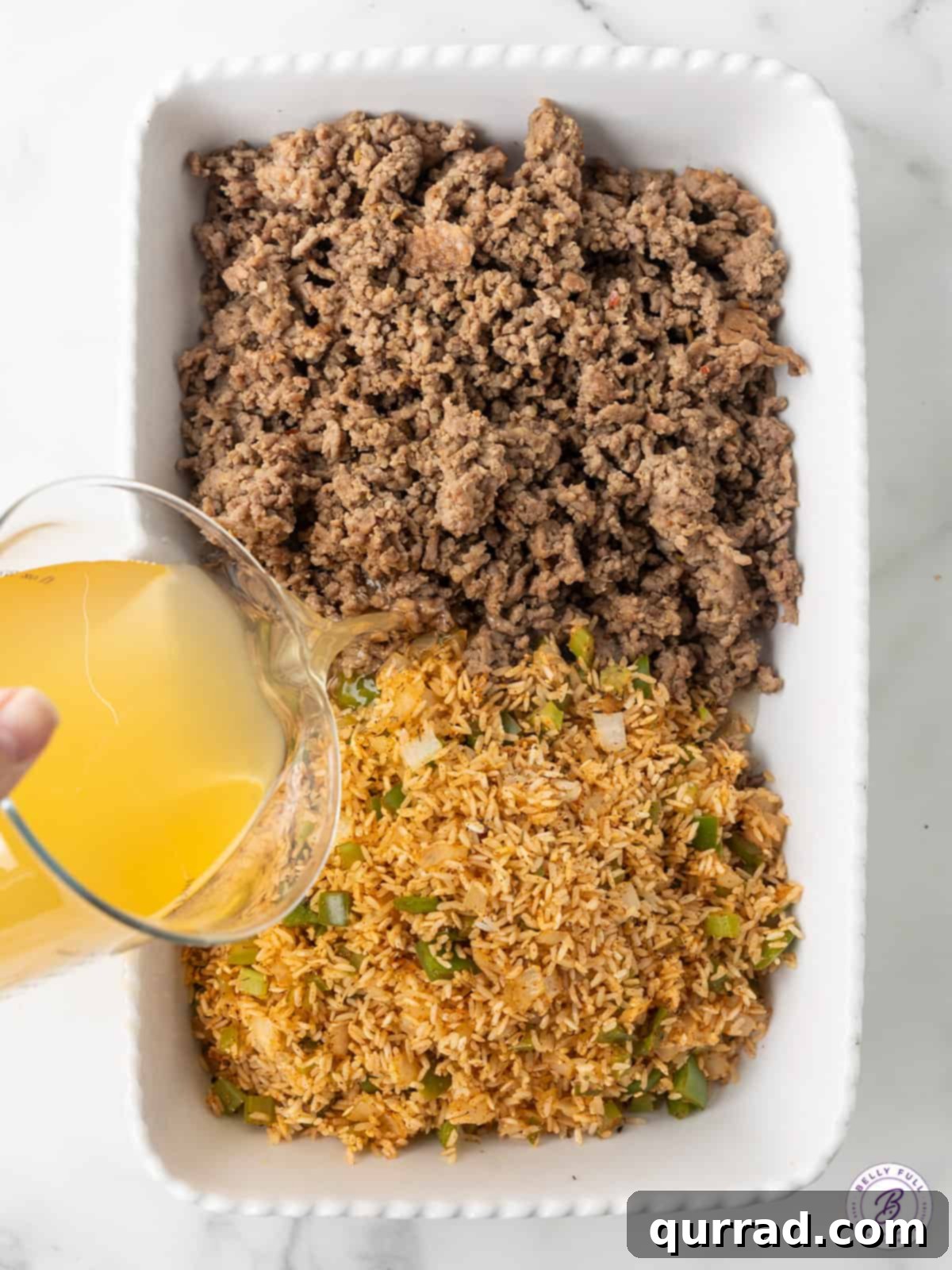
- Combine and Season: Transfer the rice and vegetable mixture from the skillet into the baking dish with the cooked ground meats. Pour the low-sodium chicken broth evenly over the entire mixture. Add a generous pinch of salt and black pepper to taste. Stir everything gently but thoroughly to ensure the ingredients are well combined and the rice is evenly submerged in the broth.
- Bake to Perfection: Cover the baking dish tightly with aluminum foil. This seal is crucial for trapping steam, which helps the rice cook evenly and prevents the casserole from drying out. Bake in the preheated oven for 45 minutes. After this initial baking period, carefully remove the foil, give the casserole a quick stir, and continue baking for an additional 15-20 minutes, or until the rice is perfectly tender and all the liquid has been absorbed. The top should be slightly browned and fragrant.
- Rest and Serve: Once baked, remove the casserole from the oven and let it rest, still covered with foil, for 5-10 minutes. This resting period allows the flavors to settle and the rice to steam slightly, ensuring a perfectly fluffy texture. Fluff with a fork before serving and enjoy your homemade Dirty Rice Casserole!
Tips, Tricks, and Savory Substitutions for Your Casserole
This Dirty Rice Casserole recipe is wonderfully versatile, allowing for various adjustments to suit your taste, dietary needs, or what you have on hand. Here are some tips and substitutions to make it truly your own:
- Experiment with Proteins: While ground beef and pork create a classic flavor profile, don’t hesitate to customize your protein.
- For a leaner option, substitute with ground turkey or ground chicken.
- If you prefer a bolder flavor, consider adding a spicy ground sausage (like Andouille sausage) in place of some of the pork.
- For a truly authentic touch, you can include finely minced chicken liver or giblets, cooked and browned alongside the ground meats. These add a distinctive depth that purists often seek.
- Vegetarian or vegan? Omit the meat and use plant-based ground crumbles, adjusting cooking times as needed. Ensure to use vegetable broth.
- Rice Variations: Long-grain white rice is recommended for its fluffy, separate grains, but other rice types can work with adjustments:
- Basmati or Jasmine Rice: These aromatic long-grain varieties will yield similar excellent results with a delightful fragrance.
- Brown Rice or Wild Rice: For a healthier, nuttier, and chewier texture, you can use brown rice or wild rice. However, be aware that these varieties require significantly more liquid and longer cooking times. You may need to increase the broth by about 1/2 to 1 cup and extend the baking time by 20-30 minutes or more. Monitor the liquid levels carefully and add more if the casserole appears dry before the rice is fully cooked.
- Pre-Soaking: For brown rice, pre-soaking it for 30 minutes before cooking can help reduce the overall baking time slightly.
- Boosting the Vegetable Power: Enhance the nutritional value and flavor by adding other vegetables. Consider a diced red or yellow bell pepper alongside the green for more color, or finely chopped carrots for a touch of sweetness. A small can of drained diced tomatoes can also add a nice acidity and moisture.
- Adjusting the Spice Level: The Cajun spice adds a mild kick, but you can easily adjust the heat.
- For more heat, add an extra pinch of cayenne pepper or a dash of your favorite hot sauce to the broth.
- For a milder version, reduce the amount of Cajun spice.
- Preventing a Dry Casserole: A common concern with rice casseroles is dryness. To ensure your dirty rice remains moist and flavorful:
- Always cover the baking dish tightly with foil during the initial baking phase to trap steam.
- Ensure you use the correct amount of broth. If your oven tends to run hot, you might add an extra 1/4 cup of broth at the beginning.
- If the casserole appears dry during the uncovered baking stage, you can add a splash more broth (1/4 cup at a time) and quickly re-cover it with foil for a few more minutes.
- Extra Flavor Boosters: A tablespoon of tomato paste stirred in with the vegetables can add a subtle umami depth. A splash of Worcestershire sauce or a bay leaf added to the broth can also enhance the savory profile.
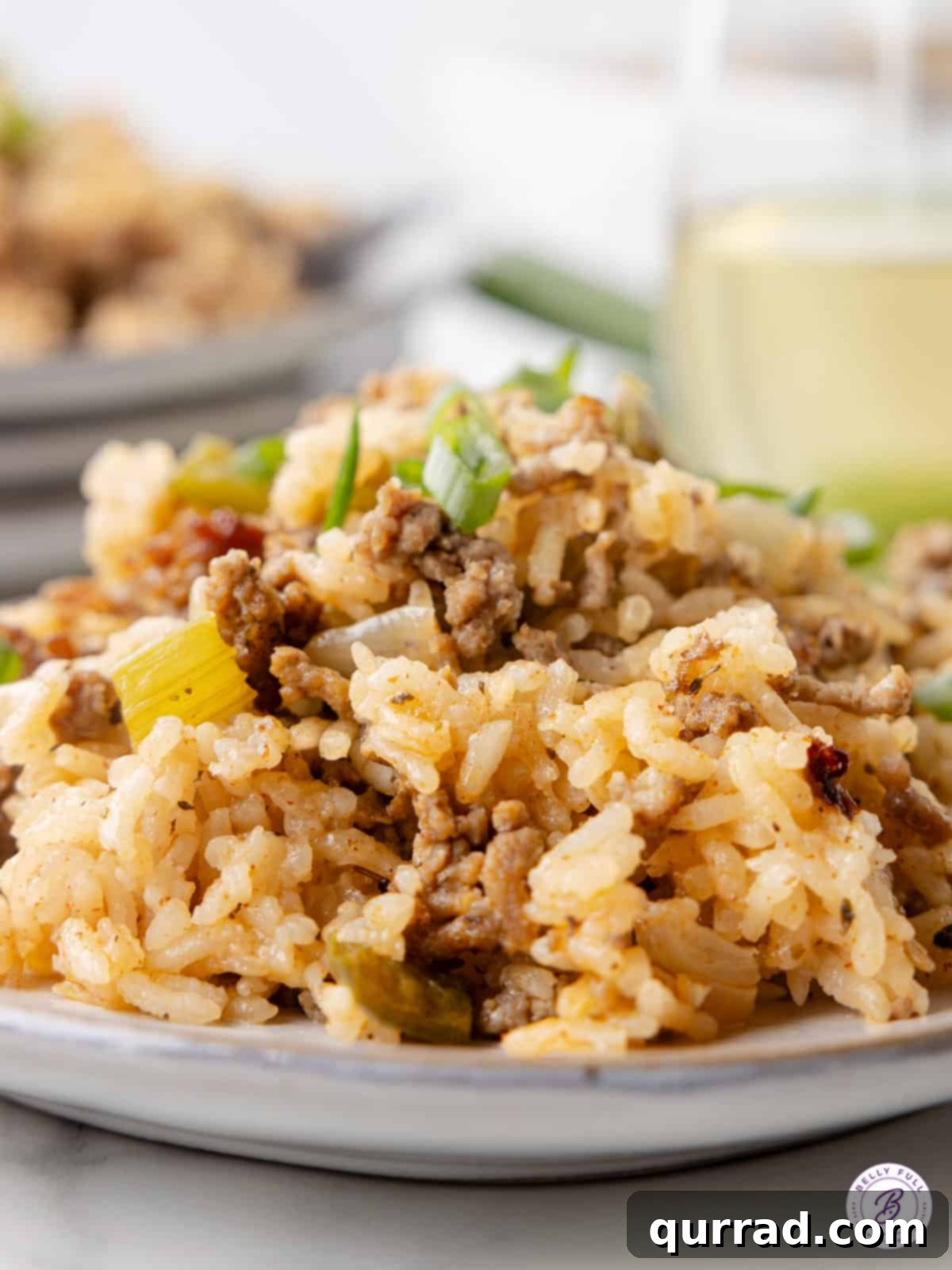
Serving Suggestions: What Pairs Best with Dirty Rice Casserole?
This Dirty Rice Casserole is incredibly versatile, hearty enough to stand alone as a main course, yet equally fantastic as a robust side dish. Its rich flavors make it a perfect companion to a variety of Southern-inspired or comfort food meals:
- Classic Cornbread: A warm slice of easy skillet cornbread is a quintessential pairing, perfect for soaking up any leftover savory juices.
- Creamed Greens: A side of creamy creamed spinach or collard greens adds a touch of freshness and a vibrant color contrast.
- Crisp Slaw: For a refreshing counterpoint to the rich casserole, serve it alongside a tangy coleslaw. The crunch and tartness cut through the richness beautifully.
- Simple Salad: A light and crisp simple green salad with a vinaigrette dressing offers a refreshing balance and adds essential greens to your meal.
- Grilled or Fried Chicken: If serving as a side, this casserole is excellent with grilled chicken, crispy fried chicken, or even baked chicken thighs.
- Seafood Entrees: For a truly Southern feast, pair it with blackened fish, grilled shrimp, or crab cakes.
Make Ahead & Proper Storage for Your Dirty Rice Casserole
This casserole is not only delicious freshly baked but also holds up exceptionally well as leftovers, making it perfect for meal prep or busy schedules.
- Make Ahead: You can assemble the entire casserole a day in advance. Prepare it up to the point where you pour in the broth and stir everything together. Cover the baking dish tightly with plastic wrap or foil and refrigerate. When ready to bake, remove it from the fridge and allow it to sit at room temperature for about 20-30 minutes while your oven preheats. Then, bake according to the recipe instructions, adding an extra 10-15 minutes to the initial covered baking time since it will be starting cold.
- Leftovers: Any leftover Dirty Rice Casserole should be stored promptly in an airtight container and refrigerated. It will maintain its delicious flavor and quality for up to 3 days.
- To Reheat:
- Microwave: For individual portions, microwave on high for 1-2 minutes, stirring halfway through, until thoroughly warmed.
- Oven: For the entire casserole or larger portions, preheat your oven to 350°F (175°C). Cover the dish with foil and heat for 20-25 minutes, or until warmed through.
- Moisture Tip: If the rice seems a bit dry after being stored, add a splash (1-2 tablespoons) of water or chicken broth before reheating to help rehydrate it.
- To Freeze: Dirty Rice Casserole freezes beautifully!
- Allow the casserole to cool completely after baking.
- Divide it into individual portions or leave it whole in a freezer-safe baking dish.
- Store in airtight, freezer-safe containers or heavy-duty resealable plastic bags. It can be kept in the freezer for up to 3 months.
- When ready to enjoy, thaw the frozen casserole in the refrigerator overnight.
- Once thawed, reheat using the microwave or oven methods described above. You might need to add a bit of extra liquid during reheating to restore moisture.
More Irresistible Rice Recipes to Explore:
If you love the versatility and comforting nature of rice dishes, be sure to try some of these other fantastic recipes:
- Mushroom Rice
- Spanish Rice
- Rice Pilaf
- Cilantro Lime Rice
- Coconut Rice
We are confident that this easy Dirty Rice Casserole will become a new favorite in your household. Its rich flavors, simple preparation, and hearty nature make it a perfect choice for any occasion. Don’t forget to share your experience and leave a review below! For more delicious recipes and culinary inspiration, follow us on TikTok, Facebook, Instagram, Pinterest, and YouTube!
Dirty Rice Casserole Recipe Card
Prep Time: 15 mins
Cook Time: 1 hr 10 mins
Total Time: 1 hr 25 mins
Servings: 6 to 8 as a side
Ingredients
- 1 pound lean ground beef
- 1 pound ground pork
- 1 medium green bell pepper, seeded and diced
- 1 medium yellow onion, diced
- 2 stalks celery, diced
- 2 cloves garlic, minced
- 2 cups dry long grain white rice
- 4 & 1/2 cups low sodium chicken broth
- 1 teaspoon paprika
- 1 teaspoon garlic powder
- 1 teaspoon onion powder
- 1/2 teaspoon dried oregano
- 1/2 teaspoon dried thyme
- 1/4 teaspoon cajun spice
- Salt and black pepper, to taste
Instructions
- Preheat the oven to 375°F (190°C). Spray a 9×13 baking dish with nonstick spray.
- In a large nonstick skillet over medium heat, cook the ground beef and ground pork, breaking it up into tiny crumbles, until browned and no pink remains. Drain excess fat and transfer to the prepared baking dish.
- In the same skillet, add the bell pepper, onion, and celery. Sauté until the vegetables are tender, about 5 minutes. Add in the garlic and cook until fragrant, about 20 seconds.
- Stir in the rice, paprika, garlic powder, onion powder, oregano, and thyme. Cook and stir for another 2 minutes.
- Transfer the rice and vegetable mixture to the prepared baking dish with the cooked meat.
- Pour the chicken broth over the meat and rice/vegetable mixture. Season with a bit of salt and black pepper. Stir to combine.
- Cover the baking dish tightly with aluminum foil and bake in the preheated oven for 45 minutes.
- Remove the foil, stir, and continue baking for an additional 15-20 minutes or until the rice is tender and the liquid is absorbed.
- Once done, remove from the oven and let it rest for a few minutes before serving.
Notes
- Use a different protein: Substitute with ground turkey or ground chicken for a leaner option. Ground lamb or additional ground beef/turkey/chicken can be used in place of the pork, if preferred. For an authentic touch, add finely minced chicken liver.
- Swap the broth: Vegetable broth or beef broth can be used instead of chicken broth depending on what you have on hand or your flavor preference.
- Try a different rice: We prefer long-grain white rice for its fluffy texture and ability to not clump together. However, you can use basmati or jasmine rice for a similar result. Brown rice or wild rice can be used, but note that you might need to adjust the amount of liquid and cooking times since these varieties take longer to cook. Also note that wild rice will be chewier.
Nutrition Information (Approximate Per Serving)
- Calories: 570 kcal
- Carbohydrates: 55g
- Protein: 37g
- Fat: 21g
- Saturated Fat: 8g
- Polyunsaturated Fat: 2g
- Monounsaturated Fat: 9g
- Trans Fat: 0.3g
- Cholesterol: 101mg
- Sodium: 155mg
- Potassium: 802mg
- Fiber: 2g
- Sugar: 2g
- Vitamin A: 350IU
- Vitamin C: 18mg
- Calcium: 59mg
- Iron: 4mg
Nutritional information provided is an automatic calculation and can vary based on the exact products you use and any changes you make to the recipe. If these numbers are very important to you, we recommend calculating them yourself using a trusted nutrition calculator.