
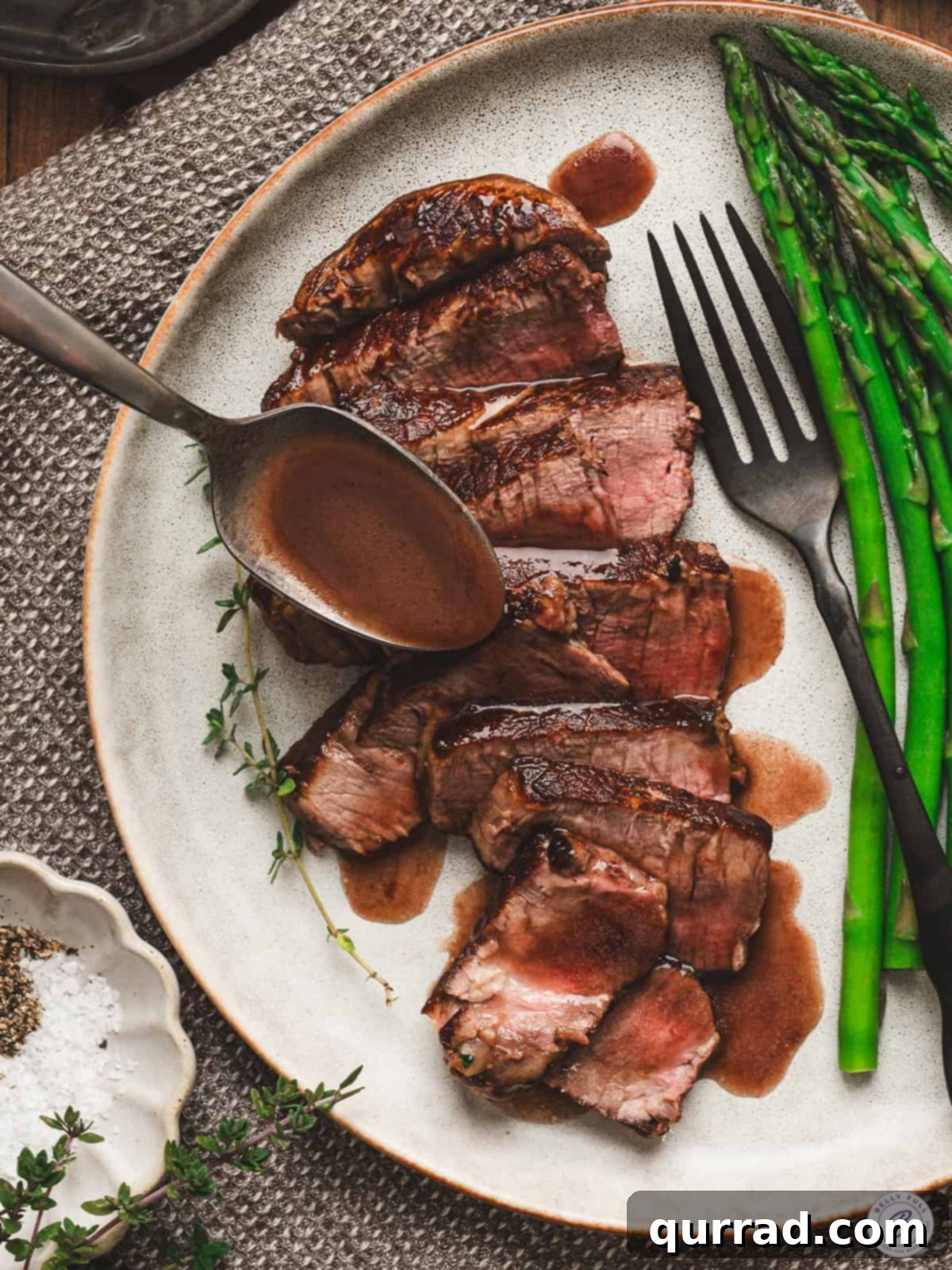
Transform your ordinary steak night into an extraordinary culinary experience with this rich, glossy red wine reduction sauce. Forget bland beef; this gourmet sauce is your secret weapon to achieving restaurant-quality flavor and presentation right in your own kitchen. Crafted from a handful of simple ingredients like robust red wine, aromatic garlic, and fresh thyme, it simmers down to a velvety smooth pan sauce in under 30 minutes, capturing every savory nuance left in your pan. Elevating your meal doesn’t have to be complicated or time-consuming. This elegant red wine sauce effortlessly adds that coveted deep flavor and sophisticated sheen that defines a truly memorable steakhouse dish. Whether it’s a cozy weeknight dinner or a special date night, this easy upgrade makes any meal feel luxurious and special, without any extra fuss.
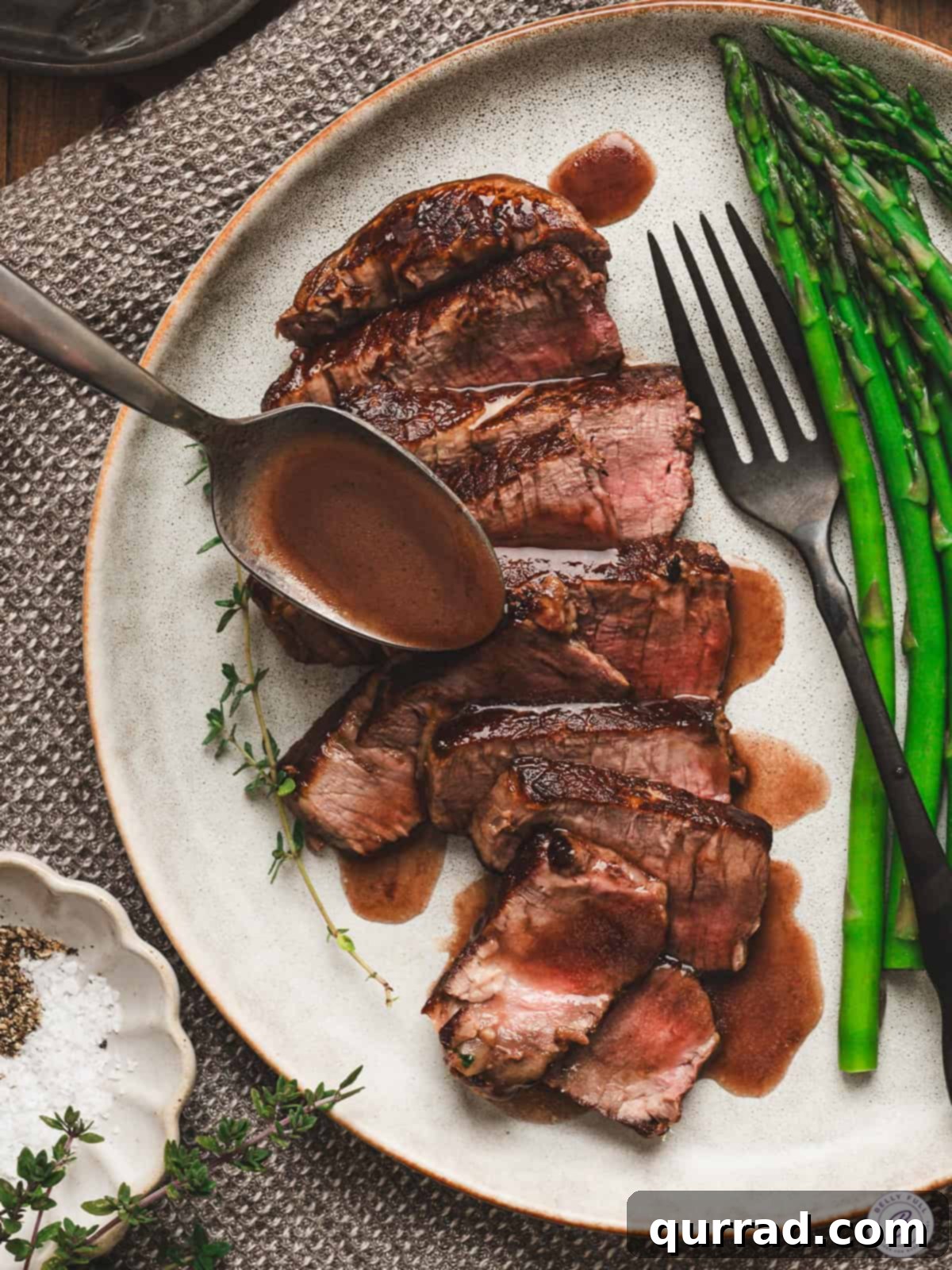
As an avid home cook, I firmly believe a truly magnificent sauce can transform even the simplest dish into a masterpiece – it’s the culinary equivalent of the perfect accessory. Given our household’s love for a perfectly cooked steak, having a reliable and delicious red wine sauce recipe is an absolute necessity. This particular recipe stands out because it uses just seven pantry staples – a dry red wine, fresh garlic, fragrant herbs, and savory beef stock – to create a deeply flavored, glossy sauce that feels incredibly fancy but requires minimal effort. It’s my go-to whenever our steak dinner needs that extra touch of sophistication, and it never fails to impress and disappear quickly.
Why This Red Wine Reduction Sauce is a Must-Try
A gourmet red wine reduction sauce might sound intimidating, but this recipe simplifies the process without compromising on flavor or elegance. Here’s why you’ll want to add it to your repertoire:
- Unforgettable Flavor: The process of reduction intensifies the flavors of the wine, aromatics, and stock, creating a complex, savory, and slightly sweet sauce that beautifully complements rich meats.
- Restaurant-Quality Finish: The final whisking of butter into the strained sauce not only adds richness but also gives it a stunning, glossy sheen that looks like it came straight from a five-star kitchen.
- Incredibly Versatile: While it’s the ultimate steak companion, this sauce elevates a wide array of dishes, from roasted chicken and pork to lamb, mushrooms, and even mashed potatoes.
- Simple Ingredients: You likely have most of these ingredients in your pantry or can easily find them at any grocery store. No exotic or hard-to-find items needed!
- Quick to Prepare: From start to finish, this luxurious sauce comes together in less than 30 minutes, making it perfect for both spontaneous weeknight meals and planned special occasions.
- Make-Ahead Friendly: It stores beautifully in the refrigerator or freezer, allowing you to prepare it in advance and simply reheat when needed, saving you time when entertaining.
Helpful Tips & Variations for the Perfect Sauce
Mastering a red wine reduction is all about technique and a little patience. These tips will ensure your sauce is perfect every time, and the variations will inspire you to customize it to your taste.
- Reduce Long Enough: The term “reduction sauce” is highly descriptive; it means you are literally reducing the liquid. This process, done uncovered over gentle heat, allows some of the liquid to evaporate, concentrating the flavors and naturally thickening the sauce. If your sauce appears too thin after the recommended time, simply continue simmering. You’re looking for a consistency that coats the back of a spoon – not watery, but not overly thick like gravy. Patience here is key to a rich, intense flavor.
- Simmer, Don’t Boil Aggressively: While the initial step involves bringing the wine to a boil, the sustained cooking should be a gentle simmer. Aim for small, gentle bubbles breaking on the surface, not a vigorous, rolling boil. Boiling too rapidly can cause the wine to oxidize quickly and develop an unpleasantly bitter taste. A gentle simmer ensures a smooth, mellow flavor development.
- Balance the Flavors: This red wine sauce is a delicate dance between acidity and sweetness. The dry red wine contributes a bright acidity, which is beautifully rounded out by the richness of butter and the subtle sweetness of sugar. Always taste your sauce as it reduces. If it tastes too sharp or acidic, a small pinch more sugar can balance it. Conversely, if it’s too sweet, a tiny splash of red wine vinegar or even a squeeze of lemon juice can brighten it up.
- Don’t Skip the Straining Step: For that truly refined, restaurant-style finish, straining the sauce through a fine-mesh sieve is crucial. This removes any minced shallots, garlic, thyme sprigs, or bay leaves, leaving you with an incredibly smooth, silky, and elegant sauce. It’s a small extra step that makes a significant difference in texture and presentation.
- Enhance with Balsamic: For an extra layer of complexity and a hint of sweetness, consider adding a splash of good quality balsamic vinegar along with the beef stock. It deepens the color and adds a lovely tang.
- Make it Thicker: If you prefer an even thicker sauce, after straining and whisking in the butter, you can whisk in a slurry made from ½ teaspoon of cornstarch mixed with 1 tablespoon of cold water. Bring the sauce back to a gentle simmer for a minute or two until it thickens to your desired consistency.
- Dairy-Free Option: To make this red wine reduction dairy-free, simply substitute the unsalted butter with a high-quality dairy-free butter alternative. The richness and gloss will still be achievable.
- Experiment with Herbs: While thyme is classic, a sprig of rosemary can add a different aromatic note. Just be mindful as rosemary can be quite potent.
Easy & Elegant Red Wine Reduction Sauce
Print Recipe
See below the recipe card for detailed step-by-step images.
Ingredients for Red Wine Sauce
- 3 tbsp unsalted butter, room temperature, divided (1 tbsp for sautéing, 2 tbsp for finishing)
- 1 shallot, finely minced
- 1 clove garlic, minced
- 1 cup dry red wine, (such as Cabernet Sauvignon, Pinot Noir, or Merlot – choose one you enjoy drinking!)
- 2 sprigs fresh thyme
- 1 dried bay leaf
- ½ tsp granulated sugar
- 1 cup beef stock, (low sodium preferred, see note for alternatives)
- ¼ tsp coarse salt
- a few turns of freshly ground black pepper
Step-by-Step Instructions
-
Sauté Aromatics: In the same medium saucepan or skillet you used to cook your steak (this allows you to capture all those delicious fond bits!), melt 1 tablespoon of unsalted butter over medium heat. Add the finely minced shallot and sauté gently until it softens and becomes translucent, taking care not to brown it. This should take about 3-5 minutes. Stir in the minced garlic and cook for an additional 20 seconds until it becomes fragrant. Be careful not to burn the garlic, as this can make the sauce bitter.
-
Reduce the Wine: Carefully pour in 1 cup of dry red wine. Immediately add the 2 sprigs of fresh thyme, 1 dried bay leaf, and ½ teaspoon of granulated sugar. Increase the heat slightly to bring the mixture to a rolling boil, then immediately reduce the heat to a gentle simmer. Allow the wine to simmer, stirring occasionally, for about 8-10 minutes, or until the liquid has reduced by approximately half. This concentrates the wine’s flavor and burns off the alcohol.
-
Add Beef Stock and Continue Reduction: Pour in 1 cup of beef stock. Continue simmering the sauce gently for another 10-15 minutes, or until it has reduced further by half and has noticeably thickened to a syrupy consistency that coats the back of a spoon. The deeper the reduction, the more intense the flavor will be.
-
Strain for Smoothness: Carefully strain the entire sauce through a fine-mesh sieve set over a clean bowl. Press down on the solids (shallots, garlic, herbs) with the back of a spoon to extract all the flavorful liquid. Discard the solids, then return the smooth, rich liquid to the clean saucepan. This step ensures a silky, lump-free sauce, characteristic of a gourmet reduction.
-
Finish with Butter: Turn off the heat. Add the remaining 2 tablespoons of room temperature unsalted butter to the sauce. Whisk continuously until the butter is fully incorporated and melted, creating a beautifully smooth, emulsified, and glossy finish. This “monte au beurre” technique adds incredible richness and sheen.
-
Season and Serve: Season the red wine reduction sauce with ¼ teaspoon of coarse salt and a few generous turns of freshly ground black pepper. Taste and adjust seasonings as needed. Serve warm immediately over your favorite cuts of steak, poultry, or vegetables, and enjoy the exquisite flavor!
Watch How to Make It
(Video Placeholder: Embed video here for visual instructions on making this delicious sauce.)
Notes & Expert Tips
- Choosing Your Wine: Opt for a dry red wine that you enjoy drinking. Cabernet Sauvignon, Pinot Noir, and Merlot are excellent choices as they offer robust flavor without being overly sweet. Avoid “cooking wines” which often contain added salt and preservatives.
- Stock Alternatives: You can substitute beef stock with chicken or vegetable broth if preferred. However, note that the sauce won’t be as deep or rich in flavor, as beef stock provides the most robust base for a red wine reduction.
- To make the sauce dairy-free, use a high-quality dairy-free butter alternative in place of unsalted butter.
- For an even thicker sauce, whisk in a slurry of ½ teaspoon cornstarch mixed with 1 tablespoon cold water after straining and before adding the final butter. Bring to a gentle simmer until thickened.
- Seasoning to Taste: Always taste your sauce before serving and adjust salt and pepper as needed. The flavor intensifies as it reduces, so season carefully.
Nutrition Information
Please Note: Nutritional information provided is an automatic calculation and can vary based on the exact products you use and any changes you make to the recipe. If these numbers are very important to you, we recommend calculating them yourself using your specific ingredients.
How to Make Red Wine Reduction Sauce: Step-by-Step with Images
Visual learners, rejoice! Follow these detailed steps, complete with images, to ensure your red wine reduction sauce is perfect every time.
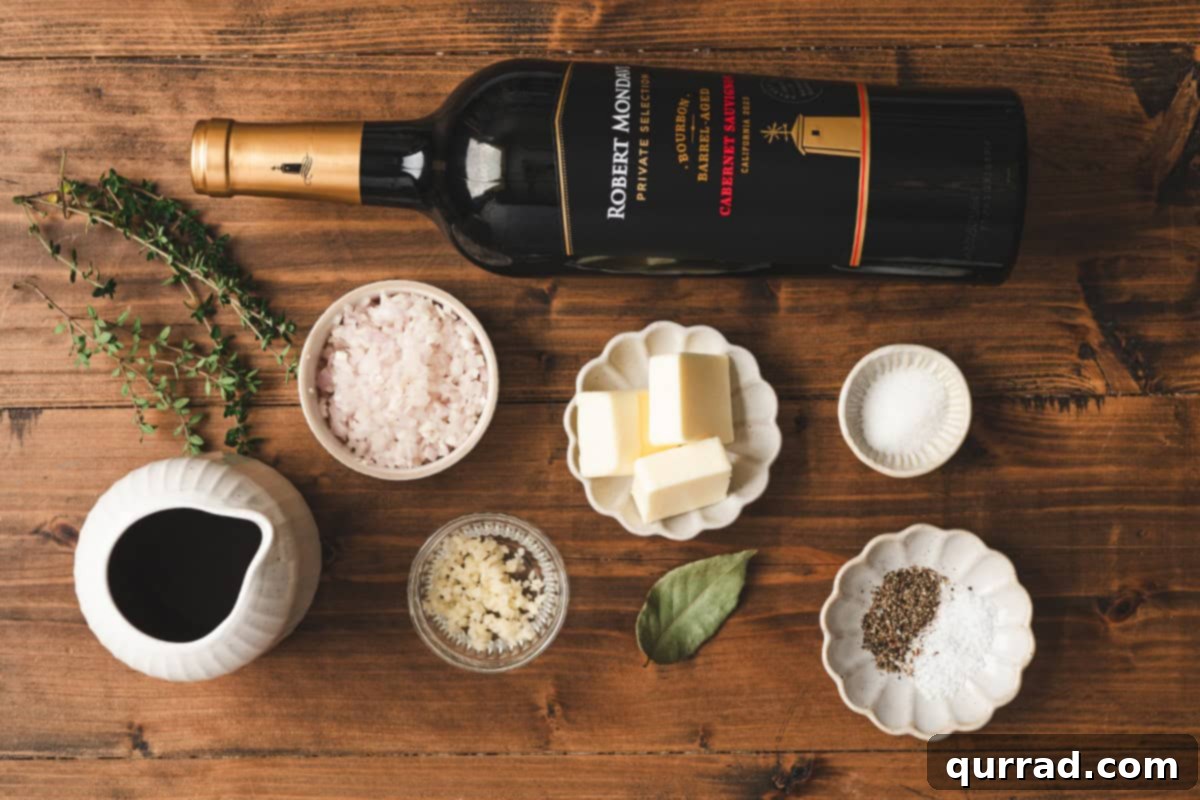
Step 1: Gather Your Ingredients. Lay out all your ingredients on the counter. Having everything prepped and ready (mise en place) will make the cooking process smooth and enjoyable. Ensure your butter is at room temperature for the best emulsification at the end.
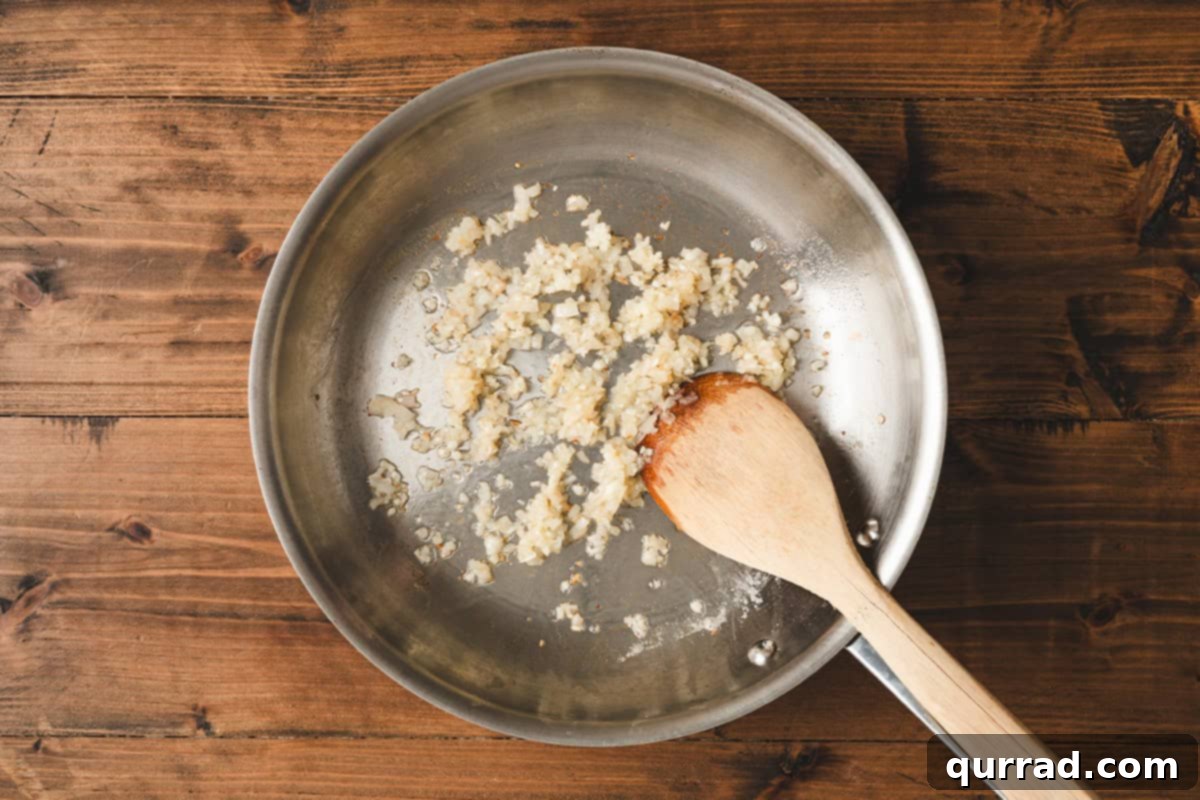
Step 2: Sauté the Aromatics. Begin by melting 1 tablespoon of unsalted butter in a medium saucepan or skillet over medium heat. Add your finely minced shallot and cook, stirring occasionally, until it becomes soft and translucent, typically 3-5 minutes. The goal is to soften, not brown, the shallot, which would add a bitter note. Next, stir in the minced garlic and cook for just about 20 seconds until it releases its delightful aroma. Garlic burns quickly, so keep a close eye on it!
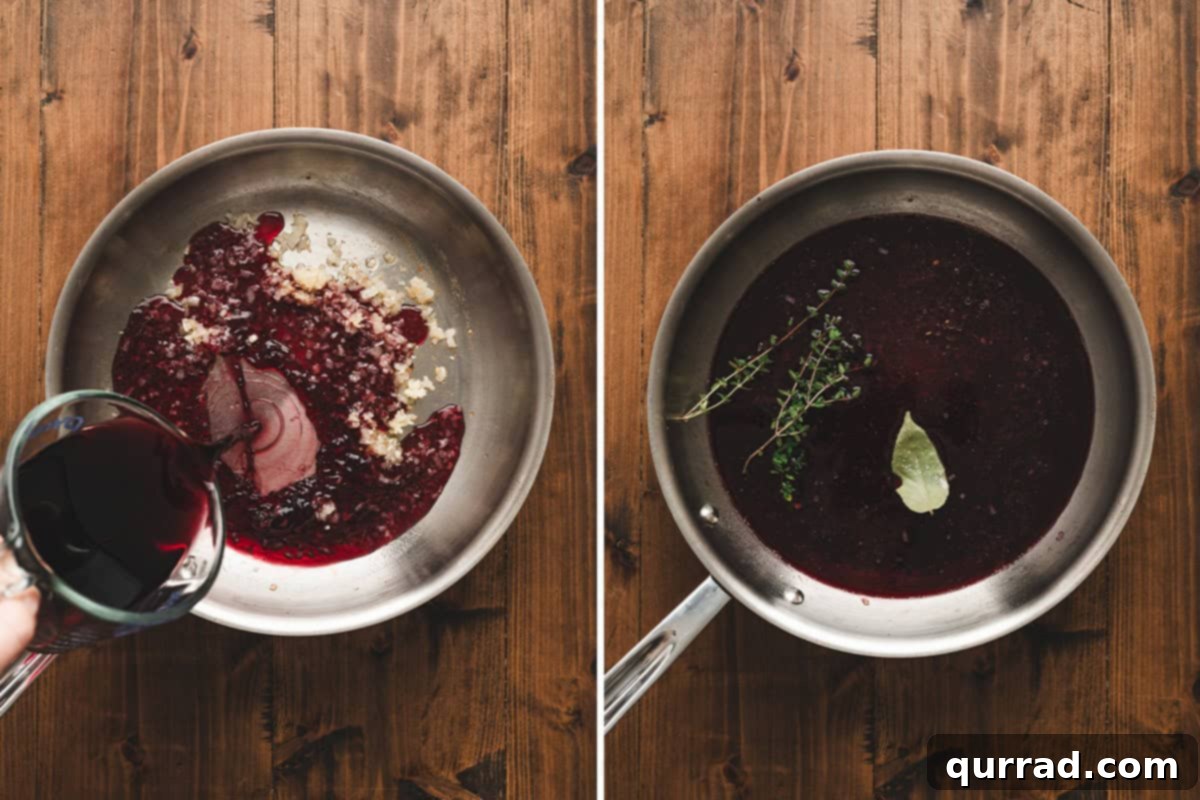
Step 3: Begin the Wine Reduction. Pour in 1 cup of your chosen dry red wine. Immediately add the 2 sprigs of fresh thyme, 1 dried bay leaf, and ½ teaspoon of granulated sugar. Increase the heat to bring the mixture to a brisk boil for a minute, then immediately lower the heat to a gentle simmer. Allow this mixture to simmer, uncovered and stirring occasionally, for 8–10 minutes. You want the liquid to reduce by about half, intensifying the wine’s flavor and cooking off the alcohol.
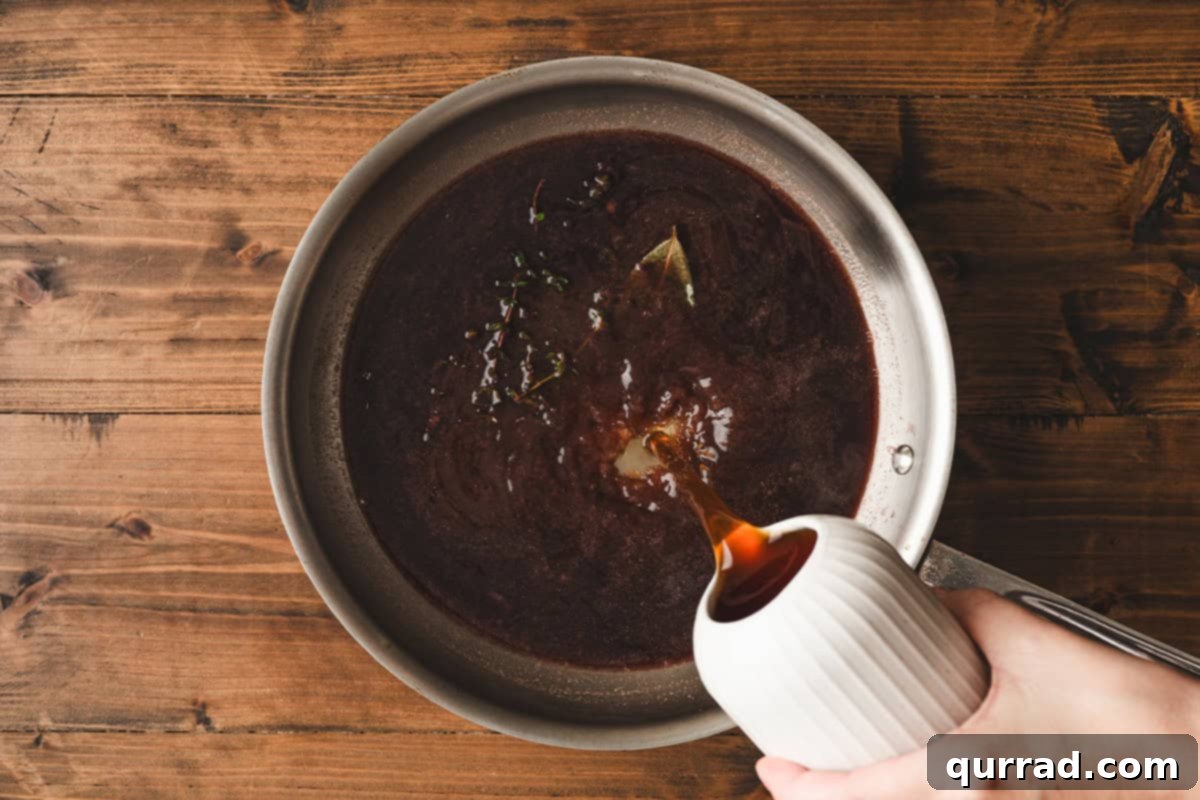
Step 4: Add Beef Stock and Thicken. Stir in 1 cup of beef stock. Continue to simmer the sauce gently for another 10–15 minutes, or until the liquid has reduced by half again and has noticeably thickened. The sauce should be syrupy and coat the back of a spoon. This second reduction further concentrates the flavors, building a deep and complex base for your sauce.
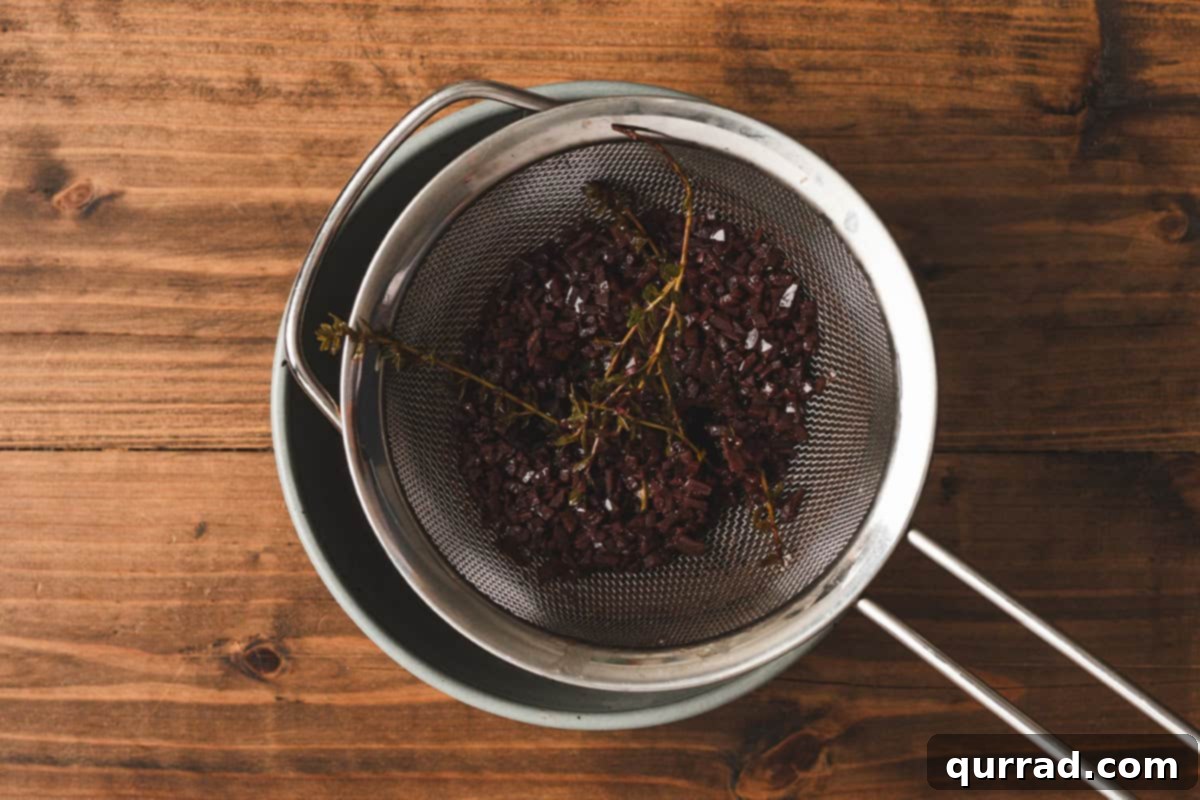
Step 5: Strain for a Silky Smooth Finish. Place a fine-mesh sieve over a clean bowl. Carefully pour the entire contents of the saucepan through the sieve, pressing down on any solids (shallots, garlic, herbs) with the back of a spoon to extract every last drop of flavorful liquid. Discard the solids and return the smooth, strained red wine reduction back to the clean saucepan. This crucial step ensures a refined, elegant texture.
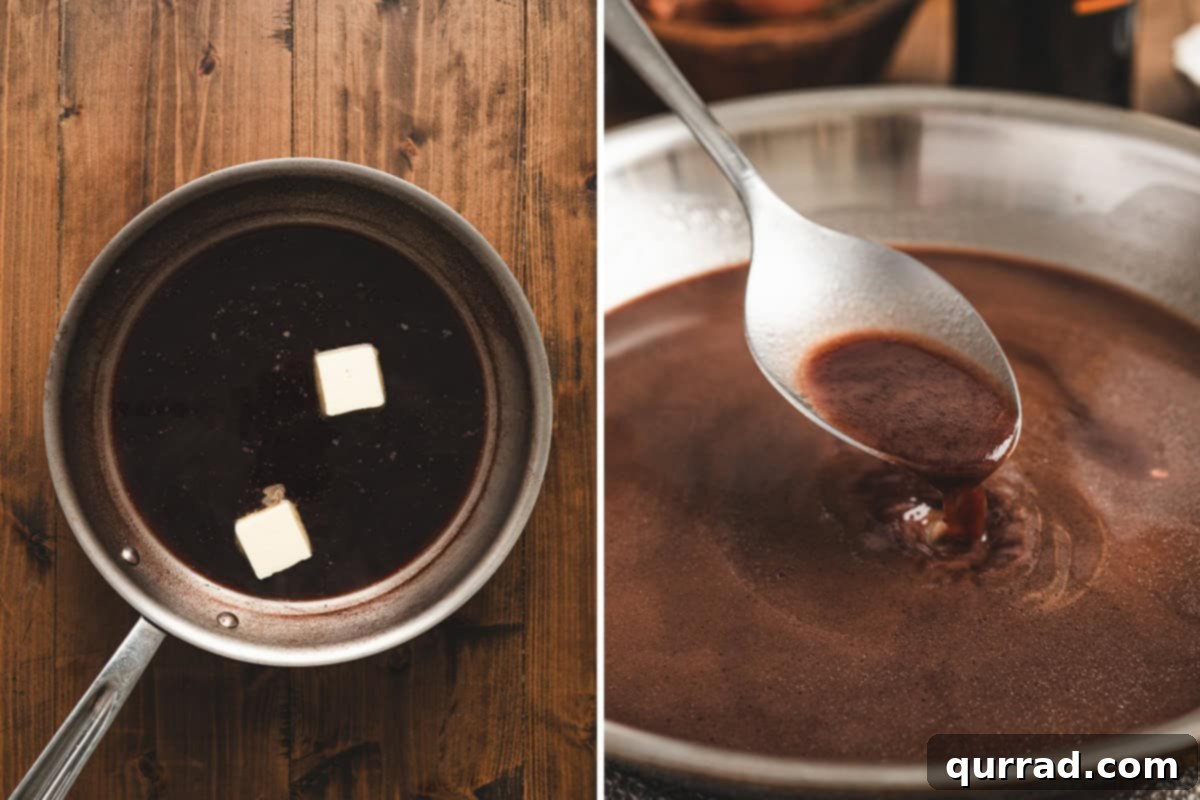
Step 6: Finish with Butter and Season. Turn off the heat. Add the remaining 2 tablespoons of room temperature unsalted butter to the hot sauce. Whisk vigorously until the butter is completely melted and emulsified into the sauce. This process, known as “monte au beurre,” gives the sauce its signature silky texture and beautiful glossy appearance. Finally, season the sauce with ¼ teaspoon of coarse salt and a few turns of freshly ground black pepper. Taste and adjust the seasoning as needed, then serve warm over your favorite dishes!
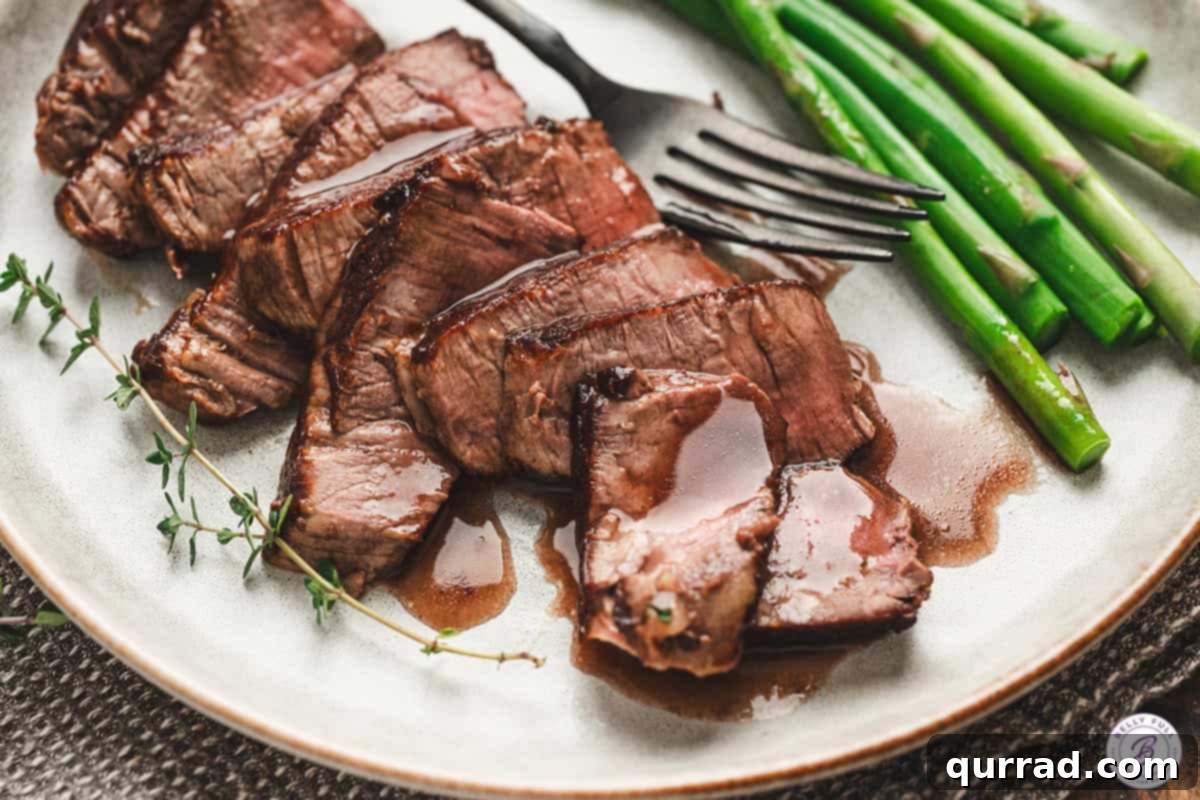
Serving Suggestions for Your Red Wine Reduction Sauce
This versatile red wine reduction sauce is our absolute favorite for classic steak night, but its rich, savory depth extends far beyond beef. It’s an incredibly adaptable sauce that can elevate a wide variety of meals, making them feel more special with minimal effort. Here are some of our favorite ways to enjoy it:
- Steaks: Of course, it’s a perfect pairing for any cut of steak – spoon it generously over pan-seared ribeye, grilled sirloin, or a perfectly cooked filet mignon.
- Beef Tenderloin: Drizzled over a roasted beef tenderloin, this sauce adds an unparalleled touch of elegance for holiday meals or special occasions.
- Pork Tenderloin: The rich flavors of the sauce beautifully complement the lean tenderness of roasted or pan-seared pork tenderloin.
- Roasted Chicken or Duck: Spoon a little over a crispy-skinned roasted chicken breast or a decadent duck confit for an instant flavor boost.
- Lamb Chops: The robust flavor profile of the sauce stands up wonderfully to grilled or pan-fried lamb chops.
- Mushrooms: Sautéed or roasted mushrooms (think cremini or shiitake) become incredibly savory and luxurious when tossed with or drizzled with this red wine reduction.
- Mashed Potatoes: For an ultimate comfort food experience, add a generous spoonful to your creamy mashed potatoes or cauliflower mash.
- Beef Tips & Gravy: Elevate a simple dish of beef tips and gravy by incorporating this reduction for a deeper, more refined taste.
- Baked Chicken Breast: Even a simple baked chicken breast becomes a gourmet meal with a drizzle of this sophisticated sauce.
- Polenta or Risotto: For a vegetarian option, stir it into creamy polenta or mushroom risotto for a profound depth of flavor.
Anytime you crave a dinner that feels a little more special and refined, without the added stress of complex cooking, this easy red wine reduction sauce is your culinary hero.
How to Store Leftovers and Make Ahead
One of the best things about this red wine reduction sauce is that it can be made in advance and stores beautifully, making meal prep for special occasions a breeze!
- Refrigeration: Store any leftover red wine sauce in an airtight container or a glass jar in the refrigerator for up to 4 days. The flavors will deepen even further.
- Reheating: To reheat, gently warm the sauce in a small saucepan over low heat. If the butter separates (which can sometimes happen when sauces cool), whisk vigorously as it warms to bring the sauce back to its smooth, emulsified state. Avoid high heat, as it can cause separation or boil away the liquid too quickly.
- Freezing: For longer storage, this sauce freezes exceptionally well. Pour the cooled sauce into small freezer-safe containers or even an ice cube tray. Once frozen solid, you can transfer the cubes to a freezer bag for convenient, portion-sized use. It will keep in the freezer for up to 2 months.
- Thawing: To use from frozen, simply thaw overnight in the refrigerator or gently warm the frozen sauce directly in a small saucepan over very low heat, stirring occasionally until melted and warm.
Frequently Asked Questions About Red Wine Reduction Sauce
Here are answers to some common questions about making and using this delicious sauce:
Q: What is the best red wine for a reduction sauce?
A: A dry red wine like Cabernet Sauvignon, Pinot Noir, Merlot, or Zinfandel is ideal. Choose a wine you enjoy drinking, as its flavor will be concentrated in the sauce. Avoid sweet wines or “cooking wines” which often contain undesirable additives.
Q: Can I make this sauce without alcohol?
A: While the alcohol cooks out during reduction, the wine is essential for the flavor profile. If you must avoid alcohol, you could try substituting the red wine with an equal amount of non-alcoholic red wine, or a mix of cranberry juice and balsamic vinegar for a similar depth and tang, though the flavor will differ.
Q: What if my sauce is too thin?
A: If your sauce is too thin, simply continue to simmer it gently, uncovered, until it reduces to your desired consistency. Be patient, as reduction takes time. If you need a quicker fix, you can whisk in a cornstarch slurry (½ tsp cornstarch mixed with 1 tbsp cold water) and simmer for another minute until thickened.
Q: What if my sauce is too thick?
A: If your sauce becomes too thick, you can thin it out by whisking in a small amount of warm beef stock or water, one tablespoon at a time, until it reaches your preferred consistency.
Q: Can I add other flavorings?
A: Absolutely! This recipe is a fantastic base. You can experiment with a splash of Dijon mustard for tang, a sprig of fresh rosemary for a different aromatic twist, or even a dash of mushroom powder for an extra umami boost. Add these during the simmering stage.
Q: Is this sauce gluten-free?
A: Yes, this red wine reduction sauce is naturally gluten-free, provided your beef stock does not contain gluten-containing ingredients.
Q: How do I get that perfect glossy finish?
A: The key to the glossy finish is the final “monte au beurre” step. Whisking in cold or room temperature butter off the heat emulsifies it into the sauce, creating a rich, smooth, and shiny appearance without making it greasy.
More Delicious Steak Dinner Recipes to Try
If you’re looking for more ways to enjoy a fantastic steak dinner, check out these other mouth-watering recipes:
- Slow Cooker Cube Steak
- Easy Homemade Salisbury Steak
- Marinated Grilled Flank Steak
- The Best Steak Marinade
- Perfect Skillet Steak
We truly hope you love this delicious and easy red wine reduction sauce recipe! Be sure to leave a review and star rating below to let us know what you think. And don’t forget to follow us on TikTok, Facebook, Instagram, Pinterest, and YouTube for more fantastic recipes and cooking tips!