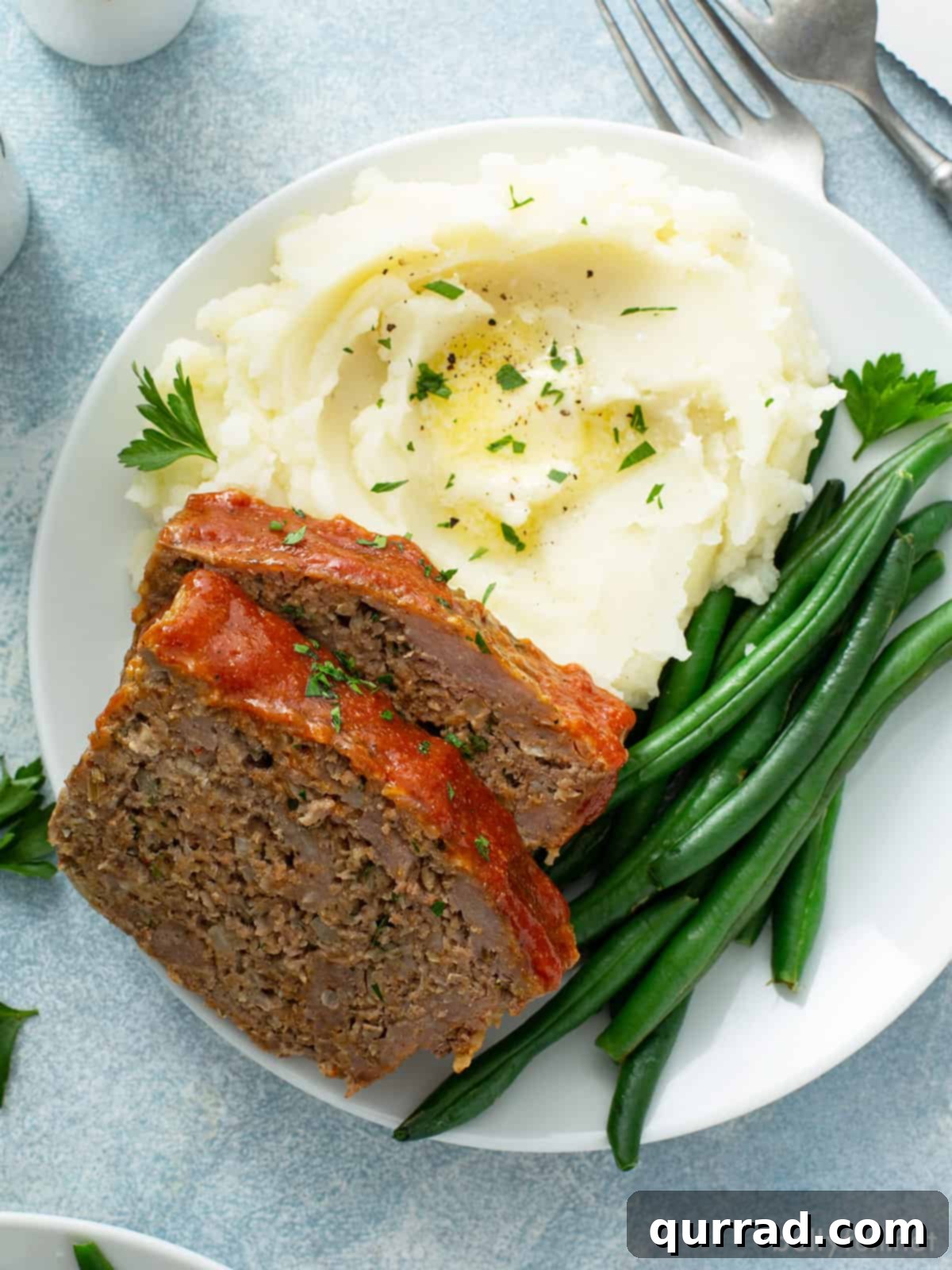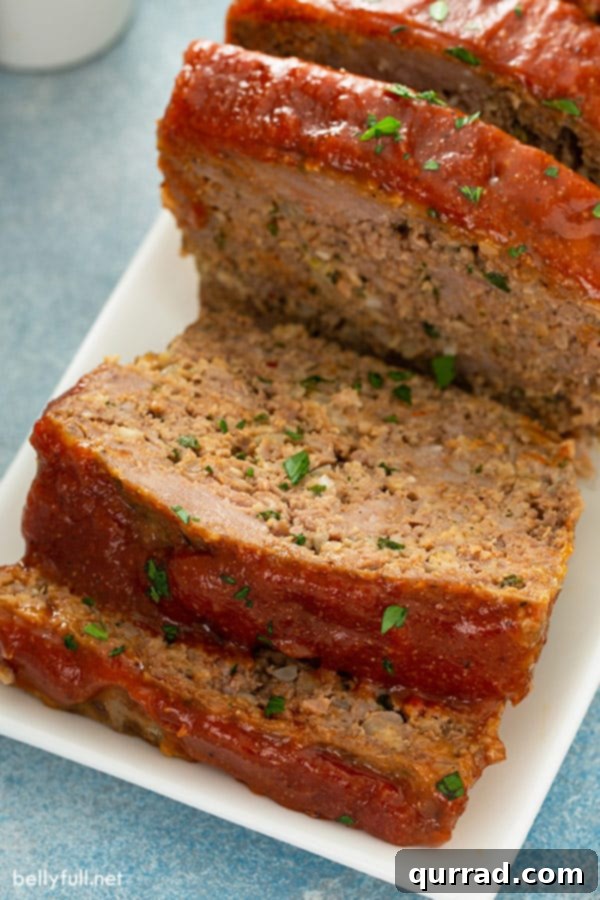
Welcome to the ultimate guide for crafting the best classic meatloaf recipe you’ll ever make. Forget everything you thought you knew about dry, crumbly meatloaf – this recipe promises a tender, juicy, and incredibly flavorful loaf that holds its shape beautifully when sliced. Coated with a sweet and tangy glaze, it’s the quintessential comfort food that brings warmth and satisfaction to any dinner table. Perfect for family meals or a cozy night in, this meatloaf isn’t just a dish; it’s an experience.
5 STAR REVIEW
Ron Burg says, “The best I’ve made and is now my go-to meatloaf recipe. So simple, moist and flavorful. It’s perfect.”
Many mistakenly label meatloaf as merely a giant hamburger patty. However, this comparison truly undermines the unique culinary art that is meatloaf. While both dishes feature ground beef, the similarities end there. A hamburger is designed to be served on a bun with various toppings, offering a quick and satisfying bite. Meatloaf, on the other hand, is a complete meal in itself, offering depth of flavor and a comforting texture that stands alone.
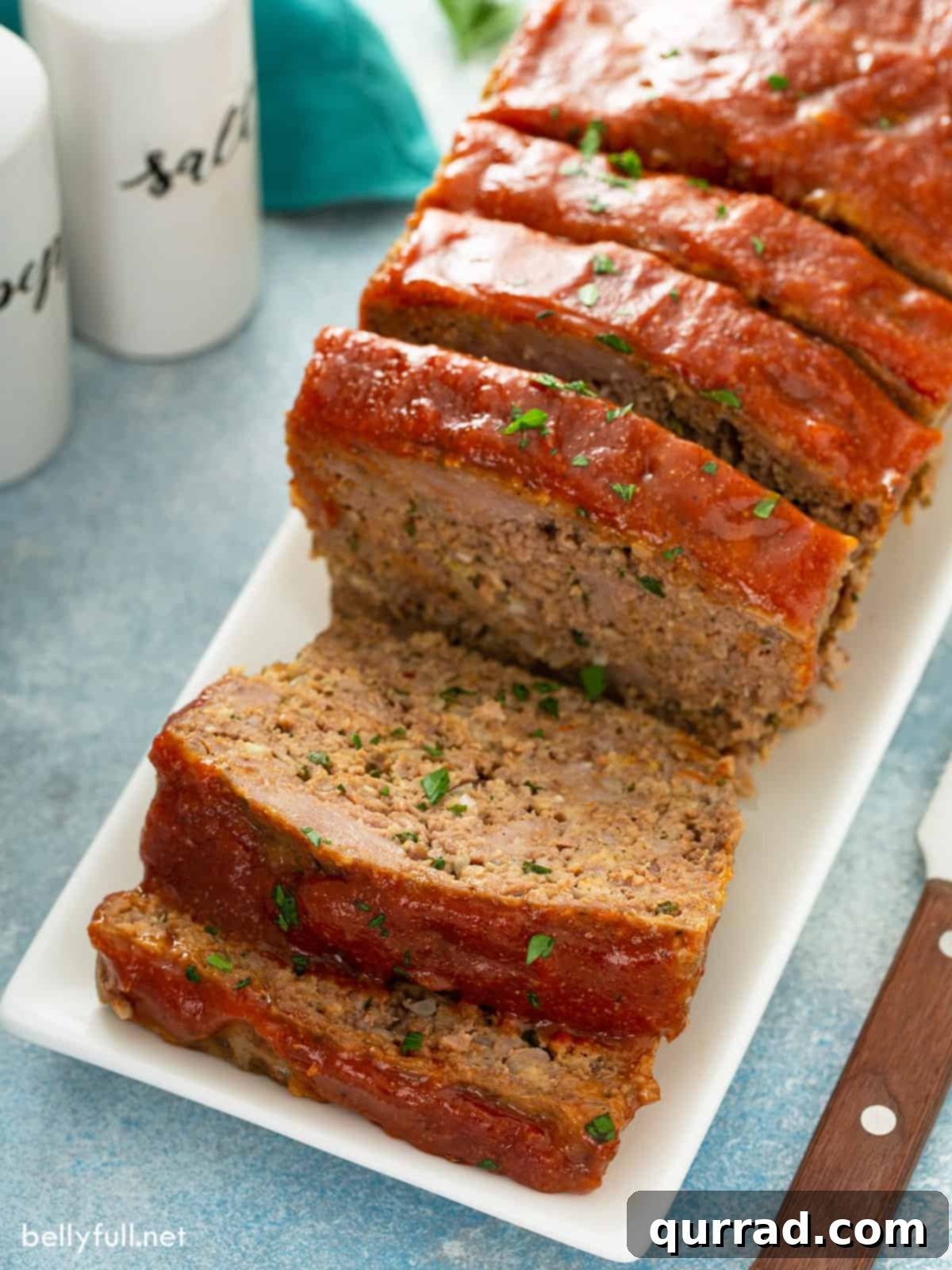
What truly distinguishes a classic meatloaf is its carefully selected ingredients and preparation method. Unlike a plain burger, meatloaf incorporates binders such as breadcrumbs or oats, along with eggs and milk, to create a moist and cohesive loaf. These ingredients work in harmony, preventing the meat from drying out and ensuring it remains tender throughout the baking process. The loaf is baked in a pan, allowing it to cook evenly and retain its shape, and is typically finished with a delicious glaze that caramelizes to perfection, adding an irresistible sweet and savory crust.
Our featured meatloaf recipe is designed to be your new go-to. It’s incredibly easy to prepare, uses readily available and affordable ingredients, and avoids any overly complicated or fancy techniques. The result is consistently a juicy, tender, and intensely flavorful meatloaf that will quickly become a family favorite. This recipe isn’t just about cooking; it’s about bringing a classic, beloved dish back to its comforting roots, ensuring every slice is as perfect as the last.
Expert Tips for Crafting the BEST Meatloaf Ever
Achieving meatloaf perfection isn’t difficult, but a few key techniques can elevate your dish from good to unforgettable. Follow these essential tips to ensure your meatloaf is always tender, juicy, and packed with flavor:
- Choose the Right Meat Blend: The foundation of a great meatloaf lies in its meat. We recommend a combination of 1 pound lean ground beef (around 85% fat) and 1 pound Italian sausage. The lean beef provides a solid base, while the Italian sausage introduces a phenomenal depth of flavor and extra moisture, preventing the meatloaf from becoming dry. This blend is the secret to a rich, juicy, and perfectly seasoned loaf. If Italian sausage isn’t available or preferred, you can use all ground beef, but ensure it’s not too lean (at least 85% fat) to maintain moisture.
- Grate Your Onion for Superior Texture and Moisture: A common mistake is using coarsely chopped onions that don’t fully soften during baking, leading to crunchy bits. To avoid pre-sautéing, grate or very finely mince your onion. This ensures it breaks down completely as the meatloaf bakes, distributing its flavor evenly. More importantly, the fine onion pieces release their juices, which are then absorbed by the oats or breadcrumbs, contributing significantly to the meatloaf’s overall moisture and tenderness.
- Avoid Overmixing the Meat Mixture: This is a critical step for a tender meatloaf. When combining the ingredients, mix just enough until everything is incorporated. Overmixing develops the proteins in the meat, leading to a dense, tough, and rubbery texture. Use your hands for gentle mixing, ensuring all ingredients are distributed without compacting the meat excessively.
- Utilize a Loaf Pan for Optimal Shape and Even Cooking: A standard 9×5-inch loaf pan is ideal for meatloaf. Pressing the mixture gently but compactly into the pan helps it hold its classic rectangular shape, preventing it from crumbling when sliced. Furthermore, the loaf pan encourages more even cooking and helps to lock in the juices, resulting in a consistently moist and flavorful interior.
- Line Your Loaf Pan for Effortless Removal: To make your life infinitely easier when it comes to serving, line your loaf pan with parchment paper. Leave two edges hanging over the sides to create “handles.” Once the meatloaf is baked and rested, you can simply lift it out of the pan, intact and beautiful, ready for slicing. This also makes cleanup a breeze!
- Bake Uncovered for a Perfect Crust and Caramelized Glaze: Resist the urge to cover your meatloaf while baking. Baking uncovered allows the top to brown beautifully and the glaze to caramelize into a delicious, sticky, and slightly crispy crust. If you notice the top browning too quickly before the meatloaf is fully cooked, you can loosely tent it with aluminum foil, especially after applying the glaze, to prevent over-browning.
- Allow Adequate Resting Time After Baking: Patience is a virtue, especially after baking meatloaf. Once it’s out of the oven, let the meatloaf rest in the pan for at least 10 minutes (or even up to 15 minutes) before slicing. Much like a roast or a steak, resting allows the internal juices to redistribute throughout the loaf, ensuring every slice is incredibly moist and flavorful. Skipping this step will result in juices running out, leading to a drier meatloaf.
Best Classic Meatloaf
This is the Best Classic Meatloaf Recipe that’s tender, juicy, full of great flavor, and slices without crumbling.
Ingredients
For the Meatloaf
- 1 pound lean ground beef (85% fat)
- 1 pound Italian sausage, broken into pieces
- 1 small sweet onion, very finely minced or grated
- 3 cloves garlic, minced
- 2 large eggs, lightly beaten
- 3 tablespoons ketchup
- 3 tablespoons finely chopped fresh parsley
- 3/4 cup quick-cooking oats
- 1/3 cup whole milk
- 1/4 cup freshly grated Parmesan cheese
- 2 teaspoons Worcestershire sauce
- 1 & 1/2 teaspoons dried Italian seasoning
- 1 teaspoon kosher salt
- 1/2 teaspoon paprika
- 1/2 teaspoon black pepper
For the Glaze
- 3/4 cup ketchup
- 2 teaspoons mustard (Dijon or yellow)
- 1 & 1/2 teaspoons apple cider vinegar
- 2 tablespoons brown sugar
- 1 teaspoon garlic powder
- 1/2 teaspoon onion powder
- 1/4 teaspoon ground black pepper
- 1/4 teaspoon salt
Instructions
- Preheat your oven to 375 degrees F (190 degrees C). Line a 9×5-inch loaf pan with parchment paper, allowing some overhang on the sides for easy lifting.
- In a large mixing bowl, combine all the ingredients listed for the meatloaf: ground beef, Italian sausage, finely minced or grated sweet onion, minced garlic, lightly beaten eggs, 3 tablespoons ketchup, fresh parsley, quick-cooking oats, whole milk, Parmesan cheese, Worcestershire sauce, Italian seasoning, kosher salt, paprika, and black pepper. Mix thoroughly but gently with your hands until just combined. Be careful not to overmix, as this can make the meatloaf tough.
- Transfer the meat mixture into the prepared loaf pan. Gently press it down and shape the top evenly. Avoid compacting it too tightly, but ensure it fills the pan uniformly.
- Bake in the preheated oven for 40 minutes.
- Carefully remove the meatloaf from the oven. You will likely see some accumulated fat on top and around the loaf. Using a spoon, carefully drain off some of this excess fat to prevent the meatloaf from becoming greasy.
- While the meatloaf is baking, prepare the glaze. In a small bowl, whisk together all the glaze ingredients: 3/4 cup ketchup, mustard, apple cider vinegar, brown sugar, garlic powder, onion powder, ground black pepper, and salt until smooth.
- Evenly spread the prepared glaze over the partially baked meatloaf. Use a spoon or spatula to cover the entire top surface.
- Return the glazed meatloaf to the oven and bake for an additional 15-20 minutes, or until the internal temperature reaches 160 degrees F (71 degrees C) when measured with a meat thermometer inserted into the thickest part of the loaf. The glaze should appear beautifully caramelized.
- Once cooked, remove the meatloaf from the oven. Let it rest in the loaf pan for 10-15 minutes before slicing. This crucial resting period allows the juices to redistribute, resulting in a moister, more tender meatloaf. If desired, drizzle individual slices with the flavorful baking juices from the pan before serving.
Nutrition Information (Approximate Per Serving)
Calories: 390kcal | Carbohydrates: 19g | Protein: 25g | Fat: 24g | Saturated Fat: 9g | Polyunsaturated Fat: 3g | Monounsaturated Fat: 10g | Trans Fat: 1g | Cholesterol: 129mg | Sodium: 821mg | Potassium: 572mg | Fiber: 1g | Sugar: 12g | Vitamin A: 548IU | Vitamin C: 7mg | Calcium: 116mg | Iron: 4mg
Nutritional information is an estimate based on ingredients and cooking methods. Actual values may vary depending on brands, portion sizes, and specific modifications to the recipe. If precise dietary information is critical, independent calculation is recommended.
Understanding Meatloaf Doneness: Internal Temperature
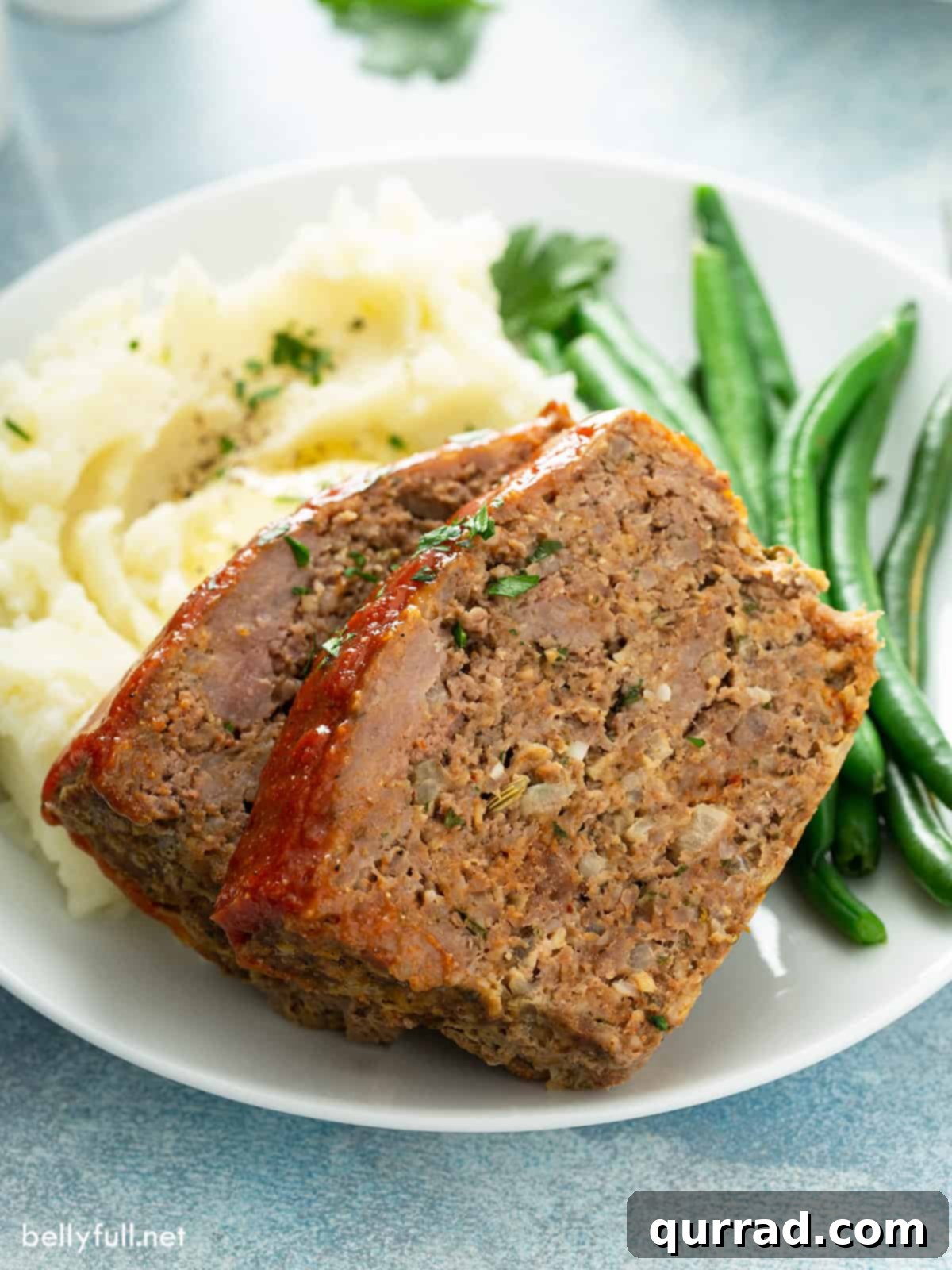
The key to a safe and perfectly cooked meatloaf is reaching the correct internal temperature. For ground meat mixtures, including meatloaf, the United States Department of Agriculture (USDA) recommends a minimum internal temperature of 160 degrees F (71 degrees C). Always use a reliable meat thermometer inserted into the thickest part of the loaf (avoiding the sides or ends) to ensure accuracy. This temperature guarantees that any potential harmful bacteria are eliminated, while still keeping your meatloaf wonderfully juicy.
Optimal Cooking Time for Meatloaf
The cooking time for meatloaf can vary slightly based on its size, density, and your oven’s calibration. For a 3-pound meatloaf, such as the one in this recipe, baked in a standard 9×5-inch loaf pan at 375 degrees F (190 degrees C), you can expect it to take approximately 60-75 minutes to reach the target internal temperature of 160 degrees F. Remember that the glaze is added partway through cooking, so the total time includes both initial baking and post-glaze baking. If you opt for a smaller or deeper loaf pan, or if you form a free-form loaf, the cooking time may increase as the meatloaf will be thicker. Always rely on a meat thermometer for the most accurate measure of doneness rather than solely on visual cues or time.
Delicious Sides to Complement Your Classic Meatloaf
Meatloaf is a versatile main course that pairs wonderfully with a variety of classic comfort food sides. Elevate your meal with these tried-and-true accompaniments:
- Creamy Mashed Potatoes: This is arguably the most iconic pairing with meatloaf. The rich, savory gravy or pan juices from the meatloaf soak beautifully into fluffy mashed potatoes, creating a truly satisfying and heartwarming combination.
- Healthier Mashed Cauliflower: For those looking for a lighter or lower-carb alternative, creamy mashed cauliflower offers a similar texture and comforting feel without the extra carbohydrates. It’s a delicious and surprisingly satisfying substitute.
- Roasted Vegetables: Add a touch of natural sweetness and vibrant color with roasted vegetables. Roasted carrots become tender and slightly caramelized, while roasted green beans offer a crisp-tender bite. Both are simple to prepare alongside your meatloaf.
- Simple Side Salad: A crisp, fresh side salad with a light vinaigrette provides a refreshing contrast to the richness of the meatloaf, balancing the meal beautifully.
- Leftover Meatloaf Sandwiches: Don’t forget the ultimate next-day delight! Cold slices of meatloaf make incredible sandwiches, often on soft bread with a little extra ketchup or mayonnaise. Plan to make a little extra, because these disappear quickly!
This array of side dishes ensures a well-rounded meal that celebrates the comforting essence of homemade meatloaf. It’s a plate of pure, wonderful satisfaction!
Make Ahead and Storing Meatloaf Leftovers
Meatloaf is an excellent meal for meal prepping and enjoying delicious leftovers. Here’s how to manage it effectively:
- Make Ahead (Raw): You can easily prepare the raw meatloaf mixture up to 1 day in advance. Form the mixture in your loaf pan, cover it tightly with plastic wrap, and refrigerate. When you’re ready to bake, remove it from the fridge about 30 minutes to an hour before cooking to allow it to come closer to room temperature, then uncover and bake as directed. This can save you valuable time on busy weeknights.
- Storing Leftovers (Cooked): Allow any leftover cooked meatloaf to cool completely before storing. Once cooled, wrap individual slices or the remaining portion tightly in aluminum foil or place it in an airtight container. Store it in the refrigerator for 3-4 days. This keeps the meatloaf fresh and moist for future meals.
- Can You Freeze Meatloaf? Absolutely! Meatloaf freezes exceptionally well, whether it’s cooked and cooled, or even formed and raw.
- To freeze cooked meatloaf: Once completely cooled, slice the meatloaf or keep it whole. Wrap it tightly in plastic wrap, then wrap it again in aluminum foil. Place the double-wrapped meatloaf into a freezer-safe Ziploc bag or container. This double-layer protection is crucial for preventing freezer burn. It will keep beautifully in the freezer for up to 3 months.
- To freeze raw meatloaf: Form the meatloaf mixture in the pan as if you were going to bake it. Wrap it extremely well with multiple layers of plastic wrap, then foil, and finally place it in a freezer bag. This will also last up to 3 months.
- Thawing: Always thaw frozen meatloaf (cooked or raw) overnight in the refrigerator before reheating or baking.
- How to Reheat Meatloaf: To reheat leftover cooked meatloaf without drying it out, place slices in a shallow oven-safe baking dish. Add 1 to 2 tablespoons of beef broth or water to the bottom of the dish to create some steam and moisture. Cover the dish tightly with aluminum foil. Transfer it to a preheated 250 degrees F (120 degrees C) oven for about 25-30 minutes, or until the meatloaf is warmed through to your desired temperature. This gentle reheating method ensures it remains tender and juicy.
Discover More Comfort Food Recipes:
If you loved this classic meatloaf, you’re sure to enjoy these other heartwarming and delicious comfort food staples:
- Hearty Beef Stew
- Classic Shepherd’s Pie
- Slow Cooker Pot Roast
- Easy Homemade Sloppy Joes
- Creamy Chicken Alfredo
- Comforting Chicken Tetrazzini
We hope you truly enjoy this delicious and simple recipe. Please take a moment to leave a review below to let us know how it turned out! Don’t forget to follow us on TikTok, Instagram, Facebook, Pinterest, and YouTube for more culinary inspiration!