
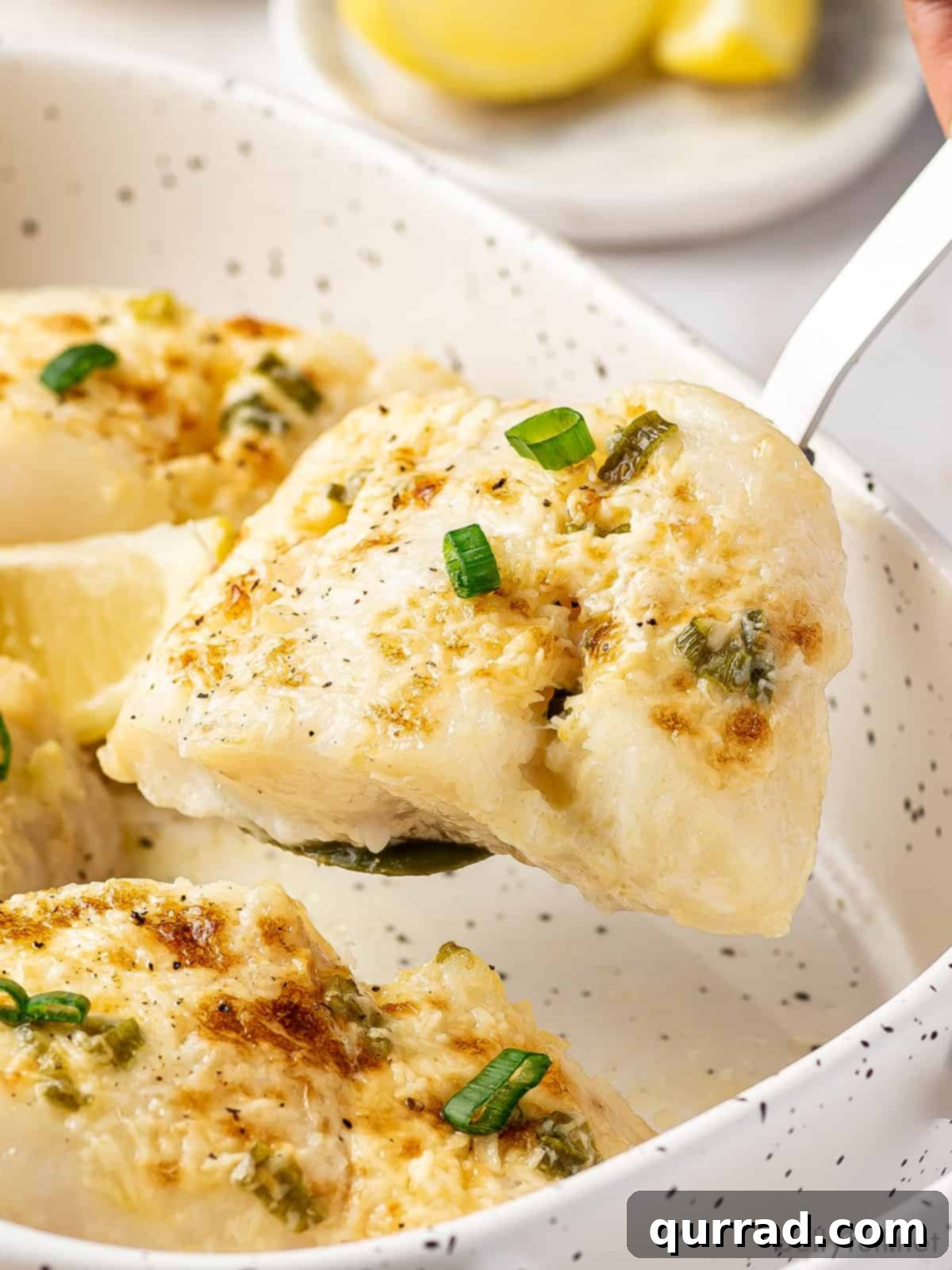
Welcome to your new favorite weeknight meal! This Creamy Baked Halibut recipe delivers an exquisite balance of flavor, health, and simplicity, making it a perfect choice for busy evenings. Each succulent fillet is meticulously seasoned and then generously coated with a luscious, tangy mayo-citrus topping that promises to tantalize your taste buds. This dish isn’t just delicious; it’s also wonderfully healthy, fitting seamlessly into various dietary needs as it’s gluten-free, keto-friendly, low-carb, and low-calorie. Best of all, you can have this culinary masterpiece on your table in under 20 minutes from start to finish. Say goodbye to bland dinners and hello to a vibrant, satisfying experience!
5 STAR REVIEW
Wendy raves, “This is now my favorite way to cook halibut! It was delicious! Followed the recipe exactly and it turned out perfect!” This glowing review is just one example of how this easy baked halibut recipe consistently earns top marks for its incredible taste and foolproof preparation.
When the craving for a fresh, flavorful, and incredibly healthy dinner strikes, look no further than this exceptional oven-baked halibut recipe. Halibut, a nutritional powerhouse, is packed with lean protein, essential omega-3 fatty acids, and a rich array of vital nutrients, all while maintaining a remarkably low-calorie count. Pair it with a simple roasted vegetable, such as asparagus or broccoli, and you instantly elevate your meal into a light yet profoundly satisfying dinner that supports your wellness goals. This dish is not just food; it’s a testament to how healthy eating can be utterly delicious and effortless.
In our humble opinion, this truly stands as the ultimate recipe for cooking halibut. The magic lies in the carefully crafted topping: a harmonious blend of creamy mayonnaise, savory Parmesan cheese, and a bright burst of freshly squeezed lemon juice. This isn’t merely a flavor enhancer; it’s a critical component in ensuring the fish remains incredibly moist, tender, and beautifully flaky throughout the baking process. The combination creates a delicate crust that locks in moisture, preventing the halibut from drying out—a common concern with lean fish. The subtle heat from a dash of hot sauce and the aromatic notes of minced garlic and fresh scallions further deepen the complexity of this irresistible topping, making every bite a memorable culinary delight.
Mastering Your Creamy Baked Halibut: Essential Tips for Success
Achieving perfectly cooked, flaky, and flavorful baked halibut is simpler than you might think with a few key considerations. Here are our top tips to ensure your Creamy Baked Halibut turns out absolutely flawless every single time:
- Uniform Fillet Size for Even Cooking: To guarantee that each piece of fish cooks consistently and none are overdone, it is crucial to select skinless halibut fillets that are roughly the same thickness and weight. For this recipe, aim for fillets around 6 ounces each. This ensures every bite is equally moist and tender, avoiding any dry, chewy sections.
- Embrace the Mayonnaise and Parmesan Cheese Topping: We understand that the idea of combining mayonnaise and Parmesan cheese with fish might raise an eyebrow for some. However, trust us on this innovative approach! The mayonnaise is the secret ingredient behind the topping’s incredibly creamy texture, which not only imparts a rich flavor but also acts as a protective layer, sealing in the fish’s natural moisture during baking. As for the Parmesan, while tradition often dictates avoiding cheese with fish, Parmesan works exceptionally well here. Its salty, nutty notes complement the mildness of the halibut and the brightness of the lemon, creating a savory, golden-brown crust under the broiler. It’s a flavor pairing that consistently surprises and delights!
- The Art of Not Overbaking Halibut: Halibut is a lean fish that cooks remarkably quickly. Overbaking is the most common mistake and the fastest way to dry out your beautiful fillets. For 6-ounce fillets at 425°F, 10 to 12 minutes is typically all you need. Keep a close watch; as soon as the fish turns opaque throughout and flakes effortlessly with a fork, it’s ready. Remove it from the oven promptly to preserve its tender, delicate texture.
- Vigilance Under the Broiler: The broiler step is short but critical for achieving that beautiful, bubbly, golden-brown crust on your creamy topping. However, broilers heat very intensely and can burn food in mere moments. Stay right by the oven door and watch the fish closely. The goal is a rich, caramelized topping, not a charred one. This usually takes just 1-3 minutes, so be attentive!
- Pat the Halibut Dry: Before seasoning and applying the topping, gently pat your halibut fillets dry with paper towels. This helps any seasonings adhere better and prevents the fish from steaming rather than baking, promoting a better texture.
- Fresh Lemon Juice is Key: While bottled lemon juice can be convenient, freshly squeezed lemon juice makes a significant difference in the topping. Its bright, zesty flavor is unparalleled and truly elevates the dish, cutting through the richness of the mayonnaise and Parmesan.
Creamy Baked Halibut Recipe
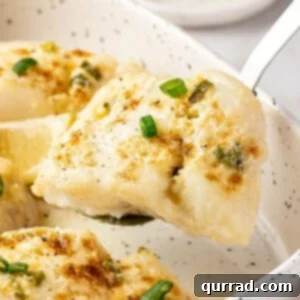
This effortless recipe transforms simple halibut into an extraordinary meal with a rich, tangy, and irresistibly creamy topping. Perfect for any night of the week, it’s quick, healthy, and packed with flavor.
- Prep time: 5 mins
- Cook time: 12 mins
- Total time: 17 mins
- Yields: 4 servings
Ingredients
- 1/2 cup Parmesan cheese, freshly grated
- 1/4 cup butter, softened to room temperature
- 3 tablespoons mayonnaise (full-fat recommended for best flavor)
- 2 tablespoons fresh lemon juice
- 1/4 teaspoon salt (or to taste)
- Dash of hot sauce (adjust to your spice preference)
- 1 clove garlic, minced finely
- 1 scallion, diced (reserve extra for garnish)
- 2 pounds skinless halibut fillets (approx. 4 fillets, 6 ounces each)
- Fresh cracked black pepper, for garnish
- Lemon wedges, for serving
- Roasted asparagus, for serving (optional, see our recipe here)
Instructions
- Preheat your oven to 425 degrees F (218 degrees C). This high heat helps to cook the fish quickly and evenly without drying it out.
- In a medium-sized mixing bowl, combine the freshly grated Parmesan cheese, softened butter, mayonnaise, fresh lemon juice, salt, hot sauce, minced garlic, and diced scallions. Stir everything together until thoroughly combined and smooth. Set this creamy mixture aside.
- Prepare a rimmed baking sheet by lining it with aluminum foil for easy cleanup. Lightly coat the foil with a nonstick cooking spray to prevent the fish from sticking. Arrange the halibut fillets in a single layer on the prepared baking sheet, ensuring they are not overlapping.
- Bake the halibut for approximately 10 to 12 minutes. The fish is done when it is opaque throughout and the flesh flakes easily when gently prodded with a fork. Be careful not to overbake!
- Carefully remove the baking sheet from the oven. Evenly spread the prepared mayonnaise mixture over the top of each halibut fillet.
- Return the baking sheet to the oven, placing it under the broiler. Broil for about 1 to 3 minutes, or until the topping is beautifully bubbly and achieves a golden-brown hue. Watch the fish very carefully during this stage to prevent burning, as broilers can cook very quickly.
- Once removed from the broiler, generously garnish the creamy baked halibut with a sprinkle of fresh cracked black pepper and a scattering of additional diced scallions for a pop of color and freshness.
- Serve immediately with your favorite side dishes, such as tender roasted asparagus, and don’t forget those extra lemon wedges for a bright finish!
Nutrition
(Per serving, approximate values)
Calories: 345kcal | Carbohydrates: 1g | Protein: 47g | Fat: 18g | Saturated Fat: 10g | Polyunsaturated Fat: 1g | Monounsaturated Fat: 5g | Trans Fat: 1g | Cholesterol: 150mg | Sodium: 451mg | Potassium: 1018mg | Fiber: 1g | Sugar: 1g | Vitamin A: 635IU | Vitamin C: 3mg | Calcium: 170mg | Iron: 1mg
Nutritional information provided is an automatic calculation and can vary based on the exact products you use and any modifications made to the recipe. For precise dietary planning, we recommend calculating these values yourself using your specific ingredients.
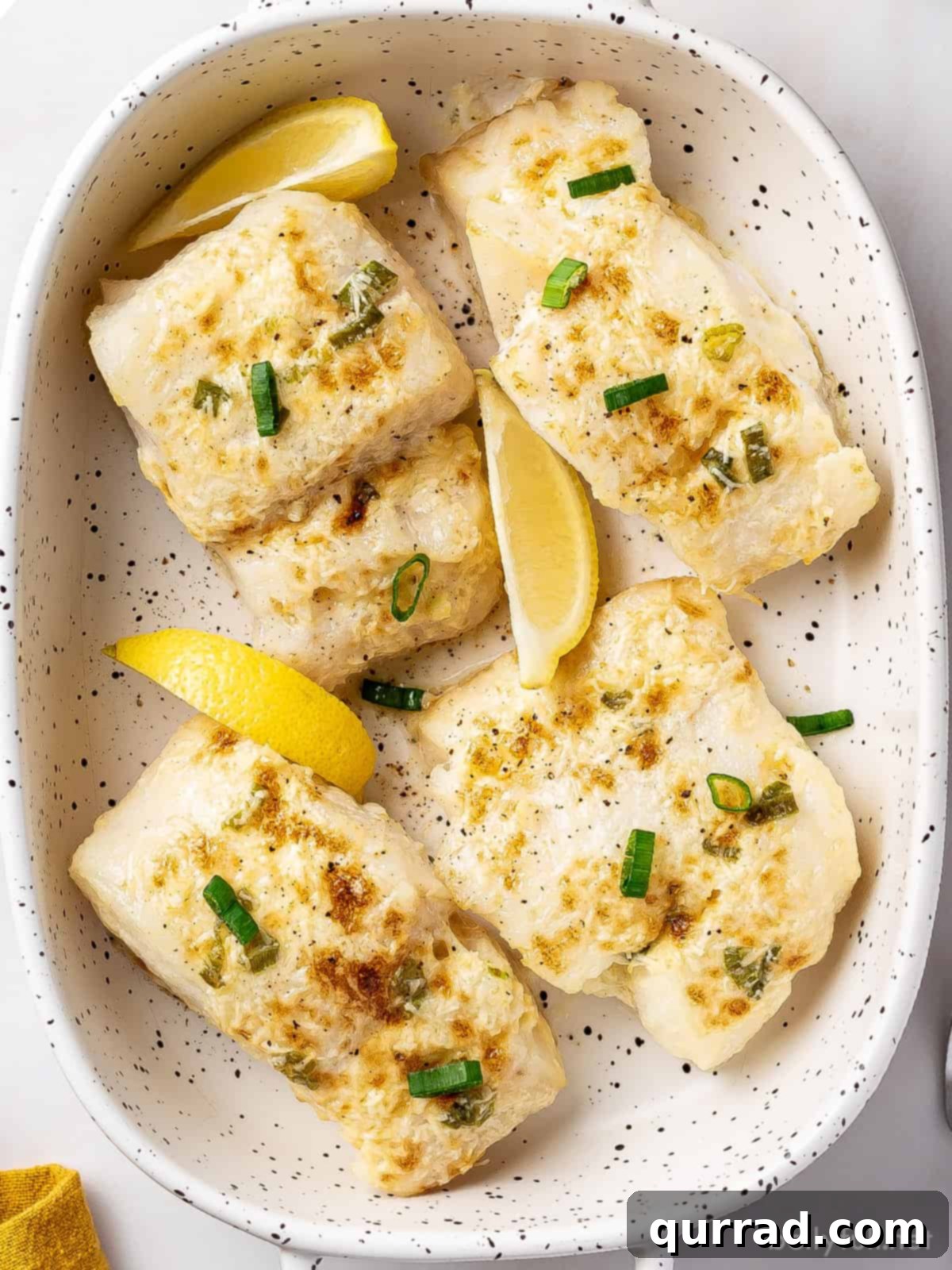
Understanding Halibut: The Ocean’s Gentle Giant
Halibut is a truly remarkable fish, often celebrated for its firm, yet wonderfully flaky white flesh and incredibly mild flavor. It holds the distinction of being the largest of all flatfish found in the ocean, a fact that contributes to its substantial fillets perfect for baking. The texture of cooked halibut is tender and moist, often likened to that of other popular white fish such as cod, sea bass, or flounder, making it a versatile ingredient in many culinary applications. Its mild flavor profile, which is less “fishy” than many other types of seafood, makes it an excellent choice for individuals who might be hesitant about eating fish. This subtle taste also means halibut readily absorbs the flavors of accompanying sauces and seasonings, making it a chef’s dream and a home cook’s delight. Beyond its culinary appeal, halibut is also a lean source of high-quality protein, essential for muscle repair and growth, and is rich in B vitamins and important minerals like phosphorus and selenium.
Navigating Fresh vs. Frozen Halibut: What You Need to Know
When it comes to preparing delicious halibut at home, you have the flexibility to choose between both fresh and frozen options, and both can yield fantastic results in this creamy baked halibut recipe. It’s a common misconception that “fresh” is always superior. In reality, a significant portion of wild-caught halibut, especially from distant waters, is flash-frozen at sea immediately after being caught. This rapid freezing process locks in the fish’s freshness, flavor, and nutritional value, often making frozen halibut a superior choice in terms of quality, especially if you reside far from coastal areas or when halibut is out of its peak season.
If you opt for frozen halibut, the most crucial step is to ensure it is completely thawed before you begin the recipe. The best method for thawing is to transfer the frozen fillets to the refrigerator 12-24 hours in advance, allowing them to thaw slowly and safely. Avoid thawing at room temperature, which can promote bacterial growth. Once thawed, gently pat the fillets dry with paper towels to remove any excess moisture before seasoning and applying the topping; this helps achieve a better texture and allows the seasoning to adhere properly.
For those selecting fresh halibut, look for fillets that exhibit a pristine white color and a lustrous, glossy finish. A fresh fillet should appear firm and resilient to the touch. Steer clear of any fish that looks dull, has brown or yellowish spots, or emits a strong, overly “fishy” odor. A truly fresh halibut will have a very mild, clean ocean scent. By following these guidelines, whether fresh or frozen, you can ensure you’re starting with the highest quality halibut for your creamy baked delight.
The Perfect Bake: How Long to Cook Halibut for Flawless Results
The key to perfectly cooked halibut lies in understanding that cooking time is highly dependent on both the thickness of your fillets and the oven temperature. For this easy baked halibut recipe, we utilize a high oven temperature of 425°F (218°C) paired with approximately 6-ounce fillets. This combination is intentional: the high heat cooks the fish rapidly, typically requiring only 10 to 12 minutes, which is crucial for retaining its moisture and delicate texture. Lean fish like halibut can dry out quickly if cooked too long, transforming from tender to tough and chewy.
While you could bake halibut at a lower temperature, doing so would necessitate a longer cooking time, increasing the risk of dryness. We highly recommend sticking to the higher temperature suggested in this recipe for a shorter, more efficient bake that guarantees a flaky, succulent result. The best way to determine doneness is not just by time but by visual and textural cues: the fish should turn opaque throughout its thickness, and when gently flaked with a fork at its thickest point, it should separate easily. Remember, every oven can vary slightly, so consider the provided times as a guide and always prioritize the visual indicators of doneness to achieve that ideal, melt-in-your-mouth texture.
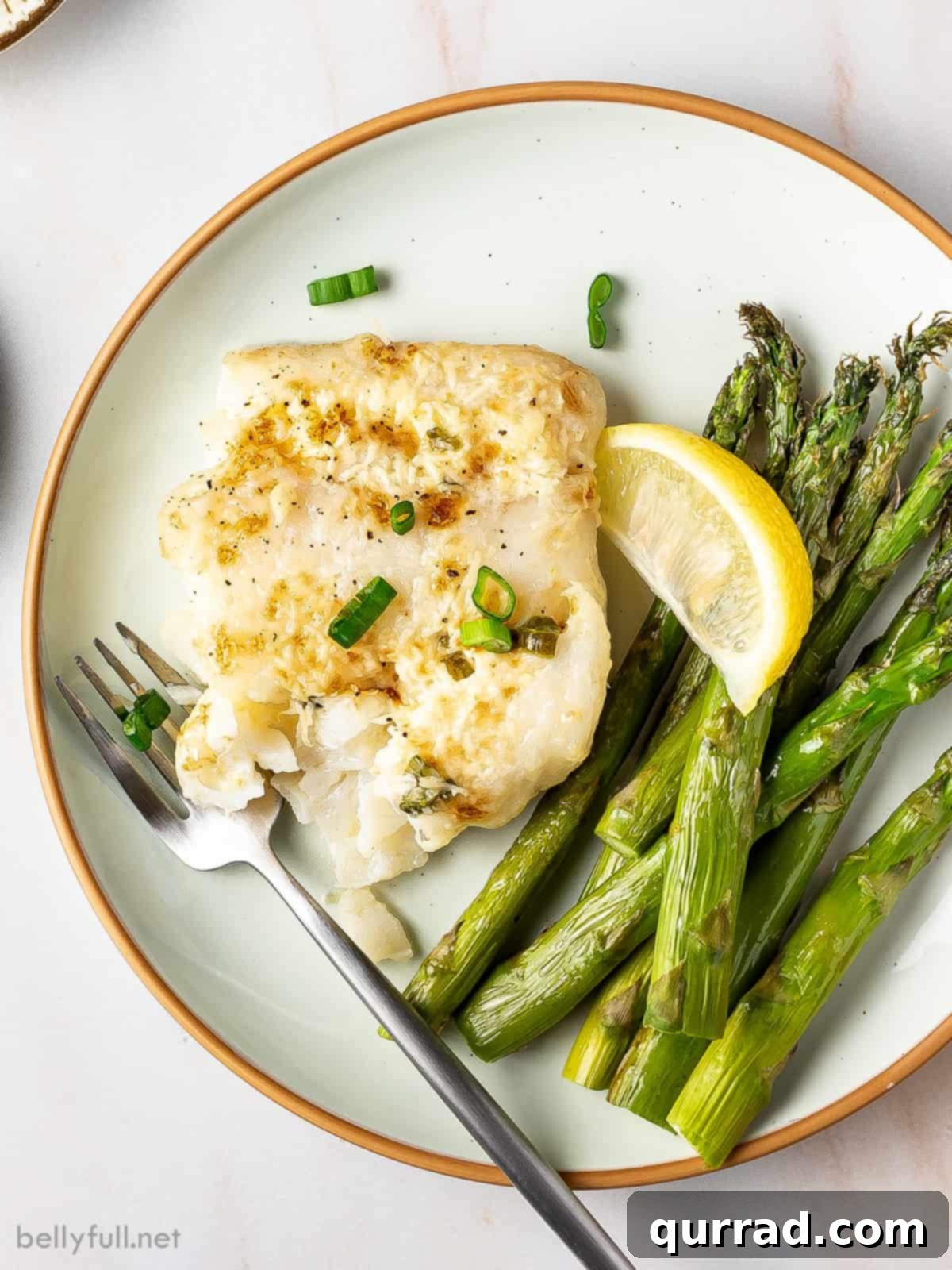
Elevate Your Meal: Inspired Serving Suggestions for Baked Halibut
The beauty of this creamy baked halibut lies in its versatility, making it a fantastic centerpiece for a variety of side dishes. Our absolute favorite way to enjoy this delectable fish is with a generous squeeze of fresh lemon juice, so we always ensure plenty of extra lemon wedges are on hand for serving. The bright acidity of the lemon cuts through the richness of the creamy topping, creating a perfectly balanced flavor profile.
For an effortlessly light and healthy dinner, oven-roasted asparagus is an impeccable pairing. Its subtle earthy flavor and tender-crisp texture beautifully complement the delicate halibut. If asparagus isn’t to your liking, fear not! There are many other delicious options. Consider pairing it with roasted broccoli, which offers a delightful crunch and robust flavor, or the savory indulgence of Parmesan roasted cauliflower, which echoes the cheesy notes of the halibut topping. For a fantastic low-carb alternative to rice, serve it alongside fluffy cauliflower rice. Other excellent choices include a simple green salad with a light vinaigrette, steamed green beans, or even a quinoa salad for added texture and nutrients. No matter your choice, this halibut recipe is sure to shine!
Storing & Reheating Leftovers: Maximizing Your Halibut’s Freshness
While this creamy baked halibut is best enjoyed fresh from the oven, leftovers can be a delightful treat if stored and reheated properly. To maintain its quality and ensure food safety, transfer any cooled leftover halibut to an airtight container and store it in the refrigerator. It will stay fresh and delicious for up to 3 days. Beyond this timeframe, the texture and flavor may begin to degrade.
When it comes to reheating, you have a couple of options. For the best possible texture, reheating on the stovetop is generally recommended. Gently warm the fillets in a lightly oiled pan over medium-low heat until just heated through. This method helps to maintain some of the crispness of the topping. Alternatively, you can reheat halibut in the microwave, using short bursts of heat (30-60 seconds at a time) on a lower power setting to prevent it from becoming rubbery. However, it’s important to note that reheating fish, especially lean varieties like halibut, can inevitably cause it to dry out slightly compared to its freshly cooked state. To combat this, you might add a tiny splash of broth or water to the pan or microwave-safe dish before reheating to create some steam and help retain moisture. Always reheat to an internal temperature of 165°F (74°C) for safety.
Explore More Delicious Fish Recipes:
If you’re a fan of seafood and looking to expand your culinary repertoire, here are some other fantastic fish recipes that are sure to impress and satisfy:
- Fish Stick Tacos: A fun, family-friendly twist on taco night!
- Crab Stuffed Salmon: Elegant and flavorful, perfect for a special occasion.
- Salmon Patties: A classic comfort food that’s easy to make.
- Honey Mustard Baked Salmon: Sweet, tangy, and incredibly simple.
- Fish Piccata: Bright, zesty, and effortlessly sophisticated.
- Baked Cod {Sheet Pan Dinner}: An all-in-one meal for ultimate convenience.
We sincerely hope you cherish this delicious and easy Creamy Baked Halibut recipe as much as we do. Your feedback is invaluable, so please don’t hesitate to leave a review below and share your experience! Stay connected with us for more delectable recipes and culinary inspiration by following Belly Full on TikTok, Facebook, Instagram, Pinterest, and YouTube!