
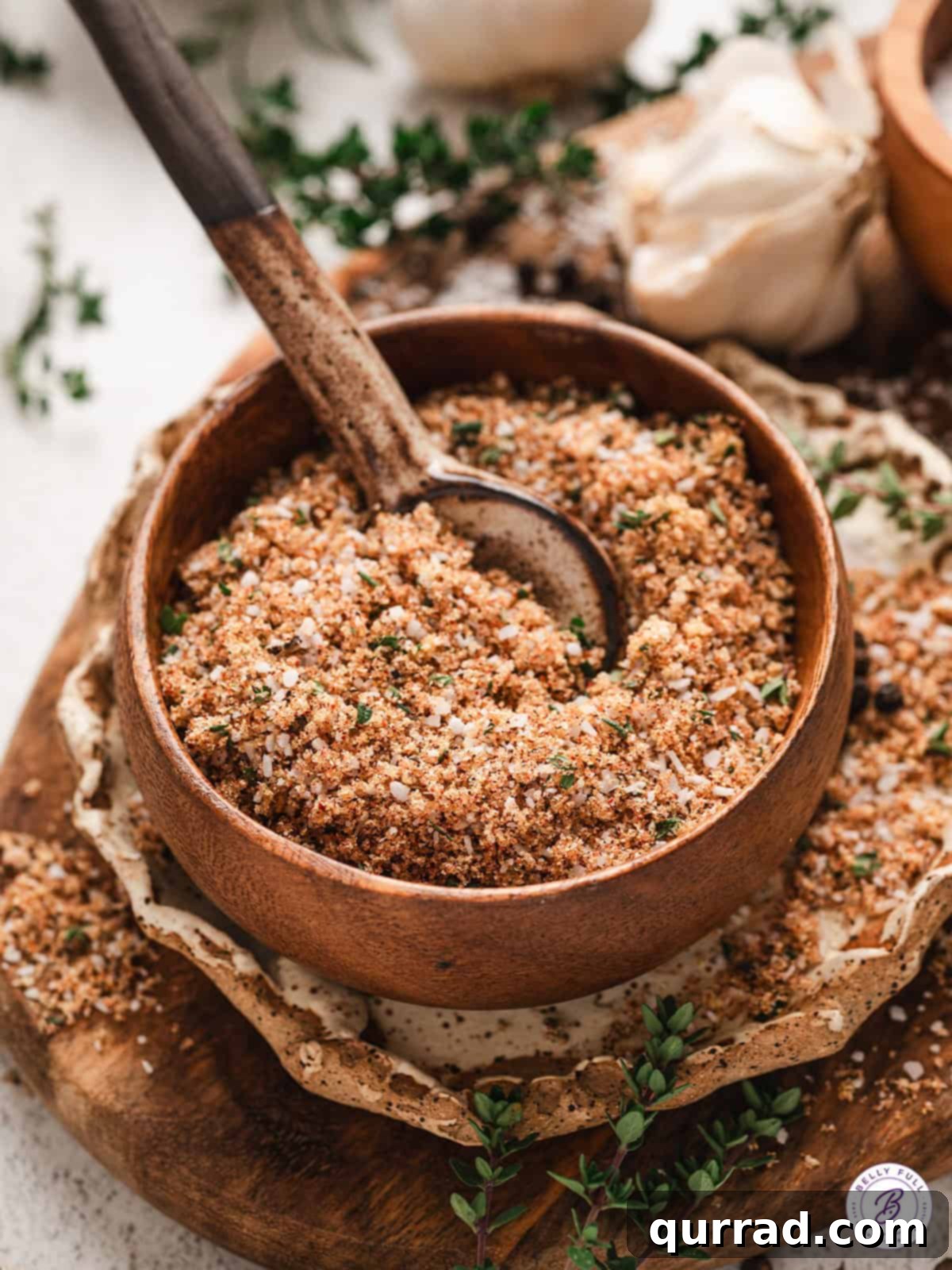
Transforming a magnificent prime rib into a culinary masterpiece demands the perfect seasoning, and nothing compares to the depth and flavor of a homemade rub. Forget the bland, store-bought options that merely coat the surface; our easy prime rib rub recipe is meticulously crafted to penetrate the meat, infusing it with an unforgettable blend of savory, sweet, and aromatic notes. This proprietary blend utilizes everyday kitchen staples like sea salt, black pepper, garlic powder, onion powder, and smoked paprika, beautifully balanced with the fragrant freshness of rosemary and thyme, and crucially, the subtle magic of brown sugar. This isn’t just a rub; it’s a tenderizer, a flavor enhancer, and a crust-creator, designed to elevate your prime rib from excellent to extraordinary. And the best part? It’s incredibly versatile, perfect for sprinkling over vegetables, pork, or chicken, ensuring no delicious morsel goes unseasoned.
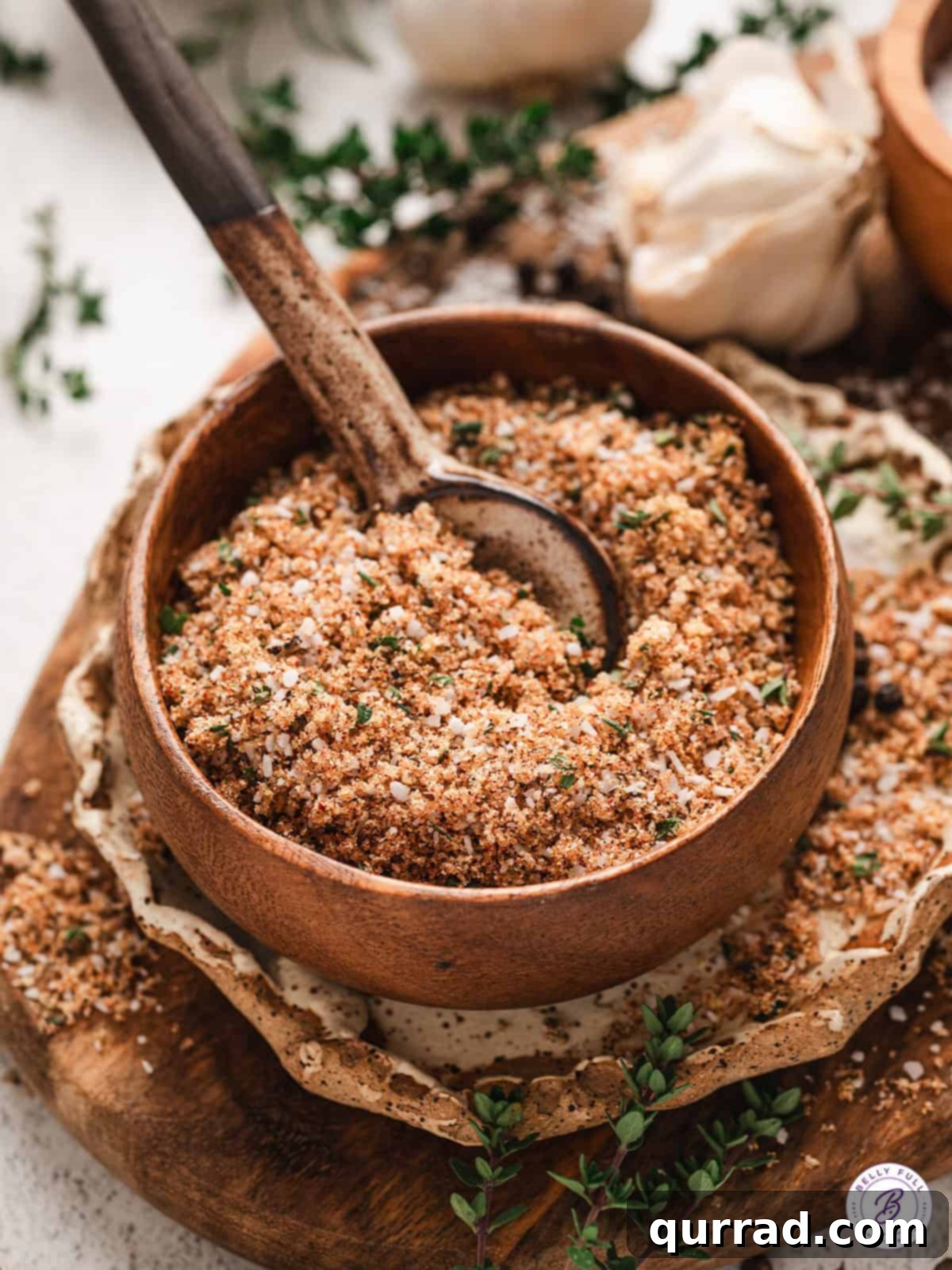
You can meticulously follow the finest prime rib roasting techniques, invest in the highest quality cut of meat, and yet, if your seasoning falls short, so too will your final dish. We believe every roast deserves to be nothing short of perfection, and our homemade prime rib rub is the simplest, most effective way to ensure that outcome. Each ingredient in this carefully developed recipe serves a specific purpose, contributing to a harmonious flavor profile that complements, rather than overwhelms, the natural richness of prime rib.
The combination of salt and pepper forms the essential foundation, while brown sugar adds a layer of depth, tenderizes the meat, and is crucial for achieving that coveted, beautifully browned crust through the Maillard reaction. Garlic powder and onion powder introduce savory complexity, and smoked paprika imparts a delightful hint of smoky warmth and a vibrant color. The fresh rosemary and thyme are pivotal, lending an earthy, herbaceous aroma and taste that distinctly sets this blend apart from a sweeter, BBQ-style rib rub, making it an ideal choice for a festive holiday roast, such as your Christmas prime rib.
Key Ingredients for Your Perfect Prime Rib Rub
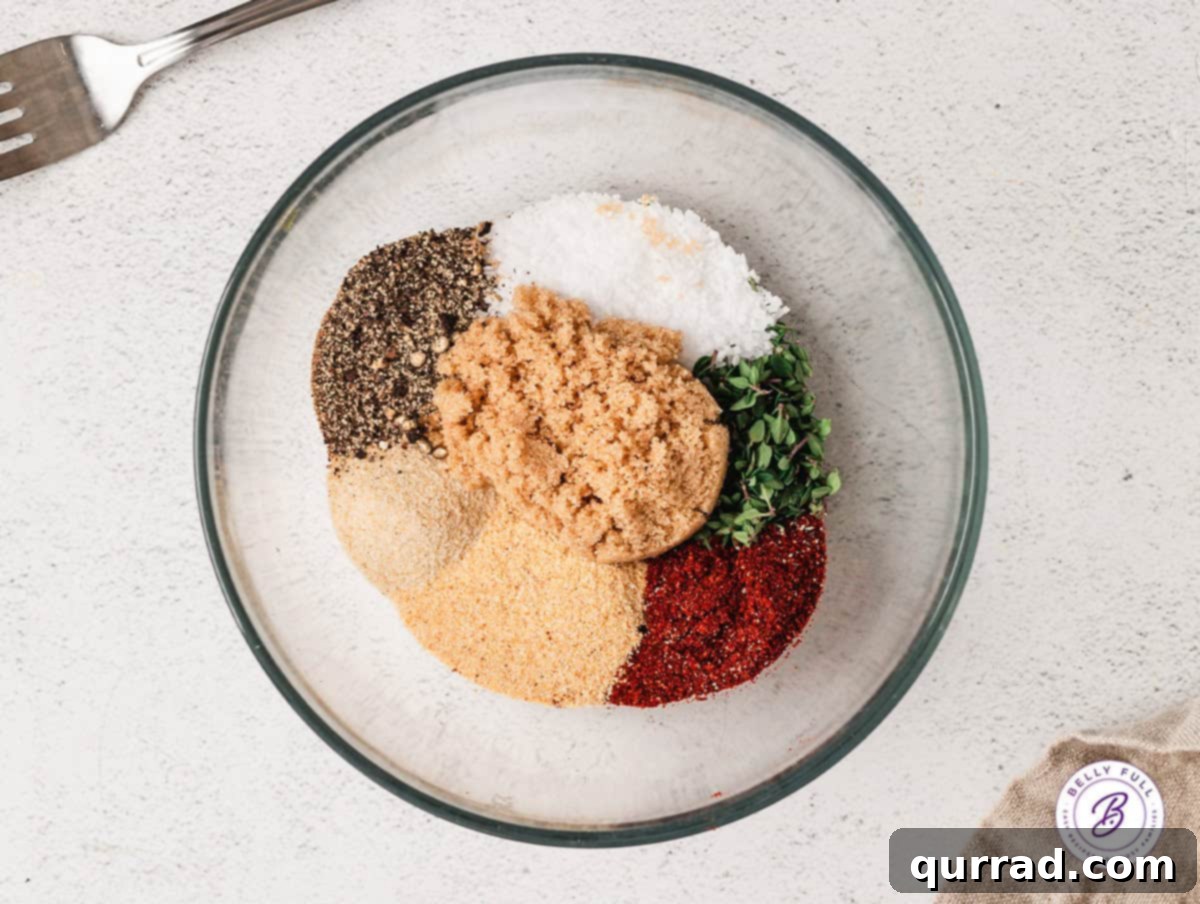
Crafting the ultimate prime rib rub begins with understanding the role each component plays in enhancing flavor and texture. Here’s a detailed look at the simple yet powerful ingredients you’ll need. For precise measurements, please refer to the recipe card below.
- Brown Sugar: While salt is undeniably the cornerstone of any effective dry rub, brown sugar plays a critical, multifaceted role. It not only adds a nuanced sweetness that balances the savory elements but also acts as a natural tenderizer. Most importantly, brown sugar is instrumental in facilitating the Maillard reaction—a chemical process where amino acids and reducing sugars react under heat, creating hundreds of new flavor compounds and contributing to the desirable deep brown, crispy crust that makes prime rib so irresistible. We recommend using dark brown sugar for its richer molasses notes.
- Fresh Rosemary & Thyme: These fresh herbs are non-negotiable for achieving the distinctive aromatic profile of this rub. Their robust, earthy, and slightly piney notes perfectly complement the beef. To maximize their flavor and aroma, we remove the leaves from their stems and mince them finely. As your prime rib roasts, these herbs will release an incredibly inviting fragrance, signaling a feast in the making.
- Essential Seasonings: A carefully selected trio of common spices forms the backbone of this rub.
- Sea Salt: More than just a flavor enhancer, salt plays a crucial role in seasoning large cuts of meat like prime rib. It helps to draw out moisture initially, which is then reabsorbed, tenderizing the meat from within and ensuring deep flavor penetration.
- Black Pepper: Freshly ground black pepper adds a pungent, spicy kick that provides a delightful contrast to the richness of the beef.
- Garlic Powder: Offering a concentrated, savory garlic flavor without the moisture of fresh garlic, it’s an indispensable ingredient for deep umami.
- Onion Powder: Similar to garlic powder, onion powder provides a robust, sweet, and savory onion essence, contributing to the overall complexity.
- Smoked Paprika: This vibrant spice adds a beautiful reddish hue to the crust and imparts a subtle, smoky undertone that enhances the roasted flavors of the prime rib, making it even more appealing.
Smear Butter Before The Rub!
For an extra layer of flavor and to help the rub adhere perfectly, we highly recommend coating your prime rib generously with softened salted butter before applying the rub. The butter not only adds richness but also contributes to an even more glorious, crispy crust as it renders during roasting.
Expert Tips for Applying Your Prime Rib Rub Like a Pro
Applying your homemade prime rib rub correctly is just as important as the ingredients themselves. Follow these expert tips to ensure maximum flavor, tenderness, and that irresistible, savory crust.
- Don’t Skip the Salt – And Let It Rest: Experienced cooks know that salt is paramount for any meat rub, especially for a large cut like prime rib. Salt doesn’t just season; it’s a powerful tenderizer. When the rub is applied, the salt initially draws moisture to the surface of the meat. Given enough time (at least an hour, but preferably several hours or even overnight), this salty moisture is reabsorbed, carrying the flavors deep into the muscle fibers. This process, known as “dry brining,” results in a significantly more tender, juicy, and flavorful roast. Allowing your prime rib to rest with the rub is a non-negotiable step for optimal results.
- Pat the Prime Rib Dry: Before you even think about butter or rub, thoroughly pat your prime rib roast dry with paper towels. A dry surface is absolutely critical for two main reasons: firstly, it ensures the butter and rub adhere perfectly to the meat, creating an even coating. Secondly, and perhaps most importantly, a dry surface is essential for the Maillard reaction to occur efficiently. This complex chemical process is responsible for the incredible deep-brown, flavorful crust that is the hallmark of a perfectly roasted prime rib. Moisture on the surface will steam the meat instead of searing it, preventing that desired crust from forming.
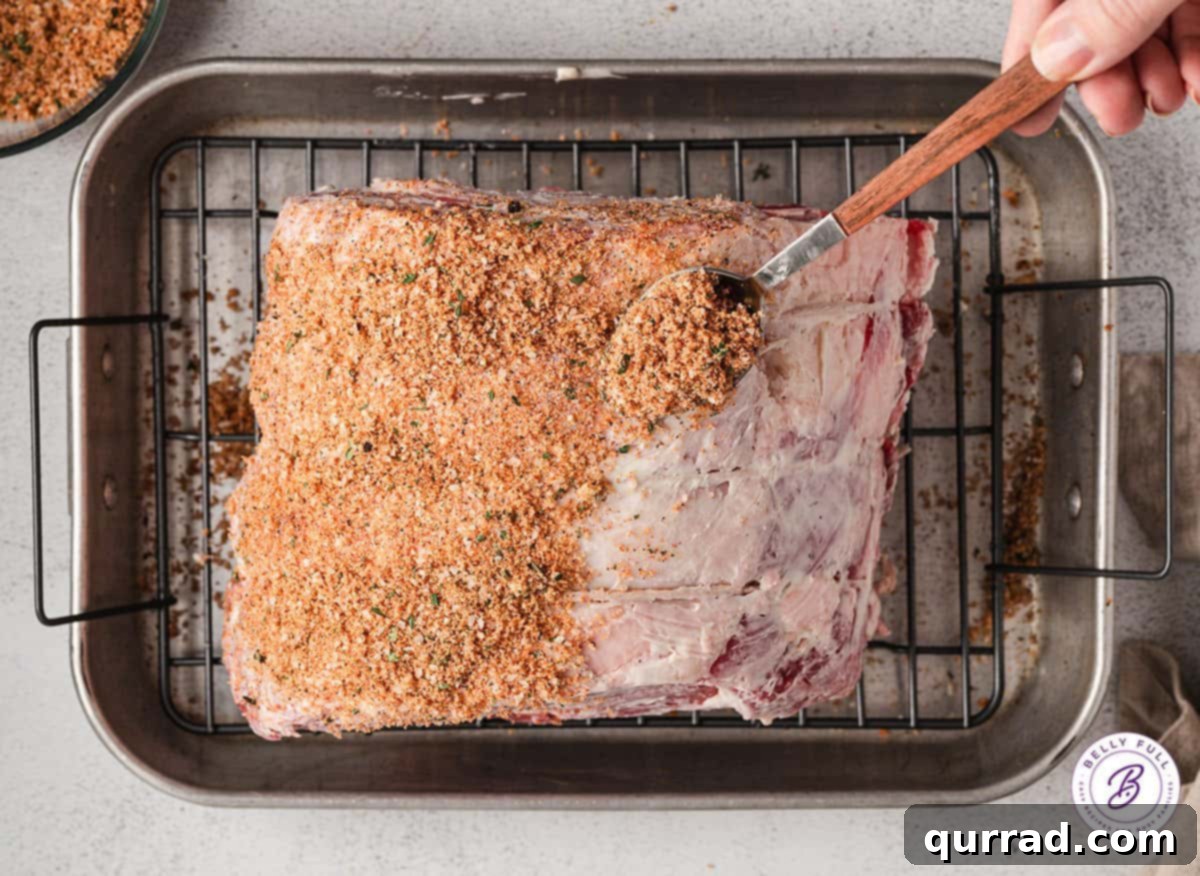
- Massage the Rub Into the Meat: Don’t just sprinkle and walk away. Using your hands, generously massage the rub into every surface of the prime rib. This ensures even distribution of all the wonderful flavors and helps the sugar crystals and spices nestle into the crevices of the meat. The warmth of your hands can also help soften the butter (if using) and further aid in adhesion, guaranteeing that every bite will be perfectly seasoned and incredibly delicious.
- Cook Your Roast Fat Side Up: For the most out of your prime rib rub, always position your roast with the fat cap facing upwards in the roasting pan. As the prime rib cooks, this natural layer of fat will slowly render and melt, cascading down over the meat. This process acts as a continuous self-basting mechanism, keeping the roast incredibly moist and juicy. Furthermore, as the fat melts, it helps to carry the flavors of the rub even deeper into the meat, while the brown sugar in the rub contributes to a magnificent, caramelized crust on top, enhancing both texture and flavor.
Versatile Variations and Substitutions
While our core recipe for prime rib rub is perfected for classic flavor, you can certainly adapt it to your taste or what you have on hand. Experimentation is part of the joy of cooking!
- Fresh vs. Dried Herbs: A Key Distinction: We strongly advocate for fresh rosemary and thyme in this recipe for their vibrant, aromatic qualities that truly shine in a prime rib. However, if fresh herbs are unavailable, dried herbs can be used in a pinch. Remember that dried herbs are significantly more concentrated than fresh ones. As a general rule of thumb, use 1 teaspoon of dried herbs for every 1 tablespoon of fresh herbs specified in the recipe. For instance, if the recipe calls for 2 tablespoons of fresh rosemary, use 2 teaspoons of dried rosemary.
- Exploring Flavor Profiles: Beyond the Basics: Don’t hesitate to personalize your rub.
- Spicier Kick: Add a pinch of cayenne pepper or a touch of ancho chili powder for a subtle heat.
- Smokier Depth: Increase the amount of smoked paprika or introduce a little chipotle powder for a more pronounced smoky flavor.
- Citrus Brightness: While less traditional, a small amount of finely grated orange or lemon zest can add a surprising brightness that beautifully cuts through the richness of the beef.
- Mustard Powder: A teaspoon of dry mustard powder can add a sharp, pungent note that complements beef exceptionally well.
Beyond Prime Rib: Other Delicious Uses for This Rub
Don’t reserve this incredible rub just for your prime rib! Its balanced blend of savory, sweet, and earthy notes makes it exceptionally versatile for a wide range of proteins and vegetables. Make a double batch, and you’ll always have a secret weapon in your pantry.
- Enhancing Other Cuts of Beef: This rub works wonders on virtually any beef cut, transforming everyday meals into something special. It’s a fantastic steak marinade for grilling or pan-searing thicker cuts like rib-eye, sirloin, or even a robust T-bone. For leaner cuts like grilled flank steak or skirt steak, the brown sugar helps create a beautiful char while keeping the meat juicy.
- A Game-Changer for Pork and Poultry:
- Pork: The sweet and savory profile, especially with the rosemary and thyme, is a natural match for pork. Try it on a roasted pork tenderloin, pork chops, or even a slow-cooked pork shoulder for pulled pork.
- Chicken: For poultry, this rub adds phenomenal flavor and a golden crust. Sprinkle it generously over baked chicken breasts, thighs, or an entire roasted chicken. The sugar helps the skin crisp up beautifully.
- Elevating Your Roasted Vegetables: The magic of brown sugar and aromatic herbs isn’t limited to meat. This rub is sensational on roasted vegetables. Potatoes, sweet potatoes, Brussels sprouts, and particularly oven-roasted carrots, benefit immensely. The brown sugar caramelizes, creating a sweet and savory glaze that makes vegetables incredibly addictive.

Storing Your Homemade Prime Rib Rub for Future Feasts
Proper storage is key to maintaining the freshness and potency of your homemade prime rib rub. Since this recipe includes fresh herbs, its shelf life is slightly different than a purely dry spice blend.
- Short-Term Storage (with Fresh Herbs): When prepared with fresh rosemary and thyme, this rub is best used within 3-4 days. Beyond this, the fresh herbs will begin to lose their vibrant aroma and moisture content, affecting the overall quality and potentially introducing unwanted moisture into the blend. Store it in an airtight container in the refrigerator during this period.
- Long-Term Storage (Dry Mix Only): For a truly shelf-stable option that lasts much longer, you can prepare the dry components of the rub in advance. Mix the sea salt, black pepper, garlic powder, onion powder, smoked paprika, and dark brown sugar together and store this blend in an airtight jar in a cool, dry, dark place (like your pantry) for up to 6 months. When you’re ready to use it, simply mince and add the fresh rosemary and thyme just before applying the rub to your prime rib. Alternatively, you can use dried herbs from the outset for a completely shelf-stable rub that will last for months.
Making your own prime rib rub is a small effort that yields monumental flavor rewards. It’s the secret ingredient that will transform your roast into a legendary centerpiece, creating memorable meals for family and friends. We hope you cherish this delicious and easy recipe as much as we do!
Easy Prime Rib Rub Recipe Card
Prime Rib Rub
Prep Time: 10 mins
Total Time: 10 mins
Servings: 1 serving (just shy of 1 cup – enough to cover a 5-10 pound bone-in prime rib)
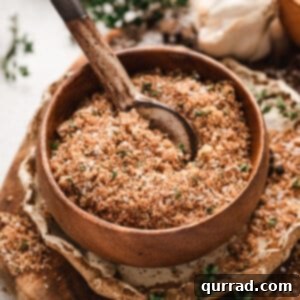
This Prime Rib Rub recipe uses salt, pepper, brown sugar, fresh herbs, and simple spices to create a perfectly seasoned prime rib every time!
Ingredients
- 2 tablespoons sea salt
- 2 teaspoons black pepper
- 2 tablespoons fresh rosemary, removed from stems and minced
- 1 tablespoon fresh thyme, removed from stems and minced
- 1 tablespoon garlic powder
- 1 teaspoon onion powder
- 1/2 tablespoon smoked paprika
- 3 tablespoons dark brown sugar
Instructions
-
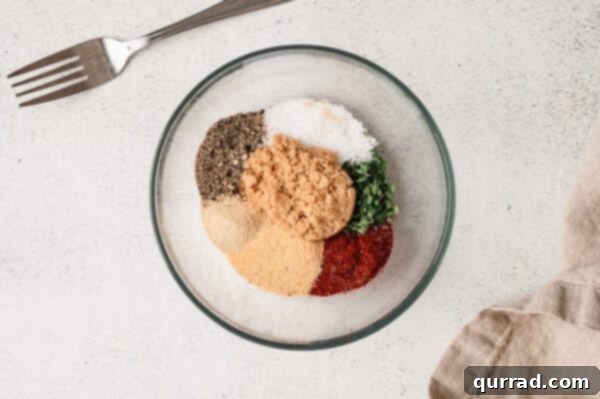
Combine 2 tablespoons sea salt, 2 teaspoons black pepper, 2 tablespoons minced fresh rosemary, 1 tablespoon minced fresh thyme, 1 tablespoon garlic powder, 1 teaspoon onion powder, 1/2 tablespoon smoked paprika, and 3 tablespoons dark brown sugar in a mixing bowl.

-
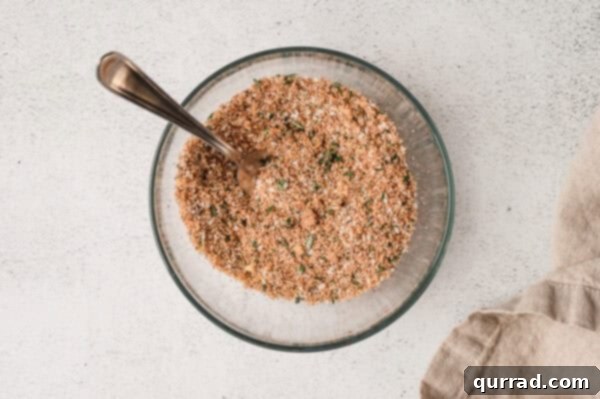
Whisk all the seasonings thoroughly to combine, ensuring an even mix of all ingredients.
-
Pat your prime rib roast completely dry with clean paper towels. Then, generously smear about 3 tablespoons of softened salted butter all over the entire surface of the roast.
-
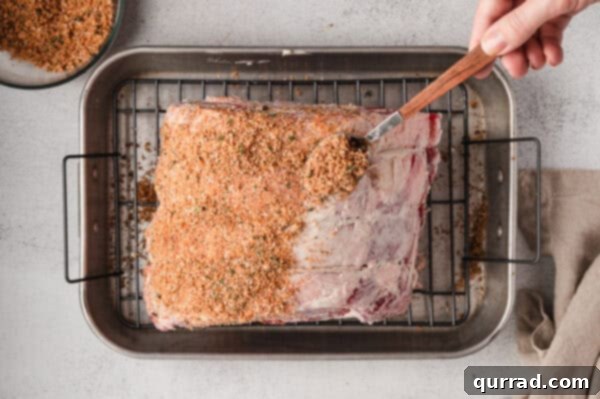
Using a spoon or your hands, evenly sprinkle the prepared prime rib seasoning onto the butter-coated meat, working one side at a time. Rub it in thoroughly with your hands to ensure every inch is covered. For an extra boost of flavor and crust, pile a little extra rub on top, especially over the fat cap. Let the seasoned roast marinate for at least 1 hour (or up to 24 hours in the fridge, uncovered) before proceeding with your chosen prime rib recipe and cooking as directed.
Recipe Notes
- Fresh vs. Dried Herbs: For the best flavor, fresh herbs are recommended. If using dried herbs, substitute 1 teaspoon of dried herbs for every tablespoon of fresh herbs specified.
- Adjusting for Roast Size: This recipe yields enough rub for a prime rib weighing approximately 5-10 pounds (bone-in). For larger roasts, it is highly recommended to double the recipe to ensure adequate coverage and flavor.
- Emphasize the Fat Cap: For an exceptional crust and deeper flavor penetration, apply a slightly heavier layer of rub onto the fat cap of the roast. As the fat renders during cooking, it will self-baste the meat, distributing the flavors and contributing to a beautiful, caramelized crust.
- Marination is Key: Allow the rub to marinate on the prime rib for a minimum of 1 hour before cooking. This allows the salt and spices to thoroughly flavor and tenderize the meat. For even deeper flavor, you can season the prime rib up to 24 hours in advance, storing it uncovered in the refrigerator.
Nutrition
Serving: 0.85 cup | Calories: 202kcal | Carbohydrates: 50g | Protein: 3g | Fat: 1g | Saturated Fat: 0.3g | Polyunsaturated Fat: 0.4g | Monounsaturated Fat: 0.2g | Sodium: 1097mg | Potassium: 368mg | Fiber: 5g | Sugar: 36g | Vitamin A: 2107IU | Vitamin C: 13mg | Calcium: 119mg | Iron: 4mg
Nutritional information provided is an automatic calculation and may vary based on specific products used and any recipe modifications. If precise nutritional values are crucial, independent calculation is recommended.
More Flavorful Seasoning Mixes to Explore
If you enjoy crafting your own spice blends, here are more homemade seasoning recipes to elevate your culinary creations:
- Everything Bagel Seasoning: Perfect for bagels, avocado toast, or roasted vegetables.
- Homemade Ranch Seasoning: A versatile mix for dips, dressings, or sprinkling on popcorn.
- Homemade Taco Seasoning: Elevate your tacos, fajitas, and chili with this flavorful blend.
- Apple Pie Spice: The quintessential blend for autumn baking, ideal for pies, crisps, and warm beverages.
- Pumpkin Pie Spice: Another fall favorite, essential for pumpkin lattes, muffins, and of course, pumpkin pie.