
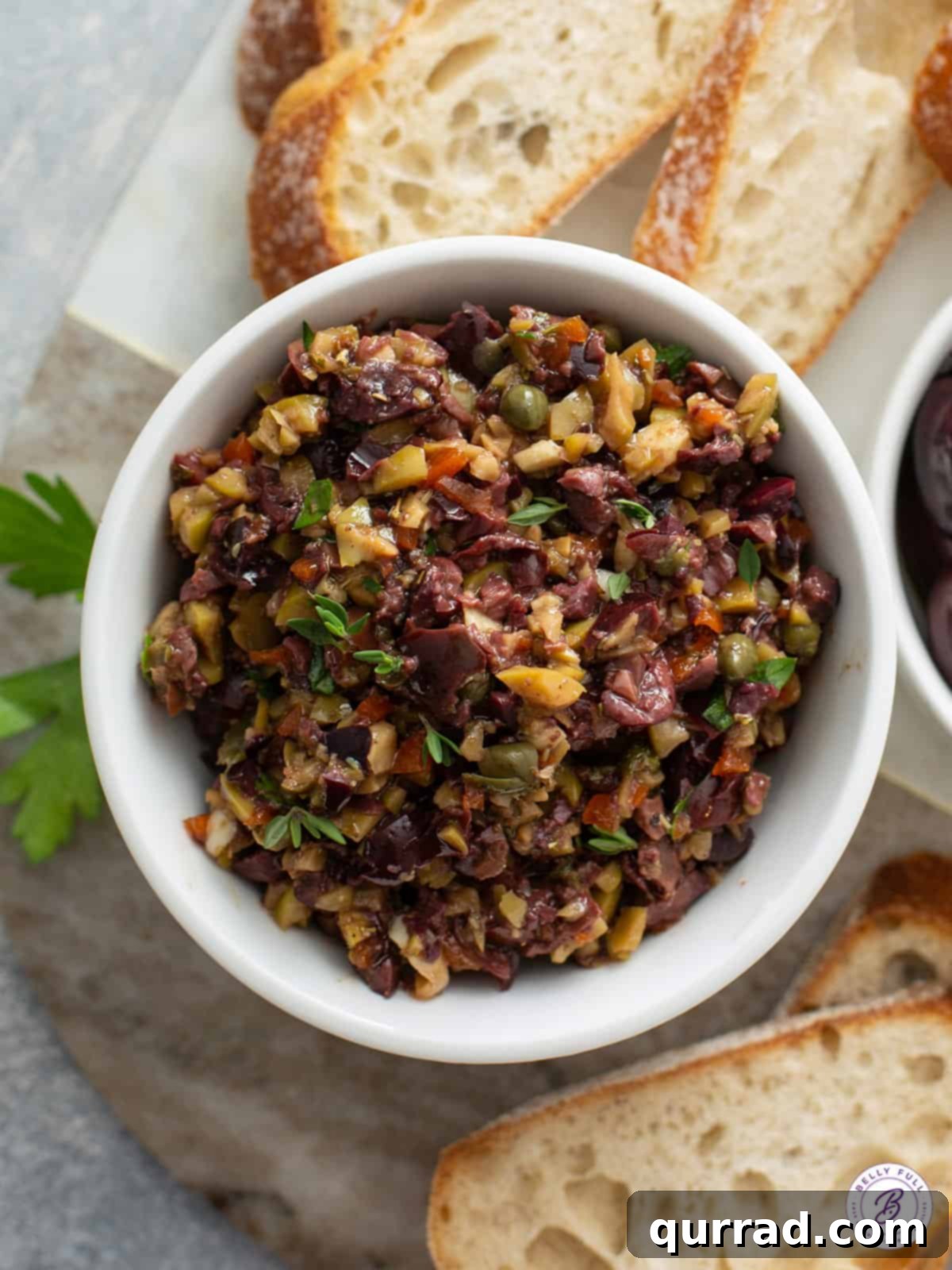
Unlock the vibrant flavors of the Mediterranean with this exquisite Olive Tapenade recipe. Originating from the sun-drenched region of Provence, France, this classic spread masterfully combines the briny goodness of olives, the sharp tang of capers, and the umami depth of anchovies. It’s a condiment bursting with robust flavor, incredibly simple to prepare, and a quintessential appetizer to serve with crusty bread or crisp crackers.
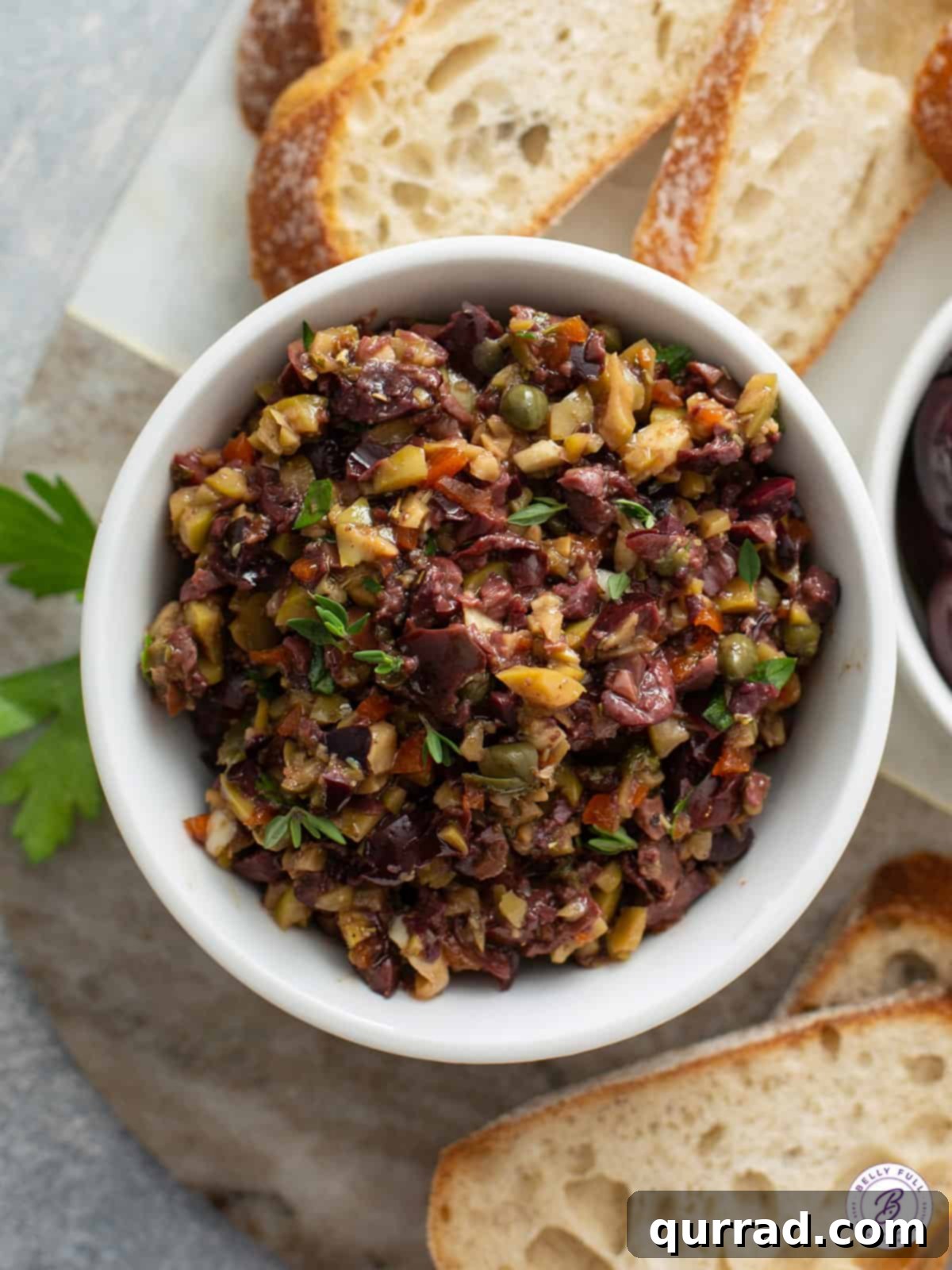
Olive Tapenade: Your Ultimate Guide to a Provencal Delight
Have you ever found yourself lingering by the gourmet olive bar at your local grocery store, intrigued by the myriad of colors and textures? Next time, don’t just walk past – take a moment to sample some of those delightful briny treats! It’s not only a fun culinary adventure but also the perfect inspiration to craft your very own homemade Olive Tapenade. This simple yet sophisticated spread is far more accessible than you might think, bringing the essence of French cuisine right into your kitchen.
What is Olive Tapenade? Diving into its Provencal Roots
At its heart, tapenade is a celebrated culinary staple from Provence, located in the picturesque south of France. The name itself, “tapenade,” is derived from the Provençal word for capers, “tapenas,” highlighting the significance of this tangy ingredient in the dish. Traditionally, this rich and savory spread is made by pureeing or finely chopping a harmonious blend of olives, capers, anchovy fillets, and extra-virgin olive oil. While its origins might be rooted in a specific region, its appeal is truly global.
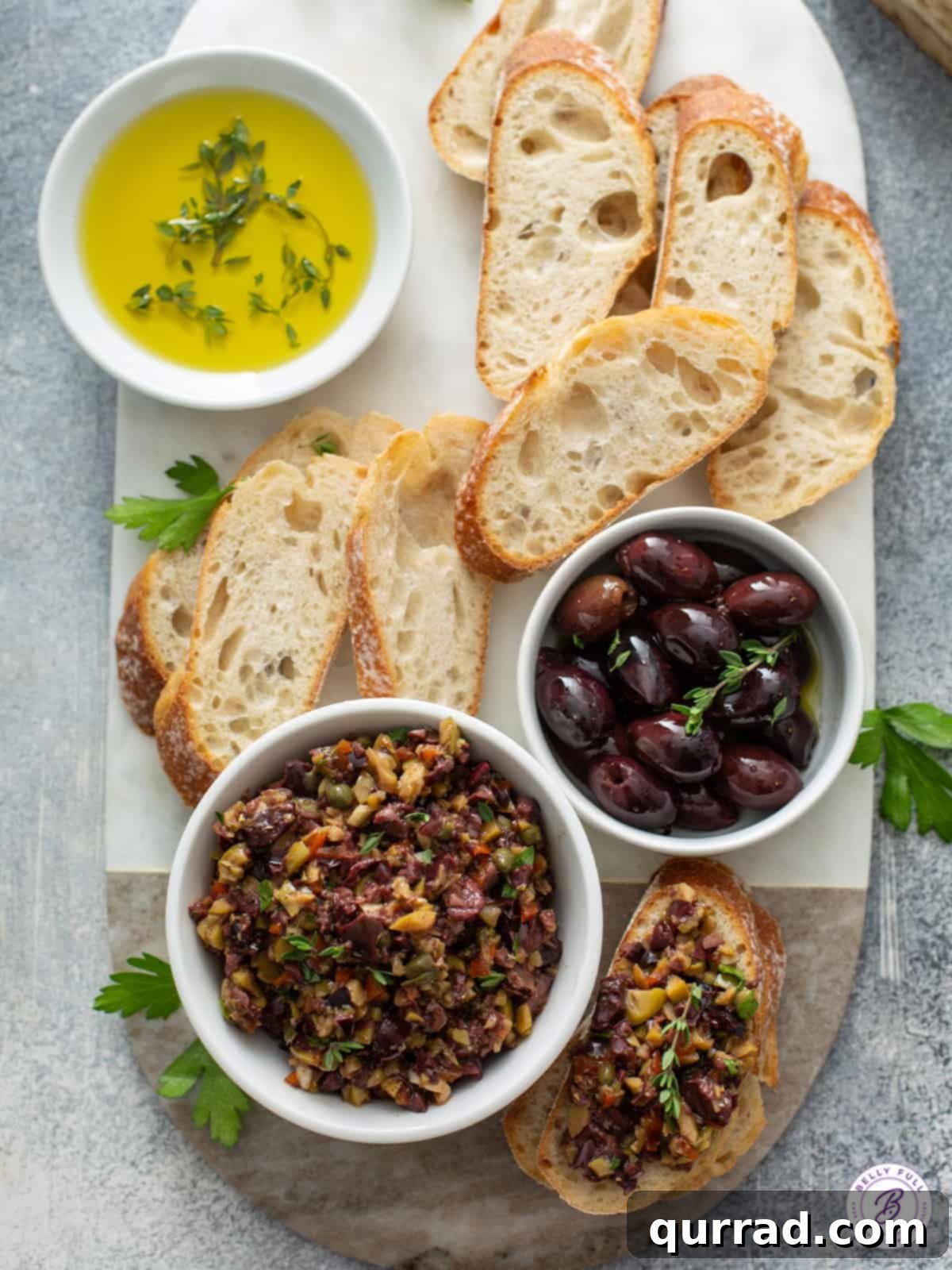
Most commonly, tapenade is enjoyed as a vibrant condiment or an elegant appetizer. Its salty, piquant profile makes it an outstanding addition to a sophisticated charcuterie board, lending a burst of flavor that beautifully complements cured meats, cheeses, and crusty bread. Beyond that, it serves as a fantastic side dish to elevate a main protein, proving its remarkable versatility in various culinary applications.
Frankly, I believe olive tapenade doesn’t receive the widespread admiration it truly merits. It’s not just about its incredible depth of flavor, which is undeniably captivating. What truly sets it apart is its effortless preparation and astonishing adaptability. For all the olive enthusiasts out there, like myself, this recipe is a game-changer. Imagine whipping up a fresh, gourmet batch of tapenade in under five minutes – it’s entirely possible, and utterly delicious!
Key Ingredients for the Perfect Olive Tapenade
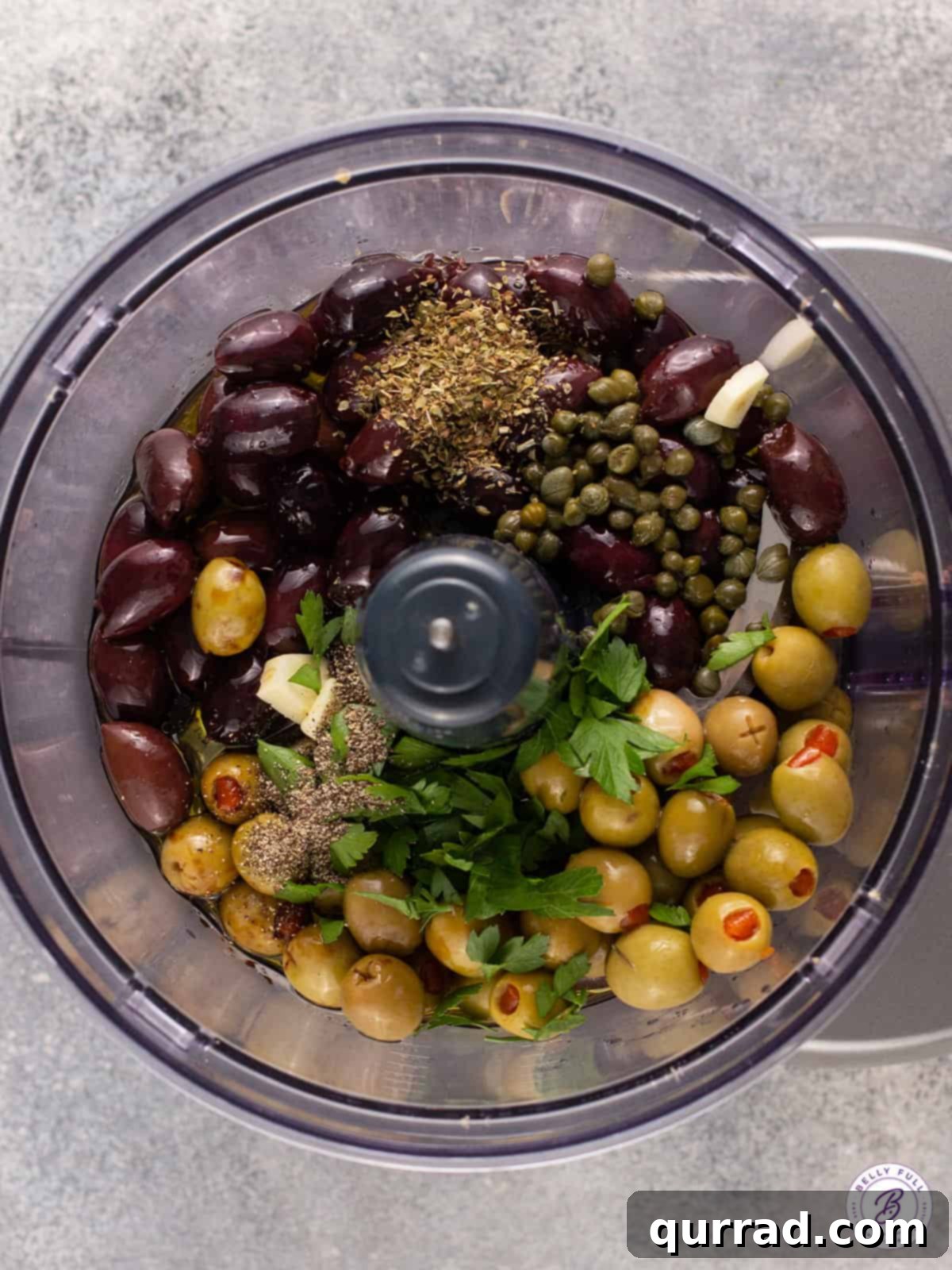
Crafting a truly exceptional olive tapenade relies on a selection of quality ingredients that each play a crucial role in building its complex flavor profile. Here’s a detailed look at what you’ll need and why each component is important. For precise measurements, please refer to the comprehensive recipe card further down this page.
- Olives: The Heart of Tapenade – The choice of olives is paramount. While you have considerable freedom, it’s best to opt for varieties that are fairly mild and have been cured in brine. My personal favorite blend, which offers a perfect balance of saltiness and fruitiness, combines robust Kalamata olives with Spanish Green pimiento-stuffed olives. You can also experiment with Niçoise olives for a truly authentic Provencal touch, or even a mix of black and green olives for visual appeal and varied flavor notes. Ensure they are pitted, or pit them yourself for the freshest taste.
- Capers: The Tangy Kick – These small, intensely flavored flower buds are non-negotiable in tapenade. Whether you use brine-packed or salt-packed varieties, the crucial step is to rinse them thoroughly under cold water. Capers are naturally very salty, and failing to rinse them can overpower the entire dish, masking the other delicate flavors. Rinsing helps mellow their intensity, allowing their bright, briny essence to shine through without being overwhelming.
- Anchovy Fillets: The Umami Secret Weapon – Many people harbor a misguided fear of anchovies, perhaps from unpleasant childhood encounters with them on pizza. However, I urge you not to shy away from them in tapenade! Anchovies are a cornerstone of many classic Mediterranean dishes, like Caesar salad, because they contribute an unparalleled savory, salty umami depth without tasting overtly “fishy.” They simply enhance and round out the other flavors. If the idea of handling whole fillets is off-putting, a high-quality anchovy paste is a convenient and equally effective alternative. They are truly the secret ingredient that elevates tapenade from good to extraordinary.
- Fresh Garlic: Aromatic Zest – Garlic provides essential aromatics and a delightful zing that cuts through the richness of the olives and oil. Use fresh garlic for the best flavor; a single clove, finely chopped, is usually sufficient to impart its characteristic pungent warmth without dominating the spread.
- Lemon Juice: A Brightening Touch – A squeeze of fresh lemon juice is vital for balancing the flavors. Its bright, acidic notes provide a refreshing counterpoint to the salty and savory ingredients, lifting the overall profile of the tapenade and making it incredibly vibrant. Always opt for freshly squeezed lemon juice over bottled for superior taste.
- Seasonings: Herbs for Freshness – Fresh parsley and dried oregano contribute herbaceous notes that complement the briny core ingredients. Freshly ground black pepper adds a subtle warmth and a hint of spice. While the olives, capers, and anchovies provide significant saltiness, it’s always wise to taste and adjust the seasoning as needed before serving.
- Extra-Virgin Olive Oil: The Unifying Elixir – As an ingredient derived directly from olives, extra-virgin olive oil is naturally the perfect binder for tapenade. More than just a liquid, it emulsifies all the components, creating a cohesive texture while infusing the spread with its own fruity, peppery notes. The quality of your olive oil genuinely makes a difference here, so choose a good extra-virgin variety for the best results.
Crafting Your Own Olive Tapenade: A Simple Step-by-Step Guide
Making homemade olive tapenade is astonishingly straightforward and requires minimal effort, especially with the help of a food processor. The entire process takes mere minutes, transforming simple ingredients into a gourmet spread. The key is achieving your preferred texture, whether you like it finely minced or beautifully smooth.
To begin, ensure all your ingredients are prepped: olives are pitted (if not already), capers are rinsed, and garlic is roughly chopped. Place all the ingredients into the bowl of your food processor. Then, simply pulse the mixture. Start with short bursts, about 5-7 pulses, scraping down the sides of the bowl as needed to ensure everything is evenly incorporated. I personally favor a tapenade that retains some texture – a finely minced consistency that’s similar to a relish, offering a satisfying bite. However, if you prefer a silkier, more uniform spread, simply continue to pulse until it reaches your desired smoothness. Be careful not to over-process it into a complete paste, as some texture adds to the experience.
Once you’ve achieved the perfect consistency, taste a small amount and adjust the seasoning as necessary. You might find it needs a tiny bit more lemon juice for brightness or a pinch more pepper. Remember, the olives, capers, and anchovies already contribute significant salt, so often no additional salt is needed. Allow the tapenade to rest for a few minutes, or even an hour, to let the flavors meld and deepen before serving. For the complete recipe details and a helpful video demonstration, scroll down to the printable recipe card below.
Health Benefits and Dietary Considerations of Olive Tapenade
Beyond its incredible taste, olive tapenade also boasts an impressive nutritional profile, making it one of the healthiest and most flavorful condiments you can incorporate into your diet. Let’s explore why this Mediterranean gem is good for you and how it fits into various dietary lifestyles.
Is Olive Tapenade Healthy? Absolutely! Tapenade’s primary ingredients – olives and extra-virgin olive oil – are packed with monounsaturated fats, which are renowned for their heart-healthy benefits. These “good” fats can help lower bad cholesterol levels, reducing the risk of heart disease. Furthermore, olives are a rich source of antioxidants, which combat free radicals in the body, and provide dietary fiber. The capers and anchovies also contribute various minerals and vitamins. While it is calorie-dense due to the healthy fats, it should be enjoyed in moderation as part of a balanced diet.
Is Olive Tapenade Vegan? No, traditionally it is not. The inclusion of anchovies, and often Worcestershire sauce (which typically contains anchovies), means that classic tapenade is not suitable for a vegan diet. However, it’s incredibly easy to make a delicious vegan version! Simply omit the anchovy fillet and Worcestershire sauce, and consider adding a small amount of nutritional yeast or a tiny dash of tamari or soy sauce for an umami boost. A finely minced sun-dried tomato or a small piece of seaweed can also add depth in place of anchovies.
Is Olive Tapenade Keto-Friendly? Yes, indeed! Olives, in both their green and black varieties, are an excellent food choice for a ketogenic diet. They are low in carbohydrates and rich in healthy fats, which are essential for maintaining ketosis. This tapenade recipe, without any added sugars or high-carb ingredients, aligns perfectly with keto principles, making it a fantastic fat-rich condiment for those following a low-carb lifestyle. It’s also naturally gluten-free!
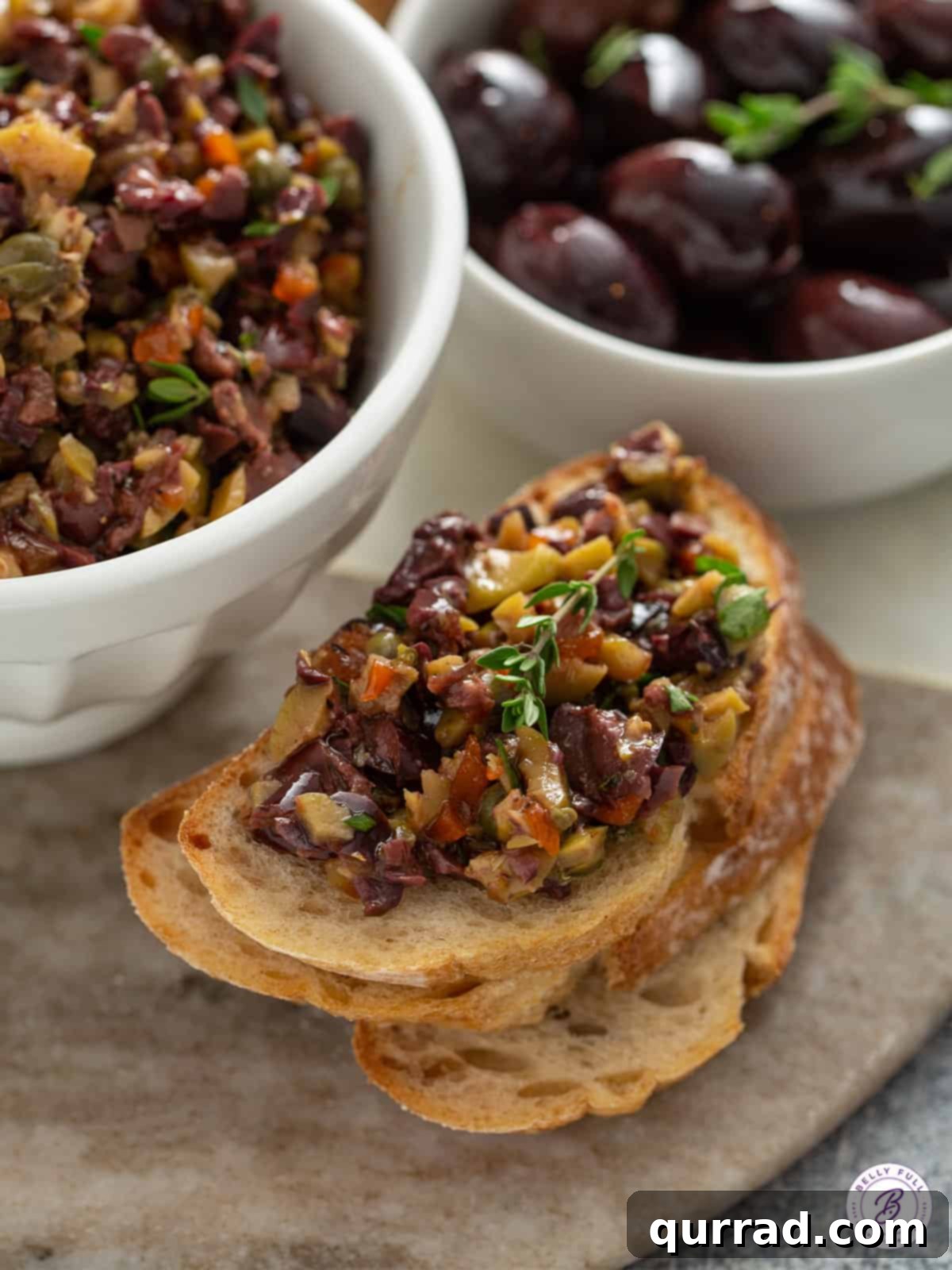
Versatile Serving Ideas for Olive Tapenade
One of the many charms of olive tapenade is its incredible versatility. Once you’ve made a batch, you’ll find countless ways to enjoy its zesty, savory flavors. Here are some of our favorite suggestions, along with creative ideas to inspire your culinary adventures:
- Classic Appetizer: The most popular way to enjoy tapenade is by spreading it generously on toasted crostini, sliced baguette, or a variety of crackers. It’s an instant crowd-pleaser for any gathering.
- Elevate Your Charcuterie Board: A dollop of olive tapenade is an absolute must-have on any charcuterie or antipasto board. Its intense flavor pairs beautifully with cured meats like prosciutto and salami, as well as a selection of hard and soft cheeses.
- Gourmet Sandwich or Wrap Spread: Ditch the mayonnaise and elevate your everyday sandwiches, wraps, or paninis. Tapenade adds a sophisticated burst of flavor that transforms a simple meal into something special. It’s particularly good with grilled vegetables, chicken, or cheese.
- Mix into Warm Pasta: Stir a tablespoon or two of tapenade into hot pasta dishes for an instant flavor infusion. It creates a rich, olive-infused sauce with minimal effort. Try it with a simple olive and pine nut pasta for a truly Mediterranean experience.
- Accompaniment to Proteins: Serve tapenade alongside roasted chicken, pan-seared steak, grilled fish, or tender pork. Its robust flavors act as a perfect relish, complementing and enhancing the main protein.
- Stir into Dips: Swirl a spoon of tapenade into hummus, cream cheese, or Greek yogurt for a quick, flavorful dip.
- Pizza Base: For an unconventional and delicious pizza, use tapenade as the base sauce instead of traditional tomato sauce. Top with fresh mozzarella, sun-dried tomatoes, and basil.
- Omelets and Scrambled Eggs: Fold a spoonful of tapenade into your morning omelet or scrambled eggs for a savory breakfast with a Mediterranean twist.
- Salad Dressing Booster: Whisk a small amount of tapenade into your vinaigrette for a more complex and flavorful salad dressing.
Storing Your Homemade Olive Tapenade for Lasting Freshness
Proper storage is essential to maintain the freshness and flavor of your homemade olive tapenade, allowing you to enjoy it for days or even months to come. Here’s how to store it effectively:
- Refrigerator Storage: If you have any delicious leftovers, transfer the tapenade to an airtight container. To extend its shelf life and prevent oxidation, pour a thin, fresh layer of extra-virgin olive oil over the top of the tapenade, creating a protective seal. Stored this way, your homemade tapenade will keep beautifully in the refrigerator for up to 2 weeks. Always ensure the oil layer remains intact.
- Freezing Olive Tapenade: Yes, you absolutely can freeze olive tapenade! This is a fantastic way to prepare a larger batch and have it on hand for future meals or impromptu appetizers. Transfer the tapenade to an airtight freezer-safe container or even into ice cube trays for portion control. Leave a small gap at the top of the container, as olives can slightly expand when frozen. It can be safely frozen for up to 2 months. When you’re ready to use it, simply thaw the tapenade overnight in the refrigerator. Once thawed, stir well and use within a few days for the best quality and flavor.
Explore More Olive-Inspired Recipes:
- Olive Cheese Bread
- Olive Bread
- Marinated Olives
- Olive Salad
- Olive Spread (just 2 ingredients for a simpler version)
We truly hope you enjoy this delightful and incredibly easy olive tapenade recipe! If you give it a try, please consider leaving a review below to share your experience. And don’t forget to connect with Belly Full on TikTok, Facebook, Instagram, Pinterest, and YouTube for more delicious recipes and culinary inspiration!
Easy Homemade Olive Tapenade
Prep Time: 5 mins
Total Time: 5 mins
Yield: 32 servings (approx. 2 tablespoons per serving)
This mixed Olive Tapenade recipe is loaded with flavor, incredibly easy to make, and perfect as a sophisticated appetizer on bread or crackers.
Pin Recipe
Print Recipe
Ingredients
- 1 cup pitted oil-packed kalamata olives
- 1 cup Spanish green olives stuffed with pimientos
- 1/4 cup extra-virgin olive oil
- 1 tablespoon lemon juice
- 2 teaspoons Worcestershire sauce
- 1 & 1/2 tablespoons capers, drained and rinsed
- 1 anchovy fillet (or 1/2 teaspoon anchovy paste), optional but highly recommended
- 1 clove garlic, chopped
- 3 tablespoons chopped fresh parsley
- 1 teaspoon dried oregano
- 1/8 teaspoon black pepper
Instructions
- Place all ingredients (olives, olive oil, lemon juice, Worcestershire sauce, capers, anchovy fillet/paste, garlic, parsley, oregano, black pepper) into the bowl of a food processor.
- Process until all ingredients are combined but still retain some texture, similar to a relish, about 7-10 pulses. Scrape down the bowl if necessary to ensure even processing. Avoid over-processing to a smooth paste, unless that is your preferred consistency.
- Taste the tapenade and adjust seasoning if necessary. You may wish for more lemon juice for brightness, or additional pepper. Salt is usually not needed due to the olives, capers, and anchovies.
- Serve the tapenade at room temperature spread on sliced baguette, crostini, or crackers.
Video Guide
Watch the full recipe video here:

(Video player would be embedded here)
Notes
Desired consistency: I prefer my tapenade finely minced with a noticeable texture rather than a completely smooth puree. For a smoother spread, simply pulse the ingredients a few more times until your desired consistency is achieved.
Storage: All detailed storage information, including refrigeration and freezing tips, is provided in the article above for your convenience.
Nutrition Information
Calories: 28kcal | Carbohydrates: 1g | Protein: 1g | Fat: 3g | Saturated Fat: 1g | Cholesterol: 1mg | Sodium: 146mg | Potassium: 9mg | Fiber: 1g | Sugar: 1g | Vitamin A: 65IU | Vitamin C: 1mg | Calcium: 6mg | Iron: 1mg
Nutritional information provided is an automatic calculation and may vary based on specific product brands used and any modifications made to the recipe. If precise nutritional values are critical, independent calculation is recommended.
Did you make this? Leave a rating below!
Your feedback helps us and other home cooks. We’d love to hear how your Olive Tapenade turned out!