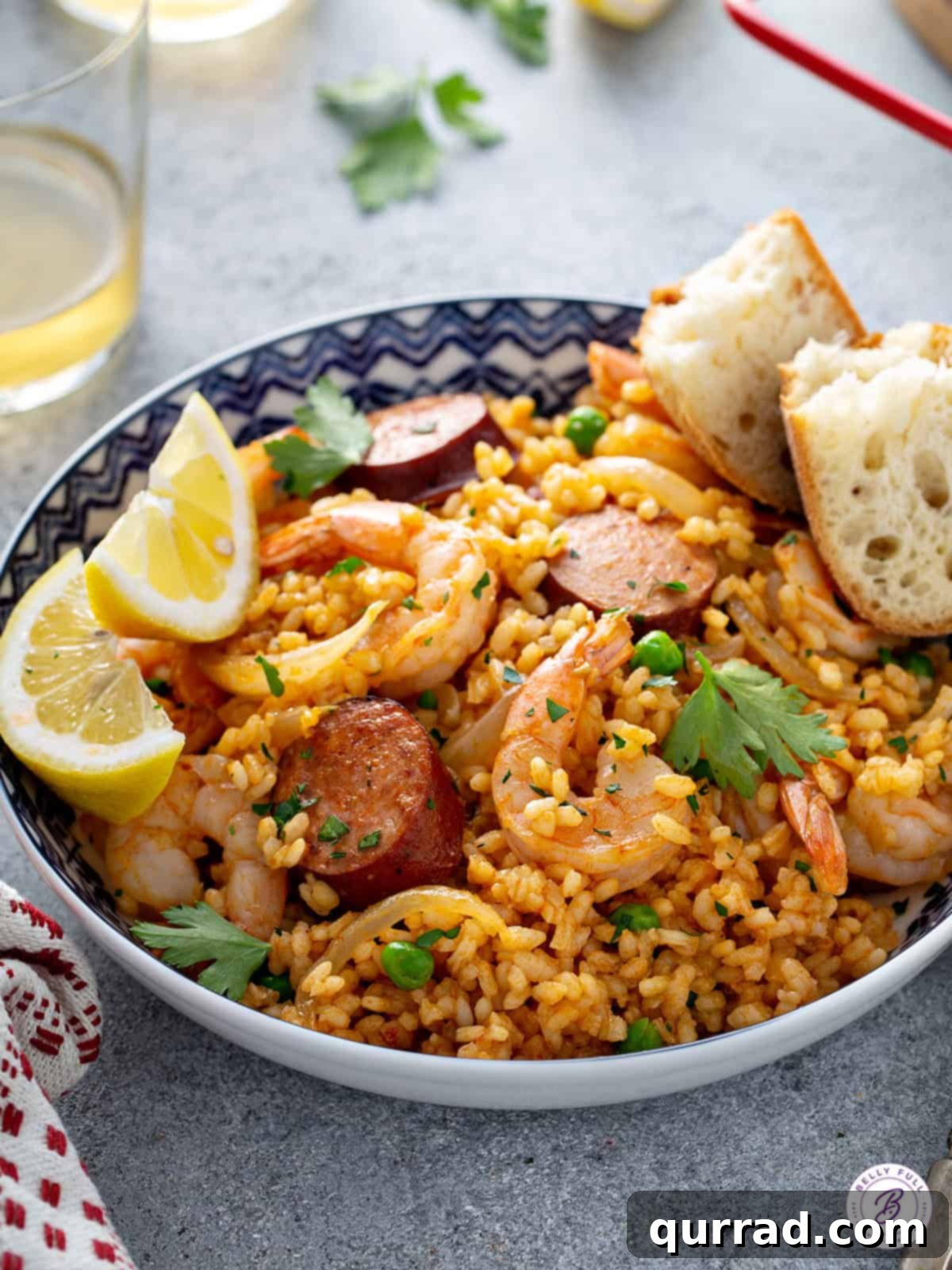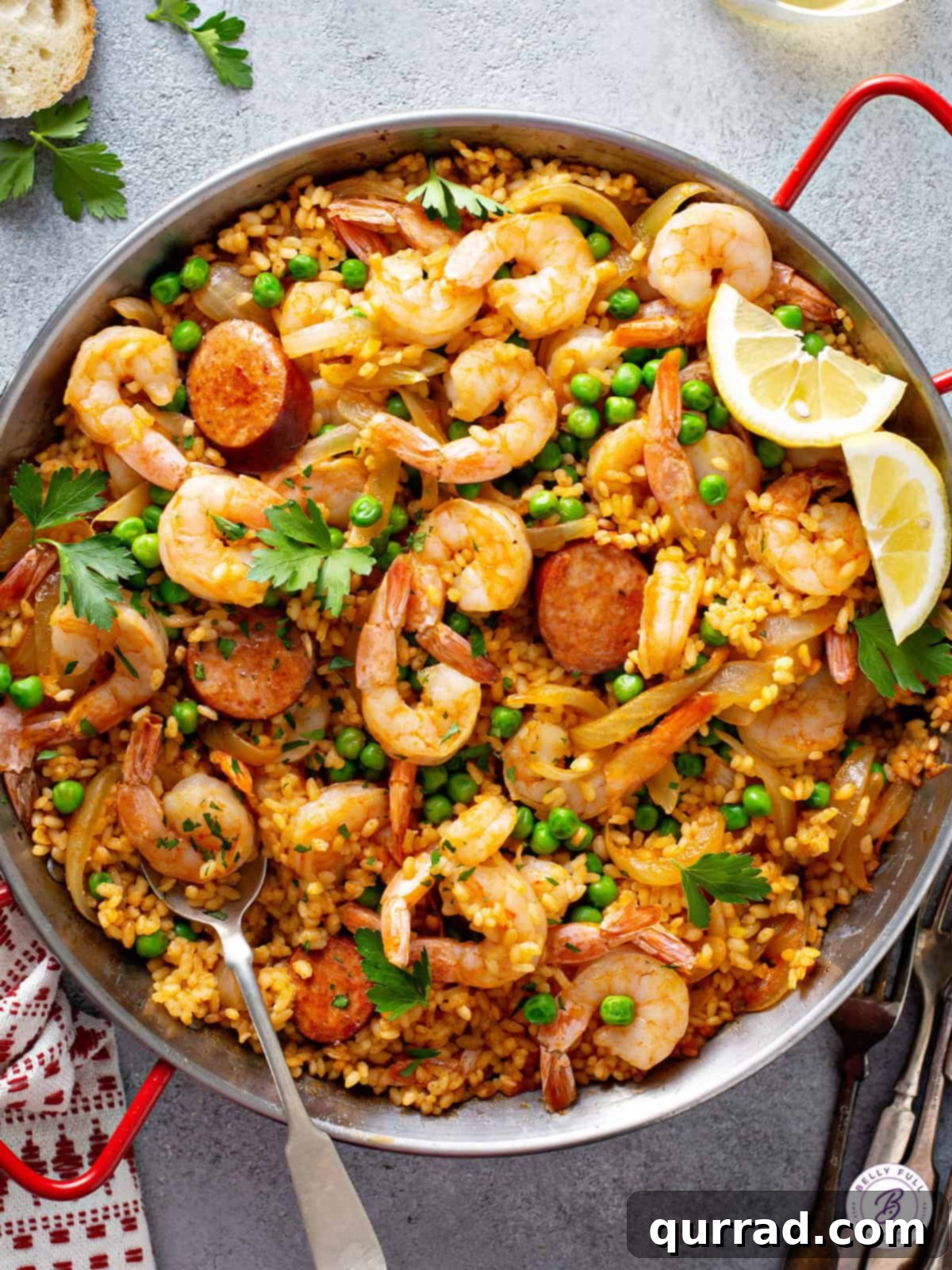
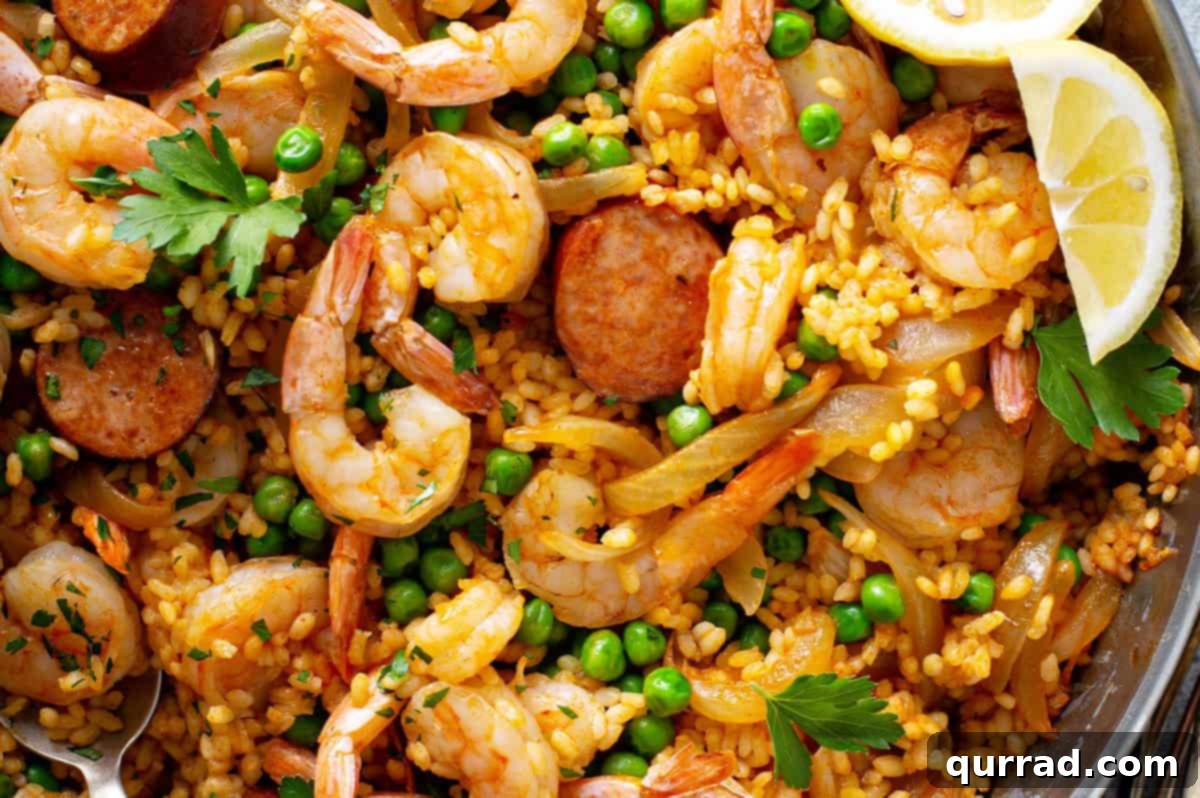
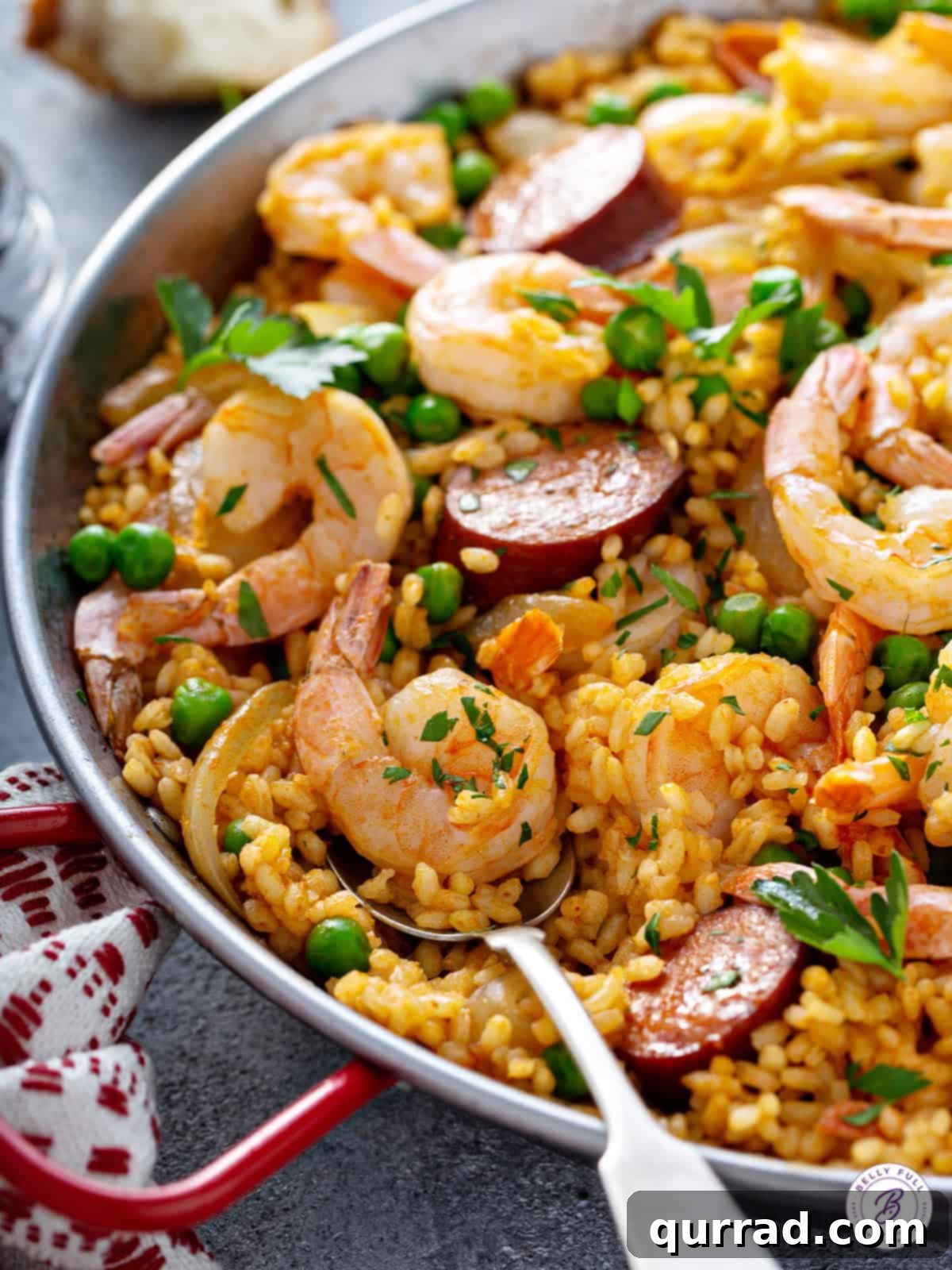
Embark on a culinary journey to the heart of Spain right from your own kitchen with this incredibly flavorful and surprisingly simple Spanish Paella recipe. It masterfully combines the rich, smoky notes of Spanish chorizo, the succulent sweetness of shrimp, and a vibrant medley of traditional ingredients, promising an authentic taste experience that’s hard to beat. This dish is not only quick and easy enough to whip up for a bustling weeknight family meal, but its impressive presentation and exquisite flavors also make it an ideal showstopper for entertaining dinner guests!
Rave Reviews: Hear What Our Cooks Are Saying!
Nani says, “The flavor was authentic and amazing. Definitely a regular for us! Didn’t change a thing! Perfect!”
Eva says, “We are making this tonight for the third time, because we just loved it!”
Dee says, “This was my first time making paella and it was delicious and so much easier than I thought it would be!”
For many avid food travelers, a visit to Spain remains high on the bucket list, often driven by the desire to experience true, authentic Paella firsthand. It’s more than just a meal; it’s Spain’s most beloved national dish, a symbol of communal dining and rich culinary heritage. Unfortunately, finding a truly exceptional paella outside of Spain can be a challenge, as too many American restaurants miss the mark, delivering imitations that fall short of the genuine article.
The truth is, while paella is fundamentally a simple dish, mastering it to perfection often takes practice, patience, and a nuanced understanding of its techniques. Even experienced home cooks might occasionally encounter small challenges – perhaps the paella pan isn’t the perfect size, the heat distribution on the stove isn’t ideal, a little too much liquid finds its way into the rice, or the temptation to stir becomes irresistible. But here’s the wonderful news: even if your first few attempts aren’t absolutely flawless, the end result is almost always a deeply satisfying and delicious meal! The journey of learning to perfect paella is part of its charm.
I’ve meticulously simplified the steps and streamlined the ingredient list for this particular recipe, making it incredibly accessible and a fantastic option for even the busiest weeknight. This approach ensures that you can achieve a truly delicious paella without needing extensive culinary experience or specialized equipment. You’re going to absolutely adore the vibrant flavors and comforting warmth of this Spanish classic, crafted for ease and authentic taste!
The Enchanting World of Spanish Paella: A Culinary Icon
Paella is far more than just a rice dish; it’s a celebration of Spanish culture, history, and a communal culinary experience. Originating in the Valencia region, it began as a humble meal prepared by farm laborers using rice, vegetables, and local meats like rabbit and snails cooked over open fires. Over centuries, paella evolved, embracing regional ingredients and techniques, giving rise to diverse variations, most notably the popular seafood paella along Spain’s coasts.
What truly defines paella and distinguishes it from other rice preparations is its unique cooking methodology. The wide, shallow paella pan—known as a paellera—is crucial. Its design allows the rice to cook in a thin, even layer, maximizing the surface area in contact with the heat and facilitating the absorption of all the rich, flavorful broth. This controlled cooking environment is essential for developing the highly prized “socarrat” – a delightful crispy, caramelized crust that forms at the bottom of the pan. This crunchy layer, bursting with concentrated flavor, is considered the ultimate hallmark of a perfectly executed paella. It’s this exquisite balance of tender, perfectly cooked grains of rice and a savory, crispy base that elevates paella from a simple meal to an unforgettable gastronomic event.
Helpful Tips & Variations for Crafting Your Perfect Paella
To truly elevate your homemade paella from good to extraordinary, understanding a few key ingredients and mastering some core techniques can make all the difference. Here are essential tips and exciting variations to help you create a paella that sings with authentic Spanish flavors:
- The Foundation: Choosing the Right Paella Rice. The type of rice used is absolutely paramount for achieving an authentic paella texture. Traditional Spanish rice varieties, such as Bomba or Calasparra, are round, short-grain rices specifically cultivated for paella. Their unique characteristic lies in their exceptional ability to absorb a substantial amount of liquid and flavor while steadfastly maintaining a firm, separate texture. Unlike creamy risotto, paella aims for dry, distinct grains. If authentic Spanish paella rice proves difficult to locate, Arborio rice, a medium-grain Italian rice commonly used in risotto, serves as the best and most acceptable substitute due to its similar starch content and high absorbency. Always consult the specific liquid-to-rice ratios recommended on your rice packaging, as these can sometimes vary slightly from general recipe guidelines, ensuring optimal results.
- Flavor Anchor: Selecting the Ideal Chorizo. When incorporating chorizo into your paella, it is crucial to use cooked, smoked Spanish chorizo. This variety is a dried and cured pork sausage, typically available in firm, ready-to-slice rounds. It delivers a deeply rich, complex, and smoky flavor profile that is quintessential to Spanish cuisine and harmonizes beautifully with the other ingredients in paella. It is distinctly different from fresh, ground Mexican chorizo, which has a softer texture, a different spice blend, and is typically used in different culinary applications, making it unsuitable for this traditional Spanish dish. If genuine Spanish chorizo is unavailable, a good quality smoked andouille sausage can be used as an alternative, offering a robust flavor, though it will slightly alter the traditional character.
- Shrimp Preparation: Tails On or Off? The decision to leave the tails on the shrimp is largely a matter of personal preference, though it does offer subtle benefits. Keeping the tails on during cooking can contribute additional flavor to the simmering broth and often enhances the visual appeal of the finished dish. The shells contain compounds that release a deeper, more pronounced seafood essence. However, if you or your dining companions prefer a cleaner, easier eating experience, feel free to remove the tails before adding the shrimp. This minor adjustment will not significantly detract from the overall deliciousness of your paella.
- The Golden Elixir: Saffron’s Role. Saffron threads are a truly iconic and highly prized ingredient in authentic paella. Valued for centuries, saffron imparts a distinctively subtle floral aroma, a delicate earthy flavor, and, perhaps most notably, a breathtaking golden-yellow hue to the rice. We fully acknowledge that saffron is one of the most expensive spices in the world, and acquiring it can be a considerable investment. If cost is a barrier or you simply don’t have saffron on hand, you can absolutely omit it. While your paella will still be incredibly flavorful and enjoyable, it will lack the characteristic golden color and the subtle, unique fragrance that only saffron can provide. Turmeric can offer a similar color, but its flavor profile is quite different, so use sparingly if at all.
- The Pinnacle of Paella: Mastering the Socarrat Method. This is perhaps the most defining characteristic that sets paella apart from other rice dishes, such as risotto. Unlike risotto, which demands constant stirring to release starches and create a creamy texture, paella thrives on minimal interference. The ultimate goal is to encourage the bottom layer of rice to develop a beautifully crisp, slightly chewy, and intensely caramelized crust – famously known as the “socarrat.” To achieve this culinary triumph, you must resist the urge to stir the rice once the liquid has been added and it begins to simmer. In the final minutes of cooking, you can gently increase the heat for a brief period (typically 2-3 minutes), listening intently for a delicate crackling sound, which signals the formation of the socarrat. This crust is a highly prized element of paella, bursting with concentrated flavors. However, exercise extreme caution: too high heat or prolonged cooking can lead to burning, so maintain low to medium-low heat and monitor it closely. A gentle stir or two to evenly distribute ingredients towards the very end is acceptable, but avoid constant agitation.
- The Authentic Tool: Paella Pan vs. Skillet. For the most traditional paella experience and the best odds of achieving that perfect socarrat, a dedicated paella pan (paellera) is highly recommended. However, do not let the absence of this specialized cookware deter you! This recipe has been designed to be adaptable and can be easily made in a large, wide skillet. More detailed information on selecting an appropriate alternative pan is provided in the sections below.
★
★
★
★
Easy Chorizo & Shrimp Paella
10 mins
30 mins
40 mins
6
Pin Recipe
Print Recipe
This simple Paella recipe has amazing flavor from chorizo, shrimp, and traditional paella ingredients. Made easy enough for a weeknight family meal!
See below the recipe card for step-by-step images.
Ingredients
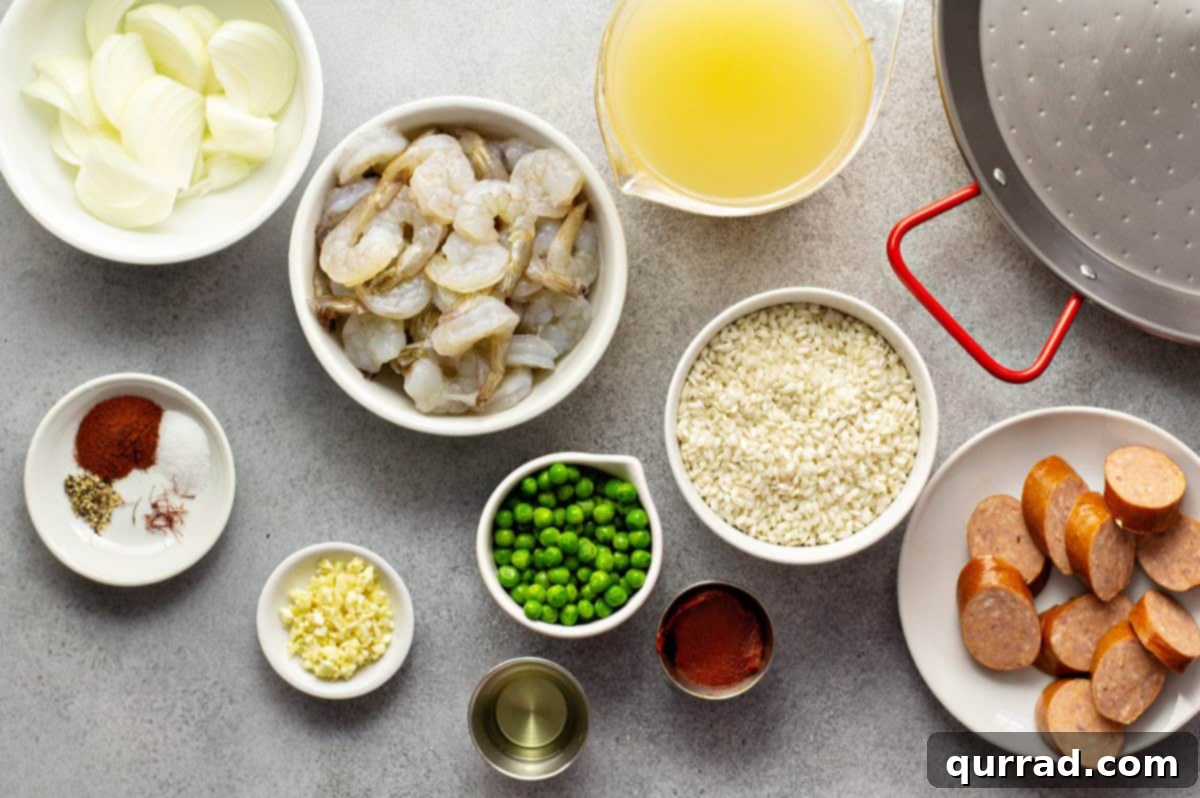
- 2 tablespoons olive oil
- 5 ounces cooked smoked Spanish chorizo sausage, cut into 1/2-inch rounds (the kind that is dried and cured, NOT Mexican ground chorizo)
- 1 medium sweet onion, cut into 1-inch wedges
- 3 cloves garlic, minced
- 2 tablespoons tomato paste
- 3/4 teaspoon paprika (sweet or smoked)
- 2 teaspoons coarse salt (not table salt)
- Few turns freshly cracked black pepper
- Pinch of saffron threads (optional)
- 1 & 1/2 cups dry Arborio rice (or Bomba rice)
- 3 & 1/2 cups low sodium chicken stock
- 1 pound medium shrimp, thawed if frozen, peeled and deveined, tails on or off
- 1/2 cup frozen peas, thawed
- 2 tablespoons finely chopped fresh parsley, for garnish
Instructions
-
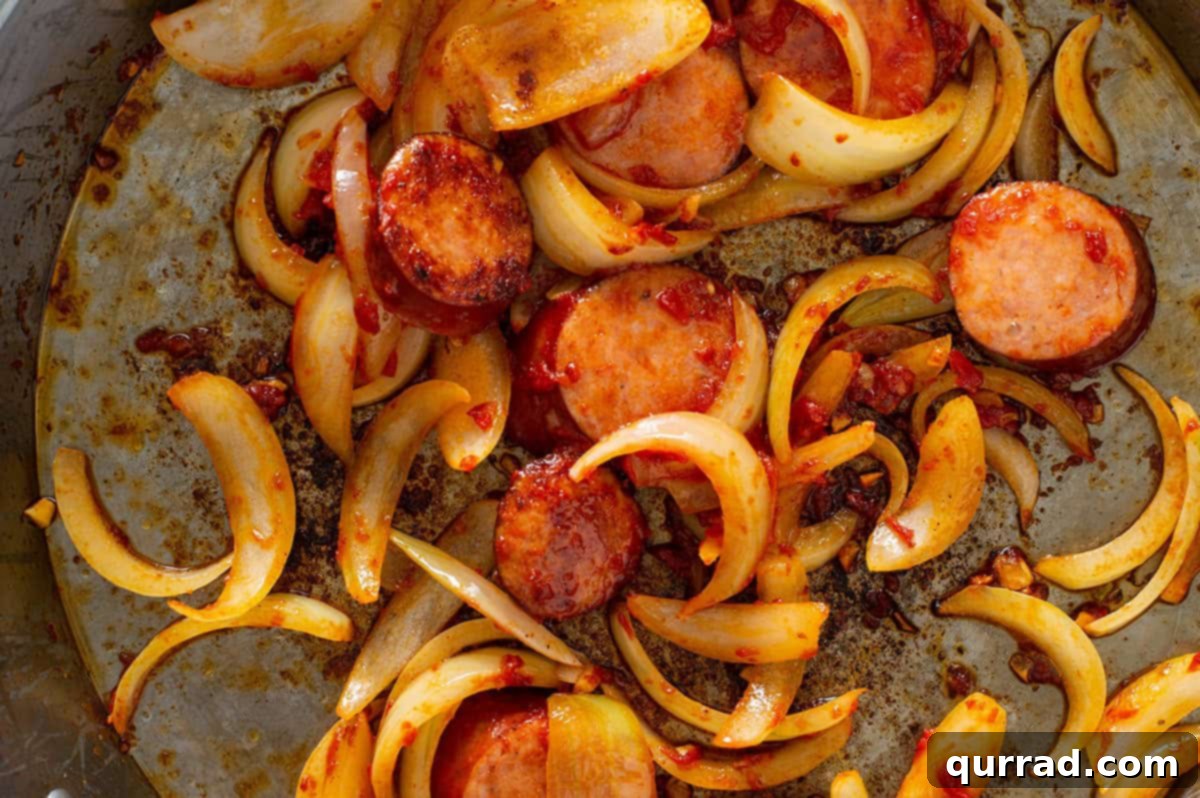
Warm olive oil in a 12 to 14-inch paella pan (or large stainless-steel skillet) over medium-high heat. Once the oil is shimmering, add the sliced chorizo and onion; sauté for approximately 3 minutes until the onion begins to soften and the chorizo is fragrant. Stir in the minced garlic and cook for about 30 seconds until aromatic, being careful not to burn it.
-
Add the tomato paste to the pan, stirring continuously to ensure it is thoroughly mixed with the chorizo and onion mixture and coats everything evenly. Cook for about 1 minute to deepen its flavor.
-
Sprinkle in the paprika, coarse salt, freshly cracked black pepper, and saffron threads (if using). Stir well to combine all the spices, allowing them to release their aromas for about 30 seconds.
-
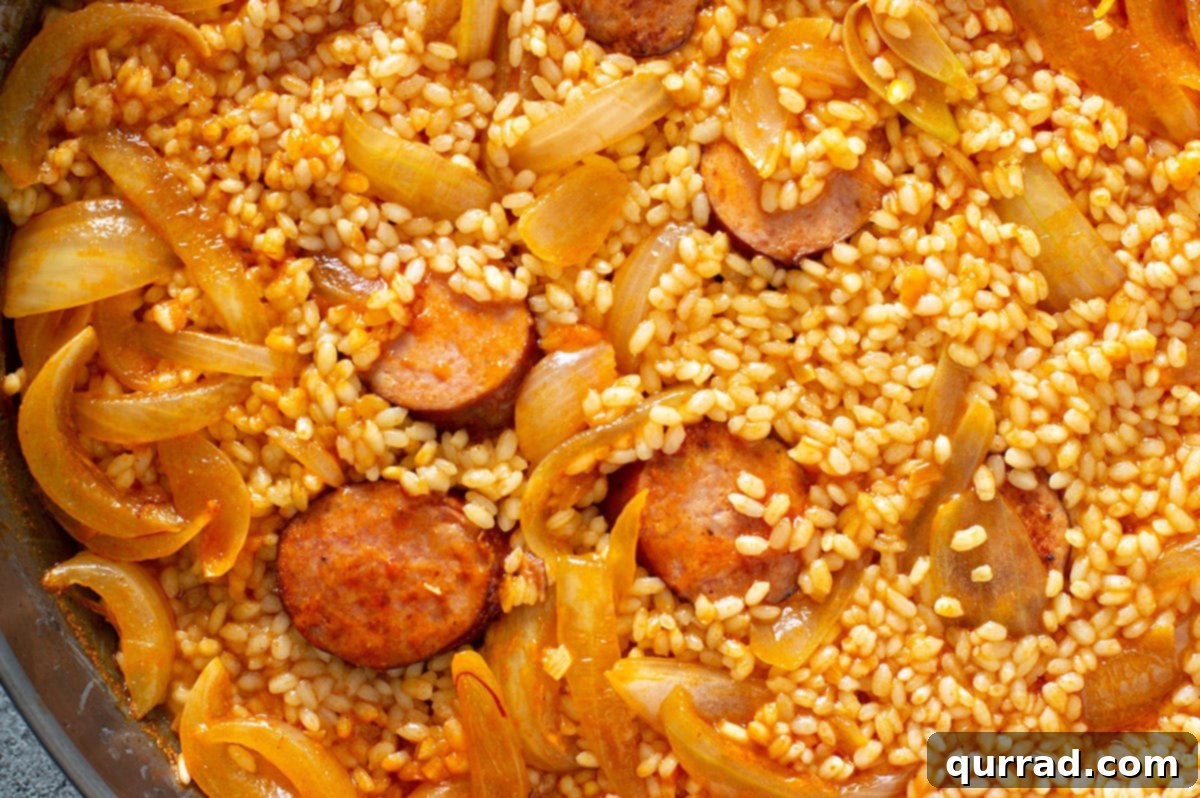
Add the dry Arborio rice to the pan. Stir gently but thoroughly to coat every grain of rice with the flavorful oil and spice mixture. This helps the rice cook evenly and absorb the broth better.
-
Pour in the low sodium chicken stock and bring the mixture to a gentle boil. Once boiling, use the back of a spatula to gently spread and flatten the rice evenly across the bottom of the pan. Reduce the heat to low, cover lightly if your pan allows (or simply let it simmer uncovered, resisting the urge to stir), and simmer for about 15 minutes. The goal is to allow the rice to cook undisturbed, absorbing the liquid.
-
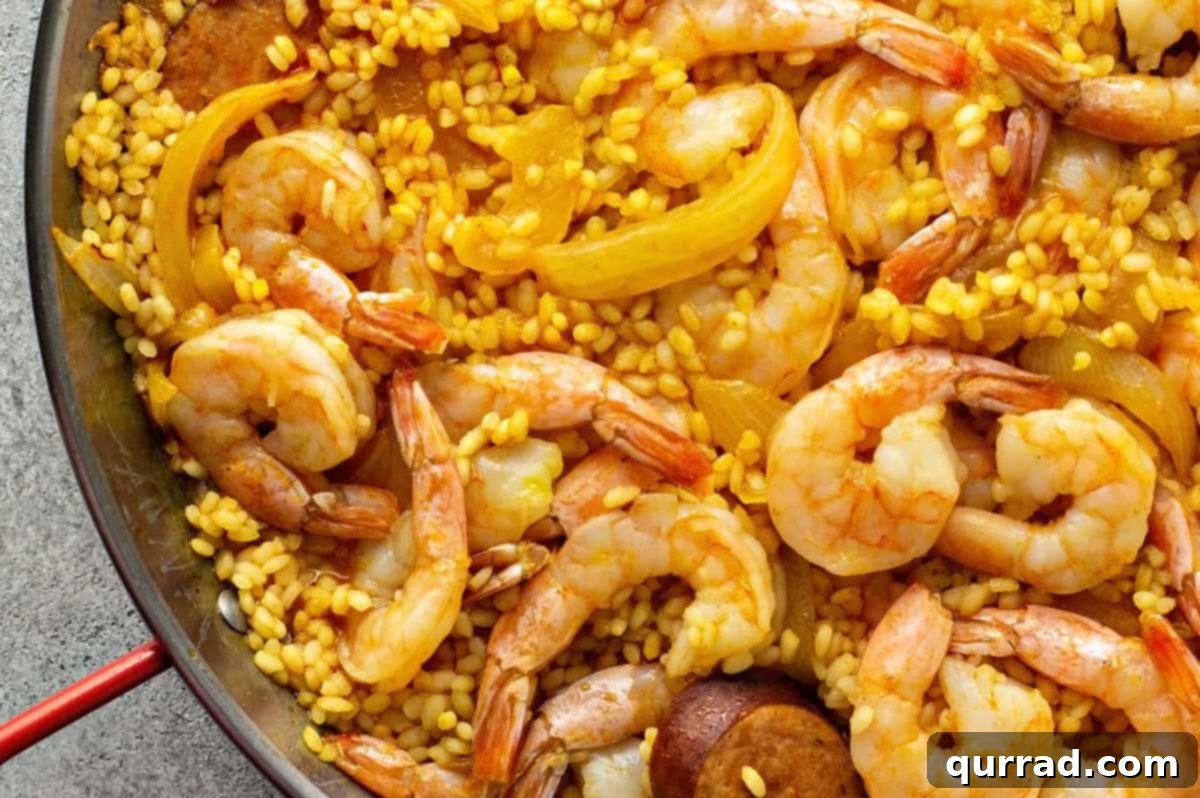
Carefully arrange the shrimp on top of the simmering rice, nestling them slightly into the liquid. Continue to cook for another 10 minutes, or until the shrimp are pink and opaque, and most of the liquid has been absorbed. Avoid stirring during this phase to encourage socarrat formation.
-
Gently stir in the thawed frozen peas, allowing them to warm through for 1-2 minutes. If you desire a more pronounced socarrat, carefully increase the heat to medium-high for the last 2-3 minutes of cooking, listening for a gentle crackling sound at the bottom of the pan.
-
Remove the paella from the heat, sprinkle generously with finely chopped fresh parsley, and serve immediately. Enjoy your homemade Spanish masterpiece!
Video Guide to Easy Paella
Chef’s Notes
For best results and to fully understand the nuances of paella, make sure to read all the recipe notes, helpful tips, and tricks provided in this article before you begin cooking!
Nutrition Information (per serving)
Calories: 457kcal | Carbohydrates: 49g | Protein: 28g | Fat: 16g | Saturated Fat: 5g | Cholesterol: 211mg | Sodium: 1366mg | Potassium: 474mg | Fiber: 3g | Sugar: 4g | Vitamin A: 1466IU | Vitamin C: 10mg | Calcium: 138mg | Iron: 5mg
Nutritional information provided is an automatic calculation and can vary based on the exact products you use and any changes you make to the recipe. If these numbers are critically important to you, we recommend calculating them yourself using a reliable nutrition calculator.
Did you make this? Leave a rating below!
Your feedback helps other home cooks!
How to Make Easy Paella: A Visual Step-by-Step Guide
Crafting a truly flavorful Spanish paella might appear daunting at first glance, but with our clear, visual step-by-step guide, you’ll discover just how approachable and rewarding it can be. Follow along with these detailed instructions and accompanying images to bring this vibrant and authentic culinary experience directly to your table.
Do I Really Need a Special Paella Pan for Authentic Results?
For purists and those dedicated to achieving the most authentic Spanish Paella experience, the answer is a resounding “yes!” A true paella pan, known affectionately as a paellera, is far more than just a pan; it’s a meticulously designed piece of cookware. It is distinctively large, round, and remarkably shallow, almost like a wide, flat disc, typically featuring two sturdy looped handles for easy transportation and handling. The most critical aspect of its design is its emphasis on an expansive diameter rather than significant height. This wide, flat bottom ensures that the rice cooks in a thin, uniform layer across the entire surface, maximizing exposure to heat. This unique characteristic is precisely what facilitates the creation of the highly prized “socarrat” – that irresistibly crispy, caramelized crust that forms at the bottom of the pan and is considered the delicious mark of a perfectly cooked paella. So integral is this pan to the dish that the word “paella” itself is widely believed to be derived from the Old French word “paelle,” meaning “pan,” underscoring its fundamental importance in crafting this iconic Spanish meal.
No Paella Pan? No Problem! Excellent Alternative Cookware Options
While a traditional paella pan is undoubtedly the ideal tool for authentic paella, its absence should absolutely not deter you from making this delightful dish at home. Many home cooks successfully prepare fantastic paella using readily available kitchen equipment. An excellent and highly recommended alternative is a large, wide stainless-steel or aluminum skillet. When selecting a skillet, look for one with a heavy, flat bottom that ensures even heat distribution, which is crucial for uniform cooking. Critically, ensure it offers enough surface area to allow the rice to spread out in a relatively thin layer, mimicking the wide expanse of a paella pan. A 12 to 14-inch skillet is usually sufficient for a recipe serving 4-6 people.
However, it’s advisable to steer clear of certain types of pans. Cast-iron skillets, for instance, tend to retain and distribute heat too intensely and unevenly for paella, which can make it challenging to control the cooking temperature and often leads to the bottom layer burning excessively rather than caramelizing into a desirable socarrat. Nonstick pans, while convenient for many other dishes, will typically prevent the formation of the cherished socarrat altogether due to their slick, non-stick surface, which inhibits the rice from adhering and crisping up. If your stovetop burners are somewhat spaced apart, you might need to periodically rotate your pan during cooking to ensure uniform heat distribution and an evenly cooked, beautifully crusted paella.
Beyond Chorizo & Shrimp: Exploring the Versatile World of Paella Variations
While our recipe proudly features the popular and undeniably delicious combination of chorizo and shrimp, the culinary world of paella is remarkably diverse and expansive. Historically, the truly authentic Valencian paella, tracing its roots back to the 1800s, often incorporated ingredients such as rabbit, snails, chicken, sometimes eel, and lima beans. For modern palates, this list might sound quite unconventional, and fortunately, these specific combinations are less common today in many parts of Spain and indeed around the world.
Purists might contend that any deviation from these highly traditional Valencian ingredients results in merely “arroz en paella” (rice in a paella pan) rather than “true paella.” However, the enduring beauty and popularity of this dish truly lie in its incredible versatility and adaptability. Today, countless delicious variations exist, allowing for endless customization based on regional preferences, seasonal availability, and personal tastes. Popular additions and types include:
- Seafood Paella (Paella de Marisco): A beloved coastal specialty, often loaded with a bountiful array of mussels, clams, tender calamari, sweet scallops, and various firm white fish.
- Mixed Paella (Paella Mixta): This popular choice elegantly combines elements from both land and sea, typically featuring savory chicken and an assortment of seafood alongside fresh vegetables.
- Vegetable Paella (Paella de Verduras): A vibrant, wholesome meatless option, generously packed with seasonal vegetables such as artichoke hearts, colorful bell peppers, crisp green beans, tender asparagus, and earthy mushrooms.
- Chicken and Pork Paella: A heartier, robust version that focuses on poultry and pork, often complemented by traditional green beans and broad beans, offering a rustic, satisfying flavor.
Feel empowered to experiment with your favorite proteins and vegetables. The fundamental key remains maintaining the essential technique of preparing the rice and building successive layers of rich flavor. Consider adding red bell peppers for their vibrant color and sweet notes, green beans for a touch of freshness, or even extra mussels and clams for an amplified seafood sensation. The culinary possibilities with paella are truly endless, inviting you to create your own unique masterpiece!
Perfect Pairings: What to Serve Alongside Your Paella
With its rich combination of perfectly cooked rice, smoky chorizo, tender shrimp, and sweet peas, Paella is, without a doubt, a complete and profoundly satisfying meal all on its own. However, if you’re looking to elevate the dining experience and create a more expansive Spanish feast, a few thoughtfully chosen complementary dishes can round out your meal beautifully:
- Fresh and Crisp Salad: A light, refreshing salad, such as a classic Caesar salad or a simple mixed green salad dressed with a bright vinaigrette, offers a delightful contrast to the rich, savory flavors of the paella.
- Crusty Artisan Bread: A warm, crusty loaf of artisan bread is an absolute must. It’s perfect for soaking up any remaining flavorful juices from the bottom of the paella pan – especially if you’ve successfully achieved that coveted socarrat!
- Bright Lemon Wedges: Always serve paella with an ample supply of fresh lemon wedges. A generous squeeze of lemon juice over individual servings dramatically brightens the flavors, adding a wonderful zesty finish that cuts through the richness.
- Authentic Spanish Beverages: For an immersive and authentic experience, consider pairing your paella with a dry Spanish white wine, a light-bodied red wine, or a pitcher of freshly made, fruity sangria. These beverages complement the bold flavors of the paella beautifully.
And to truly complete your Spanish culinary adventure, leaving a lasting impression, you simply cannot go wrong with classic Spanish sweets like a silky-smooth flan or a decadent, moist tres leches cake for dessert.
Storing Leftovers & Thoughtful Reheating for Future Enjoyment
While paella is often at its absolute best when enjoyed fresh, straight from the pan, it’s certainly possible to store and reheat any leftovers for another delicious meal. Proper storage is paramount, especially given that this recipe includes perishable seafood like shrimp.
- Refrigerator Storage: Because this paella recipe contains shrimp, it is critical to transfer any leftovers into an airtight container and place it in the refrigerator within two hours of cooking. When properly stored, the paella will maintain its quality and freshness for up to 3 days.
- Freezer Storage: For extended preservation, transfer smaller, individual portions of the completely cooled paella into freezer-safe containers or robust freezer bags. It can be safely frozen for up to 1 month, ensuring optimal quality and flavor upon thawing. Always thaw frozen paella thoroughly in the refrigerator overnight before attempting to reheat it.
- Reheating Instructions: You have a couple of convenient options for reheating leftover paella. For a quick warm-up, you can use a microwave, ensuring to stir periodically to achieve even heating. Alternatively, for superior results that better preserve the texture and flavor, gently warm the paella on the stovetop over low heat in a skillet. If the rice appears to be a bit dry or has lost some moisture, add a small splash of chicken broth or water to rehydrate it, preventing it from becoming sticky, gummy, or overly dry.
Discover More Spanish & Latin-Inspired Recipes from Our Kitchen:
- Authentic Chile Rellenos: A Classic Mexican Dish
- Easy Homemade Corn Tortillas: Fresh & Flavorful
- Classic Tres Leches Cake: A Rich & Moist Dessert
- Flavorful Cilantro Lime Rice: The Perfect Side Dish
We sincerely hope you thoroughly enjoy preparing and savoring this delicious, straightforward, and truly authentic Spanish paella recipe. Your feedback is incredibly valuable to us and helps other home cooks discover and create wonderful meals, so please consider leaving a review below! Additionally, don’t forget to connect with Belly Full across all our social media channels – follow us on TikTok, Facebook, Instagram, Pinterest, and YouTube for continuous culinary inspiration, new recipes, and engaging content!