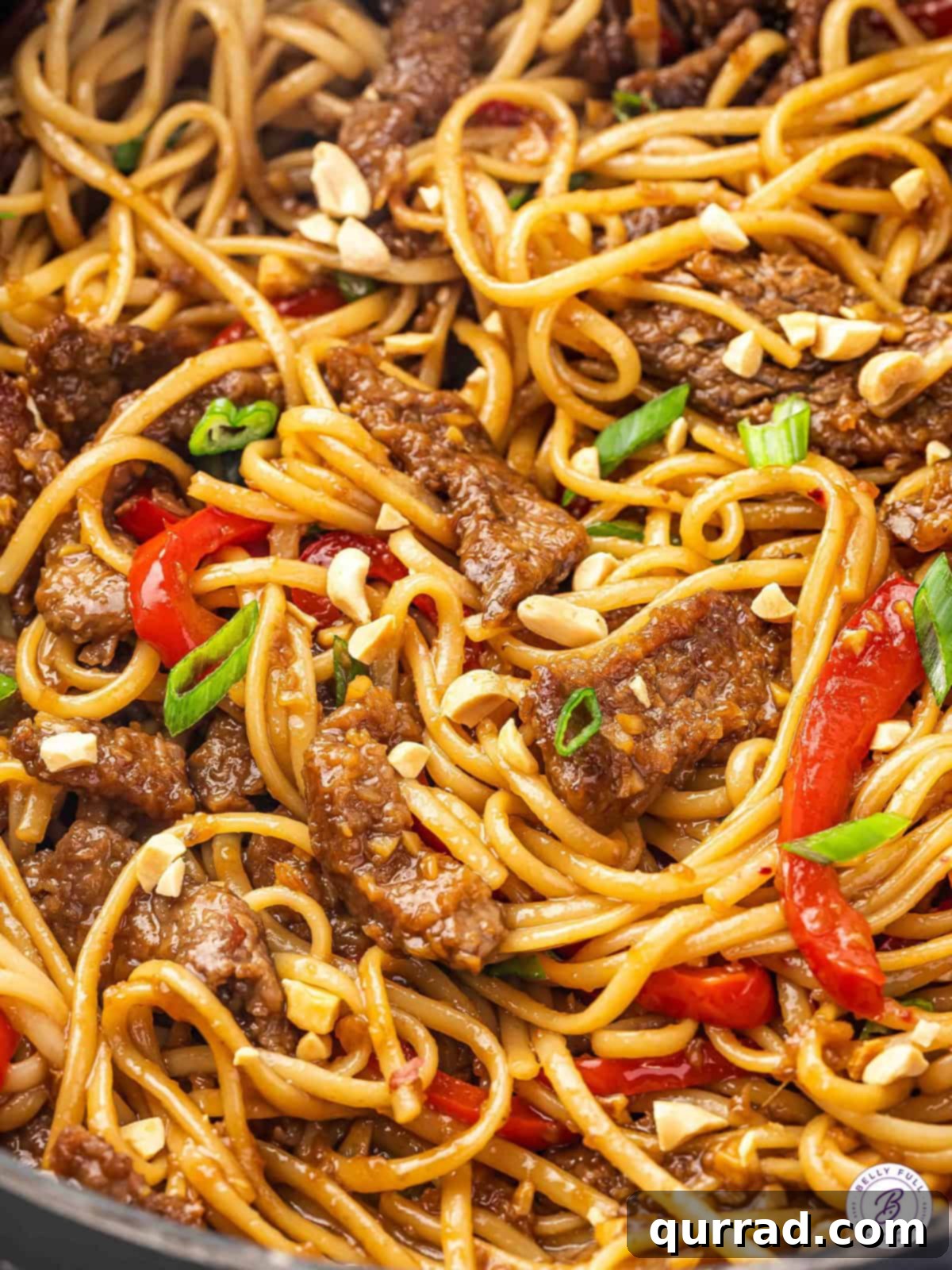
Craving the vibrant flavors of your favorite Chinese takeout but want something quick, easy, and satisfying to make at home? Look no further than this incredible Mongolian Beef Noodles recipe! Forget the greasy delivery; in just 30 minutes, you can whip up a truly delicious and hearty meal featuring tender, seared flank steak and al dente pasta coated in a rich, savory, slightly sweet, and tangy sauce. Infused with aromatic ginger and garlic, and brightened with crisp bell pepper, this dish is a taste sensation that’s surprisingly simple to prepare and packed with incredible flavor. It’s the perfect solution for busy weeknights when you desire a comforting, restaurant-quality meal without the fuss.
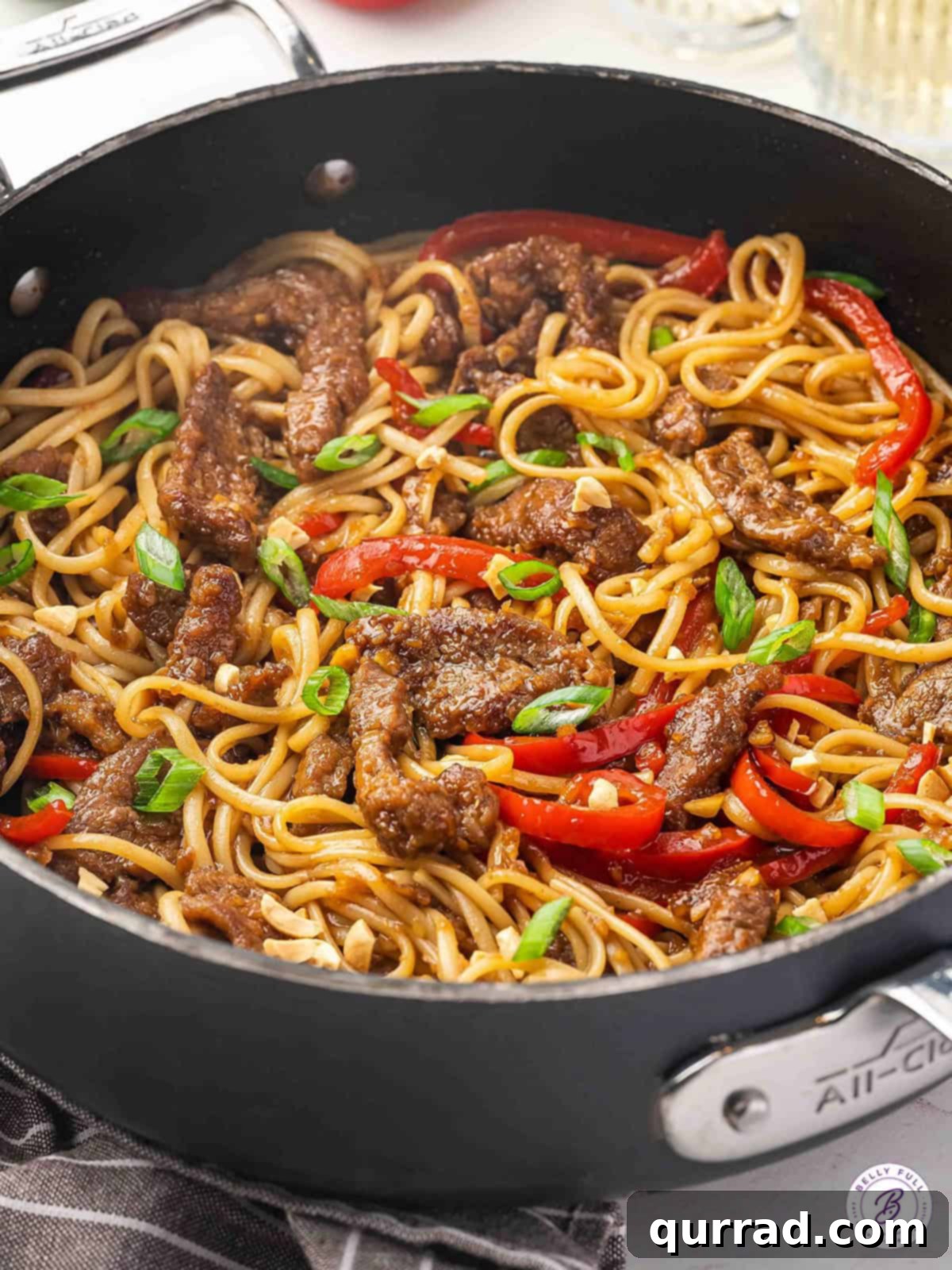
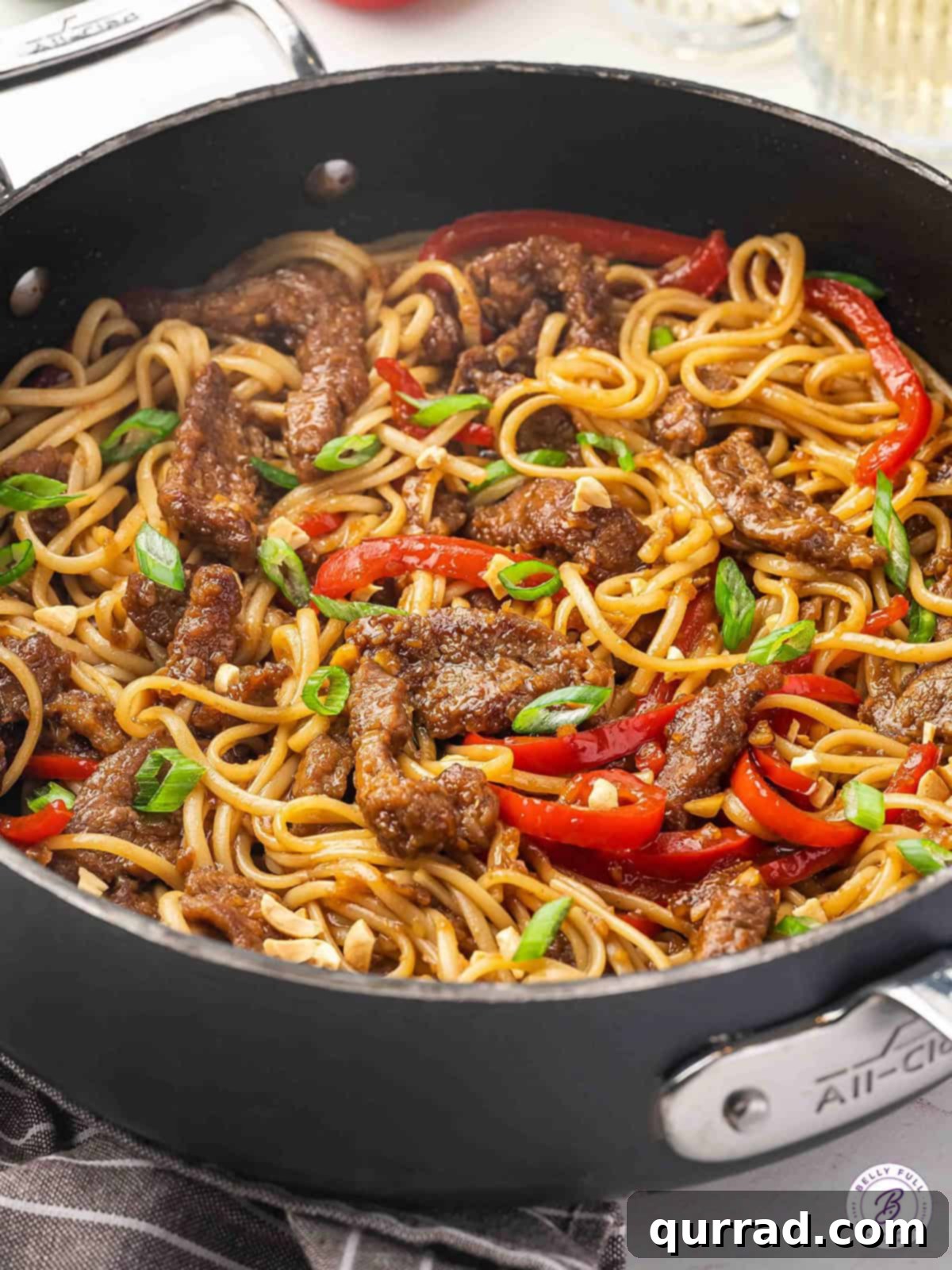
This Mongolian Beef Noodles recipe offers all the beloved taste of classic Mongolian beef, expertly combined with tender pasta to create a filling and fuss-free dinner in record time. It’s an essential addition to your recipe repertoire for those hectic weekdays, especially when your usual rotation of meals feels tired and uninspired. This dish brings excitement back to your dinner table with its complex yet balanced flavor profile and satisfying texture.
Why You’ll Love These Mongolian Beef Noodles
There are countless reasons why this Mongolian Beef Noodles recipe is poised to become a family favorite. First and foremost, its speed is unparalleled. In just 30 minutes, you can transform simple ingredients into a gourmet-level meal, making it ideal for busy evenings when time is of the essence. No more waiting for takeout – your delicious dinner is ready almost instantly!
Beyond its speed, the flavor profile is truly exceptional. The sauce strikes a perfect balance between sweet, savory, and tangy, with a delightful umami depth that coats every strand of noodle and every piece of tender beef. The fresh ginger and garlic add a vibrant aromatic kick, while the bell pepper contributes a subtle sweetness and crunch. This isn’t just a meal; it’s an experience that tantalizes your taste buds.
Furthermore, this recipe is incredibly satisfying. The combination of succulent flank steak, hearty linguine, and a rich sauce makes for a complete and fulfilling meal that will keep you full and content. It’s a comforting dish that feels indulgent, yet it’s something you can easily prepare in your own kitchen with fresh ingredients, giving you control over the quality and nutrition. It’s also highly customizable, allowing you to tweak ingredients to suit your preferences or dietary needs, making it versatile for any household.
Key Ingredients for Perfection
Crafting these delectable Mongolian Beef Noodles relies on a few core ingredients that work together to create its signature flavor. Understanding each component helps you appreciate the magic of this dish and allows for informed substitutions if needed.
For the Irresistible Sauce:
- Low-Sodium Soy Sauce: Forms the salty, umami base of the sauce. Using low-sodium allows you to control the overall saltiness and prevent the dish from becoming overpowering.
- Hoisin Sauce: This thick, fragrant sauce adds a sweet, tangy, and slightly spicy element, providing that authentic Asian flavor depth. It’s a key player in the “Mongolian” profile.
- Brown Sugar: Contributes to the characteristic sweetness of Mongolian beef, balancing the savory soy sauce and tangy rice vinegar.
- Rice Vinegar: Adds a crucial tang and acidity that brightens the sauce and cuts through the richness, preventing it from being too heavy.
- Sesame Oil: A finishing oil that imparts a wonderful nutty aroma and flavor, essential for many Asian dishes.
- Cornstarch: Acts as a thickening agent, giving the sauce its desirable glossy texture and ensuring it adheres beautifully to the noodles and beef.
- Water: Used to thin the sauce to the perfect consistency and activate the cornstarch.
For the Hearty Noodles & Flavorful Add-ins:
- Dry Linguine Pasta: While not traditional Asian noodles, linguine’s flat, broad shape is excellent for coating with the savory sauce, offering a familiar and satisfying texture.
- Flank Steak: The star protein! Flank steak is lean and flavorful, and when thinly sliced against the grain, it becomes wonderfully tender after a quick sear. Its ability to absorb flavors makes it perfect for this dish.
- Cornstarch (for beef): Coating the beef in cornstarch before searing creates a tender, velvety texture and helps achieve a beautiful brown crust, locking in juices and flavor.
- Vegetable Oil: Used for searing the beef at high heat, ensuring it browns quickly and develops a rich flavor.
- Garlic (minced): A fundamental aromatic that provides a pungent, savory base for the sauce and complements the ginger.
- Fresh Ginger (grated): Adds a warm, zesty, and slightly spicy kick, bringing a distinct freshness and depth to the overall flavor profile.
- Red Bell Pepper (thinly sliced): Offers a delightful crunch, a touch of sweetness, and a pop of color, enhancing both the texture and visual appeal of the dish.
- Scallions (sliced): Used as a fresh garnish, providing a mild oniony bite and bright green contrast.
- Roasted Peanuts (crushed): Adds a fantastic crunchy texture and a nutty flavor that elevates the dish, making it feel more substantial and interesting.
Helpful Tips & Variations for the Best Mongolian Beef Noodles
Achieving restaurant-quality Mongolian Beef Noodles at home is easier than you think, especially with these expert tips and ideas for customization. Whether you’re a seasoned chef or a kitchen novice, these insights will help you master this dish and make it truly your own.
- Mastering Cornstarch for Sauce Thickness: Cornstarch is your secret weapon for that classic glossy, thick Asian sauce. It emulsifies the sauce ingredients, creating a luxurious texture that clings perfectly to the noodles and beef. If you prefer a thinner sauce, you can reduce the amount of cornstarch or even omit it. Alternatively, to thicken a sauce without cornstarch, simply simmer it for a longer period, allowing the liquids to reduce naturally. Keep an eye on it to prevent over-reduction, which could make it too salty.
- The Art of Slicing Flank Steak: For maximum tenderness, slicing flank steak thinly and against the grain is crucial. The muscle fibers in flank steak are long, and slicing against them shortens these fibers, resulting in a more tender bite. If you find the steak too slippery or challenging to slice thinly, a fantastic trick is to pop it into the freezer for 10-15 minutes before you begin. This firms up the meat, making it much easier to achieve those perfect, uniform thin strips.
- Avoid Crowding the Pan for Optimal Sear: When searing your flank steak, resist the urge to overload the pan. Crowding lowers the pan’s temperature, causing the meat to steam rather than sear, which means you’ll miss out on that delicious browned crust and rich flavor. Cook the steak in a single layer, in batches if necessary, ensuring each piece has enough space to make direct contact with the hot surface. This high-heat searing is what gives the beef its signature caramelized exterior and tender interior.
- Explore Different Noodles: While linguine is a wonderful choice for its broad surface area and familiar texture, don’t limit yourself! This recipe is incredibly versatile when it comes to noodles. Experiment with lo mein noodles for an authentic stir-fry feel, ramen noodles for a quick and convenient option, or even rice noodles if you’re looking for a gluten-free alternative or a lighter texture. Each noodle type will absorb the sauce differently and offer a unique culinary experience.
- Effortless Gluten-Free Adaptation: Making this dish gluten-free is incredibly simple. The primary ingredient to watch out for is soy sauce, which typically contains wheat. Swap it out for tamari, a naturally gluten-free soy sauce alternative, or specifically labeled gluten-free soy sauce. For the noodles, opt for rice noodles, which are always gluten-free, or choose a brand of gluten-free linguine or ramen available in most supermarkets.
- Hoisin Sauce Substitutions: If you don’t have hoisin sauce on hand and can’t make a special trip, there are several ways to mimic its flavor profile. A good substitute can be created by mixing extra soy sauce for savoriness, a bit of brown sugar or honey for sweetness, and a touch of peanut butter or tahini for richness and depth. A dash of Sriracha or chili garlic sauce can also be added for a slight spicy kick, similar to hoisin.
- Alternative Protein Options: Beef is fantastic, but this Mongolian-style sauce is incredibly versatile and pairs well with many proteins. Consider using thinly sliced chicken breast or thighs for a leaner option, shrimp for a quick-cooking seafood twist, or even firm tofu or tempeh for a delicious vegetarian or vegan version. Just remember to adjust the cooking times accordingly to ensure the protein is cooked through but not overdone.
Mongolian Beef Noodles
Pin
Linguine and strips of flank steak are tossed with a savory umami sauce in this easy Mongolian Beef Noodles recipe. Ready in just 30 minutes!
See below the recipe card for step-by-step images.
Ingredients
FOR THE SAUCE
- 1/4 cup low-sodium soy sauce
- 2 tablespoons hoisin sauce
- 2 tablespoons brown sugar
- 1 tablespoon rice vinegar
- 1 teaspoon sesame oil
- 1/2 teaspoon cornstarch
- 1/4 cup water
FOR THE NOODLES
- 6 ounces dry linguine pasta
- 1/2 pound flank steak, thinly sliced
- 2 tablespoons cornstarch
- 2 tablespoons vegetable oil
- 3 garlic cloves, minced
- 1/2- inch piece fresh ginger, grated
- 1/2 red bell pepper, thinly sliced
- 2 scallions, sliced
- 2 tablespoons roasted peanuts, crushed
Instructions
- Boil linguine according to the package instructions until al dente. Drain and set aside.
- In a small bowl, whisk together all the sauce ingredients.
- Toss the sliced flank steak in cornstarch.
- Warm the vegetable oil in a large pan over high heat. Sear the beef until browned, about 2–3 minutes per side. Remove the seared beef and set it aside on a separate plate.
- In the same pan, cook minced garlic and grated ginger for 30 seconds. Add sliced bell pepper, sauté for 2–3 minutes until just tender.
- Return beef to the pan. Pour in the sauce and let it simmer for 2 minutes until thickened.
- Add the cooked linguine and toss to coat everything evenly. Remove from the heat.
- Garnish with scallions and crushed peanuts. Serve hot.
Video
A video tutorial for making Mongolian Beef Noodles is available here.
Nutrition
Carbohydrates: 65g |
Protein: 28g |
Fat: 19g |
Saturated Fat: 4g |
Polyunsaturated Fat: 8g |
Monounsaturated Fat: 6g |
Trans Fat: 0.1g |
Cholesterol: 46mg |
Sodium: 1017mg |
Potassium: 615mg |
Fiber: 4g |
Sugar: 13g |
Vitamin A: 702IU |
Vitamin C: 28mg |
Calcium: 65mg |
Iron: 3mg
Nutritional information given is an automatic calculation and can vary based on the exact products you use and any changes you make to the recipe. If these numbers are very important to you, I would recommend calculating them yourself.
How to Make Mongolian Beef Noodles Step by Step
Follow these detailed steps to create a show-stopping Mongolian Beef Noodles dish that will impress everyone at your table. Each step is designed for clarity and ease, ensuring perfect results every time.
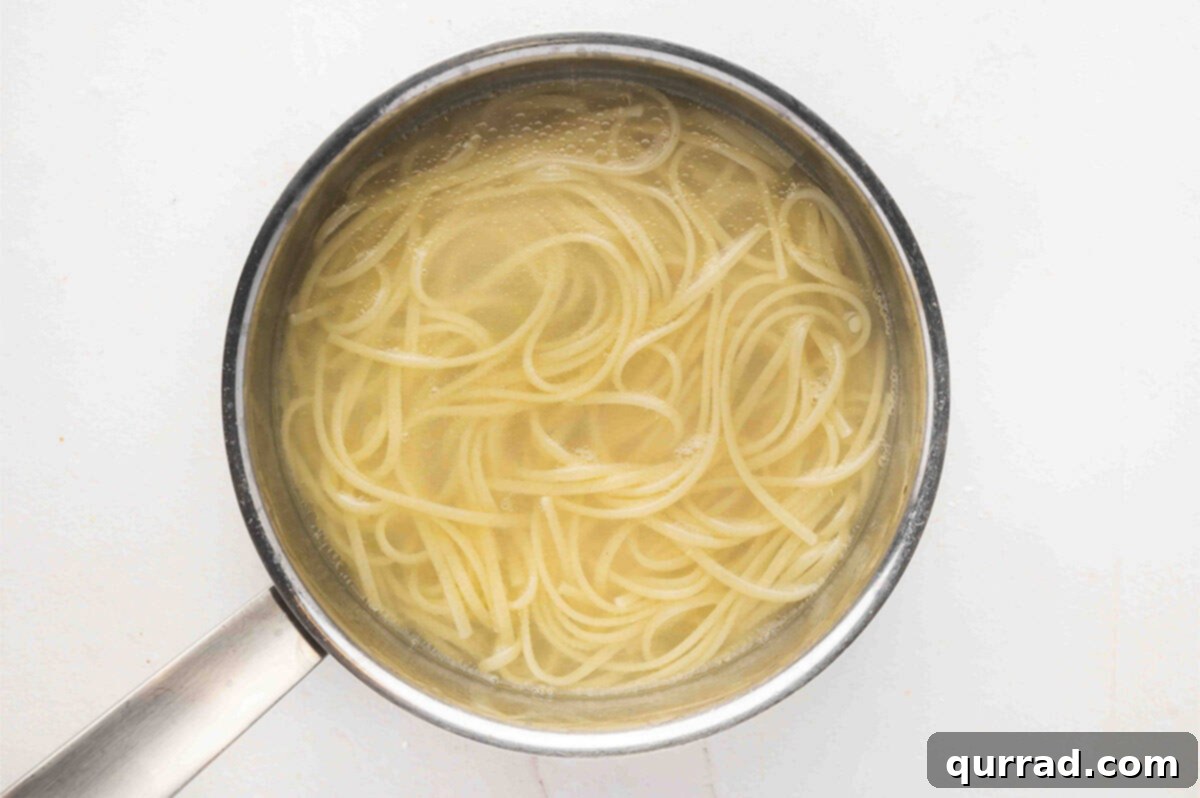
1. Cook the Noodles to Al Dente Perfection: Begin by boiling 6 ounces of linguine pasta according to the package instructions. The key here is to cook it until it’s al dente – meaning it’s firm to the bite but not hard. This ensures your noodles retain a good texture and don’t become mushy when tossed with the sauce. Once cooked, drain the pasta thoroughly and set it aside. A little trick is to rinse them briefly with cold water if you won’t be adding them to the sauce immediately, which helps prevent them from sticking together.
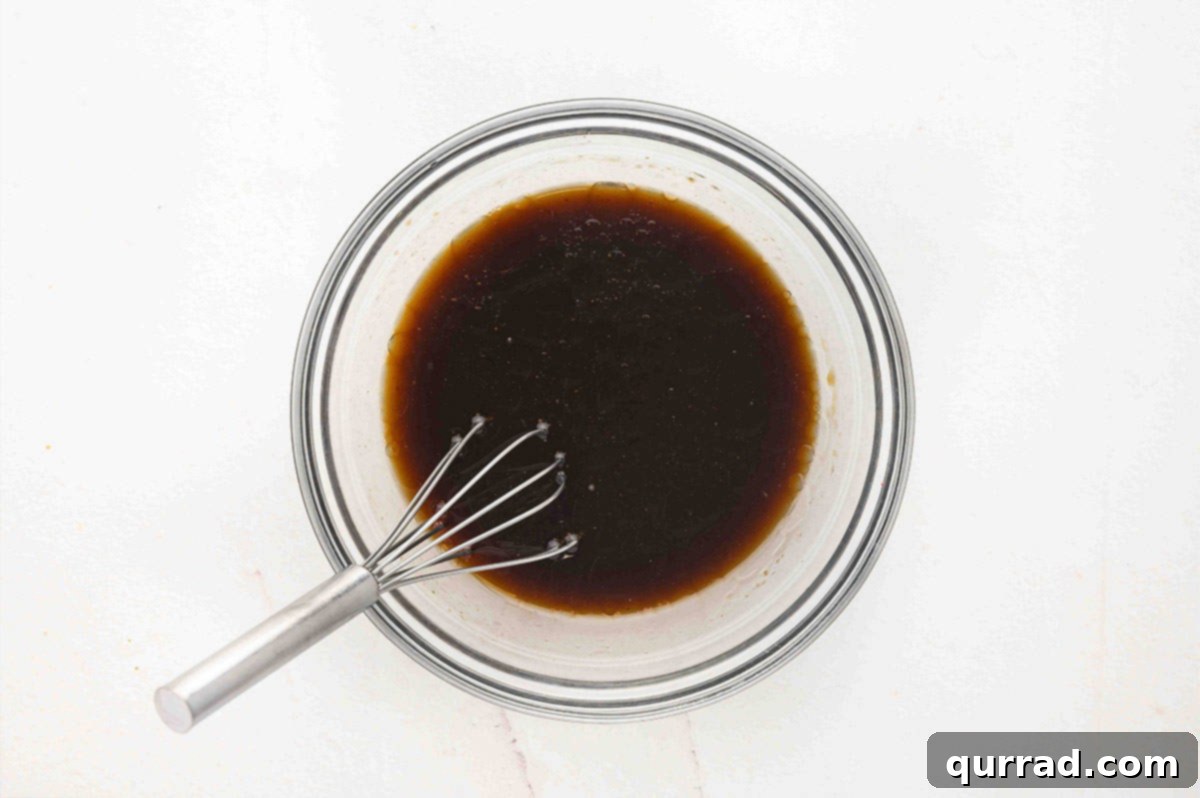
2. Prepare the Flavor-Packed Sauce: While your pasta is cooking, assemble your sauce. In a small bowl, combine 1/4 cup of low-sodium soy sauce, 2 tablespoons of hoisin sauce, 2 tablespoons of brown sugar, 1 tablespoon of rice vinegar, 1 teaspoon of sesame oil, 1/2 teaspoon of cornstarch, and 1/4 cup of water. Whisk all these ingredients together vigorously until the brown sugar is fully dissolved and the cornstarch is completely incorporated without any lumps. Set this irresistible sauce aside, ready to bring all the flavors together.
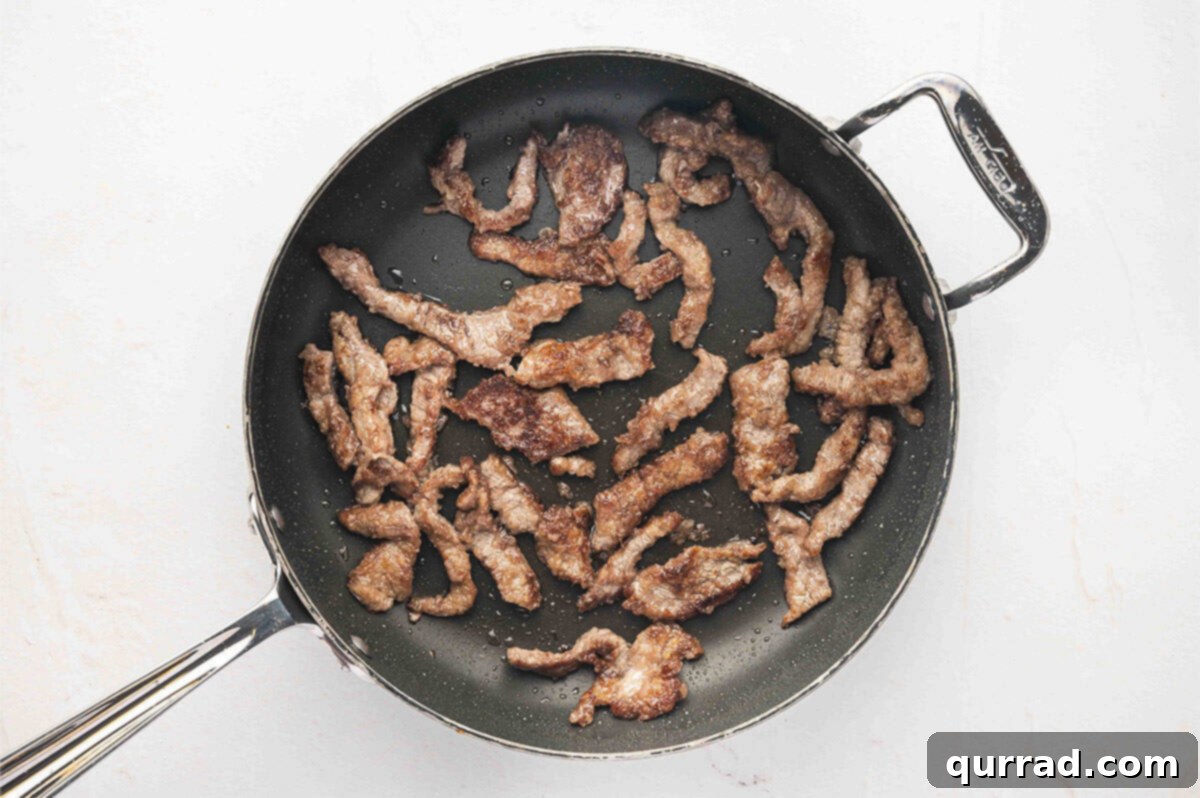
3. Sear the Cornstarch-Coated Flank Steak: Take your 1/2 pound of thinly sliced flank steak and evenly toss it with 2 tablespoons of cornstarch. This coating is crucial for tenderizing the beef and helping it achieve a beautiful golden-brown sear. Heat 2 tablespoons of vegetable oil in a large pan or wok over high heat until it’s shimmering. Carefully add the beef in a single layer (work in batches if necessary to avoid crowding) and sear it until beautifully browned, about 2–3 minutes per side. Once seared, remove the beef from the pan and set it aside on a separate plate.
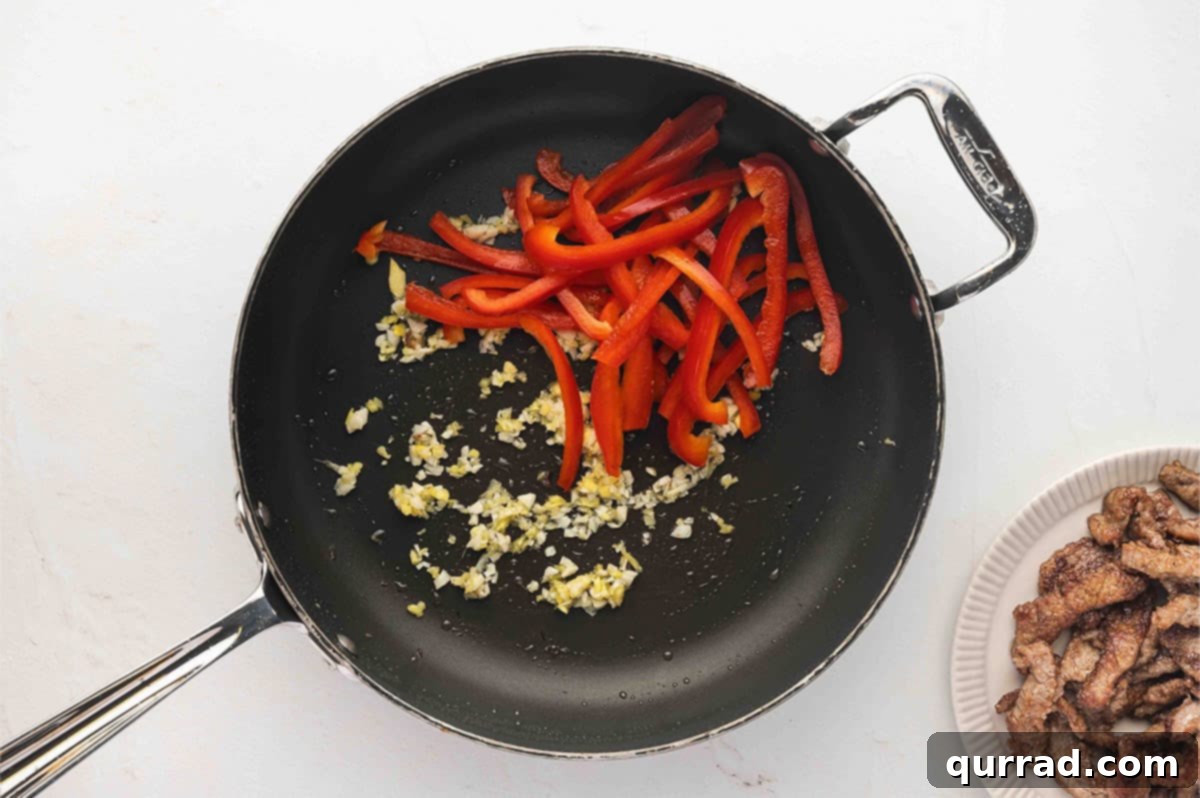
4. Sauté Aromatics and Bell Pepper: Using the same pan (don’t worry about any small bits left from the beef, they add flavor!), add a tiny splash more oil if needed. Cook 3 cloves of minced garlic and 1/2-inch piece of grated fresh ginger for about 30 seconds until fragrant. Be careful not to burn the garlic. Next, add 1/2 a thinly sliced red bell pepper and sauté for another 2–3 minutes until the bell pepper is just tender-crisp. You want it to retain a slight bite for texture.
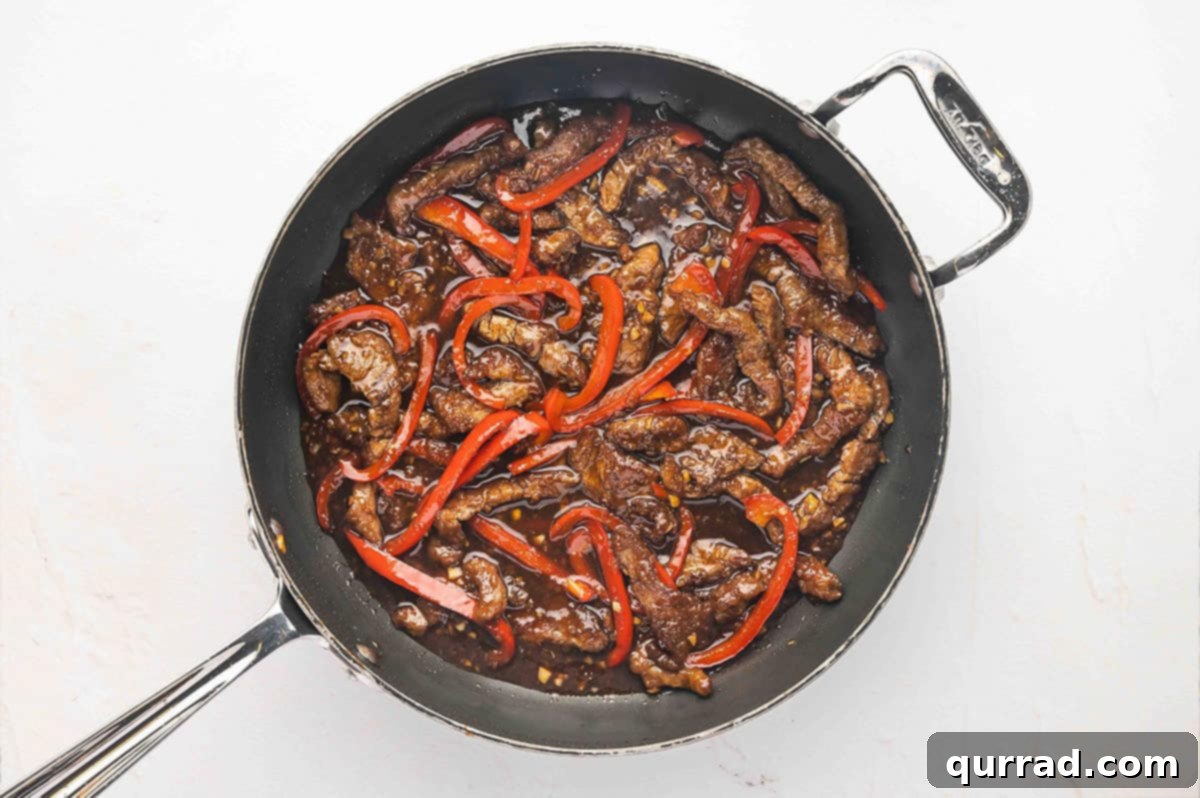
5. Combine Beef with the Rich Sauce: Return the seared beef strips to the pan with the aromatics and bell pepper. Give it a quick stir to combine. Now, pour in the whisked sauce you prepared earlier. Bring the mixture to a gentle simmer and let it cook for about 2 minutes, stirring occasionally, until the sauce has thickened to a luscious, glossy consistency. The cornstarch will work its magic, transforming the thin liquid into a rich coating.
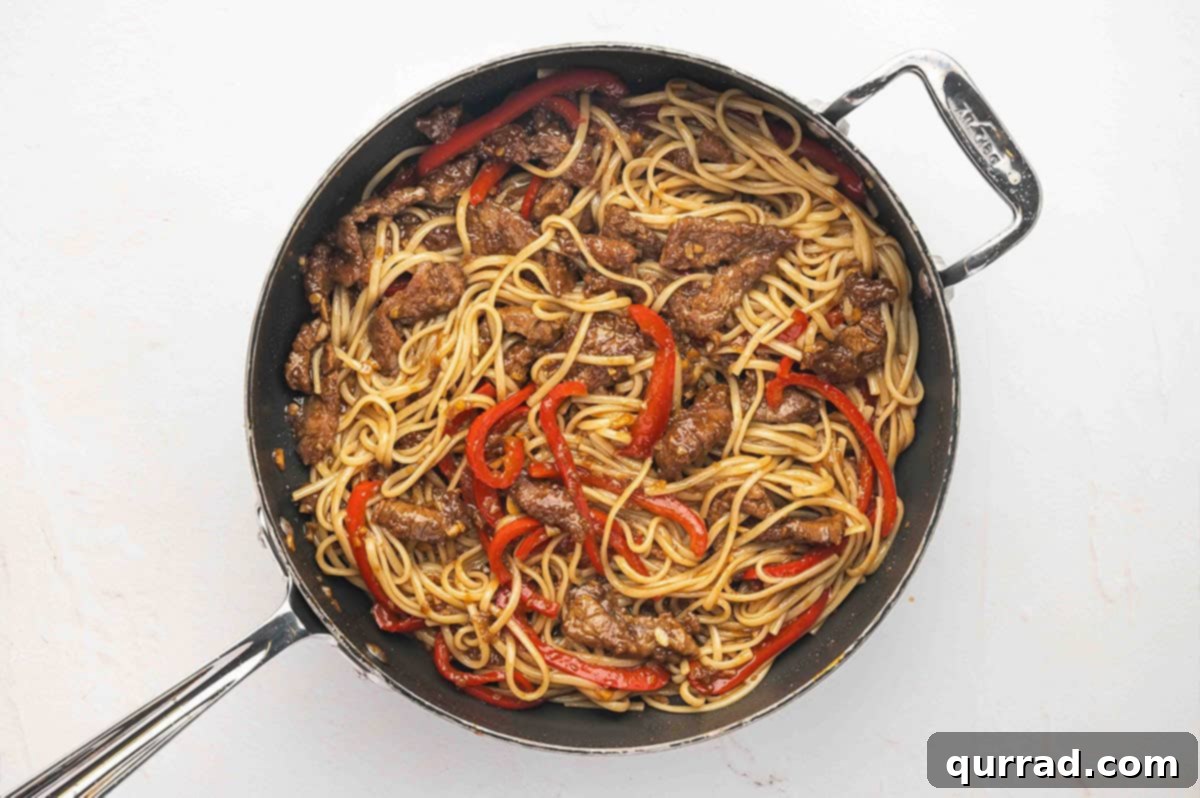
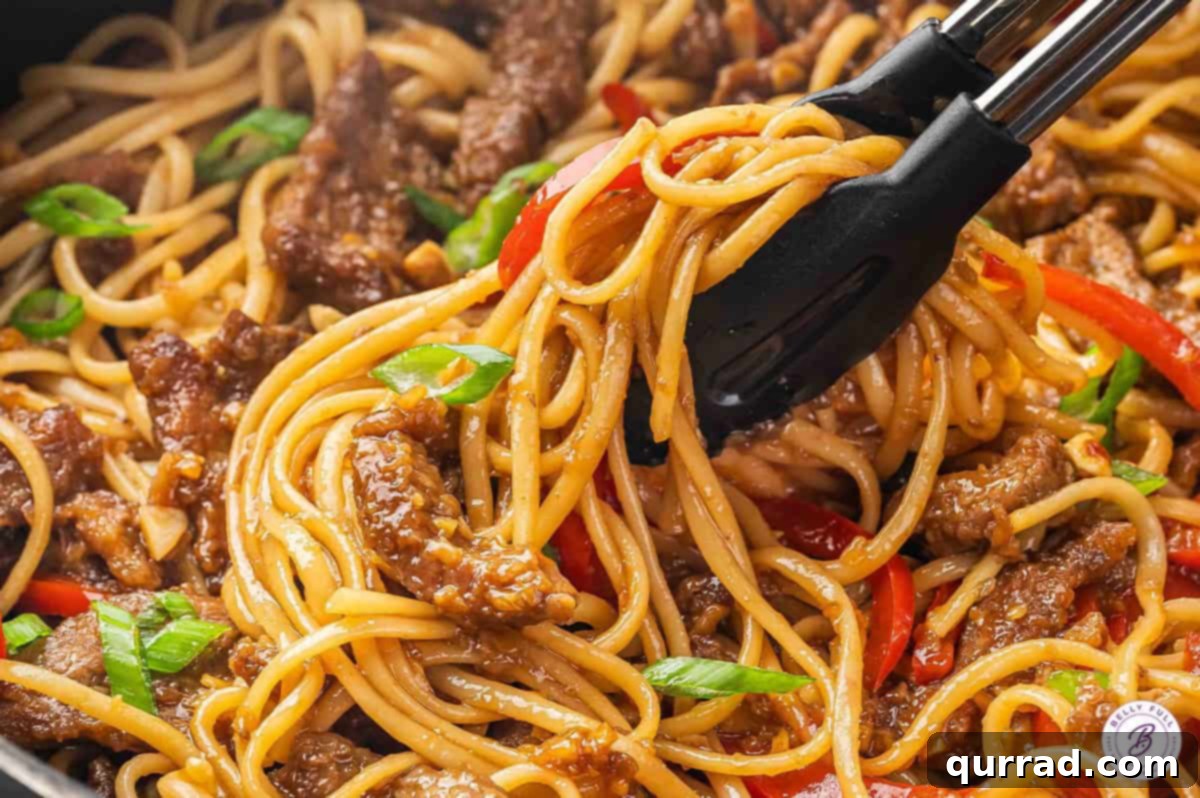
6. Incorporate the Cooked Pasta: Finally, add the cooked linguine pasta directly into the pan with the beef and sauce. Using tongs or two large spoons, toss everything together thoroughly, ensuring that every strand of pasta and every piece of beef is beautifully coated in the thick, flavorful Mongolian sauce. Continue tossing for a minute or two until everything is well combined and heated through. Remove the pan from the heat immediately to prevent overcooking the noodles.
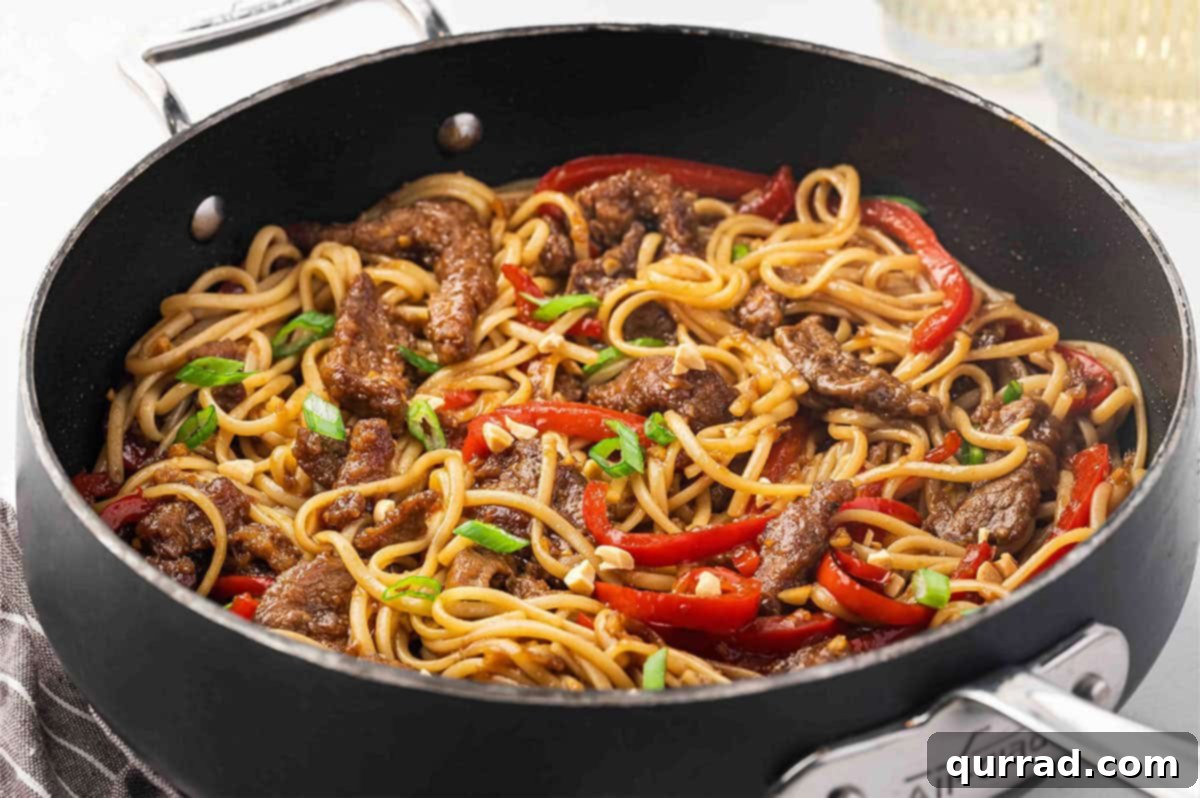
7. Garnish and Serve Hot: Transfer the Mongolian Beef Noodles to individual serving bowls or a large platter. Finish the dish by garnishing generously with 2 sliced scallions (the green parts add a lovely fresh contrast and mild onion flavor) and 2 tablespoons of crushed roasted peanuts. The peanuts provide a wonderful crunch and nutty undertone that perfectly complements the savory sauce. Serve immediately and enjoy this spectacular homemade meal!
Serving Suggestions for Mongolian Beef Noodles
Mongolian beef noodles are a remarkably complete and satisfying meal on their own, offering a perfect balance of protein, carbohydrates, and vegetables. However, if you’re looking to round out your feast or add a refreshing contrast, a simple side dish can elevate the experience. My go-to choices usually involve light, steamed, or quickly sautéed green vegetables. Options like crisp snap peas, tender broccoli florets, or vibrant green beans make excellent companions, adding extra nutrients and a fresh counterpoint to the rich sauce. For a burst of cooling flavor and texture, a quick Asian cucumber salad also pairs exceptionally well, offering a tangy and refreshing bite that cuts through the richness of the noodles.
Proper Storage and Meal Prep Tips
This Mongolian Beef Noodles recipe is fantastic for meal prep, making your weeknight dinners even easier. Knowing how to properly store and reheat your leftovers ensures you can enjoy this delicious dish for days to come.
- Refrigeration (Fridge): Any leftover Mongolian Beef Noodles should be transferred to an airtight container as soon as they’ve cooled completely. Stored properly in the refrigerator, they will remain fresh and delicious for up to 3 days. This makes them perfect for next day’s lunch or a quick dinner on another busy evening.
- Reheating Instructions: When it’s time to enjoy your leftovers, you have a couple of options. For best results, reheat the noodles in a skillet over medium heat, stirring occasionally until warmed through. Alternatively, for a quicker option, pop them in the microwave. Since the sauce tends to thicken in the fridge, add a splash of water or beef broth (about 1-2 tablespoons) before reheating. This will help loosen the sauce and bring it back to its original luscious consistency, preventing the noodles from drying out.
- Freezing for Future Meals (Freezer): This dish freezes remarkably well, making it an excellent candidate for long-term meal planning. Once the noodles have cooled entirely, portion them into individual freezer-safe containers or heavy-duty freezer bags. Ensure as much air as possible is removed from the containers to prevent freezer burn. They can be frozen for up to 2 months. When you’re ready to enjoy them, thaw the noodles overnight in the refrigerator. Reheat them using the same methods as above (skillet or microwave), again adding a small amount of water or broth to restore the sauce’s texture.
More Asian-Inspired Recipes To Try
If you’re a fan of the vibrant and diverse flavors of Asian cuisine, you’ll love exploring these other delicious recipes from our collection:
- Chinese Spare Ribs – Fall-off-the-bone tender ribs with a rich, aromatic sauce.
- Creamy Peanut Noodles – A comforting and flavorful vegetarian option, perfect for a quick lunch or light dinner.
- Filipino Pancit – A traditional and hearty noodle dish packed with vegetables and savory flavors.
- Gochujang Pasta – A unique fusion dish blending Italian pasta with Korean spicy and savory gochujang.
- Drunken Noodles – Spicy, savory, and incredibly satisfying Thai-inspired noodles with a kick.
We truly hope you enjoy this delicious and incredibly easy Mongolian Beef Noodles recipe! If you make it, please take a moment to leave a review below and share your experience. Your feedback helps other home cooks discover and love this dish too! Don’t forget to connect with Belly Full on social media for more inspiring recipes and culinary adventures. You can find us on TikTok, Facebook, Instagram, Pinterest, and YouTube! Happy cooking!