
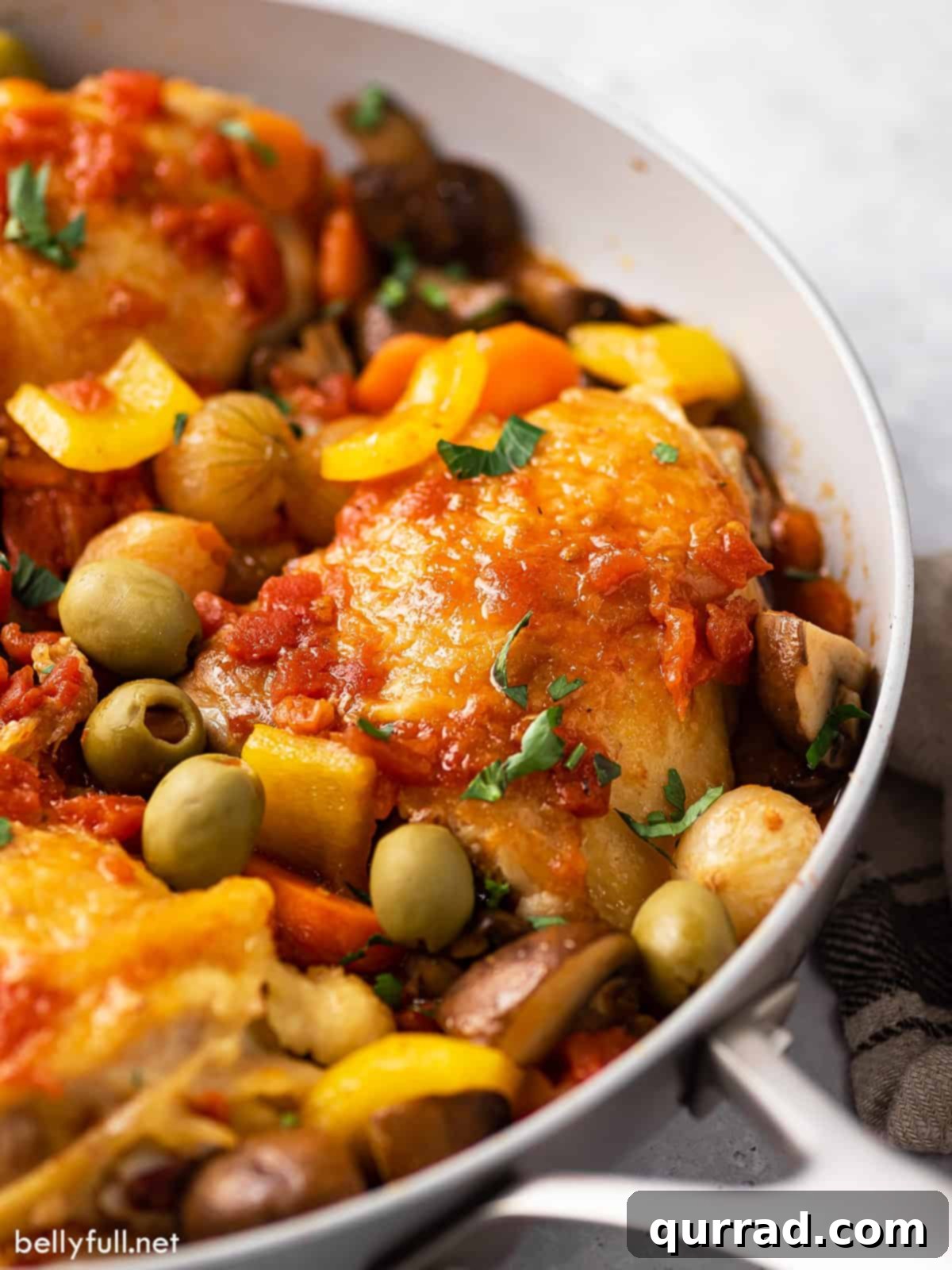
Easy Chicken Cacciatore: A Rustic Italian One-Pot Masterpiece
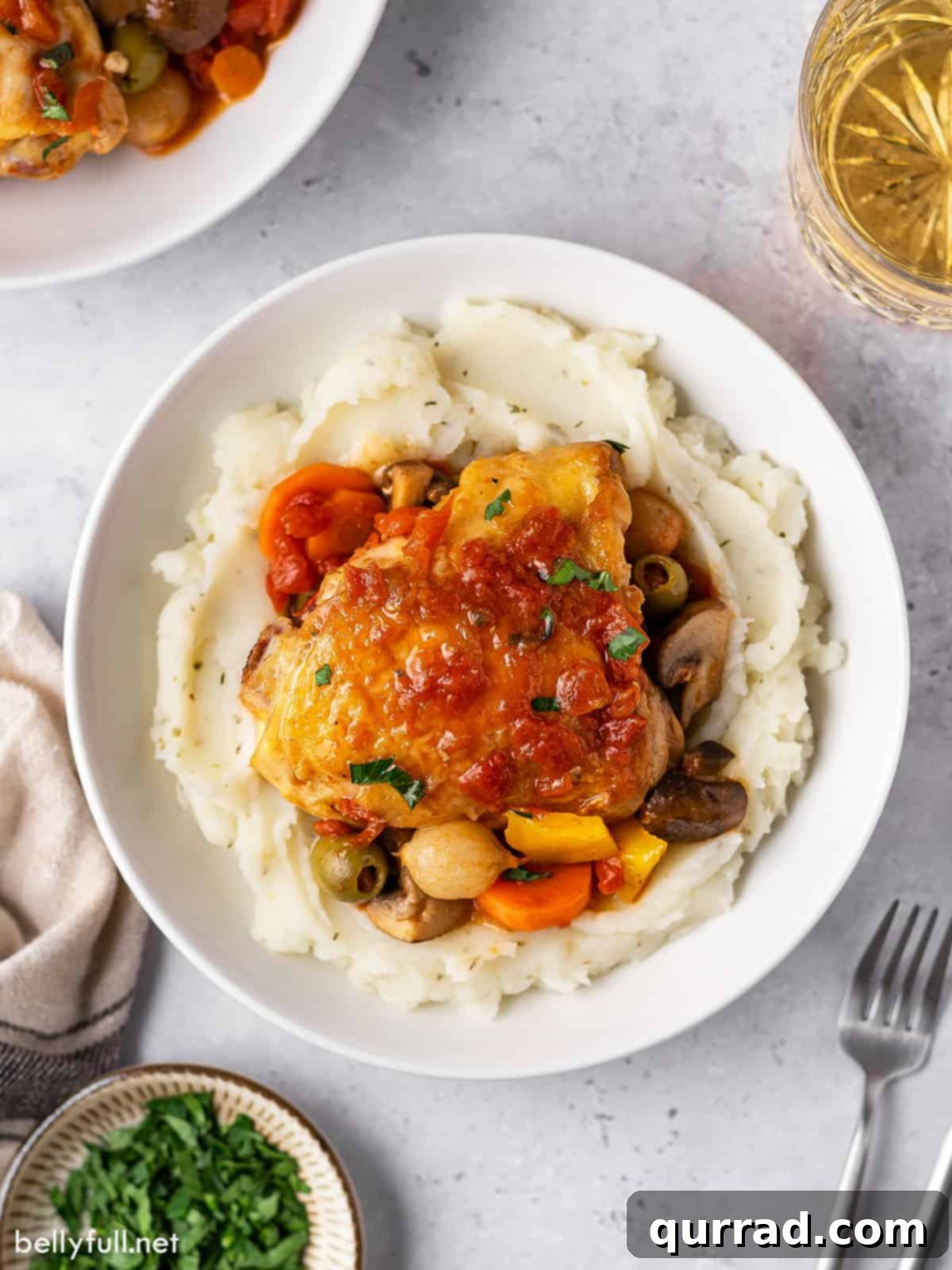
Discover the timeless appeal of Chicken Cacciatore, an authentic Italian comfort food that promises a hearty, flavorful meal with minimal effort. This easy, one-pot recipe brings together succulent chicken thighs, a medley of garden-fresh vegetables like mushrooms, bell peppers, onions, and the zesty kick of olives, all slow-braised in a rich tomato and wine sauce. Perfect for a cozy weeknight dinner or a special gathering, this stovetop classic is incredibly versatile. Enjoy it paired with your favorite pasta or creamy mashed potatoes, or keep it light and low-carb by savoring it on its own.
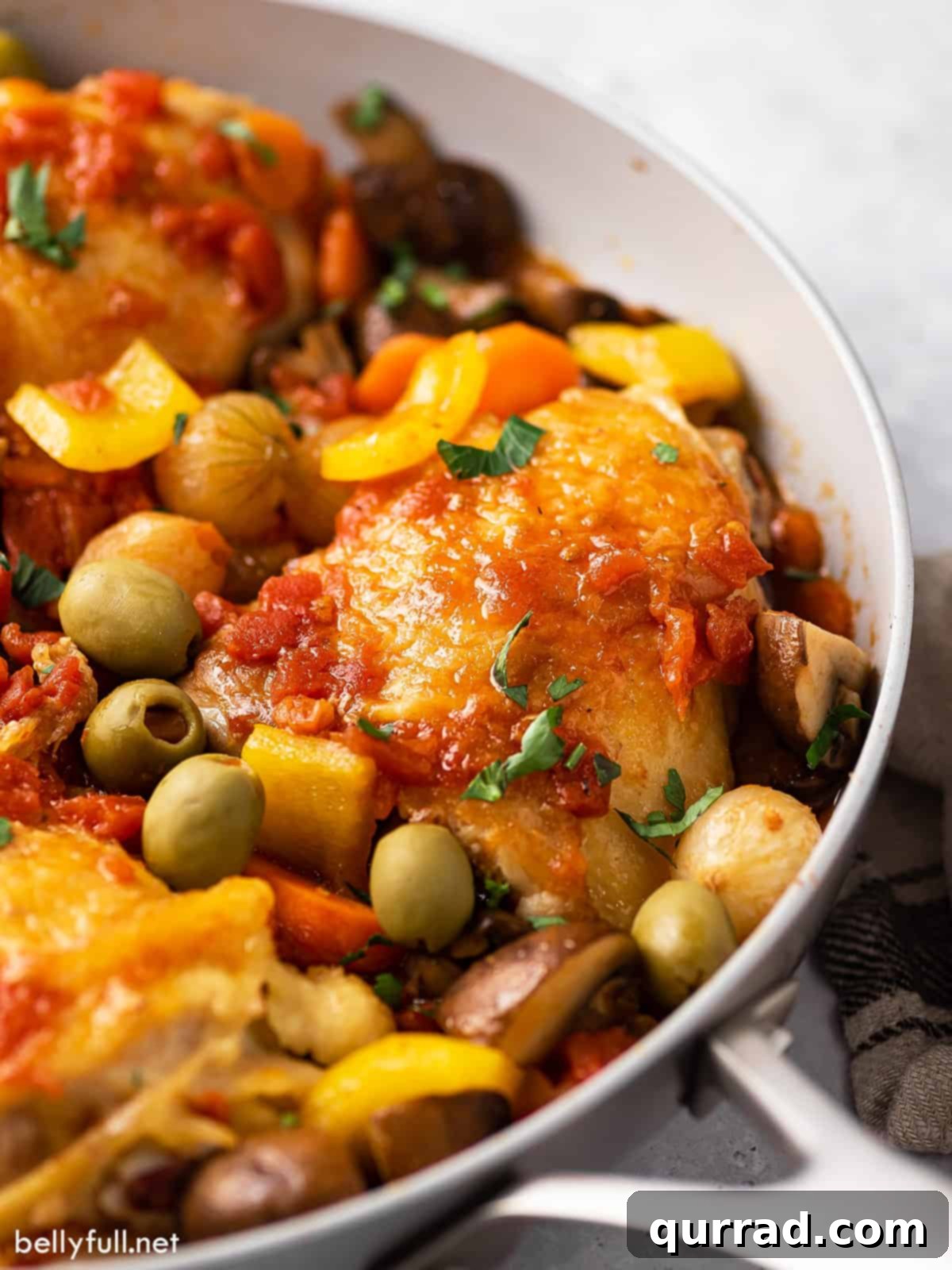
The Enduring Appeal of Easy Chicken Cacciatore
Chicken Cacciatore is a dish that has truly stood the test of time, an emblem of Italian home cooking passed down through generations. While its fundamental elements – braised chicken, vibrant peppers, aromatic onions, and juicy tomatoes – remain consistent, countless regional and family adaptations exist, each adding its unique twist. Our rendition includes briny olives, which introduce a delightful salty contrast to the savory, tangy, and subtly sweet tomato-based sauce. The best part? This entire flavorful feast comes together in a single pan, making cleanup wonderfully easy and allowing you more time to enjoy your culinary creation.
This recipe focuses on maximizing flavor through simple techniques and high-quality ingredients, ensuring that even novice cooks can achieve a restaurant-worthy dish. The slow braising process tenderizes the chicken to perfection, infusing it with the rich aromas of the vegetables and the depth of the wine. It’s a true celebration of rustic Italian flavors, designed to warm the soul and satisfy the palate.
What Exactly is Chicken Cacciatore?
In Italian, “Cacciatore” translates to “hunter,” giving this traditional dish its “hunter-style” designation. This isn’t about hunting for ingredients, but rather evoking the hearty, satisfying meals prepared by hunters using readily available rustic ingredients in the countryside. Chicken Cacciatore is essentially a robust, stew-like chicken dish, where chicken pieces are simmered slowly with a medley of fresh vegetables in a richly flavored tomato sauce. It’s known for its comforting qualities, its versatility, and its incredible depth of flavor that develops through the slow cooking process.
Historically, Cacciatore dishes could be made with various meats, but chicken has become the most popular choice due to its affordability and ability to absorb the rich flavors of the sauce. This dish represents the essence of Italian cucina povera – “poor kitchen” cuisine – where simple ingredients are transformed into something extraordinary through careful preparation and patient cooking. It’s a testament to the idea that some of the best food comes from humble beginnings.
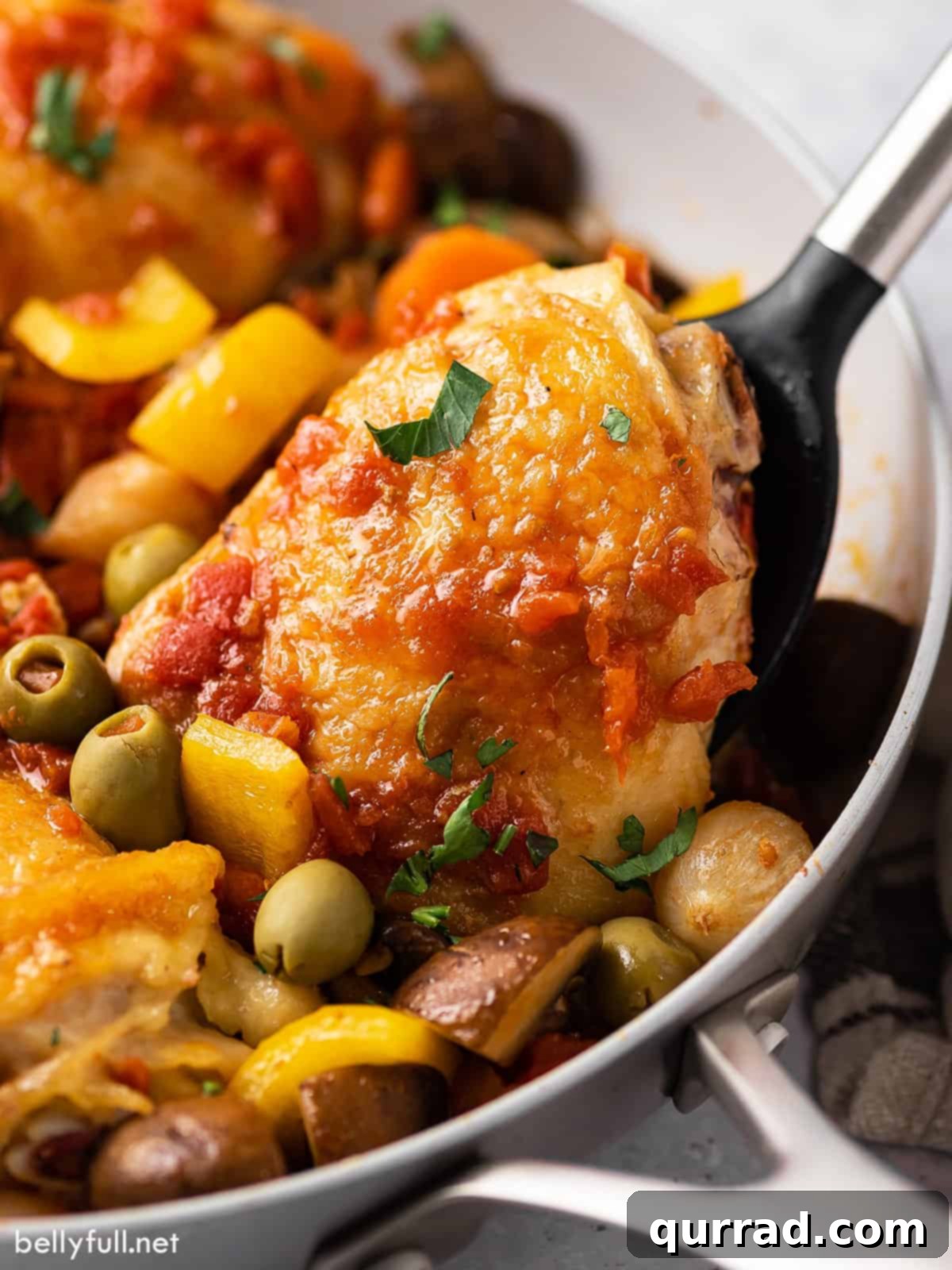
Key Ingredients for Authentic Chicken Cacciatore
Crafting the perfect Chicken Cacciatore begins with selecting fresh, high-quality ingredients. Here’s a detailed look at what you’ll need for this flavorful recipe:
- Chicken Thighs: We opt for bone-in, skin-on chicken thighs. The bone contributes immense flavor to the sauce, while the skin crisps up beautifully when seared and helps keep the meat moist during braising. Their rich flavor and forgiving nature make them ideal for this slow-cooked dish.
- Fresh Vegetables:
- Cremini Mushrooms: Whole cremini mushrooms (also known as baby bellas) add an earthy, umami depth to the sauce. Their firm texture holds up well during cooking.
- Yellow Bell Pepper: A medium yellow bell pepper introduces a touch of sweetness and vibrant color. You can experiment with red or orange bell peppers for a slightly different flavor profile.
- Carrots: Sliced carrots add natural sweetness and an additional layer of texture, balancing the savory elements of the dish.
- Garlic: Freshly minced garlic is indispensable, providing that classic aromatic foundation characteristic of Italian cuisine.
- Frozen Pearl Onions: These small, sweet onions add a delightful delicate flavor and tender texture without the fuss of peeling fresh ones. They melt into the sauce beautifully.
- Olives: Pimiento-stuffed green olives are a game-changer, lending a wonderful salty, briny, and subtly fruity note that cuts through the richness of the tomato sauce and elevates the overall flavor profile.
- Dry Red Wine: A splash of dry red wine (like Chianti or Merlot) is crucial for adding profound depth and complexity to the braising liquid. The alcohol cooks off completely, leaving behind only its rich essence.
- Seasoned Canned Tomatoes: A can of undrained petite diced tomatoes infused with garlic and oregano forms the backbone of our savory sauce. Using seasoned tomatoes simplifies the flavoring process, but regular diced tomatoes work just as well with a simple seasoning adjustment.
- Balsamic Vinegar: Just two tablespoons of balsamic vinegar add a tangy richness and a hint of sweetness, brightening the sauce and tying all the flavors together.
- Olive Oil: Essential for searing the chicken to golden perfection and sautéing the vegetables, extra-virgin olive oil provides a foundational flavor.
- Salt and Pepper: Simple seasonings are all that’s needed to enhance the natural flavors of the ingredients. Adjust to taste throughout the cooking process.
Creative Recipe Variations to Explore
One of the beauties of Chicken Cacciatore is its adaptability. Feel free to experiment with these variations to customize the dish to your preference or what you have on hand:
- Experiment with Vegetables: Don’t be afraid to swap or add vegetables. Instead of cremini, try chopped portobello mushrooms for a meatier texture. Red or orange bell peppers can replace yellow ones, each offering a slightly different nuance of sweetness. Zucchini, celery, or even small potato chunks can also be wonderful additions, though they may require adjusted cooking times.
- Regular Canned Tomatoes: If Italian-seasoned diced tomatoes aren’t available, standard canned diced tomatoes are a fine substitute. Just be sure to enhance the flavor by adding a tablespoon of dried Italian seasoning or a combination of dried oregano, basil, and a pinch of red pepper flakes to the sauce.
- Introduce a Hint of Heat: For those who enjoy a little spice, stir in a sprinkle of crushed red pepper flakes when the sauce begins to simmer. Start with a quarter teaspoon and add more to taste, creating a gentle warmth that complements the savory flavors.
- Wine Alternatives: While dry red wine adds an unparalleled depth, it can be substituted. If you prefer to avoid alcohol, low-sodium chicken broth is a suitable replacement. Keep in mind that while the dish will still be delicious, the complex flavor profile imparted by the wine will be slightly diminished. For a non-alcoholic option with more depth, a small amount of non-alcoholic red wine or a splash of grape juice with a bit of extra balsamic vinegar can also work.
- Boneless Chicken Thighs: If you prefer boneless chicken, you can certainly use boneless, skinless chicken thighs. They will cook faster, so monitor the internal temperature carefully and remove them from the skillet once they reach 165 degrees F to prevent overcooking and ensure they remain juicy.
- Add More Herbs: Fresh herbs like rosemary or thyme sprigs can be added along with the tomatoes for an extra layer of aromatic flavor. Remove them before serving.
Mastering the Art of Chicken Cacciatore: Step-by-Step Guide
Creating this delicious chicken cacciatore is straightforward, requiring minimal fuss for maximum flavor. Here’s a detailed breakdown of the cooking process:
Preparation Tip: Blot the Chicken Thighs for Perfect Searing
Before you begin, remove the chicken thighs from their packaging and gently blot them dry with paper towels. This crucial step helps remove excess moisture from the skin, allowing it to achieve a beautiful golden-brown crisp when it hits the hot oil, locking in flavor and improving texture.
- Sear the Chicken: Heat the olive oil in a large, heavy-bottomed skillet or Dutch oven over medium-high heat until it shimmers. Season the chicken thighs generously with salt and pepper, then carefully place them in the hot pan, skin side down. Sear for approximately 3-4 minutes, until the skin is deeply golden and crispy. Flip the chicken and cook for another 3-4 minutes on the other side. Transfer the seared chicken to a plate and set aside, keeping it warm to retain its juices.
- Sauté the Vegetables: Add the mushrooms, bell pepper, and carrot to the pan drippings remaining in the skillet. Sauté for about 4-5 minutes, stirring occasionally, until they begin to soften and develop a slight char. Stir in the minced garlic and cook for an additional 30 seconds until fragrant, being careful not to burn it.
- Deglaze with Wine: Pour the dry red wine into the skillet, scraping up any browned bits from the bottom of the pan with a wooden spoon. This process, called deglazing, adds incredible flavor to the sauce. Allow the wine to simmer and reduce for 1-2 minutes until most of the alcohol has evaporated.
- Simmer the Sauce: Stir in the undrained diced tomatoes (with their juices), frozen pearl onions, and black pepper. Bring the mixture to a gentle simmer, stirring to combine all the ingredients.
- Braş the Chicken: Carefully return the seared chicken thighs to the skillet, nestling them into the tomato and vegetable mixture, skin side up. Cover the skillet with a tight-fitting lid, reduce the heat to low, and let it gently simmer for about 15-20 minutes. Cook until the chicken is thoroughly cooked through and registers an internal temperature of 165 degrees F (74 degrees C) when checked with a meat thermometer at the thickest part.
- Final Touches and Serve: Stir in the balsamic vinegar and the pimiento-stuffed olives, allowing them to warm through for a minute or two. Taste the sauce and adjust seasonings as needed, adding a pinch more salt or pepper if desired. Garnish with a sprinkle of fresh chopped parsley for brightness and serve immediately with your preferred side dish.
Perfect Pairings: What to Serve with Chicken Cacciatore
While Chicken Cacciatore is a complete meal in itself, its rich, flavorful sauce practically begs to be soaked up by a delicious accompaniment. Here are some of our favorite options to complete your rustic Italian feast:
- Rustic Bread: Nothing complements a savory, saucy dish quite like a slice of crusty bread. A warm piece of Dutch Oven Bread or fragrant Focaccia is perfect for mopping up every last drop of the delectable tomato and wine sauce.
- Comforting Potatoes: For a truly comforting experience, serve a generous portion of Chicken Cacciatore over a bed of creamy mashed potatoes. The fluffy potatoes absorb the sauce beautifully. Alternatively, a side of crispy roasted potatoes offers a delightful textural contrast.
- Classic Pasta or Couscous: You can’t go wrong with pasta when it comes to Italian dishes. Choose a pasta shape with ridges or nooks, like rigatoni, penne, or fettuccine, to best “catch” the savory sauce. Fluffy couscous also makes an excellent light and quick alternative, absorbing flavors wonderfully.
- Healthy Spaghetti Squash: For a low-carb, gluten-free, and keto-friendly option, serve your Chicken Cacciatore with our flavorful roasted spaghetti squash, tossed with butter, onion, garlic, and Parmesan cheese. It’s incredibly satisfying and nutritious.
- Grains or Cauliflower Rice: White or brown rice provides a simple yet effective canvas for the rich sauce, making for a wholesome meal. If you’re looking for another excellent low-carb alternative, our cauliflower rice is a fantastic choice that pairs exceptionally well with the robust flavors of this chicken dish.
- Fresh Green Salad: A simple, crisp green salad with a light vinaigrette can provide a refreshing contrast to the richness of the cacciatore, cleansing the palate between bites.
Proper Storage and Reheating Tips
Chicken Cacciatore is one of those dishes that often tastes even better the next day as the flavors have more time to meld and deepen. Here’s how to store and reheat your leftovers:
- To Store: Any leftover Chicken Cacciatore should be transferred to an airtight container and stored promptly in the refrigerator. It will maintain its delicious quality for up to 4 days.
- How to Reheat: For best results, gently reheat the chicken cacciatore on the stovetop over medium-low heat in a Dutch oven or a deep skillet. Stir occasionally until it is heated through. If you’re in a hurry, the microwave can also be used; simply heat in short intervals, stirring in between, until piping hot. Add a splash of broth or water if the sauce seems too thick.
- Can I Freeze Chicken Cacciatore?: Absolutely! Chicken Cacciatore freezes beautifully. Allow the dish to cool completely before transferring it to an airtight, freezer-safe container. It can be frozen for up to 3 months. When you’re ready to enjoy it, thaw overnight in the refrigerator before reheating using the stovetop or microwave method.
More Delicious and Easy Chicken Recipes to Try
If you loved this straightforward and flavorful Chicken Cacciatore, you’re sure to enjoy these other accessible chicken dishes:
- Creamy Chicken Alfredo
- Comforting Chicken Tetrazzini
- Sweet and Savory Honey Garlic Chicken
- Zesty Chicken Piccata
- Hearty Chicken Pot Pie Noodle Skillet
- Flavorful Salsa Verde Chicken
Chicken Cacciatore
This Chicken Cacciatore recipe is a simple Italian one-pot meal featuring tender chicken thighs, vibrant vegetables, and briny olives, all braised in a rich tomato and wine sauce. It’s an effortless dish that delivers incredible flavor.
Cook Time: 25 mins
Total Time: 35 mins
Servings: 6
Ingredients
- 2 tablespoons extra-virgin olive oil
- 6 bone-in, skin-on chicken thighs (about 2 1/4 pounds)
- Salt and pepper, to taste
- 8 ounces whole cremini mushrooms, stems removed, quartered
- 1 medium yellow bell pepper, seeds and ribs removed, cut into 1-inch pieces
- 1 medium carrot, peeled, cut into thin rounds
- 3 cloves garlic, minced
- 1/3 cup dry red wine
- 15 ounce can diced tomatoes with garlic and oregano, undrained
- 1 cup small frozen pearl onions
- 1/2 teaspoon black pepper
- 2 tablespoons balsamic vinegar
- 12 pimiento stuffed olives
- Chopped fresh parsley, for garnish
Instructions
- Warm olive oil in a large skillet over medium-high heat. Once shimmering, sprinkle chicken with salt and pepper and add to the hot pan, skin side down. Cook for 3-4 minutes until golden; flip and cook for 3-4 minutes more. Transfer to a plate and keep warm.
- Add the mushrooms, bell pepper, and carrot to the pan drippings; sauté for about 4 minutes until tender. Stir in the garlic and cook until fragrant, about 20-30 seconds.
- Pour in the wine and allow to evaporate, scraping up any browned bits from the bottom of the pan.
- Stir in the diced tomatoes (along with their juices), pearl onions, and the black pepper.
- Return chicken to the skillet (skin side up), nestled into the tomato and vegetable mixture.
- Cover the skillet, reduce heat to a gentle simmer, and cook for about 15-20 minutes or until the chicken is cooked through and registers an internal temperature of 165 degrees F (74 degrees C).
- Stir in the balsamic vinegar and olives; warm through. Taste and season with a pinch more salt and pepper, if desired.
- Enjoy hot over rice, pasta, or mashed potatoes. Alternatively, serve with a slice of rustic bread to soak up the delicious sauce. Low-carb serving recommendations are included in the article above.
Notes
Replacing Red Wine: While dry red wine contributes significant depth, if you prefer not to use alcohol, simply replace it with an equal amount of low-sodium chicken broth. Please note that the overall dish may not be as rich in flavor, but it will still be delicious.
Nutrition
Calories: 433 kcal | Carbohydrates: 13g | Protein: 26g | Fat: 30g | Saturated Fat: 7g | Polyunsaturated Fat: 6g | Monounsaturated Fat: 14g | Trans Fat: 1g | Cholesterol: 142mg | Sodium: 350mg | Potassium: 749mg | Fiber: 2g | Sugar: 5g | Vitamin A: 1967IU | Vitamin C: 47mg | Calcium: 64mg | Iron: 2mg
Nutritional information is an automatic calculation and may vary based on specific products used and any recipe modifications. It is recommended to calculate your own if these numbers are critical.