
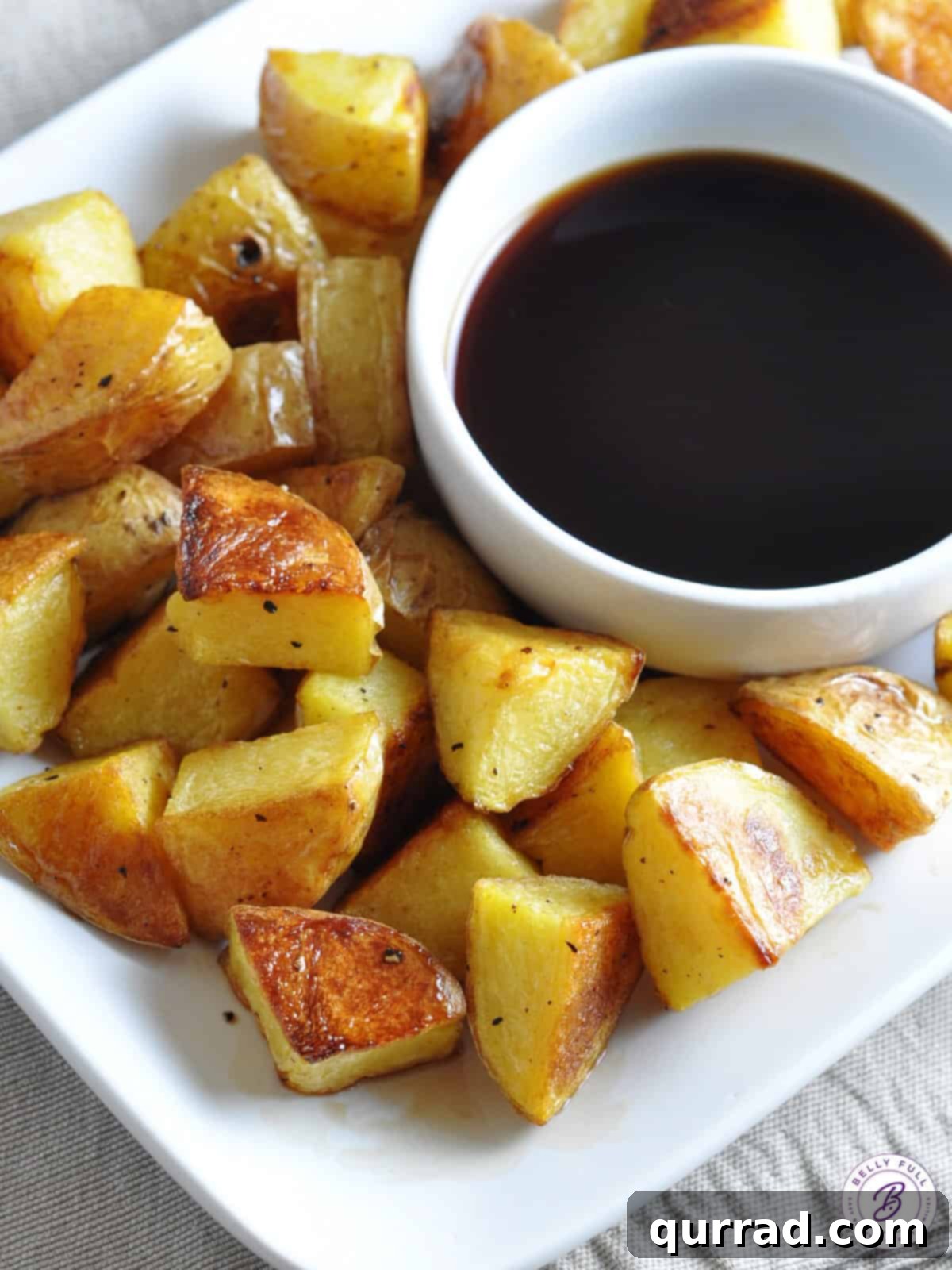
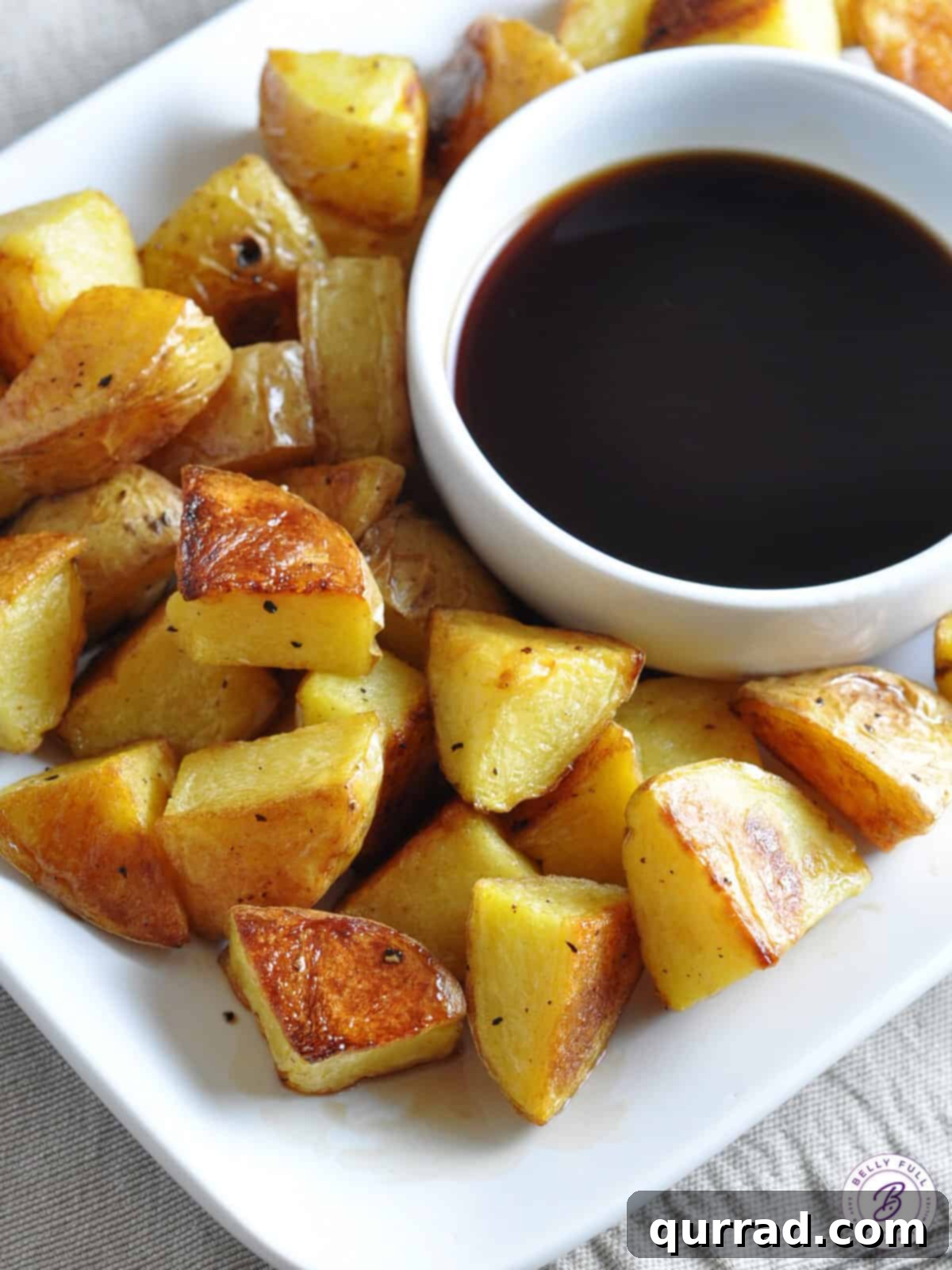
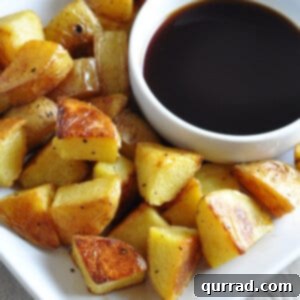
Prepare to tantalize your taste buds with these incredible oven-roasted potatoes, delivering a harmonious blend of crispy texture, tender interiors, and a uniquely savory-sweet malt vinegar glaze. Much like your favorite salt and vinegar chips, but elevated to a sophisticated side dish, these potatoes are deceptively easy to make and guaranteed to become a new family favorite. They offer a delightful tang that cuts through richer main courses and makes for an irresistibly delicious addition to any dinner table.
For those who love a rustic, comforting potato side, you might also enjoy these crispy home fries, featuring a delightful combination of potatoes and tart apples. It’s another excellent choice that beautifully complements dishes like roasted chicken, grilled steak, or succulent pork chops.
Malt Vinegar Roasted Potatoes: A Flavorful Twist
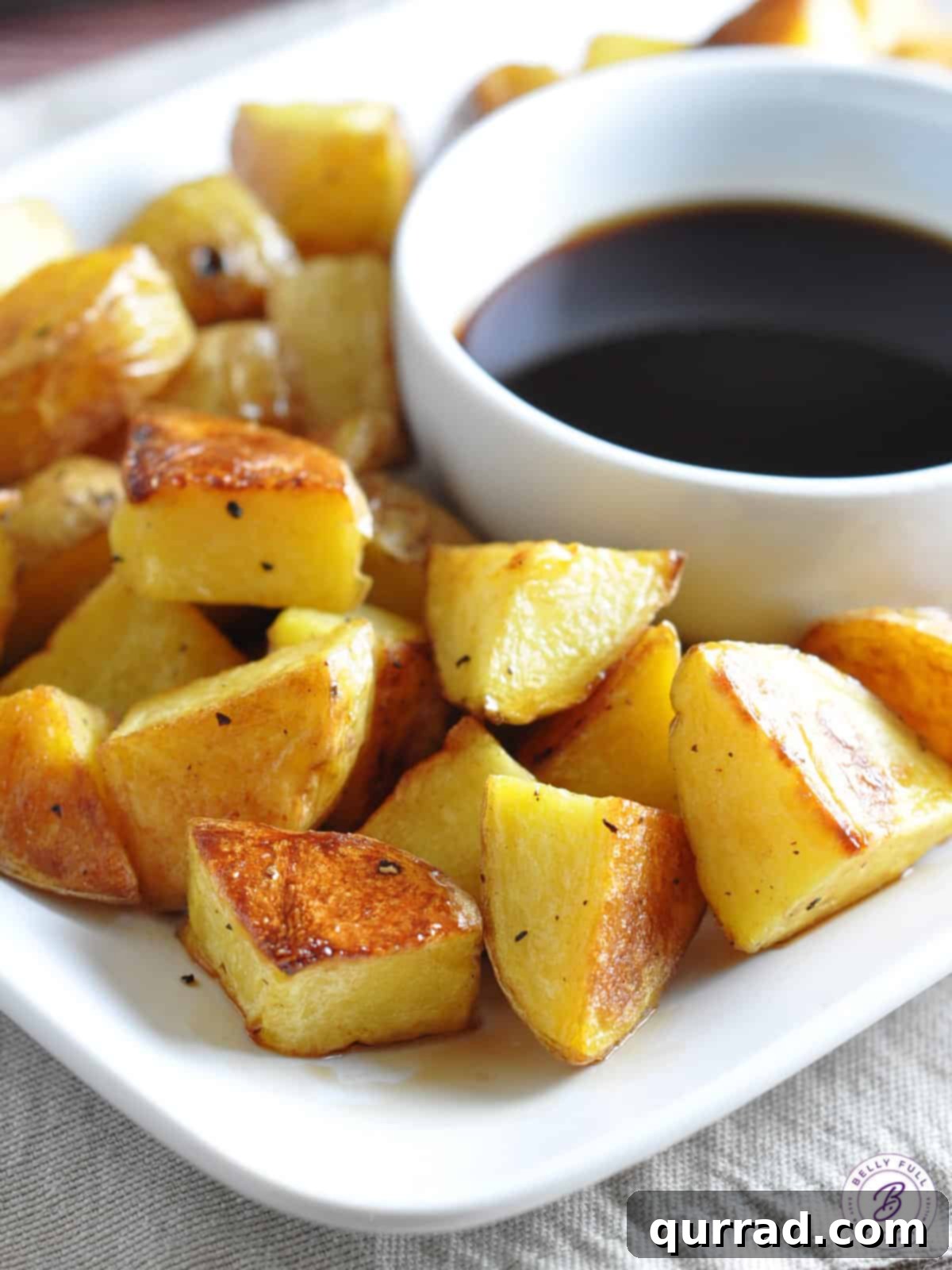
Inspired by the quintessential British pub snack – salt and vinegar crisps – this recipe reimagines that beloved flavor profile into a hearty, satisfying side dish. Cubes of perfectly roasted potatoes are generously coated in a reduced, syrupy malt vinegar sauce, creating a complex taste that’s both tangy and slightly sweet. The result is so addictive, you’ll find it hard to stop at just one serving. This dish is not just a side; it’s a culinary experience, offering a burst of flavor that will leave a lasting impression.
The Magic of Malt Vinegar
Malt vinegar is a distinctive condiment made from malted barley, giving it a richer, slightly less acidic, and more complex flavor compared to white or apple cider vinegar. Its signature tang, combined with a subtle sweetness, is what makes salt and vinegar chips so appealing. In this recipe, we take that distinct flavor and transform it into a glossy, concentrated sauce that clings beautifully to each roasted potato. Reducing the malt vinegar with a touch of sugar creates a syrupy consistency, intensifying its savory and slightly sweet notes, and allowing it to caramelize slightly on the potatoes for an even deeper flavor experience.
Why Oven Roasting? The Key to Crispy Perfection
Oven roasting is arguably the best method for achieving truly crispy potatoes with a fluffy interior. The dry, high heat of the oven allows the exterior of the potatoes to dehydrate and brown, creating that irresistible crunch, while the inside cooks through to tender perfection. Unlike boiling or steaming, which can lead to soggy results, roasting brings out the natural sweetness of the potatoes and develops rich, caramelized flavors through the Maillard reaction. It’s also a hands-off cooking method, freeing you to focus on other parts of your meal while the oven works its magic.
Essential Ingredients for Your Malt Vinegar Potatoes
You’ll be delighted by how few simple ingredients are needed to create such a spectacular dish. Each component plays a crucial role in developing the incredible flavor and texture. For precise measurements and detailed instructions, remember to scroll down to the printable recipe card below.
- Yellow Potatoes: Such as Yukon Gold, which are known for their naturally buttery flavor and creamy texture, making them ideal for roasting. They become wonderfully crisp on the outside and stay tender within. Other waxy potatoes can also work well.
- Vegetable Oil: Or another high-smoke-point oil like canola or grapeseed oil. This is essential for achieving a golden-brown, crispy exterior on the potatoes without burning.
- Malt Vinegar: The star of the show! Choose a good quality malt vinegar for the most authentic and robust flavor.
- Granulated Sugar: A small amount of sugar balances the sharp acidity of the malt vinegar and helps create that desirable syrupy consistency when reduced. It also aids in caramelization.
- Salt and Pepper: Basic seasonings that enhance the natural flavors of the potatoes and balance the tang of the vinegar. Sea salt or kosher salt is recommended for seasoning.
How to Achieve Perfectly Roasted Potatoes with Malt Vinegar Glaze
Creating these irresistibly crispy and flavorful roasted potatoes is a straightforward process. Following these steps will ensure a delicious outcome every time. Remember, the full recipe with specific quantities can be found in the printable recipe card further down the page.
- Prepare the Potatoes: Begin by washing and peeling your yellow potatoes. Cut them into uniform 1-inch cubes. This consistent sizing is crucial for even cooking. Once cut, submerge the potato cubes in a large bowl of cold water for at least 30 minutes. This soaking step is vital as it removes excess starch, which in turn prevents the potatoes from sticking together during roasting and helps achieve maximum crispness. After soaking, drain the potatoes thoroughly and pat them completely dry with a clean kitchen towel or paper towels. Moisture is the enemy of crispiness!
- Season and Spread: Preheat your oven to 425 degrees Fahrenheit (220 degrees Celsius). On a large baking sheet, toss the dried potato cubes with vegetable oil, ensuring each piece is lightly and evenly coated. Spread the potatoes out in a single layer across the baking sheet. Overcrowding will cause the potatoes to steam instead of roast. Season generously with a sprinkle of salt and freshly ground black pepper.
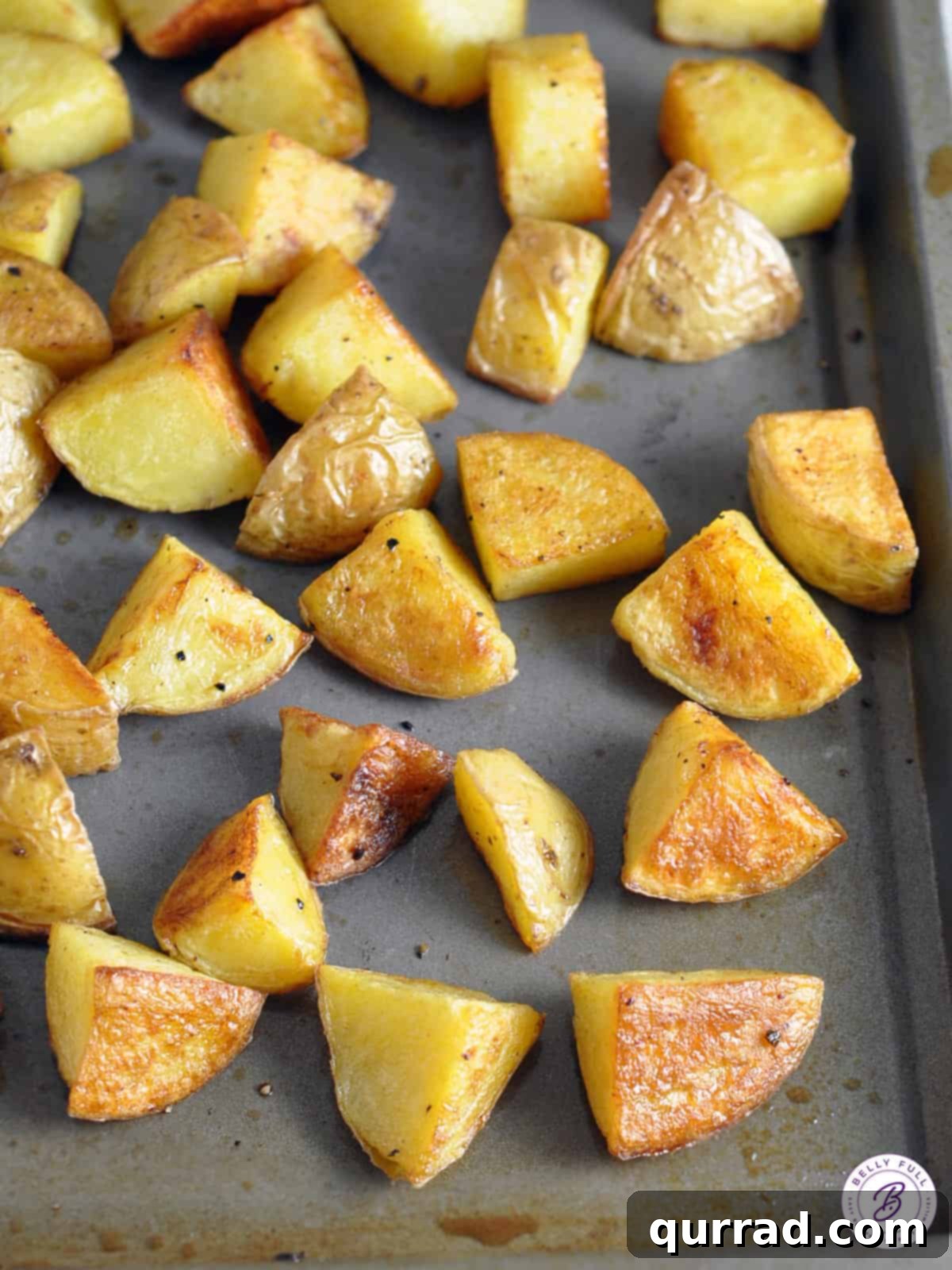
- Roast to Golden Perfection: Place the baking sheet in the preheated oven. Roast the potatoes for approximately 30-35 minutes, or until they are beautifully golden brown and crispy on the outside, and tender when pierced with a fork. Make sure to toss the potatoes a few times throughout the roasting process (about every 10-15 minutes) to ensure even browning and crispness on all sides.
- Prepare the Malt Vinegar Sauce: While the potatoes are roasting, combine the malt vinegar and granulated sugar in a small saucepan. Bring the mixture to a gentle simmer over medium heat. Continue to simmer, stirring occasionally, for about 15 minutes, or until the liquid has reduced by half and thickened into a syrupy glaze. The sauce should coat the back of a spoon.
- Serve and Enjoy: Once the potatoes are done, remove them from the oven. You can either drizzle the warm malt vinegar sauce directly over the roasted potatoes and toss to coat, or serve the sauce on the side for dipping. Both methods are delicious, allowing you to customize the intensity of the malt vinegar flavor. Serve immediately while hot and crispy for the best experience.
Expert Tips for the Best Crispy Malt Vinegar Potatoes
Achieving restaurant-quality crispy roasted potatoes with a perfect malt vinegar glaze is simple when you know a few tricks. These tips will ensure your potatoes are a resounding success every time.
- Cut Uniform 1-inch Cubes: Precision matters here. Cutting potatoes into pieces that are roughly the same size, ideally 1-inch cubes, ensures they cook evenly. Smaller pieces risk burning, while larger ones may not cook through or crisp up properly in the same amount of time.
- The Importance of Soaking: Don’t skip soaking the potato cubes in cold water for at least 30 minutes (or even longer, up to a few hours). This step draws out excess starch from the potatoes. Less starch means less sticking and a much crispier result once roasted. It’s a game-changer for texture.
- Dry Them Thoroughly: After soaking and draining, pat the potatoes completely dry with paper towels or a clean kitchen towel. Any residual moisture will create steam in the oven, preventing the potatoes from browning and crisping up. Dry potatoes are happy crispy potatoes!
- Single Layer on the Baking Sheet: For ultimate crispiness, arrange the potato cubes in a single layer on your baking sheet. Ensure there’s enough space between them for air to circulate. If potatoes are piled on top of each other, they will steam rather than roast, resulting in soft, unappealing spuds. Use two baking sheets if necessary to avoid overcrowding.
- High Heat is Your Friend: Roasting at a high temperature, specifically 425°F (220°C), is crucial. High heat promotes rapid browning and the Maillard reaction, which is responsible for the delicious crispy exterior and deep flavor.
- Toss Halfway Through: Gently toss the potatoes two to three times during the roasting process. This ensures all sides get exposed to the direct heat of the baking sheet and the oven, promoting even browning and crispness.
- Monitor Cook Time: The total roasting time of 30-35 minutes is a guideline. Potatoes are done when they are fork-tender on the inside and beautifully golden and crisp on the outside. Ovens can vary, so keep an eye on them towards the end of the cooking time.
- Don’t Forget the Sauce Reduction: When making the malt vinegar sauce, ensure you reduce it by half until it’s visibly syrupy. This concentration of flavor is what gives the potatoes their signature tang and glossy finish.
Proper Storage and Reheating for Leftovers
These malt vinegar roasted potatoes are truly at their best when served hot and fresh right from the oven, with their peak crispness. However, if you happen to have any leftovers, they can be stored and reheated.
- To Store Leftovers: Place any cooled leftover potatoes in an airtight container and store them in the refrigerator for up to 3 days. While they won’t retain their initial crispness as perfectly, they will still be flavorful.
- To Reheat: For the best results in regaining some crispness, reheat roasted potatoes in the oven. Spread them on a baking sheet and warm at 425 degrees Fahrenheit (220 degrees Celsius) until heated through and starting to crisp up again, typically 10-15 minutes. Alternatively, you can reheat them in a dry fry pan on the stovetop over medium-low heat, stirring occasionally, until warmed. Reheating in the microwave is also an option for convenience (45-60 seconds), but this method often results in steamed potatoes that lose their crisp texture, so it’s not our top recommendation for optimal enjoyment.
Serving Suggestions and Perfect Pairings
These Malt Vinegar Roasted Potatoes are incredibly versatile and can accompany a wide variety of main courses. Their tangy flavor makes them a fantastic counterpoint to rich and savory dishes. Serve them alongside classic battered fish for a deconstructed “fish and chips” experience. They also pair wonderfully with roasted chicken, grilled pork chops, hearty sausages, or even a classic steak. For a vegetarian option, they’re excellent with a portobello mushroom burger or a crisp garden salad.
Frequently Asked Questions (FAQ)
Here are answers to some common questions you might have about making these delicious malt vinegar roasted potatoes.
- Can I use a different type of vinegar? While malt vinegar is key to the distinctive “salt and vinegar chip” flavor, you could experiment with apple cider vinegar or white vinegar for a similar tangy effect, though the flavor profile will be different. Balsamic vinegar would be too sweet and dark for this recipe.
- Can I air fry these potatoes? Absolutely! Air frying is a great way to get extra crispy potatoes. Follow the same prep steps (soaking, drying, oiling), then air fry at 400°F (200°C) for 15-20 minutes, shaking the basket occasionally, until golden and crispy. Prepare the sauce separately and drizzle afterwards.
- What kind of potatoes work best? Yellow potatoes (like Yukon Golds) are highly recommended due to their creamy texture and good crisping ability. Russet potatoes also work well for a fluffier interior, and red potatoes can be used for a slightly waxier texture, though they may not get quite as crispy.
- Can I make the malt vinegar sauce ahead of time? Yes, you can prepare the reduced malt vinegar sauce up to 3 days in advance and store it in an airtight container in the refrigerator. Gently reheat it on the stovetop before drizzling over the hot potatoes.
- How can I make these potatoes spicier? If you enjoy a bit of heat, you can add a pinch of red pepper flakes when tossing the potatoes with oil, or incorporate a tiny dash of cayenne pepper into the malt vinegar sauce for a subtle kick.
More Delicious Potato Recipes to Try:
- Classic Potato Latkes
- Air Fryer Baked Potato
- Loaded Mashed Potato Cakes
- The Best Twice Baked Potatoes
- Cheesy Potato Casserole
We truly hope you adore this unique and easy recipe for Malt Vinegar Roasted Potatoes. If you try it, please consider leaving a review below to let us know what you think! And don’t forget to connect with Belly Full on TikTok, Facebook, Instagram, Pinterest, and YouTube for more delicious inspiration!
★
★
★
★
Malt Vinegar Roasted Potatoes
10
30
30
1 10
8
Pin
Ingredients
-
6 medium yellow potatoes, cut into 1-inch cubes -
2 tablespoons vegetable oil -
salt and pepper -
1 cup malt vinegar -
3 tablespoons granulated sugar
Instructions
-
In a large bowl, soak potatoes in cold water for 30 minutes. Drain and pat dry.
-
Preheat oven to 425 F. Toss potatoes with the oil on a baking sheet and spread in an even layer. Season with a sprinkle of salt and pepper.
-
Roast for 30-35 minutes, turning 2-3 times, until golden and crisp.
-
In the meantime, place vinegar and sugar in a small saucepan; simmer over medium heat for 15 minutes, or until liquid is reduced by half; stirring occasionally.
-
Serve malt sauce on the side for dipping, or drizzle over potatoes.
Nutrition
Carbohydrates: 20g |
Protein: 3g |
Fat: 3g |
Saturated Fat: 2g |
Sodium: 13mg |
Potassium: 526mg |
Fiber: 3g |
Sugar: 4g |
Vitamin C: 14.5mg |
Calcium: 40mg |
Iron: 4.1mg
Nutritional information given is an automatic calculation and can vary based on the exact products you use and any changes you make to the recipe. If these numbers are very important to you, I would recommend calculating them yourself.
Did you make this? Leave a rating below!