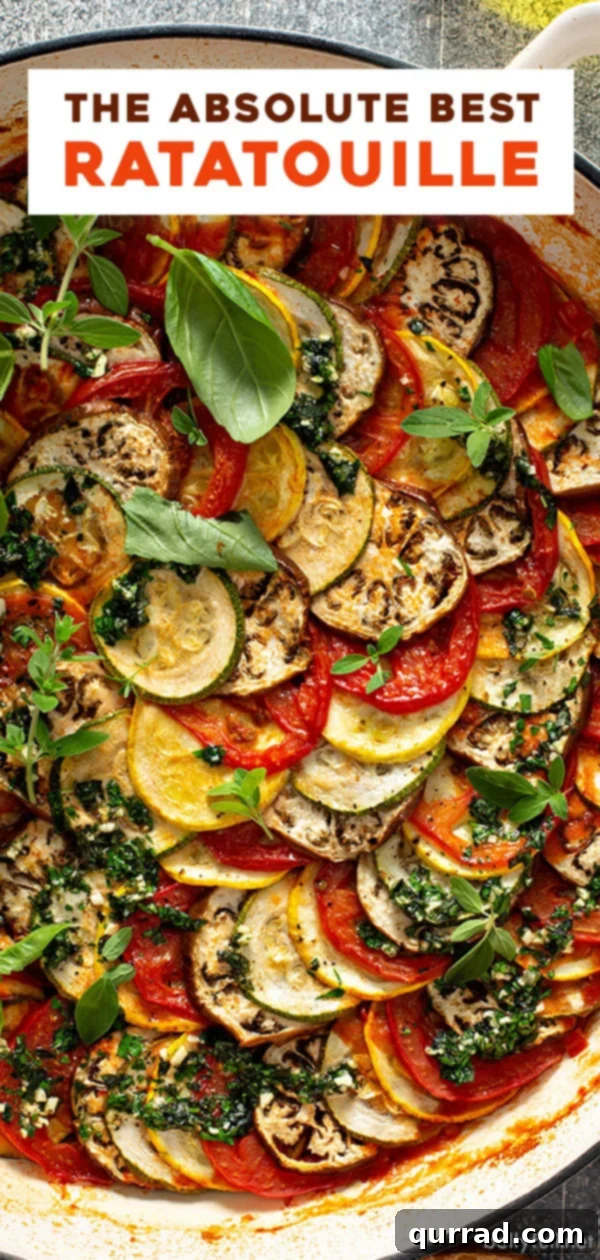
Embark on a culinary journey with Ratatouille, a vibrant celebration of fresh vegetables slow-roasted to perfection in a rich, aromatic tomato sauce. This classic French dish transforms simple garden produce into an extraordinary main course or a sublime side, offering a remarkably healthy, incredibly satisfying, and undeniably delicious experience.
For an elevated dining experience, consider pairing this delightful stew with crusty artisan bread or our personal favorite, fluffy popovers, perfect for soaking up every last drop of the delectable, savory juices!
While Ratatouille traditionally signifies the glorious culmination of summer’s garden bounty, its enduring appeal means it can be savored all year round. The common ingredients are readily available in most markets, regardless of the season. This makes it an ideal choice for any occasion, including holiday gatherings like Thanksgiving, where its make-ahead convenience and ability to accommodate diverse dietary needs are truly appreciated. It’s a dish that impresses with its elegant presentation yet remains wonderfully humble and rustic at heart, making it a beloved staple in many homes.
What Exactly is Ratatouille? A Deep Dive into a French Classic
Ratatouille (pronounced “ra-ta-TOO-ee”) is a quintessential vegetable stew originating from Provence, a region celebrated for its Mediterranean flavors in the south of France. At its core, it’s a hearty blend of garden-fresh vegetables like onions, bell peppers, zucchini, eggplant, yellow squash, and tomatoes, lovingly seasoned with garlic and fragrant herbs, all simmered together in a robust tomato base. Traditionally, in Provence, each vegetable is sautéed separately in olive oil until perfectly tender, a meticulous process that builds layers of flavor. Afterwards, all the components are combined and gently simmered, allowing the distinct tastes to meld into a harmonious whole. This method ensures each vegetable retains its unique texture and character.
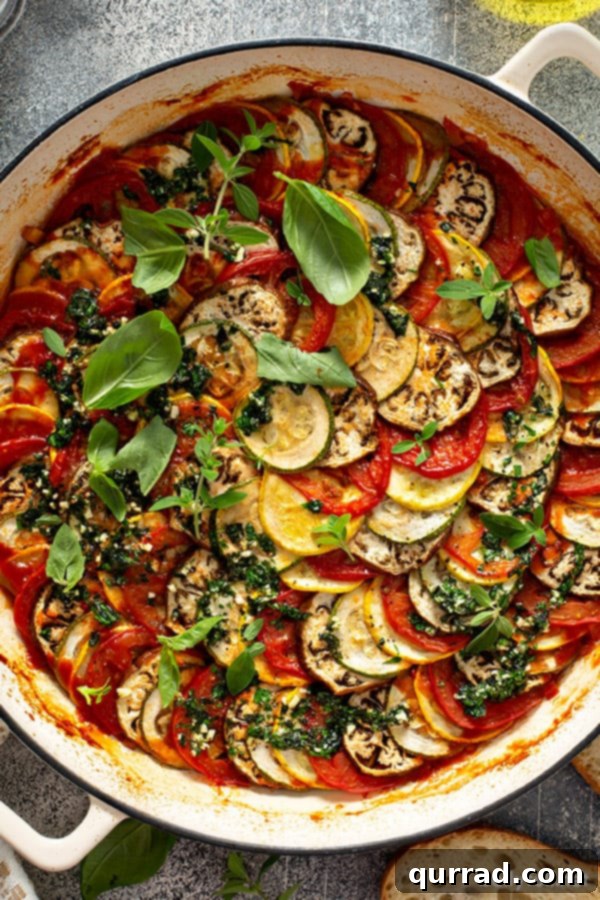
Our rendition, while respecting the traditional flavor profile, takes inspiration from the visually stunning method popularized by the beloved Ratatouille movie. This approach involves thinly slicing the vegetables to uniform size and thickness, then artfully arranging them in a spiral pattern before roasting them in the flavorful tomato sauce. The result is not only a remarkably delicious dish but also a breathtaking presentation that elevates the dining experience, making it perfect for special occasions or simply to add a touch of gourmet flair to a weeknight meal.
Why This Ratatouille Recipe Stands Out: Benefits Beyond Deliciousness
This Ratatouille recipe isn’t just a meal; it’s a testament to simple ingredients creating profound flavors and offering incredible versatility. Here’s why we consider it one of the best ways to enjoy this classic dish:
- A Gardener’s Dream: If you’re fortunate enough to have a home garden, Ratatouille is your ultimate solution for utilizing that overflowing summer harvest. It transforms an abundance of zucchini, eggplant, and tomatoes into a delectable creation, preventing waste and celebrating the freshness of your produce.
- Year-Round Enjoyment: Despite its summer origins, the beauty of Ratatouille lies in its accessibility. All the primary ingredients are readily available in grocery stores throughout the year, meaning you don’t have to wait for a specific season to enjoy this comforting and flavorful stew.
- Vegetables, Elevated: This dish has a magical quality that makes even the most reluctant vegetable eaters fall in love. The slow roasting process in a seasoned tomato sauce coaxes out incredible depths of flavor, transforming humble vegetables into something truly extraordinary. Even typically “less favorite” vegetables achieve a new level of deliciousness here.
- Perfect for Meal Prep: Ratatouille is an exceptional make-ahead dish. In fact, like many stews, its flavors intensify and meld even further overnight, making it taste even better the next day. This makes it an ideal choice for busy weeknights, meal prepping for the week, or holiday entertaining.
- A Dish for Every Diet: This particular Ratatouille recipe is a true crowd-pleaser, designed to cater to a wide array of dietary needs without compromising on flavor. It is naturally Vegan, Vegetarian, Gluten-Free, Paleo, Low Carb, Whole30 compliant, Keto-Friendly, and Dairy-Free. This remarkable versatility ensures that everyone at your table can enjoy a hearty, healthy, and incredibly satisfying meal together.
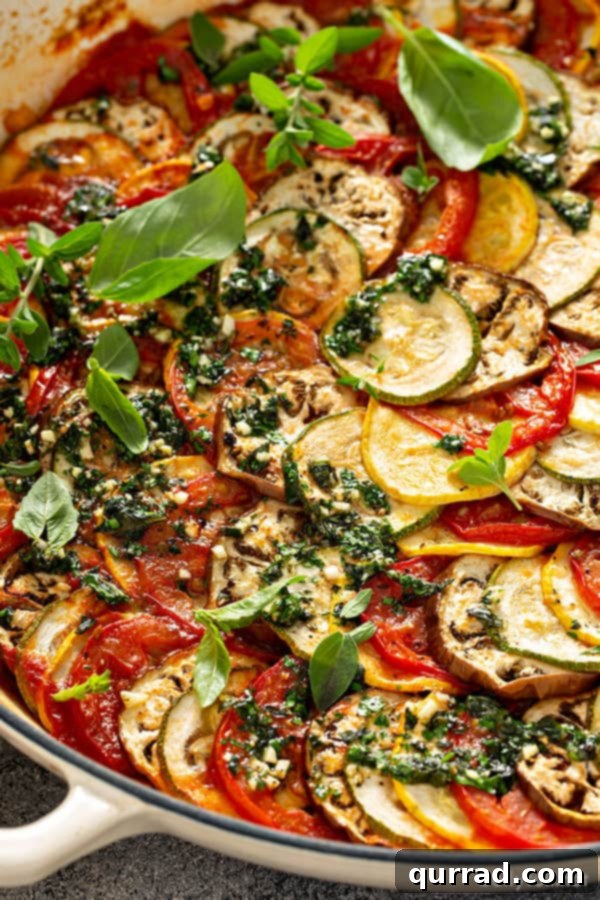
- Stunning Presentation: The artful arrangement of thinly sliced vegetables in a spiral pattern creates a visually appealing dish that is sure to impress your guests, making it suitable for both casual family dinners and elegant dinner parties.
- Nutrient-Rich Goodness: Packed with a variety of colorful vegetables, this Ratatouille is a powerhouse of vitamins, minerals, and antioxidants, contributing to a healthy and balanced diet.
Unveiling the Key Ingredients for Authentic Ratatouille
To truly capture the essence of a traditional Ratatouille, fresh, high-quality ingredients are paramount. Here’s a closer look at what goes into our recipe, along with some tips for selecting the best produce:
- Onion: Sweet onions are our top choice for their mild flavor that caramelizes beautifully, adding a foundational sweetness to the sauce without overpowering the other delicate vegetable flavors.
- Bell Pepper: We recommend a vibrant combination of red and yellow bell peppers for both their sweet notes and visually appealing colors. Orange bell peppers also work wonderfully. Green bell peppers, while acceptable, tend to be more bitter, so we personally prefer to avoid them in this particular recipe to maintain a sweeter profile.
- Zucchini and Yellow Squash: These summer squash varieties are central to Ratatouille. Their contrasting green and yellow hues create a beautiful visual dynamic in the finished dish. While we suggest using both for aesthetics, you can easily double up on one kind if you prefer or if only one is available.
- Eggplant: For the best results, Japanese eggplant is highly recommended. Unlike larger globe eggplants, Japanese varieties contain fewer seeds, resulting in a less bitter taste and a more tender, creamy flesh when cooked. Their slender, uniform shape also makes them ideal for slicing to match the other vegetables, ensuring even cooking.
- Tomatoes: Roma tomatoes are the go-to choice for their firm texture, fewer seeds, and lower water content compared to other varieties. This ensures your slices hold their shape better and don’t water down the rich sauce.
- Garlic: Fresh garlic is indispensable for that authentic, pungent aroma and deep flavor. There’s simply no substitute for freshly minced cloves when building the layers of taste in this dish.
- Herbs & Seasonings: A fresh medley of herbs is crucial. We use fresh parsley, basil, and thyme for their classic Mediterranean profiles. These herbs impart an incredible fragrance and depth. Of course, a generous seasoning of salt and freshly ground black pepper is essential to enhance all the flavors.
- Olive Oil: Extra-virgin olive oil is always the winner here. Its fruity, robust flavor not only helps sauté the vegetables but also serves as a key flavor component, infusing the entire dish with its rich, healthy essence.
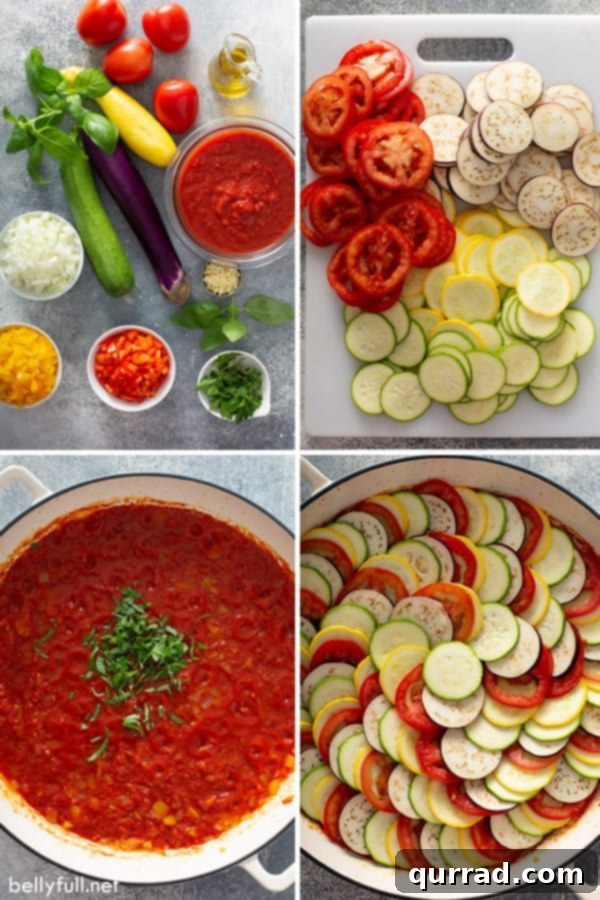
How to Prepare This Stunning Ratatouille: A Step-by-Step Guide
While this recipe might seem a little labor-intensive due to the slicing and arranging, each individual step is straightforward, and the magnificent end result is truly worth every moment spent. The visual appeal combined with the incredible flavor makes it a rewarding culinary endeavor.
- Preheat Oven & Prepare Vegetables: Begin by preheating your oven to 375°F (190°C). This ensures it’s ready once your vegetables are prepped. Dice the onion and bell peppers into small, uniform pieces. For the zucchini, yellow squash, eggplant, and Roma tomatoes, thinly slice them into uniform rounds, approximately 1/8-inch thick. Consistency in thickness is key for even cooking and beautiful presentation. Set these sliced vegetables aside.
- Craft the Flavorful Tomato Sauce: In a 12-inch cast iron skillet or any other oven-safe pan, heat the extra-virgin olive oil over medium-high heat. Add the diced onion, minced garlic, and diced bell peppers. Sauté these aromatics gently for about 10 minutes until they become wonderfully soft and fragrant. Season generously with salt and pepper to taste. Next, pour in the crushed tomatoes and stir thoroughly to ensure all the ingredients are well incorporated. Remove the pan from the heat and stir in the chopped fresh basil. Smooth the surface of the sauce with a spatula, creating a bed for your sliced vegetables.
- Artfully Arrange the Sliced Vegetables: This is where the magic happens! Take your thinly sliced eggplant, tomatoes, squash, and zucchini. Begin arranging them in an alternating pattern (e.g., eggplant, tomato, yellow squash, zucchini) on top of the tomato sauce. Start from the outer edge of the pan and work your way inward, creating a beautiful spiral design. Ensure the slices are packed in tightly to maintain their shape during baking. Once arranged, season the top with a final sprinkle of salt and pepper.
- Cover and Bake to Perfection: Cover the skillet tightly with aluminum foil. Place it in your preheated oven and bake for 40 minutes. This initial covered baking period allows the vegetables to steam and tenderize beautifully in the sauce. After 40 minutes, carefully remove the foil and continue baking for another 20 minutes, or until the vegetables are perfectly tender and slightly caramelized on top.
- Prepare the Fresh Herb Seasoning: While your Ratatouille is baking, prepare the vibrant herb seasoning. In a small bowl, whisk together the chopped fresh basil, chopped fresh parsley, chopped fresh thyme, minced garlic, a pinch of salt and pepper, and extra-virgin olive oil. This fresh mixture will be drizzled over the hot Ratatouille, adding a burst of fresh flavor and aroma.
- Serve and Savor Every Bite: Once baked to perfection, remove the Ratatouille from the oven. Drizzle the freshly prepared herb seasoning generously over the top. Serve immediately, perhaps with some crusty bread to mop up all that glorious, savory sauce. Prepare to be delighted by this exquisite medley of flavors and textures!
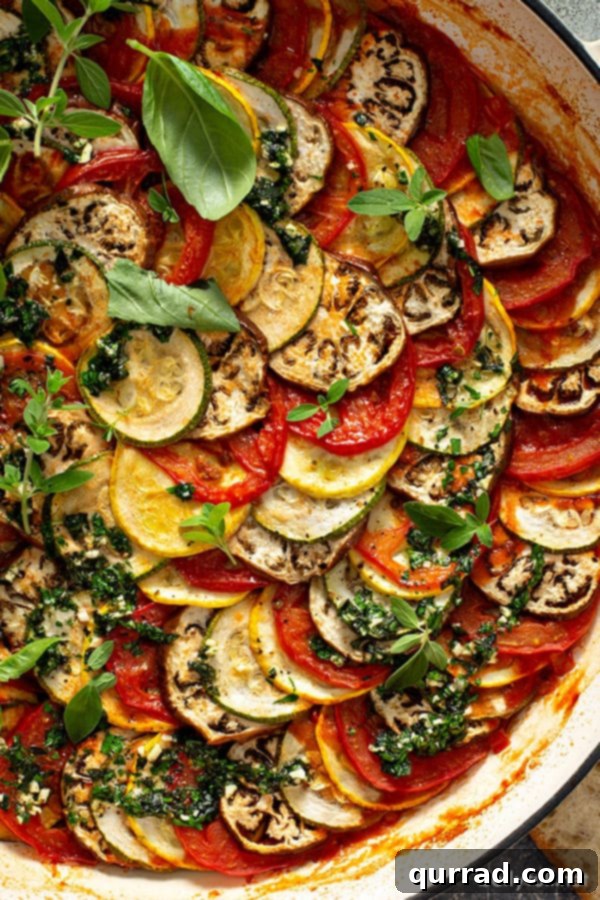
Essential Equipment for Crafting Your Ratatouille
Creating this Ratatouille doesn’t require an arsenal of specialized kitchen tools, as most items are likely already in your kitchen. You’ll primarily need a sharp knife, a cutting board, a small bowl and whisk for the herb seasoning, a wooden spoon for stirring, and a reliable 12-inch cast iron pan or another oven-safe skillet. However, for those aiming for truly restaurant-quality presentation and ultra-efficient prep, we highly recommend a mandoline slicer. If you already own one, this is the perfect opportunity to use it. If not, consider investing in a quality model like the “Grate and Slice Set” (though we’re removing any direct affiliate links here). A mandoline makes the process of slicing vegetables incredibly easy, fast, and ensures consistent thickness for all your ingredients. This uniformity is crucial not only for the beautiful spiral arrangement but also for guaranteeing that all the vegetables cook at the same rate, resulting in perfectly tender bites every time.
Storing and Enjoying Leftover Ratatouille
One of the many charms of Ratatouille is its ability to taste even better the day after it’s made. The flavors have ample time to deepen and meld, creating a more complex and satisfying experience. Proper storage ensures you can enjoy this delicious dish for days to come:
Refrigerating Leftovers: Allow the Ratatouille to cool completely to room temperature before transferring it to an airtight container. Store it in the refrigerator for up to 4 days. When ready to reheat, you can gently warm it on the stovetop over low heat, or in the microwave, until heated through. Add a splash of vegetable broth or water if it appears too thick.
Freezing Ratatouille: While freezing is an option, it’s not always our preferred method for Ratatouille. The high water content in many of the vegetables can cause them to break down and become a bit mushy once thawed, altering the texture. However, if you plan to use it in a blended sauce, soup, or as a base where texture is less critical, then freezing works fine. To freeze, allow the dish to cool completely. Transfer it to an airtight, freezer-safe container or freezer bags, removing as much air as possible to prevent freezer burn. It can be stored in the freezer for up to 2 months. Thaw overnight in the refrigerator before reheating.
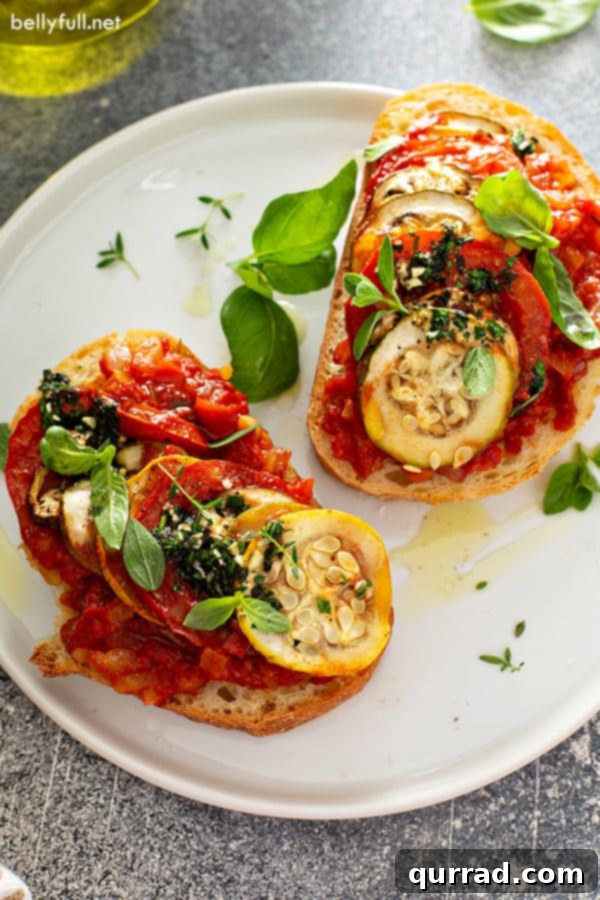
Creative Ways to Serve Your Ratatouille
Given its vibrant tomato-based sauce, aromatic herbs, and medley of roasted vegetables, Ratatouille is incredibly versatile and pairs wonderfully with a wide variety of dishes. Here are some delicious serving suggestions:
- With Bread: The most classic pairing! Serve it over crusty French bread, with our homemade popovers, easy skillet cornbread, or a comforting creamy cornbread casserole. The bread is essential for soaking up every last bit of the savory sauce.
- As a Main Course: Enjoy Ratatouille on its own as a light yet satisfying vegetarian or vegan meal. It’s surprisingly filling and packed with nutrients.
- Over Grains: Serve it over fluffy couscous, quinoa, brown rice, or even pasta for a more substantial meal. The grains absorb the rich flavors beautifully.
- With Protein: Ratatouille makes an excellent side dish for grilled or roasted meats such as chicken, lamb, or beef. It also complements baked fish or seared scallops beautifully, adding a fresh, Mediterranean touch.
- With Eggs: For a delightful brunch or light dinner, serve warm Ratatouille with a poached or fried egg on top. The runny yolk adds an extra layer of richness.
- As an Appetizer or Bruschetta Topping: Spoon chilled Ratatouille onto toasted baguette slices for a sophisticated and flavorful appetizer.
- In Sandwiches or Wraps: Use leftover Ratatouille as a flavorful filling for sandwiches, wraps, or even savory crepes.
Just thinking about this magnificent dish makes my mouth water, even after having some earlier today! It truly holds a special place among my most cherished recipes. This Ratatouille recipe is so incredibly delicious; we are confident you will fall in love with it just as much as we have!
More Delicious Vegetable Side Dishes to Explore
- Creamy Best Mashed Potatoes
- Savory Mushroom Rice
- Perfectly Oven Roasted Carrots
- Simple Baked Sweet Potato
- Flavorful Roasted Beets
We sincerely hope you cherish this delightful and straightforward Ratatouille recipe. Please consider leaving a review below to share your experience! Don’t forget to connect with Belly Full onFacebook,Instagram,Pinterest, and YouTube for more delicious recipes and cooking inspiration!
Classic Roasted Ratatouille
Prep Time: 20 mins
Cook Time: 1 hr
Total Time: 1 hr 20 mins
Servings: 6
This Ratatouille recipe showcases a bounty of fresh, colorful vegetables roasted to tender perfection in a rich, seasoned tomato sauce. It’s a healthy, filling, and absolutely delicious side or main dish that’s perfect for any occasion.
Ingredients
For the Spiraled Vegetables
- 1 Japanese eggplant, ends trimmed, thinly sliced (approx. 1/8-inch)
- 1 zucchini, ends trimmed, thinly sliced (approx. 1/8-inch)
- 1 yellow squash, ends trimmed, thinly sliced (approx. 1/8-inch)
- 4 Roma tomatoes, ends trimmed, thinly sliced (approx. 1/8-inch)
For the Tomato Sauce
- 2 tablespoons extra-virgin olive oil
- 1 sweet onion, diced
- 1 red bell pepper, seeds and ribs removed, diced small
- 1 yellow bell pepper, seeds and ribs removed, diced small
- 4 cloves garlic, minced
- Salt and freshly ground black pepper, to taste
- 1 (28 ounce) can crushed tomatoes
- 6 leaves fresh basil, chopped
For the Herb Seasoning
- 8 leaves fresh basil, chopped
- 2 tablespoons chopped fresh parsley
- 2 teaspoons chopped fresh thyme
- 1 clove garlic, minced
- Salt and freshly ground black pepper, to taste
- 3 tablespoons extra-virgin olive oil
Instructions
- Preheat your oven to 375°F (190°C).
- Prepare the spiraled vegetables: Thinly slice the eggplant, zucchini, yellow squash, and Roma tomatoes into uniform rounds, about 1/8-inch thick. Set them aside.
- Make the sauce: Heat the 2 tablespoons of olive oil in a 12-inch cast iron or other oven-safe pan over medium-high heat. Sauté the diced sweet onion, minced garlic, red bell pepper, and yellow bell pepper until they are soft and fragrant, about 10 minutes. Season with salt and pepper. Stir in the crushed tomatoes until well combined. Remove the pan from the heat and stir in the 6 chopped basil leaves. Smooth the surface of the sauce with a spatula.
- Arrange the sliced vegetables: Artfully arrange the thinly sliced vegetables on top of the sauce in an alternating pattern (e.g., eggplant, tomato, yellow squash, zucchini). Start from the outer edge of the pan and create a spiral pattern towards the center, packing the vegetables in tightly. Season the top of the arranged vegetables with a sprinkle of salt and pepper.
- Cover and Bake: Cover the skillet tightly with aluminum foil and bake for 40 minutes. After 40 minutes, remove the foil and continue baking for another 20 minutes, or until the vegetables are tender.
- Prepare the herb seasoning: While the Ratatouille bakes, combine the ingredients for the herb seasoning in a small bowl: 8 chopped basil leaves, 2 tablespoons chopped fresh parsley, 2 teaspoons chopped fresh thyme, 1 minced garlic clove, salt, pepper, and 3 tablespoons extra-virgin olive oil. Whisk together until well combined.
- Serve: Once the Ratatouille is cooked and the vegetables are tender, remove it from the oven. Drizzle the freshly prepared herb seasoning over the top. Serve hot on its own, or with some crusty bread to soak up the delicious sauce.
Nutrition Facts (Approximate per serving)
Calories: 207.41 kcal | Carbohydrates: 23.3g | Protein: 4.8g | Fat: 12.54g | Saturated Fat: 1.75g | Sodium: 187.83mg | Potassium: 907.65mg | Fiber: 6.1g | Sugar: 13.42g | Vitamin A: 1634.26IU | Vitamin C: 98.05mg | Calcium: 84.01mg | Iron: 2.75mg
Nutritional information provided is an automatic calculation and may vary based on specific product brands and any modifications made to the recipe. For precise dietary needs, it is recommended to calculate these values independently.