
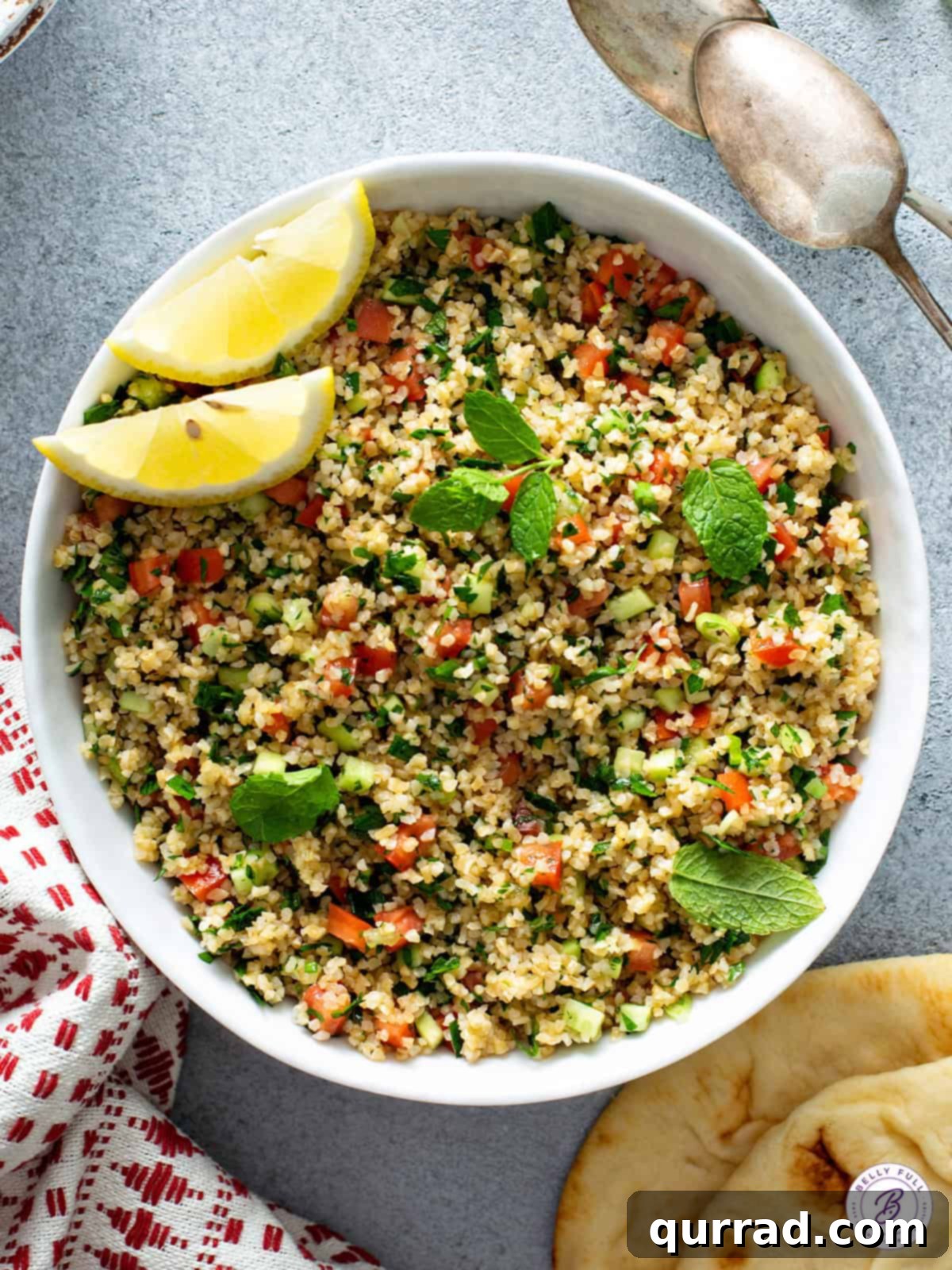
Welcome to the ultimate guide for creating the most refreshing and authentic Tabbouleh salad! This vibrant Middle Eastern dish is a celebration of fresh flavors and simple ingredients, making it a perfect healthy addition to any meal. Our easy Tabbouleh recipe combines fine bulgur wheat, juicy tomatoes, crisp cucumbers, a generous amount of fresh parsley and mint, all brought together with a zesty lemon juice and olive oil dressing. It’s light, nutritious, wonderfully low in calories, and bursts with bright, fresh tastes that are simply irresistible. Whether you’re planning a summer barbecue, a potluck, or just seeking a delightful side dish for a weeknight dinner, this classic Tabbouleh will quickly become a cherished recipe in your kitchen.
5 STAR REVIEW
“Made this for a bridal shower and everyone loved it!” – Sandy
Unlock the Flavors of the Middle East: Your Easy Tabbouleh Recipe
There’s something truly special about the simplicity and freshness of Tabbouleh. I remember a time when my sister and I would regularly meet for lunch at a charming Middle Eastern restaurant. Without fail, I’d find myself indulging in generous portions of creamy hummus, warm naan, and, of course, a mountain of Tabbouleh. The memory alone makes my mouth water! Since that restaurant isn’t always within reach, I’ve perfected making these beloved dishes at home, and this homemade Tabbouleh recipe brings that authentic taste right into my kitchen.
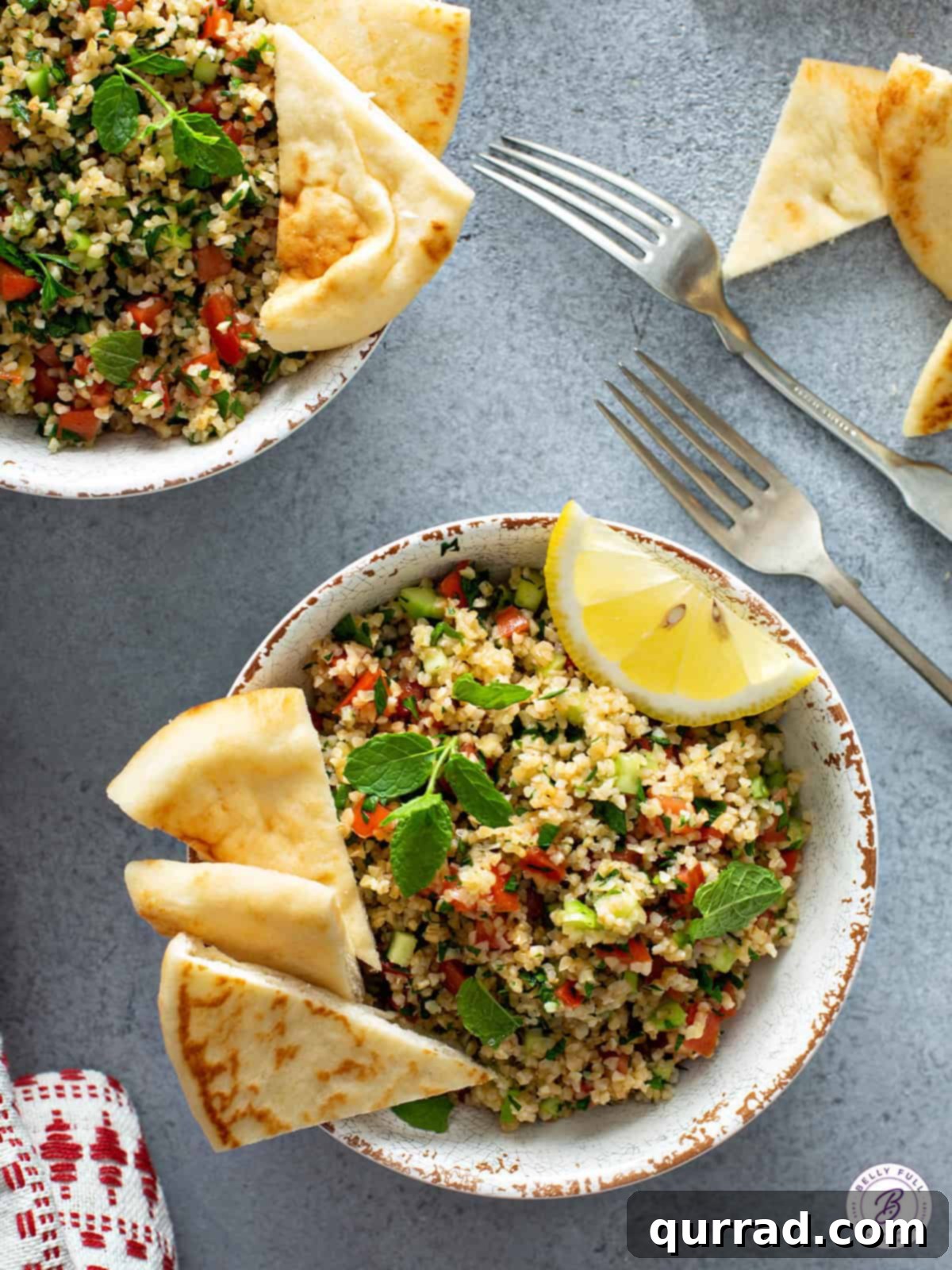
Tabbouleh, sometimes spelled Tabouli, is more than just a salad; it’s a staple of Middle Eastern cuisine, renowned for its incredible balance of flavors and textures. Traditionally, it’s a finely chopped salad centered around bulgur wheat, abundant fresh parsley, and mint, complemented by diced tomatoes, cucumbers, and scallions, all dressed in a bright concoction of olive oil and fresh lemon juice. This isn’t just a side dish; it’s a vibrant, healthy, and satisfying culinary experience, packed with wholesome ingredients.
What is Tabbouleh? A Brief History and Cultural Significance
Tabbouleh traces its roots back to the mountains of Syria and Lebanon, where it has been a beloved dish for centuries. Originally, it was a peasant dish, making use of readily available fresh herbs and grains. The word “Tabbouleh” itself comes from the Arabic word “taabil,” meaning “to season.” Over time, it evolved into the iconic salad we know today, a cornerstone of mezze platters and family meals across the Levant and beyond.
What makes Tabbouleh truly unique is its emphasis on fresh herbs, particularly parsley, which isn’t just a garnish here but the star ingredient. The bulgur wheat acts as a subtle binder and provides a delightful chewiness, absorbing the lively lemon-olive oil dressing. This focus on fresh, unprocessed ingredients aligns perfectly with modern desires for healthy, plant-based eating, making Tabbouleh not just culturally rich but also incredibly relevant today.
Why You’ll Love This Authentic Tabbouleh Salad
If you’re looking for a dish that delivers on flavor, nutrition, and ease, this authentic Tabbouleh salad recipe is for you. Here’s why it stands out:
- Incredibly Fresh & Flavorful: The combination of crisp vegetables, aromatic herbs, and tangy lemon juice creates an explosion of fresh taste in every bite. It’s a bright, invigorating salad that awakens the palate.
- Healthy & Wholesome: Loaded with fresh produce, fiber-rich bulgur, and heart-healthy olive oil, Tabbouleh is a powerhouse of nutrients. It’s naturally low in calories and fat, making it an excellent choice for a balanced diet.
- Diet-Friendly: This recipe is naturally vegetarian and easily adaptable to be vegan (just use water instead of vegetable broth) and gluten-free (by substituting bulgur with quinoa). It’s a fantastic plant-based meal option.
- Simple to Make: With straightforward steps and minimal cooking, Tabbouleh is perfect for both seasoned cooks and beginners. Most of the prep involves chopping, and the bulgur simply soaks.
- Versatile & Adaptable: Enjoy it on its own as a light meal, serve it as a side dish, stuff it into pita bread, or use it as a fresh topping for grilled meats and fish. Its versatility means it fits seamlessly into many dining occasions.
- Perfect for Any Occasion: From casual summer potlucks and picnics to elegant dinner parties, Tabbouleh is always a crowd-pleaser. Its make-ahead friendly nature makes entertaining a breeze.
Expert Tips for Perfect Tabbouleh & Delicious Variations
Achieving the perfect Tabbouleh is all about the right technique and fresh ingredients. Here are some invaluable tips and exciting variations to elevate your salad:
- Mastering the Bulgur: This recipe specifically calls for fine bulgur wheat, which is ideal for Tabbouleh as it requires only soaking in hot water for about 30 minutes until tender. If you happen to be using medium or coarse bulgur, be aware that it will need a longer soaking time or even a brief boil. Always follow the package directions for these coarser varieties to ensure it’s perfectly cooked and not mushy.
- Choosing the Best Cucumbers: For optimal texture and less excess water, English or Persian cucumbers are highly recommended. These varieties have fewer seeds and a thinner skin, which means less moisture and no need for peeling. If you’re using common slicing cucumbers, remember to scoop out the seeds before chopping to prevent a watery salad.
- Alternative Tomato Choices: Ripe, firm Roma tomatoes are fantastic for Tabbouleh due to their lower water content and robust flavor. However, if ripe fresh tomatoes are out of season or unavailable, sun-dried tomatoes can be a delightful substitute. They will introduce a different, sweeter, and more intense flavor profile to the dish, adding a unique twist.
- The Art of Fine Chopping: The hallmark of authentic Tabbouleh is its uniformly fine chop. Take the time to chop all your vegetables and herbs by hand with a sharp knife. This ensures the best texture, prevents bruising of the herbs, and allows the flavors to meld beautifully. Avoid using a food processor, as it can over-process the ingredients, turning them into a paste and releasing too much moisture, leading to a less desirable consistency.
- Don’t Skimp on the Olive Oil: It might be tempting to reduce the amount of olive oil for calorie reasons, but resist the urge! Olive oil is crucial for the salad’s luscious texture and rich flavor. It binds the ingredients, keeps the bulgur from being dry, and adds a healthful, Mediterranean touch. Use a good quality extra virgin olive oil for the best results.
- Make it Vegan: The traditional recipe is naturally vegan if you simply swap vegetable broth for water when soaking the bulgur. This minor adjustment ensures your Tabbouleh is suitable for a plant-based diet without sacrificing flavor.
- Embrace a Gluten-Free Option: For those with gluten sensitivities, Tabbouleh can easily be made gluten-free by substituting bulgur wheat with cooked quinoa. Use the same amount of cooked quinoa as you would soaked bulgur. Quinoa provides a similar texture and absorbs the dressing beautifully, making for a delicious and accessible alternative.
- Add More Vegetables: Feel free to experiment with other finely diced vegetables like bell peppers (red, yellow, or orange for color and sweetness), red onion (for a sharper bite), or even grated carrots for extra crunch and nutrients.
- Introduce Cheese: For a non-vegan variation, crumbled feta cheese can add a salty, tangy dimension that complements the fresh herbs and vegetables wonderfully.
- Spice it Up: A pinch of ground allspice or a touch of cayenne pepper can add a subtle warmth and depth to your Tabbouleh, enhancing its Middle Eastern character.
5 from 4 reviews
Tabbouleh: A Classic Middle Eastern Salad
20 mins
30 mins
50 mins
8
Pin Recipe
Print Recipe
This easy Tabbouleh salad recipe is light, healthy, low calorie, and so simple to prepare. With wonderful and bright fresh flavors, it’s great for summer potlucks or enjoyed year-round on its own or as a refreshing side.
See below the recipe card for step-by-step images to guide you through the process.
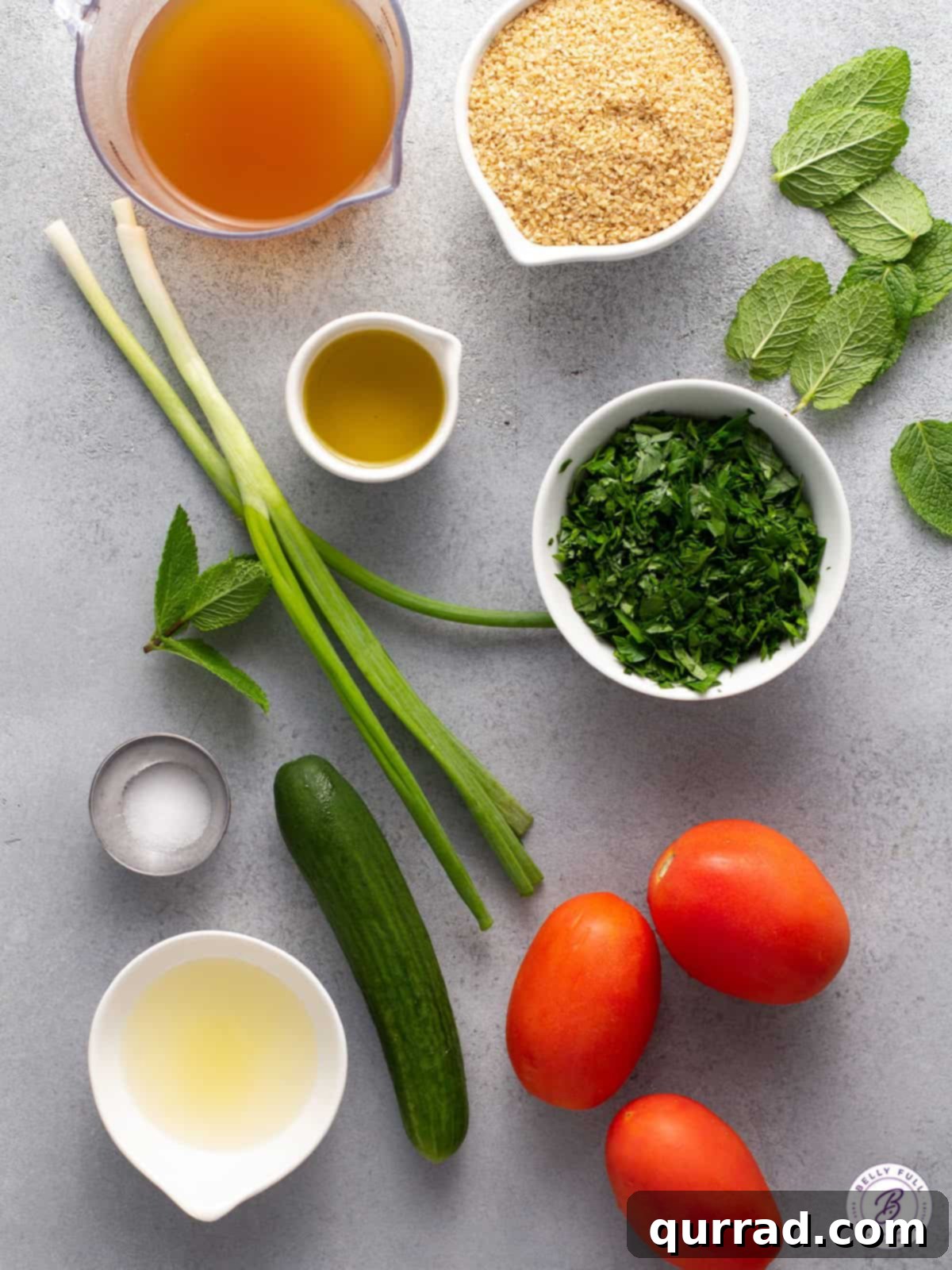
Ingredients
- 1 cup fine bulgur wheat
- 1 cup vegetable broth (or water for a vegan dish)
- 1 tsp salt, divided
- ¼ cup olive oil
- 3 tbsp lemon juice
- 1 cup fresh parsley, flat leaf or Italian, very finely chopped
- ½ cup loosely packed fresh mint, finely chopped (about 6 mint leaves)
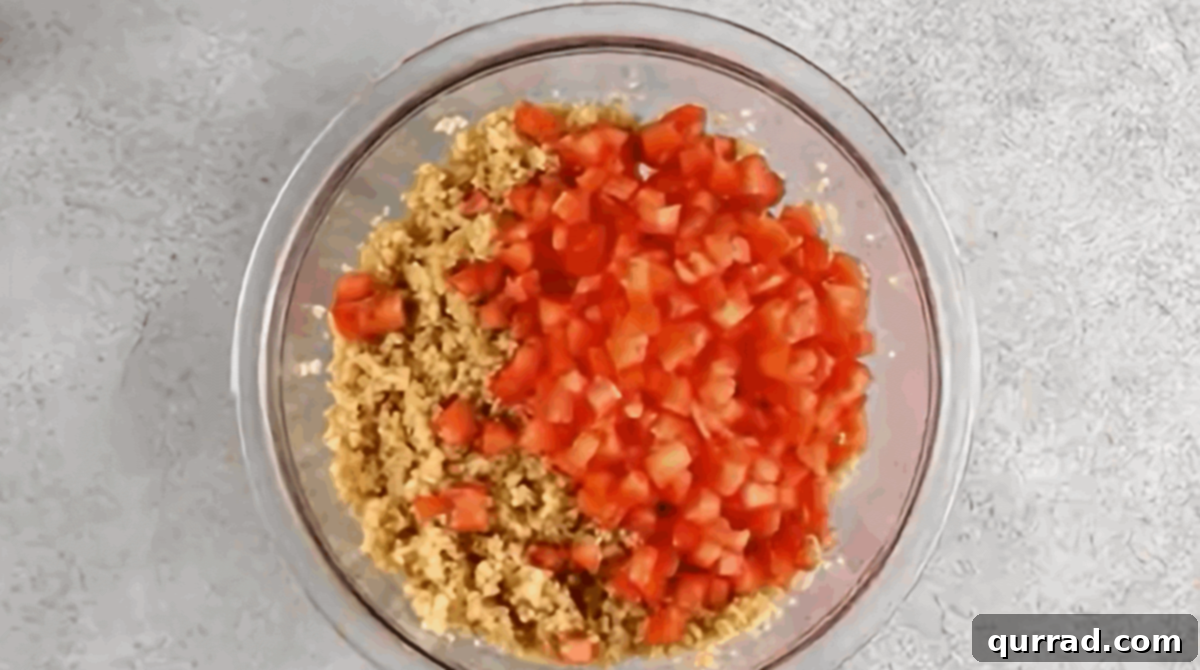
- 3 firm Roma tomatoes, seeded and finely diced, excess liquid drained (1 cup)
- 1 small English cucumber, peeled, seeded and finely diced, excess liquid drained (1 cup)
- 2 whole scallions, greens and white parts, finely diced
- Pita bread and/or romaine lettuce leaves, for serving (completely optional)
Instructions
- Place the bulgur in a medium-sized bowl.
- In a small saucepan (or microwave-safe bowl) bring the vegetable stock and ½ teaspoon of salt to a boil, then pour it over the bulgur. Let sit for 30 minutes. Drain any liquid that hasn’t evaporated.
- Add the olive oil and lemon juice to the bulgur and mix well.
- Add in the rest of the other ingredients, and the remaining ½ teaspoon salt; mix to combine. (Taste and adjust seasoning, if necessary—add a little more lemon juice for zing, or salt for more overall flavor.)
- You can eat it immediately, but it’s much better if you let it rest in the refrigerator for at least 30 minutes—and it’s even more amazing the next day.
Nutrition
Calories: 133kcal | Carbohydrates: 13g | Protein: 3g | Fat: 7g | Saturated Fat: 1g | Polyunsaturated Fat: 1g | Monounsaturated Fat: 5g | Sodium: 417mg | Potassium: 192mg | Fiber: 4g | Sugar: 1g | Vitamin A: 861IU | Vitamin C: 14mg | Calcium: 30mg | Iron: 1mg
Nutritional information is an automatic calculation and can vary based on the exact products you use and any changes you make to the recipe. If these numbers are very important to you, I would recommend calculating them yourself.
How to Make Tabbouleh: A Step-by-Step Visual Guide
Creating this fresh Middle Eastern Tabbouleh salad is a breeze with our detailed step-by-step instructions. Follow along with these visual cues to ensure your salad turns out perfectly vibrant and delicious every time.
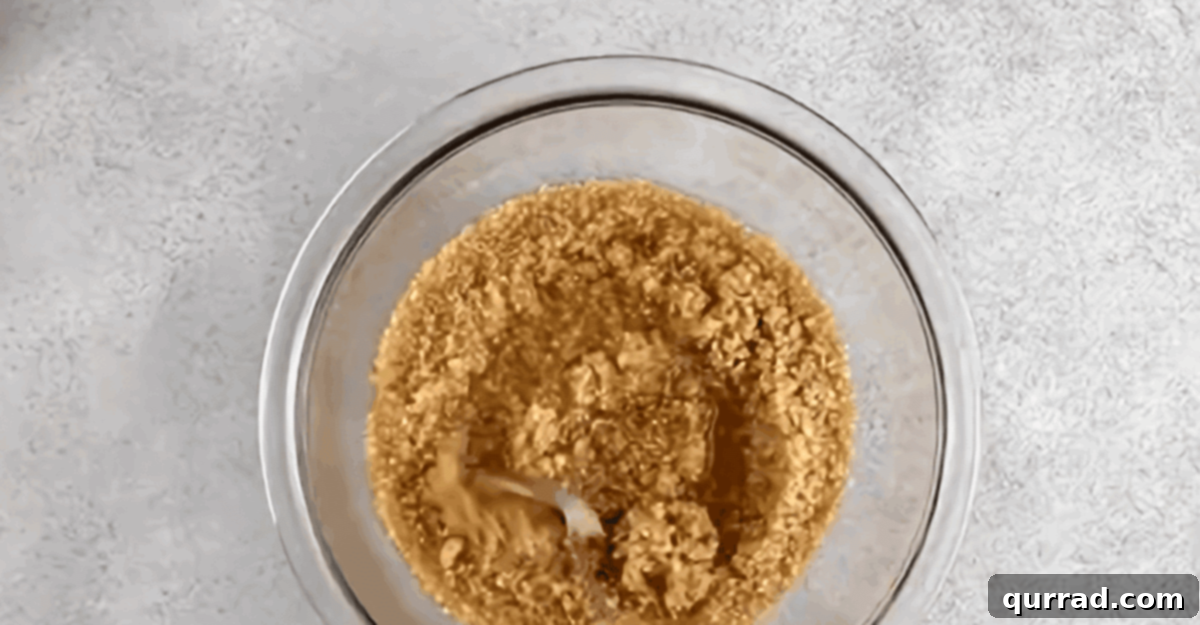
Step 3: Add Oil and Lemon Juice. After the bulgur has soaked and been drained, add ¼ cup of good quality olive oil and 3 tablespoons of fresh lemon juice. Stir thoroughly to ensure the bulgur is well coated, infusing it with bright, rich flavors.
How to Store Tabbouleh for Maximum Freshness
One of the many benefits of Tabbouleh is how well it stores, often tasting even better as the flavors have more time to meld. After preparing your salad, it’s highly recommended to cover it tightly and refrigerate for at least 30 minutes before serving. This chilling time allows the bulgur to fully absorb the dressing and the fresh herb flavors to intensify. Leftover Tabbouleh will keep beautifully in an airtight container in the refrigerator for up to 3 days. Beyond that, the fresh herbs might start to lose their vibrant green color and crispness, but it will still be edible.
What to Serve With Tabbouleh: Perfect Pairings
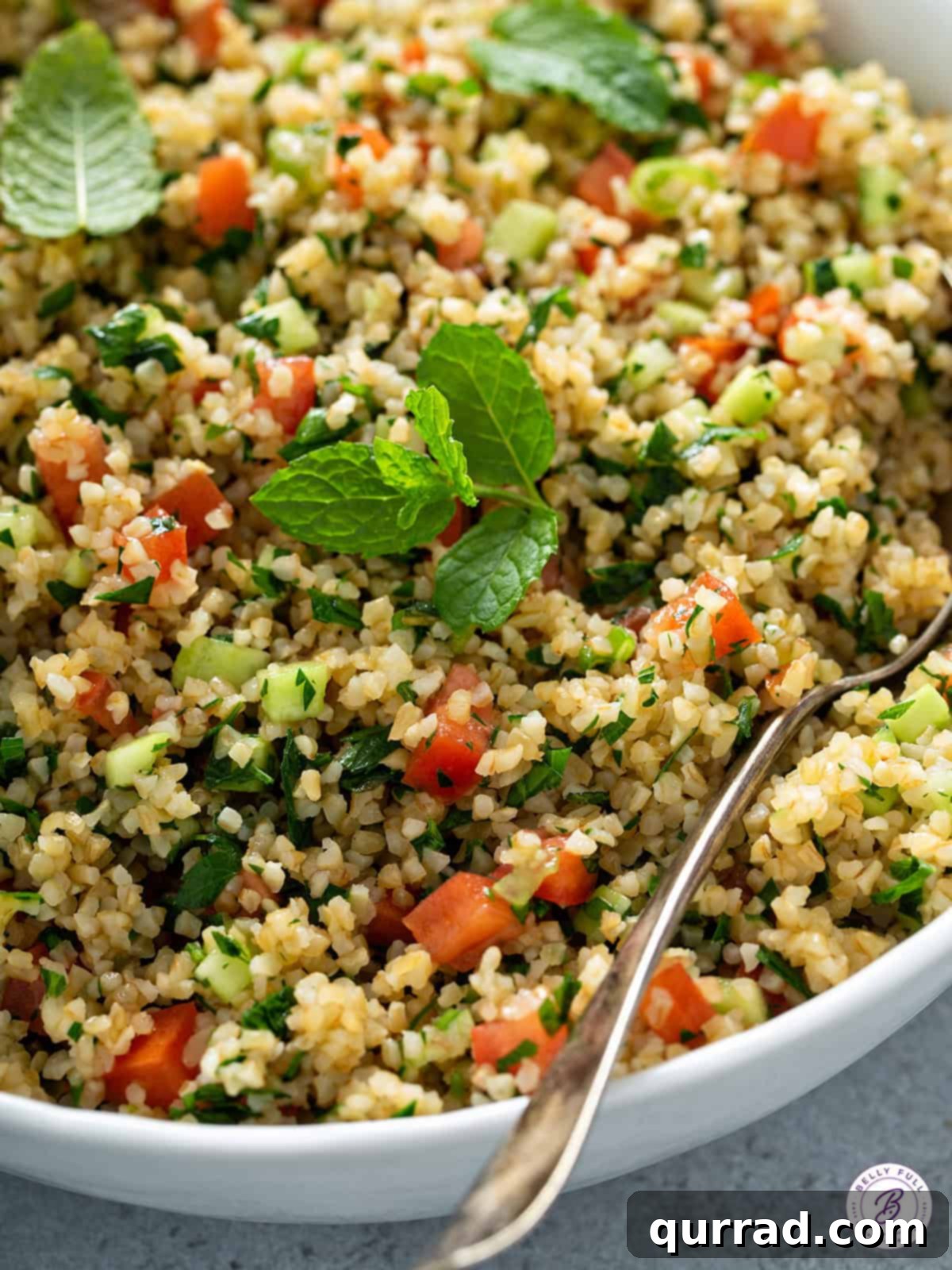
Tabbouleh is incredibly versatile and can be enjoyed in numerous ways. Its refreshing quality makes it a fantastic accompaniment to a wide array of dishes, or even a satisfying light meal on its own. Here are some of our favorite ways to serve this classic Middle Eastern salad:
- As a Side Dish: It’s the quintessential side for virtually any grilled meat or fish. Pair it with succulent grilled chicken breasts, flavorful grilled steak, or grilled lamb skewers for a complete and balanced meal.
- Part of a Mezze Platter: Serve it alongside other Mediterranean delights like creamy hummus, smoky baba ghanoush, crispy falafel, and fresh pita bread or naan. This creates a delightful spread perfect for sharing.
- Light Lunch or Appetizer: Enjoy a generous scoop of Tabbouleh on its own for a healthy and satisfying lunch. You can also serve it as a refreshing appetizer, perhaps with a sprinkle of crumbled feta on top.
- With Wraps and Lettuce Cups: For a low-carb option, scoop Tabbouleh into crisp romaine lettuce leaves for a fresh and crunchy bite. It’s also delicious stuffed into warm pita bread with a drizzle of tahini.
- Alongside Other Mediterranean Staples: It pairs wonderfully with dishes like dolma (stuffed grape leaves), kebabs, or roasted vegetables.
- As a Topping: Use Tabbouleh as a vibrant topping for grain bowls, salads, or even alongside scrambled eggs for a Mediterranean-inspired breakfast.
Frequently Asked Questions About Tabbouleh
Here are some common questions people ask about making and enjoying Tabbouleh:
What kind of bulgur wheat should I use for Tabbouleh?
For authentic Tabbouleh, fine bulgur wheat (also known as #1 fine grain) is highly recommended. It has a delicate texture and only requires soaking in hot water, making it perfect for this no-cook grain salad. Coarser bulgur can be used but will require longer soaking or a brief boil.
Can I make Tabbouleh ahead of time?
Absolutely! Tabbouleh is a fantastic make-ahead dish. In fact, many find its flavors improve after resting in the refrigerator for a few hours or even overnight. This allows the ingredients to meld and the bulgur to fully absorb the dressing. It stays fresh and delicious for up to 3 days when stored in an airtight container in the fridge.
What’s the difference between Tabbouleh and other grain salads?
The defining characteristic of Tabbouleh is its high ratio of fresh herbs (primarily parsley and mint) to bulgur wheat, and its signature lemon-olive oil dressing. While other grain salads might feature various vegetables and grains, Tabbouleh uniquely prioritizes the fresh, finely chopped herbs as the main component.
Can Tabbouleh be made gluten-free?
Yes, it can! To make this Tabbouleh recipe gluten-free, simply substitute the bulgur wheat with an equal amount of cooked quinoa. Quinoa offers a similar fine texture and readily absorbs the dressing, creating a delicious gluten-free alternative that is just as satisfying.
What kind of parsley is best for Tabbouleh?
Flat-leaf parsley (also known as Italian parsley) is generally preferred for Tabbouleh. It has a more robust flavor and a less curly texture than curly parsley, making it easier to chop finely. However, if curly parsley is all you have, it will still work well.
How finely should I chop the ingredients?
The key to authentic Tabbouleh is very finely chopped ingredients. Aim for a consistent, small dice for the tomatoes, cucumbers, and scallions, and finely minced parsley and mint. This ensures all the flavors are evenly distributed and contributes to the salad’s signature texture. Avoid using a food processor, as it can crush the herbs and make the vegetables watery.
More Healthy Salads to Explore
If you love the freshness and vibrancy of Tabbouleh, you’ll surely enjoy these other healthy and delicious salad recipes:
- Classic Chicken Salad
- Deconstructed Big Mac Salad
- Refreshing Cauliflower Salad
- Hearty Three Bean Salad
- Sweet and Savory Watermelon Salad
Did you try this amazing Tabbouleh recipe? We’d love to hear from you! Leave a rating below and share your experience.