
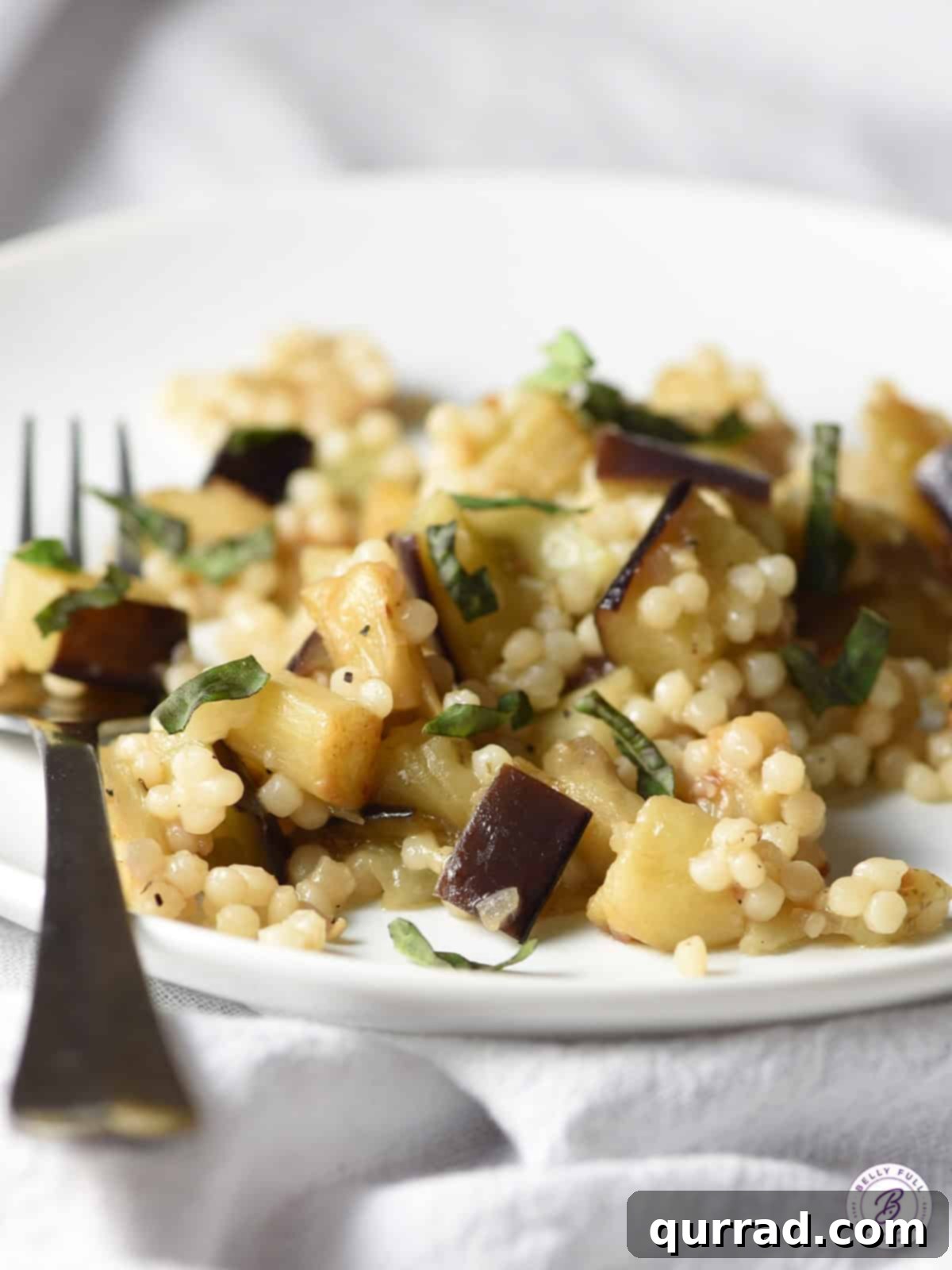
Discover Delicious Eggplant Couscous: A Vibrant Vegetarian Delight
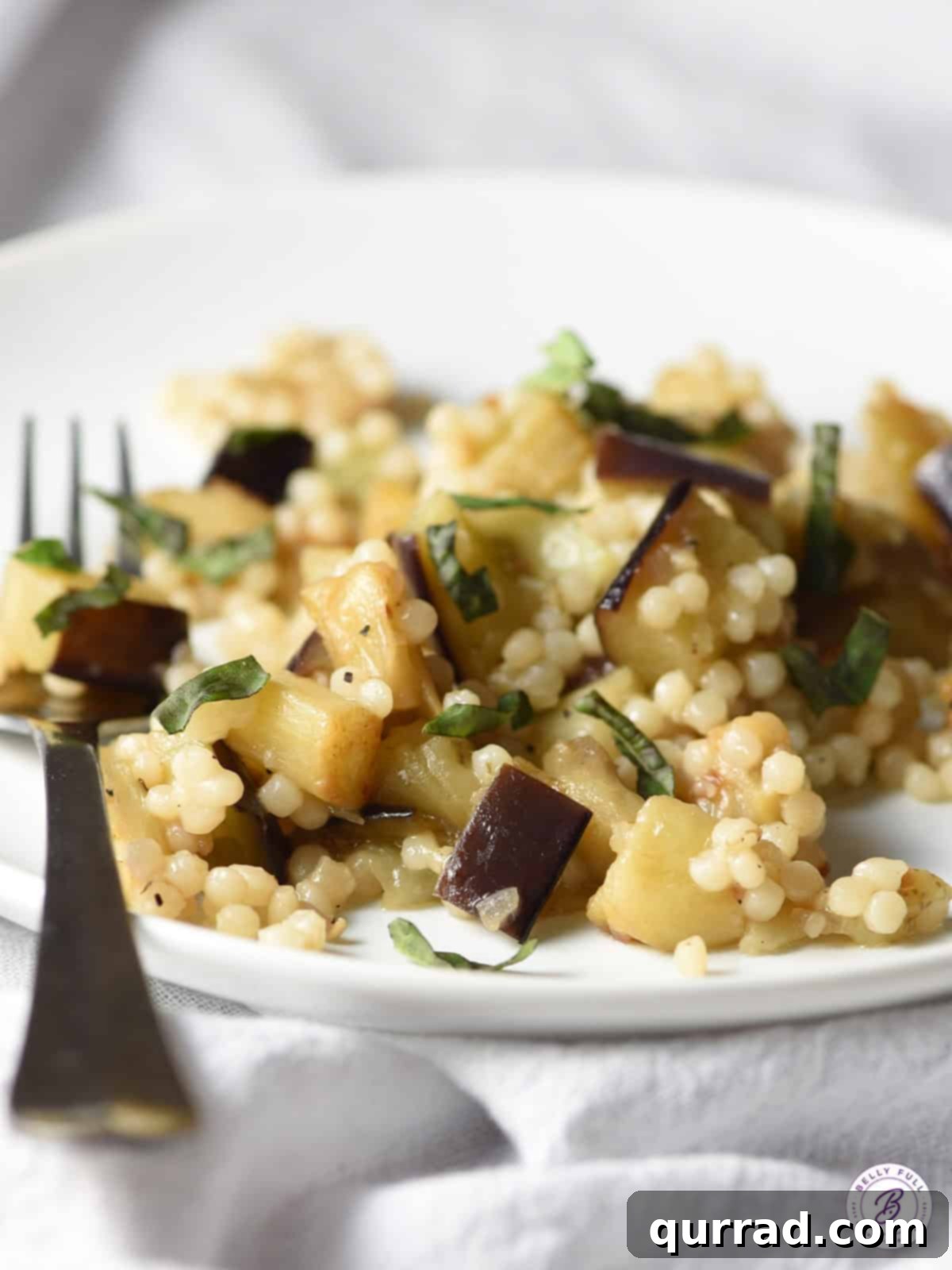
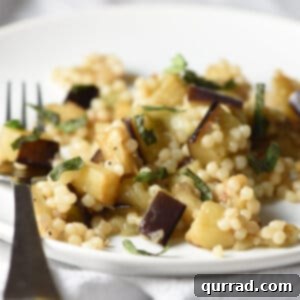
Uncover the irresistible flavors of this Eggplant Couscous, a truly remarkable vegetarian side dish that’s as quick to prepare as it is bursting with taste. Crafted with the perfect balance of savory sautéed eggplant and shallots, the zesty kick of red wine vinegar, and the aromatic freshness of basil, this recipe elevates simple ingredients into an extraordinary culinary experience. Ideal for weeknight meals or special gatherings, it’s a healthy, satisfying option that comes together in just 20 minutes.
Effortless Elegance: Easy Couscous with Eggplant
Eggplant, often underestimated and underutilized beyond a few classic dishes like Eggplant Parmesan, truly shines in this vibrant couscous recipe. Many overlook its incredible versatility, rich, meaty texture, and mild, earthy flavor that makes it a perfect canvas for absorbing a myriad of seasonings and marinades. Far from being bland, eggplant acts like a culinary sponge, soaking up every nuance of the ingredients it’s paired with, contributing depth and richness to any dish.
This recipe celebrates eggplant by pairing it with plump Israeli (pearl) couscous. As the couscous gently simmers, it absorbs flavorful vegetable broth, developing a wonderfully chewy texture and an additional layer of savory goodness. This is then combined with tender, perfectly sautéed eggplant and sweet, caramelized shallots. A hint of red wine vinegar introduces a bright, tangy note that cuts through the richness, while fresh basil adds a fragrant, herbaceous finish. The result is a simple yet sophisticated side dish, brimming with complex flavors that will surprise and delight your palate. It’s a testament to how humble vegetables can create truly memorable meals.
Why This Eggplant Couscous Recipe Stands Out
Beyond its delicious taste, this eggplant couscous offers several compelling reasons to become a staple in your kitchen:
- Speed & Simplicity: Ready in just 20 minutes, it’s perfect for busy weeknights when you crave a homemade, flavorful meal without a lengthy cooking process.
- Vegetarian & Vegan-Friendly: Naturally meat-free and dairy-free, it caters to various dietary preferences without compromising on satisfaction.
- Nutrient-Rich: Eggplant is packed with fiber, vitamins, and antioxidants, while whole-grain couscous provides sustained energy.
- Versatile Pairing: It complements a wide array of main courses, from grilled chicken and fish to lentil patties or simply a fresh green salad.
- Flavorful & Satisfying: The combination of textures and flavors – tender eggplant, chewy couscous, sweet shallots, tangy vinegar, and aromatic basil – creates a deeply satisfying dish that doesn’t feel light.
- Budget-Friendly: Made with readily available and affordable ingredients, it’s an economical way to enjoy healthy and delicious food.
Essential Ingredients for Your Eggplant Couscous
Crafting this flavorful couscous side dish requires just a handful of fresh ingredients and common pantry staples. Each component plays a crucial role in building the layered flavors and inviting textures.
- Israeli Couscous (Pearl Couscous): Distinct from smaller semolina couscous, Israeli couscous features larger, spherical pasta pearls. It boasts a mild, neutral taste and a delightful, slightly chewy texture, often compared to barley. Its ability to absorb liquids makes it an excellent vehicle for flavor. While not a direct substitute, regular couscous can be used in a pinch, though the cooking time and texture will differ.
- Vegetable Broth: Instead of plain water, cooking the uncooked couscous in vegetable broth infuses it with an extra layer of savory depth from the start. Opt for a low-sodium vegetable broth to better control the overall seasoning of your dish.
- Eggplant: This recipe utilizes a globe eggplant, cut into uniform 1/2-inch cubes. Globe eggplants are widely available and have a good balance of flesh and seeds. (Refer to the section below for tips on selecting the freshest, best-tasting eggplant.)
- Shallots: Possessing a delicate, sweet flavor profile that is less pungent than a traditional onion, shallots caramelize beautifully, adding a subtle sweetness and aromatic depth to the sautéed vegetables. If shallots are unavailable, a small amount of finely minced sweet onion can be used as a substitute, but the flavor will be slightly stronger.
- Olive Oil: Essential for sautéing the vegetables, olive oil not only prevents sticking but also imparts a rich, fruity flavor and ensures the ingredients cook evenly, achieving that perfect tender-crisp texture.
- Red Wine Vinegar: A splash of red wine vinegar is the secret to a delicious, zippy, and bright flavor. It provides a crucial acidic counterpoint to the richness of the eggplant and olive oil, elevating the entire dish. Balsamic vinegar or lemon juice could be considered for a slightly different, yet complementary, tang.
- Fresh Basil: This aromatic herb is a cornerstone of Mediterranean cuisine. Fresh basil offers a complex flavor, balancing sweet and savory notes with hints of mint, anise, and a touch of pepper. Tearing the leaves rather than chopping them helps release their essential oils and prevents bruising.
- Salt and Pepper: These fundamental seasonings are vital for enhancing and balancing all the other flavors in the dish. Adjust to your personal preference throughout the cooking process.
Mastering Eggplant Selection: How to Choose the Perfect Specimen
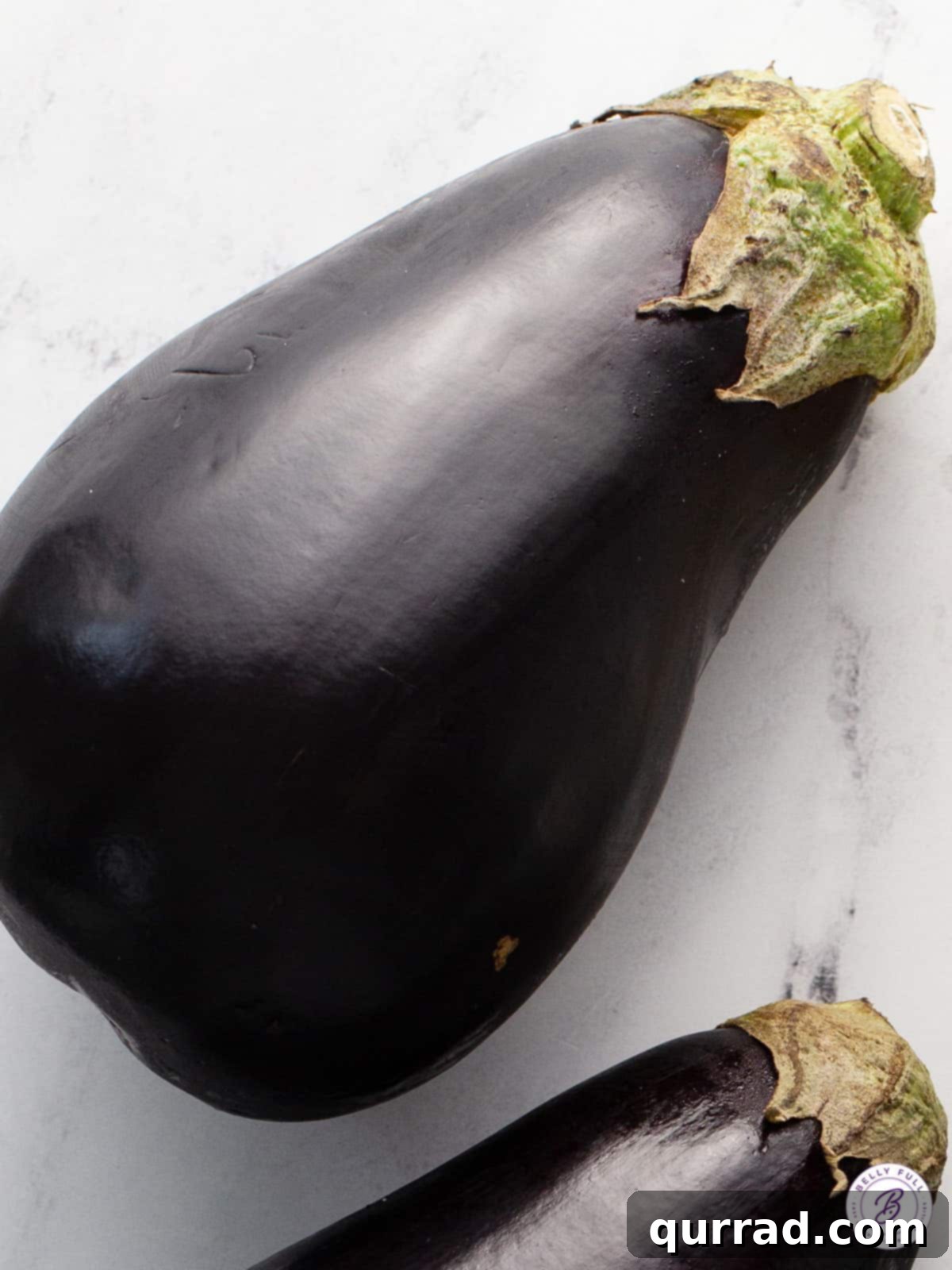
The quality of your eggplant can significantly impact the final taste and texture of your dish. Follow these five essential tips when selecting eggplant at the market to ensure you’re always bringing home the best:
- Look for Smooth and Shiny Skin: The skin of a fresh, high-quality eggplant should be taut, smooth, and possess a beautiful, glossy sheen. Dull or wrinkled skin is often an indicator of age and poor quality, which can lead to a bitter taste. Avoid any eggplants with bruises, soft spots, or discoloration, as these are signs of damage or spoilage.
- Examine the Stem for Vibrancy: The stem and cap (calyx) should be bright green and fresh-looking, not brown, shriveled, or dry. A green stem signifies that the eggplant was recently harvested. Any signs of mold or excessive dryness around the stem are red flags that the eggplant is past its prime.
- Assess Its Firmness: Gently press your thumb against the eggplant’s skin. It should feel slightly firm but yield a little, bouncing back almost immediately. If the eggplant feels hard and unyielding, it might be underripe. Conversely, if it feels too soft or mushy, it’s likely overripe and may have a bitter, unpleasant taste and a spongy texture.
- Feel for a Substantial Weight: Regardless of its size, a good eggplant should feel surprisingly heavy for its dimensions. This weight indicates that it’s full of moisture and hasn’t dried out, which is crucial for a tender cooked result. A lightweight eggplant suggests it’s dehydrated and potentially old.
- Consider the Size: Generally, smaller to medium-sized eggplants tend to be less bitter and contain fewer seeds. The more seeds an eggplant has, the higher the chance of a noticeable bitter flavor. While a gigantic eggplant might seem impressive, opting for two or three smaller-to-medium ones will often give you a better flavor and texture in your cooking.
Crafting Your Eggplant Couscous: Step-by-Step Instructions
This delightful couscous recipe with eggplant is remarkably quick and straightforward to prepare, making it a perfect addition to any meal. Follow these simple steps for a flavorful outcome.
- Cook the Couscous: In a small saucepan, combine 3/4 cup of Israeli couscous with 1 cup of vegetable broth and 1/2 teaspoon of coarse salt. Bring the mixture to a rolling boil over medium-high heat. Once boiling, give it a quick stir, then immediately reduce the heat to low. Cover the saucepan with a tight-fitting lid and allow the couscous to cook undisturbed until it is tender and all the broth has been absorbed, which typically takes about 10 minutes. Once cooked, remove from heat and keep covered.
- Sauté the Eggplant and Shallots: While the couscous is cooking, heat 3 tablespoons of olive oil in a large skillet (also with a tight-fitting lid) over medium-high heat. Add the 1 large eggplant (cut into 1/2-inch chunks) and 3 trimmed and quartered shallots to the hot skillet. Stir well to ensure all the vegetables are coated in the olive oil. Season generously with salt and pepper to taste. Cover the skillet and cook, stirring frequently every few minutes to prevent sticking or burning, until the shallots are beautifully caramelized and the eggplant is thoroughly cooked through and tender. This process will also take approximately 10 minutes.
- Combine and Finish: Once both the couscous and vegetables are cooked, transfer the sautéed eggplant and shallot mixture into a large serving bowl. Add the cooked couscous and gently combine. Stir in 3 teaspoons of red-wine vinegar and 1/3 cup of lightly packed, torn fresh basil. Taste the salad and adjust the seasonings, adding another sprinkle of salt and pepper if needed. Serve warm or at room temperature.
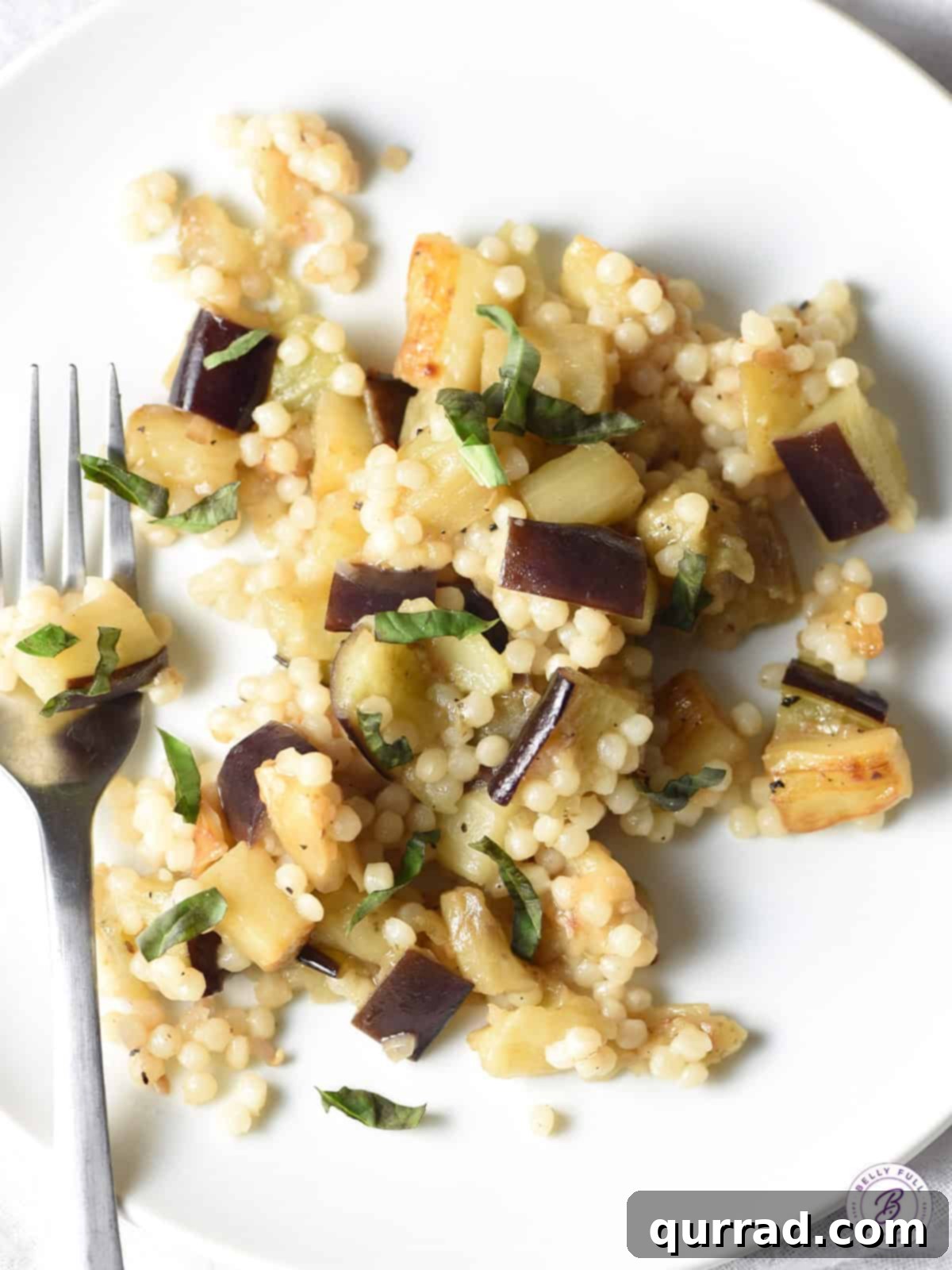
Tips for Success and Variations
To ensure your Eggplant Couscous turns out perfectly every time, consider these additional tips:
- Don’t Overcrowd the Skillet: When sautéing the eggplant and shallots, avoid overcrowding the pan. If necessary, cook them in two batches to ensure they brown properly instead of steaming. This allows the eggplant to develop a beautiful, tender texture and the shallots to caramelize effectively.
- Adjust Seasoning: Always taste and adjust seasoning at the end. The amount of salt needed can vary based on your vegetable broth and personal preference. A final squeeze of lemon juice can also enhance the fresh flavors.
- Toasting Couscous (Optional): For an extra nutty flavor, you can dry-toast the Israeli couscous in the saucepan for a few minutes before adding the broth. Stir constantly until lightly golden and fragrant.
- Add Some Heat: For those who enjoy a little spice, a pinch of red pepper flakes added with the eggplant and shallots will provide a welcome kick.
- Enhance with Cheese: If you’re not strictly vegan, a sprinkle of crumbled feta cheese or grated Parmesan adds a lovely salty tang and creamy texture to the finished dish.
- Include Other Vegetables: Feel free to customize this dish with other quick-cooking vegetables. Cherry tomatoes, zucchini, bell peppers, or spinach can be added during the last few minutes of sautéing for extra color and nutrients.
Storing and Reheating Leftovers
This Eggplant Couscous is delightful freshly made, but it also holds up well as leftovers, making it an excellent meal prep option. To maximize freshness and flavor, ensure proper storage:
- Storage: Any leftover Eggplant Couscous should be transferred to an airtight container and stored in the refrigerator. Properly stored, it will maintain its quality for up to 3 days.
- Reheating: To reheat, portion out your desired amount and place it in a microwave-safe dish. Heat in the microwave on medium power, stirring occasionally, until warmed through. Couscous can sometimes dry out slightly in the refrigerator, so adding a small splash (about a tablespoon or two) of extra vegetable broth or water before reheating will help to loosen it up and restore its moist texture.
- Serving Cold: This dish is also delicious served cold as a refreshing salad, making it ideal for packed lunches or summer picnics. The flavors meld and deepen beautifully as it chills.
Explore More Delicious Eggplant Recipes
If this Eggplant Couscous has sparked your interest in this versatile vegetable, you’ll be thrilled to discover more ways to incorporate it into your cooking. Eggplant truly is a culinary chameleon, capable of transforming into a variety of delectable dishes. Here are a few more eggplant-centric recipes to inspire your next meal:
- Grilled Eggplant
- Roasted Eggplant with Cherry Tomatoes
- Classic Eggplant Caponata
- Creamy Baba Ganoush
- Traditional Ratatouille
We hope you thoroughly enjoy this easy and delicious Eggplant Couscous recipe. Your feedback is always appreciated!
Eggplant Couscous
10 mins
10 mins
20 mins
4 as a side
Pin Recipe
Print Recipe
Ingredients
- 3/4 cup Israeli couscous (pearl couscous)
- 1 cup vegetable broth
- 1/2 teaspoon coarse salt
- 3 tablespoons olive oil
- 1 large eggplant, cut into 1/2-inch chunks
- 3 shallots, trimmed and quartered
- Salt and pepper, to taste
- 3 teaspoons red-wine vinegar
- 1/3 cup lightly packed fresh basil, torn
Instructions
-
In a small saucepan, combine couscous, vegetable broth, and salt. Bring to a boil, stir once, and reduce heat to low. Cover and cook until the couscous is tender, about 10 minutes.
-
In the meantime, in a large skillet with a tight-fitting lid, heat oil over medium-high. Add eggplant and shallots and stir to coat; season with salt and pepper. Cover and cook, stirring frequently to prevent burning, until shallots are caramelized and eggplant is cooked through, about 10 minutes.
-
In a serving bowl, combine eggplant mixture and couscous. Stir in vinegar and basil and season salad with another sprinkle of salt and pepper.
Nutrition Information
Carbohydrates: 36g |
Protein: 6g |
Fat: 11g |
Saturated Fat: 2g |
Sodium: 534mg |
Potassium: 378mg |
Fiber: 6g |
Sugar: 6g |
Vitamin A: 257IU |
Vitamin C: 4mg |
Calcium: 28mg |
Iron: 1mg
Nutritional information provided is an automatic calculation and may vary based on specific products used and any recipe modifications. If precise nutritional values are critical, independent calculation is recommended.
Did you make this recipe? We’d love to hear your thoughts! Leave a rating below!