
Journey to the heart of Italy with a rustic yet refined dish that captures both simplicity and profound flavor: Eggs in Purgatory. This Neapolitan classic, known locally as uova in purgatorio, features perfectly poached eggs nestled in a rich, vibrant tomato sauce. Quick to prepare, wonderfully healthy, and incredibly versatile, it effortlessly elevates any meal, whether it’s a cozy breakfast, a leisurely brunch, or a satisfying dinner. Don’t forget to serve it with warm naan or soft pita bread – essential for savoring every last drop of the delectable sauce!
If you share our love for eggs, you’ll also appreciate mastering the art of the best scrambled eggs and achieving perfectly hard-boiled eggs. But for now, let’s delve into the fiery depths of this timeless Italian gem.

Despite its sophisticated appearance and frequent presence on upscale brunch menus, this savory egg dish is remarkably approachable. Crafted from humble ingredients, it comes together in under 30 minutes, making it a perfect solution for a flavorful meal even on the busiest days. Its satisfying warmth and robust taste make it an instant favorite in any kitchen.
What is Eggs in Purgatory?
At its core, Eggs in Purgatory is a straightforward yet incredibly satisfying dish: fresh eggs gently poached directly within a simmering, typically spicy, tomato sauce on the stovetop. The simplicity of its preparation belies the depth of flavor it delivers, making it a staple in Italian homes and a beloved comfort food.
The Fascinating History and Lore Behind the Name
This savory egg creation hails from Southern Italy, specifically the vibrant region around Naples, where it’s known as uova in purgatorio or in the local Neapolitan dialect, Ova’ ‘mpriatorio. The origins of its intriguing name and enduring popularity are steeped in local folklore and practicality. Historically, it was revered as one of the most economical ways to incorporate essential protein into the diet, providing sustenance with readily available ingredients. It also served as an ingenious method for utilizing leftover pasta sauce, transforming it into a fresh, hearty meal rather than letting it go to waste.
The name “Eggs in Purgatory” itself is a subject of captivating debate, primarily rooted in Catholic traditions prevalent in Italy. One prominent theory suggests the dish was created as an homage to the Cult of the Souls of Purgatory. This Catholic devotion focused on prayers for souls believed to be in purgatory, a state between earthly life and heaven. In this context, the eggs, with their pristine white exteriors, are thought to represent the souls, while the fiery, often spicy, red tomato sauce enveloping them symbolizes the purifying flames of purgatory. This vivid imagery depicts the souls’ journey through cleansing on their path to divine light, creating a dish that is as spiritually evocative as it is delicious. While the depth of this religious symbolism might seem profound for a breakfast dish, it certainly adds a unique layer to its cultural narrative.
Regardless of the precise etymology, Eggs in Purgatory remains an exceptional classic. Its bold flavors and comforting nature can sometimes draw comparisons to other rustic egg dishes from around the world, such as the delicious Mexican Huevos Rancheros, offering a familiar warmth with a distinct Italian twist.

What’s the Difference Between Eggs in Purgatory and Shakshuka?
Given their striking similarities, Eggs in Purgatory and Shakshuka are often confused or seen as interchangeable. Both are beloved dishes featuring eggs poached in a flavorful tomato sauce. However, their distinct cultural origins and unique spice profiles set them apart. Shakshuka is a Middle Eastern and North African staple, and its tomato base is typically enriched with a vibrant blend of spices such as cumin, sweet paprika, and often includes bell peppers and sometimes even chilies for an added kick. These ingredients give Shakshuka a signature earthy, smoky, and often sweeter flavor profile that is immediately recognizable. The sauce tends to be chunkier due to the added vegetables.
In contrast, Eggs in Purgatory, as an Italian dish, traditionally maintains a simpler, more direct flavor profile. Its tomato sauce primarily relies on the natural sweetness and acidity of tomatoes, enhanced by foundational Italian aromatics like garlic, onion, and dried oregano, with red pepper flakes providing its characteristic “fiery” element. While it can be made spicy, the focus is less on a complex spice blend and more on the pure, robust taste of the tomato. This is why Eggs in Purgatory is sometimes affectionately dubbed the “Italian Shakshuka,” highlighting their shared concept while acknowledging their individual culinary identities.
Why You’ll Fall in Love with This Eggs in Purgatory Recipe
This particular recipe for Eggs in Purgatory is designed to deliver maximum flavor with minimal effort, making it a perfect addition to your culinary repertoire. Here’s why it’s bound to become a new favorite:
- Effortless Elegance: It looks impressive, making it ideal for entertaining, but the preparation is surprisingly simple and requires no advanced cooking skills.
- Lightning Fast: From start to finish, you can have this delicious dish on your table in under 30 minutes, perfect for busy weeknights or spontaneous brunches.
- Nutrient-Rich: Packed with protein from the eggs and vital antioxidants from the tomatoes, it’s a wholesome meal that fuels your body.
- Flavorful Simplicity: The beauty lies in its straightforward ingredients, which combine to create a deeply satisfying, warm, and hearty flavor profile.
- Incredibly Versatile: Enjoy it for breakfast, brunch, lunch, or a light dinner. It pairs wonderfully with various sides and can be customized to suit your taste.
Eggs in Purgatory: Essential Ingredients
This incredibly flavorful and hearty egg dish relies on a combination of simple, fresh ingredients that contribute to its robust character. Each component plays a vital role in building the layered flavors that make Eggs in Purgatory so appealing. Here’s a detailed look at what you’ll need to create this Italian masterpiece:
- Eggs: The star of the show! Fresh, large eggs are cracked directly into the simmering sauce, where they gently poach to your preferred level of doneness. Whether you prefer a runny, jammy, or firm yolk, the slow cooking in the sauce ensures a tender, flavorful egg.
- Tomato Sauce: The heart and soul of the dish. It’s crucial to use a high-quality, pure, unseasoned tomato sauce (often labeled as tomato puree or passata). Avoid pre-seasoned spaghetti sauces, which can contain added sugars, herbs, or flavors that might not complement this dish. For an elevated experience, consider using our homemade marinara sauce, adjusting other seasonings accordingly. The richness of the tomato forms the perfect “purgatory” for the eggs.
- Onion and Garlic: These aromatic powerhouses form the foundational flavor base of the sauce. Sautéing them until soft and fragrant releases their natural sweetness and pungent notes, creating a rich backdrop for the tomatoes and spices. Diced onion and minced garlic are essential for building depth.
- Olive Oil: Extra virgin olive oil is indispensable in Italian cooking. Used for sautéing the onion and garlic, it imparts a fruity, slightly peppery flavor and helps to carry the aromatics through the sauce. Its healthy fats also contribute to the dish’s overall richness and satisfying texture.
- Seasonings: A carefully chosen blend of spices elevates the humble tomato sauce. Our recipe calls for:
- Dried Oregano: Provides a classic Mediterranean herbal note, earthy and slightly peppery.
- Cumin: While more common in Middle Eastern cuisine, a touch of cumin here adds a subtle warmth and depth that beautifully complements the tomatoes without overpowering the Italian character.
- Paprika: Offers a sweet, smoky undertone and a vibrant red hue to the sauce.
- Cracked Red Pepper Flakes: The key to the “fiery” aspect of purgatory! Adjust the amount to control the heat level, from a mild warmth to a more assertive spice.
- Salt and Pepper: Essential for balancing and enhancing all the other flavors. Season to taste throughout the cooking process.
- Naan or Pita Bread: These soft, chewy flatbreads are traditional accompaniments and arguably one of the most important components of the meal. Their primary purpose is to act as a delicious vessel for scooping up the runny yolks and soaking up every last bit of the rich tomato sauce, ensuring no flavor goes to waste. Our homemade Naan is an excellent choice, but store-bought pita works beautifully too.
- Fresh Parsley: A vibrant garnish that adds a burst of fresh, herbaceous flavor and a beautiful pop of green color, contrasting wonderfully with the red sauce. Chopped fresh parsley provides a light, clean finish.
- Crumbled Feta Cheese (Optional, but highly recommended): For those who love an extra layer of flavor and texture, crumbled feta is a fantastic topping. Its salty, tangy notes cut through the richness of the tomato sauce and eggs, adding a delightful complexity. A sprinkle of Parmesan or Pecorino Romano could also be used for a more traditional Italian cheese pairing.

How to Make Eggs in Purgatory: A Step-by-Step Guide
Creating this Italian classic is surprisingly simple and comes together in just a few easy steps. The key is to build flavor incrementally and ensure the sauce is perfectly ready for the eggs. Here’s a brief overview of the process:
- Sauté Aromatics and Simmer Sauce: Begin by heating the olive oil in a large sauté pan. Add the diced onion and cook until it softens and becomes translucent, releasing its sweet aroma. Next, add the minced garlic and cook for a short while until fragrant, being careful not to burn it. Once the aromatics are ready, pour in the tomato sauce puree and stir in all the dry seasonings: oregano, cumin, paprika, cracked red pepper flakes, along with salt and black pepper to taste. Allow the sauce to simmer gently, stirring occasionally, until it thickens sufficiently. This simmering time is crucial for developing the rich flavors and achieving the right consistency.
- Add and Poach the Eggs: Once the sauce has thickened to a desirable consistency, use a large spoon to create small, distinct wells or indentations within the sauce. These wells will act as individual nests for your eggs. Carefully crack an egg into each well, making sure they sit snugly within the sauce rather than spreading out too much. Cover the pan with a lid and let the eggs cook. The steam trapped under the lid will help them poach evenly. Cook until the egg whites are fully set and opaque, but the yolks remain wonderfully runny, or to your preferred doneness. This typically takes about 5-7 minutes.
- Serve and Garnish: As soon as the eggs reach your desired consistency, the dish is ready! Serve immediately, directly from the pan or by carefully transferring each egg with a generous portion of the rich tomato sauce onto individual plates. Accompany with warm, torn pieces of naan or pita bread – these are essential for scooping up the delectable sauce and creamy yolks. Finish each serving with a sprinkle of fresh chopped parsley for a burst of color and herbaceousness, and a scattering of crumbled feta cheese for an optional but highly recommended salty, tangy contrast.
Expert Tips and Adjustments for the Perfect Eggs in Purgatory
While the recipe is simple, a few expert tips can elevate your Eggs in Purgatory from good to absolutely outstanding. Pay attention to these details to ensure a flawless and flavorful dish every time:
- Mastering Sauce Consistency: This is paramount! The sauce *must* be thick enough before you add the eggs. You should be able to easily create distinct wells with your spoon that hold their shape without immediately filling back up. If the sauce is too thin, the eggs will spread out, creating a flatter, less appealing presentation and making it harder to serve individual portions. If your sauce seems too runny after simmering for the recommended time, continue to cook it uncovered over medium-low heat, stirring frequently, until it reduces and thickens to the desired consistency.
- Spice It Up: Our recipe provides a mild base with a modest amount of red pepper flakes. However, the beauty of Eggs in Purgatory is its adaptability. If you have a passion for heat, don’t hesitate to increase the quantity of cracked red pepper flakes during the simmering stage. You can also add a pinch of cayenne pepper, or even a dash of your favorite hot sauce before serving for an extra kick. Fresh chilies, finely diced, can also be sautéed with the garlic and onion for a deeper, more integrated heat.
- Embrace Homemade Marinara: True to Italian tradition, this dish is an excellent way to use up leftovers. Whenever you prepare a batch of homemade marinara sauce, consider setting aside some to use in place of canned tomato puree. Not only does it deepen the flavor profile of your Eggs in Purgatory, but it also minimizes food waste, a practice deeply ingrained in Italian culinary philosophy. If using a pre-seasoned marinara, be mindful of adjusting the other spices (oregano, cumin, paprika) to avoid over-seasoning.
- Perfect Egg Doneness: The ideal Eggs in Purgatory features firm whites and a delightfully runny yolk. To achieve this, watch the eggs closely. Begin checking after about 5 minutes of covered cooking. If you prefer a firmer yolk, extend the cooking time by another minute or two, always keeping an eye on it to prevent overcooking. The residual heat of the sauce will continue to cook the eggs slightly even after you remove the pan from the heat.
- Preventing Sticking: Ensure your sauté pan is adequately non-stick or well-seasoned to prevent the eggs from adhering to the bottom. A little extra olive oil in the initial sautéing step can also help create a protective layer.
- Customizing Vegetables: While traditionally simple, you can add finely diced bell peppers (red or yellow work well), spinach, or even some zucchini to the sauce along with the onions and garlic for added nutrition and texture. Just make sure they cook down and soften before adding the eggs.
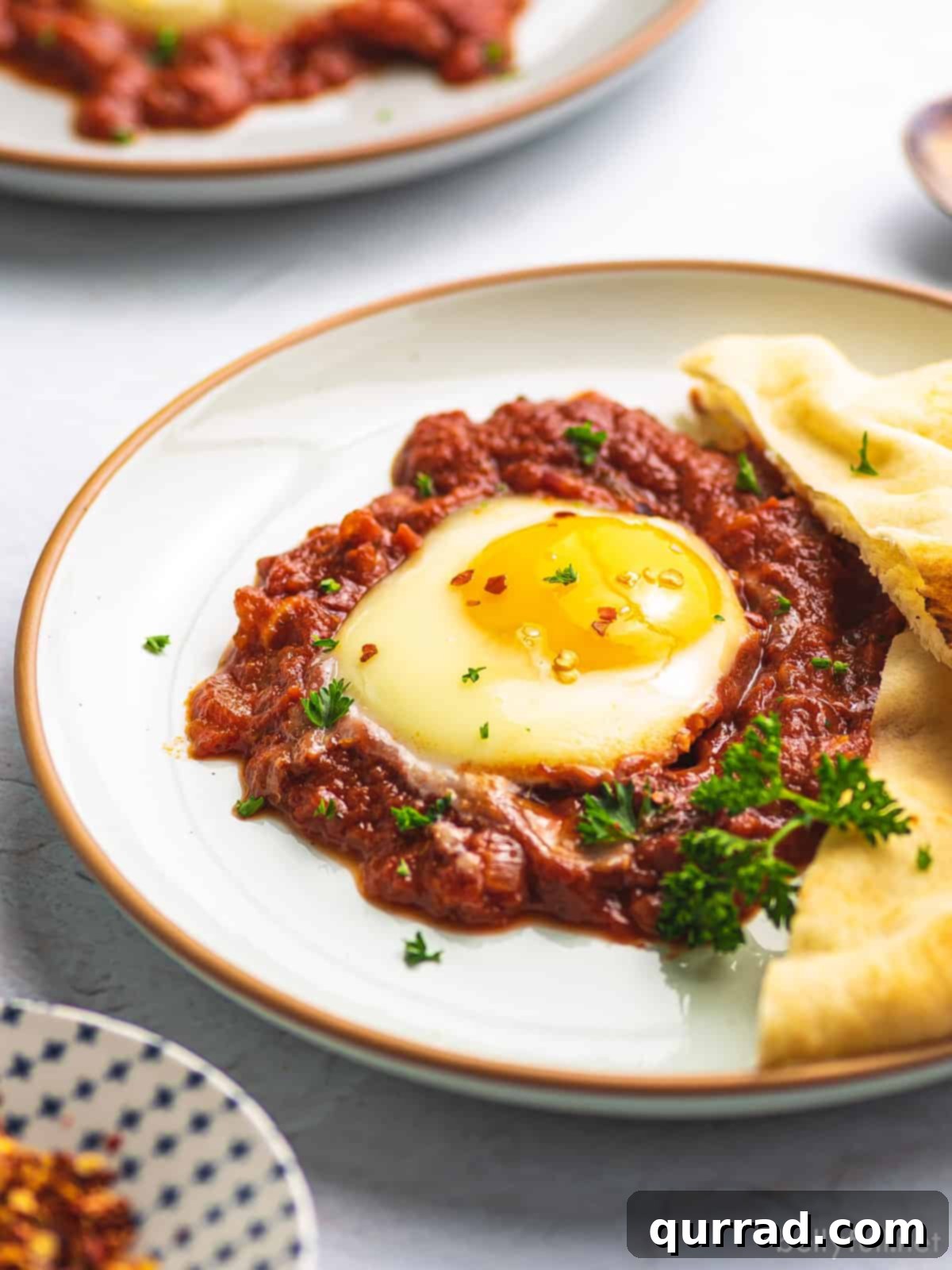
Serving Suggestions for Eggs in Purgatory
The beauty of Eggs in Purgatory lies in its versatility and how wonderfully it pairs with simple accompaniments. The undisputed king of serving suggestions for this dish is, without a doubt, bread!
This savory concoction is designed to be scooped and dipped, ensuring you capture every last morsel of the flavorful sauce and creamy egg yolk. Personally, I find torn pieces of soft naan or warm pita bread to be the perfect vessels. Their soft, pliable texture makes them ideal for soaking up the rich tomato base.
However, your options aren’t limited. Any crusty bread, such as a fresh baguette, ciabatta, or even a good sourdough, would be an excellent choice. If you opt for crusty bread, I highly recommend lightly toasting it and drizzling it with a good quality extra virgin olive oil before serving. This slight crispness and added richness provide a delightful textural contrast to the soft eggs and smooth sauce.
Beyond bread, consider these enhancements:
- Fresh Herbs: In addition to parsley, a scattering of fresh basil or oregano leaves can brighten the flavors.
- Cheese: If not using feta, a sprinkle of grated Parmesan or Pecorino Romano cheese adds a salty, umami depth.
- Side Salad: A simple green salad with a light vinaigrette offers a refreshing counterpoint to the rich, warm dish.
- Avocado: Sliced or diced avocado can add a creamy texture and healthy fats, especially if serving for brunch.
Eggs in Purgatory is undeniably best enjoyed fresh, directly from the pan while the eggs are perfectly cooked and the sauce is bubbling. If you plan to make it ahead for convenience, the tomato sauce can be prepared in advance and stored in the refrigerator. When you’re ready to serve, simply reheat the sauce gently on the stovetop and then proceed with cracking in the fresh eggs.
More Classic Egg Recipes to Explore:
If you’ve discovered a new love for egg-centric dishes through Eggs in Purgatory, there’s a world of culinary delights waiting for you. Eggs are an incredibly versatile ingredient, forming the foundation of countless comforting and delicious meals from various cuisines. Here are some more classic egg recipes that are sure to tantalize your taste buds and expand your breakfast, brunch, or even dinner repertoire:
- Perfect Fried Eggs: Learn the simple secrets to achieving those crispy edges and perfectly runny yolks every time.
- Fluffy Cheese Omelette: A timeless classic, ideal for a quick and satisfying meal, customized with your favorite cheese.
- Impeccable Poached Eggs: Master the delicate art of poaching eggs for a silky texture, perfect for toasts, salads, or eggs benedict.
- Tex-Mex Migas: A vibrant and flavorful Tex-Mex breakfast, featuring scrambled eggs with tortillas, salsa, and cheese.
- Hearty Scotch Eggs: A surprisingly simple British classic, combining a hard-boiled egg wrapped in sausage meat and breadcrumbs, then fried or baked.
- Elegant Eggs Benedict: The ultimate brunch indulgence, with perfectly poached eggs, Canadian bacon, and rich hollandaise sauce on an English muffin.
Each of these recipes offers a unique way to enjoy the incredible versatility of eggs, providing delicious options for any time of day or any occasion. Happy cooking!
We truly hope you enjoy this delicious and straightforward recipe for Eggs in Purgatory. Your feedback is invaluable, so please consider leaving a review below! For more culinary inspiration and delightful recipes, make sure to follow Belly Full on Facebook, Instagram, Pinterest, and YouTube!
Eggs in Purgatory Recipe Card
Cook: 15 mins
Total: 25 mins
Servings: 4
An Italian classic, Eggs in Purgatory is made with poached eggs in a hearty tomato sauce. Quick, easy, and healthy, this simple dish is perfect for breakfast, brunch, or dinner.
Ingredients
- 1 1/2 tablespoons extra virgin olive oil
- 1/3 cup diced onion
- 2 cloves garlic, minced
- 15 ounces tomato sauce puree (unseasoned)
- 1 teaspoon dried oregano
- 1/4 teaspoon cumin
- 1/4 teaspoon paprika
- 1/8-1/4 teaspoon cracked red pepper flakes (adjust to taste)
- Salt and pepper, to taste
- 4 large eggs
- Naan or pita bread, for serving
- Crumbled feta cheese, for serving (optional)
- Chopped fresh parsley, for garnish
Instructions
- Heat olive oil in a 10-inch saute pan over medium heat. Add diced onion and cook, stirring frequently, until softened and translucent, about 3 minutes. Stir in minced garlic and cook for an additional 30 seconds until fragrant, taking care not to burn it.
- Reduce the heat to medium-low. Add the tomato sauce puree, dried oregano, cumin, paprika, cracked red pepper flakes, and a few generous grinds of salt and black pepper. Stir well to combine. Allow the sauce to simmer gently for 5 minutes, stirring every minute or so to prevent it from sticking to the bottom of the pan and scorching. The sauce should visibly thicken during this time.
- Once the sauce has thickened, use a large spoon to create four small, distinct wells or indentations in the sauce. Gently crack one egg into each well. Cover the pan with a lid and let the eggs cook until the whites are fully set and opaque, but the yolks remain deliciously runny. This will typically take about 5-7 minutes, depending on your desired doneness for the yolk.
- Serve immediately. Carefully spoon each poached egg with a generous amount of the rich tomato sauce onto individual plates. Serve with warm, torn pieces of naan or pita bread. Garnish with chopped fresh parsley and a sprinkle of crumbled feta cheese, if using.
Nutrition (Approximate per serving)
Calories: 168kcal | Carbohydrates: 12g | Protein: 8g | Fat: 10g | Saturated Fat: 2g | Polyunsaturated Fat: 2g | Monounsaturated Fat: 6g | Trans Fat: 1g | Cholesterol: 186mg | Sodium: 103mg | Potassium: 574mg | Fiber: 3g | Sugar: 6g | Vitamin A: 903IU | Vitamin C: 13mg | Calcium: 63mg | Iron: 3mg
Nutritional information is an estimate and can vary based on specific product brands and any modifications made to the recipe. If precise nutritional values are critical, please calculate them based on your exact ingredients.