

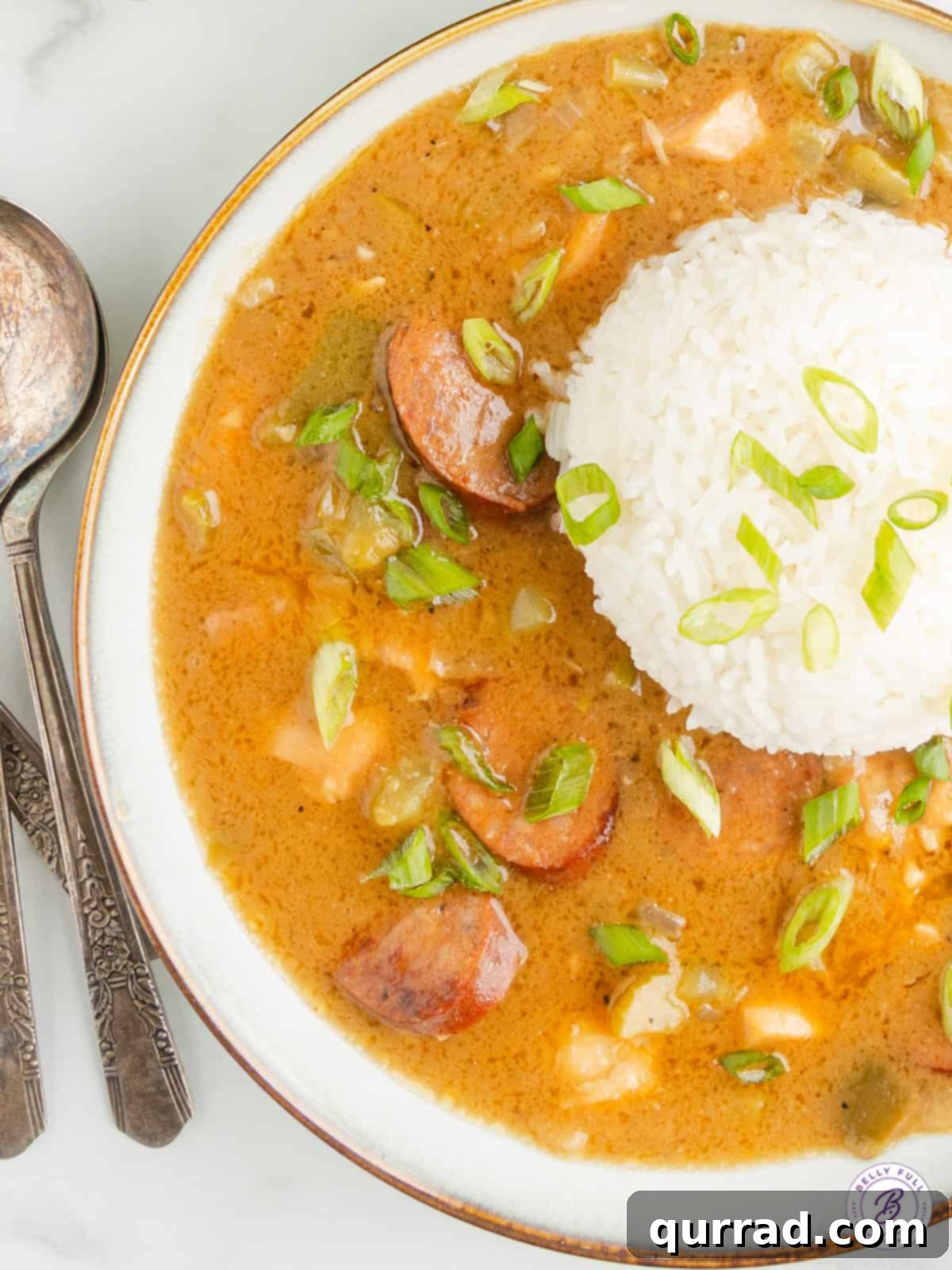
Prepare to embark on a culinary journey to the heart of Louisiana with this exquisite Chicken and Sausage Gumbo. This isn’t just a meal; it’s a celebration of rich flavors, steeped in Southern tradition and crafted to warm your soul. Featuring tender chicken thighs, robust smoky andouille sausage, and a generous, perfectly balanced dash of authentic Cajun seasoning, every spoonful of this gumbo is a testament to its legendary status.
Gumbo is more than just a dish; it’s a cultural cornerstone, beloved across the Southern United States and particularly cherished during festive occasions like Mardi Gras. This recipe captures that celebratory spirit, making it an ideal choice for year-round enjoyment, whether you’re hosting a lively Mardi Gras party or simply craving a taste of deep Southern comfort. Its versatility and hearty nature make it a perfect centerpiece for any gathering, promising to leave a lasting impression on all who try it.
To truly immerse yourself in the Mardi Gras experience, consider pairing this sensational gumbo with other festive delights such as Mardi Gras Jello Shots for a vibrant kick, and sweet Mardi Gras Lofthouse Cookies to complete your feast with a touch of sweetness.
The Ultimate Easy Chicken and Sausage Gumbo Recipe
Gumbo stands as a proud pillar of Southern U.S. cuisine, alongside other iconic dishes like the vibrant Jambalaya and the comforting Shrimp and Grits. Its roots delve deep into the rich culinary traditions of both Creole and Cajun cultures, leading to an incredible diversity of recipes, each with its unique charm and subtle variations.
Our featured chicken and sausage gumbo recipe celebrates this tradition by centering around a meticulously prepared light-brown roux. This foundational element is key, lending a distinct nutty depth that permeates the entire dish. We pair this with succulent boneless, skinless chicken thighs, chosen for their superior tenderness and rich flavor profile, and authentic andouille sausage, which contributes a smoky, spicy kick that is indispensable to a classic gumbo. The whole concoction is elevated further by a generous infusion of robust Cajun seasoning, creating a symphony of flavors that is both bold and harmonious.
This dish delivers a satisfying level of heat, balanced by the complex smokiness of the sausage and the warm, nutty undertones of the roux. It’s a combination that I personally adore. Served traditionally over fluffy white rice and finished with a dash of your favorite hot sauce, this gumbo transforms into an irresistibly comforting meal, hitting all the right notes of savory, spicy, and deeply satisfying goodness.
Why You’ll Fall in Love with This Gumbo Recipe
If you’ve been searching for a reason to dive into the world of homemade gumbo, look no further. This chicken and sausage gumbo offers a multitude of compelling reasons to become your next favorite dish:
- Explosion of Authentic Flavors: From the moment you taste it, you’ll understand why this gumbo is truly special. The nutty foundation of the roux, the smoky, spicy character of the andouille sausage, and the vibrant kick of Cajun seasoning all merge to create a rich, layered flavor profile that is nothing short of incredible. Each ingredient plays a vital role, contributing to a harmonious blend that sings of Louisiana.
- A Quintessential Southern Classic at Your Fingertips: Gumbo is deeply ingrained in the culinary heritage of the Southern states, particularly in New Orleans, where it shines brightest during Mardi Gras season. This recipe provides an accessible and straightforward path to bringing that authentic Cajun and Creole flavor directly to your dinner table, allowing you to savor a piece of Southern tradition, no matter your location. It’s an easy way to explore and appreciate the diverse tastes of American regional cooking.
- Surprisingly Approachable for Home Cooks: Despite its reputation as a complex dish, gumbo is much simpler to prepare than many imagine. While it does require a bit of dedicated hands-on time, particularly for crafting the roux, it’s far from daunting. If the idea of making a roux seems intimidating, rest assured – we’ve included comprehensive tips and guidance below to help you achieve a perfect, foolproof roux, ensuring your gumbo journey is a successful and enjoyable one.
- Perfect for Any Occasion: Whether you’re hosting a festive gathering, celebrating Mardi Gras, or simply seeking a comforting weeknight meal, this gumbo fits the bill. Its hearty nature and robust flavors make it a crowd-pleaser that satisfies on many levels. It’s a dish that feels special enough for guests yet comforting enough for a cozy evening at home.
- Makes for Fantastic Leftovers: Gumbo, like many stews, often tastes even better the next day as the flavors have more time to meld and deepen. This makes it an excellent make-ahead meal, perfect for meal prepping or enjoying throughout the week.

Essential Ingredients for an Authentic Gumbo
Crafting a truly memorable chicken and sausage gumbo begins with selecting the right ingredients. Here’s a detailed look at what you’ll need to assemble this Southern masterpiece:
- All-Purpose Flour: This is one half of the dynamic duo that forms the roux, the essential thickening and flavor base of your gumbo. While various types of flour can be used, all-purpose provides the ideal consistency and browning capabilities for a classic roux.
- Canola Oil (or Vegetable Oil): The other crucial component of the roux. Canola or vegetable oil is preferred for its high smoke point and neutral flavor, allowing the nutty essence of the browned flour to shine through without interference. Using an oil rather than butter allows for a darker roux without burning.
- Andouille Sausage: The star of the show! Andouille is a smoked, spicy pork sausage that is fundamental to Cajun and Creole cuisine. Its distinctive smoky flavor and peppery kick are irreplaceable. Most major grocery stores now stock andouille sausage, typically found alongside kielbasa and other smoked sausages. Look for a good quality, well-smoked variety for the best results.
- Boneless, Skinless Chicken Thighs: We opt for chicken thighs over breasts for their superior tenderness, richer flavor, and ability to remain moist and succulent even after extended simmering. Dicing them into bite-sized pieces ensures even cooking and allows them to meld beautifully with the other ingredients.
- Seasonings for Chicken: A simple blend of Garlic Powder and Onion Powder is used to season the chicken before cooking, adding an initial layer of savory flavor that deepens as the chicken browns.
- The “Holy Trinity” of Vegetables: This foundational aromatic trio is essential to Cajun and Creole cooking:
- Celery: Adds a subtle crispness and fresh, earthy notes.
- Onion: Provides a sweet and pungent base, contributing significant depth of flavor.
- Green Bell Pepper: Lends a slightly bitter, fresh taste that balances the richness of the gumbo.
These three vegetables are diced and sautéed until softened, forming the aromatic heart of the dish.
- Fresh Garlic: Minced fresh garlic is added to the “holy trinity” towards the end of their sautéing, releasing its potent aroma and enhancing the overall savory profile of the gumbo.
- Low-Sodium Chicken Stock (or Broth): This forms the liquid base of the stew. Using a low-sodium variety is crucial for controlling the overall saltiness of the dish, especially since andouille sausage and Cajun seasoning can contribute significant sodium. You can always adjust the salt at the end.
- Cajun Seasoning: The soul of the spice! Cajun seasoning is a proprietary blend that varies by brand but typically includes paprika, cayenne pepper, garlic powder, onion powder, and oregano. It’s responsible for the classic spicy, savory, and aromatic flavor profile of this gumbo. Adjust the amount to your preferred level of heat.
- Bay Leaves: These fragrant leaves impart a subtle, slightly herbal and peppery note to the gumbo as it simmers, adding another layer of complex flavor that deepens the stew’s character. Remember to remove them before serving.
Crafting Your Delicious Chicken and Sausage Gumbo: A Step-by-Step Guide
Making gumbo is a rewarding process that builds layers of flavor. While it requires a bit of attention, especially for the roux, the steps are straightforward and lead to an incredibly satisfying meal. Here’s a detailed guide:
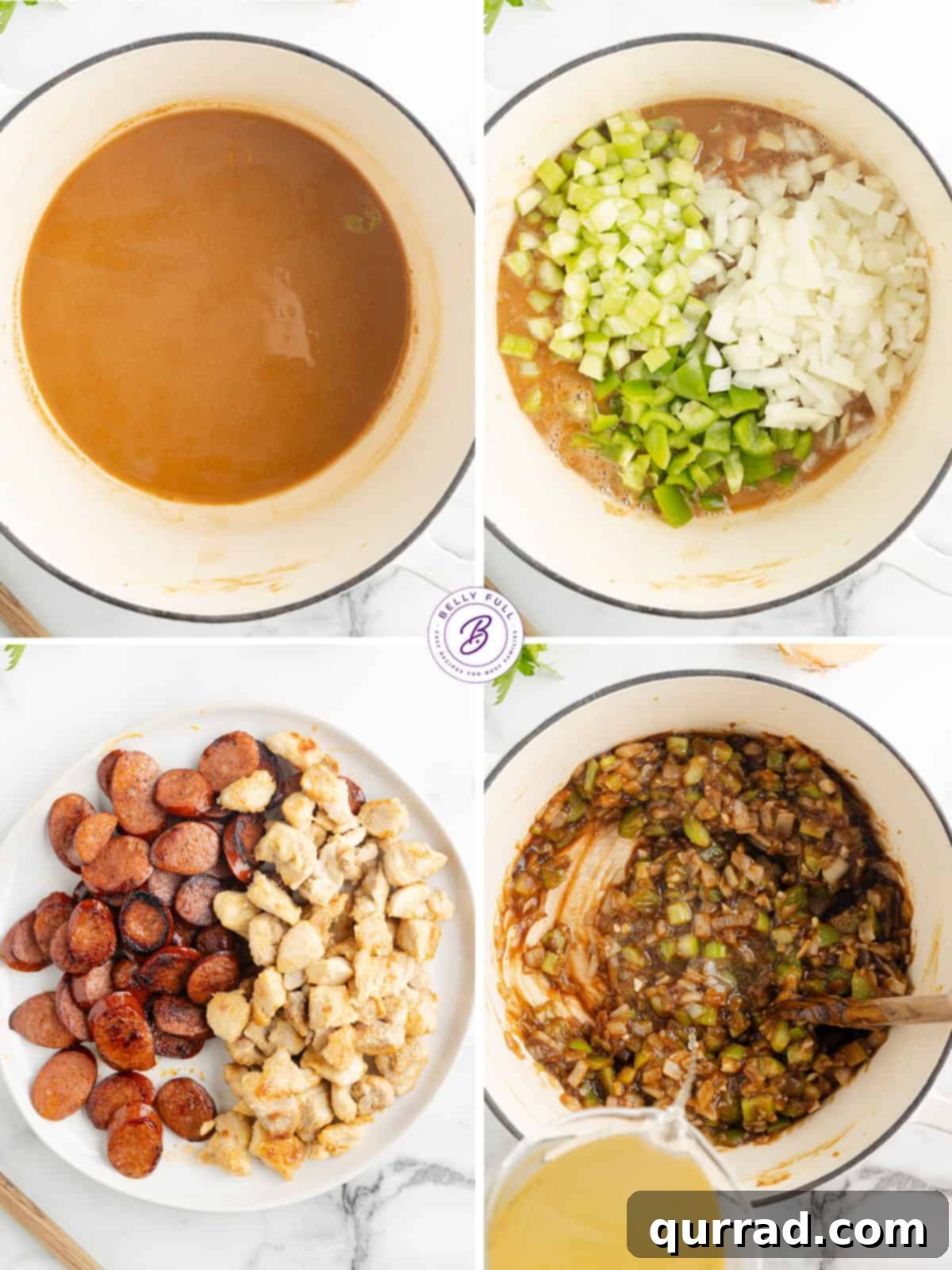
- Begin with the Roux – The Heart of Your Gumbo: In a large, heavy-bottomed pot or Dutch oven, combine your flour and canola (or vegetable) oil. Place the pot over medium heat. This initial stage is crucial for developing the deep, nutty flavor characteristic of gumbo. Stir continuously for 15-25 minutes, or until the mixture achieves a light brown, peanut butter-like color. Patience is key here; don’t rush the roux, as its color dictates the final flavor of your gumbo. (Refer to the “All About The Roux” section below for more detailed tips on mastering this fundamental step.)
- Prepare the Meats Concurrently: While your roux is gently browning, you can begin preparing the meats in parallel to save time. In a separate large nonstick skillet, cook the sliced andouille sausage over medium heat until it’s beautifully browned and has rendered some of its flavorful fat. Once done, transfer the sausage to a plate and set aside. Next, season your diced chicken thighs generously with garlic powder and onion powder. Add the seasoned chicken to the same skillet, utilizing the flavorful drippings from the sausage. Cook until the chicken is browned on all sides, then transfer it to the plate with the sausage.
- Sauté the “Holy Trinity”: Once your roux has reached the desired light brown color, it’s time to build more flavor. Add the diced celery, onion, and green bell pepper directly to the roux in the Dutch oven. Cook these vegetables, stirring occasionally, until the onions become translucent and softened, which usually takes about 5-7 minutes. Then, stir in the minced garlic and cook for an additional 20-30 seconds, just until it becomes fragrant. Be careful not to burn the garlic.
- Introduce the Liquids and Simmer: Gradually, and slowly, begin whisking the chicken stock into the roux and vegetable mixture. Whisk continuously as you add the stock to ensure it combines smoothly without lumps. Once smooth, stir in the partially cooked sausage and chicken, along with the Cajun seasoning and bay leaves. Bring the entire gumbo mixture to a rolling boil.
- Reduce Heat and Allow Flavors to Develop: As soon as it reaches a boil, reduce the heat to a gentle simmer. Cover the pot and let the gumbo cook for at least 1 hour, or even longer for deeper flavor development. This slow simmering allows all the ingredients to meld together, tenderizing the chicken and vegetables and thickening the gumbo to its perfect consistency.
- Serve and Savor: Once the gumbo has simmered and thickened to your liking, remove the bay leaves. Ladle generous portions over fluffy white rice. Garnish with fresh sliced scallions for a pop of color and freshness, and offer hot sauce on the side for those who prefer an extra kick of spice. Enjoy this deeply flavorful and comforting Southern classic!
Pro Tip: Building Flavor with Each Step
The beauty of gumbo lies in layering flavors. By browning the meats separately to create fond in the pan, then incorporating the “holy trinity” into the roux, and finally simmering everything together, you ensure that each component contributes its maximum flavor to the final dish. Don’t skip any step, as each plays a vital role in achieving that rich, complex gumbo taste.
All About The Roux: The Foundation of Any Great Gumbo
The roux is, without exaggeration, the most critical element in making an authentic and delicious gumbo. It’s not just a thickener; it’s the very soul of the dish, providing depth, color, and a unique nutty flavor. Understanding and mastering the roux is key to your gumbo success.
- What Exactly is a Roux? A roux (pronounced “roo”) is a fundamental thickening agent in French, Cajun, and Creole cooking, made by cooking equal parts fat and flour together. In our gumbo recipe, we use oil and flour. As the flour cooks in the oil, it undergoes a transformation, losing its raw flour taste and developing a rich, complex, nutty flavor profile, which varies depending on how long it’s cooked.
- The Importance of Roux Color: The color of your roux directly impacts the final flavor and color of your gumbo.
- Blonde Roux: Cooked for a shorter period, a blonde roux has a milder, somewhat less nutty flavor and provides good thickening power. Often used in gravies or lighter sauces.
- Peanut Butter (Medium Brown) Roux: This is the ideal color for our chicken and sausage gumbo. It delivers a pronounced nutty flavor, a beautiful mahogany color, and still retains good thickening properties. It offers a perfect balance of flavor and body.
- Chocolate (Dark Brown) Roux: Cooked the longest, a dark roux has the most intense, deepest nutty flavor and contributes a very dark color to the gumbo. However, it provides less thickening power than lighter rouxs because the starch molecules in the flour break down more. It’s often used in heartier, more robust gumbos.
For this recipe, aiming for a light to medium brown, like peanut butter, will infuse your vegetables with the perfect amount of nutty flavor and create a rich, savory base.
- What if My Roux Gets Too Dark or Burns? This is a common concern. If your roux turns a medium brown, that’s generally acceptable, and it will still contribute wonderful flavor. However, if your roux becomes too dark, almost black, or if you smell a burnt aroma, it’s unfortunately unusable. A burnt roux will impart a bitter, unpleasant taste that will ruin your entire gumbo, so it’s best to discard it and start over. Don’t be discouraged; even experienced chefs have had to restart a roux!
- The Golden Rule: Constant Stirring and Vigilance: The trick to a perfect roux is continuous, diligent stirring. Never take your eyes off your roux, especially as it begins to color. Stirring constantly prevents any single area from burning, ensuring even cooking and browning. If you notice the roux browning too quickly, don’t hesitate to reduce the heat to medium-low. This allows you more control over the cooking process and helps achieve that desired color without burning. Patience and attentiveness are your best tools here.

Can I Make This Gumbo Recipe in a Slow Cooker or Crockpot?
While gumbo is traditionally made on the stovetop, you can adapt this chicken and sausage gumbo recipe for your slow cooker, though with a few crucial initial steps still performed on the stovetop. The slow cooker method is excellent for hands-off simmering and can deepen the flavors beautifully over several hours.
To prepare this gumbo in a slow cooker:
- Initial Stovetop Preparation is Essential: You will still need to perform the first few steps of the recipe on the stovetop. This includes making the roux until it reaches a light to medium brown color, cooking and browning the andouille sausage, and browning the seasoned chicken thighs in the skillet. You also need to sauté the “holy trinity” (celery, onion, bell pepper) and garlic in the pot with the roux until softened and fragrant.
- Transfer to Slow Cooker: Once these initial stovetop steps are complete – meaning your roux is made, your meats are browned, and your vegetables are softened and incorporated into the roux with the chicken stock, Cajun seasoning, and bay leaves – you can transfer the entire mixture from your Dutch oven or pot into your slow cooker.
- Slow Cooking Time: Set your slow cooker to the low setting and cook for 5-6 hours. Alternatively, if you’re short on time, you can cook it on high for 2-4 hours. The slower cooking time on low will generally yield a more tender chicken and a deeper melding of flavors.
- Final Touches: Before serving, remove the bay leaves. Stir well, taste, and adjust seasonings if necessary. Then, serve your slow-cooked gumbo over white rice, garnished with scallions and a dash of hot sauce.
The slow cooker allows for a long, gentle simmer, which can be fantastic for developing the gumbo’s rich flavors and tenderizing the meat even further, making it a great option for busy days.
Perfect Serving Suggestions for Your Gumbo
A hearty bowl of chicken and sausage gumbo is a meal in itself, but the right accompaniments can elevate the dining experience. Here’s how to serve it for maximum enjoyment:
- Classic White Rice: Gumbo is almost always served over a bed of fluffy white rice. The rice acts as a neutral canvas, absorbing the rich, flavorful broth and providing a satisfying textural contrast to the tender chicken and sausage.
- Fresh Scallions or Parsley: A sprinkle of freshly sliced green scallions (green onions) or chopped fresh parsley adds a burst of color, a hint of freshness, and a mild oniony or herbaceous bite that brightens the dish.
- Hot Sauce on the Side: For those who love an extra kick, a bottle of your favorite Louisiana-style hot sauce (like Tabasco or Crystal) is a must-have on the table. Guests can add a dash or two to taste, customizing their heat level.
- Crusty Bread or Cornbread: A slice of warm, crusty French bread or a wedge of Skillet Cornbread is perfect for soaking up every last drop of the delicious gumbo broth.
- Potato Salad: While it might sound unconventional to some, serving a scoop of creamy potato salad on the side (or even directly in the gumbo for a truly traditional Southern experience) is a beloved Cajun tradition. The cool, tangy potato salad provides a wonderful contrast to the hot, spicy gumbo.
Storage & Reheating Instructions
One of the best qualities of gumbo is that it often tastes even better on subsequent days, as the flavors have more time to fully meld. Here’s how to store and reheat your delicious leftovers:
- Refrigeration: Allow the gumbo to cool completely before transferring it to an airtight container. Store it in your refrigerator for up to 3 days. The flavors will deepen and develop beautifully, making for an even more satisfying meal.
- Freezing: Gumbo freezes exceptionally well. Once completely cooled, transfer the gumbo into freezer-safe containers or heavy-duty freezer bags. Be sure to leave about an inch of headspace if using containers. It can be stored in the freezer for up to 2 months. When you’re ready to enjoy it, thaw the frozen gumbo overnight in the refrigerator.
- Reheating:
- Stovetop (Recommended for larger batches): For the best results, especially with a significant amount of leftover gumbo, reheat it gently on the stovetop. Transfer the gumbo to a pot over medium-low heat. Stir occasionally, allowing it to heat through slowly until simmering. If it appears too thick, you can add a splash of chicken stock or water to reach your desired consistency.
- Microwave (for individual servings): For quick individual servings, gumbo can be reheated in the microwave. Place a portion in a microwave-safe bowl, cover loosely, and heat in 1-2 minute intervals, stirring in between, until heated through.
Always ensure the gumbo is piping hot before serving.
Explore More Classic Southern Recipes:
If you enjoyed this authentic taste of Louisiana, we invite you to delve deeper into the rich tapestry of Southern cuisine with these other beloved recipes:
- Shrimp and Grits
- Shrimp Po’ Boys
- Shrimp Boil
- Mississippi Pot Roast
- Jambalaya
- Muffuletta Sandwich
- Rice and Beans
- Crab Cakes
- Cornbread
- Remoulade Sauce
We sincerely hope you cherish this delicious and straightforward chicken and sausage gumbo recipe. Your feedback is invaluable, so please consider leaving a review below! For more culinary inspiration and delightful recipes, don’t forget to follow Belly Full on TikTok, Facebook, Instagram, Pinterest, and YouTube!
Chicken and Sausage Gumbo

With tender chicken thighs, smoky andouille sausage, and a generous dash of Cajun seasoning, this Chicken and Sausage Gumbo is loaded with flavor. A Southern classic, this gumbo recipe is great to make year round and perfect if hosting a Mardi Gras party.
Ingredients
- 1 cup all-purpose flour
- 1 cup canola or vegetable oil
- 13 ounces andouille sausage, sliced into 1/2-inch thick coins
- 1 pound boneless skinless chicken thighs, diced
- 2 teaspoons garlic powder
- 2 teaspoon onion powder
- 3 ribs celery, diced
- 1 medium onion, diced
- 1 medium green bell pepper, diced
- 4 cloves garlic, minced
- 6 cups chicken stock or broth
- 1 tablespoon Cajun seasoning
- 2 bay leaves
- Scallions, for serving
- Hot sauce, for serving
Instructions
- In a large pot or Dutch oven, stir together the flour and oil over medium heat. Cook for 15-25 minutes, stirring constantly, until it gets a light brown color.
- While your roux is cooking, add your sausage to a large skillet over medium heat and cook until browned. Transfer the sausage to a plate.
- Season the chicken with the garlic powder and onion powder, then add to the skillet with the sausage drippings and cook until the sides brown. Transfer the chicken to the plate with the sausage.
- Add the celery, onion, and bell pepper to the roux and cook until the onions have started to soften. Add in the garlic and cook for an additional 20 seconds until fragrant.
- Slowly whisk the chicken stock into the roux until combined and smooth. Then add in the partially cooked sausage and chicken, Cajun seasoning, and bay leaves.
- Bring your gumbo to a boil, then reduce the heat to a gentle simmer for 1 hour.
- Serve over white rice with some sliced scallions and hot sauce.
Notes
- The color of the roux matters. The color you cook your roux will determine the flavor of your gumbo. Aim for a milky brown color for a nutty flavor. If it gets too dark, it will taste burnt.
- Stir constantly and don’t take your eyes off the roux. Constant stirring prevents burning. You can reduce the heat to medium-low to gain more control as the roux changes color.
- Can I make this in the crockpot? You need to prepare the roux, cook the meats, and sauté the vegetables on the stovetop first. Then, transfer everything to the crockpot and cook on low for 5-6 hours or on high for 2-4 hours.
Nutrition
Calories: 426kcal | Carbohydrates: 25g | Protein: 34g | Fat: 22g | Saturated Fat: 7g | Polyunsaturated Fat: 4g | Monounsaturated Fat: 9g | Trans Fat: 0.2g | Cholesterol: 125mg | Sodium: 658mg | Potassium: 779mg | Fiber: 2g | Sugar: 3g | Vitamin A: 784IU | Vitamin C: 18mg | Calcium: 45mg | Iron: 3mg
Nutritional information provided is an automatic calculation and can vary based on the exact products you use and any changes made to the recipe. If these numbers are critical, we recommend calculating them yourself.