
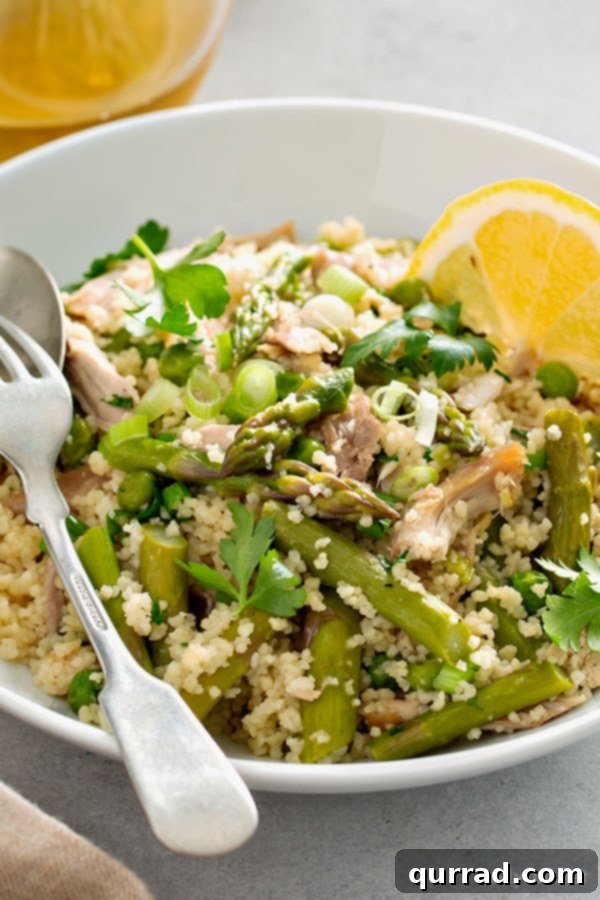
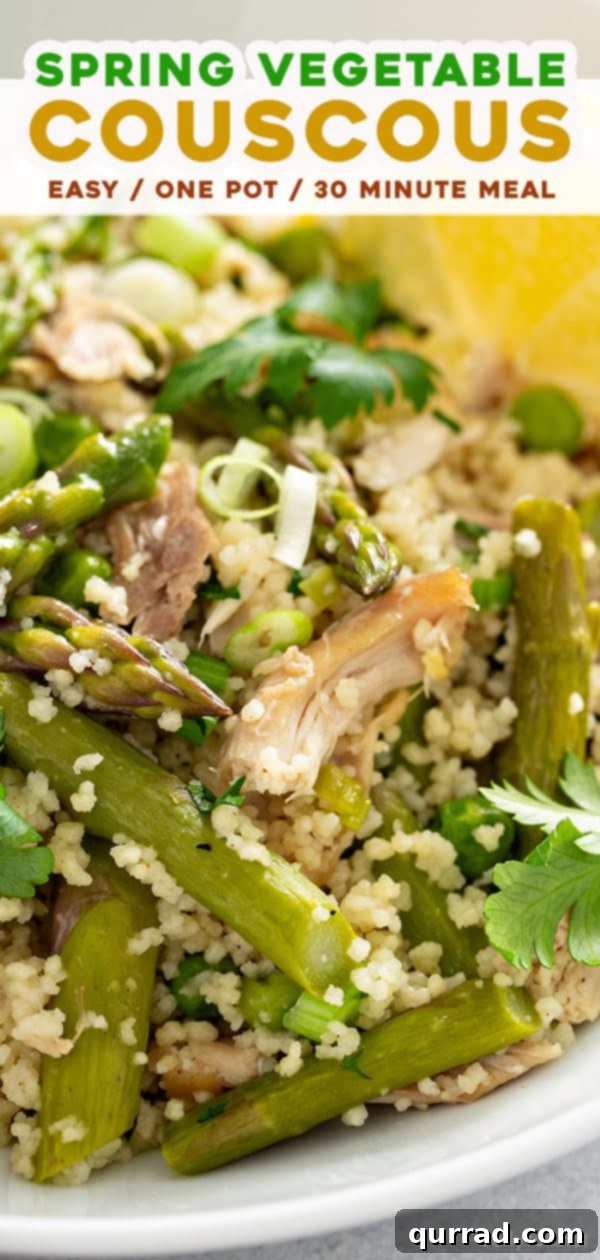
This Spring Vegetable Couscous with Chicken recipe is a celebration of fresh flavors and simple cooking. Imagine a vibrant dish brimming with tender Moroccan couscous, crisp asparagus spears, sweet baby peas, and bright scallions, all perfectly complemented by seasoned, succulent chicken. This isn’t just a meal; it’s an easy-to-prepare, one-pot wonder that comes together in just 30 minutes, making it ideal for any occasion. Whether you’re planning a light lunch, a refreshing brunch salad, a wholesome weeknight dinner, or even a versatile side dish, this recipe offers a delicious solution. It’s truly a delight—light on the palate, bursting with spring freshness, incredibly healthy, and satisfyingly filling.
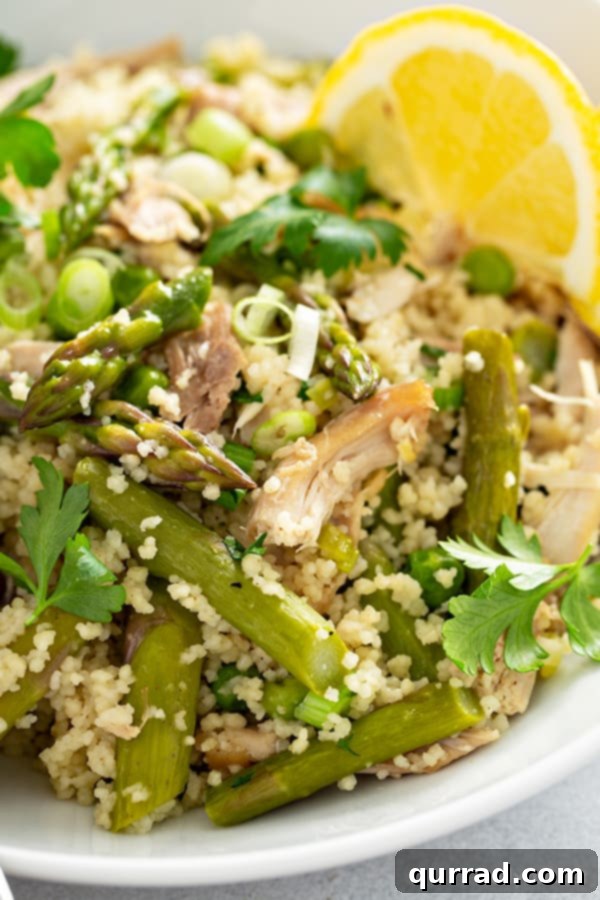
For those who appreciate the joy of simple, flavorful home cooking, this recipe might spark a nostalgic memory, much like it does for me. Do you recall the beloved Martha Stewart magazine, “Everyday Food”? It was a compact gem, yet each issue was packed with an incredible array of easy, delicious meals perfect for any busy weeknight. I was a devoted reader and genuinely saddened when it ceased publication. That little magazine was a treasure trove of culinary inspiration, providing countless fantastic recipes – some I adapted to my family’s taste, others I cherished and never changed.
This particular Spring Vegetable Couscous with Chicken recipe originated from a 2011 issue of “Everyday Food.” From the very first bite, I was completely smitten. Its vibrant flavors and effortless preparation instantly made it a staple in my kitchen, and I’ve been happily preparing it for my family ever since. It’s a testament to the fact that some recipes are simply timeless, offering a perfect blend of convenience and gourmet taste.
What is Couscous? Unpacking This Versatile “Grain”
Often mistaken for a grain, couscous is actually a type of pasta. It’s made from semolina wheat, which is crushed durum wheat, and water, rolled into tiny granules. You could think of it as the delightful offspring of rice and pasta, offering a unique texture that’s both light and satisfying. Its ability to absorb flavors makes it an incredibly versatile base for countless dishes, from savory to slightly sweet.
There are three primary types of couscous, each with distinct characteristics and cooking times:
- Moroccan Couscous is the most common and smallest variety, resembling coarse cornmeal. These tiny granules cook remarkably fast, usually in about 5 minutes, simply by being steeped in hot liquid. Its fine texture makes it excellent for absorbing sauces and flavors, serving as a delicate accompaniment to tagines or stews, or as a quick base for salads.
- Israeli Couscous, also known as pearl couscous or ptitim, is larger, about the size of a peppercorn. Unlike Moroccan couscous, it’s typically toasted before being cooked in liquid, which imparts a nutty flavor and slightly chewy texture. It takes a bit longer to cook, around 10 minutes, and is fantastic in hearty salads, soups, or as a standalone side dish where its pearl-like shape adds visual appeal and substance. The recipe here uses Moroccan couscous for a quicker preparation time, but Israeli couscous can be a delightful alternative if you enjoy a chewier bite.
- Lebanese Couscous, or Moghrabieh couscous, is the largest of the three, comparable in size to a baby pea. This variety requires the longest cooking time, often simmered for 15-20 minutes, yielding a soft, plump texture. It’s traditionally used in rich, slow-cooked dishes and stews, providing a more substantial mouthfeel.
Couscous is not only delicious but also incredibly adaptable. It can be effortlessly flavored with herbs, spices, or citrus, then served on its own as a simple side. It can be incorporated into hearty soups for added body, tossed into refreshing salads, or even used as a binding agent in recipes, much like breadcrumbs. Its mild flavor profile allows it to complement almost any cuisine, making it a valuable ingredient to have in your pantry.
A Symphony of Spring Flavors: Why This Dish Shines
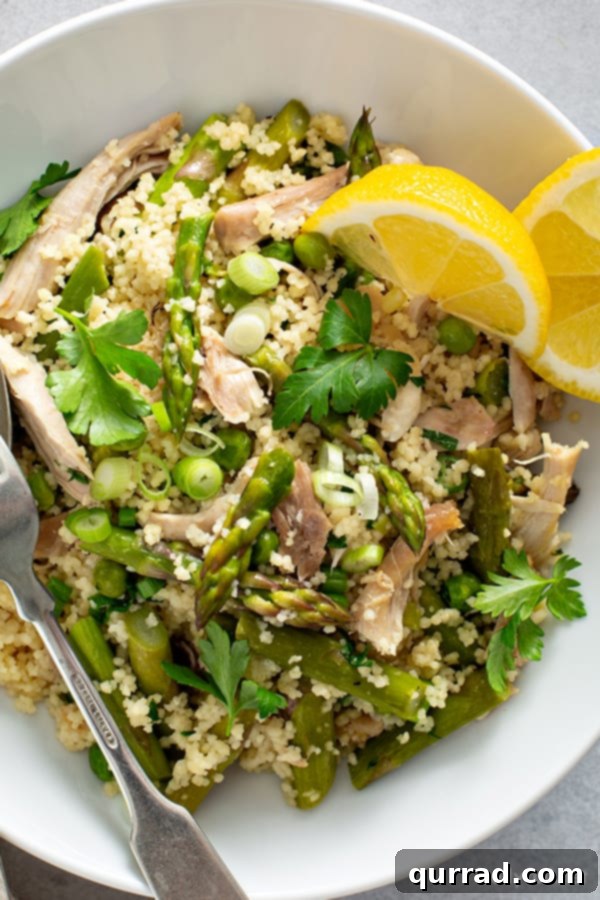
This particular couscous recipe beautifully highlights some of my favorite green vegetables that truly herald the arrival of spring: crisp asparagus, sweet baby peas, and fragrant scallions. The combination is not only aesthetically pleasing but also a burst of fresh, earthy, and subtly sweet flavors. The beauty of this dish lies in its sheer simplicity and efficiency. It’s an incredibly easy meal to prepare, requiring just one pot, which means minimal cleanup – a definite win on busy evenings! In a mere 30 minutes, you’ll have a remarkably flavorful and wholesome meal on your table.
The versatility extends beyond its quick preparation. You can serve this delightful couscous as a satisfying main meal, providing a complete and balanced plate. Alternatively, it makes for a wonderful and elegant side dish, perfectly complementing a variety of main courses. For those seeking a plant-based option, simply omit the chicken, and you have a delicious vegetarian dish that is equally flavorful and nutritious, accommodating almost everyone at your table. Its light yet fulfilling nature makes it perfect for spring gatherings, picnics, or simply a healthy weeknight dinner.
Spring vegetables like asparagus and peas are not just delicious; they’re packed with essential nutrients. Asparagus is an excellent source of vitamins K, A, and C, as well as folate and fiber, contributing to bone health and overall well-being. Baby peas are little powerhouses of protein, fiber, and vitamins, adding a natural sweetness and vibrant color to the dish. Scallions provide a fresh, mild onion flavor that brightens the entire composition without overpowering the delicate spring vegetables. When combined with lean chicken and wholesome couscous, this recipe becomes a truly balanced and nourishing meal that doesn’t compromise on taste.
More Delicious Couscous Recipes to Explore!
If you’ve fallen in love with the versatility and delightful texture of couscous, you’ll be thrilled to discover more ways to incorporate it into your cooking. Here are a few other fantastic couscous recipes to add to your culinary repertoire, each offering a unique flavor profile and fresh ingredients:
- Spring Vegetable Israeli Couscous: Explore a different texture with pearl couscous, combined with the season’s best.
- Eggplant and Basil Israeli Couscous: A savory and aromatic twist perfect for a Mediterranean-inspired meal.
- Israeli Couscous with Cherries and Apple: A surprisingly sweet and refreshing option that works wonderfully as a dessert or unique side.
Each of these recipes showcases the adaptability of couscous, proving it’s much more than just a simple side dish. Whether you prefer savory or sweet, there’s a couscous creation waiting to be discovered. This Spring Vegetable Couscous with Chicken is the perfect starting point to embark on your couscous journey, promising a delightful culinary experience that is both easy and incredibly satisfying.
I genuinely hope you cherish this delicious and incredibly simple recipe as much as my family and I do. Your feedback is invaluable, so please don’t hesitate to leave a review below and share your thoughts. And if you’re looking for more inspiring and easy recipes, make sure to follow Belly Full on Facebook, Instagram, Pinterest, and YouTube! Happy cooking!
{One Pot} Spring Vegetable Couscous with Chicken
Pin
Ingredients
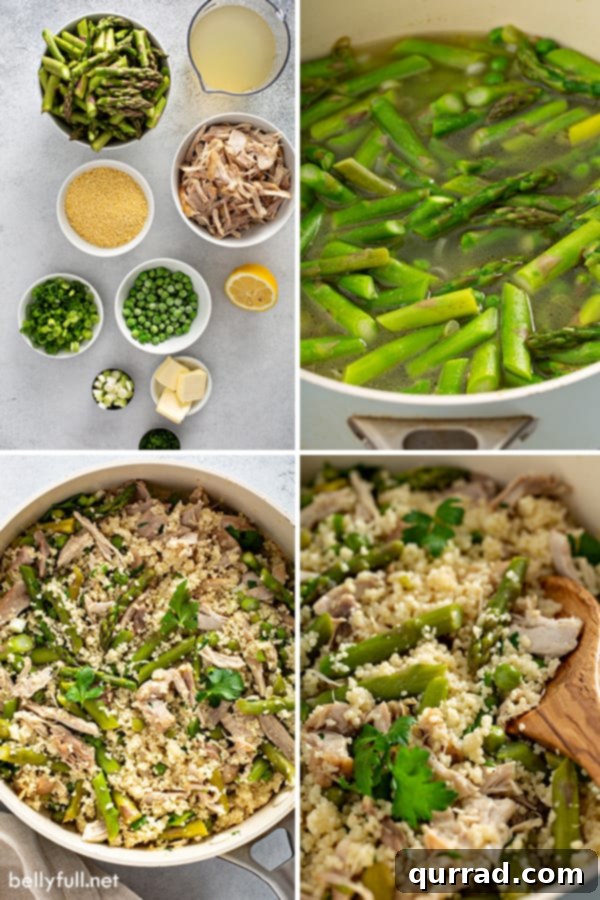
- 3 tablespoons unsalted butter
- 3 scallions, , white and green parts diced and separated
- 1 1/2 cups vegetable broth
- 1 pound asparagus, , woody ends trimmed, cut into 1/2-inch pieces
- 1/2 cup frozen baby peas, , thawed
- salt and pepper, , to taste
- 1 cup plain Moroccan couscous
- 1/2 pound chicken thighs, seasoned, roasted, and torn into bite-sized pieces (or leg and thigh meat from a rotisserie chicken)
- 1 1/2 tablespoons lemon juice
- 2 tablespoons chopped fresh parsley
Instructions
-
In a large nonstick skillet, melt butter over medium-high heat. Add the white parts of the scallions and cook, stirring constantly, until they are softened, which should take about 2-3 minutes.
-
Pour in the vegetable broth and bring the mixture to a rolling boil.
-
Add the cut asparagus and baby peas to the boiling broth. Season generously with salt and pepper to taste, then reduce the heat and gently simmer for 3 minutes to slightly tenderize the vegetables.
-
Bring the liquid back to a boil, then stir in the plain Moroccan couscous.
-
Immediately add the cooked chicken pieces to the pan. Remove the pan from the heat, cover it tightly, and let it sit undisturbed for 7 minutes. This allows the couscous to absorb the liquid and steam to perfection.
-
After 7 minutes, gently stir in the fresh lemon juice, chopped parsley, and the green parts of the scallions. Taste and adjust seasoning with a little more salt and pepper if needed.
-
Fluff the couscous lightly with a fork to separate the grains, then serve immediately and savor this delightful spring meal!
Notes
Nutrition
Nutritional information given is an automatic calculation and can vary based on the exact products you use and any changes you make to the recipe. If these numbers are very important to you, I would recommend calculating them yourself.