
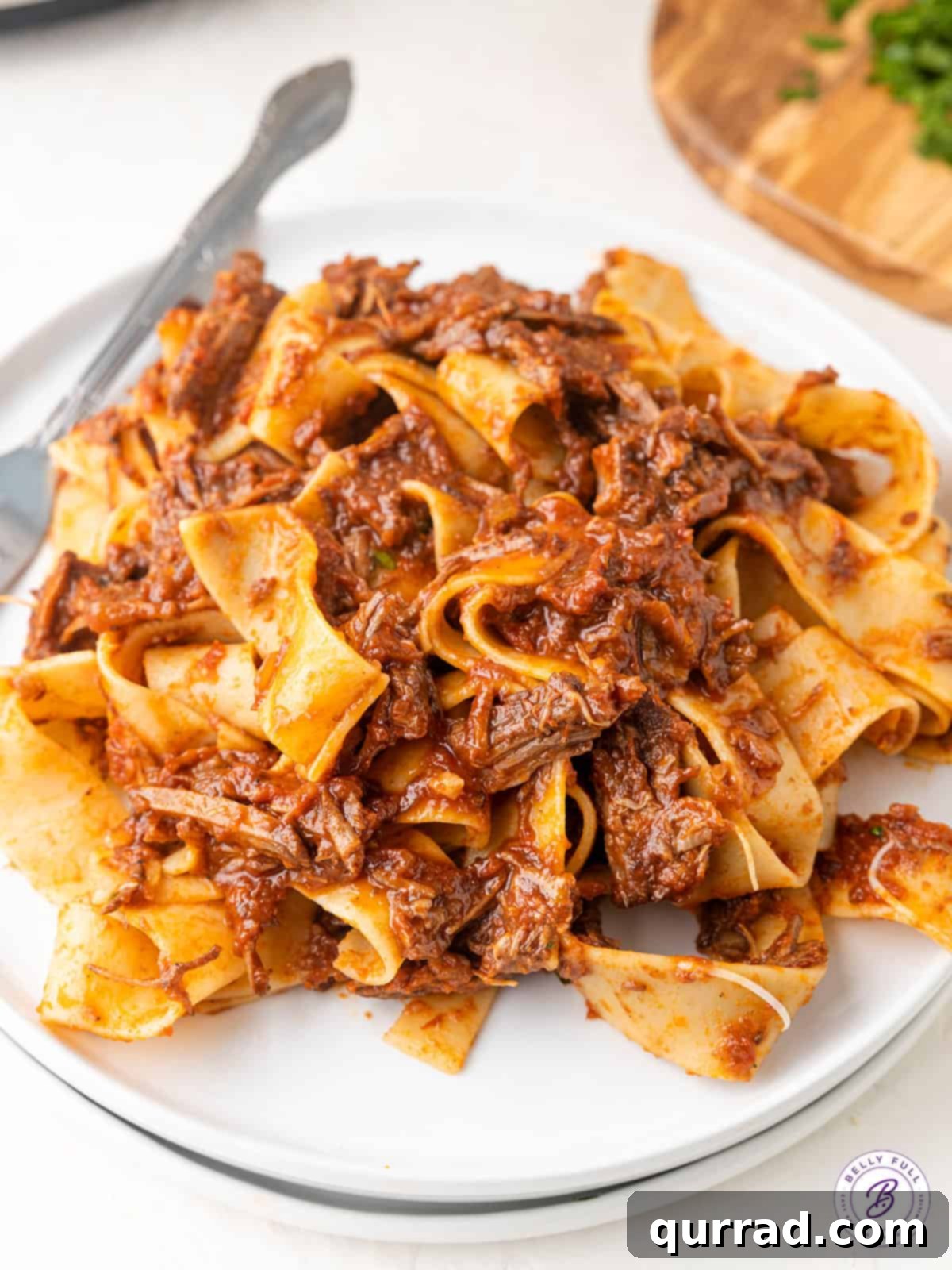
Unlock the secret to a deeply satisfying meal with this incredible Slow Cooker Beef Ragu. Crafted with succulent chuck roast, richly flavored fire-roasted tomatoes, aromatic vegetables, and a splash of robust red wine, this sauce boasts a profound, complex flavor that dances on your palate with every bite. It’s the perfect blend of rustic Italian tradition and modern-day convenience, allowing you to create a gourmet-quality dinner with minimal hands-on effort. Serve it generously over tender pappardelle or your preferred pasta for a truly effortless yet spectacular weeknight feast or a comforting weekend meal.
Are you searching for more fantastic and easy-to-prepare pasta dishes to add to your repertoire? You’ll undoubtedly fall in love with our classic Spaghetti Carbonara and our creamy, indulgent Chicken Alfredo. Both offer delightful flavors and simplicity for busy evenings.
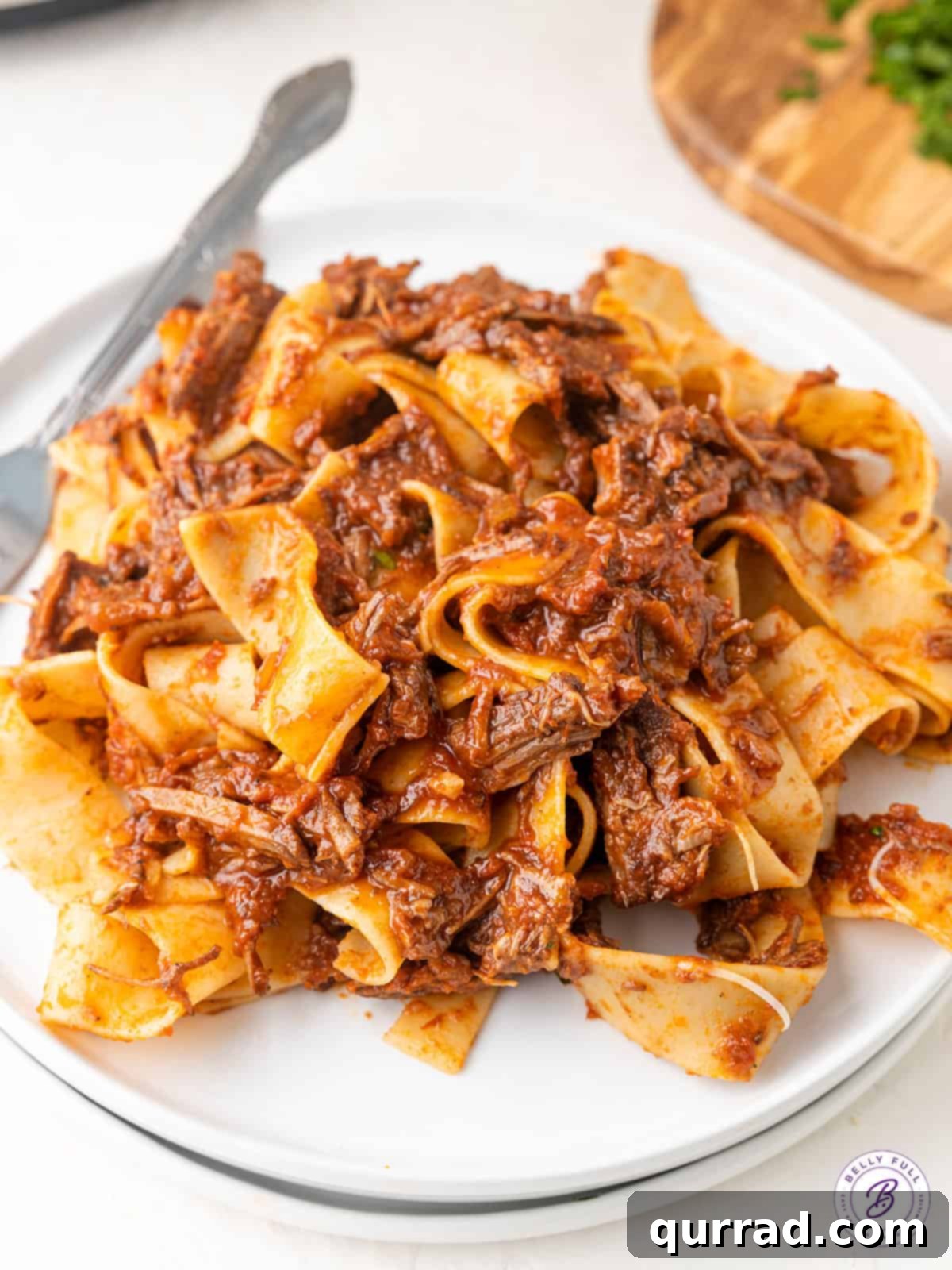
Effortless Slow Cooker Beef Ragu: A Weeknight Wonder
This recipe brilliantly reimagines a traditional Italian beef ragu, transforming it into an incredibly easy and accessible weeknight dinner by harnessing the power of your slow cooker. Forget the need for constant stirring and vigilant simmering over hours; with this method, you simply set it and forget it, letting your slow cooker handle the heavy lifting. Imagine starting your day with just a few minutes of prep, then returning home to the enticing aroma of a rich, slow-cooked sauce. A quick boil of some noodles, and you’re ready to indulge in a mouthwatering, deeply satisfying dinner that tastes like it’s been simmering all day – because it has!
While sharing a similar hearty, meat-based profile, this slow cooker beef ragu stands distinct from my beloved bolognese sauce. The key difference lies in its use of tender, shreddable chuck roast instead of ground beef, offering a richer texture and a more luxurious mouthfeel. Furthermore, the inclusion of dry red wine lends this ragu a slightly more robust and sophisticated flavor profile compared to a classic homemade spaghetti sauce. All three are undeniably delicious, each offering a unique culinary experience. I encourage you to try them all and discover your personal favorite!
What Exactly Is Ragu? Understanding This Italian Classic
Ragu is a cornerstone of Italian cuisine, a hearty, rich, and deeply flavorful meat-based sauce, typically served as a substantial accompaniment to pasta. Unlike lighter, quicker tomato sauces like marinara, ragu is characterized by its long, slow cooking process, which allows the flavors to meld and deepen beautifully, while simultaneously tenderizing the meat to perfection. While often confused with Bolognese (a specific type of ragu from Bologna that typically uses ground meat and sometimes a splash of milk or cream), a broader definition of ragu encompasses various meat sauces from different Italian regions, often featuring larger cuts of meat slowly braised.
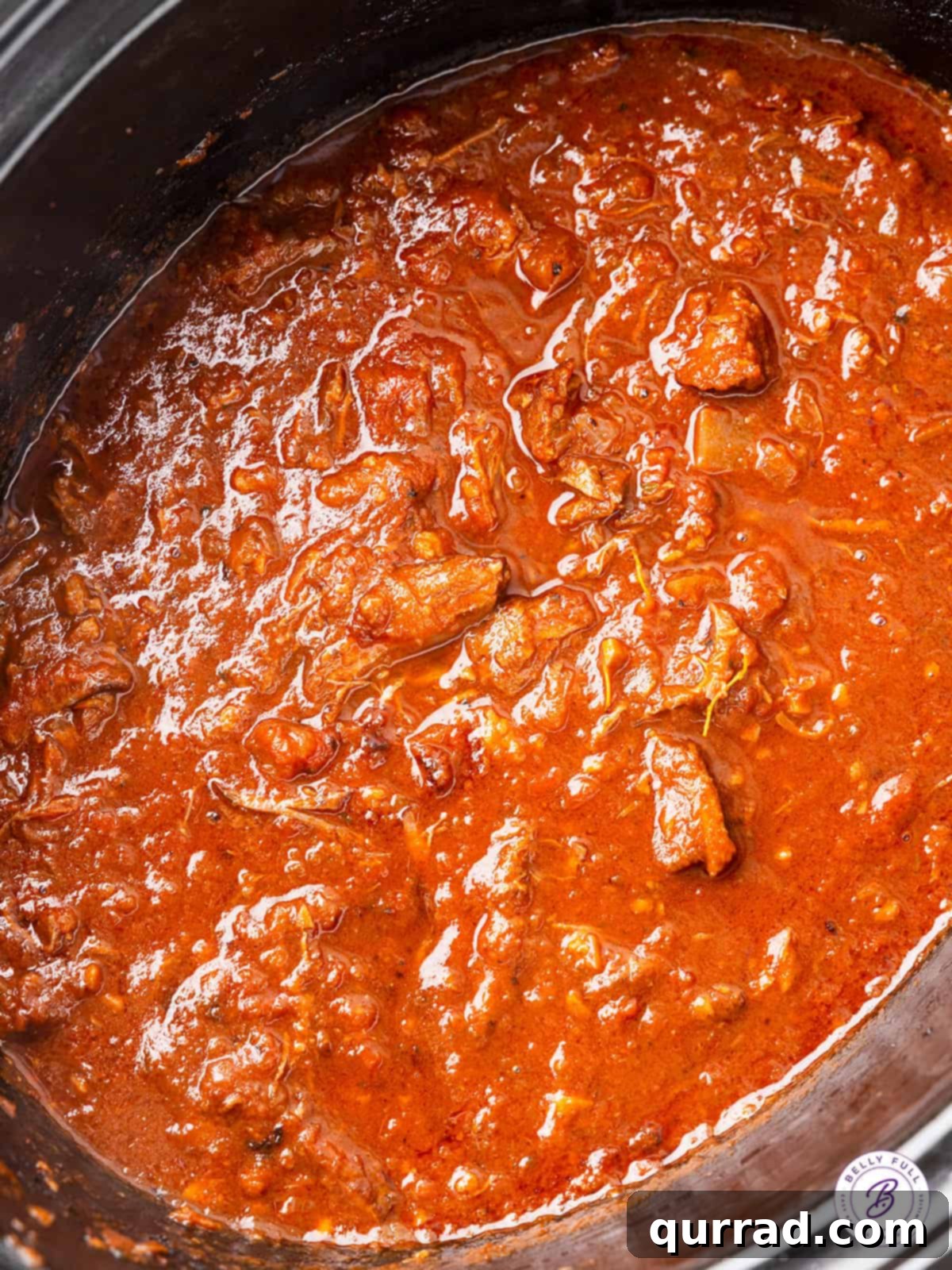
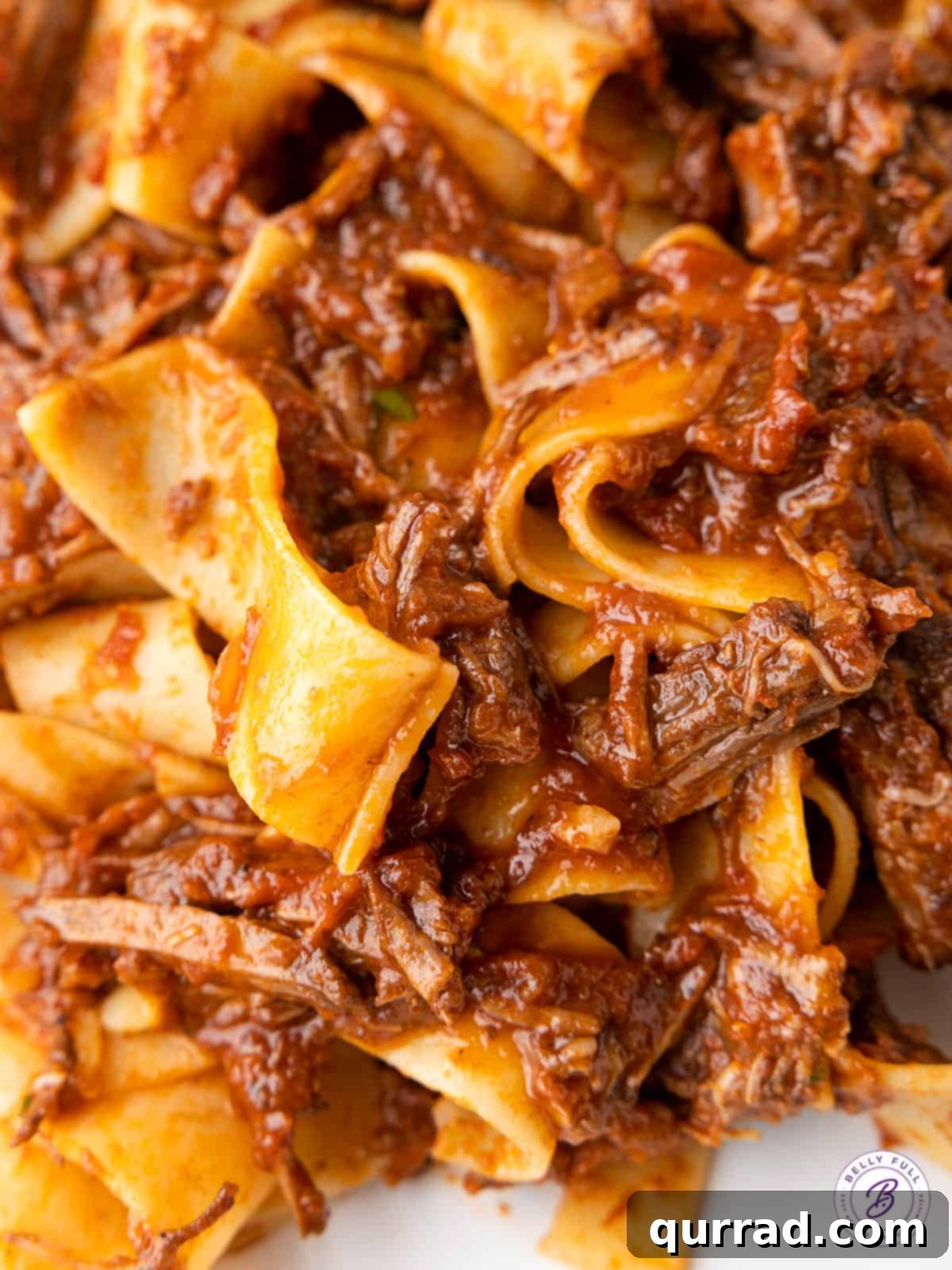
Our slow cooker beef ragu embodies the essence of this traditional dish. It’s usually built upon a foundation of finely diced onions and fragrant garlic, slowly sautéed to release their sweet aromatics. A crucial addition is a dry red wine, which deglazes the pan, capturing all the flavorful browned bits from the meat, and then slowly reduces, adding a wonderful complexity and depth. The result is a thick, chunky, and profoundly savory meat pasta sauce that clings perfectly to wide, flat noodles, most commonly pappardelle, creating an incredibly satisfying and comforting meal.
Essential Ingredients for Your Deeply Flavored Beef Ragu
The magic of this slow cooker beef ragu lies in a carefully selected blend of ingredients, each playing a vital role in building its rich and irresistible flavor profile. From the hearty meat to the vibrant tomatoes and aromatic herbs, every component contributes to a truly memorable dish.
- Olive Oil: Essential for searing the chuck roast, olive oil helps to create a beautiful brown crust, locking in moisture and developing foundational flavors through the Maillard reaction.
- Chuck Roast: The star of the show. This economical cut from the shoulder is perfect for slow cooking. Its rich marbling and connective tissues break down over hours, resulting in incredibly tender, melt-in-your-mouth beef that easily shreds into the sauce. Cut into approximately 2-inch cubes for optimal searing and cooking.
- Onion & Garlic: The aromatic backbone of any great ragu. Sweet, caramelized onions and pungent garlic provide a fundamental layer of savory depth and complexity, creating a flavorful base for the sauce.
- Dry Red Wine: A crucial ingredient for an authentic ragu. Dry red wine, such as a Merlot, Pinot Noir, or Cabernet Sauvignon, serves multiple purposes. It deglazes the pan, lifting all the browned bits (fond) that are packed with flavor, and then slowly reduces, imparting a wonderful acidity and a deep, complex nuance to the sauce. While it doesn’t need to be an expensive bottle, choose something you would enjoy drinking. Avoid “cooking wine” as it often contains added salt and preservatives that can alter the taste.
- Fire-Roasted Crushed Tomatoes: These are a game-changer for ragu. Fire-roasted tomatoes bring an unparalleled smoky depth and a subtly sweet, charred flavor that regular crushed tomatoes simply cannot replicate. They don’t make the sauce spicy; instead, they add a rich layer of complexity. If unavailable, high-quality regular crushed tomatoes can be used, but the fire-roasted variety is highly recommended for that extra dimension.
- Tomato Paste: A concentrated burst of umami and tomato flavor. Just a couple of tablespoons deeply enhance the richness and body of the meat pasta sauce, making it more robust and satisfying.
- Fresh Thyme & Bay Leaves: These classic herbs infuse the sauce with an earthy, savory aroma that complements the beef and tomatoes beautifully. Fresh thyme offers a brighter, more vibrant herbal note, while bay leaves contribute a subtle, almost peppery depth.
- Salt & Pepper: Fundamental seasonings to bring all the flavors into harmony and balance the richness of the dish. Adjust to your personal preference.
- Pappardelle: Traditionally, ragu is served with broad, flat pappardelle noodles, which are perfect for capturing every bit of the thick, chunky sauce. However, this versatile meat sauce pairs beautifully with any other hearty pasta you desire, such as tagliatelle, fettuccine, or even rigatoni. Remember to cook your chosen pasta separately according to package directions.
- Parmesan Cheese (Optional): A generous sprinkle of freshly grated Parmesan cheese adds a salty, nutty, and umami finish that truly elevates the dish. If you require a dairy-free meal, you can easily omit it without sacrificing too much flavor.
Crafting Your Slow Cooker Beef Ragu: A Simple Guide
The true genius of this recipe lies in its simplicity. After a brief burst of active cooking to sear the beef and sauté the aromatics, your slow cooker takes over, effortlessly transforming simple ingredients into a rich, complex ragu. Here’s a detailed breakdown of how to achieve culinary perfection with minimal effort.
- Prepare Your Slow Cooker: Begin by coating the inside of a 6-quart (or larger) slow cooker with a light layer of nonstick cooking spray. This small step helps prevent sticking and makes cleanup a breeze later.
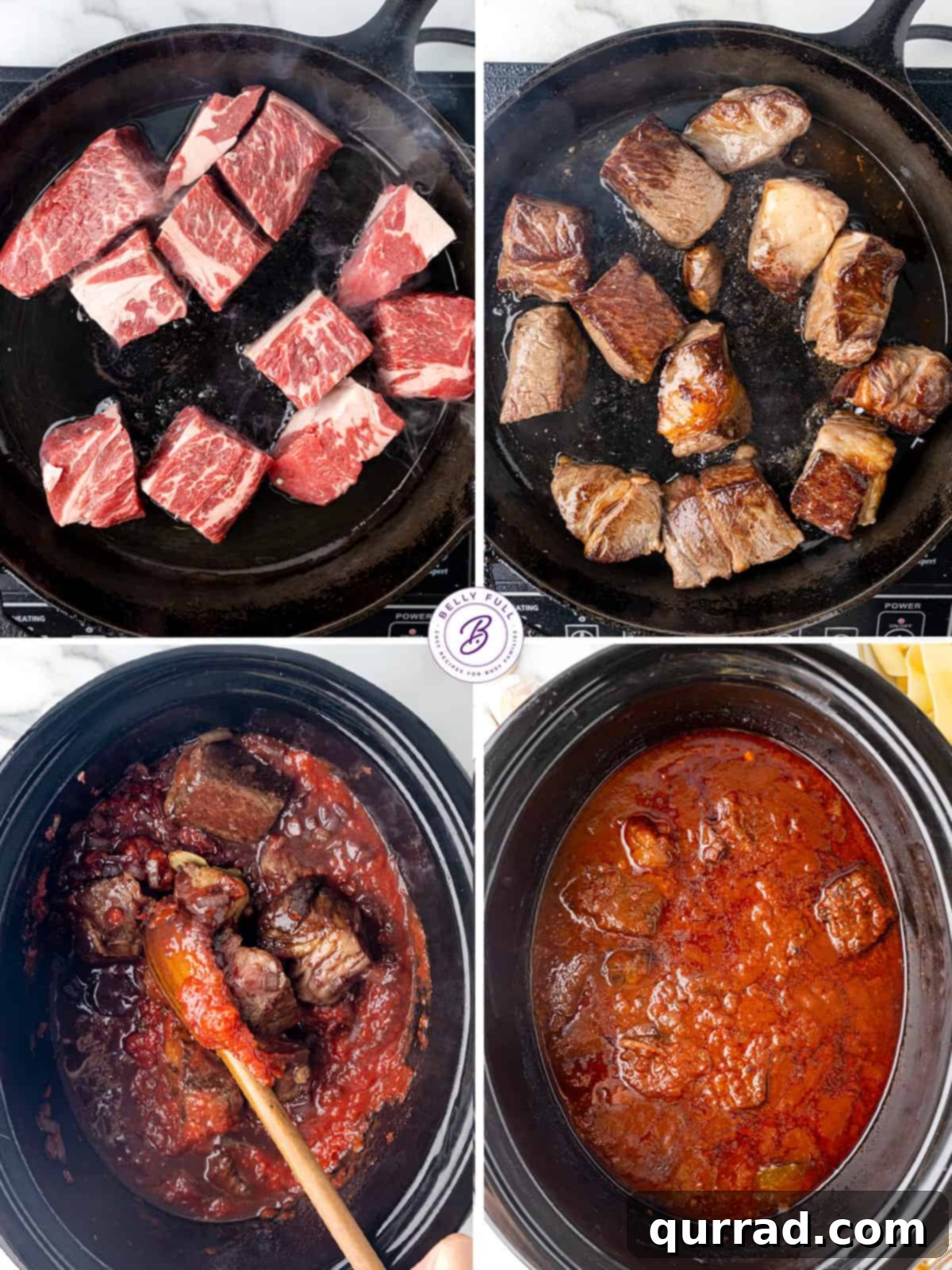
- Sear the Beef for Maximum Flavor: Heat the olive oil in a large, heavy-bottomed nonstick skillet over medium-high heat. Once the oil is shimmering and hot but not smoking, add the cubed chuck roast. Ensure not to overcrowd the pan; work in batches if necessary to allow the beef to sear properly and develop a deep brown crust on all sides. This crucial step, known as the Maillard reaction, creates incredible depth of flavor that will infuse your entire sauce. Transfer the beautifully seared meat to your prepared slow cooker.
- Sauté Aromatics and Deglaze: In the same skillet, add the chopped onions. Sauté them over medium heat, stirring occasionally, until they become soft, translucent, and slightly caramelized, which typically takes about 5-7 minutes. Stir in the minced garlic and cook for just about 20-30 seconds, until fragrant. Be careful not to burn the garlic. Immediately pour in the dry red wine to deglaze the pan. Use a wooden spoon to scrape up any browned bits (fond) stuck to the bottom of the skillet; these are packed with flavor. Allow the wine to simmer vigorously for approximately 2 minutes, letting some of the alcohol evaporate and the flavors concentrate. Transfer this aromatic mixture to the slow cooker with the beef.
- Slow Cook to Perfection: To the slow cooker, add the fire-roasted crushed tomatoes (undrained), tomato paste, fresh thyme sprigs, bay leaves, salt, and black pepper. Stir all the ingredients gently to ensure they are well combined. Place the lid securely on the slow cooker. Set it to cook on the LOW setting for 6 to 8 hours, or on the HIGH setting for 4 to 6 hours. The cooking time will vary slightly depending on your slow cooker and how tender you prefer the beef. The goal is for the meat to be fork-tender and easily shreddable.
- Shred the Meat: Once the cooking time is complete and the beef is incredibly tender, carefully remove the lid. Using two forks, gently shred the beef into smaller, bite-sized pieces directly within the sauce. The meat should practically fall apart. Stir the shredded beef back into the rich ragu.
- Serve and Savor: Your slow cooker beef ragu is now ready to enjoy! Serve it generously over your freshly cooked pappardelle or other favorite pasta. For an extra layer of flavor and a beautiful presentation, sprinkle with freshly grated Parmesan cheese. This dish pairs wonderfully with a crisp side salad and some warm crusty bread to soak up every last drop of the delicious sauce.
Pre-Cooking Ingredients: Is It Worth the Extra Step?
You might be tempted to skip the initial searing and sautéing steps, wondering if they truly make a difference. I can confidently say that taking the extra time to properly sear the beef and sauté the aromatics before adding them to the slow cooker is highly recommended. This process creates a noticeable and significant enhancement to the overall depth and complexity of flavors in your ragu. Searing the meat develops a rich, browned crust through the Maillard reaction, locking in juices and creating savory “fond” (browned bits) at the bottom of the pan that are flavor powerhouses. Sautéing the onions and garlic until softened and fragrant builds a crucial aromatic base. While you can skip these steps if you are truly pressed for time, be aware that the final flavor profile will be less robust and nuanced. For the best possible ragu, embrace the short initial effort – it truly elevates the end result.
Expert Tips & Delicious Variations for Your Beef Ragu
Making homemade beef ragu in the slow cooker is already straightforward, but these tips and variations will help you perfect the dish and customize it to your liking, ensuring a consistently delicious outcome every time.
- Don’t Skip Searing the Beef: As mentioned, this step is critical. Searing creates a flavorful crust on the meat and develops rich “fond” in the pan, which contributes immensely to the ragu’s deep, savory taste. Take your time and sear in batches if necessary to avoid overcrowding the pan, which would steam the meat instead of browning it.
- Explore Pasta Alternatives: While pappardelle is the traditional choice and excellent for catching the hearty sauce, feel free to use any pasta you have on hand or prefer. Wide, flat noodles like tagliatelle or fettuccine work beautifully. Hearty shapes like rigatoni, penne, or even cavatappi also hold up well and collect the chunky sauce in their ridges. The key is to choose a pasta that can stand up to the richness of the ragu.
- Wine Substitution: If you prefer not to use alcohol or don’t have red wine on hand, an equal amount of beef broth or even vegetable broth makes an excellent substitute. While the wine adds a unique depth, good quality broth will still yield a flavorful and delicious sauce.
- Perfect Pasta Timing: For the best results, cook your pasta separately from the sauce. A great strategy is to start boiling your water and cooking the pasta just about 15-20 minutes before the ragu is finished cooking and you’re ready to shred the meat. This ensures your pasta is fresh, al dente, and hot, ready to be tossed with the warm ragu at more or less the same time for immediate serving.
- Adjusting Consistency: If your ragu seems too thick after cooking, you can thin it out slightly by stirring in a splash of pasta water or extra beef broth until it reaches your desired consistency. If it’s too thin, you can simmer it uncovered on the stovetop for a short period to reduce, or add a cornstarch slurry (1 tablespoon cornstarch mixed with 2 tablespoons cold water) to the slow cooker during the last 30 minutes of cooking.
- Add Fresh Herbs at the End: While dried herbs cook beautifully in the slow cooker, a sprinkle of fresh chopped parsley or basil just before serving can add a vibrant, fresh note that brightens the entire dish.
- A Touch of Sweetness: Some traditional ragu recipes include a pinch of sugar to balance the acidity of the tomatoes. Taste your ragu towards the end of cooking, and if you find it a bit too acidic, a tiny pinch of sugar can help mellow it out.
Serving Your Delicious Slow Cooker Beef Ragu
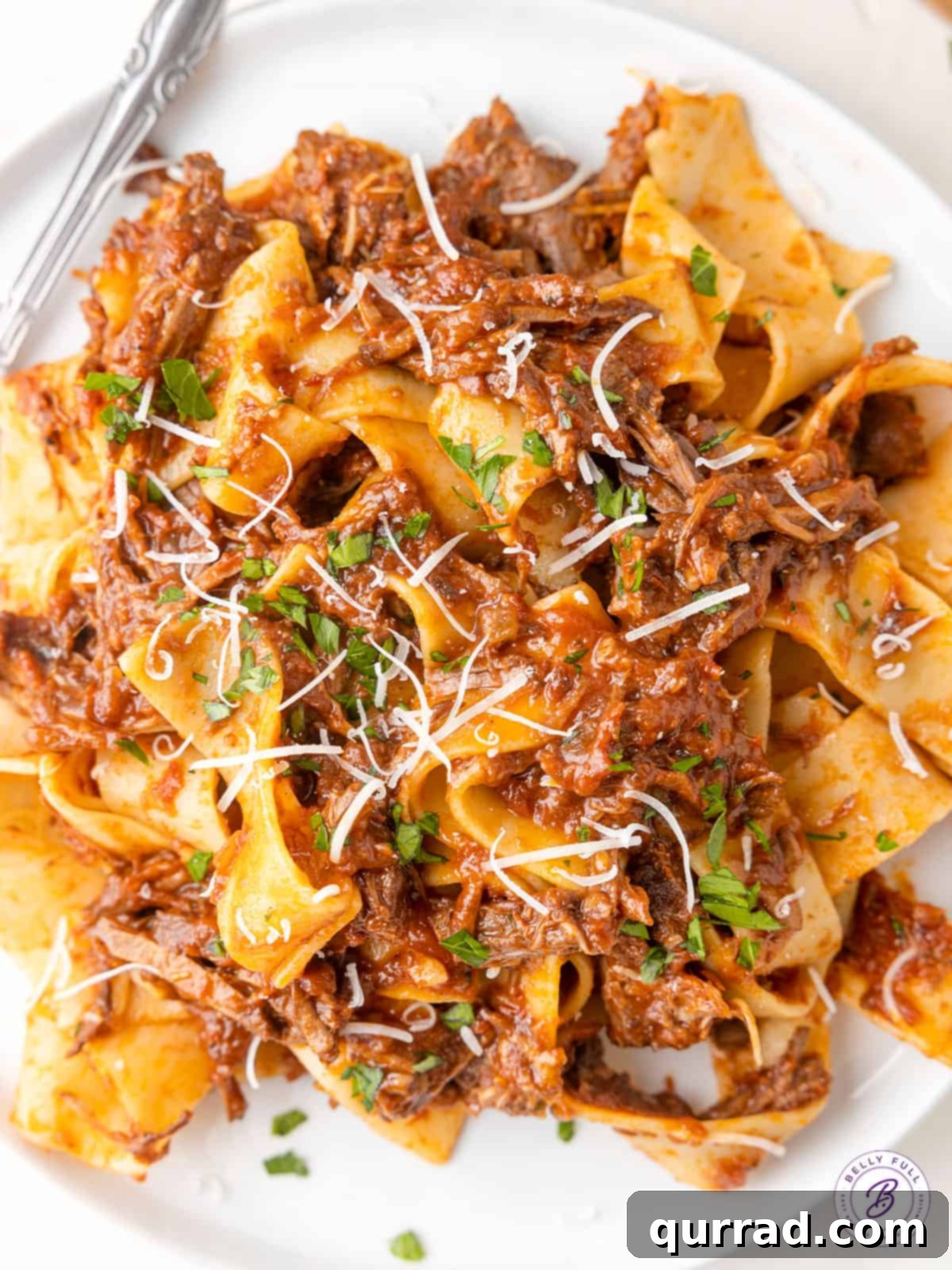
The beauty of this slow cooker beef ragu is its versatility and inherent comfort. The most classic and recommended way to enjoy this rich sauce is over a generous bed of perfectly cooked pasta. As previously mentioned, broad pappardelle noodles are traditionally paired with ragu, as their wide, flat surface provides the ideal canvas for capturing every luscious chunk of meat and sauce. However, feel free to explore other pasta shapes like tagliatelle, fettuccine, rigatoni, or penne; choose whichever your family enjoys most. A hearty sprinkle of freshly grated Parmesan cheese over the top adds a salty, nutty, and umami finish that truly completes the dish. If you are preparing a dairy-free meal, simply omit the cheese – the ragu is flavorful enough to stand on its own.
To complement this robust main course, I love to keep the sides classic and simple. A crisp and refreshing side salad, perhaps with a light vinaigrette, or a more substantial Caesar salad, provides a welcome contrast to the richness of the ragu. And of course, no Italian-inspired meal is complete without some delicious bread for soaking up every last drop of that incredible sauce. Simple breadsticks are always a good choice, but a warm, crusty slice of garlic bread is an even tastier option. For a fun and interactive side dish that’s sure to impress guests, consider serving some pull-apart garlic parmesan bread – it’s both easy to make and incredibly delicious!
Storing and Freezing Leftover Beef Ragu
One of the many benefits of making a slow cooker beef ragu is how well it stores, often tasting even better the next day as the flavors continue to meld and deepen. This makes it an ideal dish for meal prepping or ensuring you have delicious leftovers for busy days.
- Storing Leftovers in the Fridge: To keep your ragu fresh and flavorful, transfer any leftover meat sauce into an airtight container. It will happily last in the refrigerator for up to 6 days. For optimal freshness and to prevent the pasta from becoming soggy, I highly recommend storing the ragu separately from any leftover cooked pasta. When ready to reheat, you can gently warm it on the stovetop over medium-low heat, stirring occasionally, or use the microwave in short intervals until heated through.
- Can You Freeze Ragu Pasta Sauce? Absolutely! This slow cooker beef ragu pasta sauce freezes exceptionally well, making it a perfect candidate for batch cooking. Allow the ragu to cool completely before transferring it to freezer-safe containers or heavy-duty freezer bags. Ensure there’s minimal air in the container or bag to prevent freezer burn. Properly stored, it will maintain its quality in the freezer for up to 6 months. To enjoy, simply thaw the frozen ragu overnight in the refrigerator, then reheat gently on the stove or in the microwave until piping hot.
More Hearty Beef Crockpot Recipes to Explore
If you love the ease and deliciousness of slow cooker meals, especially those featuring beef, you’re in for a treat! The slow cooker excels at transforming tougher cuts of meat into incredibly tender, flavorful dishes with minimal effort. Here are some more of our favorite beef recipes that are perfectly suited for your crockpot:
- Slow Cooker Beef Brisket: Tender, smoky, and falling apart, this brisket is perfect for sandwiches or a hearty plate.
- Corned Beef & Cabbage: A classic comfort food, incredibly flavorful and simple to prepare in the slow cooker.
- Slow Cooker Beef Stew: A timeless and wholesome meal, packed with tender beef, vegetables, and a rich gravy.
- Slow Cooker Pot Roast: The ultimate Sunday dinner, yielding incredibly tender meat and vegetables with deep savory flavors.
- Taco Soup: A fun and flavorful twist, perfect for a casual weeknight dinner with all your favorite taco toppings.
I sincerely hope you adore this incredibly delicious and easy Slow Cooker Beef Ragu recipe as much as we do. Please remember to share your experience and leave a review below – your feedback is invaluable! Don’t forget to follow Belly Full on TikTok, Facebook, Instagram, Pinterest, and YouTube for more delightful recipes and culinary inspiration!
Slow Cooker Beef Ragu
Including chuck roast, fire-roasted tomatoes, aromatics, and red wine, this Slow Cooker Beef Ragu has a deep, rich flavor bursting in every bite. Serve over pappardelle or your favorite noodles for an easy weeknight dinner.
Ingredients
- 2 tablespoon olive oil
- 2 pound chuck roast, cut into 2-inch cubes
- 1 medium onion, chopped
- 5 cloves garlic, minced
- 1 cup dry red wine
- 28 ounce can fire-roasted crushed tomatoes, undrained
- 2 tablespoons tomato paste
- 4 sprigs fresh thyme
- 2 bay leaves
- 2 teaspoons salt
- 1 teaspoon pepper
- 16 ounces pappardelle, cooked per package directions, for serving
- 1/4 cup freshly grated parmesan cheese, for serving (optional to keep this meal dairy-free)
Instructions
- Coat a 6-quart crockpot with nonstick spray.
- Warm the olive oil in a large nonstick skillet over medium-high heat. Once shimmering, add the chuck roast pieces with space in between; sear the meat until the sides have browned (you might need to work in batches.) Transfer the meat to the crockpot.
- Add the onions to the skillet and sauté until softened. Stir in the garlic and cook until fragrant, 20 seconds. Deglaze your pan with the red wine and allow it to simmer for two minutes. Transfer the mixture to the crockpot.
- Add to the crockpot, crushed tomatoes, tomato paste, fresh thyme, bay leaves, salt, and pepper; stir to combine. Cover with the lid and set it to low for 6 to 8 hours or high for 4-6 hours.
- Using two forks, shred the meat into small pieces.
- Serve the ragu over the cooked pasta with a sprinkling of Parmesan cheese.
Notes
Sear the beef. Searing the beef and sautéing the aromatics before transferring to the slow cooker adds so much extra flavor to the dish and you will notice it in the end result.
Swap out the wine. If you don’t drink alcohol, you can replace the wine with beef broth.
Can’t find pappardelle? This meat pasta sauce can be used with any pasta.
Cook the pasta separately. I like to begin cooking the pasta just before I shred the meat, so everything is ready to serve at more or less the same time.
Nutrition
Carbohydrates: 51g |
Protein: 33g |
Fat: 20g |
Saturated Fat: 7g |
Polyunsaturated Fat: 2g |
Monounsaturated Fat: 10g |
Trans Fat: 1g |
Cholesterol: 129mg |
Sodium: 322mg |
Potassium: 878mg |
Fiber: 4g |
Sugar: 7g |
Vitamin A: 378IU |
Vitamin C: 12mg |
Calcium: 108mg |
Iron: 5mg
Nutritional information given is an automatic calculation and can vary based on the exact products you use and any changes you make to the recipe. If these numbers are very important to you, I would recommend calculating them yourself.
Did you make this? Leave a rating below!