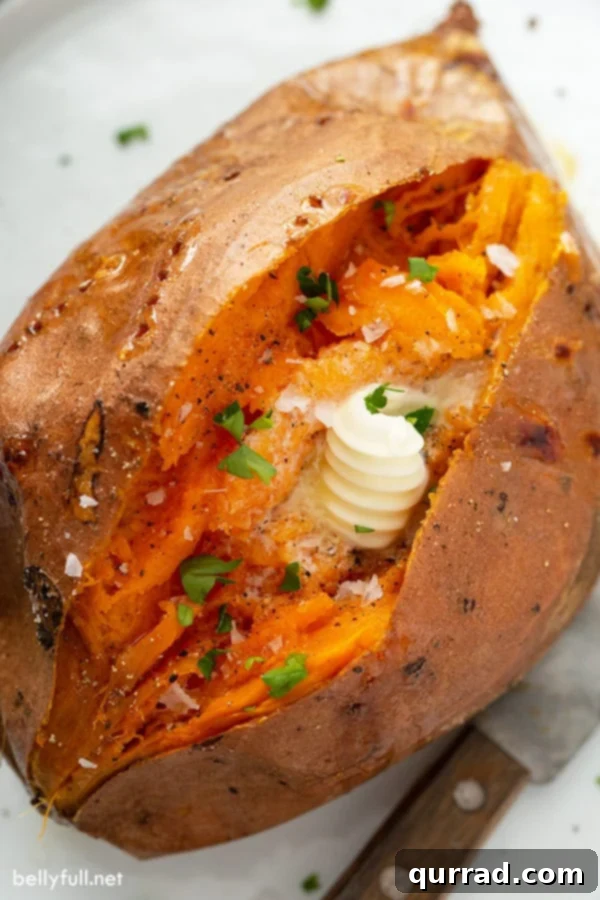
How to Bake the Perfect Sweet Potato: Crispy Skin, Fluffy Inside
Achieving a perfectly baked sweet potato with a wonderfully crispy skin and a melt-in-your-mouth fluffy interior is easier than you think! This foolproof guide and recipe will show you exactly how to transform humble sweet potatoes into a fantastic side dish, requiring only a few basic ingredients like butter, salt, and pepper. Oven-baked sweet potatoes are incredibly versatile and pair beautifully with countless meals, making them a staple in any kitchen.
If you’re a fan of sweet potatoes, be sure to explore our other delicious recipes, including irresistible Air Fryer Sweet Potato Fries and savory Twice Baked Sweet Potatoes.
The same simple techniques that make for the best classic baked potatoes also work wonders for sweet potatoes, ensuring consistent perfection every time.
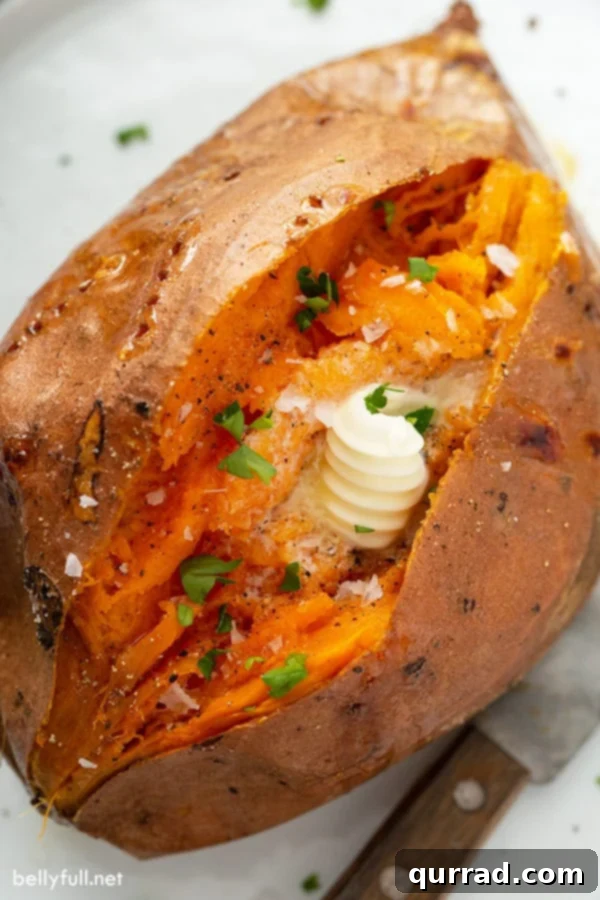
Baking a sweet potato is a skill anyone can master. While the process is straightforward, there are specific steps to follow to guarantee that coveted crispy exterior and tender, fluffy inside. Once baked, you can enjoy them plain, allowing their natural sweetness to shine, or load them up with a myriad of toppings to create diverse and exciting flavors.
Why Sweet Potatoes are a Must-Have
Beyond their delicious taste and comforting texture, sweet potatoes are nutritional powerhouses. They are an excellent source of beta-carotene, which the body converts to vitamin A, essential for vision, immune function, and skin health. They’re also rich in vitamin C, manganese, and several B vitamins, as well as dietary fiber, which aids digestion and promotes a feeling of fullness. Incorporating sweet potatoes into your diet is a simple and tasty way to boost your nutrient intake.
Selecting and Preparing Your Sweet Potatoes
The journey to a perfect baked sweet potato begins with choosing the right ones and preparing them meticulously.
How to Choose the Best Sweet Potatoes
- Size Matters: Look for sweet potatoes that are firm, smooth, and free of soft spots, blemishes, or sprouts. For even cooking, especially when baking multiple at once, select potatoes that are uniform in size and shape. This ensures they all finish cooking around the same time, preventing some from being undercooked while others overcook.
- Skin Color: While there are many varieties, the common red-skinned or orange-fleshed sweet potatoes are excellent for baking. Their natural sweetness intensifies beautifully in the oven.
Essential Preparation Steps for Baked Sweet Potatoes
- Wash and Scrub Thoroughly: Sweet potatoes grow underground, so a thorough cleaning is paramount. Use a stiff brush to scrub away any dirt or debris under running water. This ensures a clean eating experience, especially if you plan to enjoy the crispy skin.
- Dry Them Completely: This step is critical for achieving that desired crispy skin. After washing, use a clean, lint-free kitchen towel to dry each sweet potato meticulously. Any residual moisture will steam the skin in the oven rather than allowing it to crisp up.
- Rub with Oil: Coating the sweet potatoes generously with oil helps the skin achieve a beautiful golden-brown crispness and adds flavor. While olive oil, vegetable oil, or coconut oil all work wonderfully, for an indulgent twist, consider bacon grease – it imparts an incredible savory depth. Ensure the entire surface of the potato is lightly coated before baking.
- Season Generously with Salt: Don’t underestimate the power of salt! A generous application of coarse sea salt or Kosher salt on the oiled skin enhances its flavor significantly, making it truly enjoyable to eat. Table salt can be used in a pinch, but the larger crystals of coarse salt create a more satisfying texture and flavor.
- Poke Holes: Before baking, prick the sweet potatoes all over with a fork, about 6-8 times. These small punctures act as vents, allowing steam to escape from the potato’s interior during cooking. Without them, steam can build up, leading to a softer, less fluffy texture or, in rare cases, causing the potato to burst in the oven.
- Transfer to the Oven: Place the prepared sweet potatoes directly onto a baking sheet. While some people use foil, we’ll discuss why bare baking is better for crispy skin shortly.
- Cut Open Promptly After Baking: Once the sweet potatoes are tender, remove them from the oven. Don’t let them sit for too long before cutting them open. If left intact, the internal steam can condense and make the potato’s flesh dense or gummy. Immediately after baking, use a sharp knife to make a long slit along the top, then gently squeeze the potato to open it up and release the steam. This keeps the interior light and fluffy.

Perfectly Baked Sweet Potato Recipe
This simple recipe focuses on bringing out the natural deliciousness of sweet potatoes with minimal fuss. Here’s what you’ll need:
Ingredients:
- 4 large sweet potatoes (preferably red-skinned, about 10-12 ounces each)
- 4 tablespoons unsalted butter, softened (for serving)
- 1 tablespoon extra-virgin olive oil (or vegetable oil, coconut oil, or bacon grease)
- 1 teaspoon Kosher salt (or coarse sea salt)
- Freshly cracked black pepper (for serving)
You’ll also need a sturdy baking sheet for even cooking. That’s all it takes to create a delightful and nutritious dish!
A large plain baked sweet potato can come in at around 160-170 calories. With the addition of butter and oil as per this recipe, each serving is approximately 290-300 calories, making it a satisfying and enjoyable addition to your meal.
Baking Sweet Potatoes: The Details
Once your sweet potatoes are washed, dried, pricked, oiled, and seasoned, they’re ready for the oven. But there are a few key details that make all the difference.
To Foil or Not to Foil?
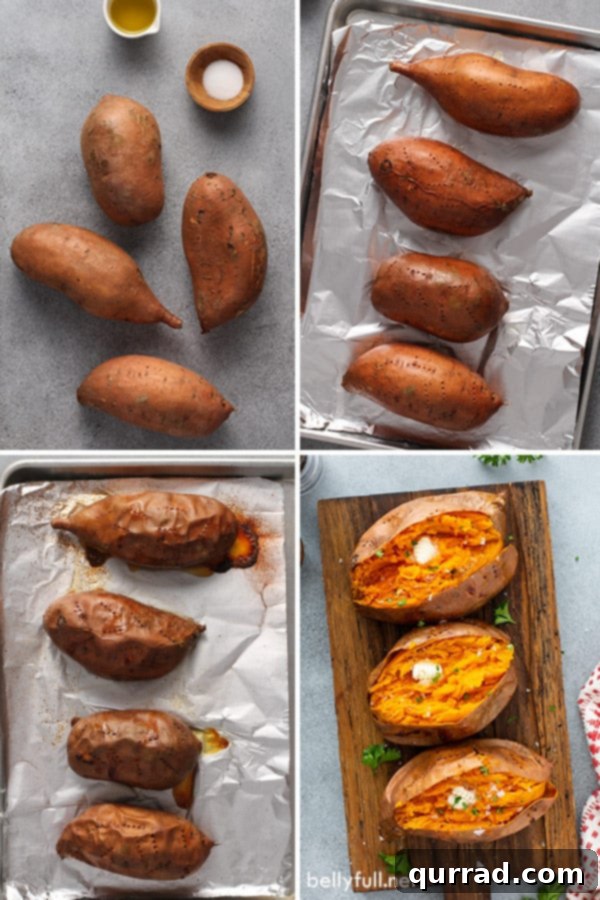
- Many recipes suggest wrapping sweet potatoes in foil before baking, and while this will cook the potato, it actually steams it. If your goal is a truly crispy, edible skin, **ditch the foil!** Baking directly on the baking sheet allows the skin to dry out and crisp up beautifully, giving you that delightful texture contrast.
How Long to Bake Sweet Potatoes?
- Baking time can vary based on the exact size of your sweet potatoes and the specifics of your oven. Generally, a large sweet potato will take between 45 to 60 minutes. Begin checking for tenderness around the 45-minute mark.
What Temperature to Bake Sweet Potatoes?
- For the ideal combination of crispy skin and a tender interior, I recommend baking sweet potatoes at **425 degrees F (220 degrees C)**. This higher temperature helps achieve that desirable crispy skin more effectively than lower temperatures.
- To check for doneness, simply pierce the thickest part of the potato with a fork or knife. It should slide in easily with no resistance. For ultimate precision, an instant-read thermometer should register between 205 to 212 degrees F (96 to 100 degrees C) in the center of the potato.
Troubleshooting Common Issues
- Mushy Interior: This often happens if the potatoes are wrapped in foil or left uncut after baking, allowing steam to build up. Ensure they are baked unwrapped and cut open immediately.
- Dry or Tough Interior: Overcooking can lead to dryness. Always check for doneness with a fork or thermometer at the lower end of the cooking time range.
- Soggy Skin: Insufficient drying or baking at too low a temperature will prevent the skin from crisping. Always dry thoroughly and use the recommended high temperature.
Baked Sweet Potato Microwave Version: A Quick Alternative
- While the oven method yields superior crispy skin and flavor, sometimes you need a quick fix. You can cook a sweet potato in the microwave with decent results, though it won’t truly be “baked” in the traditional sense. Prepare it the same way you would for oven baking (wash, scrub, dry, and prick with a fork). Place the potato on a microwave-safe plate and microwave for 5 minutes, turning it halfway through. Check for tenderness, and if not fully cooked, continue microwaving in 30-second increments until soft. Remember, the skin won’t be crispy, but the interior will be tender and delicious.
Delicious Sweet Potato Toppings and Serving Ideas
A perfectly baked sweet potato, with its naturally sweet flesh and savory, crispy skin, is often delicious on its own. As demonstrated by influencers like @happyhealthyhailey, simple is sometimes best! However, sweet potatoes are incredibly versatile, serving as a blank canvas for a wide array of toppings that can transform them from a simple side dish into a decadent treat or even a hearty main meal. Here are some inspiring ideas:
Classic & Simple Toppings:
- Butter, Salt, and Pepper: My personal favorite! A generous pat of butter melting into the warm flesh, complemented by a sprinkle of flaky sea salt and freshly cracked black pepper, creates a harmonious balance of sweet and savory.
- Butter and Brown Sugar: For those who prefer a sweeter profile, a dollop of butter and a spoonful of brown sugar turns a baked sweet potato into an almost dessert-like experience. Add a pinch of cinnamon or nutmeg for extra warmth.
Savory & Hearty Meal Toppers:
- Mexican Twist: Transform your sweet potato into a Mexican-inspired delight with a generous spoonful of seasoned black beans, corn, diced avocado, a dollop of sour cream or Greek yogurt, and a sprinkle of fresh cilantro. For a protein boost, add cooked chorizo or ground turkey.
- Hawaiian Version: Bring a tropical flair by topping with diced cooked ham and sweet pineapple chunks. A sprinkle of green onions would add a fresh touch.
- Loaded with Leftovers: Baked sweet potatoes are excellent for using up leftovers. Try topping them with a scoop of easy homemade Sloppy Joes, shredded chicken, or chili for a quick and satisfying meal.
- Cheese & Chives: A classic pairing! Melted cheddar or Monterey Jack cheese, crispy bacon bits, and fresh chives offer a familiar comfort food experience.
- Mediterranean Inspired: Top with crumbled feta cheese, chopped olives, sun-dried tomatoes, and a drizzle of balsamic glaze.
Sweet & Dessert-Like Toppings:
- Maple Pecan: Drizzle with maple syrup and sprinkle with toasted pecans and a dash of cinnamon for a cozy, autumn-inspired treat.
- Marshmallow & Cinnamon: For a true comfort food indulgence, top with mini marshmallows and broil until golden and bubbly. A sprinkle of cinnamon after baking is divine.
Creative Sweet Potato Creations:
- Twice Baked Sweet Potatoes: Elevate your sweet potato game by making Twice Baked Sweet Potatoes. This involves scooping out the flesh, mixing it with delicious additions, and then baking it again in the potato skin for an extra special presentation.

Storing and Reheating Baked Sweet Potatoes
If you happen to have any leftover baked sweet potatoes, proper storage ensures you can enjoy them later. Allow them to cool completely, then store them in an airtight container in the refrigerator for up to 3-4 days. To reheat, you can pop them back in the oven at 350°F (175°C) for 15-20 minutes, or until heated through, for the best texture. The microwave can also be used for quicker reheating, but the skin won’t regain its crispness.
Frequently Asked Questions About Baking Sweet Potatoes
Here are answers to some common questions about baking sweet potatoes:
- Q: Can I bake sweet potatoes ahead of time?
- A: Yes, you can bake them up to 3-4 days in advance. Store them in the refrigerator and reheat as directed above. While the skin might lose some crispness, the flavor will still be excellent.
- Q: What’s the difference between sweet potatoes and yams?
- A: In the U.S., what are commonly sold as “yams” are actually a type of sweet potato with a darker, rougher skin and often a moister, sweeter orange flesh. True yams are a different, starchier root vegetable with a bark-like skin and drier, whiter flesh, rarely found in typical American grocery stores.
- Q: Can I use different types of sweet potatoes for this recipe?
- A: Absolutely! While red-skinned or orange-fleshed varieties are common and delicious, you can also use white-fleshed or purple sweet potatoes. Cooking times may vary slightly, but the method remains the same.
I hope you love this delicious and simple recipe for perfectly baked sweet potatoes! Be sure to give it a try and discover your favorite way to enjoy them. For more delightful recipes and cooking tips, don’t forget to follow Belly Full on Facebook, Instagram, Pinterest, and YouTube!
Perfectly Baked Sweet Potato – Recipe Card
Yields: 4 servings
Prep time: 5 mins
Cook time: 45-60 mins
Total time: 50-65 mins
Ingredients:
- 4 large sweet potatoes (red-skinned, about 10-12 oz each)
- 4 tablespoons unsalted butter, softened (for serving)
- 1 tablespoon extra-virgin olive oil (or vegetable oil, coconut oil, or bacon grease)
- 1 teaspoon Kosher salt
- Freshly cracked black pepper (for serving)
Instructions:
- Preheat oven to 425 degrees F (220 degrees C).
- Wash, scrub, and thoroughly dry the sweet potatoes.
- Rub the entire surface of each potato with oil, then season generously with Kosher salt.
- Prick each sweet potato all over with a fork (about 6-8 times).
- Place the prepared sweet potatoes directly onto a baking sheet. Bake until tender, about 45-60 minutes, depending on the size of your potatoes. Start checking for doneness at 45 minutes by piercing with a fork.
- Once tender, remove from the oven. Let cool for about 5 minutes, then use a sharp knife to make a long slit along the top of each potato. Gently squeeze the potato to open it up and release steam, ensuring a fluffy interior.
- Top with a pat of unsalted butter and season with additional salt and freshly cracked black pepper before serving. Enjoy!
Notes:
For detailed tips, helpful information on selecting sweet potatoes, extensive topping suggestions, and a microwave baking alternative, please refer to the full article above.
Nutrition (per serving, estimated with butter and oil):
- Calories: 293 kcal
- Carbohydrates: 37g
- Protein: 4g
- Fat: 15g
- Saturated Fat: 8g
- Cholesterol: 30mg
- Sodium: 648mg
- Potassium: 855mg
- Fiber: 6g
- Sugar: 12g
- Vitamin A: 34942 IU
- Vitamin C: 35mg
- Calcium: 72mg
- Iron: 1mg
Nutritional information is an estimate and can vary based on exact product brands used and any modifications to the recipe. If precise nutritional values are critical, independent calculation is recommended.