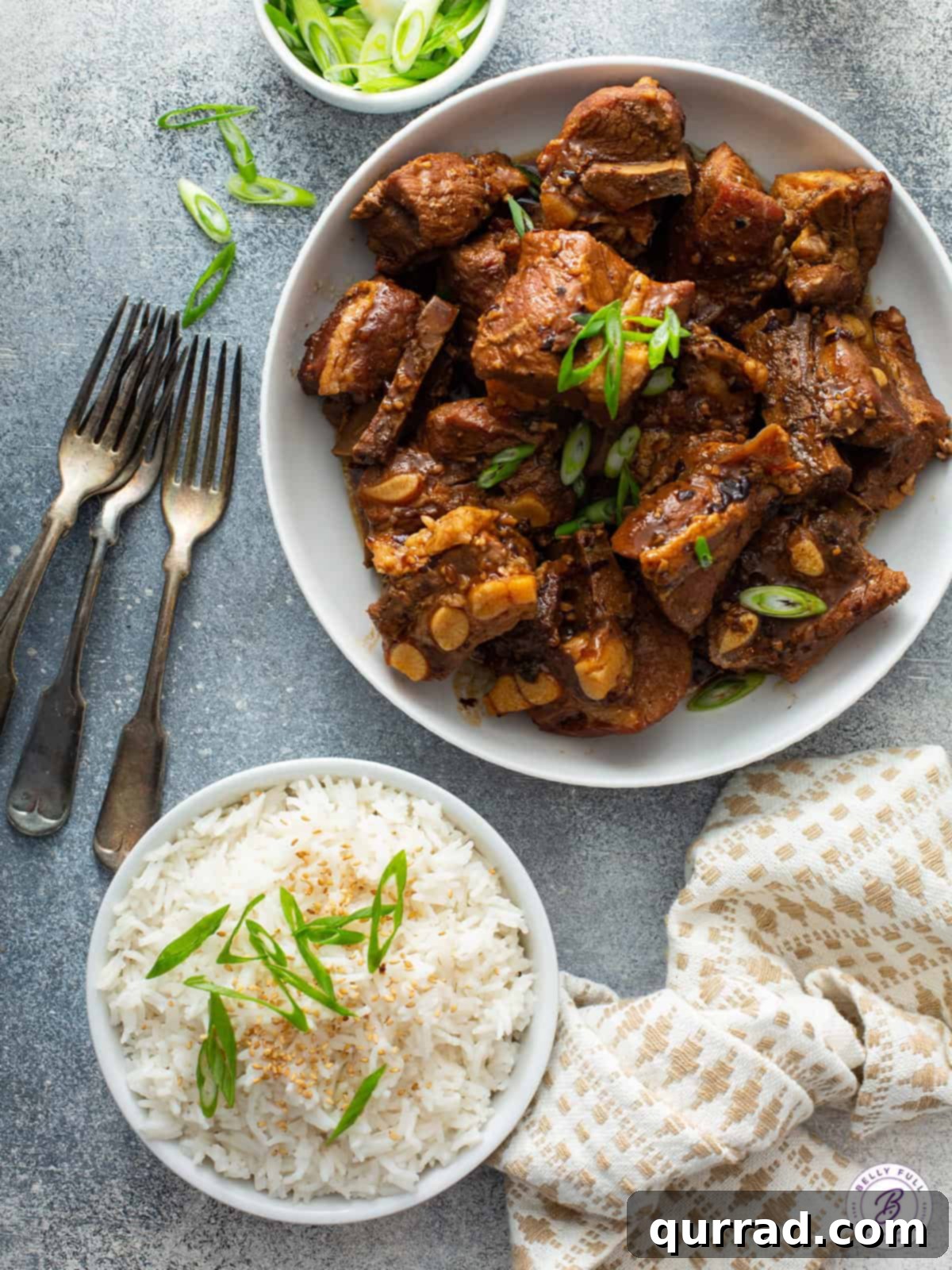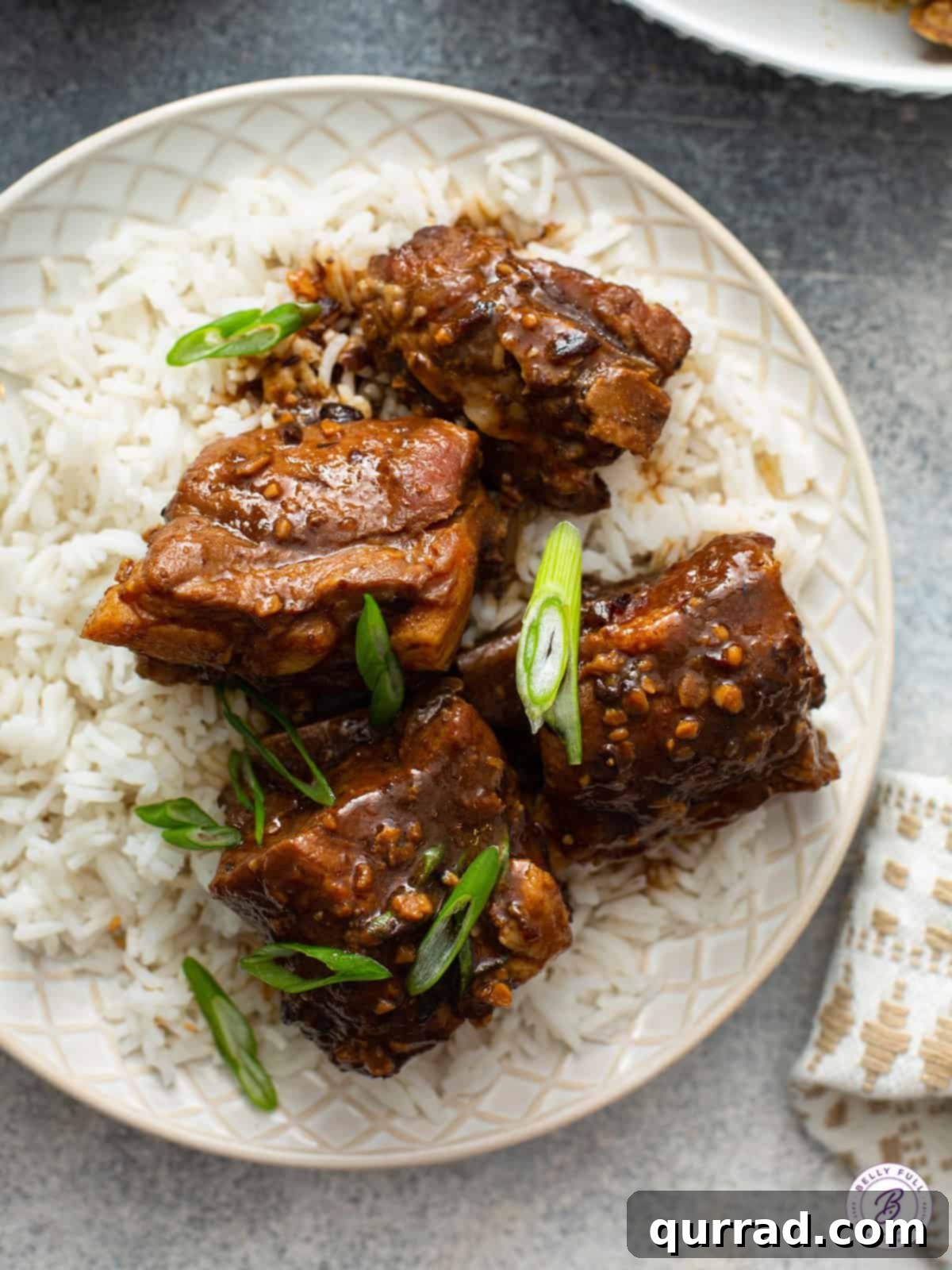
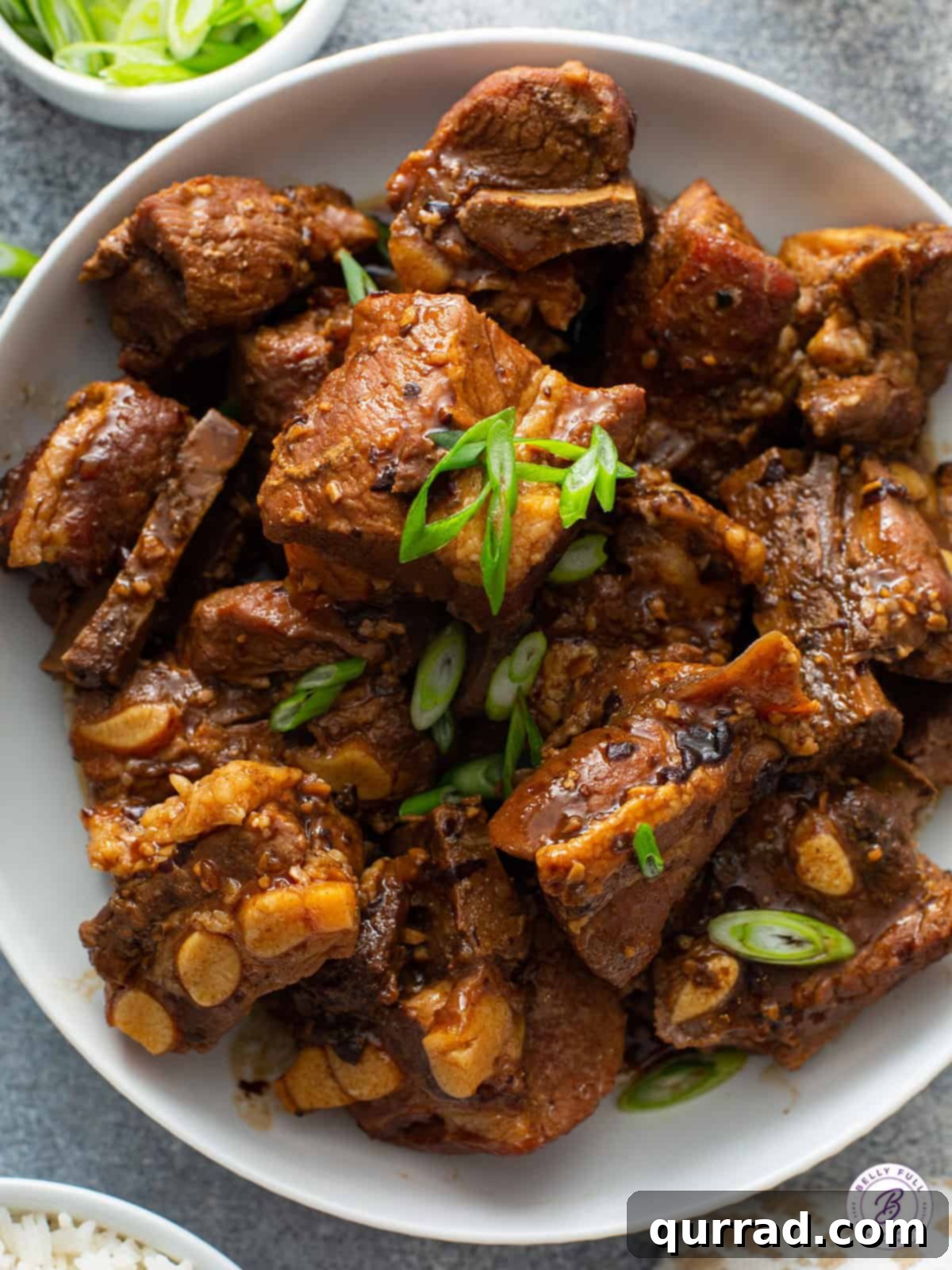
Discover the ultimate recipe for Chinese Spare Ribs, a succulent dish bathed in a rich black bean garlic sauce. This simple yet profound recipe requires less than 10 minutes of active preparation before slow simmering to perfection, yielding meat that is incredibly tender and effortlessly falls off the bone. Paired with fluffy white rice, it promises a deeply satisfying and easy dinner, perfect for any night of the week and destined to become a family favorite.
RAVE REVIEWS
Eliana raves, “This truly is an awesome dish! My entire family adored the intricate combination of flavors. My husband specifically requested that this recipe earn a permanent spot in our family cookbook.”
A Taste of Home: My Favorite Chinese Spare Ribs Recipe
Growing up, my kitchen was a vibrant hub of authentic Chinese flavors, thanks to my mom’s incredible culinary skills. From meticulously prepared homemade dumplings and crispy egg rolls to her famous sweet and sour chicken, always presented in an exquisite ornate turquoise ceramic bowl, every meal was an experience. Among these cherished memories, her Chinese spare ribs held a special place, often requested and always devoured. This recipe brings back all those wonderful nostalgic flavors, delivering comfort and deliciousness in every bite.
Unlike the traditional steamed black bean spare ribs often found at dim sum restaurants, this particular recipe embraces a slow-simmering approach. Think of it less as a quick steamed dish and more like a hearty beef stew, where the pork ribs gently cook in an aromatic broth for several hours. This extended cooking time is the secret to achieving unbelievably tender meat that practically melts in your mouth and effortlessly slides off the bone. The resulting broth is nothing short of incredible – deeply flavorful and perfectly seasoned. Any leftover broth is a treasure, absolutely delicious when spooned over hot rice for a quick and satisfying lunch the next day.
Why You’ll Fall in Love with These Chinese Spare Ribs
- Effortless Preparation: With less than 10 minutes of hands-on time, this recipe is perfect for busy weeknights or relaxed weekend cooking.
- Fall-Off-The-Bone Tenderness: The slow simmering process guarantees ribs that are incredibly succulent and easy to eat.
- Rich & Complex Flavor: The black bean garlic sauce creates a savory, umami-rich, and slightly sweet profile that is utterly addictive.
- Versatile Meal: Ideal as a standalone dish with rice, or easily paired with your favorite Asian-inspired side dishes.
- Family Favorite: A proven crowd-pleaser that will have everyone asking for seconds.
Essential Tips for Perfect Chinese Spare Ribs
Achieving restaurant-quality Chinese spare ribs at home is simpler than you might think, especially with a few key considerations:
- Selecting and Preparing Mini Pork Ribs: For this recipe, I highly recommend using baby back ribs, known for their generous meat-to-fat ratio. The trick is to have your butcher cut them into 2-inch pieces, creating convenient, bite-sized “mini ribs” where meat remains attached to the bone. This specific cut allows for quicker cooking and easier serving. Upon receiving them, it’s crucial to inspect each piece for any small bone fragments or sharp edges that might have splintered during cutting. A quick wipe with a paper towel and a snip with kitchen shears can ensure a smooth, safe eating experience. Consistent sizing is also key for even cooking, impacting the overall tenderness and cook time.
- The Magic of Black Bean Garlic Sauce: While traditional recipes might call for fresh garlic and fermented black beans, which can be challenging to source outside of a specialty Asian market, a jarred black bean garlic sauce is a fantastic, flavorful shortcut. Brands like Lee Kum Kee are widely available in the International aisle of most major grocery stores. This pre-made sauce delivers all the authentic, pungent, and savory notes without the extra effort, truly enhancing the dish’s depth of flavor.
- Choosing the Right Soy Sauce: I primarily use low sodium soy sauce in this recipe, as it, combined with the black bean garlic sauce, provides ample seasoning without making the dish overly salty. If you’re looking to add a luxurious, deep mahogany color and a slightly sweeter, richer flavor profile, Chinese dark soy sauce is an excellent alternative. Be mindful, however, that dark soy sauce is often saltier, so you might need to adjust other salty components accordingly to maintain balance.
- The Best Broth for Flavor: Through extensive testing with various liquids—including beef broth, vegetable broth, and even plain water—low sodium chicken broth consistently emerges as my top choice. It imparts a beautiful foundational flavor to the ribs without overpowering the delicate black bean sauce. It adds richness without being overly heavy, creating a perfectly balanced savory base for the slow simmer, which is crucial for the final taste.
- Incorporating Dry Sherry: A dry sherry, such as Fino, is ideal for cooking in this recipe, distinct from sweeter sherries used in baking. It contributes a subtle nutty and savory complexity that elevates the overall flavor profile of the sauce. If dry sherry isn’t available, excellent substitutes include Shaoxing rice wine (a staple in Chinese cooking), sherry vinegar, or even rice wine vinegar, each offering a slightly different but equally delicious character.
- Balancing with Granulated Sugar: A small amount of granulated sugar is essential to perfectly balance the savory notes from the black bean sauce and soy sauce, as well as the subtle acidity from the sherry. It rounds out the flavors, preventing the dish from tasting too sharp or one-dimensional. This minor addition makes a significant difference in the final taste, creating a harmonious blend of sweet and savory.
- Cornstarch for Silky Sauce: Cornstarch plays a crucial role at the end of the cooking process by thickening the simmering liquid into a glossy, luscious sauce that beautifully coats each rib. It creates that desirable rich consistency, ensuring every bite is enveloped in flavor. Always whisk cornstarch with a cold liquid (broth or water) before adding it to hot liquid to prevent lumps and ensure a smooth, professional-looking sauce.
★
★
★
★
Irresistible Chinese Spare Ribs
⎙ Pin
Ingredients
For the ribs
- 3 pounds meaty bone-in baby back pork ribs, cut into 2-inch pieces, for mini bone-in ribs (request this from your butcher for best results)
- 2 & 1/2 tablespoons black bean garlic sauce (e.g., Lee Kum Kee brand)
- 4 & 1/2 tablespoons low sodium soy sauce
- 1 & 1/2 tablespoons dry sherry
- 1 & 1/2 teaspoons granulated sugar
- 3 cups low sodium chicken broth (or more, as needed to just cover the ribs)
To thicken the sauce
- 1 & 1/2 tablespoons cornstarch
- 3 tablespoons low sodium soy sauce
- 1/2 cup broth from the cooked ribs (or more as needed)
For serving
- diced scallions
- cooked white rice
Instructions
-
In a large, heavy-bottomed pot or Dutch oven, combine all the main ingredients for the ribs (excluding the chicken broth). Mix thoroughly with a spoon or your hands, ensuring each piece of rib is generously coated with the flavorful sauce mixture. Once coated, pour in the low-sodium chicken broth, adding just enough to barely cover the ribs.
-
Bring the contents of the pot to a gentle boil over medium-high heat. Once boiling, immediately reduce the heat to a very low setting to maintain a bare simmer. Cover the pot tightly with a lid and allow the ribs to cook undisturbed for 2 to 2 & 1/2 hours, or until they are incredibly tender and the meat easily falls away from the bone. The longer, slower cook time is key to achieving maximum tenderness. Refer to the notes section for tips on checking for doneness.
-
Once the ribs are perfectly tender, carefully remove them from the pot using a slotted spoon. Transfer the cooked ribs to a large bowl and set aside while you prepare the sauce. This step helps prevent the ribs from breaking apart too much during the sauce-thickening process.
-
To create the luscious, thickened sauce: In a small separate bowl, whisk together the cornstarch, the specified amount of low sodium soy sauce, and 1/2 cup of the hot cooking broth taken directly from the pot. Whisk vigorously until the cornstarch is completely dissolved and no lumps remain. Slowly pour this cornstarch slurry into the simmering liquid in the pot, whisking constantly. Continue to gently simmer for an additional 1 minute, or until the sauce has thickened to your desired consistency – it should be glossy and able to coat the back of a spoon.
-
Return the tender, cooked ribs to the pot with the thickened sauce. Gently toss them to ensure each piece is thoroughly coated in the rich, savory black bean garlic sauce. Be careful not to agitate them too much, as they will be very delicate.
-
Serve these delectable Chinese spare ribs immediately over a generous bed of hot, fluffy white rice. Garnish with freshly diced scallions for a burst of color and a subtle oniony, peppery freshness. Enjoy!
Video Tutorial
Chef’s Notes & Pro Tips
Achieving Perfect Tenderness: The listed cooking time of 2 to 2.5 hours is a general guideline. If your butcher cut the ribs into pieces significantly smaller or larger than 2 inches, or if your simmer isn’t consistent, the cooking time may vary. Begin checking for doneness around 1 hour and 45 minutes into simmering. The ultimate test for tenderness is to gently pull at the meat with two forks; it should easily shred and pull cleanly away from the bone without resistance. Continue simmering, checking every 15-20 minutes, until this ideal texture is achieved.
Beyond the Recipe: Explore our frequently asked questions (FAQs) below for more insights on substituting beef ribs, adapting the recipe for a slow cooker (crockpot), additional serving suggestions, and best practices for storing and reheating any delicious leftovers.
Nutrition Facts
The nutritional information provided is an estimated value calculated automatically and may vary based on the specific brands and precise quantities of ingredients used, as well as any modifications made to the recipe. If precise nutritional values are crucial for your dietary needs, we recommend independently calculating them using a trusted nutrition calculator.
Can You Use Beef Ribs for This Recipe?
While pork spare ribs are a traditional and very popular choice in authentic Chinese cuisine, and indeed the recommended cut for this specific recipe due to their ideal tenderness and fat content, you absolutely can adapt this dish to use beef ribs if that’s your preference or what you have on hand. When opting for beef, select meaty ribs and follow the same preparation and cooking methodology outlined. However, be aware that beef ribs typically contain more connective tissue than pork ribs. This means they will likely require a longer and even slower cooking time to break down those tougher fibers and achieve that desirable fall-off-the-bone tender meat we’re aiming for. Monitor them closely and adjust cooking time as needed, testing for tenderness with a fork. Keep in mind that the flavor profile will be slightly different but equally delicious.
Slow Cooker Adaptation: Making These Pork Ribs in a Crockpot
Although the stovetop slow-simmer method yields the most tender results in my opinion, you can certainly prepare these flavorful Chinese spare ribs in a slow cooker, and they will still be absolutely delicious. For this recipe, you’ll need at least a 6-quart slow cooker to accommodate the quantity of ribs. A crucial adjustment for slow cooker cooking is to significantly reduce the amount of liquid. Use only half the chicken broth specified in the recipe, as slow cookers retain moisture much more efficiently and less liquid evaporates. Cook the ribs on the low setting for approximately 6 hours, or until the meat is incredibly tender and effortlessly pulls away from the bone. If desired, you can briefly sear the ribs in a pan before adding them to the slow cooker to develop a deeper flavor and beautiful caramelized color. Remember to thicken the sauce separately on the stovetop at the end of the slow cooking process, as slow cookers don’t typically allow for effective sauce thickening directly in the pot.
Delicious Serving Suggestions for Your Chinese Spare Ribs
These Chinese Spare Ribs are a complete meal in themselves, but here are some suggestions to elevate your dining experience: The absolute classic way to serve this dish is over a generous portion of hot, fluffy white rice. The rice acts as a perfect canvas, soaking up every drop of that rich, savory, and wonderfully aromatic black bean garlic sauce, ensuring no flavor goes to waste. A sprinkle of freshly diced scallions as a garnish adds a beautiful pop of color and a subtle, refreshing onion-peppery note that perfectly complements the rich ribs. To create a more balanced and comprehensive meal, consider adding a vibrant vegetable side or a light salad. Some of our personal favorites that pair wonderfully include perfectly roasted carrots, crisp roasted broccoli, a refreshing cucumber tomato salad, or a simple garden side salad. You could also venture into other Asian-inspired sides like stir-fried bok choy, steamed green beans with a hint of sesame oil, or even a light and tangy Asian coleslaw.
Storage and Reheating Best Practices
Enjoying these Chinese Spare Ribs as leftovers is just as delightful, and proper storage ensures their deliciousness for days to come:
- Refrigerator Storage: Allow any leftover ribs and sauce to cool down completely to room temperature before storing. Transfer them to an airtight container and place in the refrigerator. Properly stored, they will maintain their quality and flavor for up to 3 days, making them perfect for meal prepping.
- Freezer Storage: For longer preservation, these ribs freeze beautifully. Place the cooled ribs and sauce into an airtight, freezer-safe container or heavy-duty freezer bags, ensuring as much air is removed as possible to prevent freezer burn. For best results, I recommend freezing the ribs and sauce separately if possible, which can help maintain the ribs’ texture. They can be safely stored in the freezer for up to 2 months. When you’re ready to enjoy them again, simply thaw them overnight in the refrigerator for optimal results.
- Reheating Instructions: To reheat, you have a couple of excellent options. For larger batches or if you prefer stovetop reheating, gently warm the ribs and sauce over low heat in a pot or skillet until they are thoroughly heated through, stirring occasionally to prevent sticking and ensure even heating. For individual portions, the microwave works perfectly; reheat in short bursts, stirring in between, until piping hot and fragrant. Be careful not to overheat, which can dry out the meat.
Explore More Asian-Inspired Recipes!
If you’ve loved the savory depth and tender perfection of these Chinese Spare Ribs, we invite you to explore more of our Asian-inspired culinary creations. From quick stir-fries and vibrant noodle dishes to comforting curries, there’s always something new and delicious to discover in our collection to expand your home cooking repertoire. Don’t forget to connect with us on social media for daily recipe inspiration, cooking tips, and behind-the-scenes glimpses:
Be sure to give this delicious and easy recipe a review below! Also don’t forget to follow Belly Full on TikTok, Instagram, Facebook,Pinterest, and YouTube!