
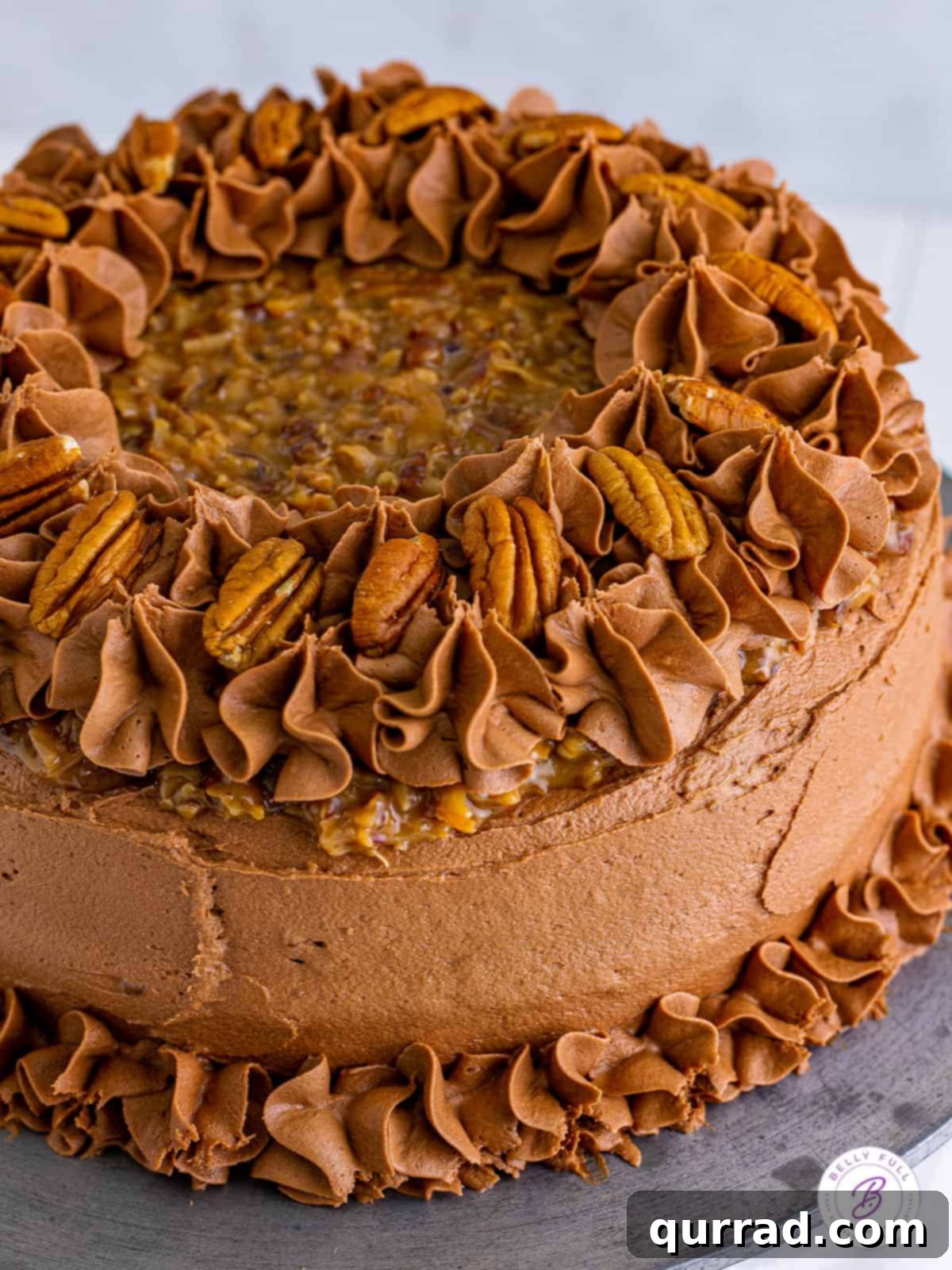
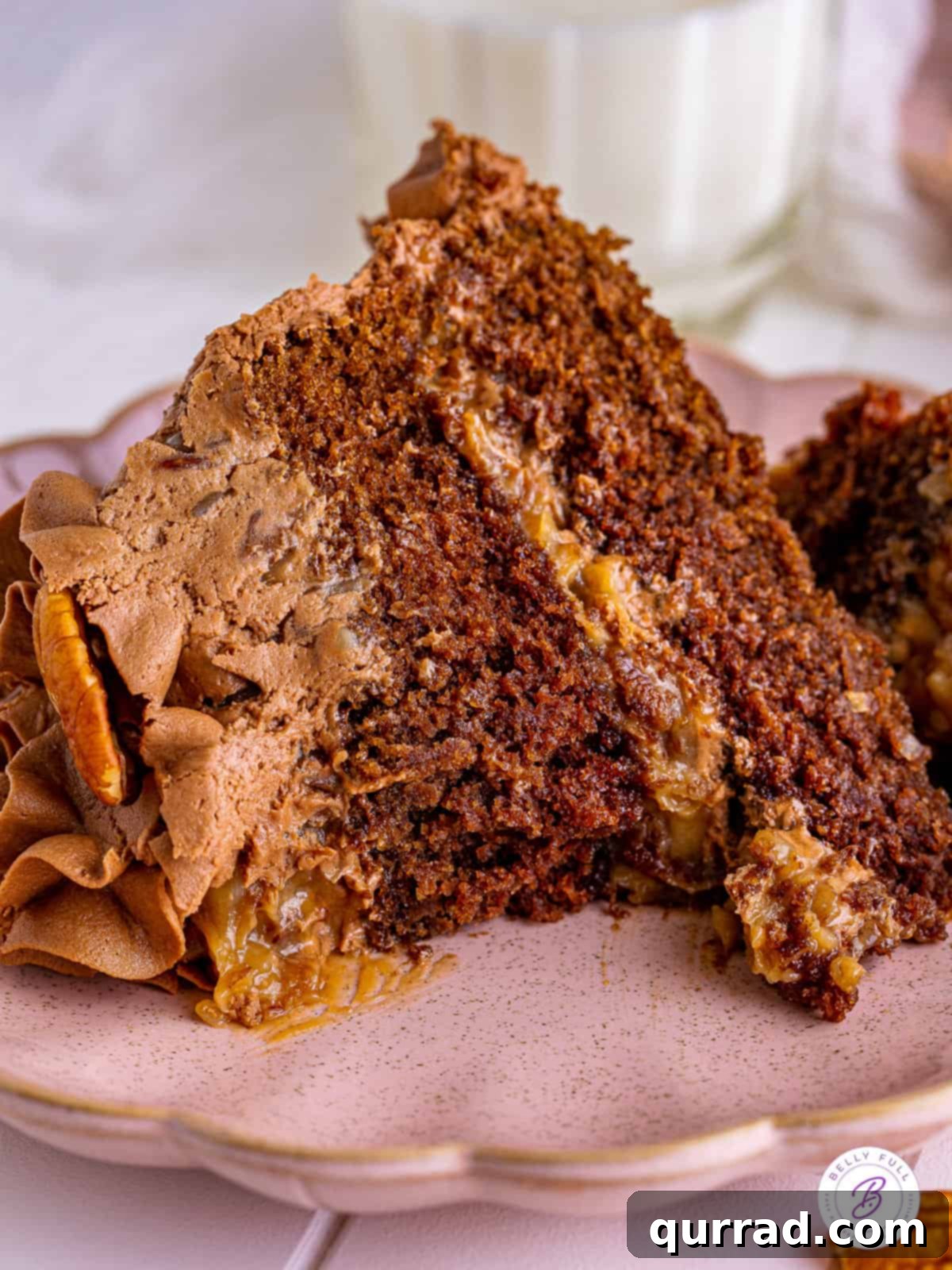
Indulge in the rich, moist layers of a truly magnificent German Chocolate Cake, a dessert that consistently steals the show at any gathering. This iconic cake features two tender chocolate cake layers generously filled with a luscious toasted coconut pecan frosting and beautifully adorned with smooth chocolate buttercream. It’s a symphony of textures and flavors, promising a decadent experience perfect for celebrating life’s special moments or simply elevating your everyday dessert cravings.
Craving more extraordinary layered cakes for your next celebration? Explore our delightful recipes for Hummingbird Cake, the visually stunning Zebra Cake, and the sweetly irresistible Caramel Cake!
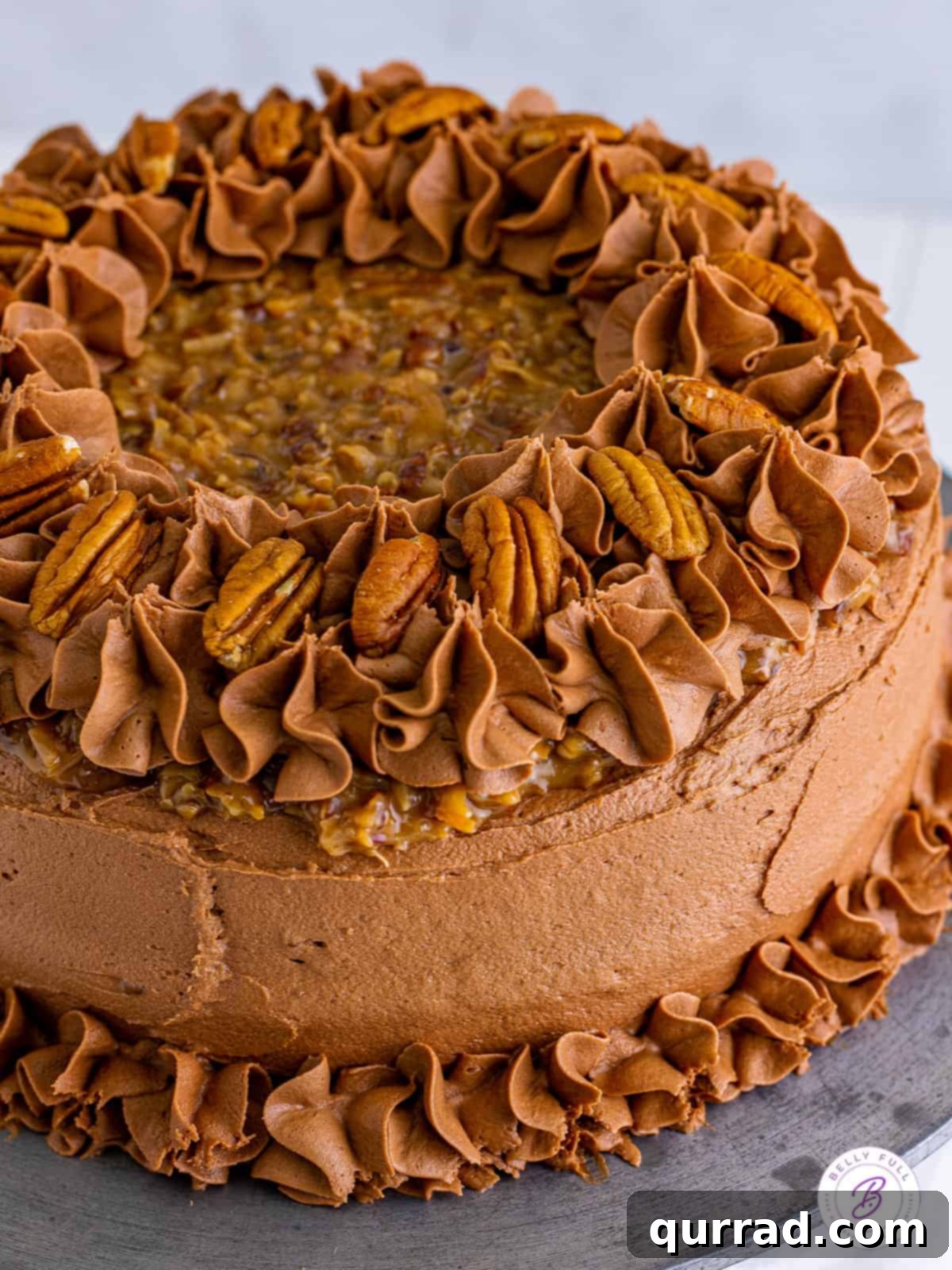
The Ultimate German Chocolate Cake Recipe: A Decadent Delight
This German Chocolate Cake recipe stands out as an absolute masterpiece, transforming a classic chocolate cake into a rich, unforgettable dessert that will leave your guests raving for days. Far from being just another chocolate cake, this recipe delivers an unparalleled depth of flavor and an incredibly moist, tender crumb that perfectly complements its two distinctive frostings.
While the creation of this cake involves several distinct steps, each one is straightforward and contributes to the final, spectacular result. The key to its success lies in allowing sufficient cooling time for both the cake layers and the unique pecan frosting before proceeding to the chocolate buttercream or final assembly. Many bakers find it convenient to prepare the cake layers and the coconut pecan frosting in the morning, dedicating the afternoon to the joyous task of assembling and decorating this culinary gem. This phased approach makes the process enjoyable and manageable, ensuring perfection with every bite.
A crucial step that significantly elevates the flavor profile of this cake is the toasting of the pecans and coconut flakes. This simple process, requiring less than ten minutes, unlocks a deeper, more aromatic essence from these ingredients, making the signature frosting truly extraordinary. Don’t skip this step – it’s a small effort with a huge impact on the overall taste experience.
Unraveling the History: What Exactly is German Chocolate Cake?
Often misunderstood, the German Chocolate Cake is a moist, multi-layered chocolate cake famously topped with a caramel-like coconut-pecan frosting and, in many variations including this one, a generous swirl of chocolate buttercream. Despite its name, this beloved dessert did not originate in Germany. Its unique moniker actually stems from an American baker named Samuel German, who in 1852 developed a dark baking chocolate bar for the Baker’s Chocolate Company in Dorchester, Massachusetts. This specific type of chocolate became known as “German’s Sweet Chocolate,” and a recipe using it gained widespread popularity, particularly after being published in a Dallas newspaper in 1957. The “German” in its name, therefore, refers to the brand of chocolate, not the country of origin.
What truly distinguishes German Chocolate Cake from other chocolate cakes is its use of melted German’s Sweet Chocolate directly in the cake batter, as opposed to relying solely on cocoa powder. This imbues the cake with a distinctly mild, sweet chocolate flavor. The other essential component is its iconic frosting: a thick, custardy blend made with evaporated milk, egg yolks, butter, sugar, and, most importantly, generous amounts of toasted pecans and sweetened coconut. This rich, textured frosting is typically spread between the layers and over the top, creating that signature look and taste. Our recipe enhances this classic by adding a layer of creamy chocolate buttercream, providing an even richer chocolate experience and a smooth finish, though this additional frosting is not universally found on all traditional German Chocolate Cakes.
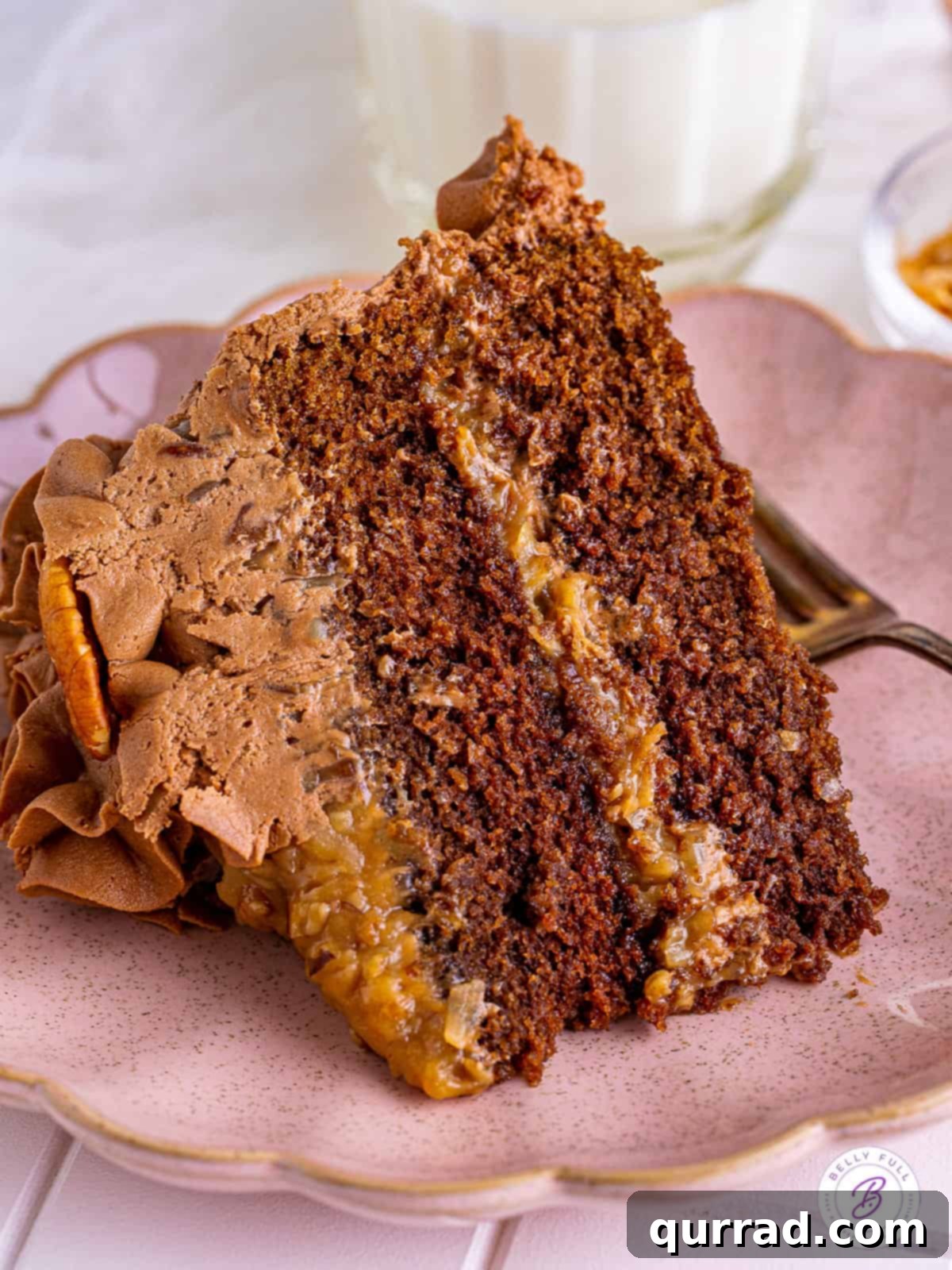
Essential Ingredients for Your German Chocolate Cake Masterpiece
Beyond the signature German baking chocolate, most ingredients for this delightful cake are common pantry staples. While the complete list might seem extensive at first glance, you’ll notice many ingredients are cleverly used in both the cake and the frosting components, streamlining your shopping list. Precision in measurement is key for baking success, so take your time with each component.
For the Cake:
- All-purpose flour: The structural backbone of our cake. Remember to use the spoon and level technique for accurate measuring to avoid a dense cake.
- Baking powder & baking soda: These leavening agents work in harmony to give the cake its beautiful rise and contribute to its exceptionally soft and moist texture.
- Fine sea salt: A touch of salt is essential to balance the sweetness and heighten all the other delicious flavors in the cake.
- Sugars (Granulated & Light Brown): A blend of both granulated sugar and light brown sugar provides the perfect level of sweetness and a subtle caramel note that enhances the chocolate flavor.
- Vegetable oil: Plays a crucial role in ensuring the cake remains incredibly moist and tender, even days after baking.
- Large eggs: Provide structure and richness to the cake batter, binding all the ingredients together.
- Buttermilk: This acidic ingredient reacts with the baking soda, contributing to the cake’s tenderness and moistness while adding a subtle tang.
- Vanilla extract: A flavor enhancer that complements the chocolate beautifully.
- German baking chocolate: The star ingredient that gives this cake its characteristic rich, yet mellow, chocolate flavor profile. Ensure it’s chopped and melted as specified.
- Boiling water: Added at the end of the batter mixing, it helps to bloom the chocolate and ensures a perfectly moist cake.
For the Luxurious Pecan Coconut Frosting:
- Sugars (Light Brown & Granulated): A similar blend of sugars as in the cake, creating a sweet and subtly caramelly base for the frosting.
- Unsalted butter: Provides richness and a smooth, creamy texture to the frosting.
- Large egg yolks: Act as a thickening agent, giving the frosting its signature custardy consistency. (Save the egg whites for another recipe, such as coconut macaroons!)
- Evaporated milk: The key liquid component, providing essential moisture and a distinct flavor that helps create the classic caramel-like base.
- Vanilla extract: Enhances the overall sweetness and complexity of the frosting.
- Toasted sweetened coconut flakes: The toasted flakes are non-negotiable! Toasting intensifies their flavor and aroma, adding incredible depth.
- Toasted chopped pecans: Similarly, toasting the pecans brings out their nutty richness, making them a standout element in the frosting.
For the Silky Chocolate Buttercream (Optional, but Highly Recommended!):
- Unsalted butter: Ensure it’s softened to room temperature for the best results, as it will whip up light and fluffy.
- Semi-sweet chocolate chips: Melted and cooled, these provide the rich chocolate flavor for the buttercream.
- Powdered sugar: For sweetness and to ensure a super smooth, lump-free frosting texture.
- Vanilla extract: A touch of vanilla enhances the chocolate and adds warmth.
- Whole milk: Used to achieve the perfect consistency. While 2% milk can work, whole milk is preferred for its richness. Skim milk is too thin and not recommended.
- Pecan halves: An optional but highly recommended garnish that adds an elegant finishing touch and a delightful crunch.
What If I Can’t Find German Chocolate?
The defining characteristic of a true German Chocolate Cake lies in its use of actual German’s Sweet Chocolate in the batter. This specific chocolate imparts a distinct, milder sweetness and flavor profile that sets it apart. While readily available in most major grocery stores, if you find yourself unable to locate German baking chocolate, you can substitute it with an equal amount of good quality semi-sweet or dark chocolate. The cake will still be incredibly delicious and rich, but it won’t possess the exact traditional “German Chocolate Cake” flavor. For the most authentic experience, we highly recommend sourcing the specific German baking chocolate if possible.
The Art of Toasting: Elevating Pecans and Coconut
Toasting your pecans and coconut is a small step that yields immense flavor rewards, transforming these simple ingredients into aromatic powerhouses that are crucial for the signature frosting. Don’t skip this easy process!
How to Toast Pecans:
- Preheat your oven: Set your oven to 350°F (175°C).
- Arrange the pecans: Spread the chopped pecans in a single, even layer on a baking sheet. This ensures they toast evenly without overcrowding.
- Bake until aromatic: Place the baking sheet in the preheated oven and bake for 5 to 8 minutes. It’s crucial to keep a close eye on them; pecans can burn quickly. Stir or turn them every 2 minutes to promote even toasting and prevent scorching. You’ll know they’re ready when they become fragrant and slightly darker in color.
- Cool immediately: As soon as they are toasted, transfer the pecans to a room temperature plate or cutting board. They will continue to cook and toast from residual heat if left on the hot baking sheet. Allowing them to cool completely before incorporating them into the frosting is essential.
How to Toast Coconut Flakes:
- Preheat your oven: Similar to pecans, preheat your oven to 350°F (175°C).
- Spread evenly: Distribute the sweetened coconut flakes in a single layer on a separate baking sheet.
- Bake with vigilance: Bake for 5 to 8 minutes, watching carefully. Coconut can go from perfectly golden to burnt in a matter of seconds. Stirring them halfway through can help. I typically pull my coconut a shade or two lighter than my desired final color, as it will continue to brown slightly as it cools.
- Rapid cooling: Immediately transfer the toasted coconut to a room temperature plate to halt the cooking process. Allow it to cool completely before adding it to your frosting.
Mastering the Art of German Chocolate Cake: Step-by-Step Guide
Crafting this magnificent chocolate cake might seem like a grand undertaking, but it’s surprisingly straightforward. Each component is manageable, and breaking it down into steps makes the process enjoyable and rewarding.
- Prepare your cake pans and preheat oven: Begin by preheating your oven to 375°F (190°C). Lightly grease two 9-inch round cake pans with nonstick spray. For easy removal and to prevent sticking, line the bottoms of the pans with parchment paper circles, then spray the parchment paper as well. Set these prepared pans aside.
- Combine dry ingredients: In a large mixing bowl, whisk together the all-purpose flour, baking powder, sea salt, and baking soda until thoroughly combined. This ensures the leavening agents are evenly distributed throughout the batter. Set this bowl aside.
- Whisk wet ingredients: In a separate, medium-sized bowl, whisk together the granulated sugar, light brown sugar, vegetable oil, eggs, buttermilk, and vanilla extract until the mixture is smooth and well-incorporated. Next, gently whisk in the melted German baking chocolate until it’s fully combined with the wet ingredients.
- Combine wet and dry mixtures: Pour the wet chocolate mixture into the bowl of dry ingredients. Whisk gently until just combined and no large lumps of flour remain. Be careful not to overmix, as this can lead to a tough cake. Finally, carefully pour in the boiling water and whisk again until the batter is smooth. The batter will be thin, which is normal for this recipe.
- Bake the cake layers: Divide the cake batter evenly between your two prepared cake pans. Bake for 23 to 28 minutes, or until a wooden toothpick inserted into the center of each cake comes out clean, with no wet batter clinging to it.
- Cool the cake layers completely: Once baked, remove the cakes from the oven and let them cool in their pans on a wire rack for about 10-15 minutes. Then, invert them onto the wire rack, remove the parchment paper, and allow them to cool completely to room temperature before frosting. This step is critical; frosting warm cakes will result in melted, messy frosting.
- Prepare the Pecan Coconut Frosting: While the cakes are cooling, begin preparing the signature frosting. In a medium saucepan, combine the light brown sugar, granulated sugar, unsalted butter, egg yolks, and evaporated milk. Whisk these ingredients together until combined (don’t worry if there are still small chunks of butter at this stage, they will melt). Place the saucepan over medium heat and cook, whisking constantly, until the mixture comes to a gentle boil. Continue whisking for about 1 minute as the frosting thickens to a rich, custardy consistency.
- Finish and cool the pecan frosting: Remove the saucepan from the heat. Stir in the vanilla extract, the toasted sweetened coconut flakes, and the toasted chopped pecans. Mix until all ingredients are well distributed. Allow this frosting mixture to cool completely to room temperature before assembling the cake. It needs to be firm enough to hold its shape between the layers.
- Make the Chocolate Buttercream: Once the cake layers and the pecan coconut frosting are completely cool, it’s time for the chocolate buttercream. In the bowl of a stand mixer fitted with the paddle attachment (or using a hand mixer), cream together the softened unsalted butter and the melted and cooled semi-sweet chocolate until smooth and well combined. Gradually add the powdered sugar, a cup at a time, mixing until fully incorporated and smooth.
- Achieve buttercream consistency: Stir in the vanilla extract and 2 tablespoons of whole milk. With the mixer on medium-high speed, whip the frosting for about 3 minutes until it becomes light, fluffy, and spreadable. If the frosting seems too thick, add the remaining 1 tablespoon of milk, a little at a time, until you reach your desired consistency.
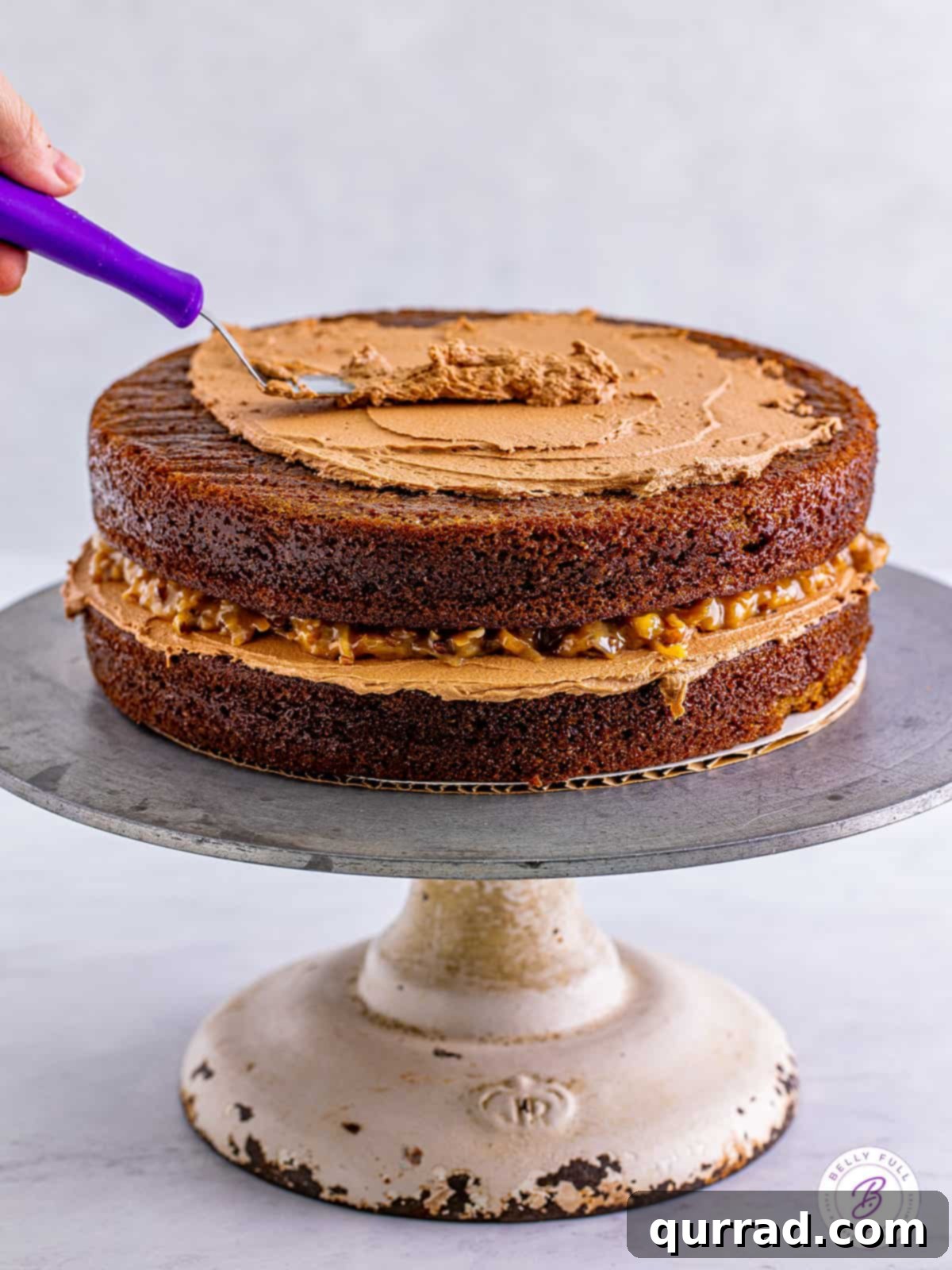
- Assemble the cake – First Layer: Once all components are cooled and ready, carefully remove the cake layers from their pans. If the tops are uneven, use a serrated knife to gently level them. Place one cake layer, bottom-side down, onto your chosen serving platter or cake stand. Spread a thin, even layer of the chocolate buttercream over the top of this cake. Then, spoon half of the cooled coconut pecan frosting over the buttercream, spreading it almost to the edge, leaving about a half-inch border.
- Add the second layer and continue frosting: Gently place the second cake layer on top, top-side down, creating a flat surface. Spread another thin layer of chocolate buttercream over the top of this cake layer, and then use the remaining buttercream to frost the sides of the cake, creating a smooth, elegant base.
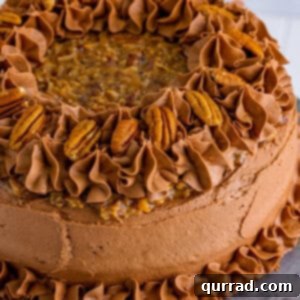
- Finish with pecan frosting and garnish: Carefully spoon the remaining coconut pecan frosting on top of the cake, spreading it evenly but leaving a small, decorative half-inch border around the edge. If desired, use a piping bag fitted with a star tip (like a 1M) to pipe the remaining chocolate buttercream around the top edge of the cake, creating a beautiful border. For a final flourish, garnish with pecan halves. Serve immediately or chill briefly for easier slicing.
Do I Need To Make Both Frostings for German Chocolate Cake?
The chocolate buttercream layer, while completely optional, undeniably adds a magnificent touch of elegance and an extra layer of rich chocolate flavor to this already decadent cake. It provides a smooth canvas for the textured coconut pecan frosting and ensures a truly polished finish that makes this cake a showstopper.
However, if you prefer a simpler approach or a less intensely rich dessert, you can certainly opt out of making the chocolate buttercream. If you choose to forgo the buttercream, I highly recommend adjusting the quantity of the coconut pecan frosting to about 1 & 1/2 times the original recipe. This will allow you to generously spread half of the pecan frosting between the cake layers and then use the remaining portion to cover the entire top of the cake. The result will be a beautiful “naked” cake, where the chocolate cake layers are still visible, but generously crowned with the star of the show – the delicious coconut pecan frosting.
Expert Tips & Frequently Asked Questions for German Chocolate Cake Success
Baking a German Chocolate Cake can be a truly rewarding experience, especially with a few insider tips and answers to common questions. Here’s how to ensure your cake turns out perfectly every time:
- Precise Boiling Water Measurement: When the recipe calls for boiling water, it’s best to measure it accurately *after* it reaches a boil. I always heat slightly more water than needed in a small pot, then carefully measure out the exact amount required once it’s boiling hot, before adding it to the batter. Exercise extreme caution as boiling water is incredibly hot and can cause burns.
- Adjusting Buttercream Consistency: If, after whipping, your chocolate buttercream appears too thick or stiff, simply add the third tablespoon of milk (or even a few drops more, if necessary) and whip again to fully incorporate it. I always recommend starting with 2 tablespoons of milk and adding more gradually, as the ideal consistency can vary slightly depending on environmental factors and ingredients.
- Testing Cake Doneness: The most reliable way to determine if your chocolate cake layers are fully baked is to insert a wooden toothpick or a thin skewer into the very center of a cake. If it comes out clean, without any wet batter or moist crumbs attached, your cake is ready. If it comes out wet, bake for a few more minutes and test again.
- Elevate Your Buttercream with German Chocolate: For an even more authentic and deeply flavored chocolate buttercream, consider using melted German’s Sweet Chocolate instead of semi-sweet chocolate chips. This subtle change will enhance the overall German Chocolate Cake experience by harmonizing the chocolate flavor across all components.
- The Importance of Toasting Nuts and Coconut: I cannot stress enough the significant flavor dimension that toasting pecans and coconut adds to the coconut pecan frosting. The heat brings out their natural oils, intensifying their nutty and sweet notes and making the frosting truly exceptional. While you *can* use untoasted sweetened coconut flakes and raw chopped pecans if you’re truly short on time, taking those extra few minutes to toast them will elevate your cake from good to absolutely extraordinary. It’s a small effort for a huge flavor payoff!
Serving and Optimal Storage for Your German Chocolate Cake
Ensuring your German Chocolate Cake is served at its best and stored properly will allow you to savor every last bite.
- Optimal Serving Temperature: This luscious layered cake is truly best enjoyed at room temperature, as the flavors and textures of both the cake and frostings are most pronounced. However, for easier, cleaner slicing, I find it beneficial to chill the cake in the refrigerator for about 30-60 minutes before cutting. After slicing, allow the individual pieces to come back to room temperature for about 15-20 minutes before serving, allowing the cake and frostings to soften slightly and release their full aromatic complexity.
- Storing Leftovers: Any leftover German Chocolate Cake will remain fresh and delicious at room temperature for up to 2 days. For extended freshness, you can store it in the refrigerator for up to a full week. In both cases, it is crucial to keep the cake in an airtight container to prevent it from drying out and to protect its flavors from other foods in the fridge.
- Freezing for Future Enjoyment: This chocolate cake freezes exceptionally well, allowing you to prepare it in advance or save portions for later. You can freeze the entire cake or individual slices for up to 3 months. To freeze, wrap the cake tightly first in plastic wrap, then again in aluminum foil. This double layer of protection helps prevent freezer burn. When you’re ready to enjoy it, thaw the cake on the kitchen counter for several hours (for slices) or overnight in the refrigerator (for a whole cake).
Explore More Decadent Chocolate Cake Recipes:
- Rich Chocolate Pound Cake
- Surprisingly Moist Chocolate Mayonnaise Cake
- Indulgent Kahlua Coffee Chocolate Poke Cake
- No-Bake Chocolate Icebox Cake
- Creamy Chocolate Mocha Cheesecake
We sincerely hope you cherish this delectable and straightforward German Chocolate Cake recipe. Your feedback is invaluable, so please don’t hesitate to leave a review below after trying it! And for more culinary inspiration and delicious recipes, be sure to follow Belly Full on TikTok, Facebook, Instagram, Pinterest, and YouTube!
German Chocolate Cake
30
38
2
3 8
15 slices
Ingredients
FOR THE CAKE
- 1 & 3/4 cups all-purpose flour, spooned and leveled
- 1 & 3/4 teaspoons baking powder
- 1 & 1/2 teaspoons fine sea salt
- 1 & 1/4 teaspoons baking soda
- 1 & 1/2 cups granulated sugar
- 1/2 cup light brown sugar, packed
- 1/2 cup vegetable oil
- 2 large eggs
- 1 cup buttermilk
- 1 tablespoon vanilla extract
- 4 ounces German baking chocolate, chopped and melted
- 1 cup boiling water
FOR THE PECAN COCONUT FROSTING
- 3/4 cup light brown sugar, packed
- 1/4 cup granulated sugar
- 1/2 cup unsalted butter
- 3 large egg yolks
- 3/4 cup evaporated milk
- 1 tablespoon vanilla
- 1 & 1/4 cups toasted sweetened coconut flakes
- 1 & 1/4 cups toasted chopped pecans
FOR THE CHOCOLATE FROSTING
- 1 cup unsalted butter, softened
- 1 cup semi-sweet chocolate chips, melted and cooled
- 4 & 1/3 cups powdered sugar
- 1 tablespoon vanilla extract
- 2-3 tablespoons whole milk
- pecan halves, for garnish, optional
Instructions
-
Preheat the oven to 375°F. Lightly spray 2, 9-inch cake pans with nonstick spray. Place parchment paper in the bottom of the pan. Spray the top of the paper with nonstick spray. Set aside.
-
In a large bowl whisk together the flour, baking powder, salt, and baking soda. Set aside.
-
In a medium-sized bowl, whisk together the sugar, brown sugar, oil, eggs, buttermilk, and vanilla until smooth. Whisk in the melted chocolate until combined.
-
Pour the wet mixture into the dry and whisk together until there are no lumps. Pour in the boiling water and whisk to combine.
-
Evenly distribute the batter between the two cake pans. Bake for 23-28 minutes until a toothpick inserted into the center comes out clean.
-
Let the cakes cool completely in the pan on a wire rack.
-
While the cakes are cooling, make the pecan coconut frosting:Dump the brown sugar, granulated sugar, butter, egg yolks, and evaporated milk in small pot. (Whisk until combined, there will be chunks of butter, that’s okay.)Place over medium heat and cook, whisking constantly until it comes to a low boil. Continue to whisk until it starts to thicken, about 1 minute.Take off the heat and add the vanilla, toasted coconut, and toasted pecans and stir it in until combined. Allow the mixture to cool to room temperature.
-
Once the cakes and pecan coconut frosting are cooled, make the chocolate buttercream:In the body of a stand mixer with the paddle attachment cream the butter and the melted chocolate together until smooth. Add the powdered sugar in a little at a time until fully mixed in.Add the vanilla and 2 tablespoons of milk. Stir it in until combined. With the mixer on medium-high speed, whip for 3 minutes until light and fluffy. If the frosting seems too thick, add the extra 1 tablespoon of milk.
-
Take the cooled cakes out of the pan and trim off the top if it is uneven. Place one of the cakes bottom side down onto your serving platter.
-
Frost with a thin layer of chocolate buttercream on top of the cake. Add half of the coconut pecan frosting on top and smooth it out almost to the edge, leaving a half-inch border.
-
Add the other cake, top side down on top. Add a thin layer of chocolate frosting on top and on the sides of the cake.
-
Add the remaining coconut pecan frosting on top of the cake, leaving a 1/2-inch border.
-
Pipe the remaining chocolate frosting around the top edge of the cake (I used a 1M star tip.) Garnish with pecans halves if desired. Serve immediately
Video
Watch our step-by-step video guide for making this German Chocolate Cake here.
Nutrition
Nutritional information given is an automatic calculation and can vary based on the exact products you use and any changes you make to the recipe. If these numbers are very important to you, I would recommend calculating them yourself.