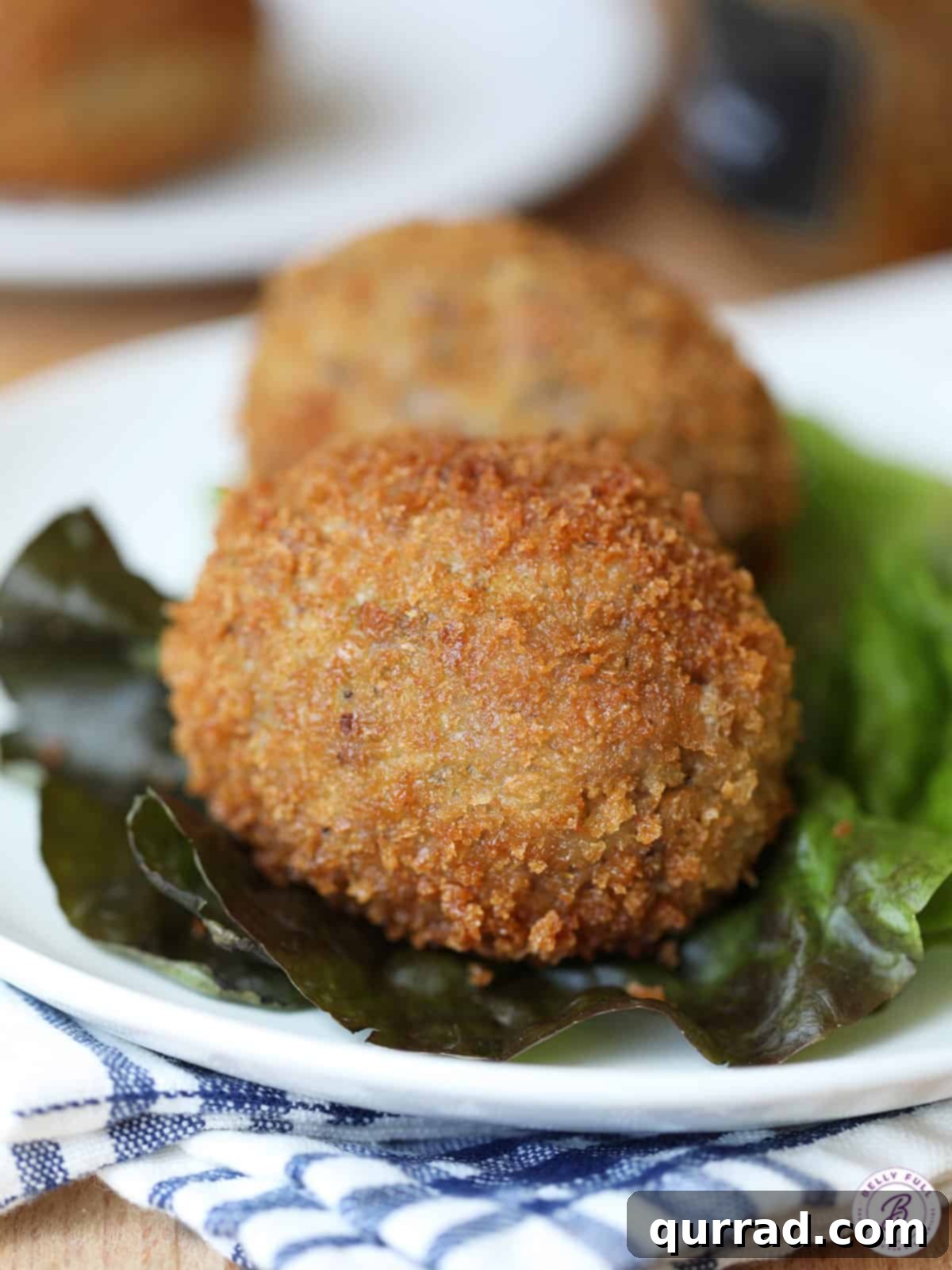
Homemade Scotch Eggs: A Classic British Delicacy Perfected
Discover the ultimate recipe for homemade Scotch Eggs! Imagine perfectly tender, hard-boiled eggs, lovingly encased in a savory seasoned sausage meat, then coated in a gloriously crispy breadcrumb shell. These culinary delights are deep-fried to a golden perfection, offering a truly irresistible combination of textures and flavors. Ideal for a hearty lunchbox, an elegant picnic spread, or as a protein-packed, satisfying snack on the go, Scotch Eggs are versatile and universally loved.
If you’re a fan of delicious breakfast recipes featuring sausage, you’ll also adore our Hash Brown Egg Casserole and our convenient Freezer Breakfast Burritos.
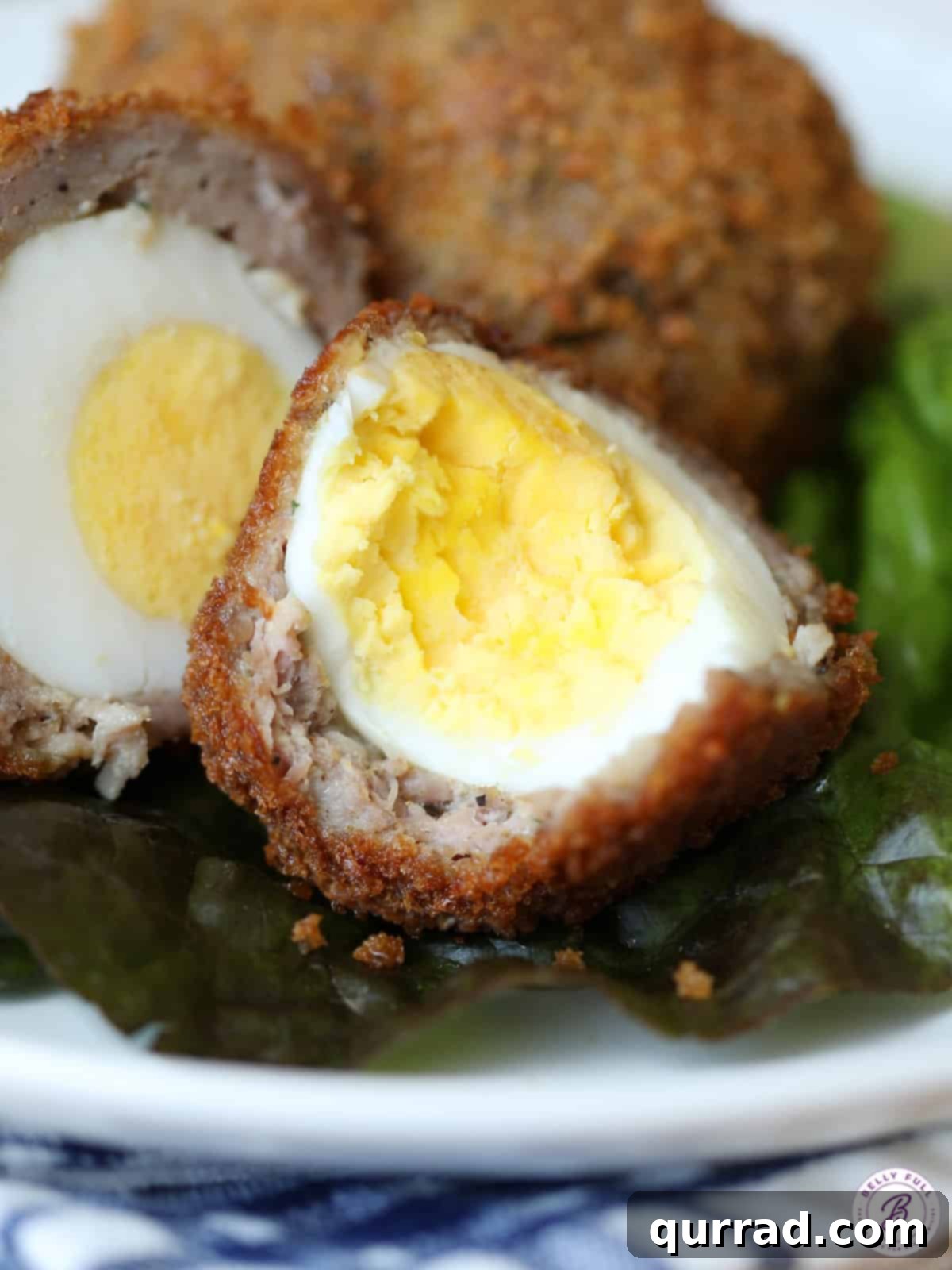
Crafting the Perfect Homemade Scotch Egg: Your Ultimate Guide
There’s a special kind of satisfaction that comes from mastering a classic, and the Scotch Egg is no exception. Having found yet another delightful application for my meticulously prepared perfect hard-boiled eggs, I can confidently say that these savory parcels are an absolute game-changer. For those unfamiliar, a Scotch Egg is essentially a hard-boiled egg, lovingly enveloped in a layer of seasoned sausage meat, then breaded and deep-fried until golden brown and gloriously crisp. The result? A truly smitten culinary experience.
The Fascinating History Behind Scotch Eggs
Contrary to what the name might suggest, Scotch Eggs actually have very little, if anything, to do with Scotland. This iconic dish is widely believed to have originated in London, England. Historical accounts often credit the prestigious British department store Fortnum & Mason with its creation in 1738, possibly through a talented kitchen assistant named Lucy-Ruth Hathaway. These unique eggs quickly rose to prominence, becoming an indispensable staple for British picnics and a beloved pub grub across the nation.
The intriguing name “Scotch” is thought to derive not from Scotland, but from the culinary term “scotched.” This term historically referred to a method of preparing food where it’s coated with breadcrumbs and then fried – a preparation technique perfectly descriptive of this dish. Over centuries, what began as a portable, hearty snack has transcended its origins, evolving into a popular menu item savored in pubs, restaurants, and homes around the globe, celebrated for its robust flavor and satisfying texture.
PRO TIP! The Importance of Proper Breading
Do not skip the breading process! Coating the sausage-wrapped egg first in flour, then in egg wash, and finally in breadcrumbs is crucial. This three-step method ensures that the breading adheres perfectly to the sausage, creating that essential crispy crust that makes Scotch Eggs so delightful and preventing the sausage from detaching during frying.
★
★
★
★
Classic Scotch Eggs
10
5
15
6 servings
Pin Recipe
Print Recipe
Ingredients
- 6 Hard Boiled Eggs, (see note on desired yolk consistency below)
- 1 pound ground sausage, (choose sweet breakfast, mild Italian, or spicy for a kick)
- 1/2 cup all-purpose flour
- 1 large egg
- 1 tablespoon milk
- 1 cup Panko breadcrumbs
- 3 tablespoons grated Parmesan cheese
- Salt and freshly ground black pepper, (to taste)
- Vegetable oil, (for deep frying)
- Grainy mustard or hot sauce, (for serving)
Detailed Instructions
-
Divide the sausage meat into 6 equal portions. Flatten one portion into a thin, round patty. Carefully place a hard-boiled egg in the center of the patty. Gently wrap the sausage meat around the egg, ensuring it’s completely enclosed and sealed without any gaps. Repeat with the remaining eggs and sausage.
-
Prepare your breading station: Place the all-purpose flour in one shallow bowl. In a second shallow bowl, whisk together the large egg and milk until well combined. In a third shallow bowl, combine the Panko breadcrumbs, grated Parmesan cheese, and a pinch of salt and pepper.
-
In a medium, heavy-bottomed pot or deep skillet, heat about 2-3 cups of vegetable oil over medium-high heat until it reaches approximately 350°F (175°C). While the oil is heating, dredge each sausage-coated egg. First, roll it in the flour, shaking off any excess. Then, dip it into the egg mixture, ensuring it’s fully coated. Finally, roll it generously in the Panko breadcrumb mixture, pressing lightly to ensure a thick, even crust.
-
Test the oil temperature by dropping a few breadcrumbs into it. If they sizzle and turn golden brown immediately, the oil is ready.
-
Carefully lower the breaded eggs, one or two at a time to avoid overcrowding the pan, into the hot oil using a small stainless steel slotted spoon or an Asian spider strainer. Maintain the oil temperature around 350°F (175°C) to prevent the breadcrumbs from burning before the sausage is cooked. Gently turn the eggs frequently with your utensil to ensure even browning. Fry for about 5-7 minutes, or until the sausage is cooked through and the breading is a beautiful golden brown and crispy.
-
Once cooked, transfer the Scotch Eggs to a plate lined with paper towels to drain off any excess grease.
-
Serve warm or chilled, accompanied by your favorite grainy mustard or a dash of zesty hot sauce for an extra burst of flavor!
Recipe Video Tutorial
Chef’s Notes & Tips
Don’t Overcrowd the Pan: It’s crucial not to overcrowd your frying pan. Doing so can drastically drop the oil’s temperature, leading to greasy Scotch Eggs with soggy breading. For best results and to maintain a consistent oil temperature, cook the eggs in small batches, usually one or two at a time, depending on your pan size.
For Healthier Options: Air Fryer Scotch Eggs. To significantly reduce the calorie count and oil, you can prepare Scotch Eggs in an air fryer. Preheat your air fryer to 400°F (200°C). Cook for approximately 15 minutes, making sure to turn them once halfway through (around the 7-8 minute mark), until they are beautifully golden brown and crispy.
Baked Scotch Eggs. Another lighter alternative is baking. Bake your Scotch Eggs at 400°F (200°C) for about 30 minutes. While they won’t achieve the same deep crispiness as deep-fried versions, they will still be incredibly flavorful and satisfying.
Choosing Your Sausage: I’ve experimented with both mild Italian sausage and sweet breakfast sausage. While both yield fantastic results, I personally have a slight preference for the subtle sweetness of breakfast sausage, which complements the egg beautifully. However, the savory herbs in mild Italian sausage are equally delicious. For those who enjoy a bit of heat, using spicy sausage adds an incredible depth of flavor and a delightful kick.
The Secret to Superior Breading: For the ultimate crispy crust, I wholeheartedly recommend using Japanese Panko breadcrumbs over traditional Italian breadcrumbs. Panko is lighter, flakier, and absorbs less oil, resulting in an incomparably crispier and airier texture. The addition of grated Parmesan cheese also adds a wonderful, savory “something extra” to the coating. For a fun twist, you could even try crushed white cheddar Cheez-It crackers someday!
Making Ahead and Storage: Scotch eggs can be prepared ahead of time and stored in the refrigerator for up to 3-4 days. They are delicious both warm and cold. To reheat, you can briefly warm them in an oven or air fryer until heated through and the crust is crisp again.
Freezing Instructions: Cooked Scotch eggs can be frozen for up to 1 month. Allow them to cool completely, then wrap each egg individually in plastic wrap and place them in a freezer-safe bag or container. Thaw in the refrigerator overnight before reheating.
Nutritional Information (Approximate Per Serving)
Calories: 470kcal
|
Carbohydrates: 15g
|
Protein: 22g
|
Fat: 34g
|
Saturated Fat: 14g
|
Cholesterol: 278mg
|
Sodium: 668mg
|
Potassium: 294mg
|
Sugar: 1g
|
Vitamin A: 390IU
|
Vitamin C: 0.5mg
|
Calcium: 86mg
|
Iron: 2.6mg
Nutritional information provided is an automatic calculation and can vary based on the exact products you use and any modifications you make to the recipe. If precise numbers are essential to you, we recommend calculating them yourself using a trusted nutritional calculator.
Did you make this? We’d love to hear from you! Leave a rating below!
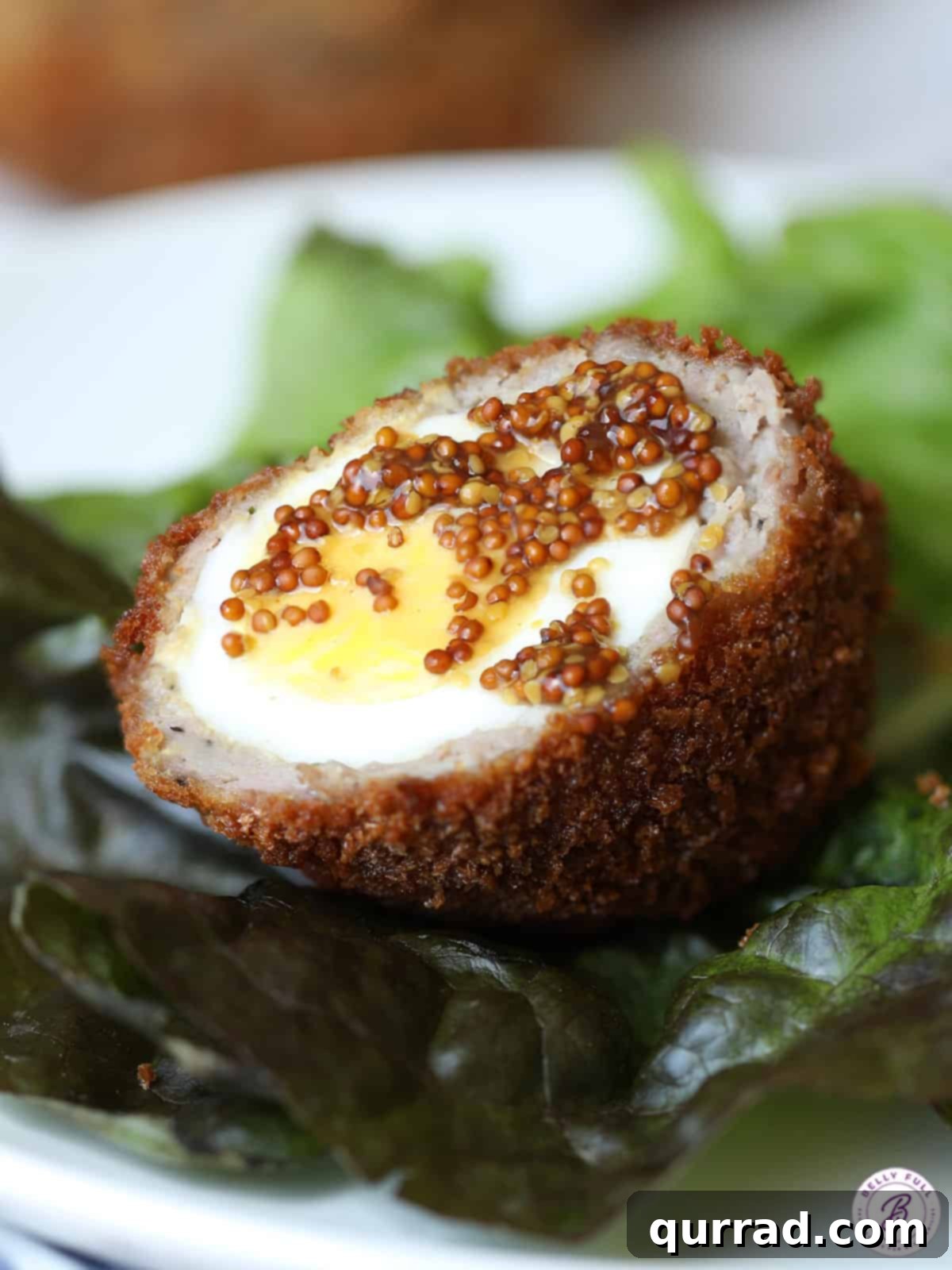
What to Serve with Scotch Eggs: Perfect Pairings
Scotch Eggs are incredibly versatile and can be enjoyed in a multitude of ways. For breakfast or brunch, they offer a satisfying and flavorful start to your day. They also make an excellent addition to a light lunch or dinner, especially when paired with a fresh, crisp salad. The traditional accompaniment often includes a dollop of grainy mustard or a drizzle of your favorite hot sauce, which perfectly cuts through the richness of the sausage and egg. Their ability to be eaten warm or cold makes them an ideal portable snack for picnics, packed lunches, or road trips. They are truly a “finger food-e-licious” treat that appeals to all ages!
Consider serving them alongside:
- Green Salad: A simple mixed greens salad with a light vinaigrette provides a refreshing contrast.
- Pickled Vegetables: Gherkins, pickled onions, or even homemade pickled beets add a tangy element.
- Coleslaw or Potato Salad: Classic picnic sides that complement the hearty nature of Scotch Eggs.
- Chutneys or Relishes: A sweet or savory chutney can elevate the flavor profile.
- Crusty Bread: For a more substantial meal, serve with slices of fresh, crusty bread.
Explore Delicious Scotch Egg Variations
While the traditional deep-fried Scotch Egg is undeniably delicious, there are fantastic alternative cooking methods to suit different preferences and dietary needs. Here are a couple of popular variations:
- Air Fryer Scotch Eggs: For a lighter, less oily version, the air fryer is your best friend. To prepare, preheat your air fryer to 400°F (200°C). Cook the breaded Scotch Eggs for approximately 15 minutes, flipping them gently once at the 7-minute mark, until they achieve a beautiful golden brown color and a satisfying crispness. This method offers a great balance of flavor and a significant reduction in fat.
- Baked Scotch Eggs: Baking provides another excellent way to enjoy this classic with less oil. Preheat your oven to 400°F (200°C). Place the breaded Scotch Eggs on a baking sheet lined with parchment paper and bake for about 30 minutes, or until the sausage is thoroughly cooked and the exterior is golden. While the crunch might not be as intense as deep-frying, the flavor remains superb, and it’s a wonderfully convenient method.
Frequently Asked Questions About Scotch Eggs
Here are answers to some common questions you might have about making and enjoying Scotch Eggs:
- Can I use soft-boiled eggs for Scotch Eggs? Absolutely! Many prefer a softer, jammy yolk for an extra luxurious experience. As noted in our Chef’s Tips, simply boil your eggs for a shorter duration (e.g., 6-8 minutes) to achieve your desired level of runniness, keeping in mind they will continue to cook slightly during the frying process.
- What kind of sausage is best? The beauty of Scotch Eggs is their adaptability. Sweet breakfast sausage offers a traditional, slightly mellow flavor. Mild Italian sausage provides a savory, herb-infused taste. For a kick, opt for spicy Italian sausage or add a pinch of red pepper flakes to your chosen ground meat. Ground pork, beef, or even turkey can also be used, though adjustments to seasoning might be needed.
- How do I prevent the sausage from falling off during frying? The key is in the meticulous breading process. Ensuring the sausage fully encases the egg and is well-sealed, followed by the flour-egg-Panko coating, creates a protective layer. Also, maintaining a consistent oil temperature (around 350°F / 175°C) and not overcrowding the pan prevents sudden temperature drops that can cause the coating to detach.
- Can I make Scotch Eggs gluten-free? Yes! You can substitute all-purpose flour with a gluten-free flour blend and use gluten-free breadcrumbs (such as gluten-free Panko) to make this recipe suitable for those with gluten sensitivities.
- How can I ensure my eggs peel easily? Using slightly older eggs (not super fresh) can help. Additionally, immediately transferring hard-boiled eggs to an ice bath after cooking helps stop the cooking process and makes peeling significantly easier.
More Delicious Recipes Featuring Hard-Boiled Eggs:
If you love hard-boiled eggs as much as we do, you’ll definitely want to try these other fantastic recipes:
- Savory Soy Sauce Eggs
- Vibrant Beet Pickled Eggs
- Simple and Delicious Easy Egg Salad
- Classic Deviled Eggs (Perfect for Parties!)
- Creamy Deviled Egg Pasta Salad
We truly hope you enjoy this delicious and easy Scotch Egg recipe! Don’t forget to show us some love by giving it a review below! Also, stay connected and follow Belly Full on TikTok, Facebook, Instagram, Pinterest, and YouTube for more mouth-watering recipes and culinary inspiration!