
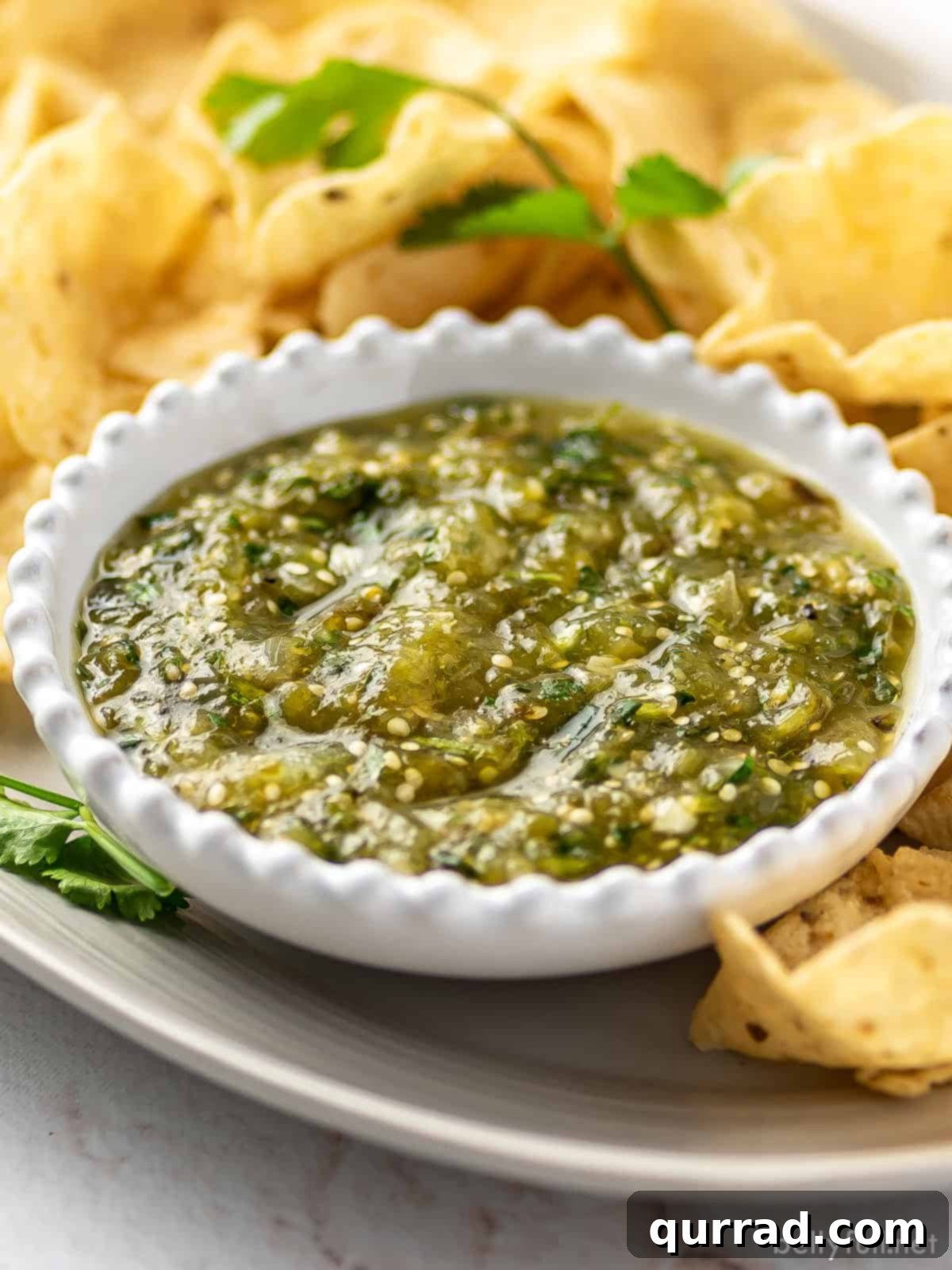
Unleash a vibrant explosion of flavor with this incredible Easy Homemade Salsa Verde Recipe. Crafted from the freshest roasted tomatillos, fiery jalapeños, and aromatic garlic, this vibrant green sauce is your secret weapon for transforming everyday meals into culinary masterpieces. Whether you’re enhancing baked chicken, stuffing burritos, or simply seeking a zesty dip for your favorite corn chips, this tomatillo salsa promises an authentic taste experience. While our foundational recipe offers a delightful mild kick, we’ve included simple adjustments for those who prefer to dial up or down the spice, ensuring it perfectly suits every palate in your home.
Once you’ve experienced the rich, tangy, and subtly spicy notes of this freshly prepared green salsa, you’ll find countless ways to incorporate it into your cooking. It’s not just a condiment; it’s a culinary staple. Kickstart your next meal by using a batch to prepare our popular Salsa Verde Chicken, a testament to how effortlessly this sauce elevates even the simplest dishes to extraordinary heights.
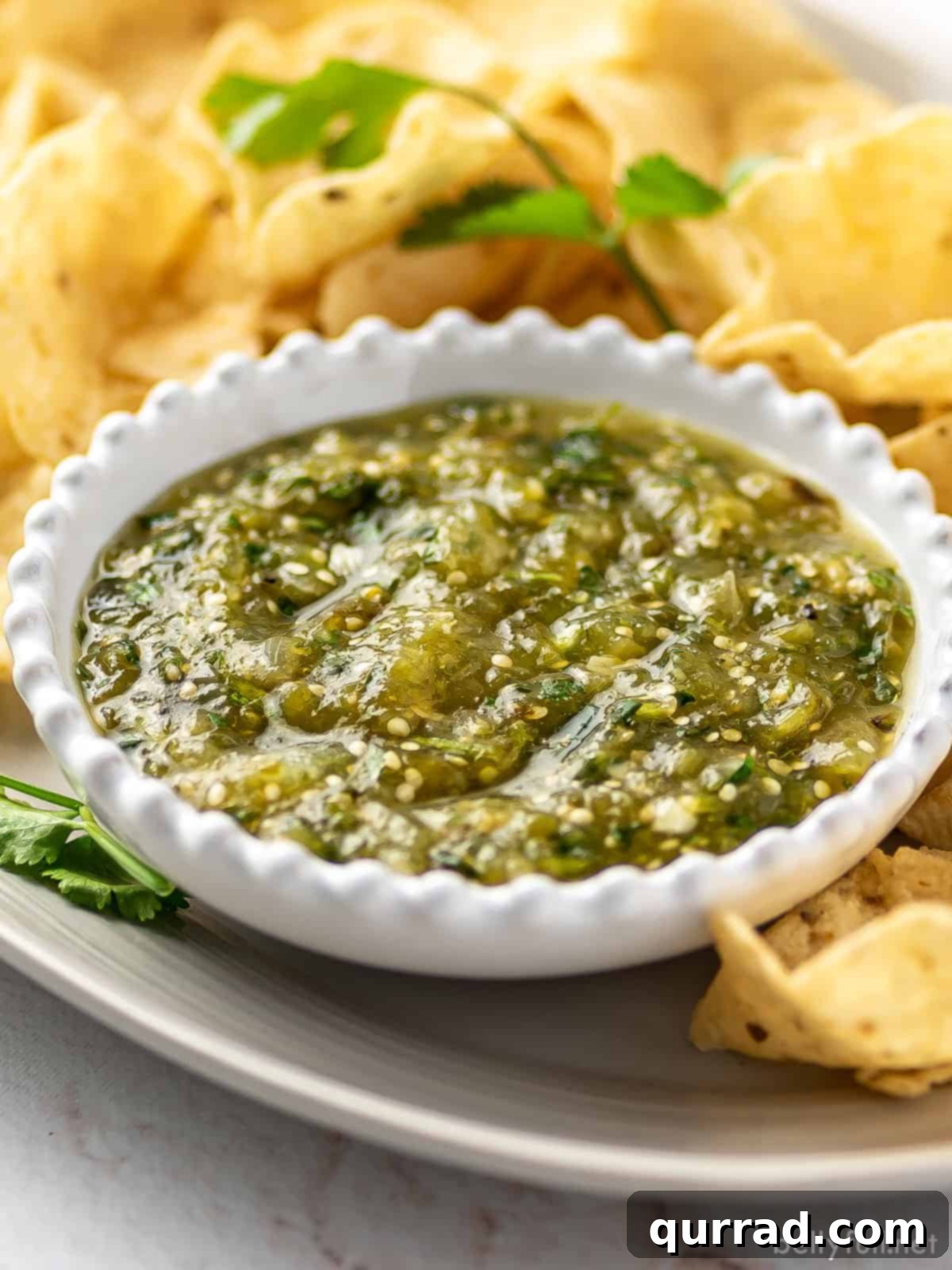
Unlock Authentic Flavor with This Easy Tomatillo Salsa Verde Recipe
Imagine a staple in your kitchen that effortlessly infuses a burst of fresh, tangy, and subtly smoky flavor into almost any dish. That’s precisely what homemade salsa verde offers. This bright green sauce, often found in Mexican and Tex-Mex cuisines, becomes an indispensable ingredient once you discover its versatility. From traditional tacos and hearty burritos to a surprising zest in scrambled eggs or a vibrant glaze for baked chicken, the possibilities are virtually endless. The depth of flavor achieved through roasting the tomatillos, jalapeños, and garlic transforms raw ingredients into a complex and irresistible condiment.
Our carefully crafted recipe strikes a perfect balance, delivering a medium spice level that appeals to a wide range of tastes. We typically use a single jalapeño to achieve this pleasant warmth, making it approachable for families. However, the beauty of preparing salsa verde from scratch lies in its complete customizability. Feel free to adjust the heat to your preference—whether you desire a milder accompaniment or an extra fiery kick, modifying the pepper quantity is straightforward. Once you experience the superior taste and texture of this homemade green salsa, you’ll find yourself reaching for it again and again.
Salsa verde, a cornerstone of authentic Mexican cuisine, translates directly to “green sauce.” Its distinctive verdant hue is its most apparent difference from conventional red salsas, which rely on ripe tomatoes. At the heart of salsa verde is the tomatillo, a fascinating fruit that, despite its name meaning “little tomato,” is botanically distinct. Tomatillos possess a unique tart and subtly sweet flavor profile, enveloped in a delicate, papery husk that must be removed before cooking. This green gem is typically roasted or boiled and then blended with complementary ingredients such as fresh peppers (like jalapeños or serranos), aromatic cilantro, and pungent garlic. The result is a vibrant, tangy, and often spicy sauce that can be enjoyed warm or chilled, offering remarkable versatility in its culinary applications—just as diverse as its red counterpart.
The inherent spiciness of tomatillo salsa verde is entirely dependent on the peppers used and how they are prepared. Tomatillos themselves contribute a tart and earthy flavor but no heat. Therefore, you have complete control over the spice level in your homemade salsa verde. For a very mild version, you can completely omit the jalapeño. To achieve a medium spice level, as in our core recipe, one medium jalapeño is usually sufficient. If you prefer a milder outcome even with peppers, simply remove the internal ribs and seeds from the roasted jalapeños, as these contain most of the capsaicin responsible for the heat. Conversely, for a genuinely hot salsa, consider incorporating two jalapeños, leaving their seeds intact, or even introducing a more potent pepper like a serrano for an extra fiery kick. This flexibility allows you to tailor the salsa perfectly to your heat preference.
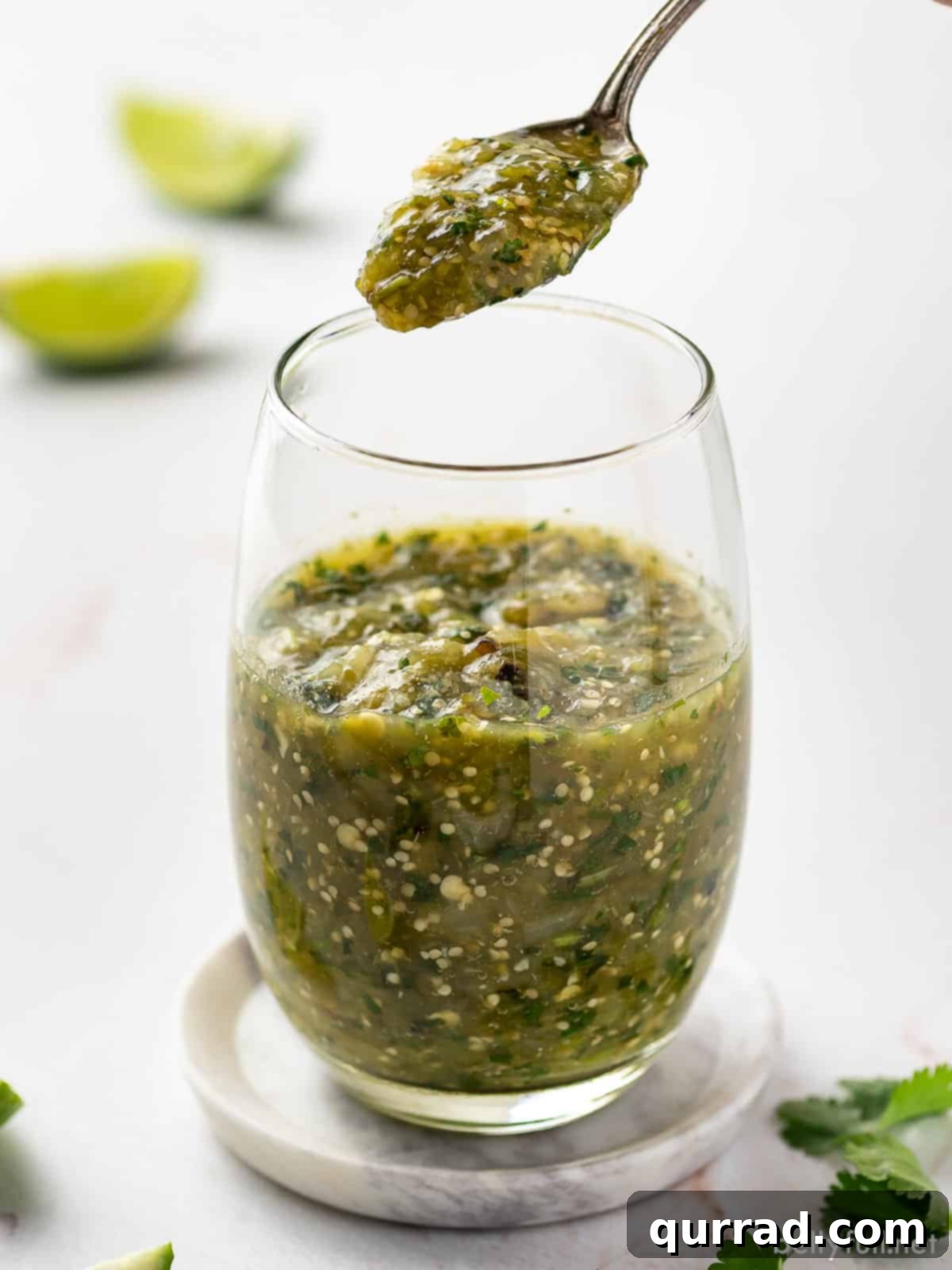
Essential Ingredients for Your Homemade Salsa Verde
Crafting exceptional salsa verde begins with selecting a few simple yet high-quality fresh ingredients. The beauty of this recipe lies in how these core components, once roasted, meld together to create a complex and irresistible flavor profile. While the printable recipe card below provides precise measurements, here’s a closer look at what you’ll need and why each element is crucial:
- Tomatillos: The star of the show, roughly 1.5 pounds of medium-sized tomatillos. Look for firm, vibrant green tomatillos with tight-fitting husks. Before use, gently remove the papery husks, thoroughly rinse the sticky residue from their surface, and pat them completely dry. Their unique tartness forms the backbone of the salsa’s flavor.
- Jalapeño Pepper: Our recipe calls for one medium jalapeño to achieve a delightful medium heat. This pepper not only provides a pleasant warmth but also contributes a fresh, peppery note. Remember, you have full control: add more for extra heat, or remove the seeds and membranes for a milder salsa.
- White Onion: Half of a medium white onion is essential. White onions are preferred for their sharper, more pungent flavor compared to yellow or sweet varieties, which helps cut through the richness and balances the tartness of the tomatillos. Roasting mellows its intensity beautifully.
- Garlic Cloves: Two whole, unpeeled garlic cloves will be roasted alongside the other vegetables. Roasting the garlic in its skin caramelizes it, imparting a sweet, smoky, and less acrid flavor that is far superior to raw garlic in this recipe.
- Fresh Cilantro: About 1/3 cup of fresh cilantro leaves. This herb adds a vital bright, citrusy, and herbaceous dimension that is characteristic of authentic Mexican salsas. A rough chop is all that’s needed before blending.
- Fresh Lime Juice: Approximately 1.5 to 3 tablespoons of fresh lime juice are crucial for enhancing the salsa’s brightness and balancing its flavors. Always opt for freshly squeezed lime juice over bottled varieties for the best, most vibrant taste.
- Salt: Starting with about 1/2 teaspoon, salt is indispensable for seasoning and bringing out all the wonderful flavors. Adjust to taste, adding more as needed after blending.
Creative Recipe Variations to Customize Your Salsa Verde
While our classic roasted salsa verde recipe is undeniably delicious, it also serves as an excellent foundation for creative experimentation. Here are several ways you can adapt this recipe to suit different tastes, textures, or even to create entirely new flavor profiles:
- Luxuriously Creamy Salsa Verde: To transform your salsa into a rich and creamy dip, simply allow the prepared salsa to cool completely. Then, blend in one ripe, diced avocado until smooth. The avocado adds a velvety texture and a subtle richness that beautifully mellows and complements any lingering spice, making it a fantastic accompaniment for tacos or as a standalone dip.
- Robust Roasted Tomato Salsa: While this modification won’t yield a “salsa verde,” it’s a fantastic way to utilize the roasting technique. Substitute the tomatillos with an equal amount of ripe, firm tomatoes (such as Roma or plum tomatoes). Follow the same roasting and blending steps. The result will be a deeply flavorful roasted red salsa with a sweet and smoky complexity, perfect for a different kind of authentic Mexican experience.
- Amp Up the Heat: Our base recipe provides a comfortable medium spice, which is often ideal for many households. However, if you’re a true heat-seeker, enhancing the fiery kick is straightforward. Beyond adding an extra jalapeño, consider introducing a more potent pepper like a serrano. A single serrano pepper can significantly increase the Scoville units, delivering a pronounced, exhilarating heat that spicy food lovers will adore.
- Fresh & Zesty Raw Green Salsa (Salsa Cruda): For a different take on green salsa, you can skip the roasting step entirely. This method, often called salsa cruda (raw salsa), produces a brighter, more pungent, and intensely fresh flavor profile. When making raw salsa, prioritize using the absolute freshest tomatillos, jalapeños, onions, and cilantro you can find. Be aware that the absence of roasting will result in a sharper, less mellow taste, lacking the smoky and caramelized notes found in our roasted version. It’s a distinct experience, but equally delicious in its own right, especially for those who love raw, vibrant flavors.
- Smoky Chipotle Salsa Verde: For an added layer of smoky depth, consider blending in one or two chipotles in adobo sauce with the other ingredients. This will introduce a rich, smoky, and slightly spicy dimension that complements the tartness of the tomatillos beautifully, perfect for grilled meats or hearty stews.
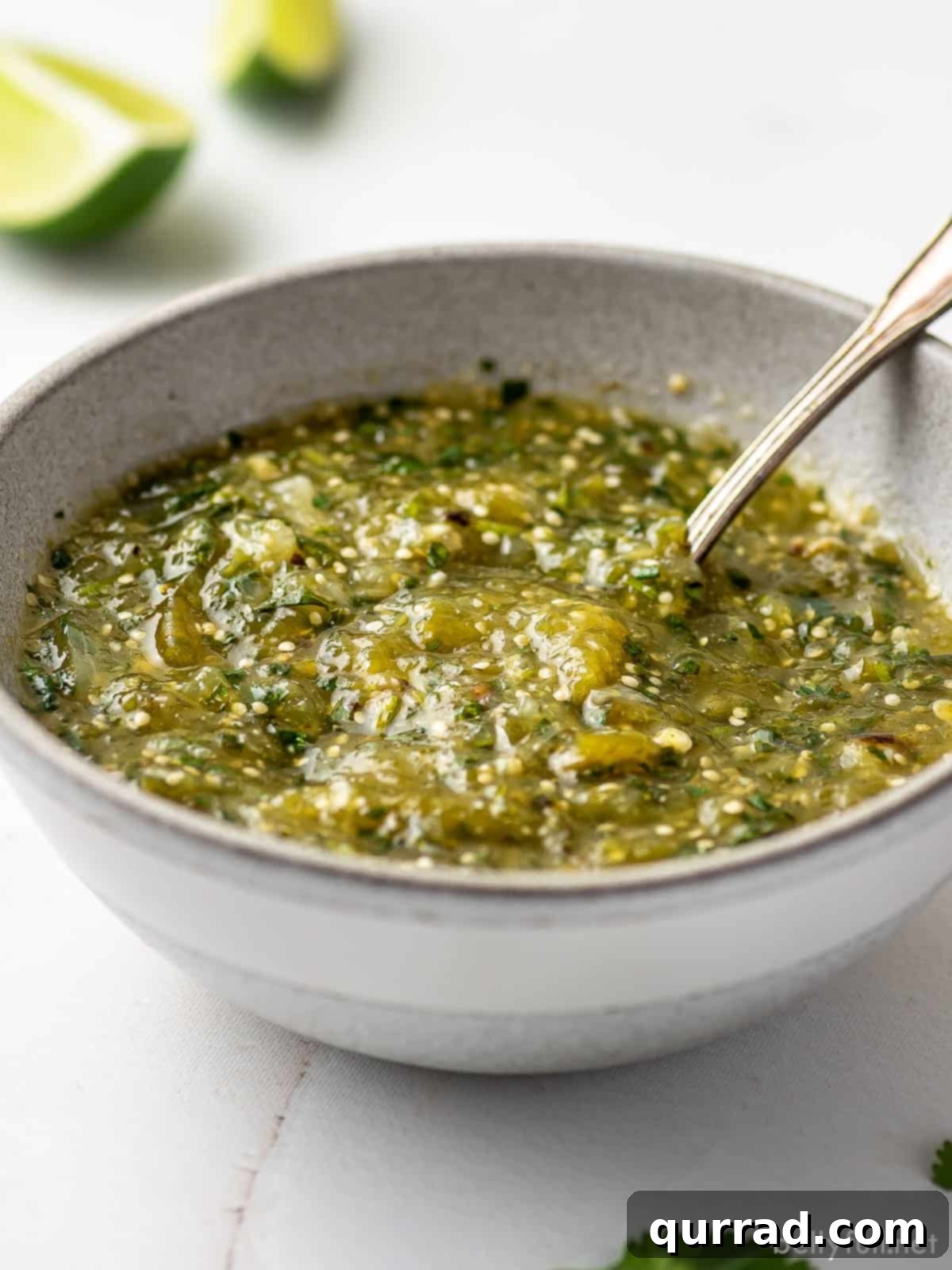
Step-by-Step Guide: Crafting Your Perfect Salsa Verde
Creating this delicious tomatillo salsa verde is remarkably straightforward, involving just two primary stages: roasting the fresh vegetables to develop deep, smoky flavors, and then blending them into a vibrant sauce. Below is a concise overview, with comprehensive, detailed instructions available in the printable recipe card at the bottom of this page, accompanied by a helpful video tutorial.
- Prepare and Roast the Vegetables: Begin by preheating your broiler to high. Line a sturdy rimmed baking sheet with aluminum foil for easier cleanup. Arrange the prepared tomatillos, jalapeños, quartered white onion, and unpeeled garlic cloves in a single layer on the sheet. Ensure they are not overcrowded to allow for even charring. Place the baking sheet under the broiler for approximately 5 minutes, carefully monitoring them until the skins begin to lightly brown and blister. Using tongs, gently flip all the vegetables over and continue broiling for another 4 to 5 minutes, or until they are tender, beautifully charred, and thoroughly blistered in spots. This roasting step is crucial for developing the rich, smoky depth of flavor.
- Blend to Perfection: Once the roasted vegetables are cool enough to handle safely, carefully remove the softened peels from the garlic cloves. Transfer all the roasted vegetables, along with any flavorful accumulated juices from the baking sheet, into a high-speed blender or food processor. Add the fresh cilantro, lime juice, and initial salt measurement. Pulse the ingredients several times until you achieve a coarse purée. The goal is a slightly chunky consistency with noticeable texture, rather than an overly smooth sauce. The salsa might appear somewhat thin at this stage, but it will naturally thicken as it cools in the refrigerator.
- Season and Taste: After blending, taste your freshly made salsa verde. This is your opportunity to adjust the seasoning to your liking. Add more salt if it tastes bland, or an additional squeeze of fresh lime juice if you desire a brighter, tangier profile. Continue to taste and adjust until the flavors are perfectly balanced.
- Chill for Enhanced Flavor: Transfer your completed salsa verde into an airtight container. Refrigerate it for at least an hour before serving. Chilling allows the flavors to meld and deepen, resulting in a more harmonious and delicious salsa. It also helps the salsa thicken to its ideal consistency.
Pro Tips for Crafting the Best Homemade Salsa Verde
Achieving a truly exceptional salsa verde is straightforward with a few insider tips. These recommendations will help you maximize flavor, perfect the texture, and ensure your homemade green salsa is consistently delicious:
- Vigilant Broiling is Key: When roasting your vegetables, particularly the peppers, maintain a watchful eye on the broiler. The intense heat can char smaller items very rapidly. Your goal is a beautifully blistered and lightly browned skin, indicating caramelized sugars and smoky notes, but avoid burning, which can introduce bitterness. Slight charring is excellent, but overly blackened vegetables will impart an undesirable flavor.
- Embrace Texture – Don’t Over-Process: Remember, you are making a salsa, not a smooth purée or soup. After roasting, pulse the ingredients in your blender or food processor just until they reach a coarse, slightly chunky consistency. This rustic texture is essential for a satisfying mouthfeel and authentic salsa experience. Over-blending will result in a watery, less appealing sauce.
- Adjust Consistency with Caution: It’s common for fresh salsa to appear somewhat thin immediately after blending. Rest assured, it will thicken considerably as it chills in the refrigerator. However, if after chilling, your salsa is thicker than your preference, gradually blend in 1 to 2 tablespoons of cold water until you achieve your desired consistency. Add sparingly to avoid making it too watery.
- Season Smartly – Taste Before Adding More Salt: Always start with the recommended amount of salt (typically 1/2 teaspoon for this recipe). Once blended and chilled, taste the salsa before adding any more. The flavors intensify and meld as it rests, and you might find it perfectly seasoned. Adjusting salt gradually prevents over-salting, which can ruin the batch.
- Ensure Even Cooking with Uniform Sizing: For optimal and consistent roasting, try to select tomatillos that are roughly similar in size. This ensures they cook evenly under the broiler, preventing smaller ones from burning while larger ones remain undercooked. Similarly, quarter your onion into manageable, relatively uniform pieces.
- Always Use Fresh Lime Juice: The bright acidity of fresh lime juice is indispensable for balancing the earthy and tart flavors of the tomatillos. Bottled lime juice simply doesn’t offer the same vibrant, fresh zest that elevates this salsa to its best.
- Don’t Skimp on Cilantro: Fresh cilantro adds a quintessential herbaceous note that is synonymous with authentic salsa verde. Ensure your cilantro is fresh and green for the best flavor contribution.
Delicious Ways to Enjoy Your Homemade Salsa Verde
The versatility of homemade salsa verde is truly remarkable, making it an indispensable addition to your culinary repertoire. Far beyond just a dip, this flavorful green sauce can elevate a myriad of dishes, adding a fresh, tangy, and subtly spicy kick. Here are some of our favorite ways to incorporate this incredible salsa into your meals:
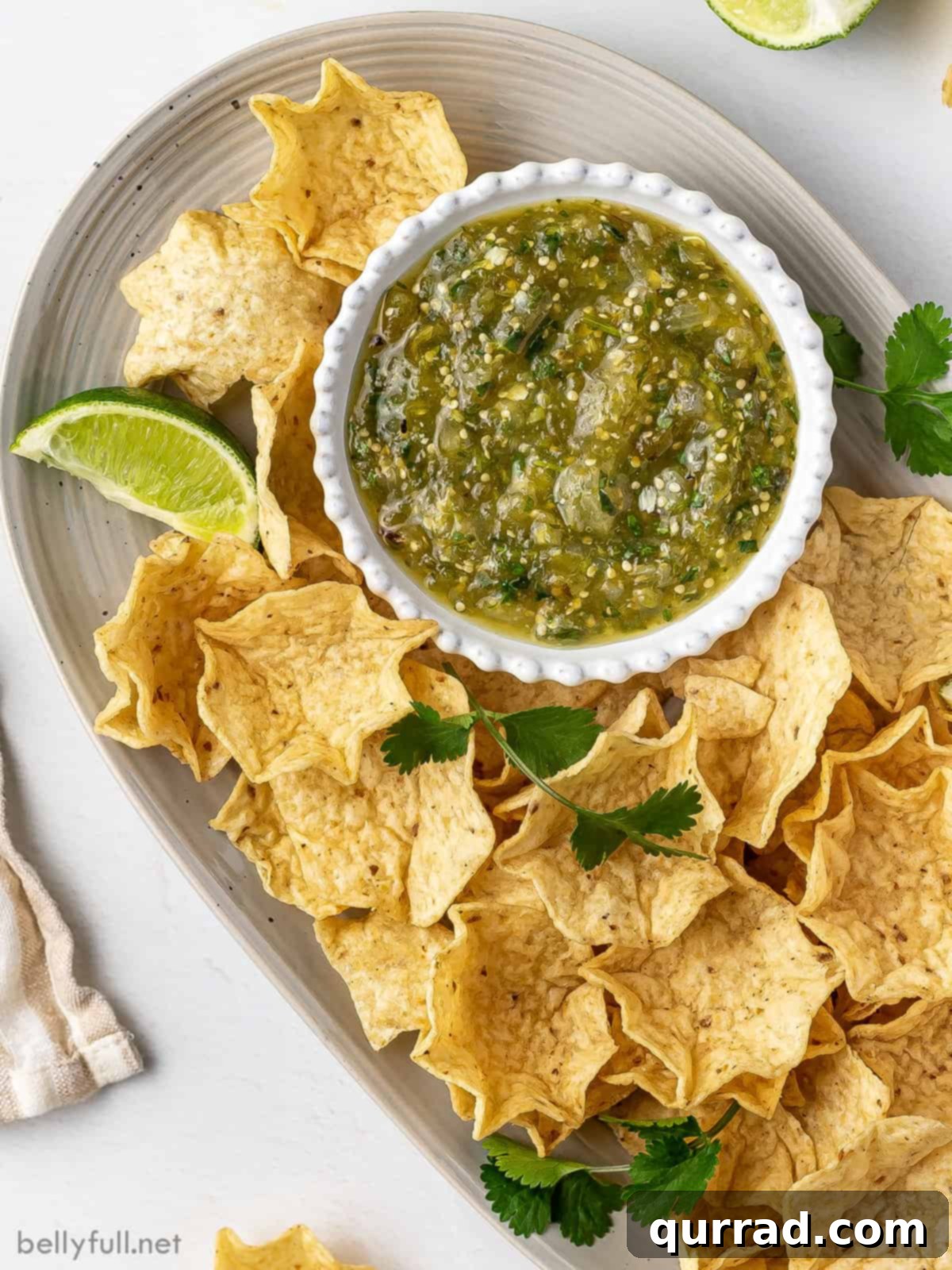
- The Classic Appetizer: Serve it as a refreshing, vibrant dip alongside crispy corn tortilla chips. It’s an instant crowd-pleaser for any gathering or a simple snack.
- Enhance Your Grains: Spoon generous amounts over a bed of fluffy cooked white rice, or take it up a notch by pairing it with zesty cilantro lime rice for an extra layer of flavor.
- Burritos & Bowls Master: Integrate it into any kind of burrito or burrito bowl to add moisture and a burst of authentic taste. It’s perfect for Chipotle steak burritos, vibrant chicken burrito bowls, or even savory freezer breakfast burritos for a morning kick.
- Taco Transformation: Drizzle it generously over any variety of tacos. From crispy fried shrimp tacos to quick fish stick tacos, salsa verde adds the perfect tangy counterpoint to rich fillings.
- Protein Power-Up: Use it as a vibrant topping or a light sauce for perfectly cooked proteins. It pairs beautifully with baked chicken breast, grilled fish, or pork tenderloin, adding freshness and zest.
- Breakfast & Brunch Brilliance: Elevate your morning routine by dolloping it onto hearty Tex Mex Migas or stirring it into scrambled eggs for an extraordinary flavor boost that will awaken your palate.
- Enchilada Upgrade: For a delightful twist on a classic, swap out traditional red enchilada sauce for your homemade salsa verde in recipes like chicken enchiladas. The result is a lighter, tangier, and incredibly flavorful dish.
- Quesadilla Companion: Serve it as a lively dipping sauce for crispy, cheesy quesadillas. The fresh flavors cut through the richness, creating a perfectly balanced bite.
- Marinade Magic: Utilize salsa verde as a tenderizing and flavorful marinade for chicken, pork, or fish before grilling or baking. The lime and tomatillo acidity works wonders on proteins.
- Soups & Stews: Stir a spoonful or two into your favorite Mexican-inspired soups and stews, such as pozole or tortilla soup, just before serving to add an extra layer of complexity and brightness.
Proper Storage for Maximum Freshness
Proper storage is key to enjoying your homemade salsa verde for as long as possible while maintaining its vibrant flavor and freshness. Follow these guidelines to ensure your delicious green sauce stays at its best:
Refrigerator Storage: Transfer your freshly made salsa verde into an airtight jar or container. Stored correctly in the refrigerator, it will retain its optimal flavor and freshness for at least one week. Always ensure the container is tightly sealed to prevent oxidation and absorption of other fridge odors.
Creamy Salsa Verde with Avocado: If you’ve opted to create the creamy avocado variation, consume it within approximately 3 days. To help prevent the avocado from browning, press a layer of plastic wrap directly onto the surface of the salsa before sealing the container. The air is what causes avocado to oxidize and turn brown.
Freezing for Longer Shelf Life: For longer-term storage, homemade salsa verde freezes beautifully. Pour the cooled salsa into freezer-safe containers or heavy-duty freezer bags, leaving a little headspace for expansion. You can also freeze it in ice cube trays for convenient individual portions; once frozen, transfer the cubes to a freezer bag. Frozen salsa verde can be kept for up to 3-4 months. Thaw it in the refrigerator overnight before use, and stir well before serving. Note that the texture might be slightly different after thawing, but the flavor will remain excellent.
Explore More Vibrant Mexican Salsas:
If you’ve enjoyed making this salsa verde, you’re sure to love exploring other homemade salsa recipes that bring the rich flavors of Mexican cuisine to your kitchen. Expand your repertoire with these delicious options:
- Classic Restaurant-Style Salsa
- Fresh & Zesty Pico de Gallo
- Flavorful Sofrito (While not strictly a salsa, it’s a foundational aromatic base for many Latin dishes)
- Bright & Herbaceous Mexican Chimichurri
We sincerely hope you cherish this incredibly delicious and remarkably easy homemade salsa verde recipe as much as we do. Your feedback is invaluable, so please don’t hesitate to share your experience and leave a rating below – we love hearing from you! To stay inspired with fresh culinary ideas and join our vibrant food community, be sure to follow Belly Full on TikTok, Facebook, Instagram, Pinterest, and YouTube for daily recipe inspiration and behind-the-scenes glimpses!
Salsa Verde
20 minutes
10 minutes
30 minutes
12
(approx 2 1/2 cups total)
Pin
Ingredients
-
1 1/2
pounds
tomatillos,
(about 12 medium), papery husks discarded, rinsed and dried -
1
medium
jalapeno,
, stems removed (see note) -
1/2
medium
white onion,
, peeled, roots removed, quartered -
2
cloves
garlic,
, kept whole, unpeeled -
1/3
cup
fresh cilantro leaves,
, roughly chopped -
1 1/2
tablespoons
fresh lime juice,
, or up to 3 tablespoons, to taste -
1/2
teaspoon
salt,
, or more to taste
Instructions
-
Preheat the broiler to high with a rack about 4-inches below the heat source.
-
Line a large rimmed baking sheet with foil, then spread the tomatillos, jalapeños, onion quarters, and garlic in a single layer. Place under the broiler for about 5 minutes to lightly brown the skins of the vegetables. (Watch carefully, since smaller peppers can burn quickly.) Using tongs, flip everything over and roast for another 4 to 5 minutes, until the vegetables are charred and blistered in spots.
-
Remove from the oven and once cool enough to handle, take the peel off the garlic.
-
Transfer everything (included any accumulated juices) to a blender or food processor along with the cilantro, lime juice, and salt. Pulse all ingredients several times until you reach a course puree (don’t over process – you want it to be slightly chunky and have some texture. The salsa might seem thin, but it will thicken up after a few hours as it cools in the fridge. If it happens to seem really thick and you want to thin it out, you can blend in 1 to 2 tablespoons of water to your desired consistency.)
-
Taste and season with extra salt and/or lime juice, if needed.
-
Transfer to an airtight container and chill in the refrigerator.
Use as desired: As a dip for corn chips, with cooked white rice, in burritos, a topping for baked chicken, etc.
Video
Notes
Use tomatillos roughly the same size. Try to use tomatillos that are roughly the same size so they cook the same.
Make creamy avocado salsa verde. To make creamy avocado salsa verde, let the salsa cool down and then blend in 1 diced avocado. Yummy!
Nutrition
Calories:
22
kcal
|
Carbohydrates:
4
g
|
Protein:
1
g
|
Fat:
1
g
|
Sodium:
83
mg
|
Potassium:
182
mg
|
Sugar:
2
g
|
Vitamin C:
8
mg
|
Calcium:
8
mg
Nutritional information given is an automatic calculation and can vary based on the exact products you use and any changes you make to the recipe. If these numbers are very important to you, I would recommend calculating them yourself.
Did you make this? Leave a rating below!