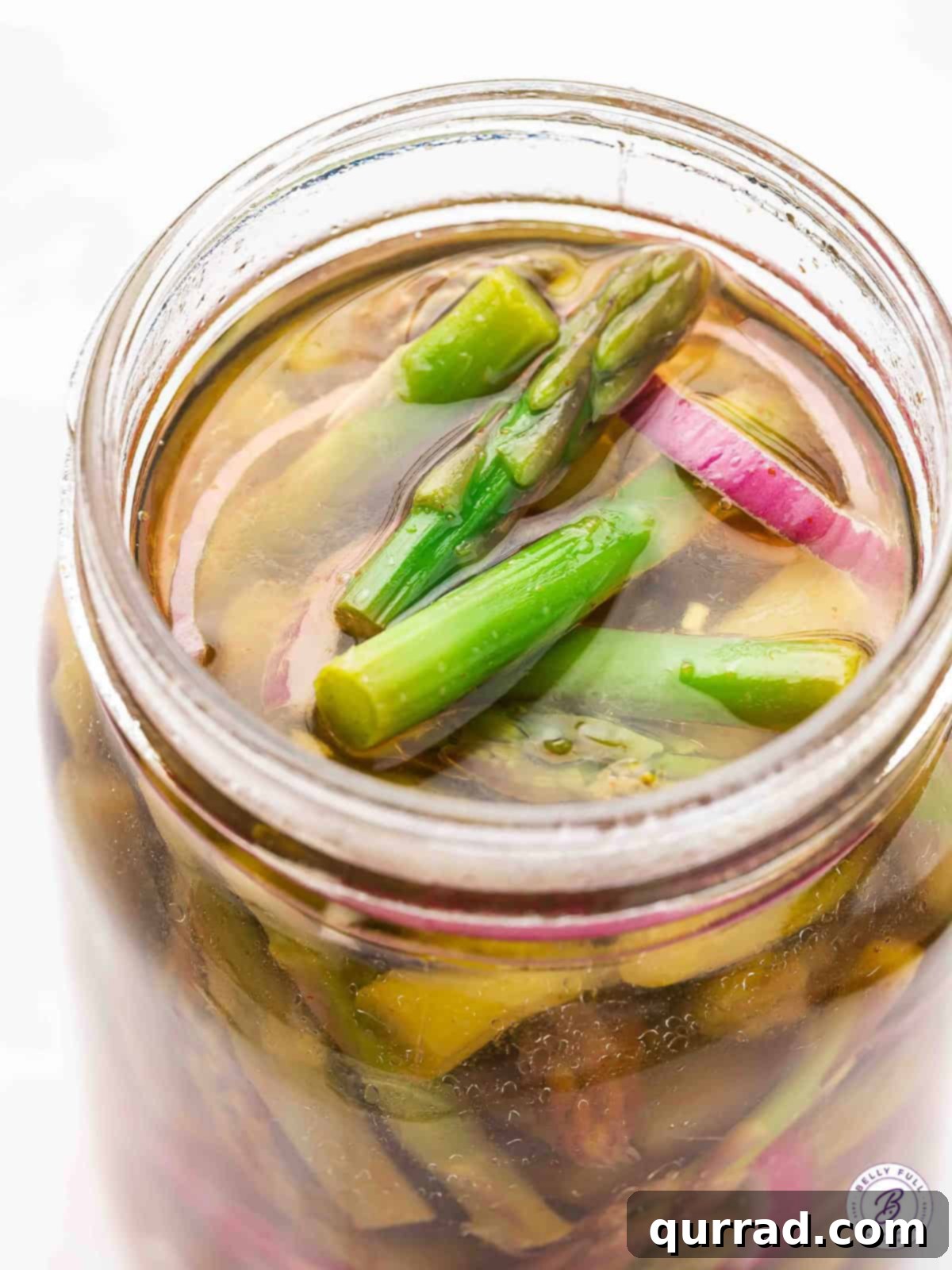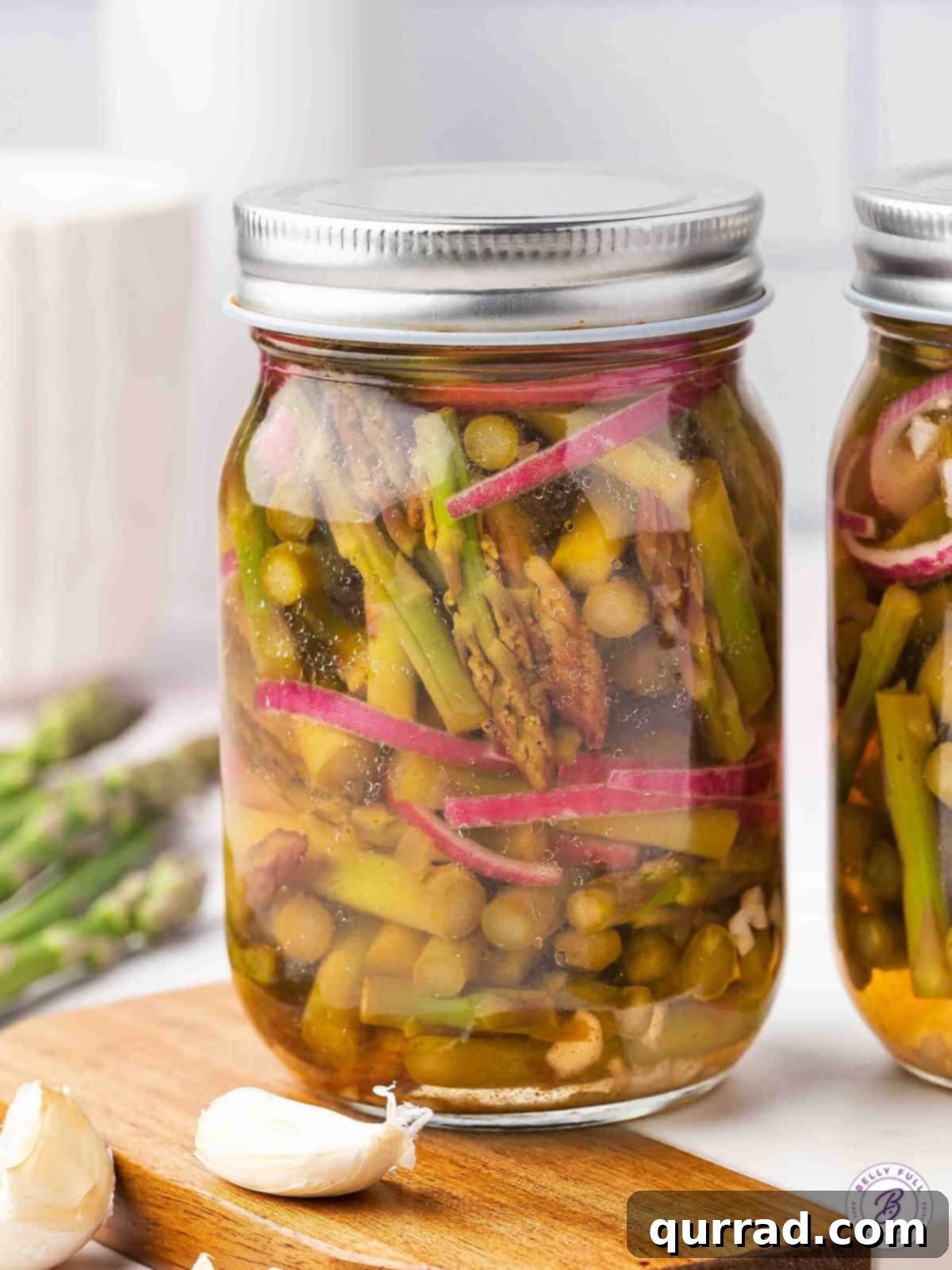
Bright, zesty, and irresistibly crunchy, this Pickled Asparagus recipe transforms fresh spring asparagus into an extraordinary gourmet delight. Our quick-pickling method infuses tender asparagus stalks with a tangy, subtly spicy, and deeply savory brine, featuring notes of chili-garlic, onion, and a hint of sweetness. It’s a delightful departure from traditional pickled vegetables, offering a refreshingly simple yet incredibly flavorful experience that’s ready to enjoy after just one night in the fridge. Prepare to fall in love with this versatile snack or side dish – it’s so quick to make and wildly delicious!
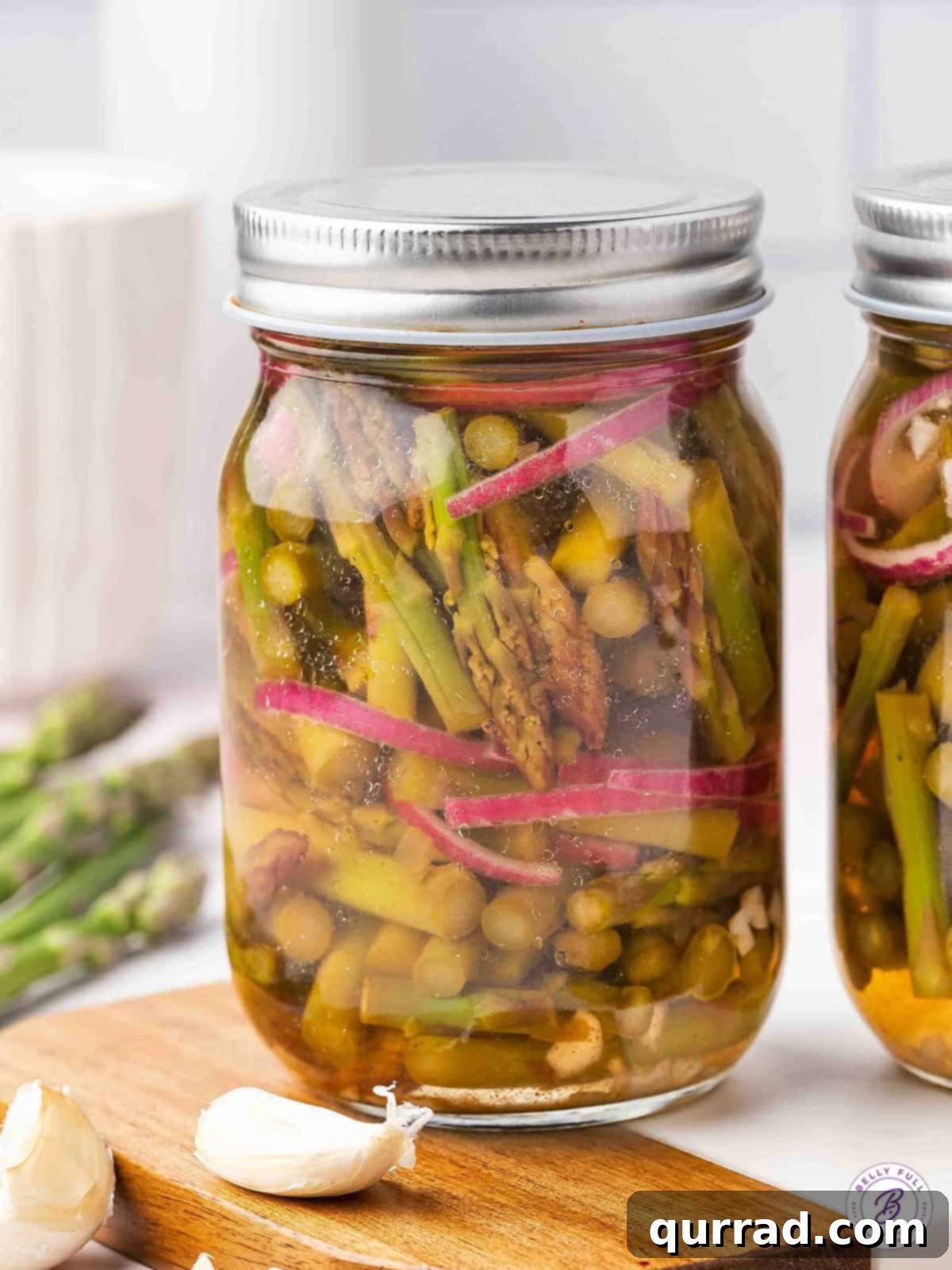
Asparagus, with its vibrant green hue and delicate flavor, is truly one of nature’s finest spring treasures. While I adore it prepared in countless ways—whether roasted in the oven, crispy from the air fryer, savory when wrapped in bacon, or baked into a fluffy quiche—there’s something uniquely captivating about quick-pickled asparagus. This recipe elevates the humble spear to new culinary heights, offering a perfect balance of tartness, a gentle kick of spice, and the earthy undertones of garlic and onion. Once you have a jar of these crunchy gems in your refrigerator, they tend to disappear remarkably fast.
Beyond being an addictive snack, this pickled asparagus makes a fantastic accompaniment to almost any meal. It can be served as a refreshing pickled asparagus salad, an exciting addition to spring charcuterie boards, or a vibrant component in salads, sandwiches, and grain bowls. Its bright flavor and satisfying crunch are guaranteed to impress everyone who tries it, making it a staple for both everyday enjoyment and special gatherings.
The Allure of Homemade Pickled Asparagus
Why bother making pickled asparagus at home when you might find it in specialty stores? The answer lies in the unparalleled freshness, customizable flavor, and sheer simplicity of the quick-pickling process. Store-bought versions often lack the crisp texture and vibrant taste that freshly prepared asparagus delivers. When you pickle asparagus yourself, you control the quality of ingredients, ensuring no artificial preservatives or excessive sugars. You can adjust the level of spice, the type of vinegar, and the sweetness to perfectly match your palate.
Furthermore, quick pickling is far less intimidating than traditional canning methods, making it accessible even for novice cooks. There’s no need for special equipment or extensive processing; just a few simple steps and a bit of patience for the flavors to meld overnight. The reward is a batch of exceptionally flavorful and crunchy pickled asparagus that tastes far superior to anything you can buy, brimming with the goodness of spring.
Understanding Quick Pickling
Quick pickling, also known as refrigerator pickling, is a fantastic method for preserving vegetables for short-term enjoyment. Unlike traditional canning, which involves sterilizing jars and processing them in a boiling water bath for shelf-stable storage, quick pickling simply requires you to submerge vegetables in a seasoned brine and store them in the refrigerator. The acidity of the brine, typically made with vinegar, inhibits bacterial growth, allowing the vegetables to “pickle” and develop their characteristic tangy flavor over time.
This method is ideal for fresh produce like asparagus because it retains much of their natural crunch and vibrant color, rather than softening them extensively. The magic happens as the vegetables absorb the complex flavors of the brine—a mix of sweet, sour, salty, and spicy notes in this particular recipe. While quick-pickled items are not shelf-stable and must be kept refrigerated, they offer an incredible burst of fresh flavor that can elevate many dishes. It’s a convenient and delicious way to enjoy seasonal produce long after its peak.
Selecting and Preparing Asparagus for Pickling
The success of your pickled asparagus begins with choosing the right stalks and preparing them correctly. These crucial steps ensure maximum flavor and the perfect crunchy texture.
- Choose thinner asparagus: When you’re at the grocery store or farmer’s market, seek out asparagus bundles that are bright green, firm, and on the thinner to medium-size spectrum. Thicker stalks tend to be tougher and more fibrous, which can result in a less pleasant texture when pickled. Thinner spears absorb the brine more effectively and maintain a delightful crunch.
-
Trim the asparagus properly: The woody ends of asparagus are not edible and must be removed. There are two common methods for this:
- The Bend and Snap Method: Gently bend each asparagus stalk near its base. It will naturally break at the point where the tough, woody part meets the tender, edible spear. This method is intuitive and ensures you’re only keeping the best parts.
- The Knife Method: For a more uniform and aesthetically pleasing result, you can gather the asparagus stalks and use a sharp knife to slice off the woody ends. Aim to cut them all at roughly the same length after determining the natural break point of one or two stalks. This is especially helpful if you plan to pack them neatly into jars.
- Do not overcook the asparagus: This is perhaps the most critical tip for perfectly crunchy pickled asparagus. You want to quickly blanch the asparagus in boiling water for just 2-3 minutes. The goal is to make them tender-crisp and bright green, not soft or mushy. Overcooking will result in limp, unappetizing pickled spears.
- Immediately cool with an ice bath: After blanching, swiftly transfer the asparagus to a bowl of ice water. This “shocking” process immediately stops the cooking, locking in that vibrant green color and crucial crunchy texture. It’s a simple step that makes a world of difference. Once cooled, drain them thoroughly and pat them completely dry with paper towels to prevent diluting the pickling brine.
- Refrigerate overnight for optimal flavor: This is arguably the hardest part of the recipe because it requires patience! Pickled asparagus isn’t something you can enjoy immediately. The asparagus needs ample time – at least overnight – to absorb the complex flavors of the brine. If you try it too soon, you’ll simply have blanched asparagus in a vinaigrette, missing out on the full, tangy, and spicy pickling experience. Trust me, the wait is absolutely worth it for that incredible burst of flavor.
Quick Pickled Asparagus with Chili-Garlic Brine
15 mins
3 mins
18 mins
4 people
Pin It |
Print Recipe
Ingredients
- 1 pound asparagus stalks
- 1/4 cup red onion, thinly sliced into half moons
- 1 small clove garlic, minced
- 1/2 cup rice vinegar
- 1/2 cup mirin (sweet Japanese rice wine – see note below)
- 1 cup water
- 1/4 cup honey
- 3 teaspoons vegetable oil (or avocado oil)
- 2 teaspoons toasted sesame oil
- 1 teaspoon chili garlic sauce
- 1/2 teaspoon coarse salt
- Sesame seeds, for serving
Instructions
-
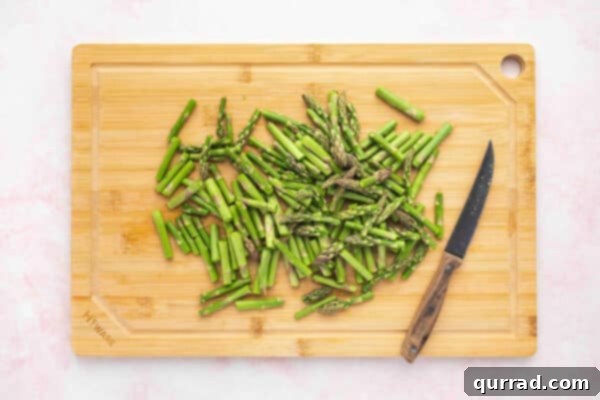
Trim and discard the woody ends of 1 pound asparagus. Then, cut the asparagus into approximately 2-inch pieces for easier packing and eating.

-
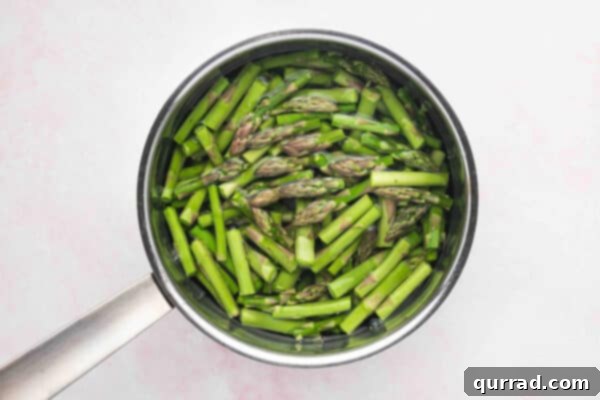
Bring a pot of salted water to a rolling boil. Carefully add the prepared asparagus pieces and cook for a brief 2-3 minutes until they are just tender-crisp and have turned a vibrant, bright green color. Be careful not to overcook.
-
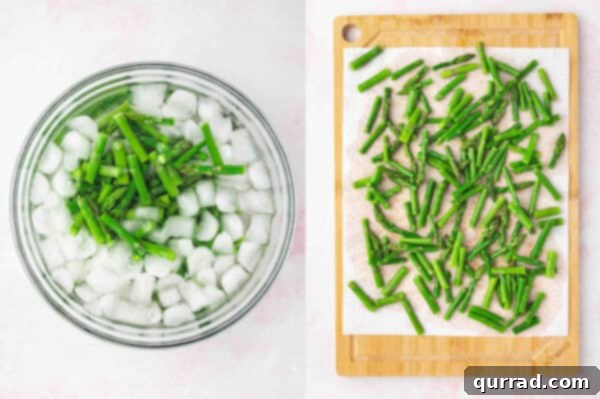
Immediately remove the blanched asparagus from the hot water and plunge them into a large bowl of ice water. This “ice bath” rapidly cools the asparagus, stopping the cooking process and preserving their crisp texture and bright color. Once thoroughly chilled, drain the stalks completely and pat them very dry with paper towels to remove excess moisture.
-
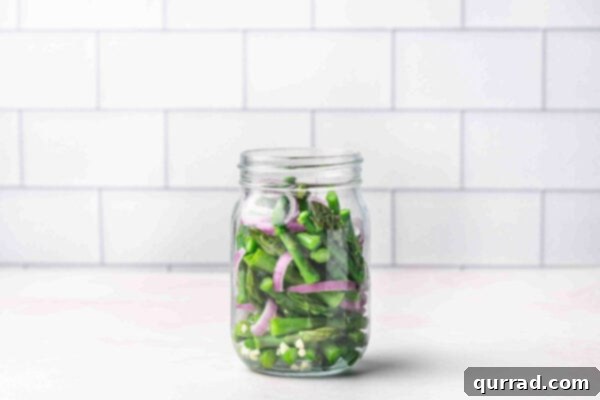
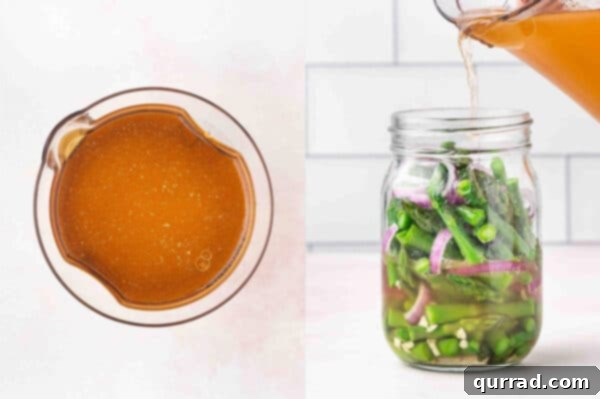
Evenly divide the dried asparagus pieces between two 11.5-ounce jars. Alternatively, you can place all of the asparagus into one pint-sized jar. Into each jar, also add a portion of the 1/4 cup sliced red onion and the small minced clove of garlic, ensuring they are distributed among the asparagus.
-
In a spouted measuring cup or medium bowl, combine the 1/2 cup rice vinegar, 1/2 cup mirin, 1 cup water, 1/4 cup honey, 3 teaspoons vegetable oil, 2 teaspoons toasted sesame oil, 1 teaspoon chili garlic sauce, and 1/2 teaspoon coarse salt. Whisk all the ingredients together thoroughly until well combined and the honey is dissolved. Carefully pour this flavorful brine evenly over the asparagus in the jars, ensuring all the asparagus and onion pieces are fully submerged.
-
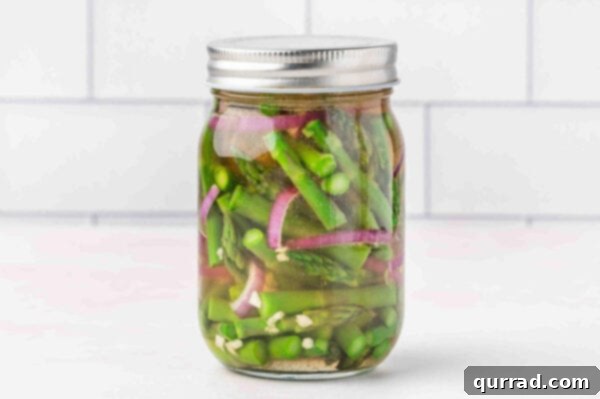
Loosely fasten the lids onto the jars. Allow the jars to sit on your countertop until they come down to room temperature. Once cooled, tighten the lids securely and transfer the jars to the refrigerator. For the best flavor, allow the asparagus to marinate and pickle overnight, or for at least 8 hours. This allows the asparagus to fully absorb the delicious brine.
-
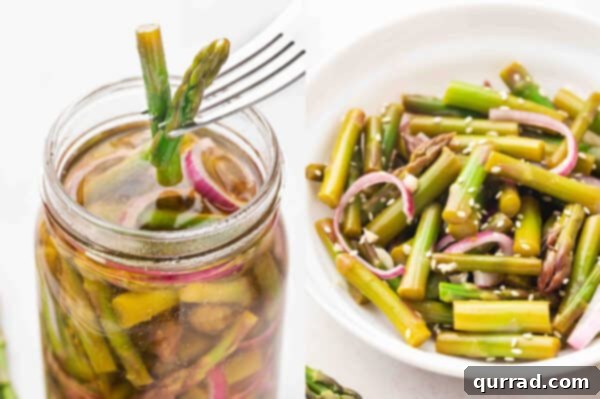
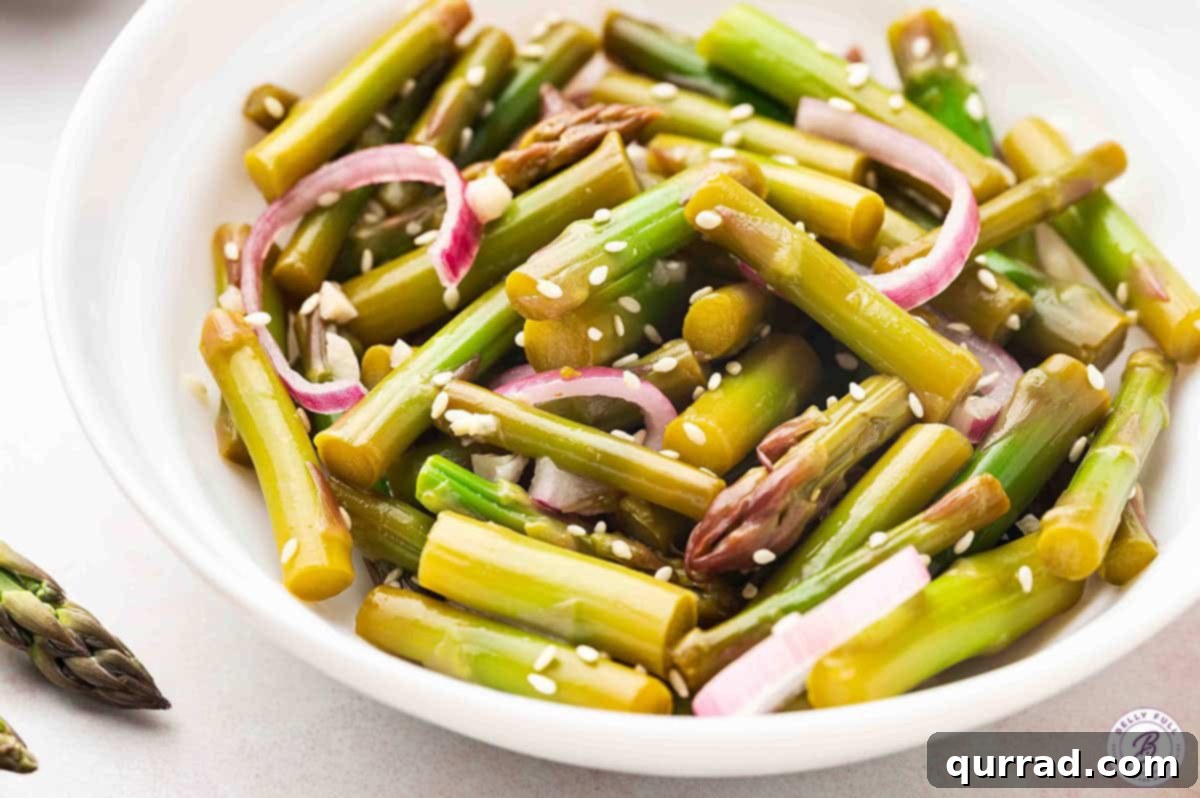
Once fully pickled, you can enjoy them straight from the fridge as a crunchy snack, just like regular pickles. If serving as a side salad, drain the pickled asparagus (reserving a little brine if desired for dressing), transfer it to a shallow serving bowl along with the red onion, and sprinkle with a generous amount of sesame seeds just before serving for added flavor and texture.
Notes
- Sake: As another Japanese rice wine, sake is a good substitute. Since it’s less sweet than mirin, you might want to add a teaspoon or two of sugar to the brine to balance the flavors.
- Dry Sherry: A dry sherry can also work in a pinch, though it will impart a different flavor profile. Again, add a bit of sugar to compensate for mirin’s sweetness.
- Rice Vinegar with Sugar: If you don’t have sake or sherry, you can use an equal amount of rice vinegar mixed with 1-2 tablespoons of sugar to mimic mirin’s sweetness and acidity.
Nutrition
Nutritional information provided is an automatic calculation and can vary based on the exact products you use and any modifications you make to the recipe. If precise dietary numbers are crucial to you, we recommend calculating them yourself using your specific ingredients.
Beyond the Jar: Creative Ways to Enjoy Your Pickled Asparagus
The versatility of pickled asparagus is truly remarkable, and I’m constantly discovering new and delicious ways to incorporate it into my meals. While the most common scenario in my kitchen involves simply snacking on them straight from the jar like crunchy, tangy pickles, there’s a whole world of culinary possibilities waiting to be explored.
One of my favorite serving suggestions is transforming them into a simple yet elegant side salad. Just drain the asparagus from the pickling liquid (you can reserve a little brine for a light dressing if you wish), transfer them to a shallow bowl along with the thinly sliced red onion, and garnish with a sprinkle of toasted sesame seeds. This makes for a vibrant and refreshing accompaniment to any dinner.
But don’t stop there! Pickled asparagus makes an exceptional addition to a wide array of dishes:
- Spring Salads: Chop them up and toss them into your favorite spring mix, potato salad, or pasta salad for an extra layer of flavor and crunch.
- Sandwiches & Wraps: Add a few spears to your sandwiches, subs, or wraps for a bright, tangy contrast that cuts through rich fillings. They’re particularly good with creamy cheeses or deli meats.
- Avocado Toast: Elevate your morning avocado toast with some finely chopped pickled asparagus. The acidity beautifully balances the creaminess of the avocado.
- Grain & Veggie Bowls: Integrate them into hearty salmon bowls, sushi bowls, or any custom veggie bowl for a delightful pop of flavor and texture.
- Charcuterie & Cheese Boards: These vibrant pickled spears are a showstopper on any charcuterie board, offering a much-needed tangy counterpoint to rich cheeses, cured meats, and crusty bread.
- Garnish for Soups & Stews: A few finely chopped pieces can brighten up creamy soups or stews with their zesty kick.
- Stir-fries: While less common, adding pickled asparagus towards the end of a stir-fry can introduce an interesting tangy element.
Essentially, any dish that could benefit from a bit of crunchy texture, a bright acidic note, and a hint of sweet-spicy flavor is a perfect candidate for pickled asparagus. Let your imagination run wild!
Storage and Shelf Life
It’s important to reiterate that this is a quick-pickled recipe, which means the asparagus does not undergo a full canning process. Therefore, it is NOT shelf-stable and must always be stored in the refrigerator. The goal of quick pickling is fresh flavor and crisp texture, not long-term pantry storage.
When properly stored in the refrigerator in a tightly sealed jar, your homemade pickled asparagus will maintain its peak flavor and texture for about one week. While it might still be safe to eat for a few days beyond that, the crunchiness and vibrant taste may diminish over time. Always ensure the asparagus remains submerged in the brine for optimal preservation. If you notice any signs of spoilage, such as off-smells, mold, or extreme softening, it’s best to discard the batch. Enjoy them fresh and often for the best experience!
Explore More Pickling Adventures
If you’ve enjoyed the delightful tang and crunch of these pickled asparagus spears, you’ll love exploring other quick-pickled recipes. Pickling is a fantastic way to extend the enjoyment of various vegetables and even eggs, adding a unique zesty dimension to your meals. Dive into these other simple and flavorful pickling projects:
- Pickled Eggs
- Pickled Beets
- Giardiniera (Mixed Pickled Vegetables)
- Pickled Radishes
- Pickled Red Onions
These recipes are all designed for refrigerator storage, offering a quick and easy way to add homemade pickled goodness to your culinary repertoire.
I hope you absolutely adore this delicious and easy Pickled Asparagus recipe! Please take a moment to leave a review below and let me know what you think. And don’t forget to follow Belly Full on TikTok, Instagram, Facebook, Pinterest, and YouTube for more delightful recipes and kitchen inspiration!