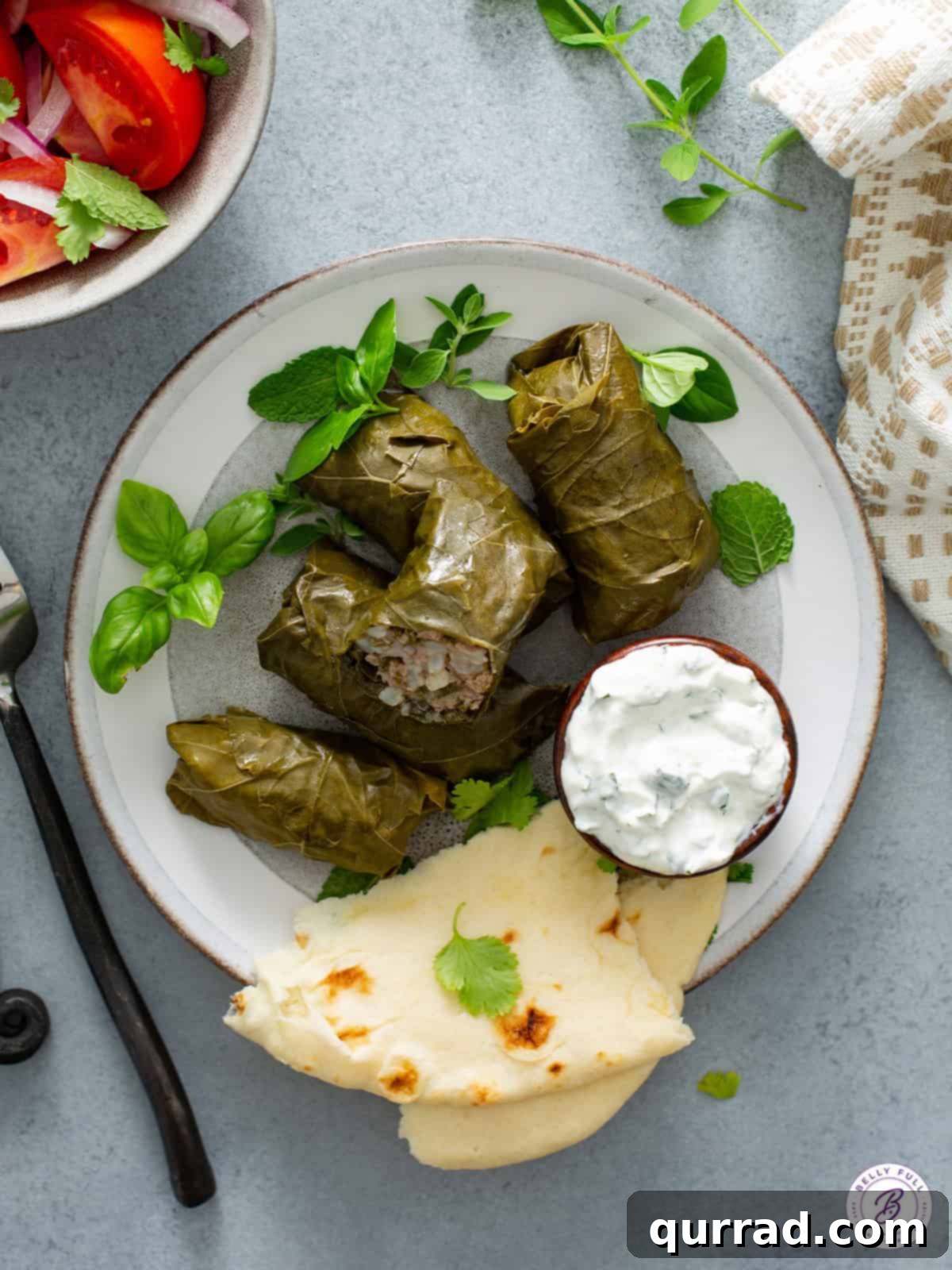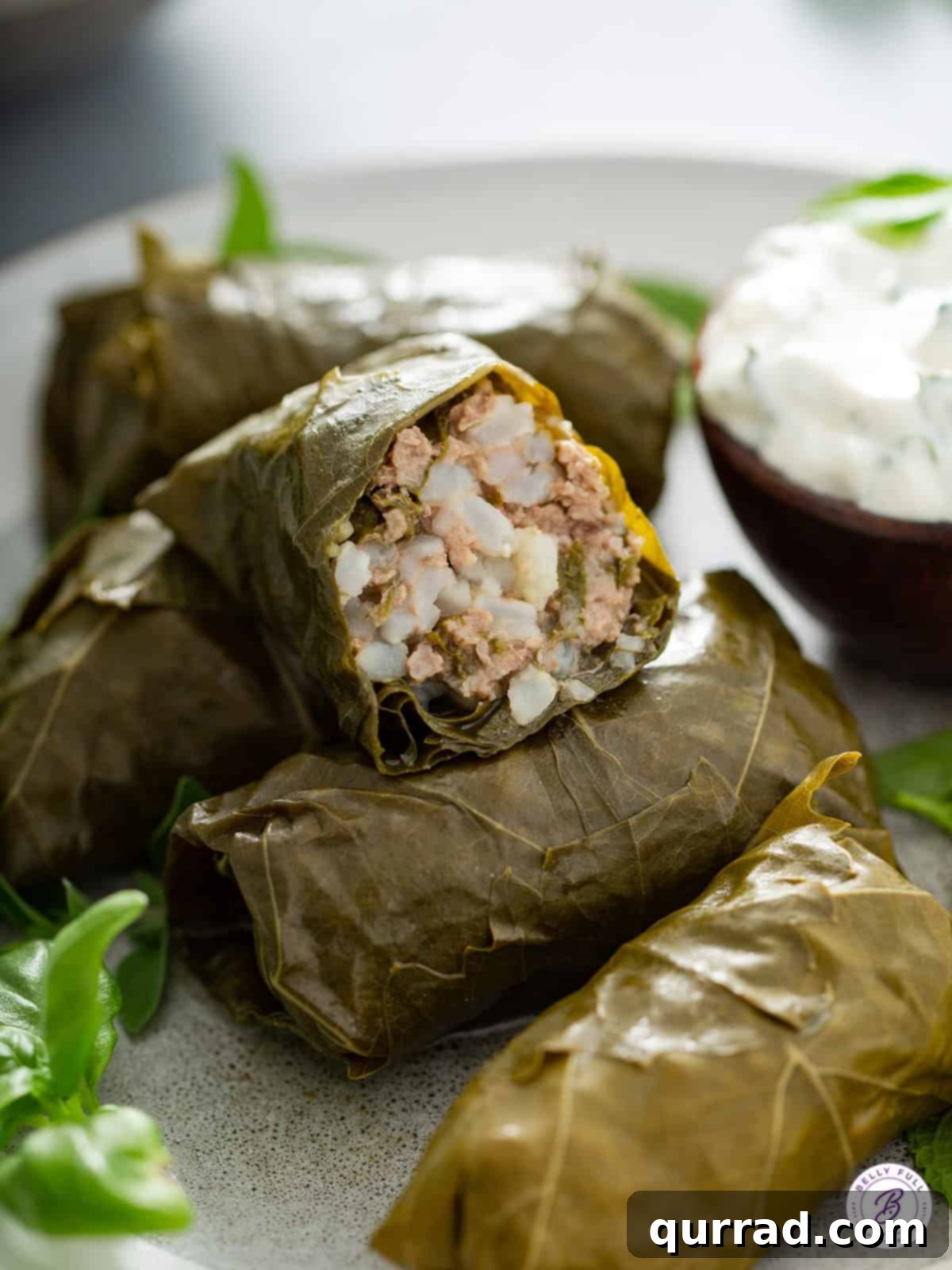
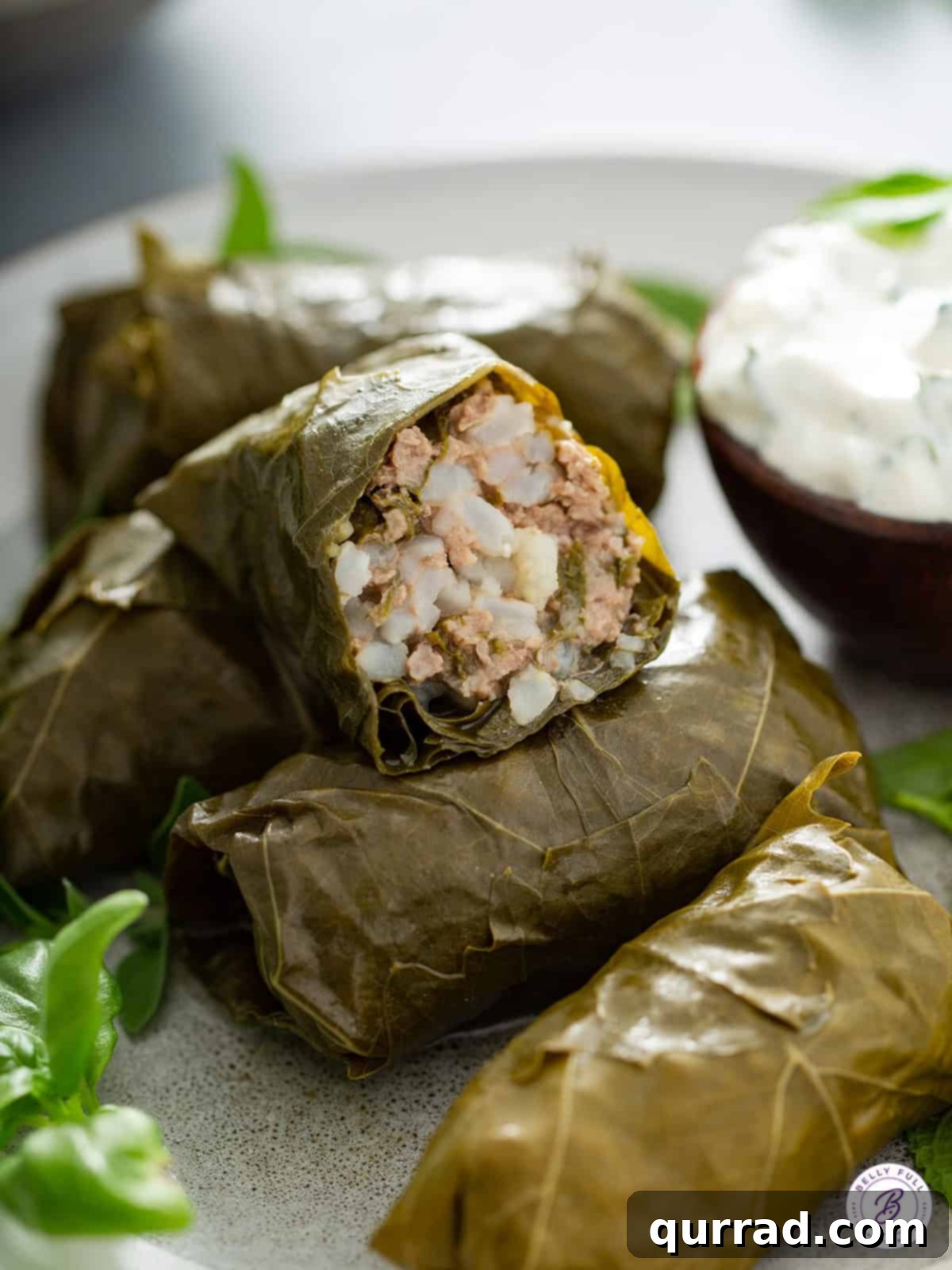
Embark on a culinary journey to the heart of the Mediterranean and Middle East by learning how to make authentic stuffed grape leaves, affectionately known as Dolma or Dolmades, right in your own kitchen! This exquisite and wholesome recipe combines aromatic rice, savory ground beef, a vibrant medley of fresh herbs, and a symphony of warming spices. Versatile by nature, these delightful parcels can grace your table as an elegant appetizer, a satisfying snack, or the centerpiece of a memorable dinner. Enjoy them warm, at room temperature, or chilled – their deliciousness knows no bounds. Get ready to impress your family and friends with this timeless delicacy!
Rave Reviews for Our Dolma Recipe
Kathy shares, “I rarely attempt dolma at home because they always seemed like too much effort, but this recipe changed my mind! It’s surprisingly easy, and the results are absolutely worth every minute. The flavors are perfectly balanced and incredibly vibrant – truly a standout dish.”
Annette P. exclaims, “This was my very first time preparing Dolmas, and I couldn’t be happier with how they turned out! I followed the recipe meticulously, and each stuffed grape leaf was fantastic.”
Marie adds, “Having never made Dolma before, I wasn’t sure what to expect, but these were utterly delicious. We loved them so much, and I served them alongside your fantastic Tzatziki sauce for a complete experience.”
My first unforgettable encounter with Dolma happened many years ago at a baby shower. Laid out on a pristine white platter, they were arranged so beautifully, almost like edible jewels. My immediate thought was, “Grape leaves? Are those really edible?” As someone who loves to explore new cuisines, I eagerly tried one, then another, and before I knew it, I had savored about ten of these delectable bites. They were perfectly complemented by a cooling Tzatziki Sauce and a refreshing Tabbouleh salad. That day, a lifelong love for stuffed grape leaves was born!
While you can certainly find delicious dolma at specialty stores, their price can quickly add up. This inspired me to discover the joy and satisfaction of preparing them at home. Yes, the process involves several steps, but please don’t let that intimidate you. Each stage is surprisingly straightforward, and I’ve broken down the assembly and cooking into easily manageable parts. After just a couple of batches, you’ll find yourself gliding through the process with confidence. It’s also a wonderfully fun activity to share with friends, turning cooking into a delightful social event!
Making homemade stuffed grape leaves not only allows you to control the quality of ingredients but also lets you customize the flavors to your exact preference. From selecting the freshest herbs to balancing the spices, crafting your own dolma is a rewarding experience that yields a truly authentic and deeply flavorful dish, far superior to store-bought versions. It’s a labor of love that results in culinary magic, transforming simple ingredients into a gourmet experience.
Understanding Dolma: A Culinary Tradition
The term “Dolma” originates from the Turkish word “Dolmak,” meaning “to be filled” or “to be stuffed.” This culinary concept encompasses a vast array of stuffed dishes found across the cuisines of the Balkans, the Middle East, Central Asia, and the Mediterranean. While the word “dolma” is often synonymous with stuffed grape leaves, it broadly refers to any vegetable — such as eggplants, tomatoes, peppers, or even cabbage — that has been cored and filled with a savory mixture. Stuffed grape leaves, sometimes specifically called “dolmades” (a Greek variation), are arguably the most iconic and beloved representation of this tradition.
You’ll discover countless regional variations of stuffed grape leaves, each reflecting local tastes and ingredients. Some are prepared as vegetarian delights, often featuring a rice-based filling enriched with pine nuts, currants, and copious amounts of fresh herbs, seasoned with olive oil and lemon. Others, like the recipe we’re exploring today, incorporate ground meat (typically beef or lamb) alongside rice, creating a heartier and richer flavor profile. Regardless of the specific filling, the delicate, slightly tart embrace of the grape leaf remains the constant, providing a unique wrapper for the flavorful ingredients within.
This dish is more than just food; it’s a symbol of hospitality and celebration in many cultures. Preparing and sharing dolma is a time-honored tradition, often reserved for special occasions or family gatherings. Its intricate appearance belies a humble preparation, inviting diners to savor each bite and appreciate the culinary heritage it represents. Whether served as part of a meze platter or as a main course, dolma always bring a touch of authenticity and comfort to the table.
Crafting the Perfect Dolma: Expert Tips for Success
Creating exquisite homemade stuffed grape leaves is an art that becomes effortless with a few key techniques. Follow these expert tips to ensure your dolma are perfectly rolled, tender, and bursting with flavor every time.
- Selecting Your Grape Leaves: The foundation of great dolma starts with the leaves. Most grocery stores stock brined grape leaves in their international food aisle or alongside pickles. Look for reputable brands; I often opt for Reese brand grape leaves, typically sold in 8-ounce glass jars. Ensure they are tender and relatively large, as this makes the rolling process much easier. Upon opening, rinse them thoroughly under cold running water to remove excess brine, then gently pat them dry. Don’t discard any torn leaves; they’re perfect for lining your cooking pot, adding both flavor and a protective layer!
- Preparing the Rice: Achieving the ideal texture for the rice in your dolma is crucial. We want it to be tender but not mushy, and certainly not sticky like sushi rice. Partially cooking the rice before mixing it with the other ingredients ensures it cooks evenly inside the leaves without expanding excessively and bursting the dolma. After a brief simmer, drain and rinse the rice under cold water to stop the cooking process and wash away any surface starch. This prevents the filling from becoming overly gluey and helps maintain the integrity of each dolma.
- The Art of Stuffing: Avoid the common pitfall of over-stuffing. Remember that the rice will expand significantly as it cooks, absorbing liquids and growing in volume. A good rule of thumb is to use about 1.5 to 2 tablespoons of filling per leaf, depending on its size. Leave a little room at the ends before rolling to allow for this expansion. An over-stuffed dolma can burst during cooking, losing its shape and some of its precious filling. Under-stuffing, on the other hand, can result in loose rolls and a less satisfying bite.
- Mastering the Roll: A snug roll is key to preventing your dolma from unraveling during the long simmering process. Place the grape leaf shiny side down on your work surface, with the stem end facing you. Spoon the filling near the stem. Fold the bottom part of the leaf up over the filling, then fold in the two side flaps. Finally, carefully roll the leaf upwards from the bottom towards the tip, creating a compact, cigar-like shape. Practice makes perfect, and you’ll soon develop a rhythm and an intuitive feel for how much pressure to apply.
- Lining the Cooking Pot: This is a critical step to prevent the bottom layer of your beautifully rolled dolma from burning or sticking to the pot. Line the bottom of your heavy-bottomed pot or Dutch oven with a layer of any torn grape leaves, thin slices of potato, or even lemon slices. This creates a protective barrier, preventing direct contact with the heat source, and also imparts additional subtle flavor to the dish.
- Arrangement for Even Cooking: Once rolled, arrange the dolma snugly in layers within your prepared pot, seam-side down. This helps to secure them and keeps them from unwrapping. If you have enough dolma, you can create two or even three layers. The tight arrangement also minimizes movement during simmering, ensuring they maintain their uniform shape and cook consistently throughout the batch.
- The Inverted Plate Trick: To keep your dolma fully submerged in the cooking liquid and prevent them from floating around and coming undone, place an inverted heat-proof plate or a smaller lid directly on top of the uppermost layer of dolma. This gentle weight ensures they cook evenly and remain intact, preventing them from unfurling and losing their filling.
- Gentle Simmering is Essential: Once you’ve added the liquid, bring it to a boil briefly over medium-high heat, then immediately reduce the heat to the lowest setting to maintain a gentle simmer. A vigorous boil can agitate the dolma, causing them to burst or unravel. A slow, steady simmer, covered, allows the flavors to meld beautifully and the rice to cook perfectly without damaging the delicate leaves. Patience is a virtue here, as slow cooking yields the most tender and flavorful results!
- The Golden Rule of Resting: After the cooking time is complete, resist the urge to serve your dolma immediately. Remove the pot from the heat and let them rest for at least 15-30 minutes, or even longer. This crucial resting period allows the dolma to absorb any remaining excess liquid, firm up, and allows the flavors to fully develop and settle. You’ll find they are easier to handle, hold their shape better, and taste even more delicious after this brief repose.
Homemade Dolma (Stuffed Grape Leaves)
25
1
15
15
1
55
25
Dolmas
Ingredients
- 25-30 grape leaves, plus more to line the pan
- 1 pound lean ground beef
- 5 tablespoons arborio rice, partially cooked and rinsed
- 1 medium sweet onion, minced
- 1 tablespoon butter
- 1 tablespoon vegetable oil
- 1 small bunch cilantro, chopped
- 10 large basil leaves, chopped
- 10 medium mint leaves, chopped
- 1 tablespoon ground cumin
- salt and black pepper, to taste
- 1/4 cup lemon juice
- 2 cups water, (or more depending on the size of your pan)
Instructions
-
Carefully remove grape leaves from the jar and rinse them thoroughly under cold water to wash away excess brine. Trim off any tough stems. Set aside any torn or smaller leaves; these will be used to line the cooking pan later.
-
To partially cook the rice, combine the arborio rice with 2/3 cups of water in a small saucepan. Bring the mixture to a boil over medium-high heat, then reduce the heat and let it gently simmer for 3-4 minutes. Immediately transfer the rice to a fine-mesh sieve and rinse thoroughly under cold running water to cool it down and remove any excess starch. Drain well.
-
In a medium pan, melt butter and vegetable oil over medium-high heat. Add the minced sweet onion and cook, stirring frequently, until the onion becomes translucent and just begins to turn golden brown, which should take approximately 3 minutes. Remove from heat and allow the cooked onion to cool slightly before proceeding.
-
In a large mixing bowl, combine the lean ground beef, the slightly cooled cooked onion, the partially cooked and rinsed rice, all of your freshly chopped herbs (cilantro, basil, and mint), ground cumin, and season generously with salt and black pepper to taste. Mix everything thoroughly with your hands until well combined.
-
Prepare your rolling station on a clean, flat working surface. Lay a single grape leaf, shiny side down (the dull side should face up, as it’s rougher and will hold the filling better), with the stem end closer to you. Place about 1.5 to 2 tablespoons of the beef and rice mixture in the middle of the leaf, slightly closer to the stem end. Fold the bottom part of the leaf up over the filling. Then, fold the two side flaps inwards towards the center. Finally, carefully roll the leaf upwards from the bottom, creating a snug, compact parcel. Repeat this process with all remaining grape leaves and filling mixture.
-
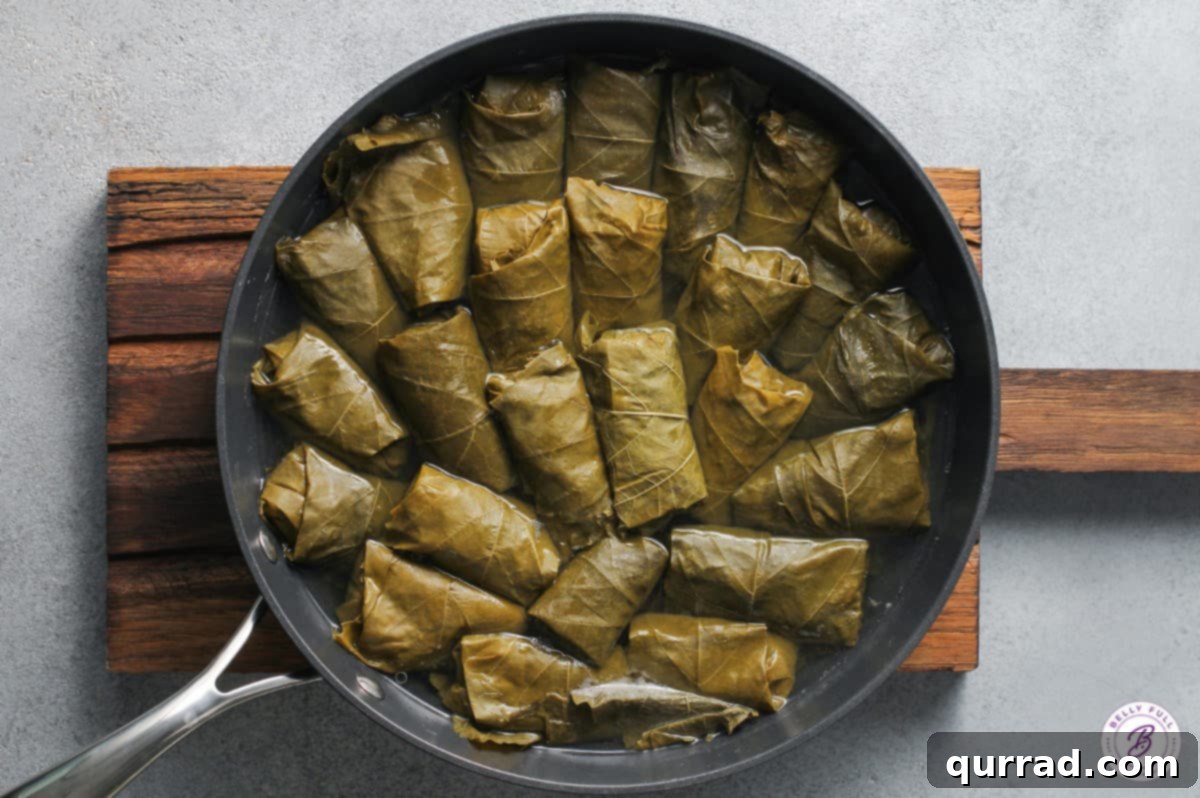
Line the bottom of a large, heavy-bottomed pot or Dutch oven with the reserved torn grape leaves or any extra whole leaves. Arrange the rolled dolmas snugly next to each other in layers, seam-side down, in the prepared pan. If necessary, you can create two or even three layers. Pour in enough water to just barely cover the top layer of dolmas (approximately 2 cups for an 11-inch pan, adjust as needed).
-
Add the fresh lemon juice and a generous pinch of salt to the cooking liquid.
-
To prevent the dolmas from floating and unraveling during cooking, place an inverted heat-proof plate or a smaller, heavy lid directly on top of the assembled dolmas. This will keep them submerged and intact.
-
Bring the liquid to a gentle boil over medium-high heat, then immediately reduce the heat to the lowest setting to maintain a gentle simmer. Cover the pot and allow the dolmas to cook for 60-75 minutes, or until the rice is tender and the meat is cooked through.
-
Once cooked, remove the pot from the heat. Keep the lid on and let the dolmas stand undisturbed for at least 15-30 minutes. This resting period allows the flavors to fully meld and the dolmas to firm up, making them easier to handle and more delicious.
-
Carefully transfer the dolmas to a serving platter. Serve them warm, at room temperature, or chilled, ideally with a side of homemade Tzatziki sauce for dipping. Enjoy your homemade Mediterranean masterpiece!
Video Guide
While the embedded video player has been removed for static HTML, you can typically find a step-by-step video guide for “Dolma (Stuffed Grape Leaves)” on popular video platforms by searching for the recipe name. A visual demonstration can be incredibly helpful for perfecting the rolling technique!
Recipe Notes & Variations
Customize Your Herbs and Spices: This recipe is incredibly adaptable to personal taste. If cilantro isn’t your preference, fresh parsley makes an excellent substitute, offering a slightly different but equally appealing herbaceous note. Not a fan of mint? Simply leave it out or reduce the amount to a hint. Consider adding a pinch of dried oregano, thyme, allspice, or a touch of minced garlic to the filling for different aromatic profiles. A hint of red pepper flakes can introduce a subtle warmth and a touch of excitement to each bite.
Sweet and Nutty Additions: For an extra layer of complexity and texture, some traditional stuffed grape leaves recipes incorporate a handful of dried currants for a touch of sweetness and/or toasted pine nuts for a delicate nutty crunch. These additions are particularly common in vegetarian dolmas, balancing the savory elements beautifully. You could also try other finely chopped nuts like walnuts for a different kind of richness.
Enhanced Citrus Flavor: If you enjoy a brighter, more zesty flavor, you can add a bit of fresh lemon zest to the filling mixture along with the juice. A generous drizzle of high-quality extra virgin olive oil over the cooked dolmas just before serving can also enhance their overall taste, adding a silky finish and bringing out the herbal notes.
Nutrition Information
Please note: Nutritional information provided is an automatic calculation and may vary based on the specific brands and products used, as well as any modifications made to the recipe. If precise nutritional values are crucial for your dietary needs, we recommend independently calculating them.
Did you make this recipe? We’d love to hear your feedback!
Share your experience and leave a rating below to help other home cooks!
Delightful Serving Suggestions for Dolma
The versatility of Dolma makes them a fantastic addition to almost any meal or gathering. Traditionally, Greek dolmades (often vegetarian and lighter) are savored at room temperature or slightly chilled, particularly refreshing during warmer months. Dolma prepared with a hearty meat filling, like ours, are typically enjoyed warm, allowing their rich, savory flavors to truly shine. However, the beauty of this dish is its flexibility – feel free to enjoy both types exactly as you prefer, warm, cool, or at room temperature, depending on your mood and the occasion.
These expertly rolled stuffed grape leaves make for incredible finger food. Their sturdy structure holds up beautifully, making them ideal for elegant dinner parties, casual potlucks, celebratory weddings, sophisticated luncheons, or even a classic picnic spread. Imagine a platter of these vibrant, flavorful bites gracing your next event – they are as visually appealing as they are delicious, sure to be a conversation starter and a crowd-pleaser.
To elevate your Dolma experience, consider pairing them with complementary Mediterranean staples. Our homemade Tzatziki sauce is an absolute must-try for dipping; its cool, creamy, and tangy profile provides a refreshing contrast to the rich filling. For a more complete and satisfying meal, serve your Dolma alongside a vibrant Tabbouleh salad, bursting with fresh herbs and grains, and warm, fluffy Naan bread to sop up all the delicious juices. This combination creates an authentic and truly memorable feast, transporting your taste buds straight to the Mediterranean coast.
Storing Your Homemade Dolma for Lasting Freshness
One of the many benefits of making a batch of homemade dolma is their excellent keeping quality, allowing you to enjoy them over several days or even weeks. Proper storage ensures they retain their exquisite flavor and texture, minimizing waste and maximizing convenience.
- Refrigerator Storage: Once your dolmas have cooled completely, transfer them to an airtight container. They will keep beautifully in the refrigerator for up to 3 days. For best results, you can store them in a single layer or gently stacked, perhaps with a piece of parchment paper between layers, to prevent them from sticking together. This also helps maintain their delicate shape and prevents the leaves from drying out.
- Freezer Storage: Dolmas are also fantastic for freezing, making them an excellent make-ahead meal or snack option. After they are fully cooked and have cooled down, arrange them in a single layer on a baking sheet and flash freeze for about an hour until firm. This prevents them from sticking together. Then, transfer the frozen dolmas to a freezer-safe airtight container or heavy-duty freezer bag, removing as much air as possible. They can be stored in the freezer for up to 1 month. When you’re ready to enjoy them, thaw the dolmas completely in the refrigerator overnight. You can gently reheat them on the stovetop with a splash of water, in the microwave, or even in a low oven until warmed through.
- Preserving Leftover Grape Leaves: If you find yourself with extra brined grape leaves after making your dolma, don’t let them go to waste! You can easily preserve them for future use. Drain them from their brine, gently pat them dry, and then carefully roll them into small bundles or stack them flat. Place these in an airtight, freezer-safe bag, ensuring as much air as possible is removed before sealing. Frozen grape leaves can maintain their quality for approximately 1 month. Once thawed in the refrigerator, they should be used within 3 days for optimal freshness and texture.
We genuinely hope you adore this delicious and approachable recipe for homemade stuffed grape leaves. Your feedback means the world to us – please take a moment to leave a review below and share your culinary creations! Don’t forget to connect with Belly Full on TikTok, Instagram, Facebook, Pinterest, and YouTube for more inspiring recipes and culinary adventures! Happy cooking!