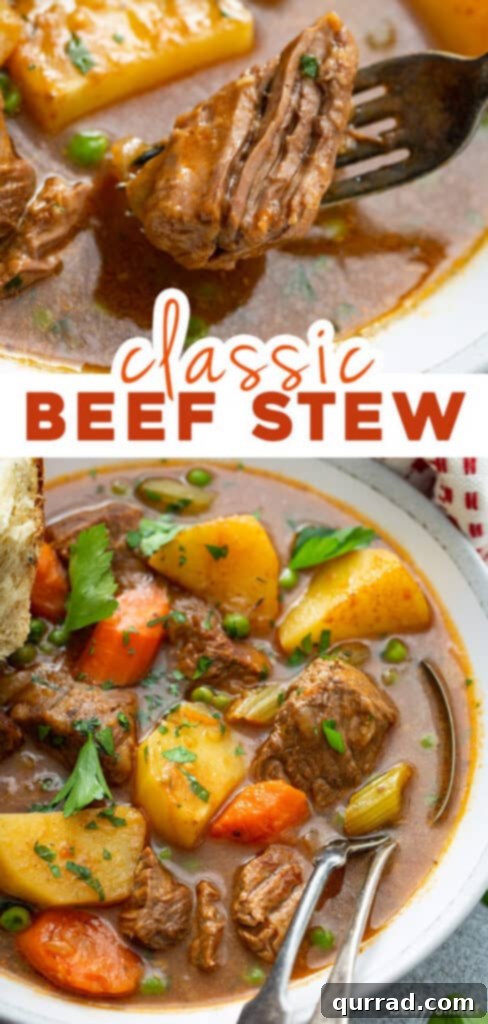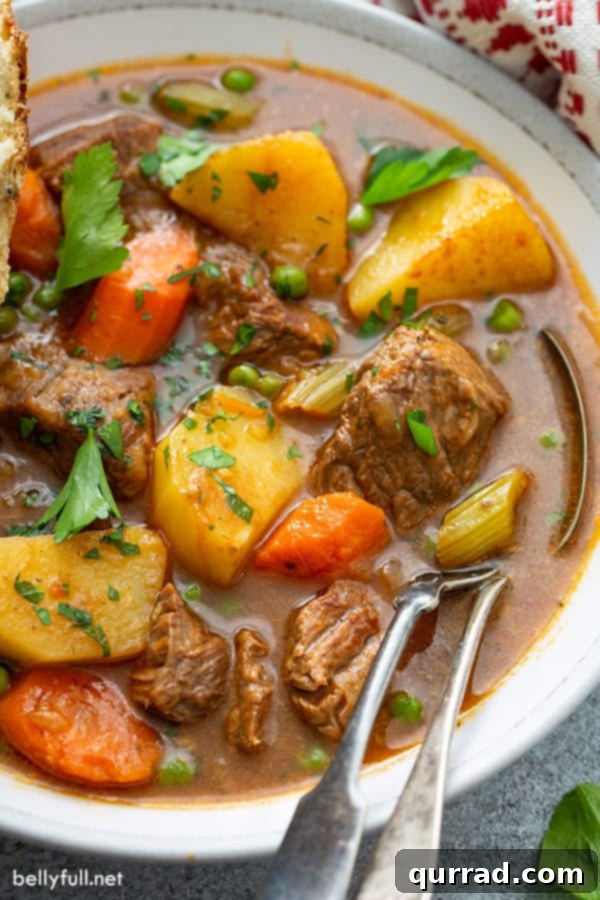
Are you searching for the ultimate classic comfort food experience? Look no further! This isn’t just a beef stew recipe; it’s *the* beef stew recipe you’ve been dreaming of. Imagine succulent, melt-in-your-mouth beef, perfectly tender root vegetables, all bathed in a rich, deeply flavorful gravy that coats every bite. This hearty beef stew is destined to become your family’s most requested dinner, a true go-to for warmth, flavor, and pure satisfaction in every bowl.
For those who love the convenience of hands-off cooking, explore our delicious Slow Cooker Beef Stew recipe, a fantastic alternative for busy days!
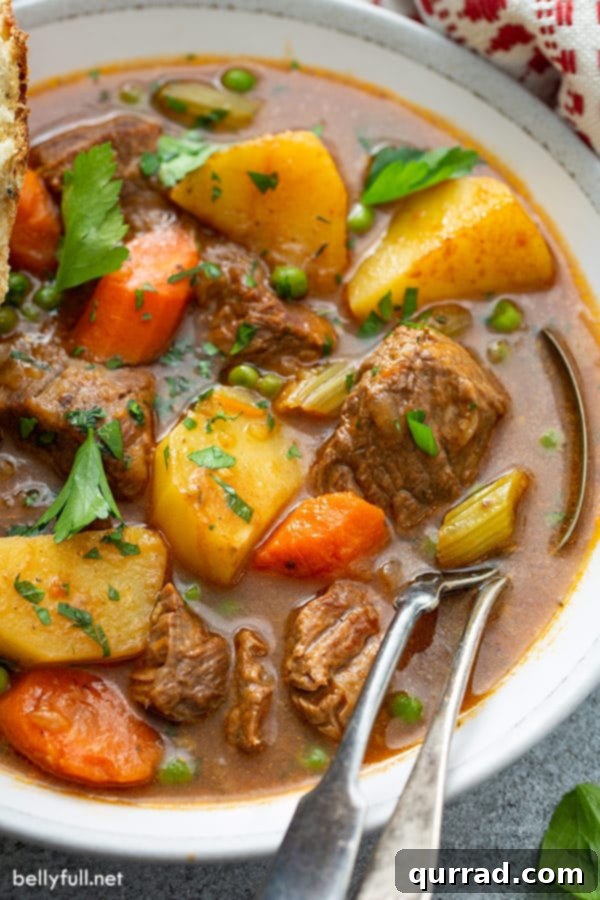
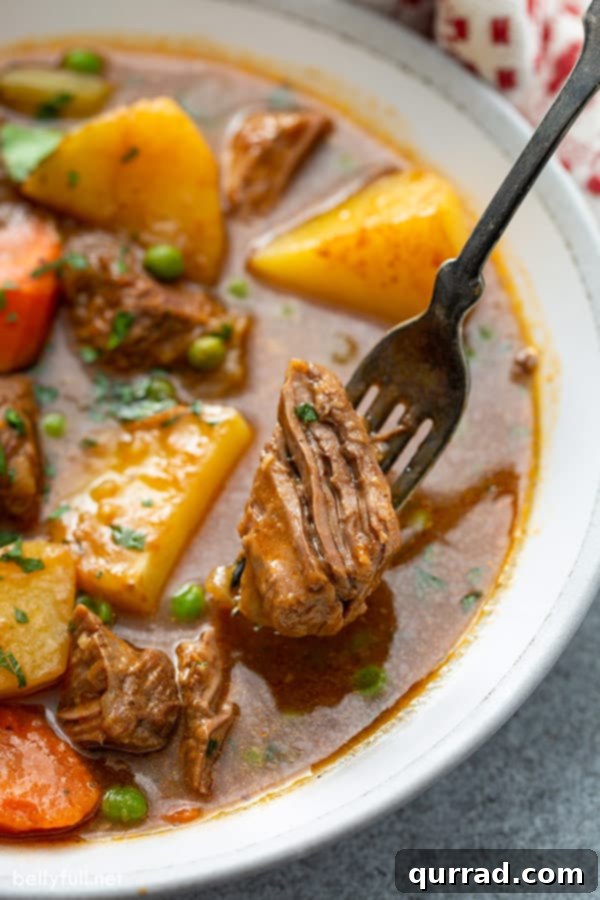
This classic beef stew epitomizes comfort food at its absolute finest. Each spoonful is a symphony of flavors and textures, featuring fall-apart cubes of tender beef, sweet carrots, wholesome potatoes, and vibrant peas. Every ingredient is masterfully seasoned and simmered in an incredibly aromatic, rich broth that promises an unparalleled culinary experience. This isn’t just a meal; it’s an embrace in a bowl, perfect for chilly evenings or any time you crave a deeply satisfying dish.
Why This is the Best Beef Stew Recipe You’ll Ever Make
What sets this particular beef stew apart from all others? It’s a combination of time-honored techniques and carefully selected ingredients that ensure a deeply flavorful, tender, and truly unforgettable meal. We prioritize flavor development from the very first step, ensuring that every element contributes to the overall richness and complexity of the stew. From perfectly seared beef to a slow, gentle simmer, each stage is designed to maximize taste and achieve that coveted melt-in-your-mouth texture.
Unlike many recipes that might rush the process or cut corners, our method focuses on building layers of flavor. The robust beef broth combined with aromatic vegetables and a medley of classic seasonings creates a gravy that’s not just thick, but incredibly savory and satisfying. This isn’t just a quick weeknight meal; it’s a labor of love that rewards your patience with a dish so comforting and delicious, it will instantly earn a permanent spot in your recipe collection.
Essential Ingredients for a Perfect Beef Stew
Crafting the perfect beef stew begins with selecting the right ingredients. Here’s a detailed look at what you’ll need to create this incredibly flavorful dish:
- Meat: Boneless Beef Chuck Roast – This is the star of our beef stew. Chuck roast is ideal for slow cooking as it contains connective tissue that breaks down beautifully over time, resulting in incredibly tender, juicy beef that easily falls apart. Cut it into uniform 2-inch chunks for even cooking.
- Vegetables: Potatoes, Carrots, Celery, Peas, Onion, and Garlic – These classic stew vegetables form the aromatic base and provide essential nutrients and textures. Onions and garlic create a foundational savory flavor, while carrots and celery add sweetness and depth. Potatoes become wonderfully tender and absorb the rich broth, and green peas add a pop of color and freshness at the end.
- Seasonings: Thyme (Fresh or Dried), Bay Leaves, Salt, and Pepper – These herbs and spices are crucial for building the stew’s aromatic profile. Thyme lends an earthy, slightly minty note, while bay leaves contribute a subtle, herbal aroma. Generous seasoning with salt and pepper enhances all the natural flavors.
- Broth Base: Low-Sodium Beef Broth, Water, Worcestershire Sauce, Tomato Paste, and Beef Bouillon Cubes – This combination creates a deeply complex and savory liquid base. Low-sodium broth allows you to control the saltiness, water helps achieve the right consistency, and Worcestershire sauce adds a crucial umami depth. Tomato paste brings a concentrated savory sweetness and a touch of color, while beef bouillon cubes amplify the beefy flavor, making the broth truly rich and robust.
- Other: Extra-Virgin Olive Oil and All-Purpose Flour – Olive oil is used for searing the beef and sautéing the vegetables, essential for developing deep flavors. All-purpose flour is key for thickening the stew, creating that luxurious, clingy gravy that is so characteristic of a great beef stew.
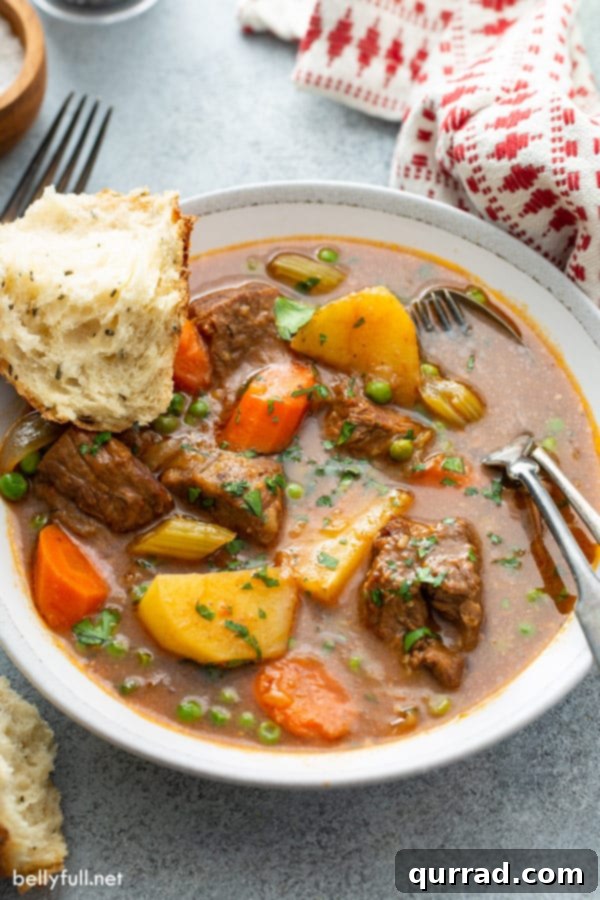
Mastering the Art of Homemade Beef Stew: A Step-by-Step Guide
Creating this incredible beef stew is simpler than you might think, primarily involving patience and a few key techniques to build exceptional flavor. While the total cooking time is about 3 hours, the process is largely hands-off, allowing the magic to happen on its own. Your kitchen will be filled with enticing aromas, and the reward will be a meal of unparalleled comfort and flavor. Here’s an overview of the essential steps:
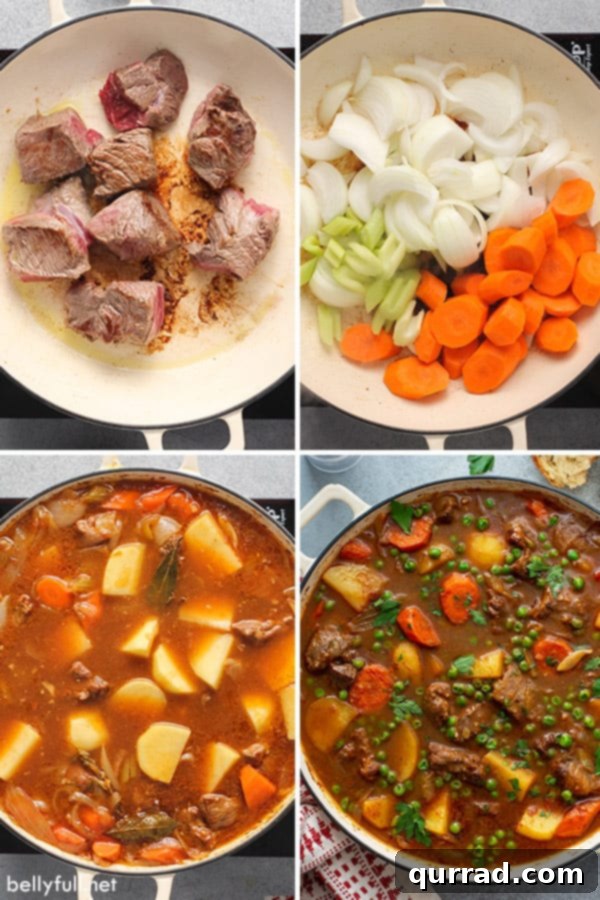
- Sear the Beef to Perfection: Begin by heating extra-virgin olive oil in a heavy-bottomed pot or Dutch oven over high heat until it’s shimmering. Pat your beef chuck roast chunks dry and season them generously with salt and pepper. Brown the beef in batches, ensuring not to overcrowd the pot. This crucial step creates a beautiful crust and locks in immense flavor through the Maillard reaction. Transfer the seared beef to a plate and set aside, reserving any juices.
- Build the Aromatic Base: Reduce the heat to medium. If needed, add a touch more olive oil to the pot. Add your chopped onions, carrots, and celery, sautéing them for about 5-7 minutes until they begin to soften. Stir in the minced garlic and cook for another 30-60 seconds until fragrant, being careful not to burn it. This step develops the foundational flavors for your stew.
- Create the Rich Gravy: Sprinkle the all-purpose flour over the sautéed vegetables. Stir continuously for 1 minute to cook out the raw flour taste, creating a roux that will thicken the stew. Slowly pour in the low-sodium beef broth, whisking constantly to ensure the flour dissolves smoothly and no lumps form.
- Add Liquids and Seasonings: Incorporate the water, Worcestershire sauce, crumbled beef bouillon cubes, and tomato paste into the pot. Stir everything thoroughly until well combined. Add the bay leaves and fresh thyme sprigs (or dried thyme) to the mixture.
- Slow Simmer for Tenderness: Return all the seared beef (along with any accumulated juices) to the pot. Ensure the liquid just covers the meat and vegetables. Bring the stew to a gentle simmer, then reduce the heat to low or medium-low to maintain a steady, slow simmer. Cover the pot with a lid and cook for 2 hours. During this period, the beef will slowly tenderize, becoming wonderfully soft.
- Introduce Potatoes and Finish Cooking: After 2 hours, add the peeled and cubed potatoes to the stew. Continue to simmer, this time without the lid, for an additional 20-25 minutes. This allows the potatoes to become fork-tender and the sauce to naturally reduce and thicken further, intensifying its flavor.
- Final Touches and Serving: In the last 5 minutes of cooking, stir in the frozen peas until they are heated through and bright green. Skim off any excess fat from the surface if desired, and then carefully remove and discard the bay leaves and thyme sprigs. Taste the stew and adjust the seasoning with salt and pepper as needed. Ladle this magnificent beef stew into bowls, garnish with fresh chopped parsley if you wish, and serve hot with your favorite crusty bread or side dish. Prepare to be amazed!
Frequently Asked Questions About Beef Stew
Here are answers to some common questions about making the perfect beef stew:
- How long does beef stew take to cook? This particular recipe requires approximately 3 hours of total cooking time. While it sounds lengthy, much of it is simmering time, allowing the flavors to meld and the beef to become incredibly tender. Your patience will definitely be rewarded!
- How do I thicken beef stew? The flour added in step 3 acts as the primary thickener. It creates a rich, savory gravy. If, at the end of the cooking process, you desire an even thicker gravy, you can easily make a slurry. In a small bowl, whisk together 2-3 tablespoons of additional all-purpose flour with 1/2 cup of hot stew broth until completely smooth. Slowly stir this slurry into the simmering stew. Cover and gently simmer for another 2-3 minutes, or until it reaches your desired consistency.
- Can I make this beef stew in a slow cooker? Absolutely! While this recipe is designed for stovetop cooking, you can adapt it for a slow cooker. We also have a dedicated Slow Cooker Beef Stew recipe that offers a slightly different, yet equally delicious, flavor profile. It’s a fantastic option for two unique beef stew experiences!
- What kind of potatoes are best for beef stew? For this recipe, we recommend using small or medium potatoes, such as Yukon Golds or new potatoes, which hold their shape well and offer a creamy texture. If using russet potatoes, it’s advisable to peel them as their skins can become mealy in the stew.
- Can I add other vegetables? Yes, beef stew is very forgiving! Feel free to add other root vegetables like parsnips or turnips, or even mushrooms, during the initial vegetable sauté. Just ensure they are cut into similar sizes for even cooking.
- Can I make this beef stew gluten-free? To make this recipe gluten-free, substitute the all-purpose flour with a gluten-free all-purpose flour blend or use cornstarch to thicken. For cornstarch, create a slurry with cold water (1 tablespoon cornstarch per 1 cup of liquid) and stir into the simmering stew at the end, cooking until thickened.
Pro Tips for the Ultimate Beef Stew
Elevate your beef stew from delicious to extraordinary with these expert tips:
- Choosing the Best Beef Stew Meat: For the most tender results, always opt for cuts of beef that favor slow cooking, such as boneless beef chuck roast or boneless short ribs. Look for meat that is nicely marbled with fat; this marbling will render during the long cooking process, adding incredible moisture, flavor, and tenderness to your stew. Cut the meat into uniform 2-inch pieces to ensure even cooking.
- The Unnegotiable Step: Browning the Beef: This is arguably the most critical step for developing deep, complex flavors in your stew. Searing the beef in batches until a beautiful brown crust forms creates a rich, savory foundation. The Maillard reaction that occurs during browning locks in flavor and creates delicious “fond” (the browned bits) at the bottom of the pot. These bits will dissolve into your broth, adding an unparalleled depth of flavor to the entire sauce. While it’s an extra step, it is truly indispensable for a robustly flavored stew.
- Potatoes: To Peel or Not to Peel? The decision to peel your potatoes depends on the type you’re using. If you’re incorporating waxy potatoes like new potatoes or Yukon Golds, their thin skins are perfectly fine to leave on for added texture and nutrients. However, if you’re using starchier potatoes like Russets, it’s definitely best to peel them, as their skins can become unpleasantly tough and detract from the creamy texture of the stew.
- Don’t Forget to Deglaze: After browning your beef and sautéing your vegetables, use a bit of broth or water to scrape up any browned bits (fond) from the bottom of the pot. This deglazing step incorporates all those concentrated flavors back into your stew, preventing waste and enhancing the overall taste.
- Taste and Adjust Seasoning: Always taste your stew before serving and adjust the salt, pepper, and other seasonings as needed. Different brands of broth and bouillon can vary in sodium content, so a final adjustment ensures the stew is perfectly balanced to your preference.
Storing and Freezing Your Delicious Beef Stew
One of the many wonderful things about beef stew is that it often tastes even better the next day, after the flavors have had more time to meld and deepen. You’ll definitely want to make enough to ensure leftovers!
- How long does beef stew last in the fridge? Once your stew has cooled completely, transfer it into airtight containers. It can be safely stored in the refrigerator for up to 4 days. Reheating gently on the stovetop or in the microwave will bring it back to its comforting glory.
- Can I freeze beef stew? Yes, beef stew freezes remarkably well, making it an excellent meal prep option for future busy evenings. Be aware that some vegetables, particularly potatoes, might become slightly softer and more prone to breaking down into smaller pieces after thawing and reheating. To freeze, allow the stew to cool completely. Transfer it into freezer-safe containers, leaving at least a 1/4-inch gap at the top to allow for expansion during freezing. Properly stored, it will keep in the freezer for up to 3 months. If you know in advance that you plan to freeze a portion of the stew, consider waiting to thicken it until you are ready to reheat and serve, as the texture of flour-thickened sauces can sometimes change slightly during freezing and thawing.
Perfect Pairings: What to Serve with Beef Stew
This hearty beef stew is wonderfully substantial on its own, easily standing as a complete and satisfying meal. However, no truly great stew is complete without something delicious to soak up every last drop of that incredible, rich gravy. Here are some of our favorite accompaniments:

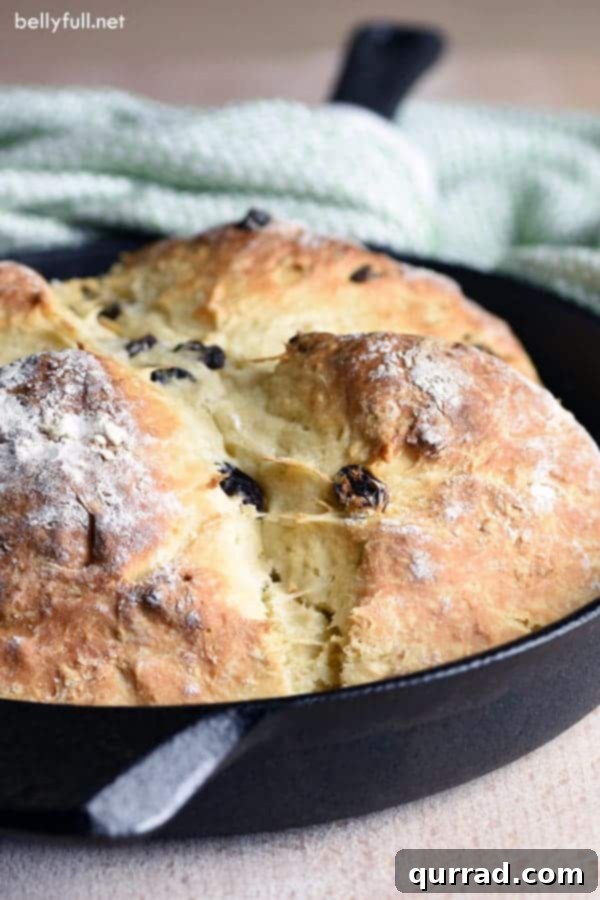

In addition to these delectable breads, a simple green salad with a light vinaigrette can provide a refreshing contrast to the richness of the stew, balancing the meal beautifully.
Watch How to Make This Incredible Beef Stew!
Sometimes, seeing is believing! For a visual guide to mastering this recipe, make sure to watch our step-by-step video demonstration. It walks you through each stage of the process, ensuring you achieve perfect results every time. Your search for the absolute best beef stew recipe ends here – we pinky promise!
We truly hope you love this delicious and easy recipe as much as we do. If you make it, please be sure to leave a review below and let us know what you think! And don’t forget to follow Belly Full on Facebook, Instagram, Pinterest, and YouTube for more incredible recipes and culinary inspiration!
Best Ever Beef Stew
20 mins
3 hrs
3 hrs 20 mins
8
Ingredients
- 2 tablespoons extra-virgin olive oil
- 2 1/2 pounds boneless beef chuck, trimmed of hard fat, cut into 2-inch chunks
- 3/4 teaspoon salt
- 1/2 teaspoon black pepper
- 2 sweet onions, chopped
- 3 medium carrots, peeled and cut into 1/2-inch thick pieces
- 2 stalks celery, cut into 1/2-inch pieces
- 3 cloves garlic, minced
- 3 tablespoons all-purpose flour
- 3 cups low-sodium beef broth
- 2 cups water
- 1 tablespoon Worcestershire sauce
- 2 beef bouillon cubes, crumbled
- 3 tablespoons tomato paste
- 2 bay leaves
- 3 sprigs fresh thyme (or 1 teaspoon dried)
- 2 small potatoes, peeled and cut into 2 1/2-inch cubes
- 1/2 cup frozen peas
Instructions
- Warm oil in a heavy bottomed pot over high heat until very hot.
- Pat beef dry and sprinkle with the salt and pepper.
- Add beef to the pot in batches and brown well all over. Transfer to a plate. Repeat with remaining beef.
- Lower heat to medium. If the pot looks dry, add a touch more oil.
- Stir in the onion, carrots, and celery; saute for 5 minutes until vegetables have softened. Add garlic and cook for 30-60 seconds until fragrant.
- Add flour, and stir for 1 minute to cook off.
- Slowly pour in the beef broth and whisk to combine until the flour dissolves.
- Add in the water, Worcestershire, beef bouillon cubes, and tomato paste; mix well.
- Toss in the bay leaves and thyme.
- Return beef to the pot (including any juices). Liquid level should just cover.
- Bring to simmer, then adjust heat to low / medium-low so it’s a gentle simmer. Cover with lid, cook for 2 hours until the beef is tender.
- Add in the potatoes; simmer for another 20-25 minutes (without the lid) until the potatoes and beef are very tender, the sauce has reduced and thickened slightly.
- During the last 5 minutes add in the peas.
- Skim off fat on surface, if desired. Discard bay leaves and thyme.
- Adjust salt and pepper, to taste.
- Ladle into bowls, sprinkle with some fresh chopped parsley and enjoy with crusty bread or popovers, if desired.
Video
For a detailed visual guide, please refer to the video demonstration within the full article.
Notes
For additional tips on recipe variations and storing leftovers, please refer to the full article above.
Nutrition
Carbohydrates: 8g |
Protein: 30g |
Fat: 20g |
Saturated Fat: 8g |
Cholesterol: 98mg |
Sodium: 840mg |
Potassium: 849mg |
Fiber: 2g |
Sugar: 2g |
Vitamin A: 4825IU |
Vitamin C: 5mg |
Calcium: 48mg |
Iron: 4mg
Nutritional information provided is an automatic calculation and may vary based on specific products used and any modifications made to the recipe. For precise nutritional values, it is recommended to calculate them independently.