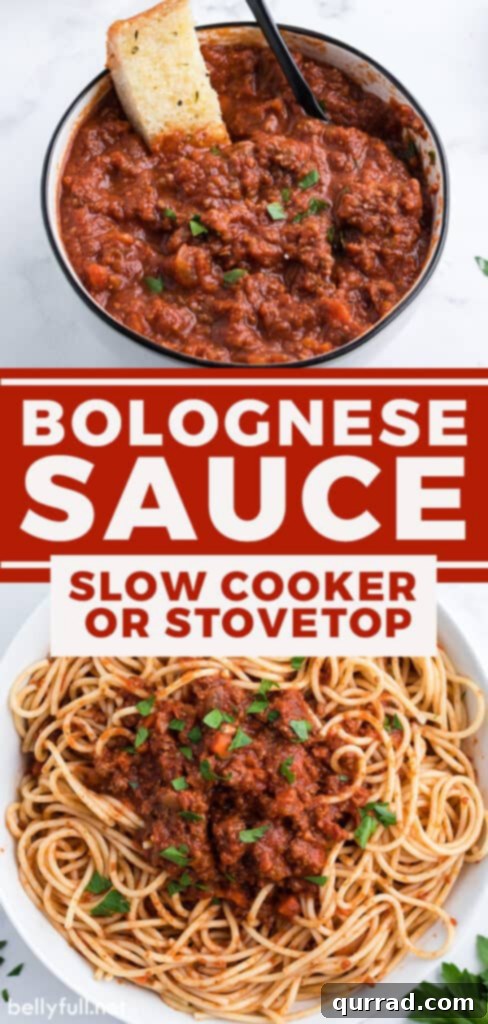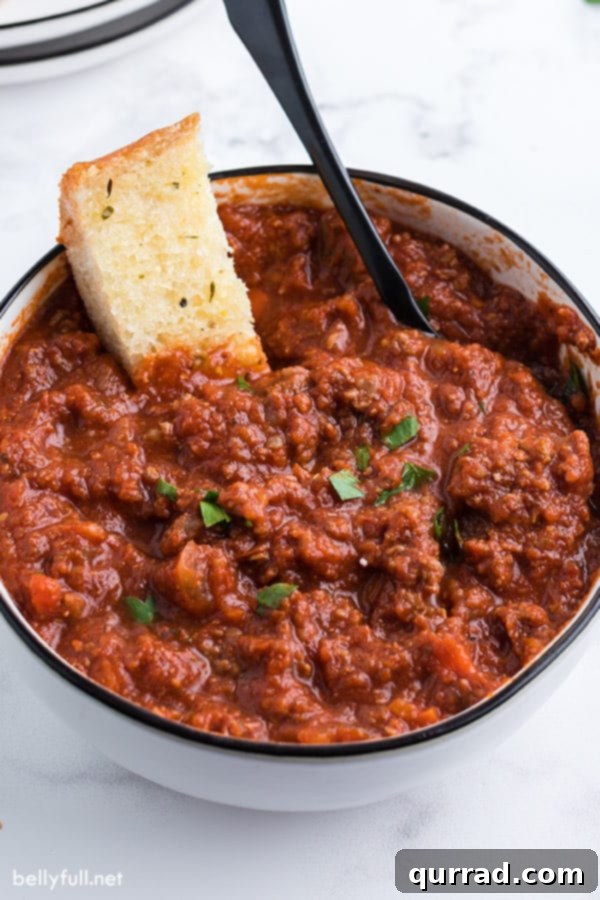
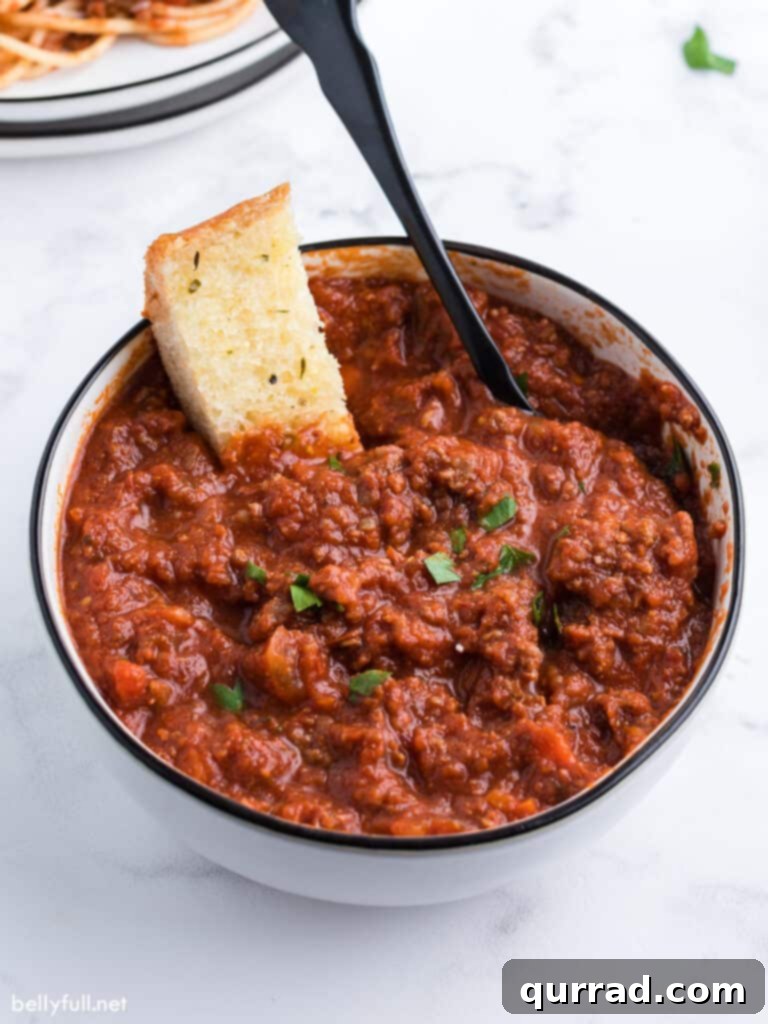
There are few dishes as universally beloved and deeply satisfying as a truly excellent Bolognese sauce. This rich, thick, and hearty meat sauce, originating from the culinary heartland of Bologna, Italy, offers a symphony of flavors that transform a simple pasta dish into an unforgettable meal. Our carefully crafted Bolognese recipe marries traditional elements with a few thoughtful enhancements, ensuring an exceptionally flavorful experience that’s both easy to prepare and incredibly versatile. Whether you choose the slow cooker for effortless convenience or the stovetop for a more hands-on approach, you’re just hours away from a sauce that promises to become a cherished family favorite. Perfect as a luscious topping for pasta or gnocchi, it’s equally delightful for simply dipping warm, crusty garlic bread or soft focaccia.
Crafting the Perfect Bolognese: A Family Favorite Recipe
For years, this particular Bolognese sauce recipe has been a staple in our kitchen, a testament to its irresistible flavor and comforting appeal. We’re thrilled to finally add it to our growing collection of cherished pasta sauces, standing proudly alongside other Italian inspirations like our classic Spaghetti Sauce, creamy Alfredo Sauce, vibrant Marinara, and fresh Pesto. No Italian sauce repertoire would be truly complete without a rich Bolognese. Our journey to perfecting this recipe involved countless variations and thoughtful adjustments, all aimed at creating a sauce that aligns perfectly with our preferences. While our version may not strictly adhere to every minute detail of traditional, ultra-authentic Bolognese, it proudly incorporates many standard ingredients while introducing select additions that elevate its flavor profile, making it 100% delicious. We’ve streamlined the cooking process by favoring the slow cooker, allowing for a hands-off experience, but rest assured, it can be made just as successfully on the stovetop for those who prefer that method.
Understanding Bolognese: More Than Just a Meat Sauce
Bolognese, pronounced “boh-loh-nyeh-zeh” in its native Italian or the more simplified English “boh-loh-nyehz,” refers to a specific type of meat-based sauce originating from Bologna, a historic city in the Emilia-Romagna region of Italy. It’s important to note an interesting local nuance: if you visit Bologna itself, you’re unlikely to find “Bolognese sauce” explicitly listed on restaurant menus. There, the locals refer to this beloved sauce simply as ragù.
So, what exactly distinguishes Bolognese from a standard spaghetti sauce? While both feature a comforting blend of meat and a tomato base, the true essence of Bolognese lies in its meticulous balance and richer complexity. Traditional Bolognese sauces often incorporate finely diced vegetables – the aromatic soffritto of onion, carrots, and celery – along with wine and milk. Surprisingly, authentic Bolognese typically contains very few tomatoes, and often, no garlic or robust herbs, which might be a shock to those accustomed to Americanized versions. Its characteristic texture is creamier and more subtly flavored than many other meat sauces. In Italy, it is almost exclusively served with wide, flat pasta noodles such as tagliatelle or pappardelle, designed to lovingly cradle the rich sauce, rather than thinner strands like spaghetti. Over centuries, and as it traveled the globe, this classic sauce has been adapted in myriad ways, with each region and even individual cook adding their unique spin, evolving into the diverse interpretations we enjoy today.
The Heart of Our Bolognese: Essential Ingredients for Unforgettable Flavor
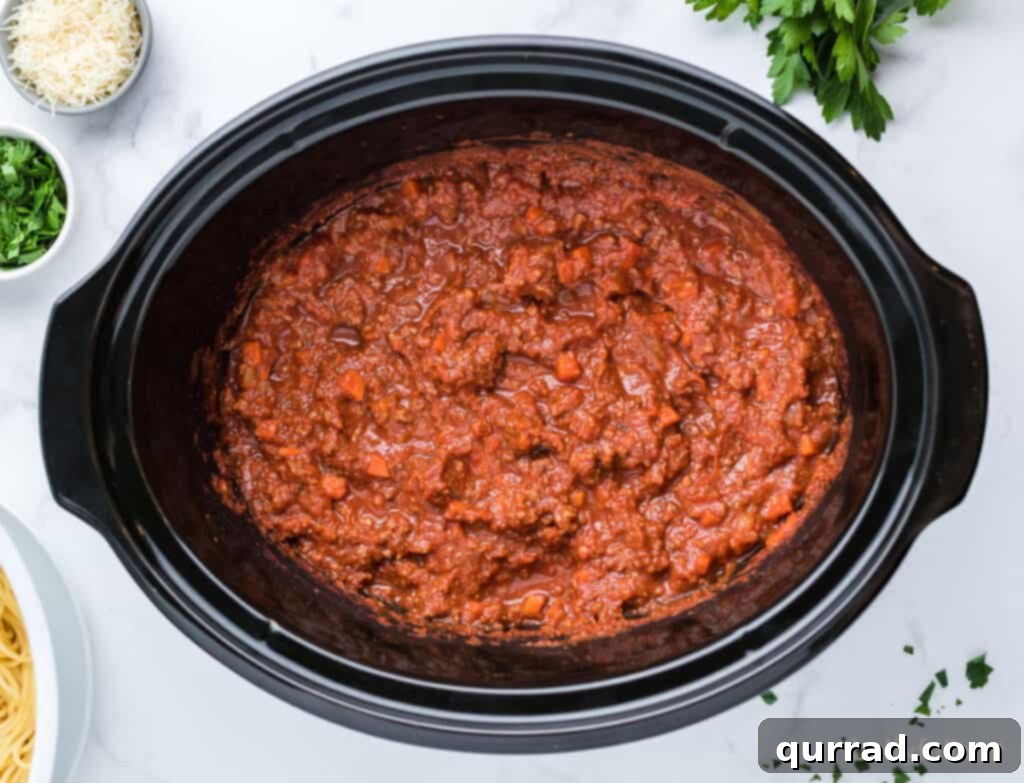
When it comes to Italian sauces, this Bolognese is one instance where I genuinely prefer our adapted recipe over a strictly authentic one. The traditional version, with its surprisingly minimal tomato, herbs, and lack of garlic, often leaves something to be desired for those who crave a richer, more robust flavor profile. Our Bolognese Sauce ingredients are carefully selected to deliver maximum taste and texture:
- Meat: While traditional Bolognese often calls for a blend of ground beef and pancetta, we typically opt for all ground beef. It’s a convenient choice, always on hand in the freezer, and delivers a wonderfully rich base. For an even deeper flavor, you could easily incorporate ground pork or veal, or a combination of all three.
- Vegetables: The foundational trio of onion, carrots, and celery – affectionately known as Italian soffritto – creates an aromatic base. We also boldly include garlic, which, though not always found in the most traditional recipes, is an absolute must for us. Its pungent warmth adds a layer of depth we simply can’t do without.
- Tomatoes: Our recipe embraces the tomato, utilizing a large can of crushed tomatoes (fire-roasted for an added layer of smoky sweetness is a fantastic touch) alongside a 6-ounce can of concentrated tomato paste. These form the vibrant, flavorful heart of the sauce, so investing in the best quality tomatoes you can find will truly make a difference.
- Wine: The debate over using dry red versus white wine in Bolognese can be quite fierce among Italian chefs! We lean towards dry red wine for its robust character, but either will yield delicious results, so feel free to use your preference. The wine adds a crucial layer of complexity and helps to deglaze the pan, capturing all those flavorful browned bits. (See note below about omitting alcohol if preferred.)
- Milk: The inclusion of whole milk is a hallmark of many Bolognese recipes and one we absolutely adore. It tenderizes the meat, mellows the acidity of the tomatoes, and contributes a sublime creamy texture and rich taste. For an even more indulgent sauce, half-and-half or heavy cream can be substituted.
- Seasonings: Again, diverging slightly from strict tradition, we generously season our Bolognese. Our homemade dried Italian seasoning blend is a go-to, complemented by kosher salt, freshly cracked black pepper, and a pinch of red pepper flakes for a subtle kick. A bay leaf simmers quietly, infusing the sauce with its subtle, savory essence. A sprinkling of fresh parsley, added just before serving, provides a bright, herbaceous finish.
- Parmesan Cheese: No Bolognese experience is complete without a generous dusting of freshly grated Parmigiano-Reggiano. Its salty, nutty notes are the perfect counterpoint to the rich sauce, elevating every bite.
Elevate Your Dish: Customizing Your Bolognese Sauce
One of the joys of cooking Bolognese is its adaptability. While our core recipe is incredibly satisfying, there are many ways to tailor it to your taste or what you have on hand. Here are some popular recipe variations to explore:
- Experiment with Meat Blends: Elevate the richness by including pancetta, bacon, and/or Italian sausage. Sauté a few ounces of finely diced pancetta or bacon alongside the ground beef for a smoky depth, or create a 50/50 combination of ground beef and Italian sausage. Whether you choose sweet, mild, or spicy Italian sausage, it will introduce a delightful new dimension of flavor.
- The Secret Umami Boost: Anchovies: Don’t let your nose scrunch up at the mention of anchovies! These tiny fish are culinary chameleons, dissolving completely into the sauce and imparting a subtle yet profound umami flavor, without any discernible “fishy” taste. A couple of crushed anchovy fillets or a teaspoon of anchovy paste can unlock an incredible depth that will leave your guests wondering about your secret ingredient.
- Fresh Herb Infusion: For a vibrant, aromatic lift, swap out dried herbs for fresh ones. Finely chopped fresh oregano or basil can be added in the final stages of cooking, or stirred in with the parsley before serving. Fresh herbs bring a brighter, more complex aroma than their dried counterparts.
- Creamier Indulgence: If you desire an even richer, more luxurious texture, replace the whole milk with half-and-half or, for ultimate decadence, heavy cream. This simple switch will make your Bolognese exceptionally smooth and velvety.
- Alcohol-Free Option: While dry red or white wine adds wonderful depth of flavor and completely cooks off during the long simmer, you can certainly omit it if you’re avoiding alcohol. Replace the wine with an equal amount of beef or chicken stock for a flavorful substitute that maintains the sauce’s body.
- Stovetop or Slow Cooker: Your Choice of Method: Unlike some sauces, this Bolognese is remarkably forgiving and shines in both a slow cooker and on the stovetop. While our popular Spaghetti Sauce often calls for a 4-hour stovetop simmer, I almost exclusively prepare this Bolognese in the crock pot. The “set it and forget it” nature of the slow cooker means you can toss all the ingredients in, cook on low for 8 hours, and return to an incredible, deeply flavored sauce ready to coat your favorite pasta. For a stovetop preparation, begin by browning the ground beef in a large, heavy-bottomed pot or Dutch oven. Drain any excess fat, then add a drizzle of olive oil and sauté the diced vegetables (onion, carrots, celery, garlic) until softened. Deglaze the pan with the wine, scraping up any browned bits. Stir in the crushed tomatoes, tomato paste, seasonings, and bay leaf. Bring to a gentle simmer, then reduce heat to low, cover, and let it cook for at least 1-2 hours, or even longer for maximum flavor development (the longer, the better!). Just before serving, stir in the milk until warmed through.
Storage and Meal Prep: Enjoying Bolognese Later
Bolognese is one of those magical dishes that often tastes even better the next day, allowing the flavors to meld and deepen further. It’s also an excellent candidate for meal prepping and freezing, making your future weeknights much easier.
Leftovers: If you find yourself with leftover sauce, allow it to cool completely to room temperature before transferring it to an airtight container. Store it in the refrigerator, where it will keep beautifully for up to 3 days. Reheat gently on the stovetop over low heat, stirring occasionally, or in a microwave-safe bowl. You might need to add a splash of water or broth if it has thickened too much.
To Freeze: For longer storage, Bolognese freezes exceptionally well. Once the sauce has cooled completely, portion it into freezer-safe containers or heavy-duty ziplock bags. Lay ziplock bags flat for efficient storage. It can be frozen for up to 3 months without compromising flavor or texture. When you’re ready to enjoy it, simply thaw the frozen sauce overnight in the refrigerator. Reheat gently in a saucepan on the stove, or for a quicker option, warm it in a microwave-safe bowl in the microwave, stirring periodically until heated through.
Serving Your Bolognese: Beyond the Traditional Pasta
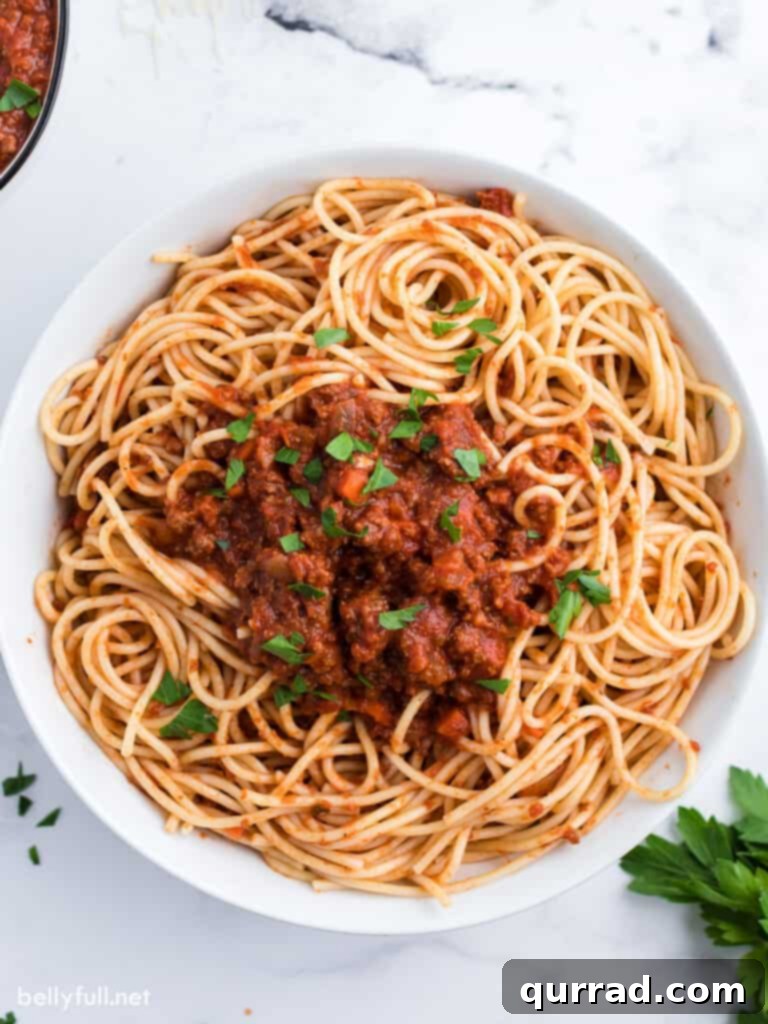
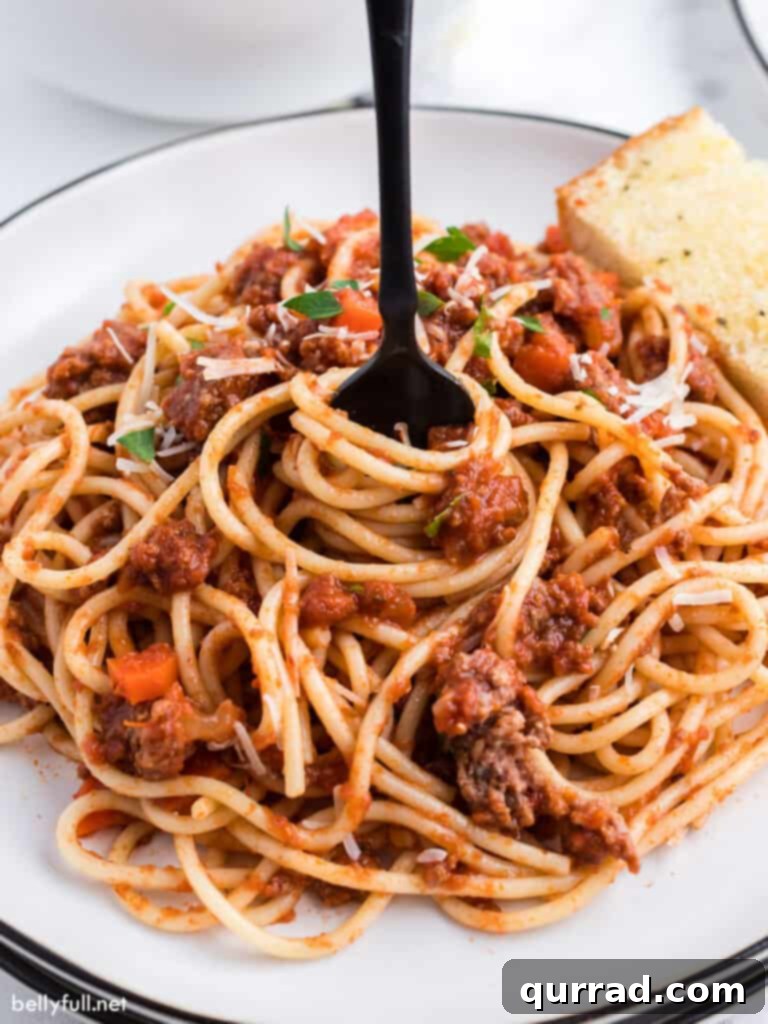
While Italians traditionally serve Bolognese sauce over wide, flat noodles such as tagliatelle or pappardelle, designed to perfectly scoop up every rich morsel, its versatility knows no bounds. This robust sauce pairs beautifully with almost any pasta shape, so feel free to use your favorite or whatever you have readily available. Often, I opt for more common varieties like regular spaghetti or penne. But don’t limit yourself to pasta alone! Bolognese is also incredible served over fluffy gnocchi, a comforting alternative. For those seeking a delicious low-carb option, spoon it generously over roasted spaghetti squash. And for a truly simple yet satisfying treat, there’s nothing quite like using it as a decadent dip for warm, crusty garlic bread. The possibilities are endless for enjoying this culinary masterpiece!
Other Classic Pasta Recipes to Explore:
- Creamy Chicken Alfredo
- Easy Lasagna Roll Ups
- Comforting Chicken Tetrazzini
- Authentic Spaghetti Carbonara
We truly hope you adore this delicious and straightforward Bolognese recipe as much as we do. Your feedback is invaluable, so please don’t hesitate to leave a review below! For more culinary inspiration and delightful recipes, be sure to follow Belly Full on Facebook, Instagram, Pinterest, and YouTube!
Bolognese Sauce
Pin
Ingredients
- 1 pound ground beef
- 28 ounce can crushed fire-roasted tomatoes
- 6 ounce can tomato paste
- 1 large celery stalk, diced small
- 2 medium carrots, peeled and diced small
- 1 medium sweet onion, diced
- 3 cloves garlic, minced
- 1/4 cup dry red wine (or white)
- 2 teaspoons dried Italian seasoning
- 1 teaspoon kosher salt
- 1/4 teaspoon black pepper
- 1/4 teaspoon of cracked red pepper flakes
- 1 bay leaf
- 1/3 cup whole milk
- freshly grated Parmesan, for serving
- torn fresh parsley, for serving
Instructions
-
In a 6-quart slow cooker, mix together all the ingredients (except the milk, Parmesan, and parsley).
-
Cover and cook on low for 8 hours until meat is cooked through and vegetables are tender.
-
Remove cover and discard bay leaf.
-
Stir in the milk until warmed through.
-
Serve with your favorite pasta with a sprinkle of freshly grated Parmesan and chopped parsley.
-
NOTE: For substitutions, additions, and stovetop cooking instructions, please refer to the full article above.
Nutrition
Nutritional information given is an automatic calculation and can vary based on the exact products you use and any changes you make to the recipe. If these numbers are very important to you, I would recommend calculating them yourself.
Did you make this? Leave a rating below!