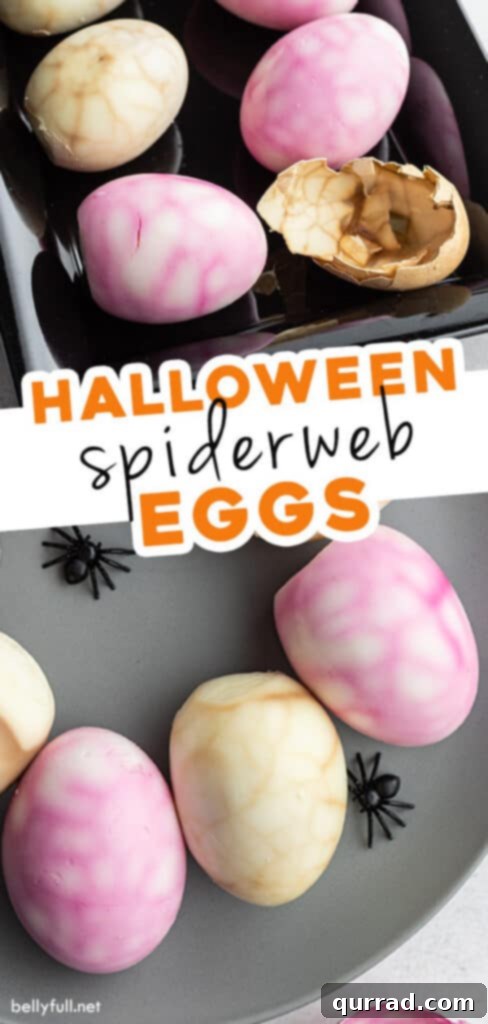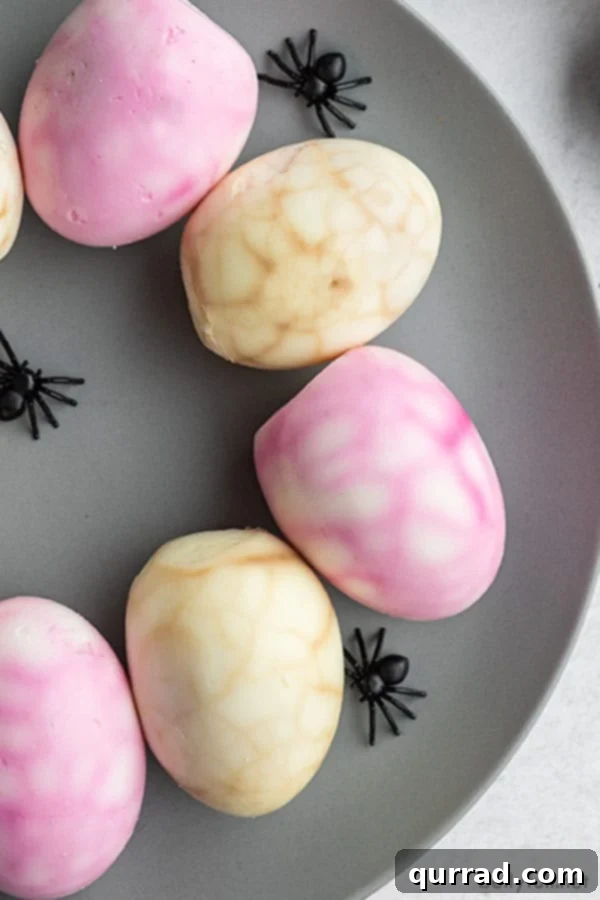
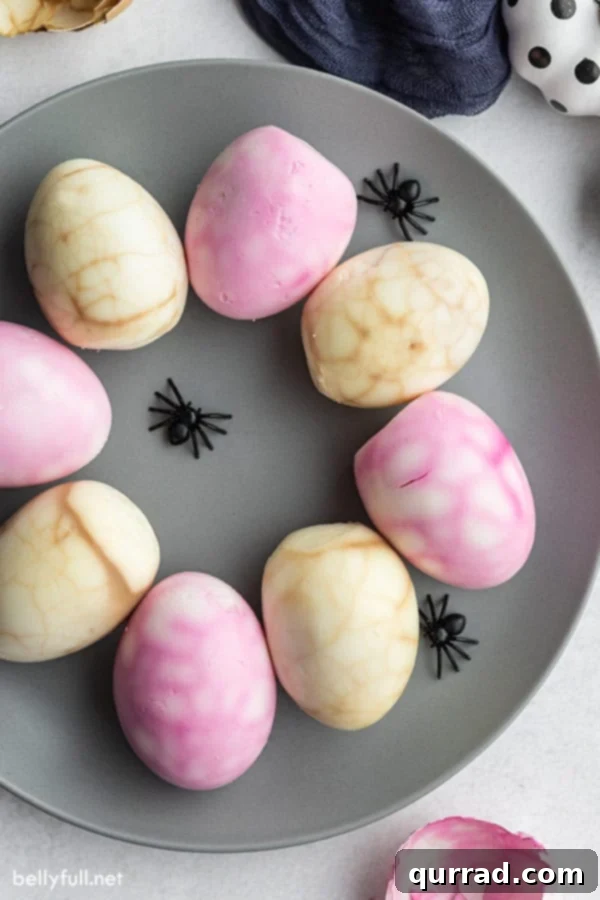
Prepare to enchant your guests and delight your family this Halloween with a truly unique and captivating treat: Halloween Spiderweb Eggs! These aren’t just any ordinary hard-boiled eggs; they are transformed into a spooky culinary masterpiece, boasting intricate spiderweb patterns elegantly branded onto their surfaces. Despite their strikingly festive and eerie appearance, these Spiderweb Eggs retain the familiar, comforting taste of classic hard-boiled eggs, making them incredibly fun and approachable to eat. They are perfectly versatile, serving as a delightful surprise for breakfast, a protein-packed snack, or, most notably, as an essential, eye-catching centerpiece for any Halloween party or autumnal gathering.
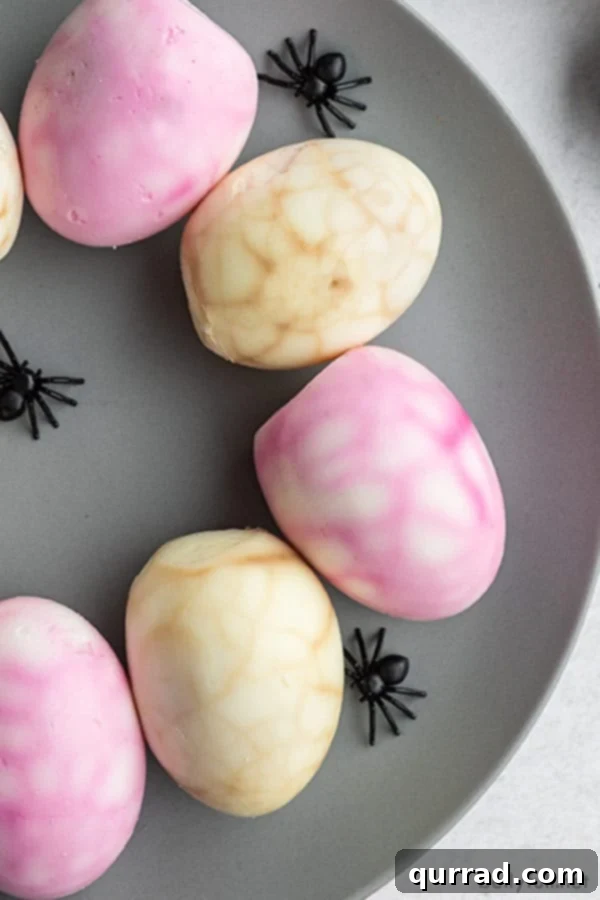
It’s quite a humorous twist of fate: while I possess a profound dislike for actual spiders, I find an undeniable charm and joy in all things spiderweb-themed when it comes to food. There’s something inherently creative and satisfying about reimagining something often perceived as creepy into a delightful, edible creation. My kitchen often becomes a canvas for such culinary adventures, like crafting whimsical Chocolate Spiderweb Sugar Cookies, baking charming Cobweb Cookies, or even concocting a savory Spiderweb Dip. Beyond the spooky aesthetic, I also harbor a deep appreciation for the humble hard-boiled egg. Any valid excuse to prepare a batch of perfectly hard-boiled eggs, with their satisfying texture and nutritional benefits, is an opportunity I eagerly embrace. Therefore, when the inspiration struck to combine my love for this simple staple with the playful spirit of Halloween, creating these captivating Spiderweb Eggs was an absolute no-brainer. They represent the perfect fusion of fun, festivity, and fantastic flavor, guaranteeing smiles (and perhaps a few delightful shivers!) at your next Halloween celebration.
Unveiling the Magic: How to Craft Your Own Spooky Spiderweb Eggs
The process of imprinting these distinctive spiderweb patterns onto hard-boiled eggs is remarkably straightforward and relies on the simple magic of natural dyes. Whether you choose the rich brine from pickled beets, the dark infusion of brewed tea, or the subtle staining power of blueberries, the technique is designed for ease and spectacular results. You’ll be amazed at how effortlessly ordinary eggs transform into extraordinary Halloween delights. Here’s a brief, step-by-step summary to guide you through the process, but remember to scroll further down for a comprehensive, detailed guide complete with essential tips and variations.
- Achieve the Perfect Hard-Boil: The foundation of these spooky treats is a perfectly cooked hard-boiled egg. Ensure your eggs are firm and fully cooked, as this will facilitate the subsequent steps.
- Cool Down in an Ice Bath: Immediately after boiling, transfer your hot eggs into a prepared ice bath. This critical step serves a dual purpose: it rapidly halts the cooking process, preventing overcooked, rubbery whites or green-tinged yolks, and it makes the eggs significantly easier to peel once they’ve had a chance to cool down for a few minutes.
- Master the Crackle: This is the artistic heart of the process. Gently tap each egg against a hard, flat surface, such as your kitchen counter, to create a myriad of fine, interconnected cracks across its shell. The goal is to produce a spiderweb-like network, not large, isolated breaks. Alternatively, a gentle whack with the blunt end of a whisk handle can achieve a similar, even crackle.
- Submerge in Staining Liquid: Once cracked, carefully place the eggs into a large glass or container filled with your chosen natural dyeing liquid. It’s crucial that the eggs are fully submerged, allowing the liquid to penetrate uniformly through all the tiny fissures in the shell.
- Refrigerate, Reveal, and Relish: Place the container with the submerged eggs into the refrigerator for several hours. This extended chilling time allows the natural pigments to seep into the egg white through the cracks, creating the desired webbed effect. The longer the soak, the more vibrant and defined your patterns will be. After sufficient chilling, drain the liquid, meticulously peel away the cracked shells, and behold your spectacular Spiderweb Eggs!
Exploring a Spectrum of Spooky Shades: Spiderweb Eggs Recipe Variations
The beauty of these Halloween Spiderweb Eggs lies not only in their ease of creation but also in the exciting possibilities for color and subtle flavor variations. By experimenting with different natural staining agents, you can produce a captivating assortment of hues, each adding its own unique charm to your festive spread. Here are some popular and delightful variations to consider:
- Ethereal Grey with Frozen Blueberries: To achieve a truly mysterious and subtly eerie shade of grey, frozen blueberries are your secret weapon. The method for this variation is distinct: instead of using an already prepared brine, you’ll actually incorporate about 1½ cups of frozen blueberries directly into the water as you boil your eggs. Once the eggs are cooked and cracked, transfer them along with the blueberry-infused cooking liquid into a bowl, and then refrigerate. Rest assured, these eggs will not adopt a blueberry flavor; the fruit serves solely as a potent natural staining agent, creating an enchanting, muted grey tone that is absolutely perfect for a classic spooky Halloween aesthetic.
- Rich Brown Tones with Dark Brewed Tea: For eggs that exude an antique, earthy charm, opt for a dark brewed tea. This method produces stunning brown and amber spiderweb patterns, giving your eggs a wonderfully rustic and slightly aged appearance. An enjoyable side effect of using tea is that the eggs will absorb a subtle, intriguing tea flavor, which can be quite a sophisticated touch for those who appreciate nuanced tastes. Experiment with different robust black teas, like English Breakfast or Earl Grey, to discover varying depths of color and aroma.
- Vibrant Pink with Pickled Beets Juice/Brine: If you’re aiming for a pop of vivid color that’s more beautifully haunting than overtly creepy, the bright red-purple juice or brine from pickled beets is an unbeatable choice. This option results in gorgeous pink or even deep magenta-hued spiderweb patterns that are incredibly eye-catching and add a vibrant contrast to darker Halloween themes. Beyond their stunning visual appeal, these eggs will also acquire a delightful hint of sweetness and tanginess from the beet brine, making them a delicious and multi-sensory experience.
- Beyond the Usual: Other Natural Dye Explorations: Don’t hesitate to unleash your inner mad scientist in the kitchen! Many other natural ingredients can be harnessed for diverse color effects. For instance, simmering eggs with red cabbage can yield striking blues or purples (depending on the acidity of the water), while a turmeric bath can create sunny yellows. Onion skins, both red and yellow varieties, can impart beautiful orange and rustic brown tones. Remember that color intensity and final hue can vary based on the concentration of your dye liquid and the soaking duration.
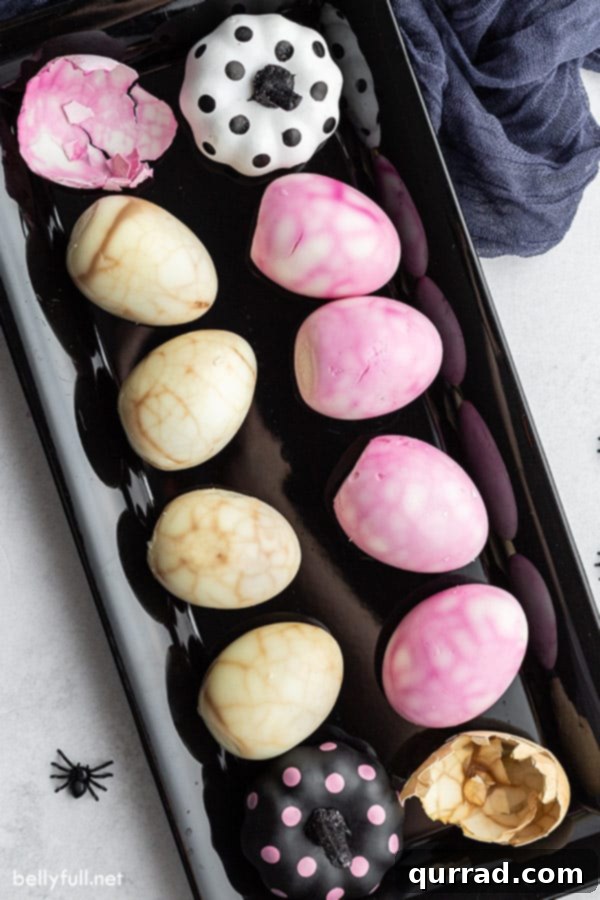
I find immense pleasure in presenting all three primary color variations—the mysterious grey, the rich brown, and the vibrant pink—together on a single, artfully arranged platter. This colorful assortment not only creates an incredibly appealing visual display but also offers guests the delightful opportunity to choose their favorite hue. It’s a wonderful reminder that when it comes to festive culinary creations, variety truly adds an extra layer of enjoyment and excitement!
Insider Secrets: Expert Tips for Perfectly Spooky Spiderweb Eggs
To ensure your Halloween Spiderweb Eggs are not only visually striking but also perfectly delicious every single time, keep these invaluable tips and tricks in mind. They are designed to help you achieve the most vibrant patterns, ideal textures, and make the entire process as enjoyable and successful as possible:
- Unlock Maximum Color Intensity: The most critical factor in achieving deep, well-defined spiderweb patterns is the amount of time your cracked eggs spend submerged in the staining liquid. For optimal results, aim for a minimum of 4 hours of refrigeration. However, if you desire truly dramatic and intensely colored webs, consider leaving them to soak overnight (8-12 hours). Always ensure that the eggs are fully covered by the liquid to guarantee even and consistent coloring across all surfaces.
- Mastering the Art of Cracking: The technique for cracking the eggshells is paramount to creating distinct web patterns. Your goal is a dense network of fine, interconnected cracks, rather than a few large, isolated breaks. If the cracks are too sparse or too wide, the staining liquid may penetrate too deeply and uniformly beneath the shell, resulting in an egg that is colored solid rather than displaying the delicate web effect. A gentle, even tapping motion, rotating the egg as you tap, is far more effective than forceful hits. Think of it as creating a delicate mosaic rather than shattering a window.
- A Wholesome Halloween Alternative: In a season often dominated by sugary confections and indulgent treats, these spiderweb hard-boiled eggs offer a fantastic and health-conscious alternative. They are naturally packed with protein, making them a satisfying and energizing snack. Furthermore, they are inherently gluten-free, low-carb, and keto-friendly, which makes them a superb option for health-conscious adults who still want to participate in the festive fun without derailing their dietary goals. While the kids might be focused on the candy, the grown-ups will appreciate this nutritious, spooky option.
- Effortless Batch Preparation for Parties: Planning a large Halloween bash? This recipe is wonderfully scalable. You can effortlessly double, triple, or even quadruple the ingredients and the quantity of staining liquid to produce a substantial batch of eggs. The process remains the same, just ensure you have enough glasses, jars, or containers to comfortably submerge all your eggs without overcrowding.
- Elevate the Flavor with Coarse Salt: While these Spiderweb Eggs are delicious on their own, a simple sprinkle of coarse sea salt just before serving can truly elevate their flavor profile. The subtle crunch and briny notes of the salt provide a perfect counterpoint to the creamy texture of the egg white and yolk. Consider offering a small bowl of various coarse salts (e.g., flaky sea salt, smoked salt) alongside your eggs, allowing guests to season them to their individual liking.
- Creative Serving and Presentation Ideas: Beyond salt, think about other condiments and garnishes. A dash of your favorite hot sauce can add a spicy kick, while a sprinkle of everything bagel seasoning provides a delightful savory crunch. For a richer, more indulgent experience, serve them alongside a creamy dill dip, a spicy sriracha mayonnaise, or even a classic deviled egg filling for a “deviled spiderweb egg” twist. Arrange them artfully on a dark platter with some plastic spiders or cobweb decorations for maximum visual impact.
Halloween Spiderweb Eggs: The Complete Recipe Card
Ready to bring these bewitching Halloween Spiderweb Eggs to life in your own kitchen? Here’s your comprehensive guide, detailing all the ingredients and step-by-step instructions to create this delightful and spooky treat.
Halloween Spiderweb Eggs
Prep Time: 5 minutes
Cook Time: 12 minutes
Chill Time: 4 hours
Total Time: 4 hours 17 minutes
Servings: 8 eggs
Transform ordinary hard-boiled eggs into festive and spooky Halloween food with unique spiderweb patterns, perfect for parties or a fun snack!
Ingredients
- 8 hard-boiled eggs
- Ice bath (a large bowl filled with ice water)
- 2 cups Dark Brewed Tea, cooled
- 2 cups brine/juice from Pickled Beets
- Sea salt, for serving (optional)
- *Optional: 1.5 cups frozen blueberries (for a grey variation, as detailed in the “Variations” section above)
Instructions
- Begin by preparing your eggs to a perfect hard-boiled consistency. For the best results and easiest peeling, we recommend following our detailed guide on how to make perfect hard-boiled eggs.
- Immediately after the eggs are cooked, use a slotted spoon to carefully transfer them from the hot water into a large bowl generously filled with ice water. Allow them to cool in this ice bath for approximately 4-5 minutes, or until they are just slightly warm to the touch. This crucial step prevents further cooking and significantly aids in easy peeling.
- Once cooled, gently tap each egg against a hard surface, such as your kitchen counter, to create a fine network of cracks all over the shell. The key is to create numerous small, interconnected cracks, not large, gaping breaks, to achieve the desired spiderweb effect. You can also gently whack them with the handle of a whisk.
- Prepare your staining liquids: Fill one tall, wide glass or container with the cooled dark brewed tea and another similar container with the pickled beet juice/brine. Carefully divide the cracked eggs evenly between the two containers, ensuring that each egg is fully submerged in its respective liquid. If you’re opting for the frozen blueberry variation, place the cracked eggs directly into the blueberry-infused cooking liquid (as described in the “Variations” section).
- Place the containers with the submerged eggs into the refrigerator. Allow them to chill and soak for a minimum of 4 hours. For more intense colors and clearly defined spiderweb patterns, we recommend leaving them to soak overnight.
- Once adequately chilled and stained, carefully drain the liquids from the containers. Then, gently peel away the cracked eggshells to reveal the stunning and spooky spiderweb patterns beneath!
- Serve your festive Halloween Spiderweb Eggs immediately. For an enhanced flavor, you may wish to sprinkle them with a touch of coarse sea salt before enjoying.
Notes
For extensive recipe tips, creative color and flavor variations, and inspiring serving suggestions that will elevate your Halloween table, please refer to the detailed sections within the article above.
Nutrition Information (per serving, approximate)
- Calories: 95 kcal
- Carbohydrates: 5g
- Protein: 6g
- Fat: 5g
- Saturated Fat: 2g
- Cholesterol: 187mg
- Sodium: 951mg
- Potassium: 85mg
- Sugar: 1g
- Vitamin A: 260IU
- Calcium: 25mg
- Iron: 1mg
Please note that nutritional information provided is an automatic calculation and can vary based on the specific brands and exact products you use, as well as any modifications you make to the recipe. If precise nutritional numbers are critical for your dietary needs, we recommend calculating them yourself using the specific data from your ingredients.
More Spooktacular Halloween Recipes to Complement Your Feast
Looking to expand your Halloween culinary repertoire beyond these fantastic Spiderweb Eggs? Explore these other delightful and spooky recipes that are guaranteed to bring more festive cheer and deliciousness to your celebration:
- Witches Brew
- Monster Munch
- Ghost Toast
- Candy Corn Pretzel Bark
We sincerely hope you have an absolutely fantastic time creating and sharing this delicious and incredibly easy Halloween Spiderweb Eggs recipe! It’s a wonderful, memorable way to infuse a little extra magic, fun, and healthy goodness into your holiday celebrations. If you give this recipe a try, we would be thrilled to hear about your experience and see your amazing spooky creations!