How to Cook Spaghetti Squash: Your Ultimate Guide to Al Dente Perfection
Discover the incredibly versatile and healthy world of spaghetti squash! This comprehensive guide will walk you through easy, step-by-step instructions and practical tips, ensuring you master how to cook spaghetti squash to achieve perfect al dente strands every time. It’s a culinary blank canvas, ready to transform into countless delicious low-carb and low-calorie meals.
What is Spaghetti Squash and Why You’ll Love It
Spaghetti squash is a unique and incredibly beneficial winter squash, easily recognizable by its vibrant yellow-orange skin and oval shape. Its name isn’t just a clever marketing trick; once cooked, its flesh naturally separates into delicate, spaghetti-like strands, offering a fantastic alternative to traditional flour-based pasta.
But the similarities end there, and the benefits truly begin. Unlike conventional pasta, spaghetti squash is remarkably low in calories and carbohydrates, making it a dream come-true for anyone following a low-carb, keto, or gluten-free diet. Beyond its diet-friendly nature, it’s packed with essential nutrients, including fiber, vitamin A, vitamin C, potassium, and antioxidants. Incorporating spaghetti squash into your diet is a simple yet effective way to boost your nutrient intake and enjoy delicious, wholesome meals without the caloric density.
Its mild flavor profile means it readily absorbs the flavors of whatever sauces, seasonings, or ingredients you pair it with, making it an incredibly versatile addition to your culinary repertoire. Whether you’re aiming for healthier eating habits or simply exploring new vegetables, spaghetti squash is definitely worth a try.
Choosing the Perfect Spaghetti Squash
Before you even begin cooking, selecting the right spaghetti squash is key to a successful dish. Look for a squash that feels heavy for its size, indicating good moisture content. The skin should be firm, smooth, and free of soft spots, blemishes, or mold. A vibrant, consistent yellow color usually signifies ripeness. Avoid any squash that appears dull, withered, or has significant green patches, as these might be unripe or past their prime. A short, firm stem is also a good sign of freshness. Once you’ve chosen your perfect squash, it can be stored on your countertop for up to two weeks, or even longer in a cool, dry pantry.
Different Ways to Cook Spaghetti Squash (and why roasting whole is best!)
There are several popular methods for cooking spaghetti squash, including baking, microwaving, and using an Instant Pot. Each has its merits, but for the best texture and easiest preparation, oven-roasting it whole is often preferred. Why? Spaghetti squash, like many winter squashes, is notoriously dense and can be a real challenge to cut when raw. Roasting it whole softens the tough exterior, making it significantly easier (and safer!) to slice in half once it’s tender. This method also results in beautifully al dente strands, preventing them from becoming mushy or watery, which can sometimes happen with other cooking techniques.
While cutting it in half or even into rings before baking is an option, the whole-roast method minimizes pre-cooking effort and maximizes safety. Let’s focus on this superior method to achieve truly perfect results.
How to Cook Spaghetti Squash
Learn how to cook spaghetti squash using the oven-roasting method. This simple technique produces ideal al dente strands, perfect for any low-carb or low-calorie recipe you can imagine.
Prep Time: 5 mins
Cook Time: 1 hour
Total Time: 1 hour 5 mins
Servings: 4
Ingredients
- 3 pound spaghetti squash (one medium squash)
- Optional: A drizzle of olive oil, salt, and black pepper for flavor enhancement
Instructions
-
Preheat Your Oven: Start by preheating your oven to 400 degrees Fahrenheit (200 degrees Celsius). This ensures a consistently hot environment for thorough and even cooking.
-
Prepare the Squash: Gently scrub the entire exterior of the spaghetti squash under running water to remove any dirt or debris. Once clean, use a sharp, sturdy knife or a fork to pierce the skin in several places all around the squash. These punctures allow steam to escape during baking, preventing the squash from exploding and helping it cook more evenly.
-
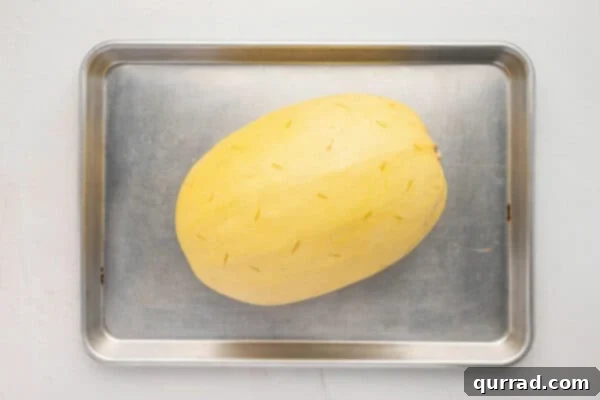
Bake Whole: Place the prepared, whole spaghetti squash directly onto a baking sheet. You don’t need to add water or cover it. Transfer the baking sheet to the preheated oven.

The whole spaghetti squash, ready for roasting on a baking sheet. -
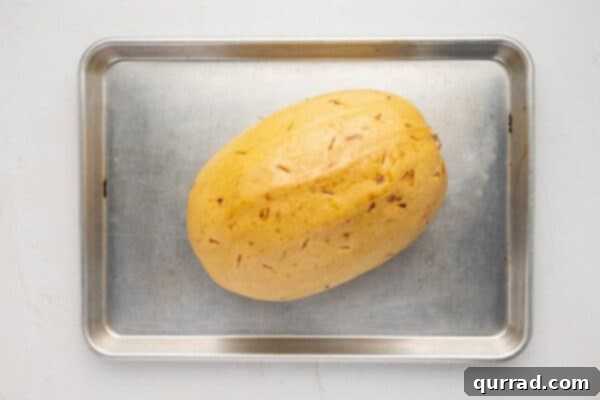
Roast Until Tender: Bake for approximately 60 minutes for a 3-pound squash. Cooking time will vary depending on the size of your squash; larger squashes will require more time. To check for doneness, carefully poke the squash with a sharp knife or fork. It should feel tender with slight resistance. For ideal al dente strands, avoid overcooking, which can lead to a watery or mushy texture. You want it tender but still holding its shape.
The squash after roasting, showing a slightly softened and darker exterior. -
Rest and Cool: Once baked, remove the squash from the oven and let it rest on the baking sheet for at least 15-20 minutes. This resting period is crucial; it allows the squash to cool down enough to be handled safely and continues the cooking process slightly, helping the strands firm up. Trying to cut a hot squash immediately can be dangerous.
-
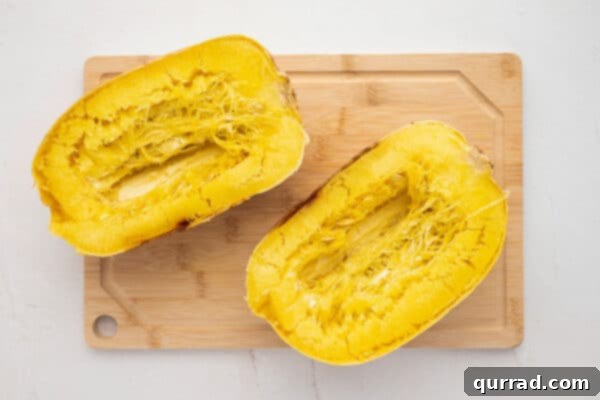
Cut in Half: Once cool enough to handle, place the squash on a stable cutting board. Using a very sharp, sturdy knife, carefully cut the squash in half lengthwise, from the stem to the base. Be cautious as the squash can still be somewhat firm, especially near the ends.
The roasted squash, perfectly sliced lengthwise into two halves. -
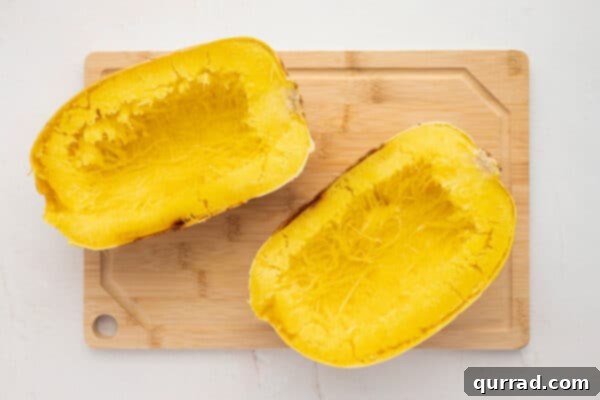
Remove Seeds: With a spoon, scoop out all the seeds and the stringy, slimy pulp from the center of each squash half. Discard the pulp, but consider saving the seeds! Just like pumpkin seeds, spaghetti squash seeds can be rinsed, tossed with a little oil and seasoning, and roasted for a delicious, crunchy snack.
The squash halves after seeds and pulp have been thoroughly scooped out. -
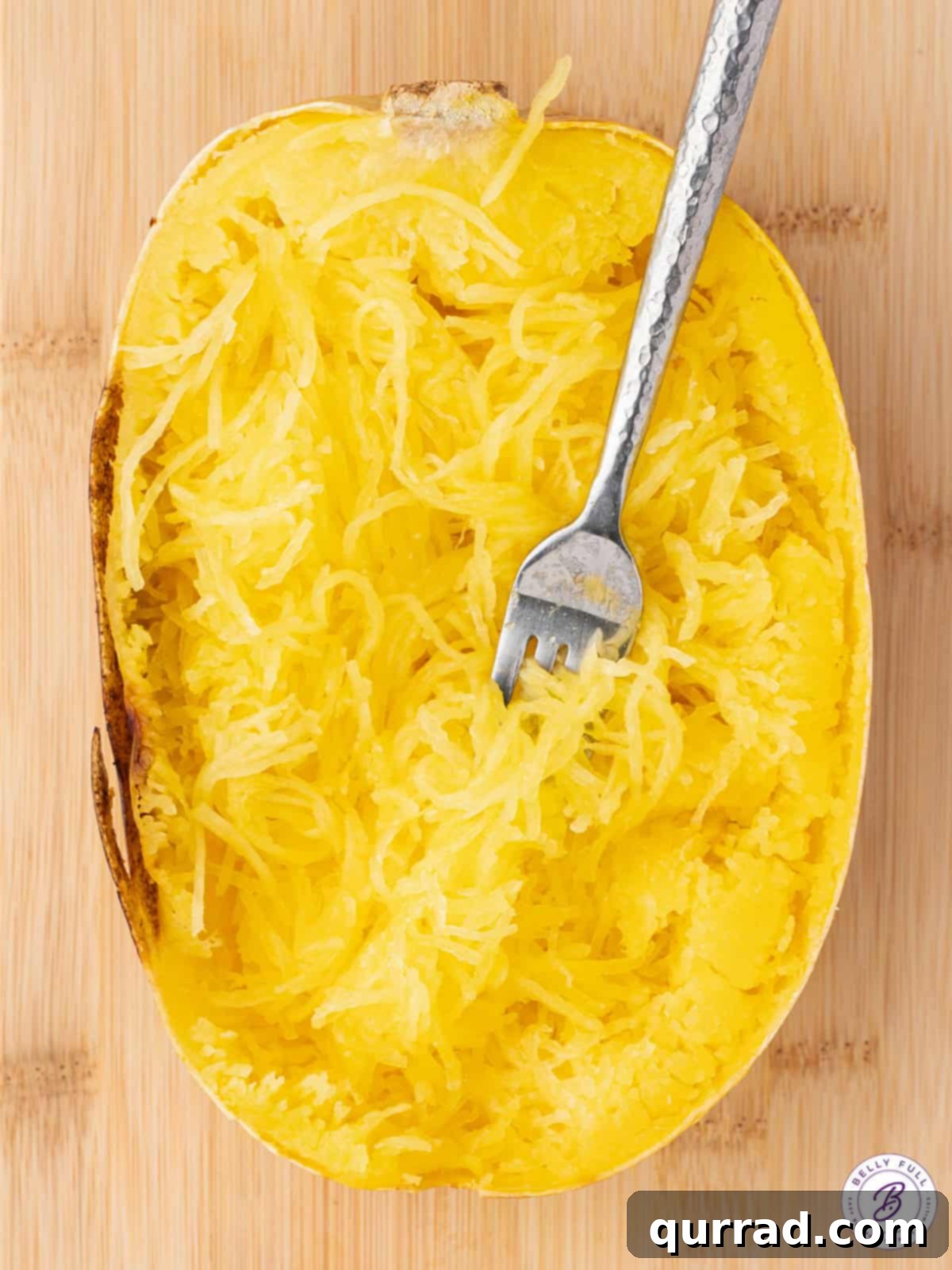
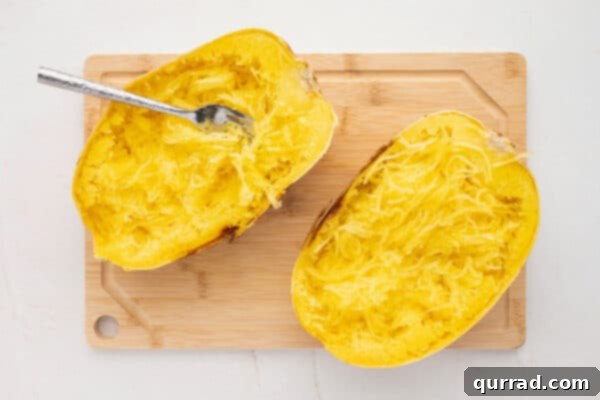
Pull the Strands: Now for the fun part! Using a fork, gently scrape the cooked flesh from the inside of the squash, starting from one end and working your way to the other. The flesh will naturally separate into beautiful, spaghetti-like strands. Use long, even strokes for longer strands, or short, quick strokes for smaller, rice-like pieces. Continue until you’ve scraped out all the usable flesh, leaving behind a hollow shell.
A close-up of the squash halves, revealing the separated, spaghetti-like strands. -
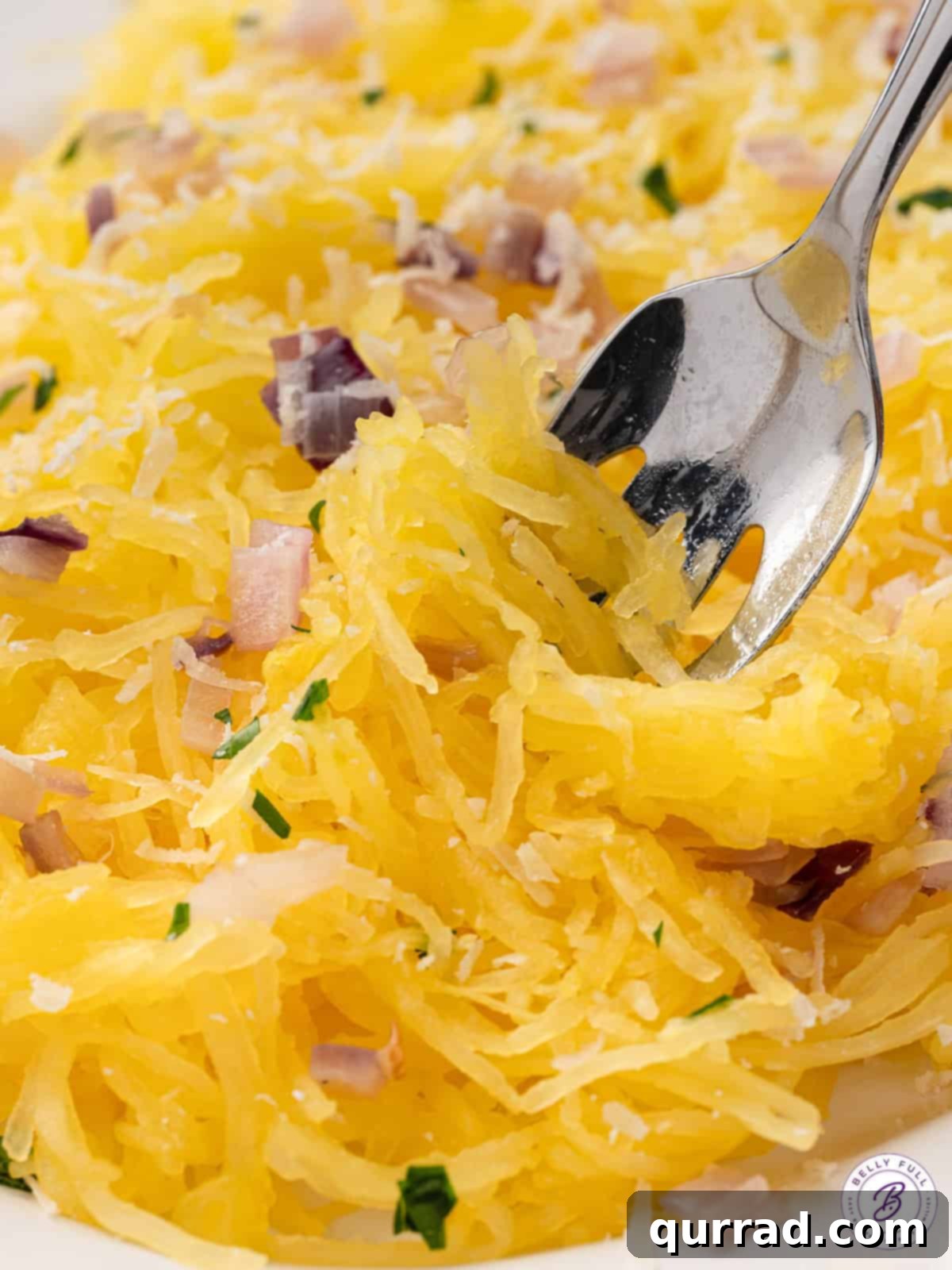
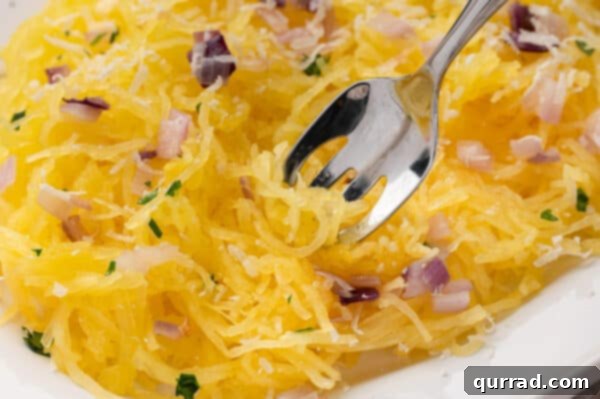
Serve and Enjoy: Your perfectly cooked spaghetti squash strands are now ready to be enjoyed! They are a blank canvas for your favorite flavors. We love tossing them simply with sautéed diced red onion, fresh chopped parsley, and a generous sprinkle of Parmesan cheese for a light and flavorful side dish or main.
Delicious spaghetti squash strands, ready to be dressed and enjoyed.
Video Guide: Visual Steps for Perfect Spaghetti Squash
For those who prefer a visual aid, watch our video demonstration below on how to perfectly cook spaghetti squash from start to finish. Seeing the steps in action can often clarify any uncertainties and boost your confidence in the kitchen.
(Video player embed would go here)
Nutrition Information (per serving)
Below is the estimated nutritional information for one serving of plain spaghetti squash (approx. 1/4 of a 3-pound squash). Please note that these values are automatic calculations and can vary based on specific product brands and any additions or changes you make to the recipe. If precise nutritional data is critical for your dietary needs, we recommend calculating them yourself using a reliable nutrition tracker.
- Calories: 75 kcal
- Carbohydrates: 17g
- Protein: 2g
- Fat: 1g
- Saturated Fat: 1g
- Sodium: 41mg
- Potassium: 261mg
- Fiber: 4g
- Sugar: 7g
- Vitamin A: 290 IU
- Vitamin C: 5mg
- Calcium: 56mg
- Iron: 1mg
Nutritional information provided is an estimate. Actual values may vary.
How Long Does Spaghetti Squash Last?
Understanding proper storage helps you enjoy your spaghetti squash for longer. An uncut, uncooked spaghetti squash can last remarkably well on your kitchen countertop for up to 2 weeks, and even longer (up to 1-2 months) if stored in a cool, dark, and dry pantry. Once cooked, store the spaghetti squash strands in an airtight container in the refrigerator for 3-4 days. For longer storage, cooked spaghetti squash can be frozen. Simply place the cooled strands in a freezer-safe bag or container, removing as much air as possible. It can last up to 8-12 months in the freezer, though the texture might be slightly softer after thawing. Thaw overnight in the refrigerator before reheating.
Creative Ways to Use Spaghetti Squash
Spaghetti squash, by itself, has a very mild and subtle flavor, which is precisely what makes it so fantastic. It acts as a neutral base, readily absorbing the vibrant flavors of whatever ingredients and sauces you pair it with. Think of it as a healthy, low-carb alternative to pasta, rice, or even potatoes. The possibilities are truly endless!
- Classic Italian: Top it with your absolute favorite Homemade Spaghetti Sauce, a rich Bolognese, or a creamy pesto. You can even mix it directly into the sauce for a delightful one-pan meal.
- Creamy Alfredo: For a decadent yet healthier option, try it with a luscious Spaghetti Squash Alfredo. The tender strands hold up beautifully to creamy sauces.
- Garlic Parmesan: A simple yet flavorful approach is to toss the strands with roasted garlic, fresh parsley, a drizzle of olive oil, and plenty of grated Parmesan cheese, as suggested in this Roasted Spaghetti Squash with Onion, Garlic, and Parmesan recipe.
- Stir-Fries and Bowls: Use spaghetti squash as the base for a healthy stir-fry. Add your favorite vegetables, protein (chicken, shrimp, tofu), and a savory sauce. It’s also excellent in Buddha bowls or grain bowls.
- Baked Dishes: Stuff the squash halves with a mixture of ground meat, vegetables, cheese, and herbs, then bake until bubbly for a hearty and satisfying meal.
- Salads: Chilled spaghetti squash strands can be added to salads for extra texture and nutrients. Try it with a lemon-herb vinaigrette and some cherry tomatoes.
- Breakfast: Believe it or not, spaghetti squash can even make an appearance at breakfast! Sauté it with eggs and some breakfast sausage for a savory hash.
Don’t be afraid to experiment! Its adaptability is its greatest strength, allowing you to enjoy a wide variety of meals while keeping things light and healthy.
Explore More Delicious Squash Recipes
If you’ve enjoyed cooking with spaghetti squash, you’ll love exploring other varieties of squash and their unique culinary applications. From sweet acorn squash to versatile zucchini, there’s a squash for every season and every meal. Expand your repertoire with these fantastic recipes:
- Air Fryer Acorn Squash
- Roasted Acorn Squash
- Yellow Squash Casserole
- Air Fryer Zucchini Fries
- Italian Stuffed Zucchini
- Pizza Stuffed Zucchini Boats
We hope this guide has empowered you to confidently cook and enjoy spaghetti squash. It’s truly a game-changer for healthy eating and offers endless culinary possibilities. If you tried this recipe, please consider leaving a rating below!
Don’t forget to follow Belly Full on TikTok, Instagram, Facebook, Pinterest, and YouTube for more delicious recipes and cooking inspiration!