

Transform your meals with the vibrant, zesty flavors of the Mediterranean! This incredible homemade Greek Salad Dressing recipe is remarkably simple to prepare, requiring just a handful of everyday ingredients and mere minutes of your time. Far superior to any store-bought alternative, this dressing promises an explosion of fresh, tangy goodness that will elevate not only your salads but also serve as a versatile marinade for proteins or a delicious drizzle over roasted vegetables. Get ready to awaken your taste buds with a dressing that’s bursting with authentic Greek charm and unparalleled freshness.

For culinary enthusiasts who appreciate wholesome, flavorful cooking, homemade sauces and dressings are a game-changer. They offer an unparalleled freshness and depth of flavor that mass-produced versions simply cannot match. Crafting your own dressings puts you in complete control of the ingredients, allowing you to avoid unwanted preservatives, artificial flavors, and excessive sugars or sodium often found in commercial products. This dedication to fresh, quality ingredients is the secret behind truly exceptional meals, transforming simple dishes into extraordinary culinary experiences.
Our Greek Salad Dressing stands as a shining example of this philosophy. Its bright, zesty character makes it an instant favorite, offering a refreshing tang that complements a wide array of dishes. While it’s a quintessential partner for classic green salads, its versatility extends far beyond. Imagine it tossed with a vibrant pasta salad, infusing every bite with Mediterranean zest, or used as a tenderizing marinade for chicken, fish, or even vegetables, imparting a rich, herbaceous aroma. A simple drizzle over roasted vegetables can turn them into a gourmet side dish. This dressing isn’t just an accompaniment; it’s a culinary catalyst, designed to add a burst of deliciousness wherever it goes, making every meal feel a little more special and a lot more authentic.
The Authentic Greek Salad Dressing: A Recipe for Freshness
Unlocking the vibrant flavors of the Mediterranean starts with a homemade Greek salad dressing that’s both incredibly simple and bursting with fresh, tangy notes. This recipe is not only delicious but also naturally gluten-free and soy-free, making it an excellent choice for those with specific dietary needs. It champions pure, wholesome ingredients, ensuring a taste that’s as authentic as it is invigorating. Below, we delve into each essential component that makes this dressing truly exceptional, providing insight into why each ingredient plays a crucial role in achieving that perfect balance of flavor and aroma.
- Extra-virgin olive oil: The cornerstone of any great Mediterranean dressing, extra-virgin olive oil provides a rich, fruity base. Its quality directly impacts the final flavor, so investing in a high-quality, cold-pressed olive oil is paramount. It offers a smooth texture and a subtle peppery finish that ties all the other flavors together, contributing healthy monounsaturated fats. Look for oils with a bright, green hue and a distinct aroma for the best results, as these signify freshness and robust flavor.
- Red wine vinegar: Offering a deeper, more complex tang compared to white vinegar, red wine vinegar is essential for that characteristic Greek profile. Its robust acidity cuts through the richness of the olive oil and brightens the overall flavor, providing a crucial tartness that defines many Mediterranean vinaigrettes. Choose a good quality red wine vinegar for a cleaner, more balanced tartness that elevates the entire dressing without overwhelming it.
- Fresh lemon juice: A squeeze of fresh lemon juice introduces a bright, lively citrus note that complements the red wine vinegar beautifully. It adds an invigorating zest and a layer of acidity that cannot be replicated by bottled lemon juice, enhancing the overall freshness and complexity of the dressing. Always opt for freshly squeezed lemons; it makes a remarkable difference in flavor.
- Honey: A small amount of honey is a secret weapon in this recipe, providing a very subtle sweetness that expertly balances the acidity of the vinegar and lemon juice. It creates a harmonious flavor profile, preventing the dressing from being overly sharp without making it overtly sweet. Don’t be tempted to skip it, as it’s key to achieving that perfect equilibrium and adds a touch of golden warmth to the taste.
- Dijon mustard: Dijon mustard is not just for flavor; it’s a vital emulsifying agent that helps bind the oil and vinegar together, preventing them from separating too quickly. Its pungent, slightly spicy notes add a layer of sophisticated flavor that enhances the overall depth and provides a pleasant background tang. While other mustards can be used, Dijon offers the most refined taste for this dressing, contributing to its smooth consistency.
- Fresh garlic: Nothing quite compares to the pungent, aromatic kick of freshly minced garlic. It infuses the dressing with an essential zing and a robust flavor that is integral to Greek cuisine. Mincing it finely ensures its flavor is evenly distributed and melds perfectly with the other ingredients, creating an irresistible aroma that hints at the Mediterranean sunshine.
- Dried oregano: The quintessential herb of Greek cooking, dried oregano imparts an earthy, slightly minty, and peppery flavor that is instantly recognizable. It brings warmth and authenticity to the dressing, evoking the sun-drenched landscapes of Greece. While fresh oregano can be used, dried often offers a more concentrated and traditional flavor for vinaigrettes, releasing its oils when combined with the liquids.
- Salt and Pepper: These fundamental seasonings are crucial for enhancing and balancing all the flavors. Fine sea salt and freshly ground black pepper allow you to adjust the dressing to your exact preference, ensuring every component shines. Season generously but taste as you go to achieve your ideal savory balance, bringing out the best in each ingredient.
- Feta cheese (optional): For an extra layer of creamy, salty tang, crumbled feta cheese can be incorporated into the dressing. It adds a delightful texture and a pronounced Mediterranean character, especially when used on salads where you want that signature Greek flavor to be prominent. If adding, ensure it’s finely crumbled to integrate well with the liquid components.

Crafting Your Greek Salad Dressing: A Simple Guide
Making this homemade Greek Salad Dressing is incredibly straightforward, requiring minimal effort for maximum flavor. The easiest and most popular method involves a mason jar with a secure, tight-fitting lid. Simply combine all the measured ingredients – the extra-virgin olive oil, red wine vinegar, fresh lemon juice, honey, Dijon mustard, finely minced garlic, dried oregano, salt, and pepper – into the jar. Once all components are in, fasten the lid tightly and shake the jar vigorously for about 30-60 seconds. This energetic shaking action is key to thoroughly blending and emulsifying the oil and vinegar, creating a smooth, cohesive dressing where all flavors are perfectly integrated. After shaking, taste the dressing and adjust the seasonings as needed. You might find you prefer a bit more salt, pepper, or even a touch more lemon juice to suit your individual palate and achieve your desired level of zest.
Alternatively, if you don’t have a mason jar, you can whisk all the ingredients together in a medium-sized bowl until thoroughly combined and emulsified. Use a good quality whisk and continue mixing until the dressing appears uniform and slightly thickened. Once blended, you can transfer it to a decorative carafe or bottle for serving. The beauty of the jar method, however, lies in its sheer convenience: you can make, store, and serve the dressing all from the same container. This not only minimizes cleanup but also makes it incredibly easy to give the dressing a quick shake before each use, ensuring all the flavors are perfectly re-incorporated, especially after refrigeration when some natural separation may occur.
Storing Your Homemade Elixir: Tips for Freshness
Proper storage is essential to maintain the freshness and quality of your homemade Greek Salad Dressing. Always transfer any leftover dressing into a clean, airtight glass jar or container and store it promptly in the refrigerator. This will help preserve its vibrant flavors and extend its shelf life. It’s important to note that it’s completely normal for the oil and vinegar to separate during storage; this is a natural occurrence in dressings without artificial emulsifiers or stabilizers. A quick, vigorous shake of the jar before each use will effortlessly re-incorporate all the ingredients, bringing the dressing back to its perfectly blended and delicious state.
Another natural phenomenon you might observe is the slight solidification of the olive oil when chilled. Unlike many store-bought dressings that contain chemical emulsifiers and anti-coagulants to prevent this, your homemade version is pure and free from such additives. If your dressing becomes firm in the fridge, simply remove it about 30 minutes before you plan to use it. Allowing it to sit at room temperature will gently soften the olive oil, after which another good shake will return it to its pourable consistency, ready to be drizzled over your favorite dishes. When stored correctly in the refrigerator, this homemade Greek dressing will maintain its optimal freshness and flavor for up to 1 week, making it a convenient and healthy staple for your weekly meal prep and cooking endeavors.
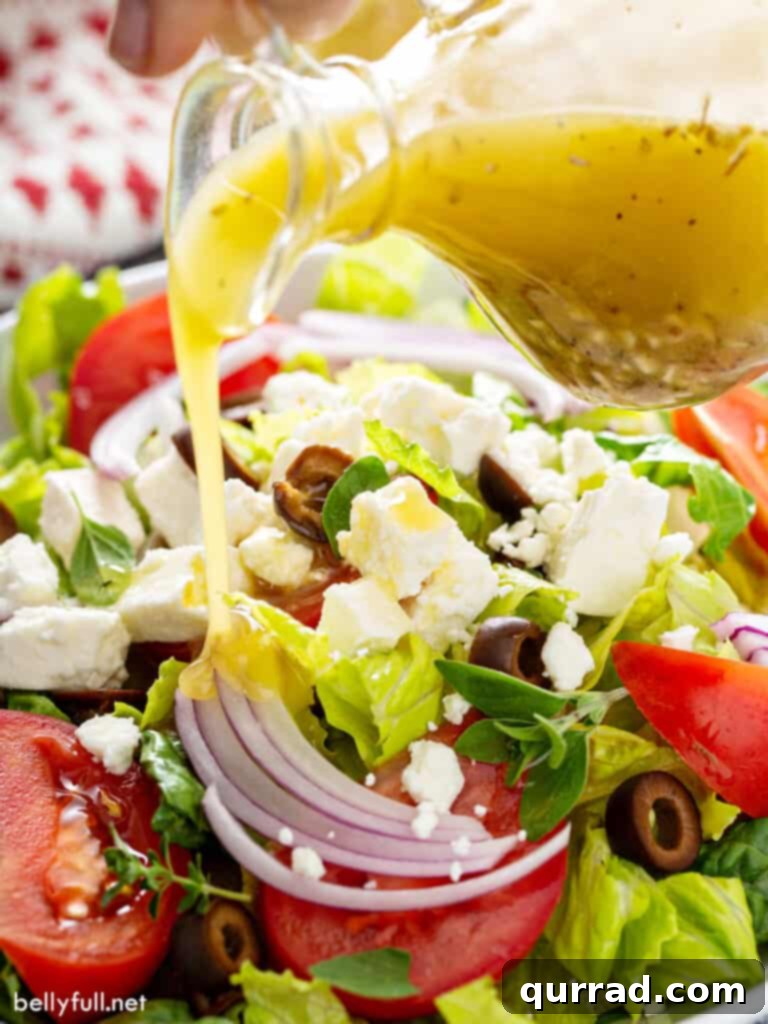
Beyond the Salad Bowl: Versatile Uses for Greek Dressing
While this homemade Greek Salad Dressing is undeniably a star player on any classic green salad, its vibrant flavor profile and balanced acidity make it incredibly versatile for countless other culinary applications. Don’t limit its use to just leafy greens; explore these delicious ways to incorporate its zesty goodness into your everyday meals and discover new favorite combinations:
- Pasta Salads: It’s a match made in heaven with this Greek Pasta Salad. The dressing coats every noodle and vegetable, infusing the dish with an unforgettable Mediterranean zest. Try it with rotini, cherry tomatoes, cucumbers, olives, and a sprinkle of feta for a perfect summer side dish or light lunch.
- Hearty Green Salads: Absolutely wonderful over our Cobb Salad or this Chopped Salad. Its robust flavor stands up well to a variety of ingredients, from grilled chicken and hard-boiled eggs to crunchy vegetables and hearty greens, adding a bright, fresh finish.
- Cucumber Tomato Salad: Perfectly drizzled over Cucumber Tomato Salad. The refreshing qualities of the dressing perfectly complement the crispness of cucumbers and the sweetness of ripe tomatoes, making for a light and refreshing side dish that’s ideal for warm weather.
- Marinade for Proteins: Love it as a marinade for grilled chicken breasts, fish (like salmon or cod), pork tenderloin, or even tofu. The lemon juice and vinegar tenderize the meat, while the oregano and garlic infuse it with an aromatic, savory depth that’s ideal for grilling, baking, or pan-searing. Marinate for at least 30 minutes, or up to 4 hours for deeper flavor.
- Roasted Vegetables: Drizzle generously over your favorite roasted vegetables like bell peppers, zucchini, eggplant, asparagus, or potatoes before roasting. The dressing caramelizes slightly in the oven, creating a rich, flavorful crust and tender interior, transforming simple vegetables into a culinary delight.
- Grain Bowls: Elevate your quinoa, couscous, farro, or rice bowls with a generous splash of Greek dressing. It adds moisture, vibrant flavor, and helps to bring all the various components (grains, greens, proteins, veggies) together for a cohesive, delicious, and healthy meal.
- Sandwich or Wrap Spread: Instead of plain mayonnaise or other condiments, spread a thin layer of Greek dressing inside your sandwiches, pitas, or wraps for an extra burst of fresh flavor. It pairs beautifully with turkey, grilled chicken, hummus, or grilled vegetables, offering a tangy alternative.
- Dipping Sauce: Serve it alongside crusty bread, warm pita bread, or a platter of fresh crudités (carrots, celery, bell peppers) for a flavorful and healthy dipping option. It’s also fantastic with crispy falafel or grilled halloumi cheese, adding a bright counterpoint to richer flavors.
- Potato Salad Alternative: Use this dressing instead of a mayonnaise-based dressing for a lighter, tangier, and distinctly Mediterranean potato salad. It pairs wonderfully with boiled potatoes, red onion, fresh herbs, and olives.
Frequently Asked Questions About Greek Salad Dressing
Here are answers to some common questions about making and using homemade Greek Salad Dressing, to help you get the most out of this versatile condiment:
- Can I use different types of vinegar? While red wine vinegar is traditional and highly recommended for its deep, authentic Greek flavor profile, you can certainly experiment with other vinegars. White wine vinegar or apple cider vinegar could be used, though they might offer a slightly lighter or fruitier taste, altering the classic Greek character somewhat. Balsamic vinegar would significantly change the flavor, making it less “Greek” and more Italian-inspired.
- How can I make this dressing creamier? If you prefer a creamier dressing, you have a couple of options. You can add a tablespoon or two of plain Greek yogurt to the mixture for a rich, tangy creaminess, or a small amount of tahini for a nutty, earthy depth. Blend well with a whisk or in a blender to ensure a smooth, emulsified texture.
- Is this dressing suitable for vegans? As written, this recipe includes honey, which is not strictly vegan for some. To make it entirely vegan, simply substitute the honey with an equal amount of maple syrup or agave nectar. The flavor balance will be slightly different but still delicious and provide the necessary sweetness to cut the acidity.
- Can I use fresh herbs instead of dried? Absolutely! Fresh herbs can add a wonderful vibrancy. If you have fresh oregano on hand, you can use approximately three times the amount of dried oregano (e.g., 3 teaspoons of finely chopped fresh oregano for 1 teaspoon dried). Fresh herbs will provide a brighter, more aromatic, and slightly different flavor profile.
- How long does homemade Greek dressing last? When stored properly in an airtight container in the refrigerator, homemade Greek salad dressing will typically last for up to one week. Always check for any off-smells, discoloration, or signs of spoilage before using it, especially if it has been stored for several days.
- What kind of olive oil is best for Greek dressing? Always choose a good quality extra-virgin olive oil for dressings. It should have a robust, somewhat peppery flavor and a pleasant, fresh aroma. Avoid light or refined olive oils, as they lack the distinct and complex flavor necessary to make this dressing truly shine. The oil is a significant component, so its quality is paramount.
Other Homemade Dressings to Explore
If you’ve enjoyed the simplicity, freshness, and incredible flavor of this homemade Greek dressing, you might be inspired to broaden your culinary horizons by trying your hand at making other delicious dressings from scratch. They are equally rewarding to prepare and can transform your everyday meals into something extraordinary:
- Homemade Italian Dressing: A classic blend of herbs, oil, and vinegar, perfect for robust salads.
- Classic Balsamic Vinaigrette: Sweet and tangy, ideal for a wide range of salads and as a glaze.
- Creamy Homemade Ranch Dressing: A beloved favorite, rich and herbaceous, fantastic for dipping or on crisp greens.
Homemade Greek Salad Dressing

Pin Recipe
Print Recipe
This zesty homemade Greek Salad Dressing recipe only takes minutes to make with just a few ingredients and is so full of flavor! Liven up your salads, roasted vegetables, or use it as a marinade.
Ingredients
- 1/2 cup extra-virgin olive oil
- 1/4 cup red wine vinegar
- 1 tablespoon fresh lemon juice
- 1/2 tablespoon honey
- 3/4 teaspoon Dijon mustard
- 2 cloves garlic, finely minced
- 1 teaspoon dried oregano
- 1/2 teaspoon salt
- 1/4 teaspoon ground black pepper
Instructions
- Place all ingredients into a jar with a tight-fitting lid. Shake vigorously until well-blended and emulsified. Taste and adjust seasonings, adding more salt and pepper if necessary.
- (Alternatively, you can whisk everything together in a bowl and transfer to a carafe for serving.)
- Use as desired – refer to the “Versatile Uses for Greek Dressing” section in the article for ideas!
Nutrition Information
Carbohydrates: 2g |
Protein: 1g |
Fat: 18g |
Saturated Fat: 2g |
Sodium: 202mg |
Potassium: 18mg |
Fiber: 1g |
Sugar: 2g |
Vitamin A: 7 IU |
Vitamin C: 1mg |
Calcium: 9mg |
Iron: 1mg
Nutritional information provided is an automatic calculation and can vary based on the exact products you use and any changes you make to the recipe. If these numbers are critically important to you, it is highly recommended to calculate them yourself using a trusted nutritional calculator.

We hope you love this delicious and simple recipe for homemade Greek Salad Dressing. Don’t forget to explore more of our easy and flavorful recipes to inspire your next meal!