
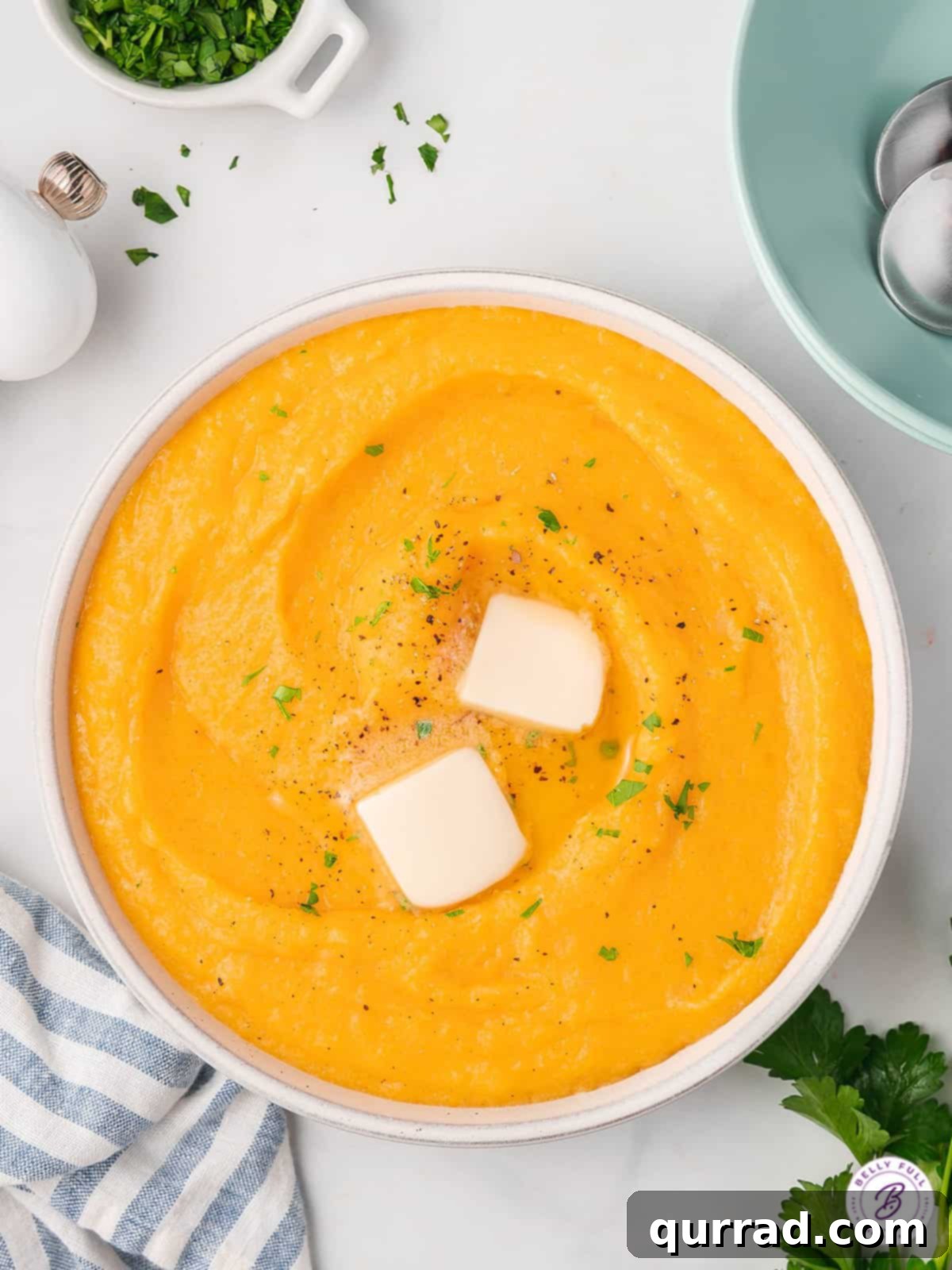
Elevate your side dish game with this incredibly rich and subtly sweet Mashed Butternut Squash and Yukon Gold Potatoes. It’s a harmonious blend of earthy butternut squash and creamy Yukon Gold potatoes, infused with aromatic garlic, savory Monterey Jack cheese, and luxurious butter. This isn’t just another Thanksgiving staple; it’s a versatile, easy-to-make side dish perfect for any meal, any time of the year. Prepare to discover your new favorite way to enjoy mashed vegetables!
While this recipe might become your go-to, don’t miss out on other delightful ways to savor butternut squash. Explore our Roasted Butternut Squash for a simple yet flavorful preparation, or cozy up with a bowl of our silky Butternut Squash Soup.
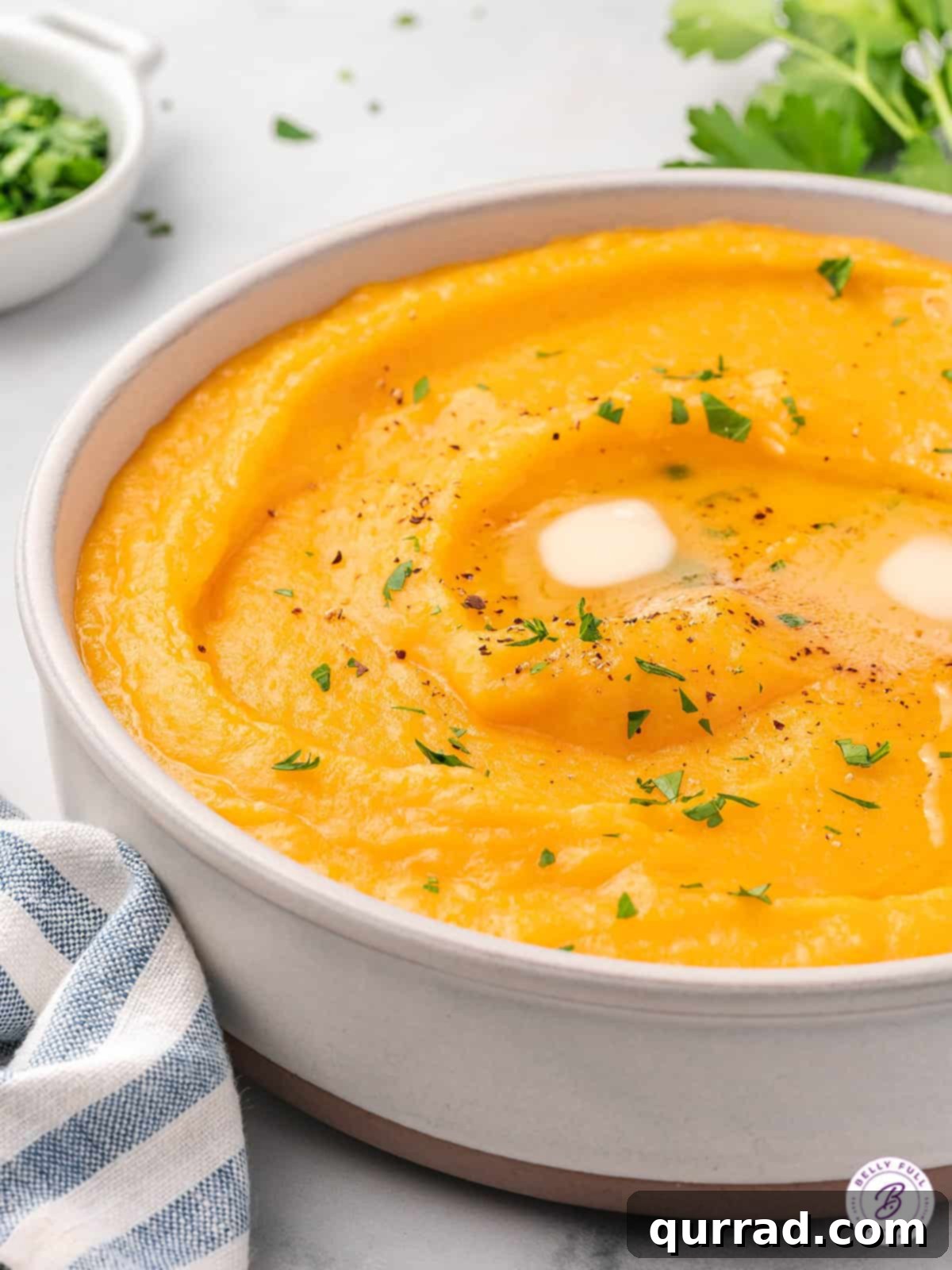
Why You’ll Fall in Love with This Butternut Squash Mash
This Mashed Butternut Squash and Potato recipe is more than just a side dish; it’s a culinary experience waiting to happen. The combination of sweet butternut squash and savory potatoes creates a flavor profile that is both comforting and exciting. Here’s why it’s destined to become a staple in your kitchen:
- Unforgettable Flavor Fusion: The inherent sweetness of butternut squash perfectly complements the classic, savory notes of Yukon Gold potatoes, resulting in a unique and balanced taste.
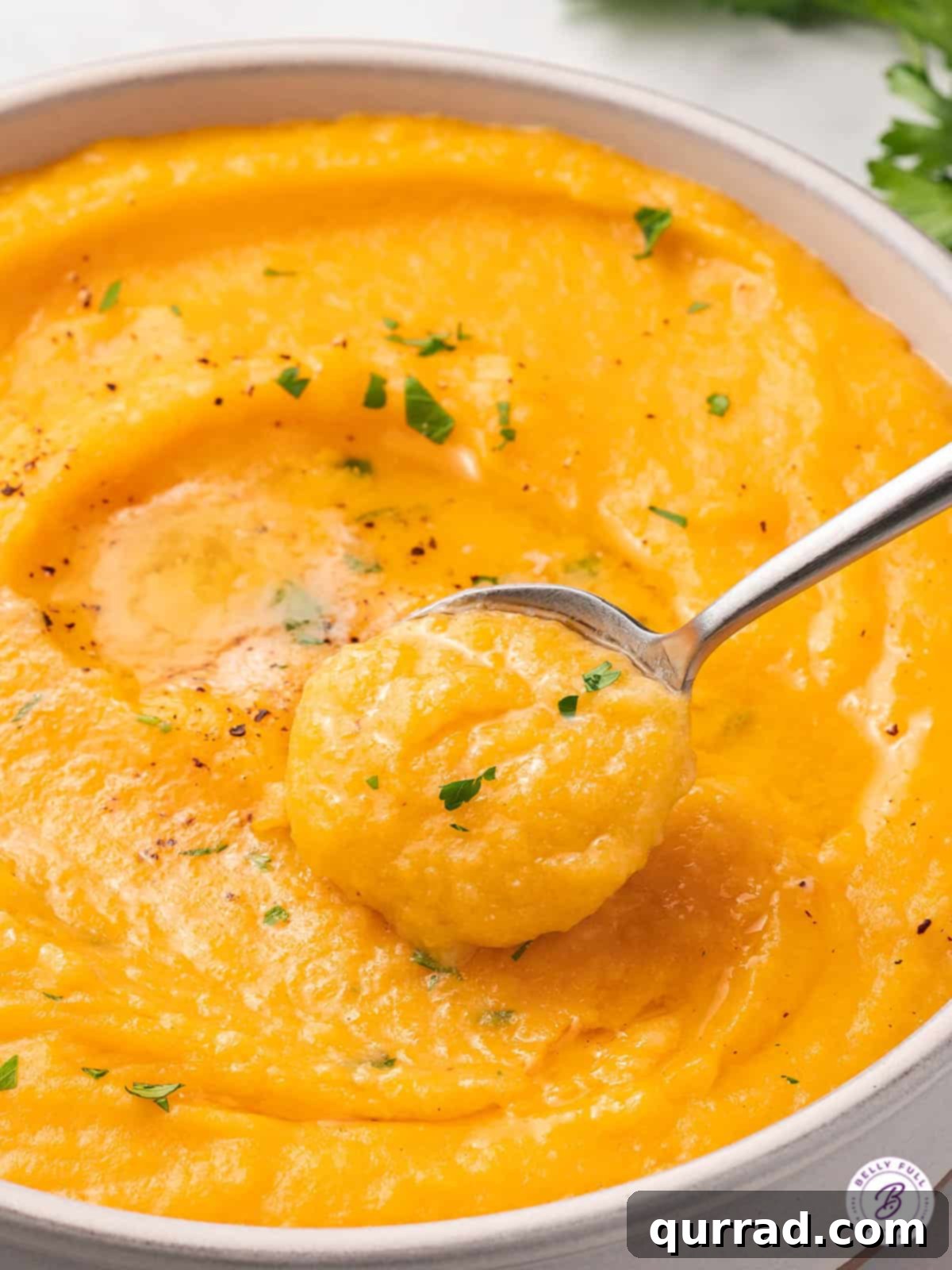
- Luxuriously Creamy Texture: Thanks to the high starch content of Yukon Golds and the addition of butter and cheese, this mash achieves an incredibly smooth and velvety consistency that melts in your mouth.
- Effortlessly Elegant: Despite its gourmet appeal, this dish is surprisingly simple to prepare, making it ideal for both busy weeknights and special occasions.
- Nutrient-Rich Goodness: Butternut squash is a powerhouse of vitamins (A and C), fiber, and potassium, adding a healthy boost to your meal.
- Versatility at Its Best: While it shines during holiday feasts, this mash is equally at home alongside a casual weeknight dinner, pairing beautifully with a wide variety of main courses.
- A Crowd-Pleasing Favorite: Even those who claim not to love vegetables often find themselves reaching for seconds of this delectable mash.
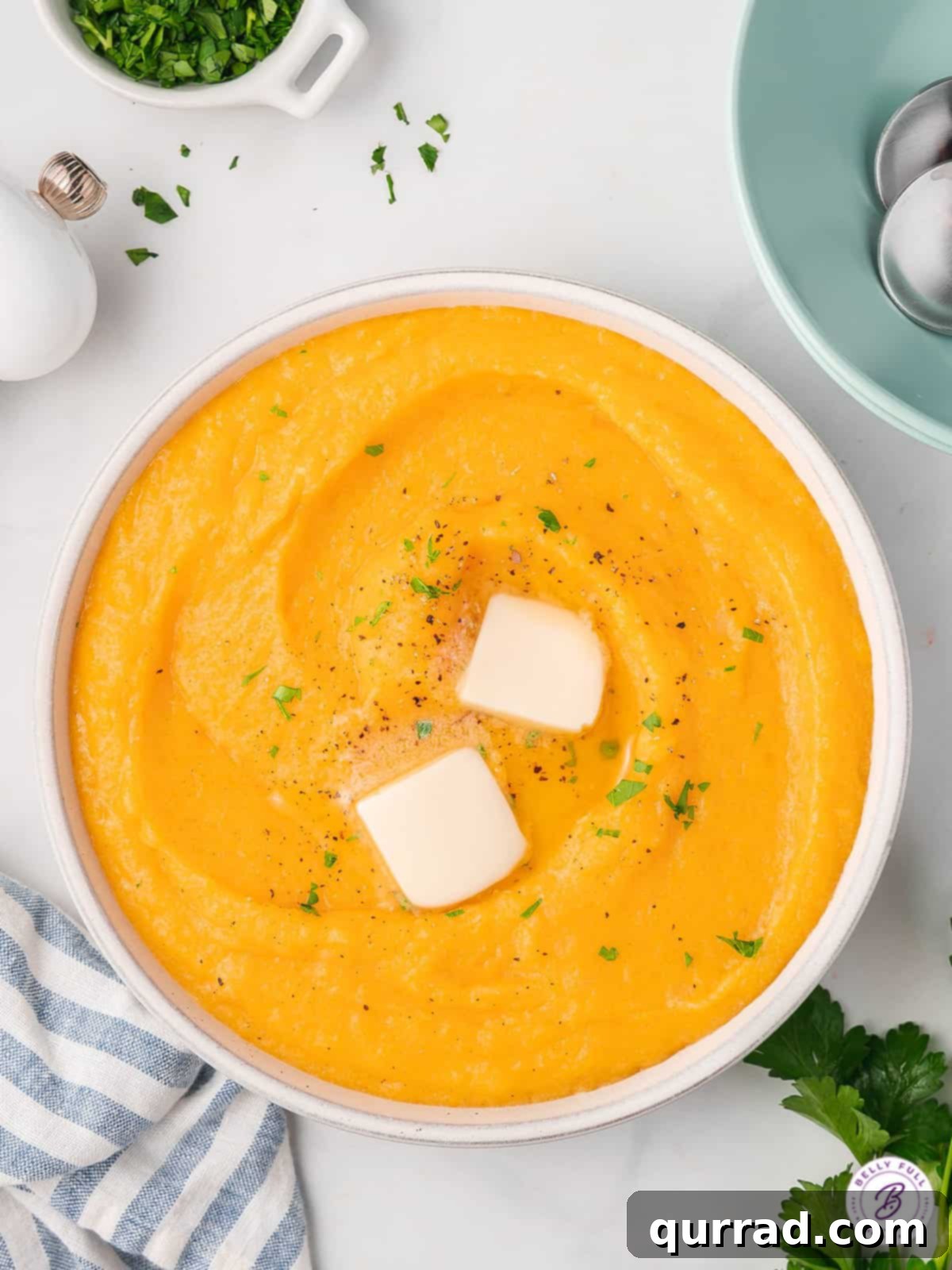
The Perfect Pairing: Butternut Squash & Yukon Gold Potatoes
The secret to this mash’s irresistible charm lies in its core ingredients: butternut squash and Yukon Gold potatoes. This isn’t a random pairing; it’s a carefully chosen duo that brings out the best in each other.
Butternut Squash: Often regarded as a cross between a pumpkin and a sweet potato, butternut squash offers a distinctive flavor that is subtly sweet and nutty. Beyond its delicious taste, it’s a nutritional powerhouse. This winter squash is naturally fat-free and packed with dietary fiber, essential for digestive health. It’s an excellent source of Vitamin A, crucial for vision and immune function, and Vitamin C, known for its antioxidant properties. Additionally, it provides beneficial amounts of magnesium and potassium, contributing to overall well-being. Its vibrant orange hue not only makes your plate more appealing but also signals its rich beta-carotene content.
Yukon Gold Potatoes: When it comes to mashing, not all potatoes are created equal. Yukon Golds are the star for a reason. Their medium-starch content means they break down beautifully when cooked, yielding an incredibly creamy and fluffy texture without becoming gluey. They possess a naturally buttery flavor, reducing the need for excessive added fats and enhancing the overall richness of the mash. Unlike russet potatoes, which can be dry and mealy, or red potatoes, which can be waxy, Yukon Golds strike the perfect balance for a truly smooth and luscious consistency. For this recipe, peeling them is essential to ensure that silky smooth finish.
Together, these two vegetables create a symphony of flavors and textures, with the squash lending sweetness and a beautiful color, and the potatoes providing a comforting, creamy base. The result is a mash that is greater than the sum of its parts.
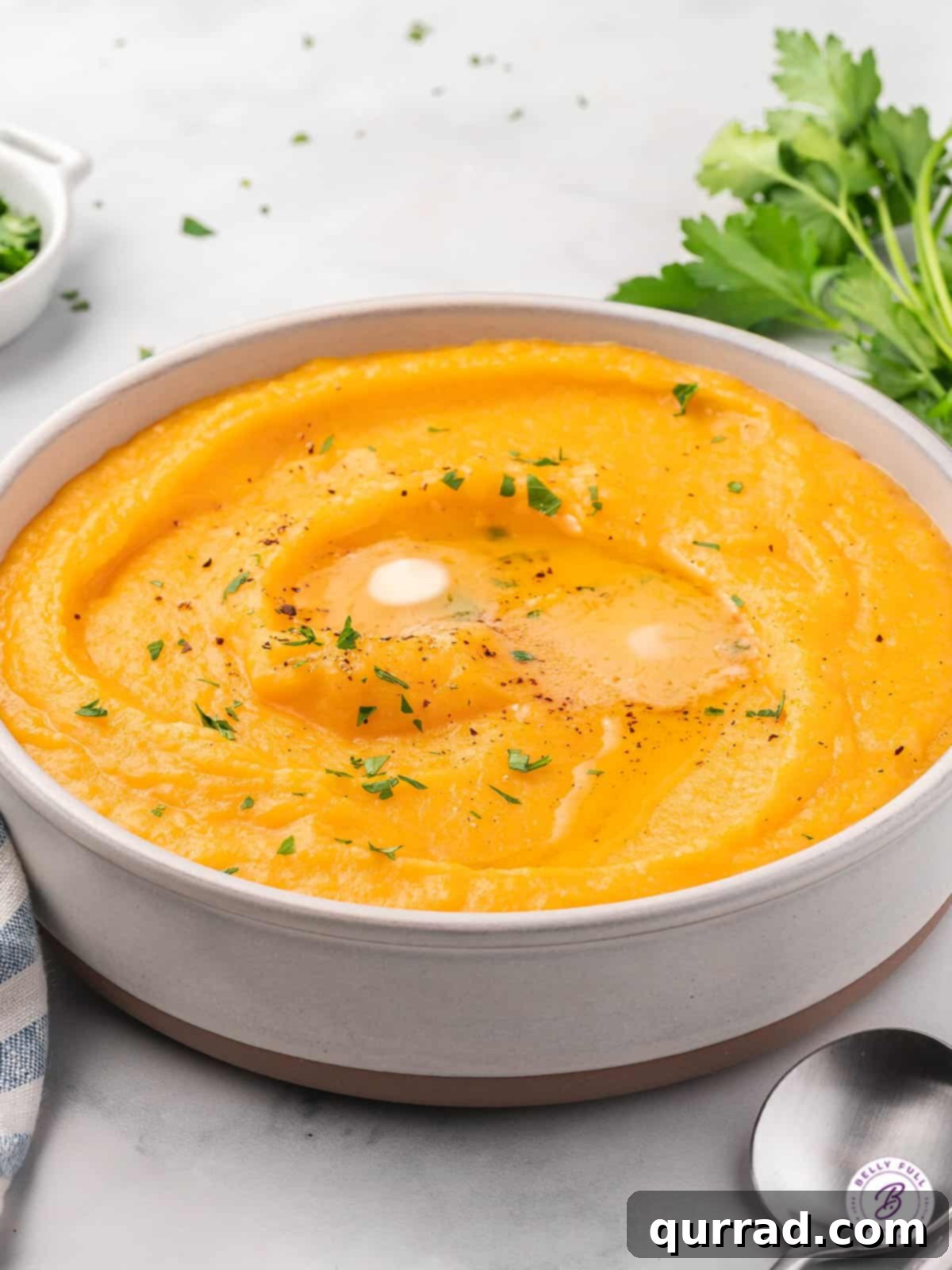
Essential Ingredients for Your Butternut Squash Mash
Crafting this delightful butternut squash and potato mash requires just a handful of fresh ingredients and a few common seasonings. Each component plays a vital role in achieving the perfect balance of flavor and texture:
- Butternut Squash: Approximately 1 & 1/2 pounds, yielding about 6 cups once peeled and cubed. Look for a squash that is firm, heavy for its size, and free of soft spots or blemishes.
- Yukon Gold Potatoes: About 2 medium potatoes, which will be roughly 2 cups peeled and cubed. Opt for firm potatoes without any green spots or sprouts.
- Fresh Garlic: 5 cloves, minced. Fresh garlic provides an aromatic depth that powdered garlic simply cannot replicate.
- Monterey Jack Cheese: 1 cup, freshly shredded off the block. Monterey Jack is chosen for its mild, creamy flavor and exceptional melting qualities, which contribute to the mash’s smooth texture without overpowering the delicate sweetness of the squash.
- Unsalted Butter: 2 tablespoons. Butter is crucial for adding richness, moisture, and that signature creamy mouthfeel to starchy potatoes. Using unsalted butter allows you to control the overall sodium content of your dish, especially since cheese also contains salt. Remember, you can always add more salt, but you can’t take it away!
- Seasonings:
- Kosher Salt: 1 teaspoon, used to enhance all the flavors in the dish.
- Black Pepper: 1/4 teaspoon, for a subtle hint of spice and warmth.
- Nutmeg: A pinch, optional but highly recommended. Freshly grated nutmeg adds a wonderfully warm, slightly sweet, and aromatic note that complements both squash and potatoes beautifully.
- Fresh Parsley: Chopped, for garnish. Not just for aesthetics, fresh parsley adds a bright, herbaceous note that cuts through the richness of the mash.
How to Prepare Mashed Butternut Squash and Potatoes
Creating this delicious mashed butternut squash and potato side is straightforward and can be accomplished in just a few easy steps. Follow these instructions for a perfect, creamy result:
- Prepare Your Vegetables: Begin by thoroughly washing both the butternut squash and the Yukon Gold potatoes. For the butternut squash, use a sturdy vegetable peeler or a sharp knife to remove the tough outer skin. Carefully slice the squash in half lengthwise, scoop out the seeds and fibrous pulp using a spoon, then cut the flesh into roughly 1-inch cubes. Next, peel the Yukon Gold potatoes and cut them into similar 1-inch cubes. Ensuring uniform sizing for both vegetables is key to even cooking.
- Cook Until Tender: Place the cubed butternut squash, potatoes, and minced garlic into a large, heavy-bottomed pot. Add enough cold water to just cover the vegetables. Bring the water to a rolling boil over high heat. Once boiling, reduce the heat to a gentle simmer, leaving the pot uncovered. Continue to cook for approximately 12-15 minutes, or until both the squash and potatoes are fork-tender. This means a fork or knife can be easily inserted and removed with little resistance.
- Drain and Mash: Carefully drain the cooked vegetables through a colander, ensuring all excess water is removed. Return the drained squash and potatoes to the same warm pot. Add the freshly shredded Monterey Jack cheese, unsalted butter, kosher salt, and black pepper. Using a potato masher, fork, or a handheld electric mixer, begin to mash the mixture. Continue mashing until the cheese has fully melted and your desired consistency is achieved. Some prefer a slightly chunky mash, while others aim for ultra-smoothness.
- Season and Serve: Once mashed, taste the mixture and adjust the seasoning as needed. You might want to add a bit more salt or pepper to suit your preference. If using, stir in a small pinch of freshly grated nutmeg for an added layer of warmth. Serve the mashed butternut squash and potatoes immediately, garnished with a pat of butter melting on top and a sprinkle of fresh chopped parsley for a pop of color and fresh flavor. Enjoy hot!
Expert Tips for the Smoothest, Most Flavorful Mash
Achieving perfectly creamy and delicious mashed butternut squash and potatoes is simple with a few insider tips. These pointers will help you avoid common pitfalls and ensure your dish is a resounding success every time:
- Uniformity is Key: Dedicate a few extra minutes to cutting your butternut squash and potatoes into pieces of similar size. This crucial step ensures that all the vegetables cook at the same rate, preventing some pieces from becoming mushy while others remain undercooked and firm. Evenly cooked vegetables mash much more consistently.
- Mind the Water Level: When boiling, add just enough water to barely cover the vegetables. Too much water can lead to waterlogged potatoes and squash, diluting their flavor and making your mash soupy or causing them to disintegrate during cooking. Using less water helps concentrate their natural flavors.
- Avoid Overcooking: Keep a close eye on your pot. As soon as a fork or a butter knife can easily pierce the largest piece of squash and potato with minimal resistance, they are done. Overcooked vegetables absorb too much water and can result in a gummy or grainy mash.
- Softened, Unsalted Butter is Best: Always use softened (room temperature) unsalted butter. Softened butter incorporates more smoothly into the mash, contributing to a superior, velvety texture. Unsalted butter gives you complete control over the dish’s saltiness, allowing you to season to taste without worrying about over-salting, especially with the addition of cheese.
- Don’t Skimp on the Fat: Potatoes, being naturally starchy, require fat to transform into a truly creamy texture. Butter is your best friend here. Do not omit it, or your mash will likely turn out dry and less appealing. For even more richness, consider adding a splash of warm milk, cream, or a dollop of cream cheese during mashing.
- Salt for Flavor, Not Just Saltiness: While you’re controlling salt with unsalted butter, remember that both butternut squash and potatoes need adequate seasoning to bring out their best flavors. Without enough salt, the dish can taste bland and flat. Always taste your mash after adding the initial salt and pepper, and adjust as desired. A pinch of nutmeg also enhances the overall profile.
- Resist Overmixing: Once you’ve added your ingredients, mash until just combined and the desired consistency is reached. Overmixing, especially with an electric mixer, can break down the starches in the potatoes too much, leading to a gluey, unpleasant texture. Gentle mashing or a quick whip is all that’s needed.
- Consider Roasting Garlic: For an even deeper, sweeter garlic flavor, consider roasting the garlic cloves before adding them to the mash. Simply wrap whole cloves (skins on) in foil with a drizzle of olive oil, and roast in the oven until soft and caramelized. Squeeze out the softened garlic into your mash.
Serving Suggestions and Perfect Pairings
This Mashed Butternut Squash and Potatoes dish is incredibly versatile, making it suitable for a wide array of meals, from everyday family dinners to grand holiday feasts. Its unique blend of sweet and savory notes pairs wonderfully with almost any main course where you’d typically serve mashed potatoes.
Elevate Your Holiday Table:
This mash is a natural fit for special occasions. Its vibrant color and rich flavor make it a stand-out addition to:
- Thanksgiving: A welcome alternative or complement to traditional mashed potatoes and sweet potato casserole.
- Christmas Dinner: Perfect alongside roasted turkey, ham, or prime rib.
- Easter Brunch: A lighter yet flavorful side for lamb or glazed ham.
Everyday Dinner Companions:
Don’t reserve this delicious dish just for holidays. It’s easy enough to whip up any night of the week and pairs beautifully with:
- Roasted or Baked Poultry: Serve with baked chicken breast, roasted chicken thighs, or a whole roasted chicken.
- Hearty Red Meats: Excellent with grilled flank steak, pan-seared pork chops, roasted pork tenderloin, or a classic meatloaf.
- Fish and Seafood: A surprisingly good match for pan-seared salmon or baked cod, offering a comforting contrast to the delicate fish.
- Vegetarian Mains: Pair with mushroom steaks, lentil loaf, or hearty vegetable and bean patties for a complete and satisfying meal.
Garnishing for Impact:
A few simple garnishes can enhance both the visual appeal and the flavor of your mash:
- Fresh Herbs: A sprinkle of fresh chopped parsley, chives, or a few sprigs of thyme or sage.
- Browned Butter: Drizzle a little nutty browned butter over the top just before serving.
- Crispy Sage Leaves: Fry a few fresh sage leaves in a touch of butter until crispy for an elegant touch.
- Toasted Pecans or Walnuts: For added texture and a nutty crunch.
Proper Storage and Reheating Guidelines
One of the many benefits of this delightful mashed butternut squash and potato dish is how well it stores, making it an excellent option for meal prepping or enjoying leftovers for days to come. Here’s how to properly store and reheat your mash:
Storing Leftovers in the Refrigerator:
- Cool Completely: Before storing, ensure the mashed butternut squash and potatoes have cooled down to room temperature. This prevents condensation from forming and helps maintain freshness.
- Airtight Container: Transfer the cooled mash to an airtight container. This protects it from absorbing odors from other foods in the refrigerator and prevents it from drying out.
- Refrigeration Time: Stored properly, the mash will keep fresh in the refrigerator for up to 4-5 days.
- Reheating Individual Servings: For quick reheating, individual portions can be warmed in the microwave. Place the mash in a microwave-safe bowl, cover loosely, and heat in 1-minute intervals, stirring occasionally, until heated through. If it seems a little dry, add a splash of milk, cream, or vegetable broth before reheating to restore its creamy texture.
- Reheating Larger Batches on the Stovetop: For larger quantities, gently reheat on the stovetop over low to medium-low heat. Transfer the mash to a saucepan, add a tablespoon or two of milk, cream, or broth, and stir continuously until warmed through and creamy again. Avoid high heat, which can scorch the bottom.
Freezing for Longer Storage:
Mashed butternut squash and potatoes freeze beautifully, making it perfect for preparing ahead or saving extras.
- Cool Thoroughly: Again, allow the mash to cool completely before freezing.
- Freezer-Safe Packaging: Transfer the mash to freezer-safe containers or heavy-duty freezer bags. If using bags, press out as much air as possible before sealing to prevent freezer burn. You can also portion it into individual servings for convenience.
- Freezing Duration: The mash can be frozen for up to 3 months. Label your containers or bags with the date of freezing.
- Thawing Instructions: When ready to enjoy, transfer the frozen mash to the refrigerator and allow it to thaw completely overnight. This slow thawing helps maintain its texture.
- Reheating After Freezing: Once thawed, reheat the mash on the stovetop or in the microwave, following the instructions for refrigerated leftovers. You will likely need to add a bit more liquid (milk, cream, or broth) during reheating to bring back its original creamy consistency. Stir well to incorporate the added liquid and ensure even heating.
Explore More Delicious Mash Recipes
If you’ve enjoyed the creamy comfort of this butternut squash and potato mash, you’ll be delighted to discover other fantastic mashed vegetable recipes that offer variety and flavor to your table. Each of these recipes brings its unique character, ensuring there’s a perfect mash for every craving and occasion:
- Classic Mashed Potatoes: The timeless favorite, perfected for ultimate creaminess and flavor. A staple for any comfort food lover.
- Mashed Sweet Potatoes: Naturally sweet and vibrant, this mash offers a delightful alternative, perfect for adding a touch of sweetness to your meal or for holiday spreads.
- Loaded Mashed Cauliflower Casserole: A brilliant low-carb option that doesn’t skimp on flavor. This casserole combines the lightness of cauliflower with all the indulgent fixings of a loaded potato.
- Loaded Mashed Potato Cakes: Transform your leftover mashed potatoes into crispy, savory cakes that are perfect as an appetizer or a creative side dish.
- Mashed Cauliflower: A simple yet elegant way to enjoy cauliflower, providing a creamy, healthy, and low-carb alternative to traditional mashed potatoes.
Each of these recipes offers a different way to enjoy the comforting texture and satisfying flavors of a well-made mash. Experiment with them to find your next family favorite!
★
★
★
★
★
Butternut Squash and Potato Mash
15
15
25
6
Pin
Ingredients
- 6 cups peeled and cubed butternut squash, (about 1 & 1/2 pounds)
- 2 cups peeled and cubed Yukon Gold potatoes, (about 2 medium)
- 5 cloves garlic, minced
- 1 cup shredded Monterey Jack cheese
- 2 tablespoons unsalted butter
- 1 teaspoon kosher salt
- 1/4 teaspoon black pepper
- pinch of nutmeg, optional
Instructions
-
Place squash, potatoes, and garlic in a large pot; fill with water just to cover and bring to a boil. Reduce heat to a simmer and cook, uncovered, for 12-15 minutes or until fork tender.
-
Drain the mixture and return to pot.
-
Add in the cheese, butter, salt, and pepper; mash until desired consistency is reached.
-
Taste and adjust seasoning, if necessary. Mix in a pinch of nutmeg, if desired.
-
Serve hot!
Nutrition
Carbohydrates: 30g |
Protein: 8g |
Fat: 10g |
Saturated Fat: 6g |
Polyunsaturated Fat: 0.4g |
Monounsaturated Fat: 3g |
Trans Fat: 0.2g |
Cholesterol: 27mg |
Sodium: 511mg |
Potassium: 842mg |
Fiber: 5g |
Sugar: 4g |
Vitamin A: 15145IU |
Vitamin C: 45mg |
Calcium: 219mg |
Iron: 2mg
Nutritional information given is an automatic calculation and can vary based on the exact products you use and any changes you make to the recipe. If these numbers are very important to you, I would recommend calculating them yourself.
Did you make this? Leave a rating below!