
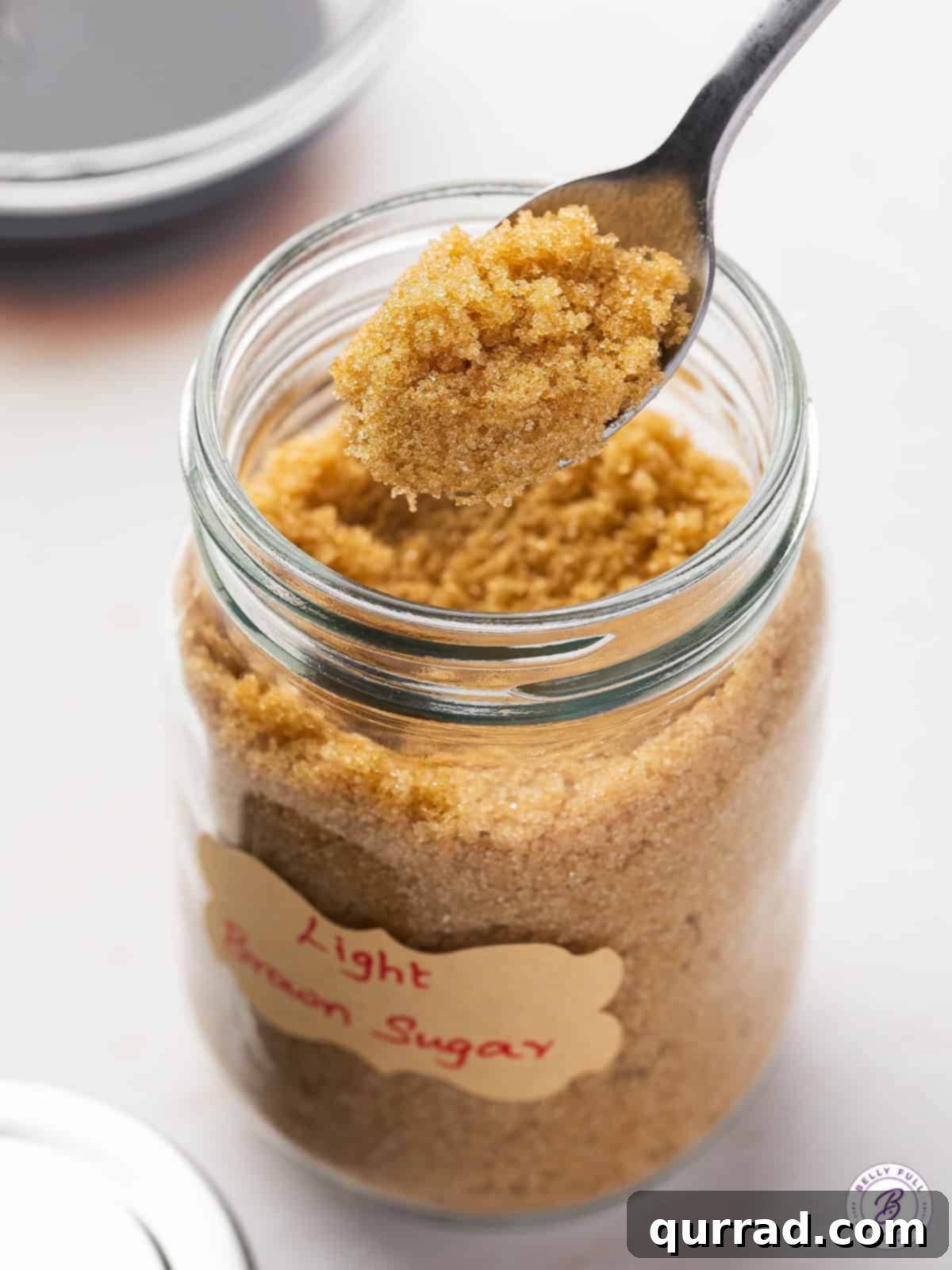
Have you ever found yourself in the middle of baking, only to realize your brown sugar jar is empty? Or perhaps your brown sugar has hardened into an unyielding block? Don’t let these common kitchen dilemmas derail your culinary plans. The good news is, you can easily make fresh, pliable brown sugar right in your own kitchen with just two common ingredients and a few minutes of your time. This simple kitchen hack not only saves a trip to the grocery store but also offers a level of freshness and control that store-bought varieties can’t always match.
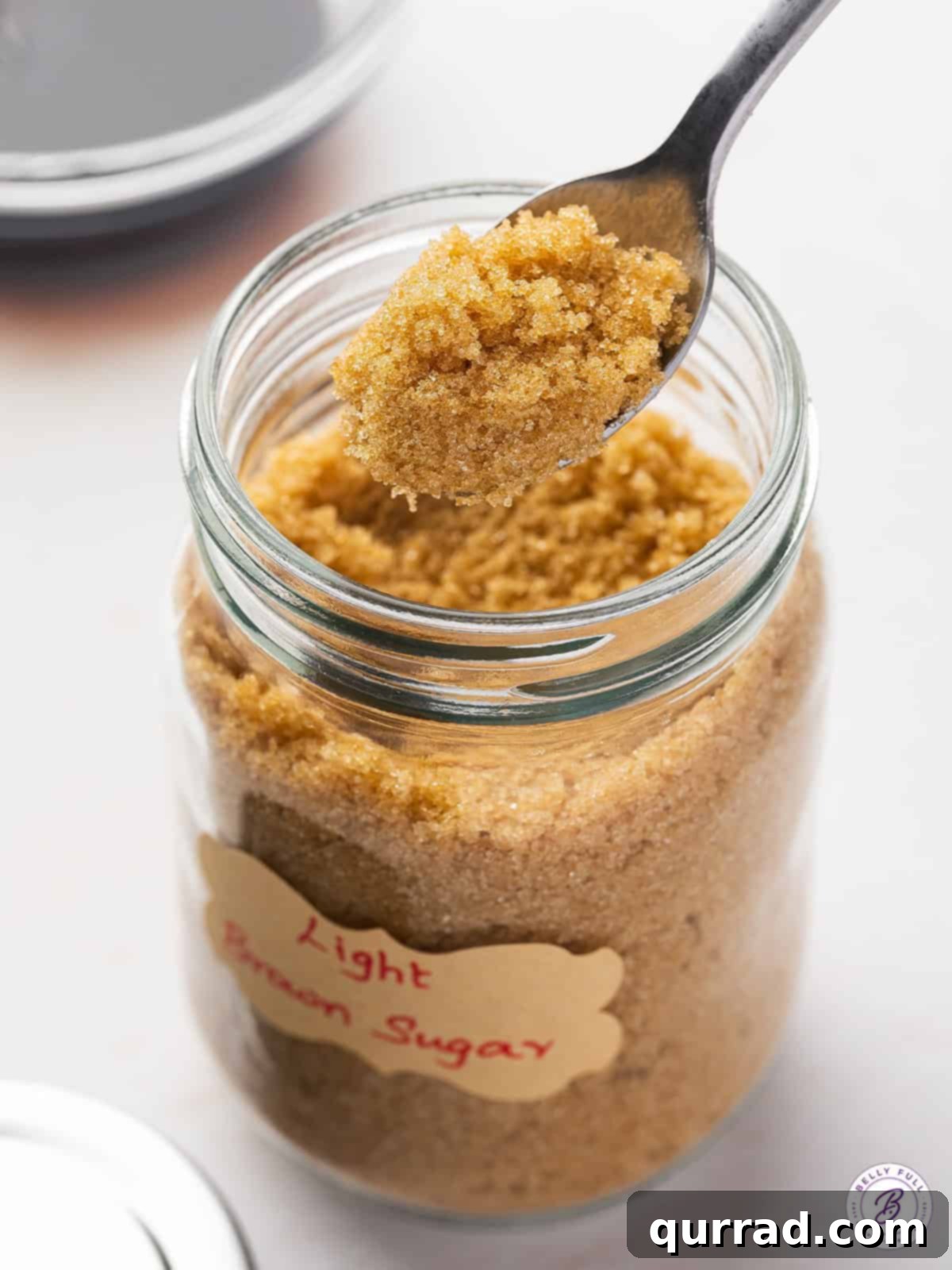
The Simple Secret to Brown Sugar: Sugar and Molasses
Many home bakers are surprised to learn that brown sugar is essentially just a combination of regular granulated white sugar and molasses. That’s right! When you mix these two humble ingredients, you transform plain white sugar into the rich, moist, and flavorful brown sugar that adds depth to countless recipes. This revelation means that running out of brown sugar is no longer a crisis; it’s an opportunity to whip up your own batch.
Making brown sugar at home is not only a fantastic emergency solution but also a valuable technique for anyone who bakes frequently or needs specific quantities. Whether you’re a seasoned baker creating elaborate desserts or someone who occasionally needs a small amount for a savory dish, this homemade method offers unmatched convenience. Brown sugar isn’t just for sweet treats; its unique flavor profile enhances a wide array of recipes, from savory marinades and rubs to breakfast staples and comforting side dishes. I frequently incorporate it into my stir-fry sauce, use it in a robust rib rub, add it to cornbread for a touch of sweetness, and swirl it into oatmeal for a comforting start to the day.
Essential Ingredients for Homemade Brown Sugar
To embark on your brown sugar making journey, you’ll be delighted to know that you only need two core ingredients, both likely already in your pantry:
- Granulated Sugar: This is the foundation of our brown sugar. Any standard granulated white sugar will work perfectly. It provides the bulk and sweetness, while the molasses adds the characteristic color, moisture, and flavor.
- Unsulphured Molasses: This is the crucial ingredient that gives brown sugar its distinct identity. I personally prefer brands like Grandma’s, but any unsulphured molasses will do the trick. It’s important to choose unsulphured molasses, as sulphured varieties can have a slightly sharper, less palatable flavor due to the sulfur dioxide used as a preservative in some molasses made from young sugarcane. Unsulphured molasses offers a cleaner, sweeter, and more authentic flavor profile for your homemade brown sugar.
Understanding Molasses: The Heart of Brown Sugar
Molasses is a byproduct of refining sugarcane or sugar beets into sugar. During the refining process, the cane or beet juice is boiled down to extract sugar crystals. The dark, viscous syrup left behind is molasses. Different grades of molasses exist, depending on how many times the sugar syrup has been boiled and how much sugar has been extracted:
- Light Molasses: The product of the first boiling. It’s the lightest in color and sweetest, often used in baking.
- Dark Molasses (Robust Molasses): Produced from the second boiling. It’s darker, thicker, and less sweet than light molasses, with a more pronounced, slightly bitter flavor. This is commonly used for making dark brown sugar.
- Blackstrap Molasses: The result of the third and final boiling. It’s the darkest, thickest, and least sweet, with a very strong, somewhat bitter flavor. It’s rich in vitamins and minerals and often used for health benefits rather than just sweetness.
For making brown sugar, both light and dark molasses can be used, with dark molasses contributing to a richer, deeper flavor characteristic of dark brown sugar. Always ensure it’s unsulphured for the best taste.
Light Brown Sugar vs. Dark Brown Sugar: What’s the Difference?
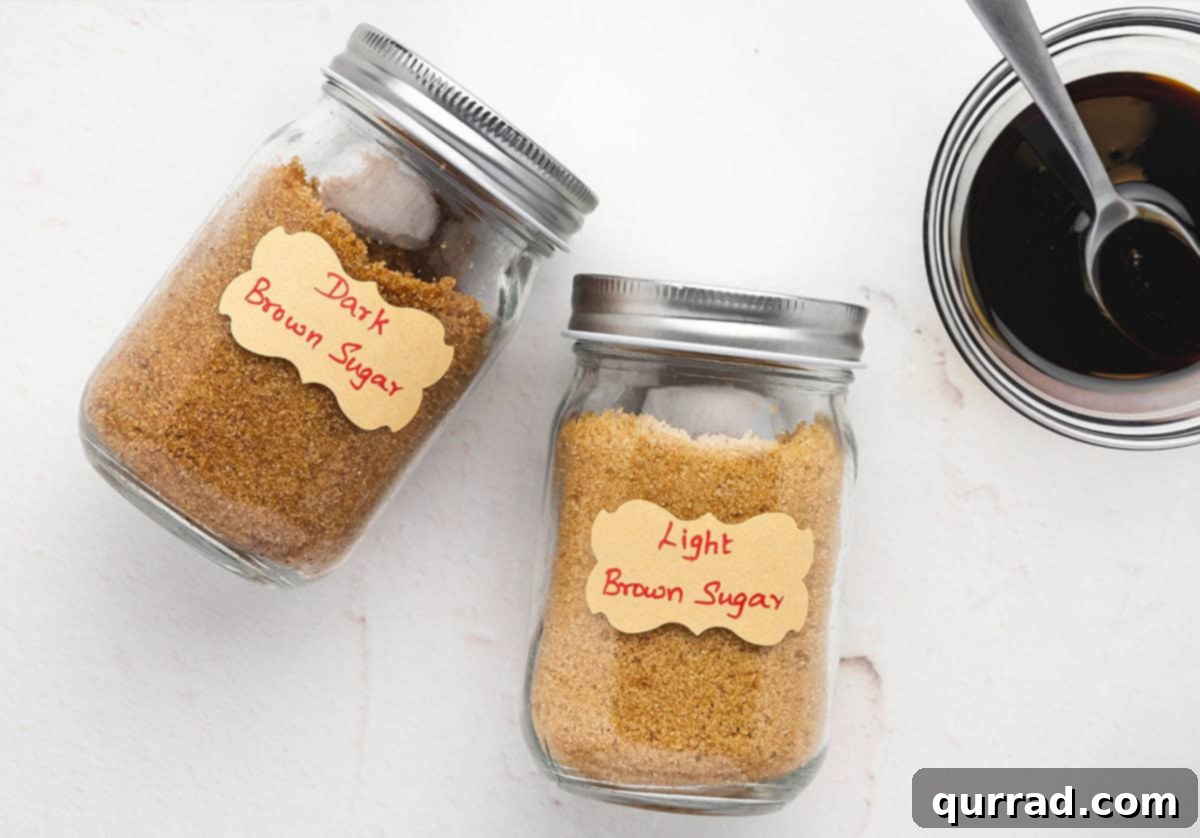
Many recipes specify either light or dark brown sugar, and while they might seem interchangeable, there’s a subtle yet significant difference between the two. The distinction boils down to one simple factor: the amount of molasses added to the granulated white sugar.
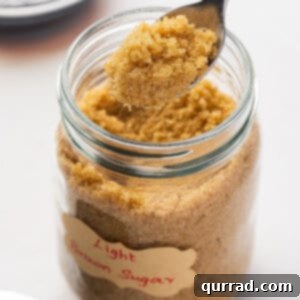
- Light Brown Sugar: This variety contains a smaller amount of molasses, typically around 3-5% by weight. It has a milder flavor and a lighter color. It’s the most commonly called-for brown sugar in baking and general cooking, offering a delicate caramel note without overpowering other flavors.
- Dark Brown Sugar: With a higher concentration of molasses, usually 6-8% by weight, dark brown sugar boasts a richer, more intense, and deeper molasses-y flavor. Its darker hue and more robust taste make it ideal for recipes where a strong molasses presence is desired, such as gingerbread, BBQ sauces, or certain types of cookies.
The beauty of making brown sugar at home is that you have complete control. You can easily produce either light or dark brown sugar by simply adjusting the amount of molasses you incorporate. For light brown sugar, you’ll use less molasses, and for dark brown sugar, you’ll add a bit more to achieve that deeper color and more pronounced flavor. The recipe card below provides precise measurements for both variations.
What If I Don’t Have Molasses? (And Why You Really Should Get Some!)
If you don’t have molasses, it’s important to understand that you won’t be able to make “true” brown sugar. Molasses is the defining ingredient, responsible for its unique moisture, color, and flavor. Without it, you’re essentially left with granulated sugar. While some people might consider substitutions in a pinch, it’s crucial to manage expectations regarding flavor and texture.
I’ve heard of individuals trying to substitute real maple syrup (not pancake syrup, which is mostly high-fructose corn syrup) when molasses isn’t available. While it might provide some moisture and a darker hue, the flavor profile will be distinctly different. Maple syrup has its own wonderful, earthy sweetness, but it lacks the deep, slightly bitter, and caramel-like notes that molasses brings to brown sugar. Therefore, I would strongly advise against using maple syrup or any other syrup substitute in recipes where the specific flavor of brown sugar is a key component, such as molasses cookies, gingerbread, or certain glazes.
The best advice? Invest in a jar of unsulphured molasses. It’s surprisingly inexpensive, and a single jar will last a long time, enabling you to make numerous batches of brown sugar. Once opened, molasses keeps well in your pantry for almost a year, making it a highly practical ingredient to keep on hand for both homemade brown sugar and other delicious recipes.
Storing Your Homemade Brown Sugar for Optimal Freshness
Proper storage is key to keeping your homemade brown sugar soft, moist, and ready for use. Brown sugar’s moisture content is what gives it its characteristic soft texture, and exposure to air will quickly dry it out, leading to hard, clumped sugar. To prevent this, always store it correctly:
- Airtight Containers are Essential: For the best results, transfer your brown sugar to an airtight container or a resealable plastic bag. If using a bag, press out as much air as possible before sealing. Glass jars with tight-fitting lids, plastic containers with secure seals, or even heavy-duty freezer bags are excellent choices.
- Location Matters: Store your brown sugar in a cool, dark, and dry place, such as your pantry or a cupboard, away from direct sunlight, heat sources, or excessive moisture. When stored properly, homemade brown sugar can maintain its quality and soft texture for many months, often even longer.
- Preventing Hardening: Brown sugar tends to harden as it loses moisture. This is a common issue with both homemade and commercial brown sugar. The molasses coating on the sugar crystals dries out, causing them to stick together.
What If Your Brown Sugar Hardens? Easy Softening Tricks!
Even with the best storage practices, brown sugar can sometimes harden. Don’t despair; it’s easy to revive it!
- The Bread Slice Method: This classic trick works wonders. Place a slice of fresh bread (any type will do, but plain white bread is common) directly into the airtight container with your hardened brown sugar. Seal the container and let it sit for several hours or overnight. The sugar will absorb moisture from the bread, returning to its soft, usable state. This works on the same principle as keeping cookies soft – the sugar acts as a desiccant, drawing moisture from the more humid environment.
- Terra Cotta Disk Method: For a more reusable solution, you can purchase special terra cotta disks designed for this purpose. Soak the disk in water, pat it dry, and then place it in your brown sugar container. It releases moisture slowly, keeping the sugar soft.
- Microwave Quick Fix: If you need soft brown sugar immediately, place the hardened sugar in a microwave-safe bowl. Add a damp paper towel (not dripping wet) over the sugar. Microwave on high for 15-20 seconds. Check the sugar, and if it’s not yet soft, microwave in additional 10-second intervals. Be careful not to overheat it, as it can melt. This method works by introducing steam, which the sugar quickly absorbs.
Homemade brown sugar is not just a convenient kitchen hack; it’s a way to ensure freshness and control over your ingredients. Give this simple recipe a try and elevate your baking game!
How to Make Brown Sugar
5 mins
5 mins
16
tablespoons (firmly packed)
Pin Recipe
Print Recipe
Wondering how to make brown sugar at home? It’s incredibly easy! You just need granulated sugar, molasses, and about 5 minutes.
Ingredients
For Light Brown Sugar
- 1 cup granulated sugar
- 1 tablespoon unsulphured molasses (such as Grandma’s brand)
For Dark Brown Sugar
- 1 cup granulated sugar
- 2 tablespoons unsulphured molasses (such as Grandma’s brand)
Instructions
- Place the granulated sugar in a mixing bowl that’s large enough for easy stirring.
- Pour the specified amount of unsulphured molasses (1 tablespoon for light, 2 for dark) directly over the sugar.
- Using a sturdy fork or spatula, begin working the molasses into the sugar. Press down and stir to ensure the molasses is thoroughly incorporated. If lumps form, break them up against the side of the bowl.
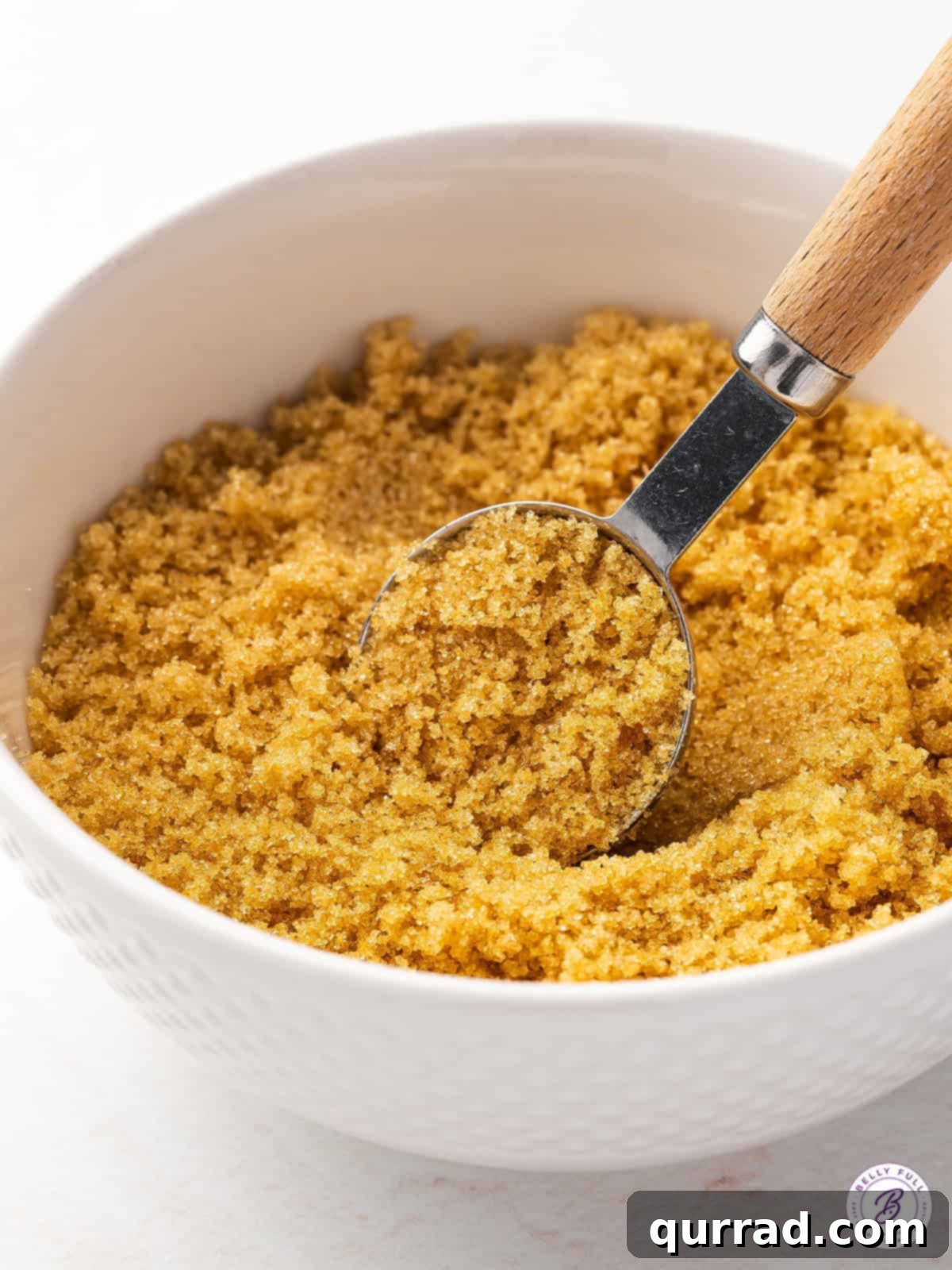
- Continue mixing and pressing until no lumps of molasses remain and the sugar has transformed into a uniform tan (light brown sugar) or darker brown (dark brown sugar) color. The mixture should be moist and crumbly.
- Your homemade brown sugar is now ready to use in any recipe!
Nutrition
|
Calories: 53 kcal
|
Carbohydrates: 14g
|
Fat: 0.1g
|
Saturated Fat: 0.001g
|
Polyunsaturated Fat: 0.002g
|
Monounsaturated Fat: 0.001g
|
Sodium: 1mg
|
Potassium: 20mg
|
Sugar: 14g
|
Calcium: 3mg
|
Iron: 0.2mg
Nutritional information is an estimated automatic calculation and can vary based on the exact products you use and any changes you make to the recipe. If these numbers are critically important to you, I recommend calculating them yourself using a reliable nutrition calculator.
Did you make this? Leave a rating below!
I genuinely hope you find this homemade brown sugar recipe both delicious and incredibly useful. It’s truly a game-changer for any home cook or baker. Please consider leaving a review below to share your experience! And don’t forget to follow Belly Full on your favorite social media platforms for more amazing recipes and kitchen tips. You can find us on TikTok, Facebook, Instagram, Pinterest, and YouTube!